- The paper presents a key contribution by systematically reviewing spin qubit modalities, theoretical models, and decoherence mechanisms critical for scalable quantum processors.
- It details experimental architectures and metrics, such as fidelity >99%, photon-mediated coupling with >100 MHz gate speeds, and effective shuttling processes for spin conservation.
- Implications include CMOS-compatible designs integrating dynamic reconfiguration, parallel readout, and robust error correction to overcome scalability challenges in quantum systems.
Theory of Spin Qubits and the Path to Scalability
Overview
The paper "Theory of spin qubits and the path to scalability" (2604.13644) presents a comprehensive and technically rigorous review of the physical underpinning, material science, device engineering, and architectural approaches relevant to semiconductor spin qubit platforms. The authors critically discuss the theoretical modeling of spins in low-dimensional semiconductors, practical qubit implementations (including multi-qubit architectures), long-range interconnects, and emerging paradigms for scaling spin-based quantum computation towards fault-tolerant, large-scale systems. The review emphasizes both the deep theoretical underpinnings—electronic structure theory, decoherence processes, coupling mechanisms—and quantitative experimental progress, highlighting major device platforms, control/readout protocols, and fidelity metrics.
Spin Qubit Modalities
A central theme is the categorization and description of spin qubit modalities: Loss-DiVincenzo (LD) qubits, donor-based qubits, multi-spin encodings (singlet-triplet, exchange-only, resonant exchange), and hole spin qubits. Each exhibits distinct advantages and engineering trade-offs (e.g., isotopic purification of Si for coherence, ease of EDSR, compatibility with CMOS platforms).
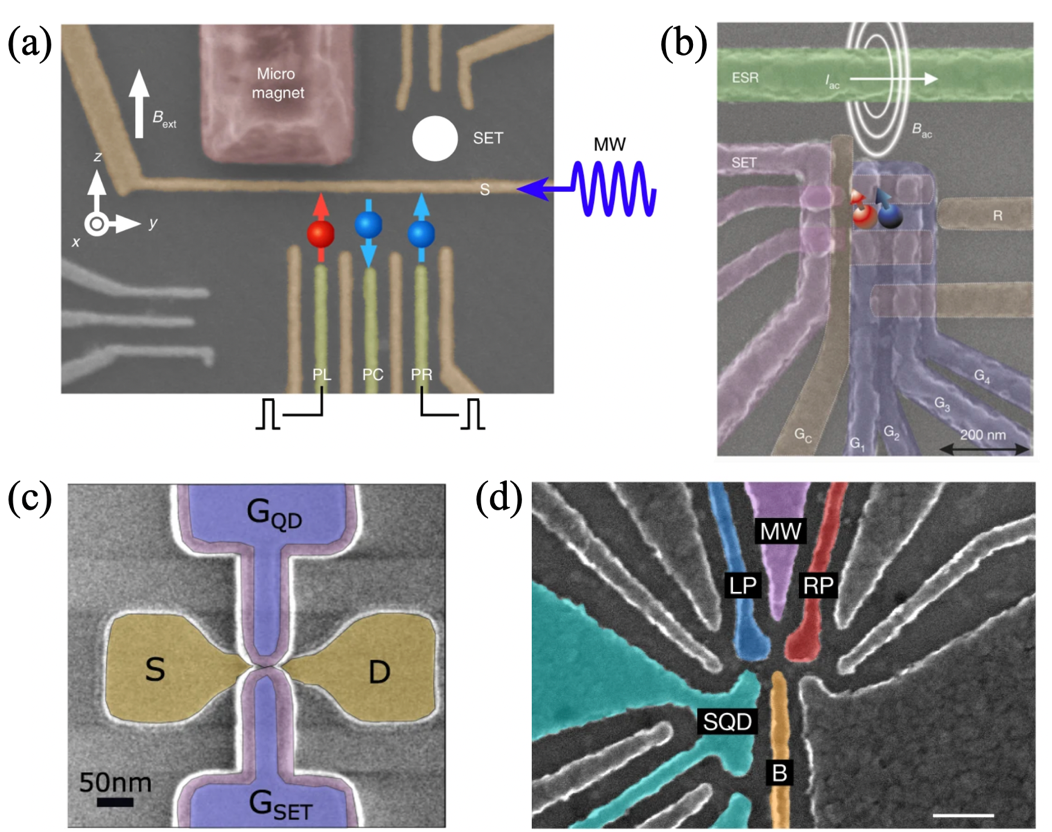
Figure 2: Examples of LD qubit architectures in leading semiconductor platforms, including GaAs/AlGaAs, Si/SiO₂, and Si/SiGe with tunable single- and multi-qubit operations.
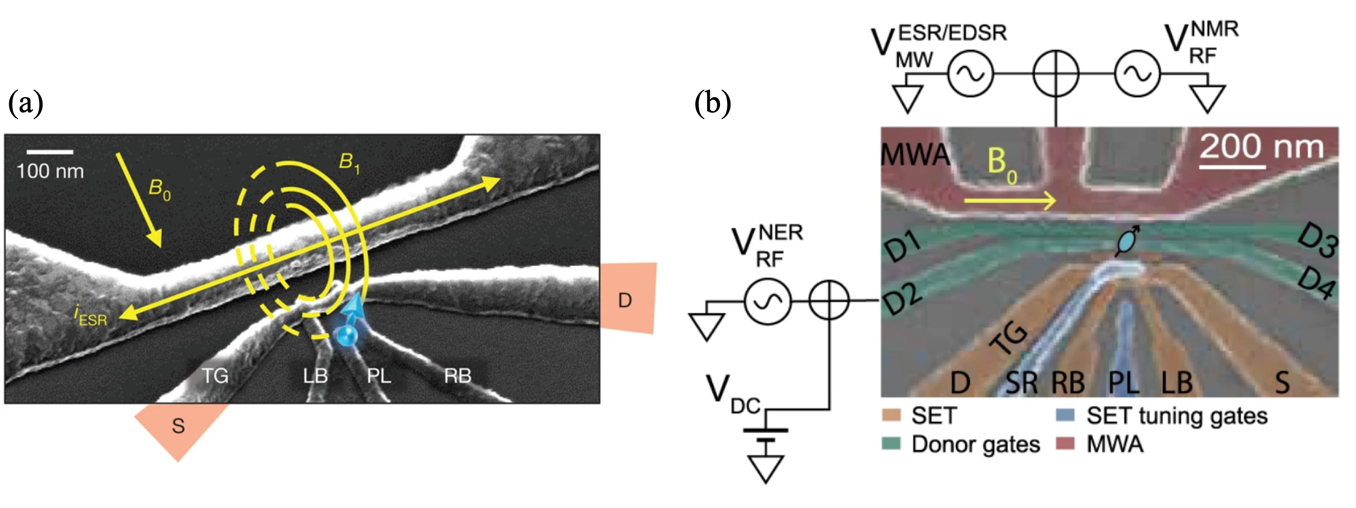
Figure 1: Donor qubit devices: single phosphorus and antimony donors in Si implementations with distinct spin manipulation strategies.
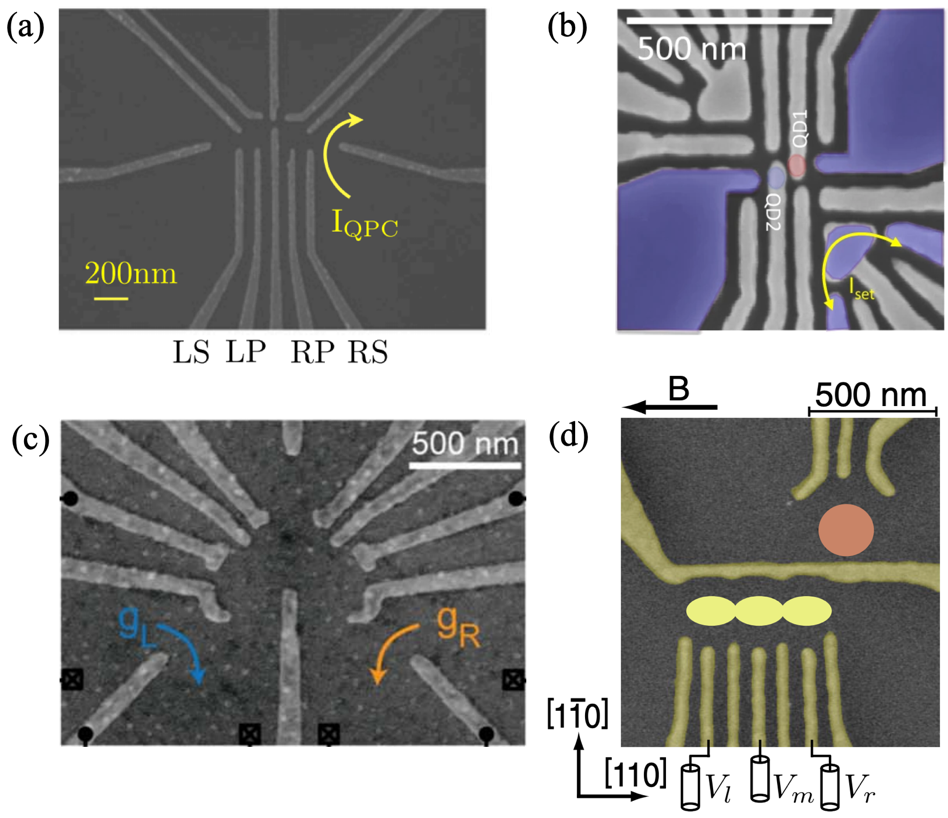
Figure 3: Electrostatic and micromagnet-based singlet-triplet encoding in Si/SiGe and SiMOS, and exchange/resonant exchange qubits in GaAs/Si.
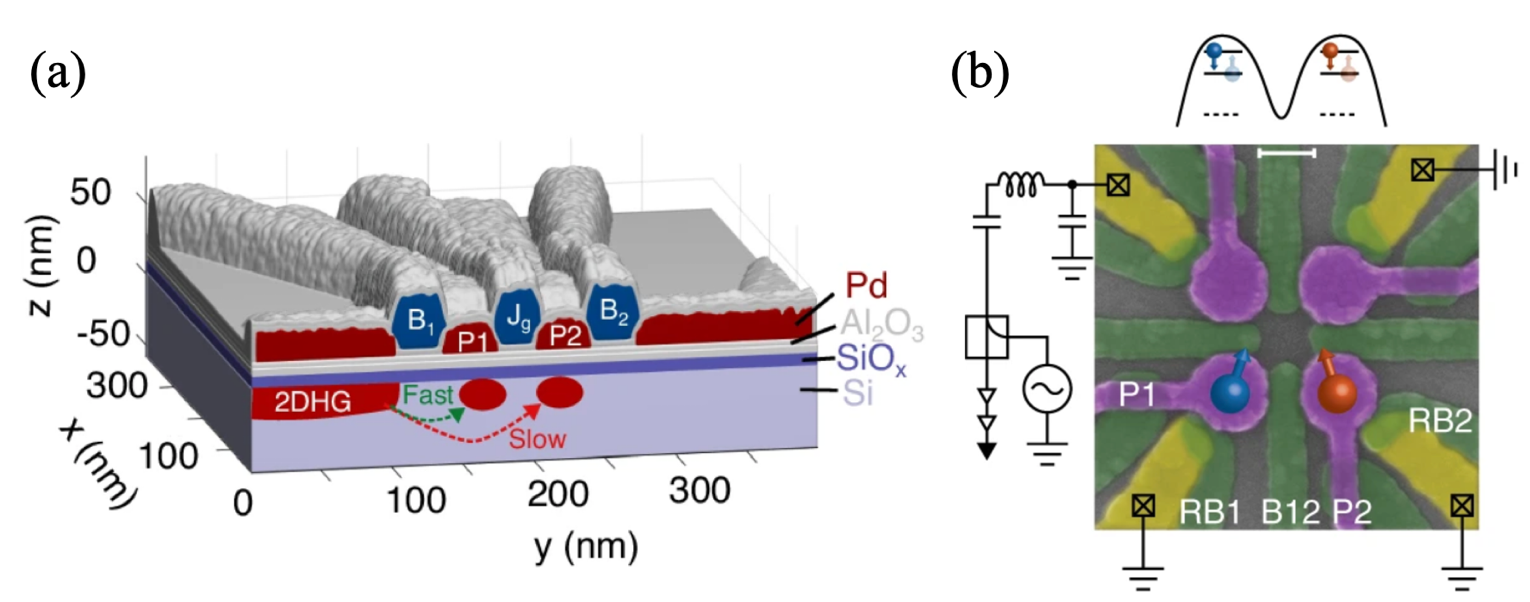
Figure 4: Hole spin qubit examples demonstrating electrical-only fast qubit operation in Si/SiO₂ and Ge/SiGe dot arrays.
These architectures leverage various material systems, and the discussion includes the impact of host lattice nuclear spins, spin-orbit coupling, and control/readout optimization.
Electronic Structure Theory
A substantial section is devoted to the detailed modeling of quantum-confined spin systems. Band structure theory, k⋅p formalism, density functional theory (DFT), and tight-binding (TB) approaches are covered in depth, emphasizing their consequences for qubit design parameters:
- The relationship between band structure features (direct/indirect gap, mass anisotropy, SOC) and qubit control strategies.
- Material symmetries (e.g., point group Oh for Si, Td for GaAs) and their role in constraining Hamiltonian invariants and Bloch envelope functions.
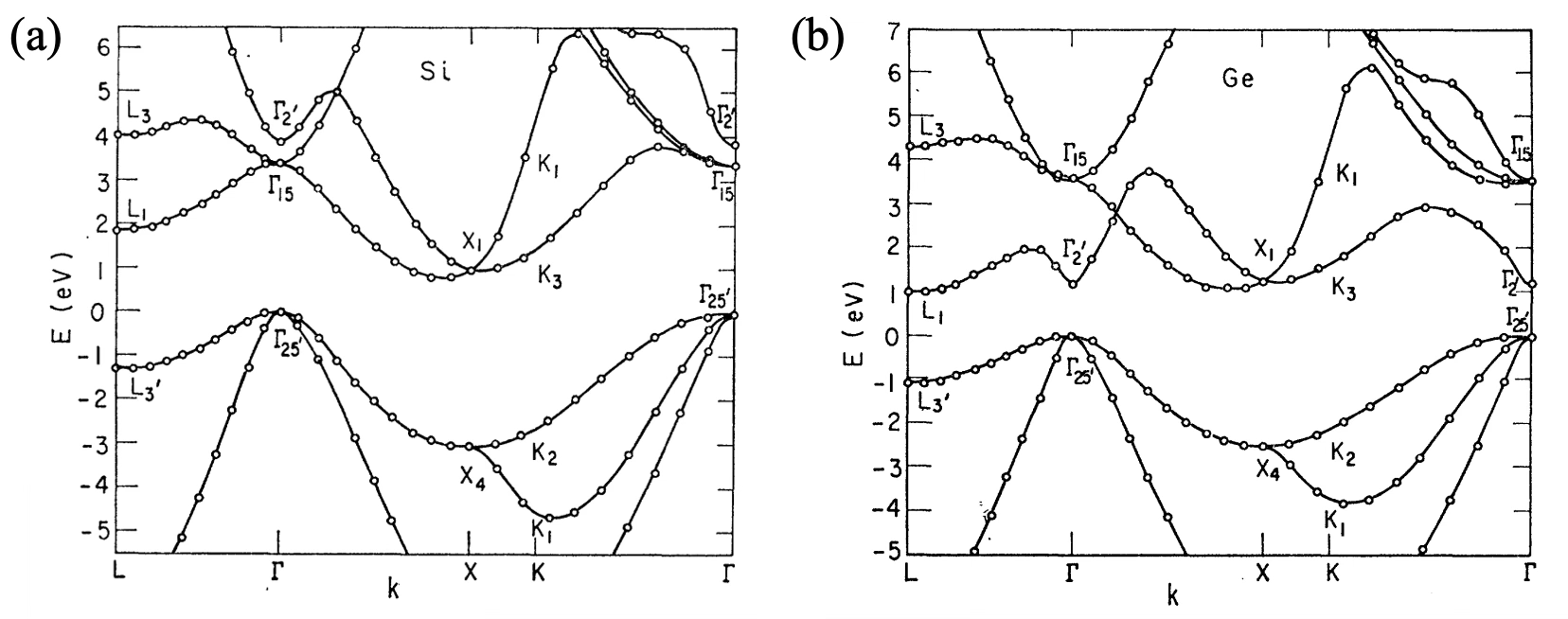
Figure 5: Calculated energy bands in Si and Ge along high-symmetry directions, displaying fundamental band parameters tied to qubit operation.
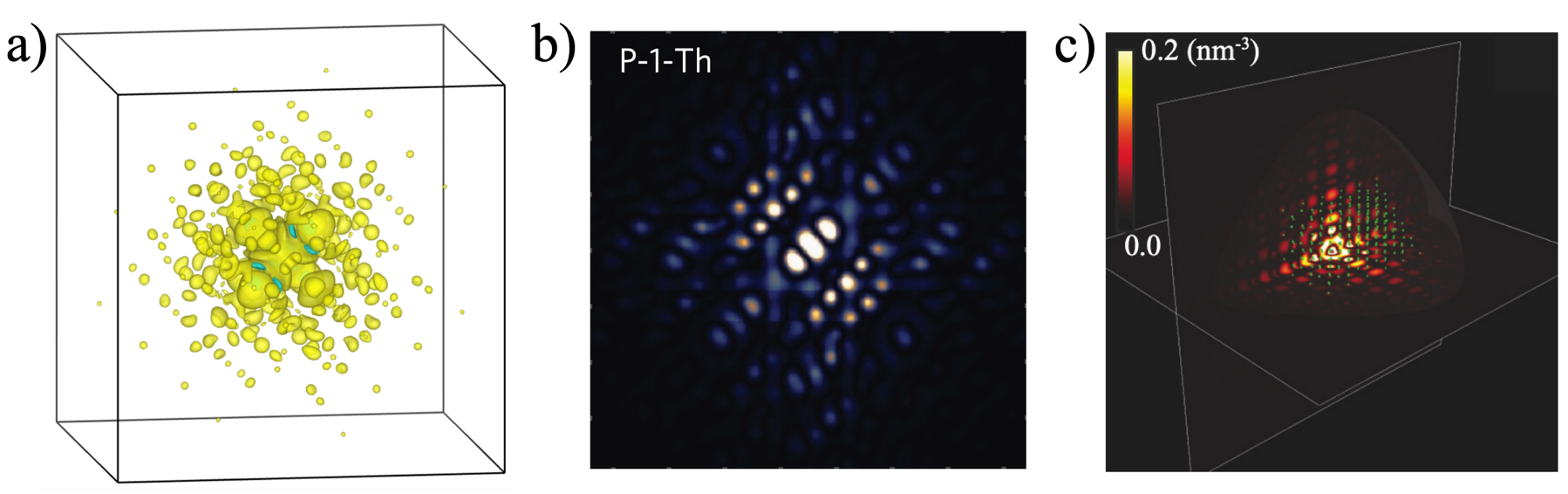
Figure 6: Multiscale modeling pipeline: DFT, TB, and multivalley effective mass theory applied to donor wavefunctions in Si for accurate qubit property prediction.
Numerical and analytic approaches enable the extraction of effective masses, g-tensors, valley splittings, and hyperfine constants—each critical for decoherence and gate performance modeling.
Spin Qubit Initialization, Control, and Decoherence
The review systematically analyzes state initialization/readout, control Hamiltonians, and decoherence processes:
- Readout: Spin-to-charge conversion by energy-selective tunneling (Elzerman), Pauli spin blockade.
- Control: ESR with microwave fields, EDSR via synthetic or intrinsic SOC, exchange-based entangling gates, and two-axis singlet-triplet control.
- Decoherence: Markovian (phonons) and non-Markovian (charge, nuclear spin baths) noise with explicit T1, T2∗, and Tϕ models. Charge noise and Overhauser field gradients are identified as key factors in state-of-the-art devices.
The discussion incorporates filter function formalism and dynamical decoupling schemes for extracting and mitigating noise spectral features.
Long-range qubit coupling via circuit QED is examined, incorporating recent theoretical and experimental advances in coupling spin-charge hybrid qubits to superconducting microwave resonators. The critical theoretical constructs—Rabi and Jaynes-Cummings models, dispersive regime Hamiltonians, and input-output theory—are presented in the context of spin qubits, with explicit focus on strong coupling metrics and resonator transmission signatures.
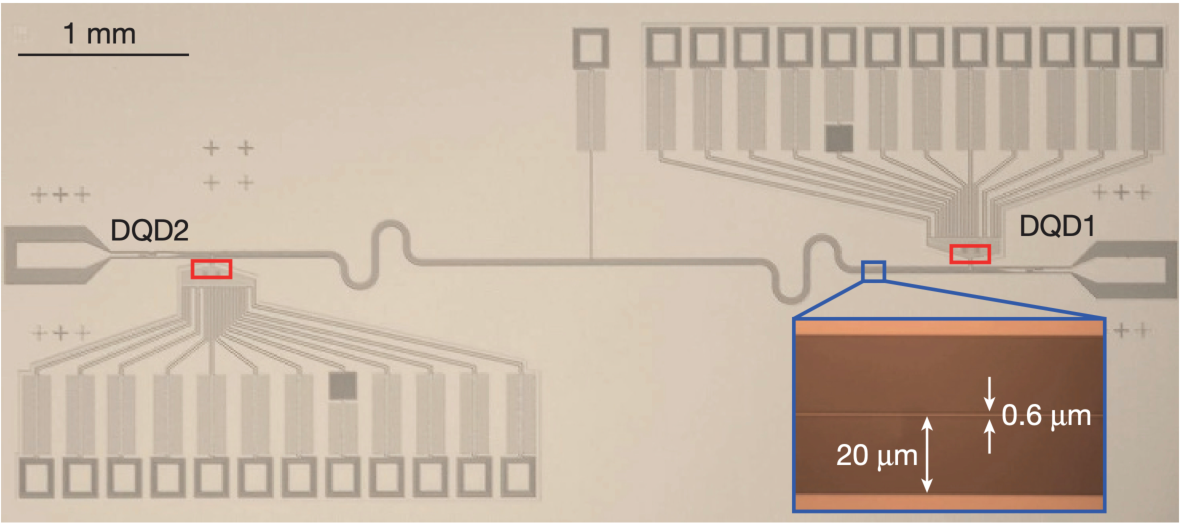
Figure 9: Micrograph of a stripline superconducting resonator with embedded DQDs for photon-mediated coupling experiments.
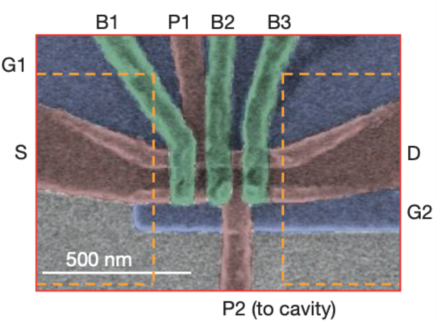
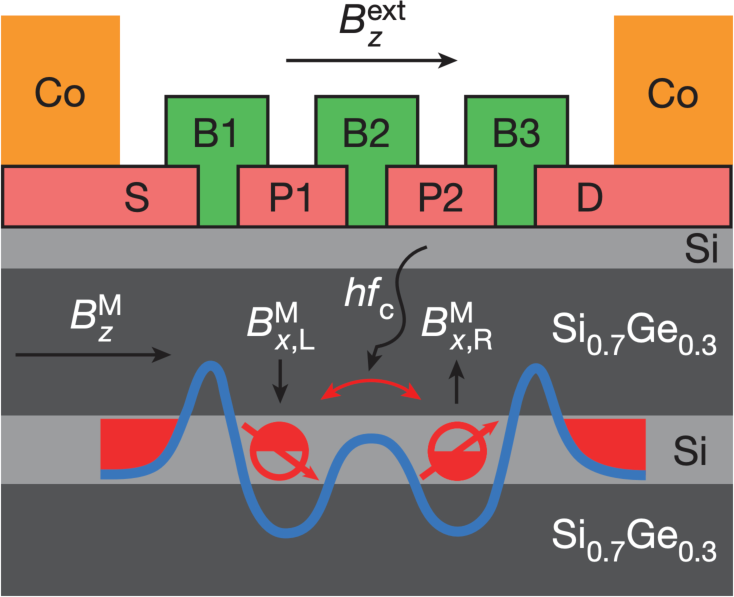
Figure 7: Device design for cavity coupling—plunger gate to cavity via capacitive link, and spin-charge hybridization using engineered field gradients.
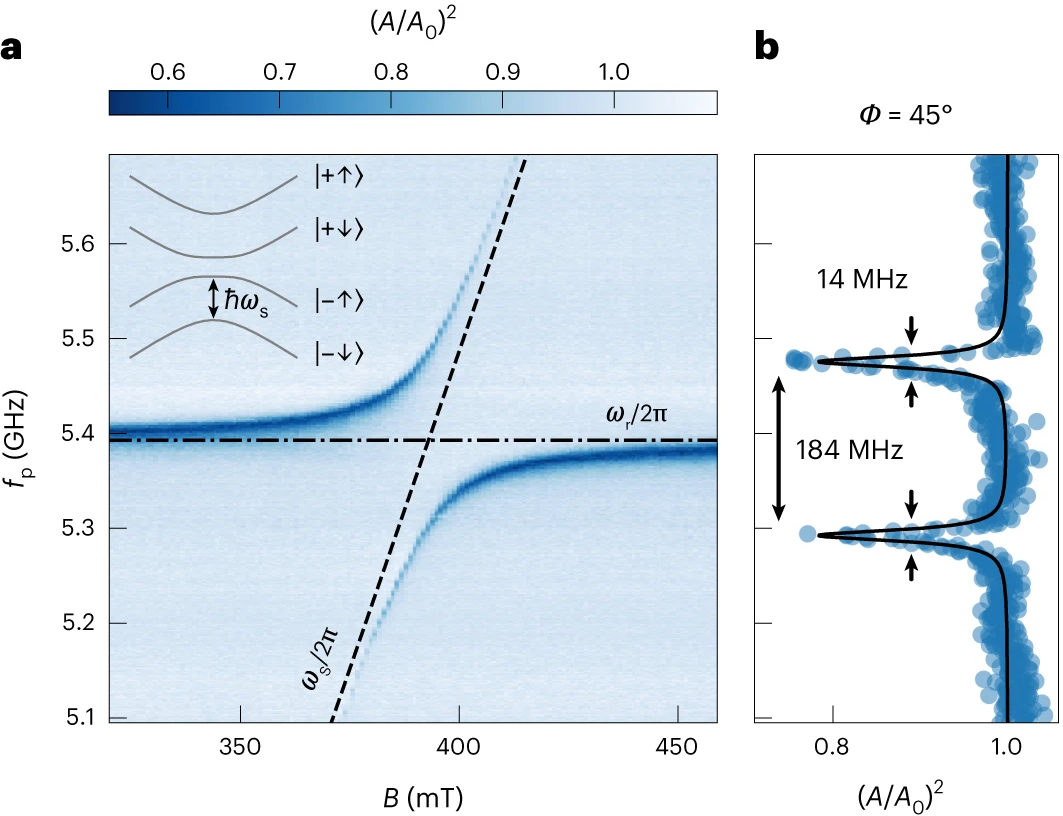
Figure 8: Transmission probability map under spin-cavity hybridization, evidencing the strong coupling regime and vacuum Rabi splitting for a hole spin qubit.
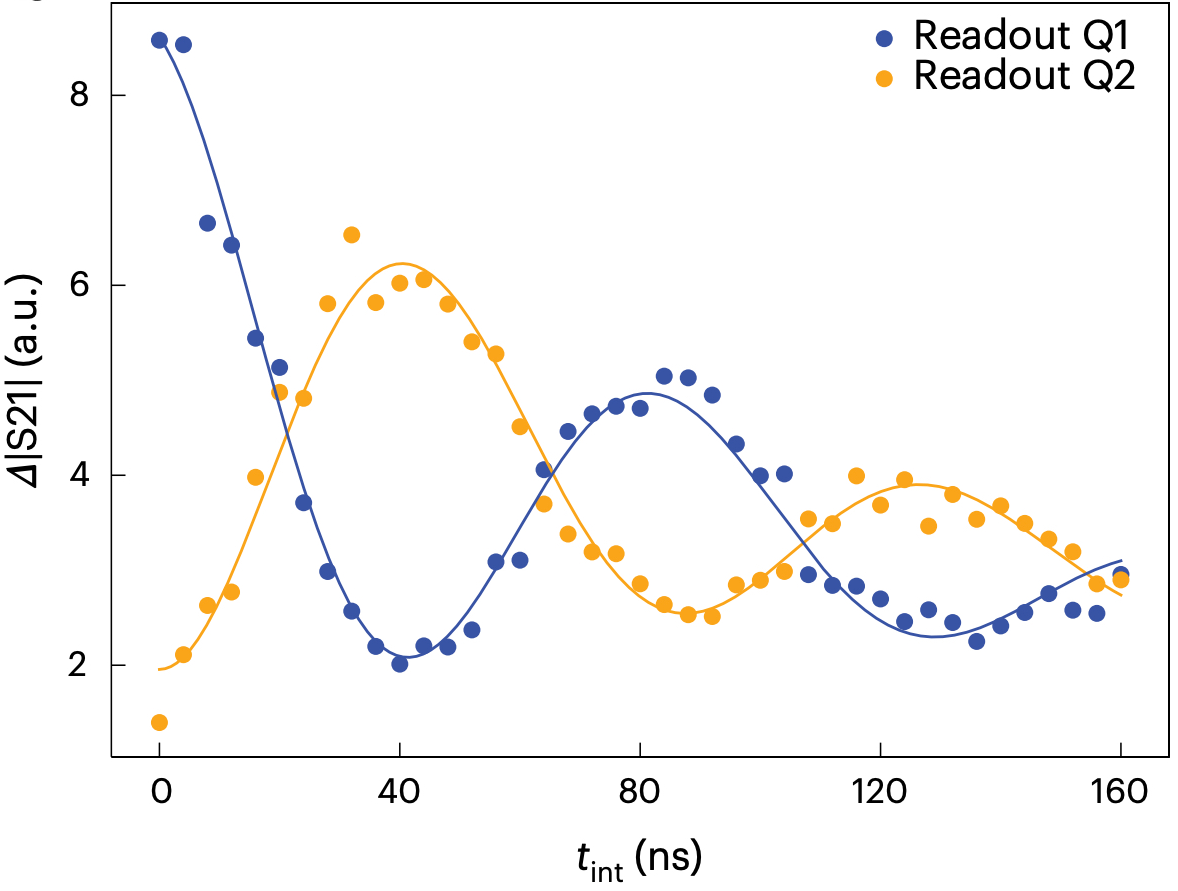
Figure 10: Observation of iSWAP oscillations between distant spin qubits via virtual photon exchange, establishing entangling gates over ≫100 µm distances.
The review highlights both transverse (Jaynes-Cummings) and longitudinal (parametrically driven, σz-type) coupling schemes, evaluating their suitability for fast readout and reduced measurement back-action.
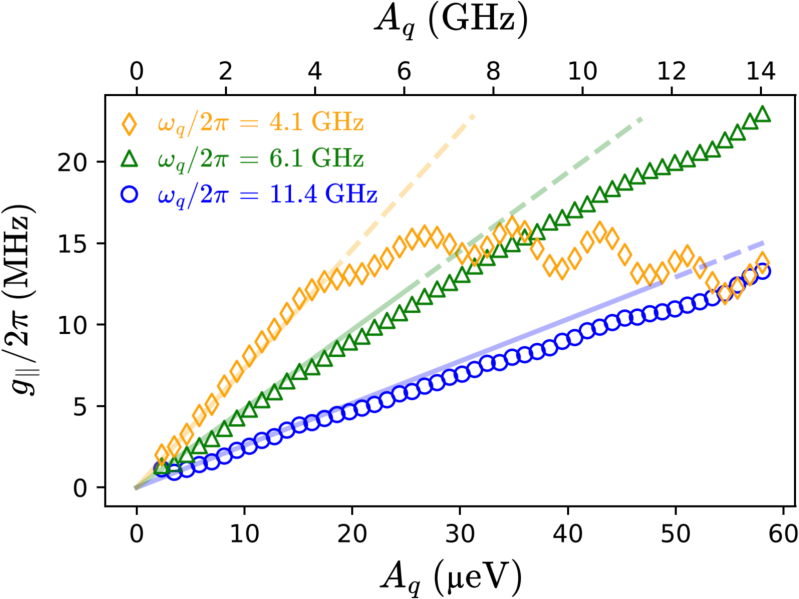
Figure 14: Demonstration of parametrically driven longitudinal coupling in quantum-dot charge qubits as a function of modulation amplitude.
Superconducting Hybrid Devices: Andreev Qubits
The text presents Andreev bound states in proximitized nanowires and quantum dots as platforms hosting spin and parity-engineered qubits. Both even-parity (Andreev pair) and odd-parity (Andreev spin) encodings are analyzed, including their Josephson energy dispersion, superconducting phase modulation, and inductive coupling to circuit resonators.
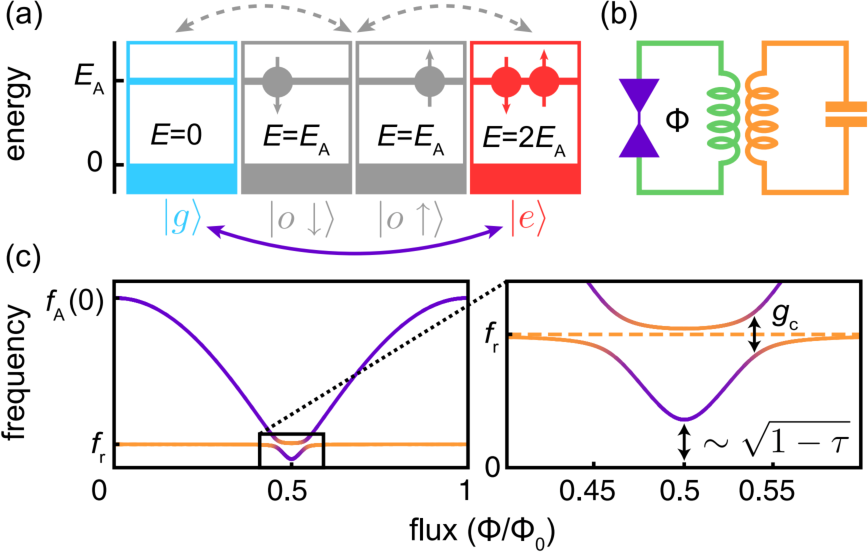
Figure 16: Energy spectrum and microwave readout strategy for four-level, parity-encoded Andreev pair qubits in Josephson nanowires.
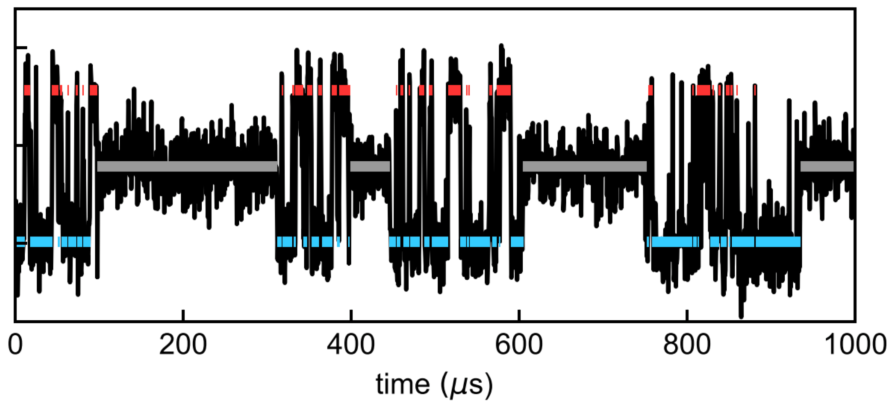
Figure 11: Real-time monitoring of quasiparticle poisoning events via dispersive parity readout on Andreev qubits.
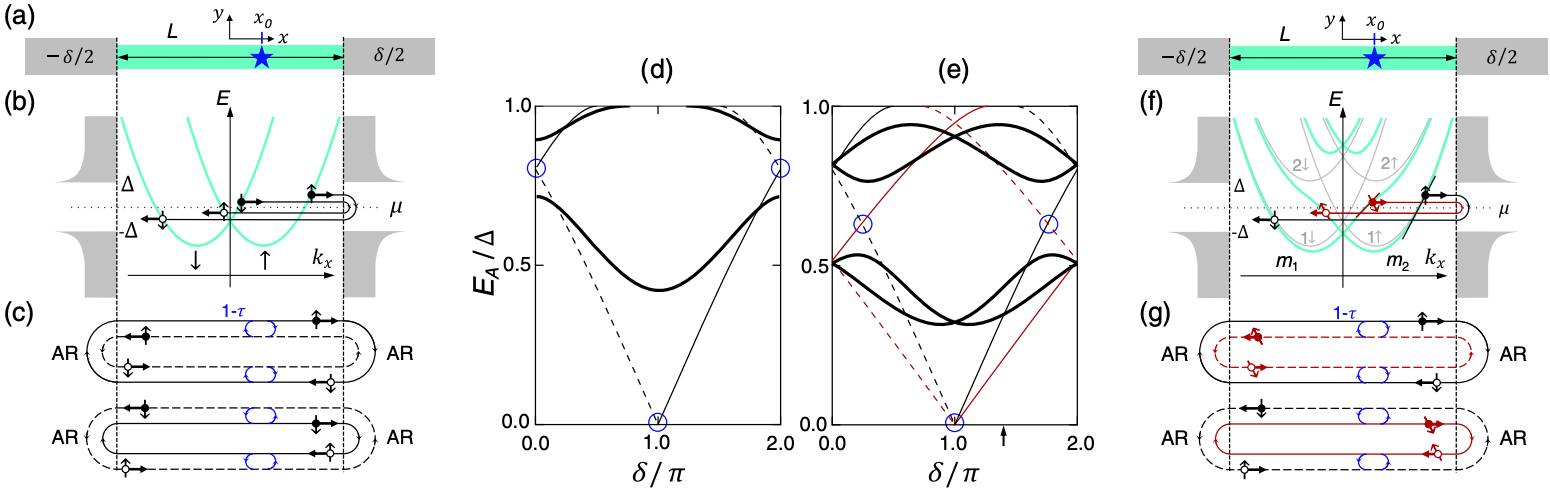
Figure 12: Theoretical framework for SO-coupled Andreev doublets: junction geometry and spin splitting in the presence of broken inversion, multiple subbands, and disorder.
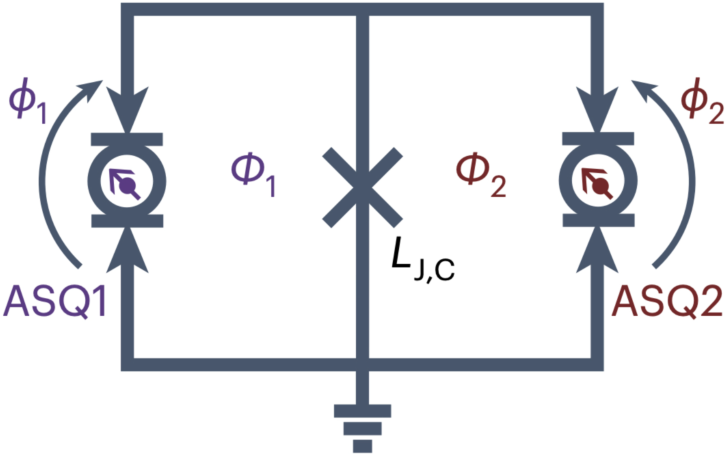
Figure 13: Architecture for spin-spin ZZ coupling between two Andreev spin qubits linked by a tunable Josephson junction, enabling long-range direct entangling gates.
The text notes demonstrated two-qubit gate strengths >100 MHz at 25 μm separation, exceeding previous capacitive approaches by an order of magnitude, and discusses the implications of parity switching, quasiparticle lifetimes, and integration with conventional spin qubits.
Spin Shuttling and Dynamical Connectivity
A critical barrier for large-scale 2D architectures is the wiring bottleneck and limited native connectivity. The authors delineate two shuttling modalities:
- Bucket-brigade: Sequential, adiabatic charge transfer between adjacent dots permits <100 μm transfer with high fidelity, though scaling is limited by disorder/timing.
- Conveyor-mode: Moving potential wells (via phase-controlled gate waveforms) trap and transport spins over tens of microns in <200 ns with fidelities >99.5%, mitigates non-uniformity, and requires control pulse count independent of transfer distance.
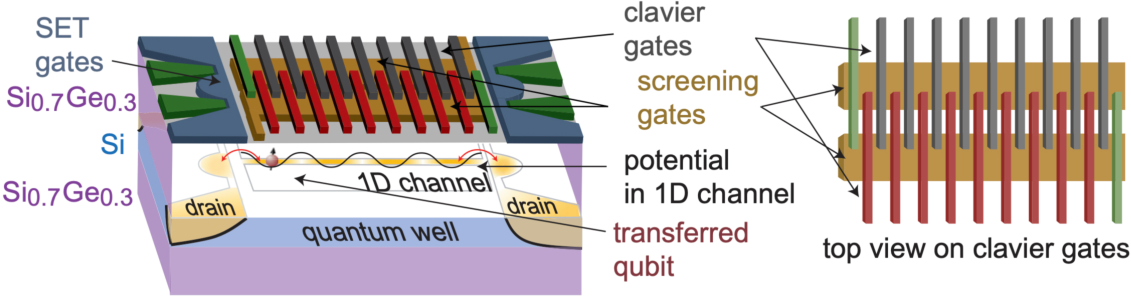
Figure 15: Gate-defined shuttling channel and interdigitated clavier gates enabling robust bucket-brigade operations.
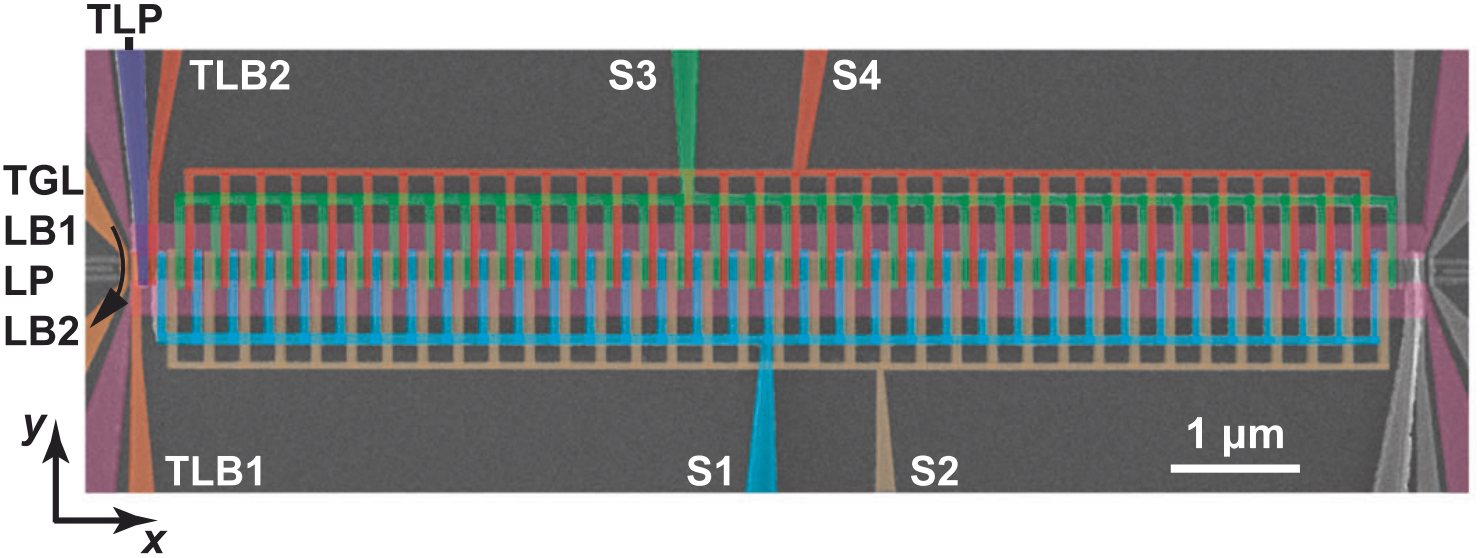
Figure 17: Conveyor-mode transport over 10μm using traveling potentials generated by four-phase voltage modulation, with parallelized electron transfer demonstrated.
Spin-preserving transport and single-qubit gates utilizing spatially inhomogeneous quantization axes have been realized with fidelities above Oh0, and shuttling-induced error mechanisms are carefully analyzed (e.g., motional narrowing, Zeeman gradients, valley hot-spots).
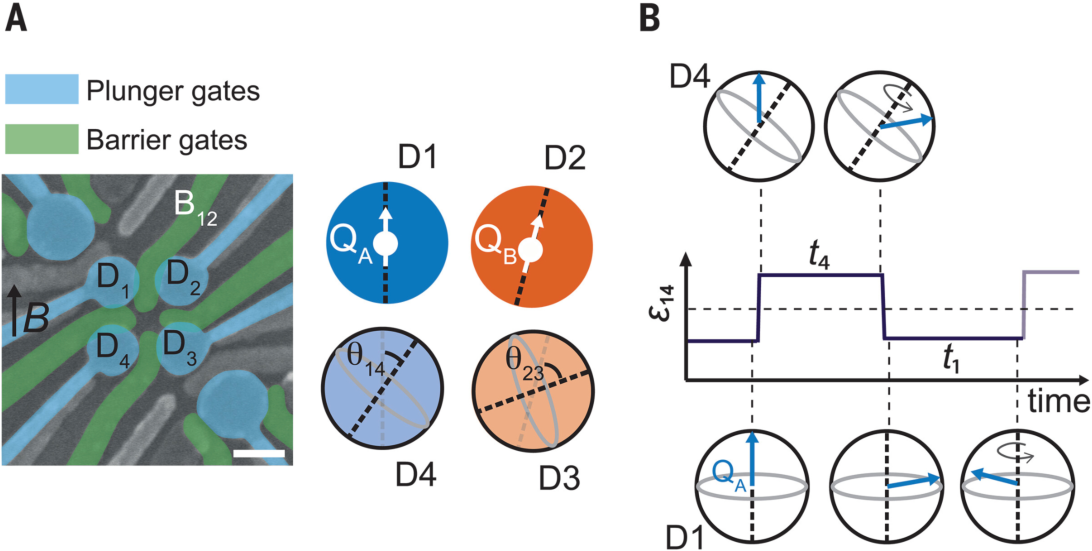
Figure 18: Baseband-controlled single-qubit gates realized by shuttling spins through position-dependent quantization axes in engineered arrays.
Hardware-Efficient Quantum Error Correction with Spin Shuttling
The use of sparse 2D arrays equipped with shuttling enables flexible, bipartite connectivity graphs for quantum low-density parity check (LDPC) codes, surpassing the constraints of static surface code arrays.
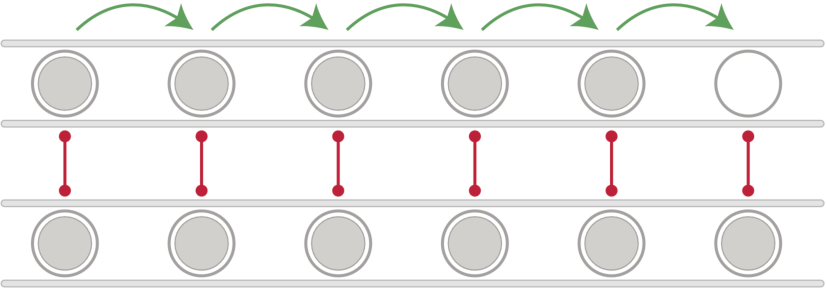
Figure 24: Using a Oh1 shuttling-enabled array to realize diverse connectivity graphs required for LDPC and surface code implementations.
The review details how dynamic qubit repositioning and serialized ancilla readout can, in principle, drastically reduce area overhead and wiring complexity, but increased shuttling steps or correlated errors necessitate specialized code construction and constant error monitoring.
Topological Spin Texture Interconnects
Theoretical proposals are discussed wherein the chirality of nanoscale magnetic domain walls (e.g., in ferrimagnetic nanowires) serves as long-range, solid-state flying qubits. These chiral domain wall modes are described by field-theoretic soliton models with Oh2 symmetry, and their motion can be precisely controlled to mediate deterministic entanglement between spatially remote spin qubits.
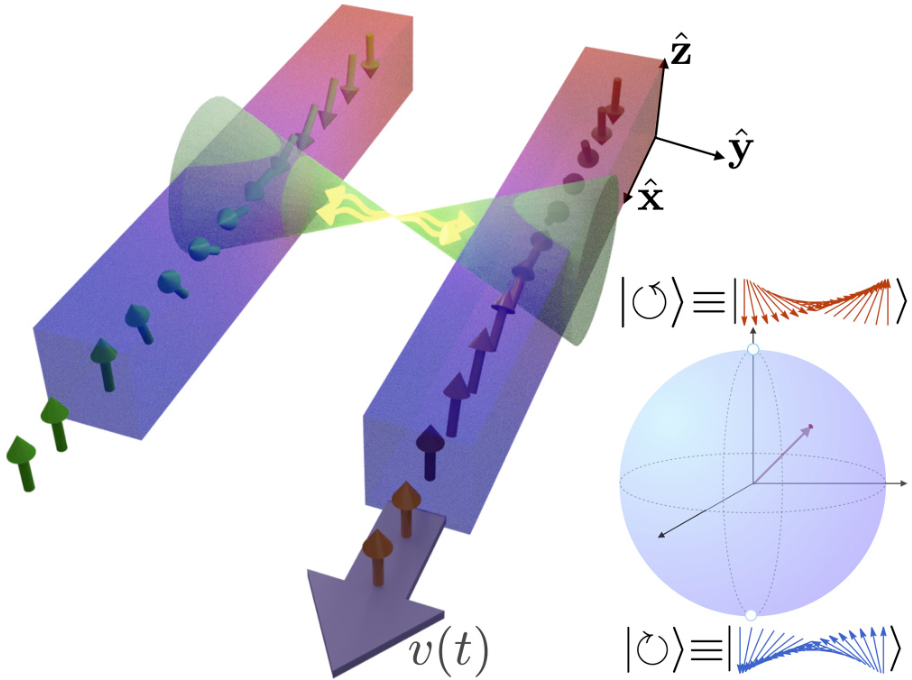
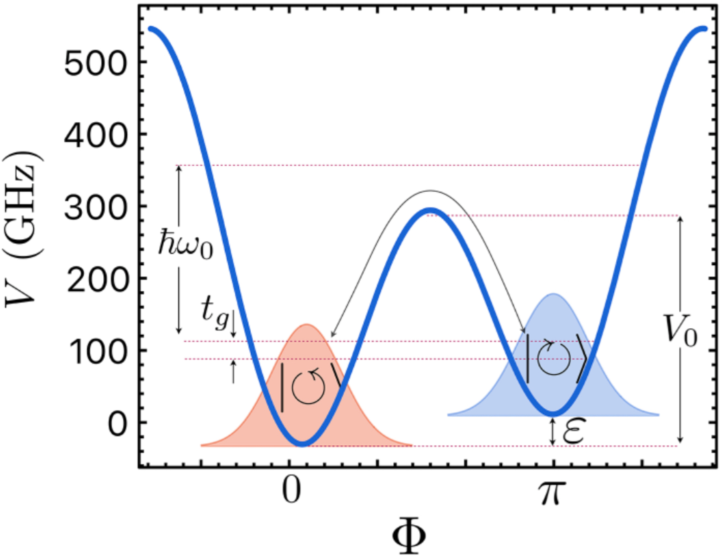
Figure 19: Illustration of two domain-wall qubits in ferrimagnetic racetracks, with chirality-based encoding and a potential landscape supporting robust topological modes.
Conclusion
This review provides a detailed, quantitative survey of the state of spin-based quantum information science, addressing both foundational and highly technical aspects essential for progress towards scalable, fault-tolerant spin qubit quantum processors. Key technical results include rigorous analysis of electronic structure models for device design, demonstration of spin-photon and Andreev-spin entangling gates at Oh3 MHz energy scales, and the establishment of shuttling architectures with Oh4 spin-preserving fidelities over mesoscale distances.
Strong claims are made regarding the compatibility of semiconductor spin qubits with industrial-scale, cryocompatible CMOS processes and their unique potential for integrating high connectivity, parallel readout, and dynamic circuit reconfiguration. The review challenges existing paradigms for network topology, error-correcting code embedding, and the boundaries of possible material/architectural routes, and explicitly discusses the limitations arising from non-Markovian, correlated error sources.
The implications for quantum architectures extend beyond traditional qubit arrays to encompass photonic/superconducting hybridization, super-semi interconnects, and the coupling of spin systems to emergent topological textures.
Outlook
Ongoing advances in material science, automated device tuning, and theoretical control over noise and coupling mechanisms are projected to further elevate the viability of spin qubits as a platform for scalable quantum computation. Future research will likely focus on demonstrating logical qubit lifetime enhancement under realistic correlated noise, optimizing shuttling-based code embedding, and integrating spintronics with topologically protected transport modes, pushing the limits of quantum error correction and modular architectures.