Integrated information theory: the good, the bad and the misunderstood
Abstract: The integrated information theory of consciousness (IIT) is uniquely ambitious in proposing a mathematical formula, derived from apparently fundamental properties of conscious experience, to describe the quantity and quality of consciousness for any physical system that possesses it. IIT has generated considerable debate, which has engendered some misunderstandings and misrepresentations. Here we address and hope to remedy this. We begin by concisely summarising the essentials of IIT. Given IIT is supposed to apply universally, we do this with reference to an arbitrary patch of matter, as opposed to the usual system of discrete computational units. Then, after briefly summarising IIT's theoretical and empirical achievements, we focus on five points which we consider especially important for driving forward new theory and increasing understanding. First, a high value of the measure $Φ$ is not synonymous with `more consciousness'. We describe how $Φ$ might be replaced with a suite of quantities to obtain a multi-dimensional characterisation of states of consciousness. Second, we describe with nuance the distinct flavour of panpsychism implied by IIT -- whereby space (and time) are tiled with substrates of (proto-) consciousness -- and find this is not problematic for the theory. Third, $Φ$ is not well-defined for real physical systems, and has not been computed on any real physical system. Fourth, so far only proxies for IIT measures have been computed, and not approximations. Fifth, for IIT to fit with current successful theories in fundamental physics, a reformulation in terms of continuous fields would be needed.
Paper Prompts
Sign up for free to create and run prompts on this paper using GPT-5.
Top Community Prompts
Explain it Like I'm 14
What this paper is about
This paper looks at Integrated Information Theory (IIT), a bold idea about consciousness. IIT tries to connect what an experience feels like (the “inside view”) to what’s happening in physical stuff (the “outside view”). The authors explain what IIT gets right, what gets misunderstood, and what still doesn’t work. They also suggest ways to improve the theory.
The big questions the authors ask
- What does IIT actually say, in simple terms?
- Which parts of IIT have real scientific support?
- What do people often get wrong about IIT (for example, what a high “Phi” number means)?
- Where does IIT run into technical trouble when applied to real brains?
- How could IIT be adjusted to fit better with physics and real data?
How IIT works (in everyday language)
Think of a “patch of matter” like a chunk of brain tissue. IIT asks: does this patch hold a conscious experience right now? To answer, IIT looks at:
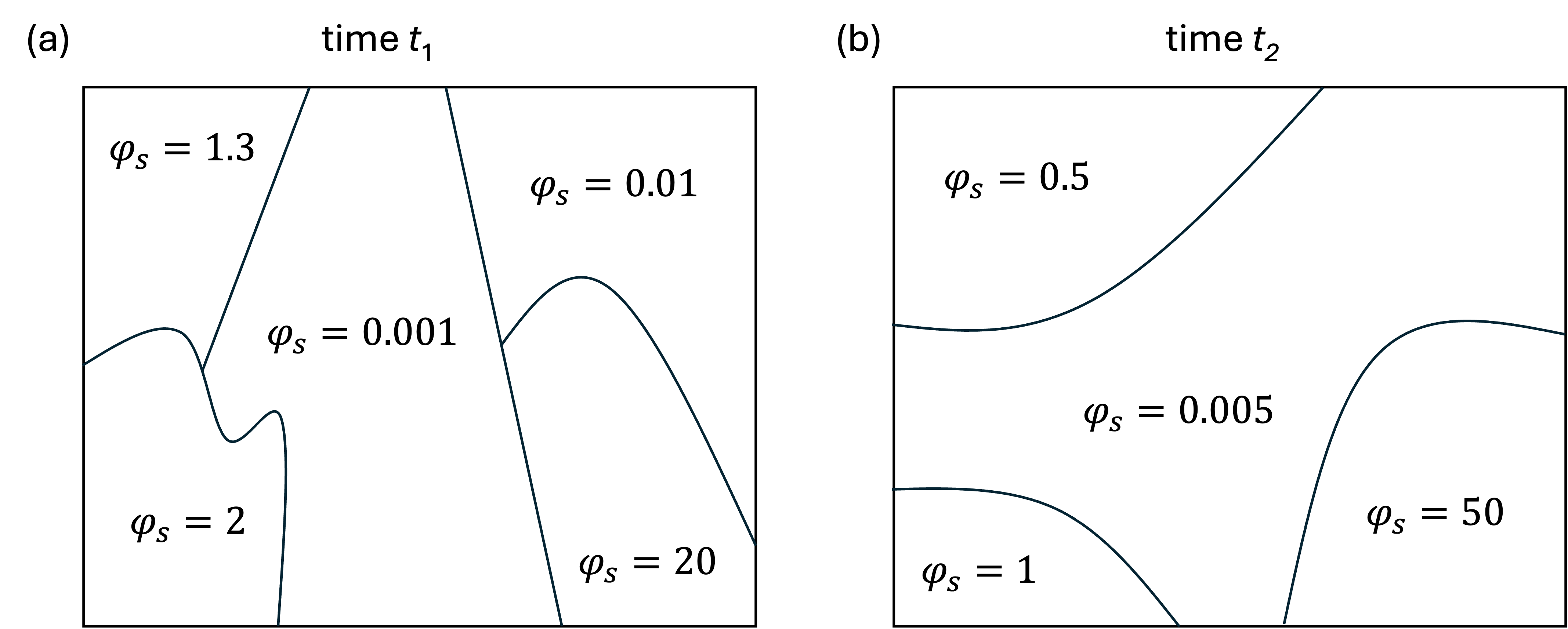
- System integrated information (written as φ_s): this helps identify exactly which patch, among many overlapping patches, is the “right” one to count as the seat of an experience at that moment.
- Cause–effect structure (C): this is like a detailed map of how parts of the patch influence each other across time. It’s meant to describe the “contents” of the experience (what it’s like).
- Structure integrated information (Φ, “Phi”): a summary number meant to reflect “how much” experience there is.
To do this, IIT imagines splitting the patch into parts in every possible way, checking how the parts depend on each other, and asking how much information the whole has beyond its pieces. It also tries different “zoom levels”:
- Space graining: how finely you chop the patch into parts.
- Time graining: how big the time steps are.
- State graining: how you describe the state of each part (like ON/OFF, or a small number of levels).
The “best” graining is the one that maximizes the measures above.
An everyday analogy:
- Think of a choir. If you listen to each singer alone, you get something. But listening to the whole choir together gives you harmonies that can’t be heard from solo voices alone. IIT tries to measure that “more-than-the-sum-of-its-parts” harmony and how it changes over time.
What the authors found and why it matters
1) Achievements and helpful evidence
- Brain “zap-and-listen” tests: In some studies, researchers briefly stimulate the brain (with a safe magnetic pulse) and record the electrical response. When people are awake, the response spreads and looks complex. When they’re asleep or under anesthesia, it stays simple and local. A score called PCI (Perturbational Complexity Index) captures this difference. This pattern fits IIT’s idea that conscious brains show both differentiation (many patterns) and integration (they hang together).
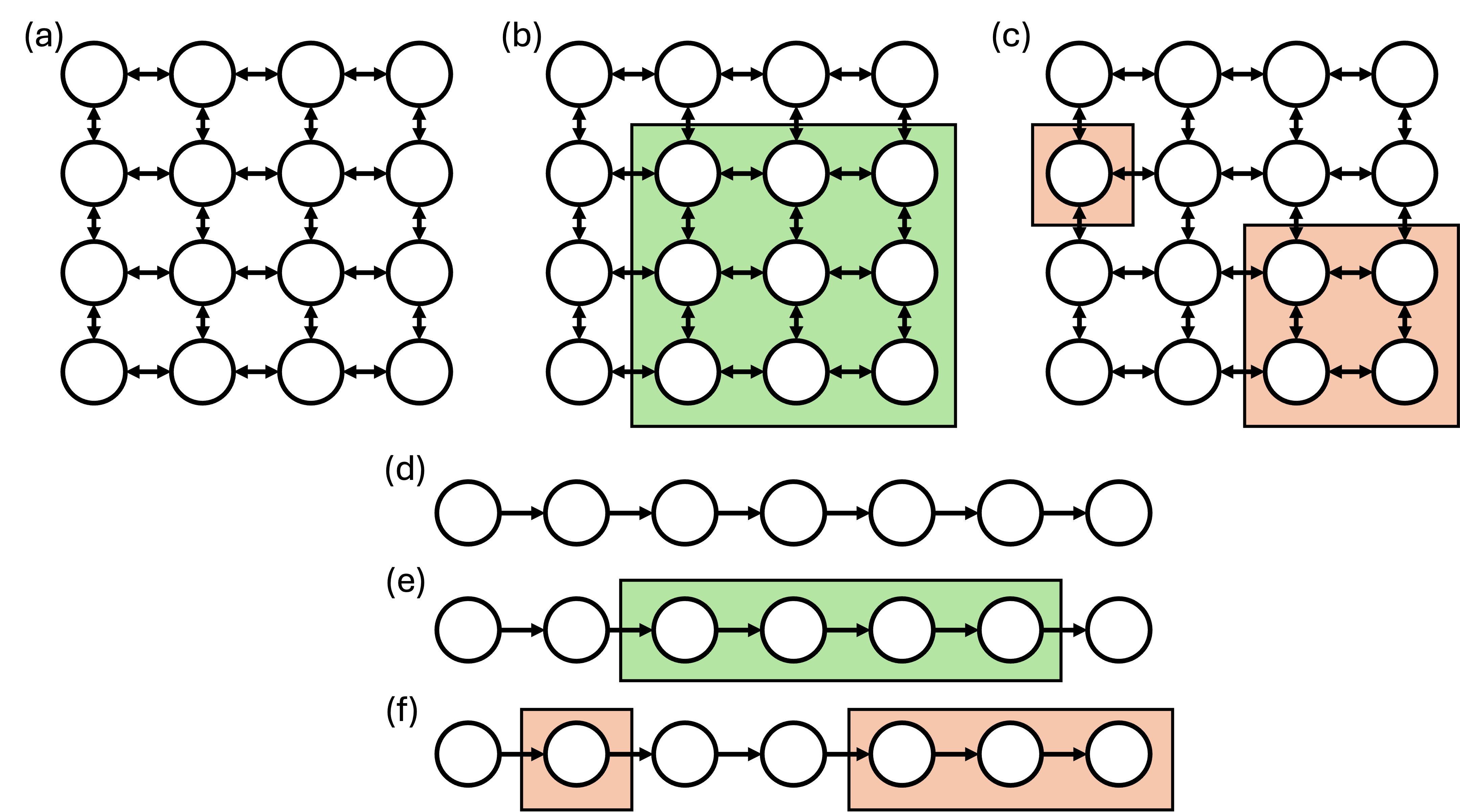
- Linking brain wiring to specific feelings: Simple network shapes can relate to common features of experience.
- A 2D grid-like network can line up with how we experience a visual “space” where spots and regions overlap in structured ways.
- A chain-like network that passes influence forward can line up with the feeling of time flowing.
Why this matters: IIT inspires useful tests and offers a way to connect brain structure to how things feel (like space and time), something few other theories try to spell out.
2) Common misunderstandings they clear up
- “High Phi = more consciousness” is too simple. The authors argue that one number can’t capture the whole “state of consciousness.” For example, a system might have a high Φ at a single instant but show no changes over time and have very plain contents. That’s like a bright, blank screen: intense in one way, empty in others. They suggest using several measures (e.g., average Φ over time, how much the contents change, and how complex the structure is) to better describe a state.
- About panpsychism (the idea that consciousness is everywhere): IIT implies that space and time are “tiled” by tiny substrates of (proto-)consciousness. Most of these would be microscopic and have almost no content—like “dust.” Only very special, complex arrangements (like certain brain networks) would create rich experiences. The authors argue this version isn’t as weird as it sounds and could be reframed as “proto-consciousness” for tiny systems, saving “consciousness” for richer cases.
3) Technical problems they highlight
- Not well-defined for real systems: The IIT math assumes that knowing just the “now” is enough to predict the next step (this is called “Markovian”). Real brains have memory: the next state can depend on what happened earlier, not just the present. That breaks the current formulas. Also, IIT depends on trying every possible way to chop space, time, and states—which is unrealistic for actual brains.
- Only toy models so far: IIT calculations have been done on simple, idealized setups (like small networks of on/off units), not on real brains.
- Proxies aren’t approximations: Scores like PCI are “proxies”—useful stand-ins inspired by IIT—but they are not precise approximations of Φ. You can’t currently compute true Φ for a real brain, so PCI can’t be a mathematically guaranteed “close match.”
- Physics mismatch: Fundamental physics describes the world as continuous fields (like rippling oceans), not as little on/off boxes. The authors say IIT may need a “field” version to line up with modern physics and with continuous brain signals.
What this means going forward
The paper suggests several ways to move IIT forward:
- Use multiple measures to describe a conscious state (not just Φ).
- Be clear about the “proto-consciousness” idea: tiny systems may have vanishingly small, simple experiences, while only very complex systems (like healthy human brains) have rich experiences.
- Redesign the math so it can work with systems that have memory and so it can rely more on the current state in a well-defined way.
- Be honest that data analyses use proxies, not true Φ.
- Explore a version of IIT written for continuous fields, to fit with physics and real brain signals.
Why it’s important
IIT is one of the most ambitious attempts to bridge feelings and physics. Even though parts of it don’t yet work for real brains, it has:
- Sparked useful clinical tools (like PCI).
- Suggested new ways to link brain wiring to what we experience (space, time).
- Pushed researchers to ask clearer questions about what a “state of consciousness” really is.
If the technical issues can be solved—or if IIT inspires better tools—science could get closer to explaining how matter gives rise to experience, and to building better methods for assessing consciousness in medicine and beyond.
Knowledge Gaps
Unresolved Knowledge Gaps, Limitations, and Open Questions
Below is a single, concise list of gaps and open questions highlighted or implied by the paper. Each item is framed to guide concrete next steps for future research.
- Formal well-posedness of the IIT algorithm for non-Markovian dynamics: how to uniquely define the required conditional distributions when future states depend on past histories, not just the present.
- Convergence and stability of proposed fixes for memoryful systems (e.g., imposing uniform priors over finite histories or future trajectories) in non-ergodic settings.
- Viable reformulation of IIT that depends only on instantaneous system structure (geometry/topology) while preserving the axioms’ intent and a coherent notion of causation.
- Extension of IIT to continuous state spaces and continuous time: define a maximum-entropy prior (or alternative) for continuous variables, establish discretization schemes, and prove boundedness as state-graining is refined.
- Field-theoretic reformulation: specify , cause–effect structures , and for continuous fields (e.g., electromagnetic field), ensuring gauge invariance, relativistic covariance, and compatibility with the Standard Model.
- Practical method to optimize over spatial, temporal, and state grainings (the maximization of and ): tractable search procedures, guarantees of invariance/consistency under coarse-graining, and computational complexity bounds.
- Operational identification of conscious “patch” boundaries in real systems when maximizing across overlapping candidates, especially under measurement noise and non-stationarity.
- Statistical estimation of the transition probability structures IIT requires in large systems: finite-sample estimators, confidence bounds, and robustness to biological noise and drift.
- Demonstration of IIT computations on realistic biophysical models (neurons, circuits, or mesoscale dynamics), not just toy, discrete, memoryless networks.
- Theoretical linkage between empirical proxies (e.g., PCI) and IIT quantities: derive approximation relationships with explicit error bounds, or construct new observables with provable connections to and .
- Experimental designs that uniquely test strong IIT claims (not explainable by “weak IIT” or competing theories such as GNWT), including falsifiable predictions tied to the IIT algorithm.
- Formalization of a multidimensional characterization of global conscious states from IIT outputs: precise definitions (e.g., mean over time, variance of elements of , structural/topological complexity metrics), computational recipes, and validation on empirical datasets.
- Integration of metacognition, self-related processing, and affect/suffering into IIT’s formalism: identify components of or new metrics that capture these dimensions beyond integration and differentiation.
- Thresholding and criteria for distinguishing “consciousness” from “proto-consciousness” within IIT’s panpsychist tiling, including principled thresholds and ethical implications for ascribing moral status.
- Scaling behavior and normalization of : characterize how scales with system size and architecture, formalize normalizations to avoid pathologies (e.g., expander grids), and specify phenomenological interpretations.
- Generalization of architecture-to-qualia mappings (space, temporal flow) to realistic, heterogeneous neural connectivity; assessment of robustness to parameter variation and uniqueness (do different architectures entail indistinguishable qualia?).
- Axiomatic completeness and uniqueness: prove that the IIT algorithm is the sole (or one of a constrained class of) formalism(s) satisfying the axioms, or enumerate principled alternatives with the same axioms.
- Justification and sensitivity of the maximum-entropy prior over states: test alternative priors and show how prior choices influence , , and , both theoretically and empirically.
- Methods to infer IIT-relevant cause–effect structures from data in real systems: intervention strategies, causal discovery algorithms tailored to IIT’s requirements, and validation against ground truth.
- Temporal multiscale phenomenology: extend IIT to support nested, multi-timescale experiences (as suggested by prior critiques), reconcile with the exclusion axiom, and specify how temporal grains are selected or combined.
- Physical consistency of IIT’s space–time “tiling” of substrates: reconcile moving boundaries of conscious patches with relativity and field dynamics, and clarify interactions between nested or adjacent substrates.
- Handling of nested systems and the exclusion/intrinsicality tension in practice: specify how external matter influences substrate selection and what empirical footprints this yields.
- Scalable algorithms for enumerating and evaluating partitions (including non-bipartitions) with error-controlled approximations, to make computation of and feasible in large systems.
- Constructible benchmarks: design hardware or simulated systems where IIT quantities are fully well-defined and measurable end-to-end to validate theory, algorithms, and proxies under controlled conditions.
Practical Applications
Below is a concise mapping of the paper’s main ideas to practical, real-world applications. Items are grouped by deployment horizon and, where useful, include sectors, likely tools/products/workflows, and key assumptions or dependencies.
Immediate Applications
- Clinical assessment of consciousness using PCI (acknowledged as a proxy)
- Sectors: Healthcare (neurology, anesthesiology), Medical devices
- Tools/workflows: TMS-EEG systems implementing the Perturbational Complexity Index; ICU/OR dashboards that flag low-complexity responses during anesthesia, sleep, or disorders of consciousness (DoC); clinician training modules emphasizing that PCI is a proxy rather than an approximation of IIT’s Φ
- Assumptions/dependencies: Availability of TMS-EEG hardware and trained operators; accepted clinical protocols; acknowledgment that PCI does not compute Φ and is compatible with multiple theories, not only IIT
- Standardized language and reporting for “proxy vs. approximation” in consciousness research
- Sectors: Academia, Policy (journals, funding agencies, IRBs/RECs)
- Tools/workflows: Author/reviewer checklists and journal guidelines requiring explicit labeling of Φ-inspired metrics as “proxies” unless formal approximation bounds are provided; grant and pre-registration templates that enforce clear terminology
- Assumptions/dependencies: Editorial and funder buy-in; community consensus on terminology to reduce overclaiming
- Benchmarking suites for IIT-inspired proxies across models and data
- Sectors: Academia, Software tools
- Tools/workflows: Open-source libraries to simulate toy networks (e.g., grids, chains) and diverse dynamical regimes; standardized datasets and leaderboards comparing PCI and other integration/segregation proxies under parameter sweeps; reproducible pipelines for cross-lab validation
- Assumptions/dependencies: Community participation; shared data standards; acknowledgment that proxies can move in different directions under the same manipulation
- Educational and clinical communication materials on IIT and its limitations
- Sectors: Education, Healthcare
- Tools/workflows: Short courses/CME modules for clinicians; lab curricula clarifying IIT axioms, the role of Φ, non-Markovian challenges, and panpsychism nuances; patient-family information sheets explaining what PCI-based assessments do and do not imply
- Assumptions/dependencies: Institutional support; careful framing to avoid conflating proxy outputs with “amount of consciousness”
- Multi-dimensional proxy dashboards for global states of consciousness (research use)
- Sectors: Academia, Neurotech
- Tools/workflows: Research dashboards combining multiple proxy dimensions (e.g., PCI, signal diversity measures, network integration/segregation indices, simple topological descriptors) to characterize states over time (mean, variance, stability)
- Assumptions/dependencies: Proxies are acknowledged as non-Φ; need for validation against behavioral and clinical endpoints; harmonized preprocessing across modalities (EEG/MEG/fMRI)
- Experimental paradigms linking network motifs to aspects of experience
- Sectors: Academia (computational/theoretical neuroscience)
- Tools/workflows: Toy-model simulations (grids/chains) to probe cause-effect structures and relate them to spatial/temporal phenomenology; perturbation studies (e.g., TMS, optogenetics in animals where appropriate) to examine changes in complexity metrics
- Assumptions/dependencies: Continued agreement that certain toy architectures illuminate aspects of phenomenology without computing Φ; careful interpretation to avoid over-extrapolation to human experience
- Ethical and communications guidance using “proto-consciousness” terminology
- Sectors: Policy, Industry (AI/neurotech), Public communication
- Tools/workflows: Institutional position statements and marketing guidelines distinguishing consciousness from “proto-consciousness” to avoid over-attributing moral status; communications playbooks for press releases and outreach
- Assumptions/dependencies: Ethical oversight bodies’ adoption; risk of misinterpretation mitigated by clear definitions
- Use of IIT-inspired complexity proxies as secondary endpoints in CNS trials
- Sectors: Pharma/biotech, Healthcare
- Tools/workflows: Incorporating PCI or related complexity proxies for sedation depth stratification or DoC subgrouping in early-phase trials; exploratory biomarker analyses alongside behavioral scales
- Assumptions/dependencies: Regulatory acceptance as exploratory endpoints; harmonized acquisition (TMS-EEG) and QA; recognition that proxies don’t quantify Φ
Long-Term Applications
- Field-theoretic reformulation of IIT and field-based biomarkers
- Sectors: Academia, Healthcare (diagnostics), Medical devices
- Tools/workflows: Theoretical frameworks mapping continuous electromagnetic field configurations to conscious contents/levels; MEG/EEG-derived field complexity indices better aligned with a field-based IIT; device software that computes validated field metrics bedside
- Assumptions/dependencies: A mathematically well-defined IIT formulation for continuous fields; empirical bridge models linking field metrics to clinical outcomes; regulatory validation
- Well-defined IIT algorithm for non-Markovian systems and realistic models
- Sectors: Academia, HPC/Software, Healthcare (eventual)
- Tools/workflows: Algorithmic advances (e.g., current-state-only formulations) enabling computation on biophysically realistic, non-Markovian brain models; HPC toolchains to evaluate cause-effect structures and Φ-like quantities across grainings
- Assumptions/dependencies: Resolution of non-Markovian and graining problems; proofs of convergence and uniqueness; tractable computational costs
- Clinically actionable, multi-dimensional “consciousness profile” monitors
- Sectors: Healthcare, Medical devices
- Tools/workflows: Real-time systems integrating multiple validated dimensions (e.g., mean level, temporal variability of contents, topology/geometry complexity) into a “profile” for anesthesia management, ICU monitoring, and DoC tracking
- Assumptions/dependencies: Validation against outcomes; human factors engineering; reimbursement pathways; robust artifact handling
- Closed-loop neuromodulation guided by cause-effect structure targets
- Sectors: Healthcare (neuromodulation, psychiatry, pain), Neurotech
- Tools/workflows: Stimulation protocols (TMS, tDCS/tACS, DBS) adjusted to steer network architectures toward desired phenomenology (e.g., mitigating pathological temporal flow in certain disorders, modulating pain-related contents)
- Assumptions/dependencies: Reliable mapping from structural/dynamical features to phenomenology; individualized models; safety and regulatory approvals
- Design and governance frameworks for AI/robotics “consciousness risk”
- Sectors: Policy, Robotics, AI
- Tools/workflows: Risk assessment checklists distinguishing proxy complexity from consciousness; architectural guidelines to avoid inadvertently creating systems with complex cause-effect structures if undesirable; governance incorporating “proto-consciousness” terminology
- Assumptions/dependencies: Broader consensus on ethical thresholds; technically sound metrics with low false positives; coordination with existing AI safety standards
- Improved proxy development informed by IIT but theory-agnostic validation
- Sectors: Academia, Industry (neurotech/AI)
- Tools/workflows: Next-generation proxies that integrate integration/segregation, temporal dynamics, and topological features; model- and data-driven validation frameworks that compare against alternative theories (e.g., Global Neuronal Workspace)
- Assumptions/dependencies: Availability of multimodal datasets; community-agreed benchmarks; statistical rigor to avoid overfitting
- Personalized anesthesia and sedation optimization using multi-dimensional profiles
- Sectors: Healthcare, Pharma/biotech
- Tools/workflows: Pre-op baselining and intra-op titration guided by validated multi-dimensional consciousness metrics; predictive analytics for emergence and postoperative delirium
- Assumptions/dependencies: Prospective trials; integration with anesthesia information systems; clinician adoption
- Rehabilitation and communication strategies for DoC informed by dynamic profiles
- Sectors: Healthcare, Assistive technology
- Tools/workflows: Longitudinal tracking of patients to identify windows of higher complexity/state variability for targeted stimulation or communication attempts; adaptive protocols for therapy timing
- Assumptions/dependencies: Demonstrated prognostic value; ethical safeguards; device accessibility
- Curricular and standards development around an IIT-compatible theoretical core
- Sectors: Education, Professional societies
- Tools/workflows: Interdisciplinary curricula combining phenomenology, information theory, physics of fields, and neurobiology; standards bodies codifying best practices for reporting and interpreting IIT-inspired metrics
- Assumptions/dependencies: Consensus-building across disciplines; sustained funding and faculty expertise
- Hardware and software co-design to modulate network motifs linked to phenomenology
- Sectors: Neurotech, Computational neuroscience
- Tools/workflows: Co-designed stimulation/recording systems and control algorithms that can shape network connectivity patterns (e.g., grid-like vs chain-like motifs) to study or therapeutically influence aspects of subjective experience
- Assumptions/dependencies: Safe, precise neuromodulation; reliable inference of motif changes from recordings; translational pathways from basic to clinical research
These applications pivot on the paper’s core contributions: distinguishing proxies from approximations, advocating multi-dimensional characterizations of consciousness, clarifying IIT’s panpsychism, recognizing current mathematical limitations (Markovian assumptions and grainings), and encouraging reformulation toward continuous field descriptions. Feasibility hinges on honest framing (especially in clinical and public settings), rigorous validation, and cross-sector collaboration.
Glossary
- Bipartitions: A division of a system into two disjoint parts used when evaluating integration or partition-based measures. "All partitions into an arbitrary number of parts are considered (not just bipartitions as shown here)."
- Cause-effect structure (C): IIT’s formal description of the informational relationships among parts of a system that correspond to the contents (quality) of experience. "The key outputs of the algorithm are: system integrated information ; cause-effect structure ; and structure integrated information ."
- Causal mechanisms: The underlying causal interactions that determine how current states lead to future states in a system. "The above quantities are computed based on the current state of the patch and the causal mechanisms that exist within the patch at the current time, as determined by transition probability matrices."
- Composition (IIT axiom): The principle that each experience has internal structure made of distinguishable parts and relations. "Composition. Experience is structured: it is composed of distinctions (distinct phenomenal components) and the relations that bind them together, yielding a phenomenal structure that feels the way it feels."
- Continuous fields: Physical entities whose values vary continuously in space and time, forming the basis of modern fundamental physics. "In fundamental physics, the standard model is built from continuous fields, not discrete logic gates or neurons"
- Dynamic core hypothesis: An early proposal linking integrated and differentiated neural dynamics to conscious experience. "An appropriate starting point is the dynamic core hypothesis proposed by Giulio Tononi and Gerald Edelman in the late 1990s \citep{Tononi1998}."
- Electromagnetic field: The fundamental field described by Maxwell’s equations; proposed as uniquely suited to support complex configurations relevant to consciousness. "the electromagnetic field is unique in that its physics enables complex configurations to arise \citep{Barrett2014}"
- Exclusion (IIT axiom): The principle that each experience is definite and excludes simultaneous overlapping experiences. "Exclusion. Experience is definite: it is this whole."
- Expander grids: Highly connected grids of logic gates used in critiques to argue for counterintuitive high Φ in inactive systems. "the often-cited `expander grids' no longer cause the severe problems for the theory that were identified by \citet{Aaronson}."
- Existence (IIT axiom): The principle that experiences are real and occur. "Existence. Experience exists: For each experience, there is something."
- General relativity: Einstein’s theory of gravitation formulated as a continuous field theory. "for example Einstein's theory of mass and gravitation (general relativity), Maxwell's theory of electromagnetism, and the standard model of particle physics"
- Global neuronal workspace theory: An alternative framework positing that globally broadcast information underlies conscious access. "these results are equally compatible with alternative weaker versions of IIT, as well as, arguably, with other theories of consciousness such as global neuronal workspace theory \citep{Farisco2023,Mudrik2025}."
- Grainings: The choices of spatial, temporal, and state discretizations used to model a system for IIT calculations. "Importantly, the output of the algorithm will depend on three `grainings' \citep{Marshall2024}"
- Granger causality: A statistical measure of directed influence based on predictability, often used to approximate information flow. "Furthermore, Granger causality is often used as an approximation to transfer entropy, that specifies just the contribution from fitting a linear model to the data and neglecting non-linear components in the dynamics \citep{Barnett2015}."
- Information (IIT axiom): The principle that each experience is specific, distinguishing itself from alternatives. "Information. Experience is specific: it is this one."
- Integrated information theory (IIT): A theory deriving quantitative and structural characterizations of consciousness from phenomenological axioms. "Integrated information theory (IIT; \citealt{Albantakis2023,Tononi2016}) continues to garner substantial interest and attract controversy"
- Integration (IIT axiom): The principle that each experience is unitary and irreducible to independent parts. "Integration. Experience is unitary: it is a whole, irreducible to separate experiences."
- Intrinsicality (IIT axiom): The principle that experience exists for itself, independent of external observers’ frames of reference. "Intrinsicality. Experience is intrinsic: it exists for itself."
- Markovian dynamics: Memoryless dynamics in which the next state depends only on the current state. "The toy model systems on which the IIT algorithm has been applied are composed of a finite set of binary units that interact with each other and update their states in discrete time, according to a memoryless (Markovian) dynamics."
- Maximum entropy prior: An assumption that all states are equally likely a priori when computing informational relations. "Crucially, these are calculated assuming that all states are a priori equally likely (in technical language, a `maximum entropy' prior)."
- Non-ergodic dynamics: Processes where time averages need not equal ensemble averages, which can prevent convergence of certain estimates. "specifically there is no convergence when dynamics are non-ergodic, such as on a random walk"
- Non-Markovian dynamics: Dynamics with memory where future states depend on past states beyond the present. "the state dynamics have memory, i.e., are non-Markovian"
- Ontological dust: IIT’s term for pervasive micro-level, minimal forms of consciousness. "Throughout the physical universe, there are mostly only micro forms of consciousness, or `ontological dust' \citep{Tononi2022}"
- Panpsychism: The metaphysical view that consciousness is fundamental and widespread, in IIT’s case via space–time tiling of substrates. "IIT has been frequently criticised for implying panpsychism \citep{Hakwan}."
- Perturbational Complexity Index (PCI): An empirical proxy quantifying the diversity/complexity of TMS-evoked EEG responses to assess conscious level. "In these experiments, this effect was quantified using the perturbational complexity index (PCI), which quantifies the signal diversity of the EEG response to the TMS \citep{Casali2013}."
- Phenomenology: The structure and qualities of subjective experience used by IIT as its starting point. "No other theory tackles the question of identifying the physical substrate of consciousness by starting from the fundamentals of phenomenology"
- Physical causal structure: The set of actual causal interactions among system components, distinct from IIT’s abstract cause-effect structure. "(For understanding IIT, it is important to remember that the cause-effect structure is distinct from physical causal structure, the latter usually being defined as a set of physical causal interactions between components within a system.)"
- Planck scale: The extremely small scale where quantum gravity may render spacetime discrete. "At the Planck scale, where quantum gravity is relevant, it is possible that space and time become discrete"
- Proxy measures: Practical stand-ins used in experiments when theoretical quantities like Φ are ill-defined or intractable. "What has been applied are proxy measures, that have some, but not all of the properties required by IIT"
- Qualia: The subjective, qualitative aspects or “feels” of experience. "IIT can link neural structures to qualia"
- Standard model of particle physics: The quantum field theory describing fundamental particles and interactions (excluding gravity). "for example Einstein's theory of mass and gravitation (general relativity), Maxwell's theory of electromagnetism, and the standard model of particle physics \citep{Barrett2014, Barrett2016}."
- Stationarity: The assumption that a process’s statistical properties are time-invariant, used for information-theoretic estimation. "Various methods are used to empirically approximate (estimate) what would be the transfer entropy in the limit of infinite data, under assumptions of stationarity."
- Structure integrated information (Φ): IIT’s scalar summarizing the degree of integrated information across the cause-effect structure, intended to index quantity of consciousness. "Finally, the structure integrated information sums up the integrated information associated with each set of parts in the cause-effect structure."
- Substrate of consciousness: The specific physical system or patch whose current state entails a conscious experience. "Patch is a substrate of consciousness if and only if its system integrated information is greater than that of all other patches that overlap with "
- System integrated information (φ_s): The IIT quantity used to identify which system or patch constitutes the conscious substrate at a given time. "The system integrated information is used to identify precisely where within a system consciousness arises."
- Tiling (space–time tiling): IIT’s implication that space and time are entirely covered by non-overlapping substrates of consciousness. "IIT therefore implies a tiling of space and time with substrates of consciousness (with no gaps)"
- Toy model systems: Simplified discrete-time, discrete-state network models used to demonstrate IIT constructs. "The toy model systems on which the IIT algorithm has been applied are composed of a finite set of binary units"
- Topology: The abstract pattern of connections/overlaps; used to relate network architecture to aspects of experience. "has exactly the same topology (geometrical structure) as the overlaps between the various spots one can distinguish on the spatial canvas of one's visual experience \citep{Haun2019}."
- Transition probability matrices: Matrices specifying probabilities of transitioning from current to future states, used to characterize system dynamics. "The above quantities are computed based on the current state of the patch and the causal mechanisms that exist within the patch at the current time, as determined by transition probability matrices."
- Transcranial magnetic stimulation (TMS): A noninvasive method to perturb cortical activity with magnetic pulses. "electroencephalographic (EEG) response to transcranial magnetic stimulation (TMS; \citealt{Massimini2009})."
- Transfer entropy: An information-theoretic measure of directed information flow between processes. "One measure from information theory that is frequently computed in approximation is the transfer entropy between two variables \citep{Schreiber2000}."
- Weak and strong IIT: A distinction between a metaphysically committed identity of IIT quantities with experience (strong) and more conservative correlational claims (weak). "It has thus recently been proposed to make a distinction between
weak' andstrong' flavours of IIT \citep{Mediano2022}."
Collections
Sign up for free to add this paper to one or more collections.