- The paper presents a novel hybrid system that integrates content-based k-NN and matrix completion to address the cold-start challenge in selecting closure models for multiphase CFD.
- It achieves significant performance improvements with MRR@1 > 0.47 and lower regret compared to expert-designed and popularity-based baselines.
- The method leverages detailed case metadata to personalize recommendations even under high data sparsity, making it scalable for industrial CFD applications.
Hybrid Cold-Start Recommender Systems for Closure Model Selection in Multiphase CFD
Selection of appropriate closure model combinations remains a central bottleneck in multiphase Computational Fluid Dynamics (CFD), particularly within the Eulerian-Eulerian framework. Industrial workflows often face a combinatorial model space—hundreds of thousands of possible combinations—where traditional trial-and-error or expert-driven approaches become unsustainable due to the simulation costs and risks of numerical instability. The paper "Hybrid Cold-Start Recommender System for Closure Model Selection in Multiphase Flow Simulations" (2604.09112) addresses this challenge by reframing closure model selection as a cold-start recommendation problem in a data-sparse, high-cost scientific setting.
The authors formalize CFD closure model selection as a user–item recommendation task, in which CFD cases are 'users', closure model combinations are 'items', and explicit relevance feedback is available as aggregated performance scores. The central technical contribution lies in proposing a hybrid recommender architecture unifying metadata-driven content-based methods with collaborative filtering via matrix completion, enabling personalized closure model recommendations for new ('cold-start') CFD simulation scenarios.
The empirical backbone of the study is a comprehensive simulation matrix covering 13,600 CFD runs, spanning 136 validation cases and 100 diverse closure model combinations. Each element in this matrix comprises a scalar performance score between 0 and 1, derived from a fuzzy-logic aggregate of physical accuracy metrics or set to zero if numerical instability occurred (e.g., diverging or oscillatory solutions). Visualization of this matrix reveals strong variability in model-case interactions and a prevalence of instability-induced failures:
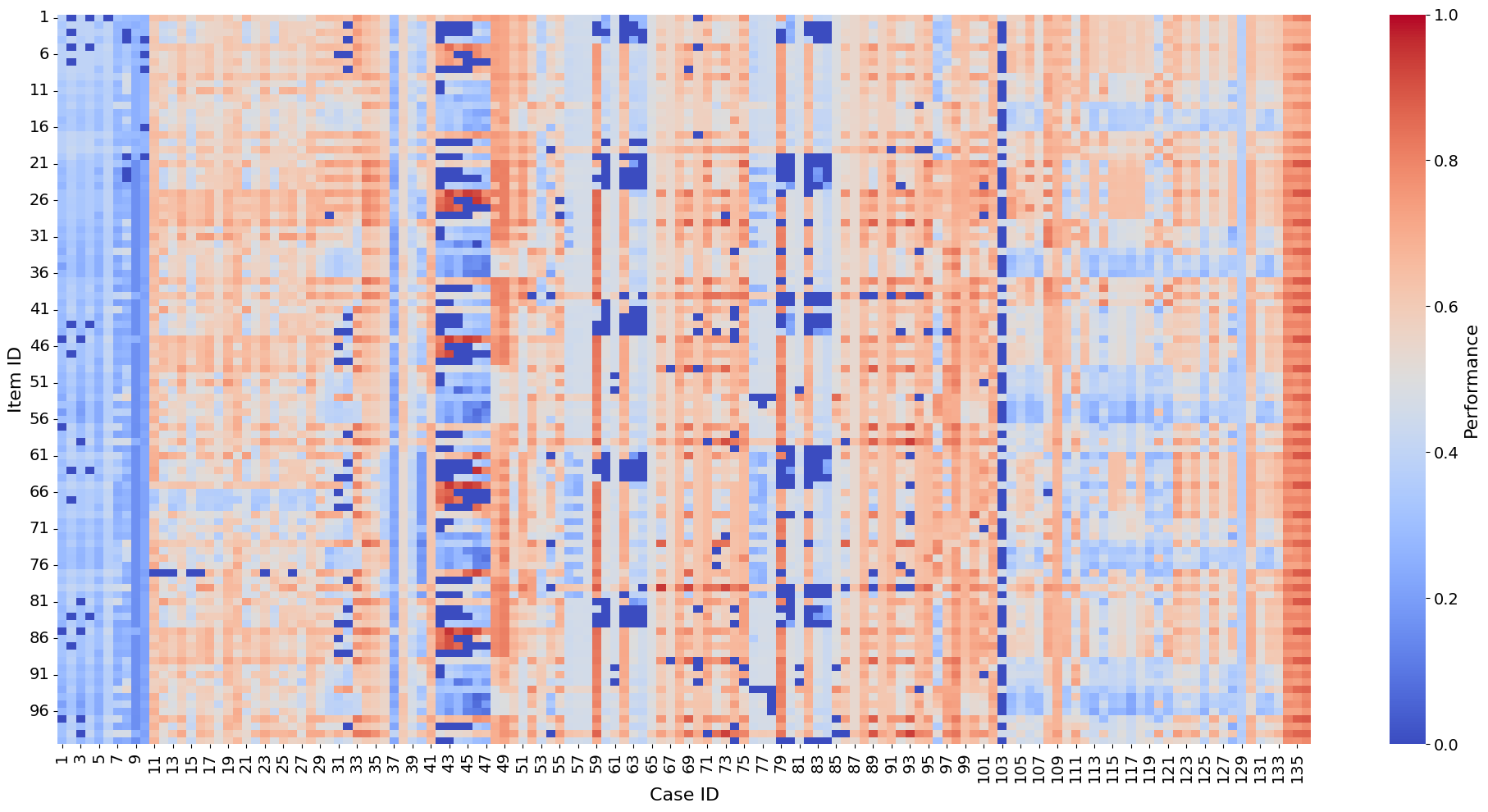
Figure 1: The ground-truth performance matrix for 100 closure model items by 136 CFD cases, with zero values indicating numerically unstable simulations.
Case metadata consists of 27 features (17 categorical, 6 continuous)—fully specified prior to simulation—encoding experimental configuration, flow regimes, geometric scalars, and input conditions. Exploratory analysis using MDS projections demonstrates clustering in this feature space, but with only partial correspondence to latent performance space similarity, highlighting the need for architectures that exploit both explicit case features and collaborative performance data.
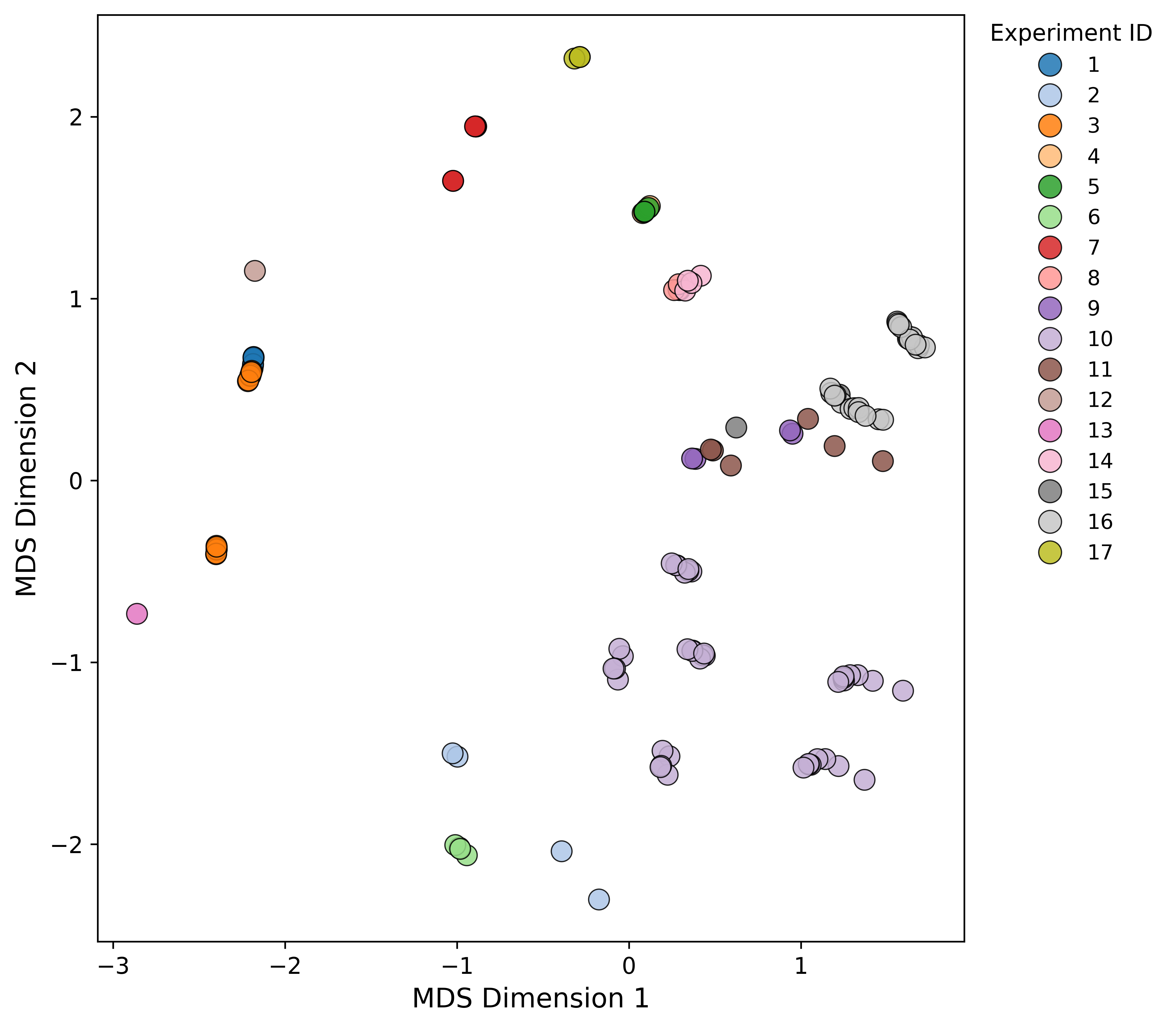
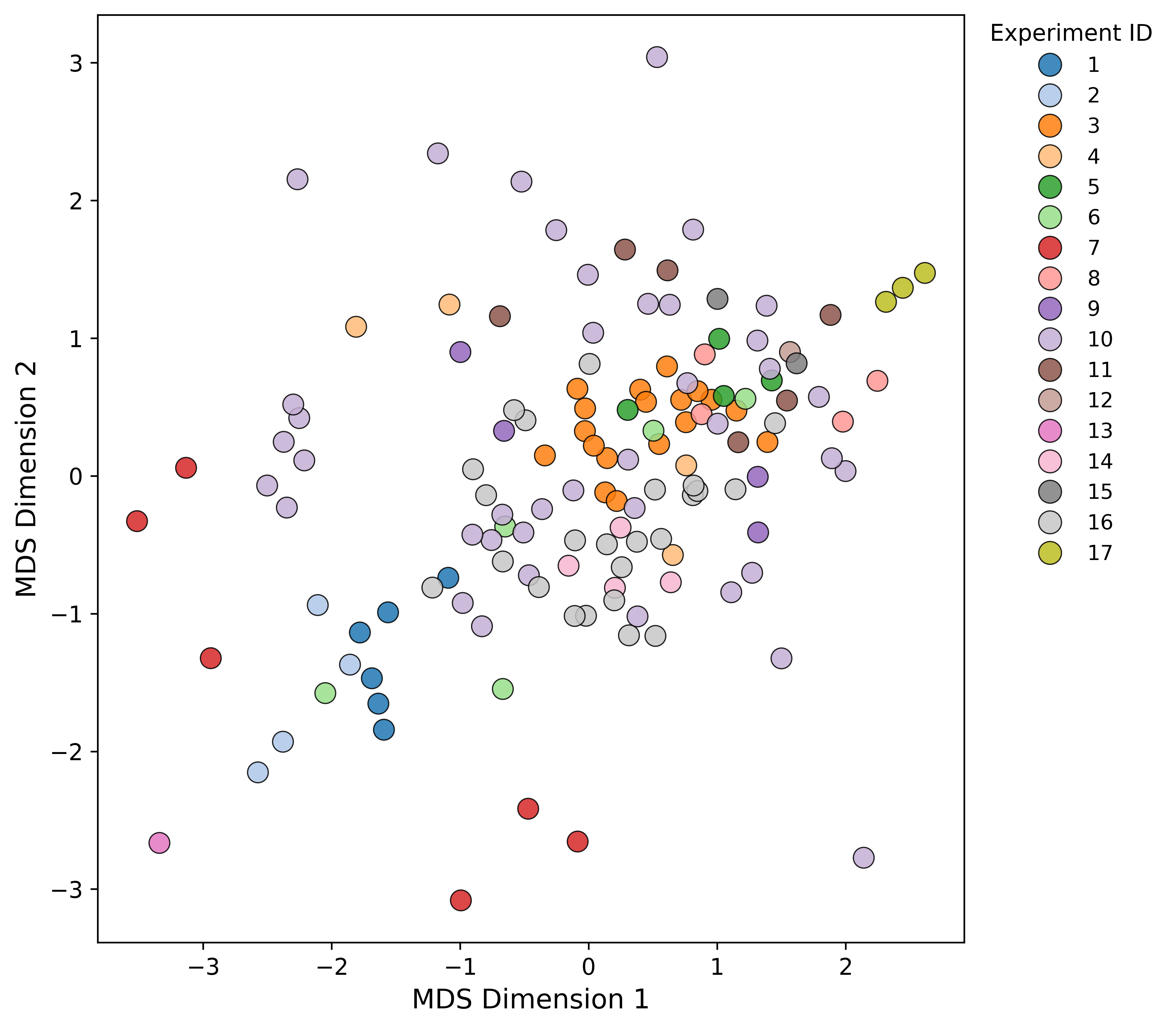
Figure 2: MDS projection of CFD cases in feature space, revealing experiment-specific clusters and the incomplete mapping between metadata and performance similarity.
Hybrid Recommender Architecture
Collaborative Filtering and Matrix Completion
Standard collaborative filtering (e.g., matrix factorization, copula-based imputation) leverages the observed performance matrix to extrapolate unobserved case–model outcomes. This approach is severely limited in cold-start settings: new cases (unseen columns) lack entries, precluding latent representation inference. The authors adopt gcimpute, a Gaussian copula matrix completion method, given its empirical efficacy on related CFD datasets.
Content-Based Neighborhood Modeling
To address the cold-start regime, content-based approaches are implemented via k-nearest neighbor retrieval in the concatenated case metadata space (with normalizations and one-hot encoding). Multiple distance metrics (Euclidean, cosine, Gower) are evaluated adaptively per experiment. This enables construction of a performance prediction for a query case by averaging over its nearest neighbors in feature space, circumventing the need for case-specific prior simulations.
Integrated Pipeline
The hybrid architecture first imputes the sparse observed performance matrix, then retrieves the k nearest feature-space neighbors for the query case and aggregates their imputed or observed performances to score and rank closure model candidates. The pipeline is illustrated schematically:
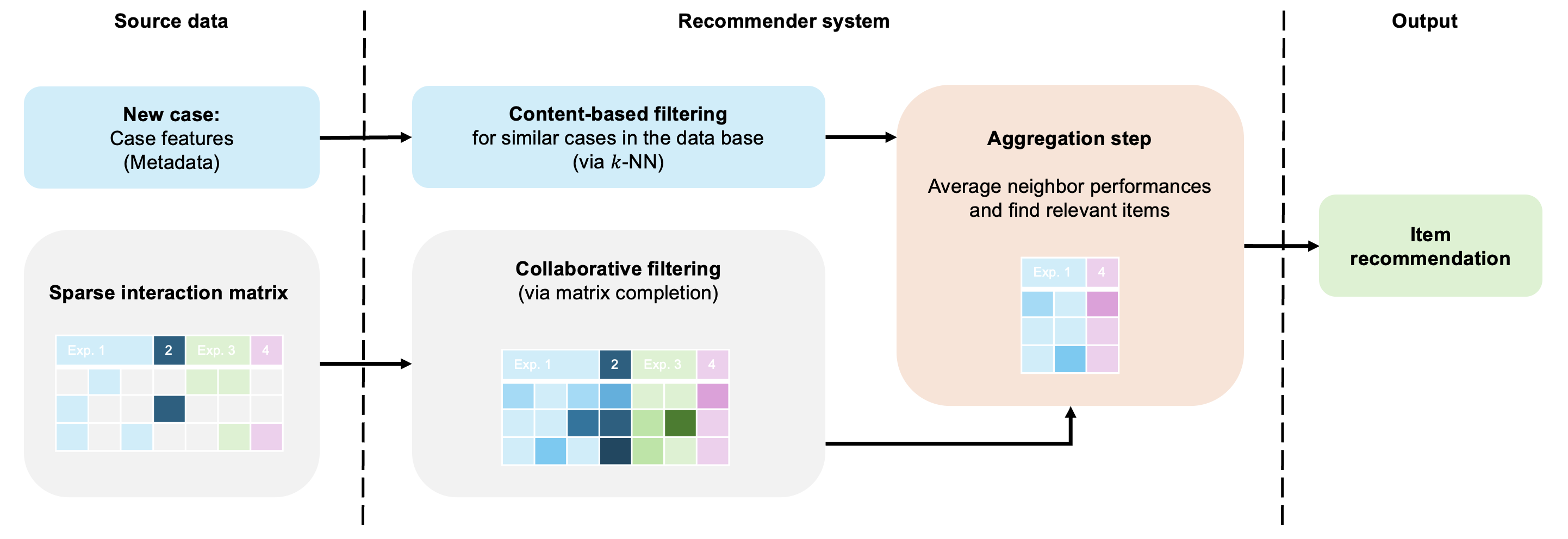
Figure 3: Overview of the hybrid recommender pipeline, integrating cold-start content-based k-NN with collaborative matrix completion for closure model selection.
Evaluation Framework
A rigorous experiment-level nested cross-validation protocol is employed. Each of the 17 experiments, representing real-world test cases, is held out as a 'cold-start' target (i.e., no simulation information from any sub-case is seen during training or hyperparameter selection). Extensive sparsification up to 90% is performed on the performance matrix to mimic realistic data poverty. Metrics focus on both ranking fidelity—mean reciprocal rank at top-k (MRR@k)—and regret, i.e., degradation in performance relative to oracle best model selection.
Relevance is defined dynamically; items within a 0.05 performance window of the per-case optimum are considered relevant. This nuanced relevance assignment allows robust evaluation of recommender recall and capacity to surface strong but not necessarily unique candidates:
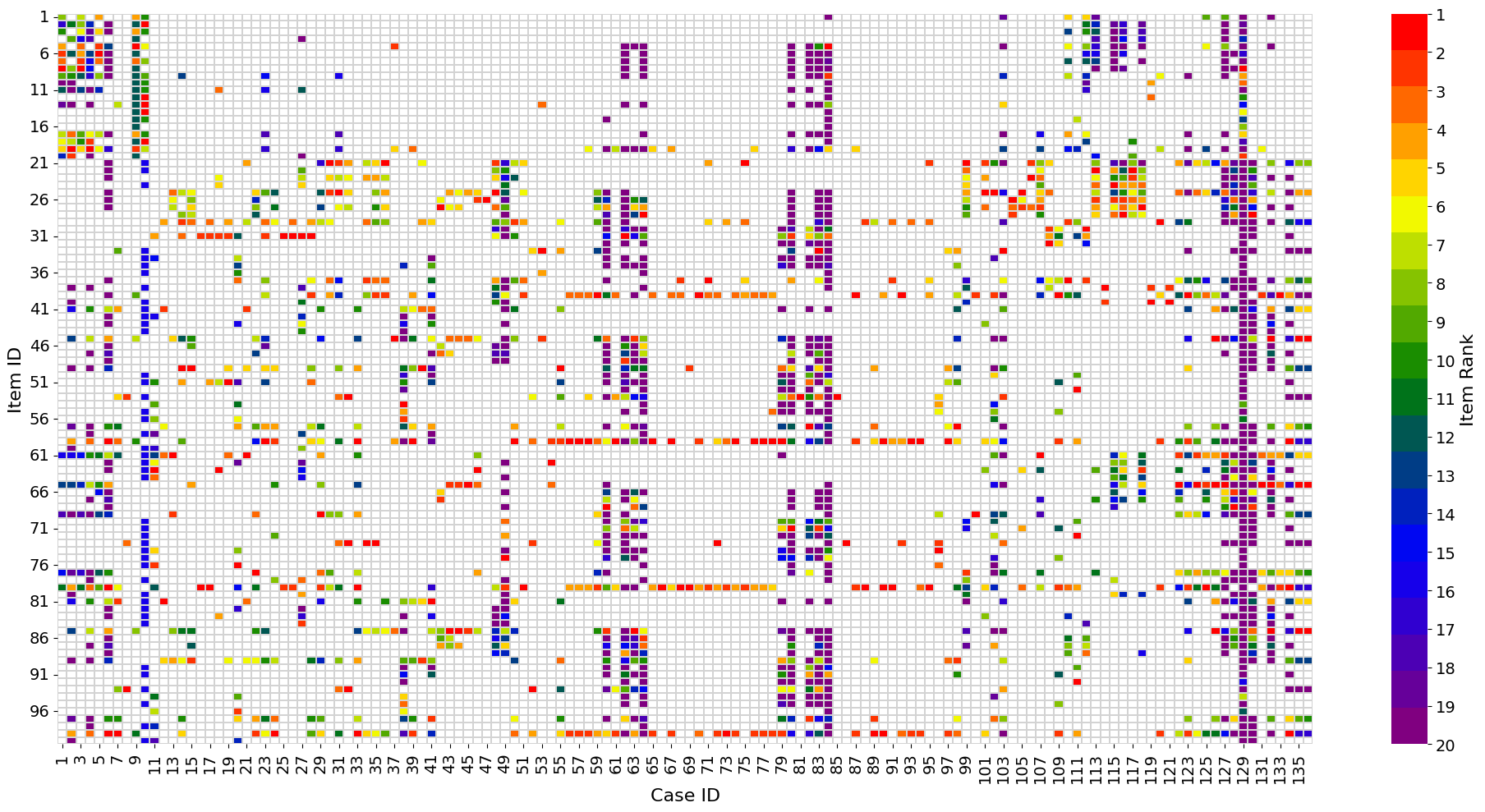
Figure 4: Visualization of relevant items per case (within the defined performance threshold of the optimum), colored by predicted ranking.
Ranking Metrics
The hybrid recommender consistently outperforms baseline approaches across sparsity levels (up to 90%), including a popularity-based item baseline (based on mean observed or imputed performance) and a commonly used expert-designed reference model. For example, at 75% sparsity, the hybrid approach achieves >0.47 MRR@1 and >0.57 MRR@3, significantly exceeding both baselines.
Strong case-specific adaptivity is evident. In 12 out of 17 test experiments, the recommender's RR@1 dominates both popularity and the reference model (Figure 5). The ablation comparing popularity from imputed entries versus k-NN hybridization confirms the primary advantage derives from metadata-driven neighborhood selection, not merely from collaborative imputation.
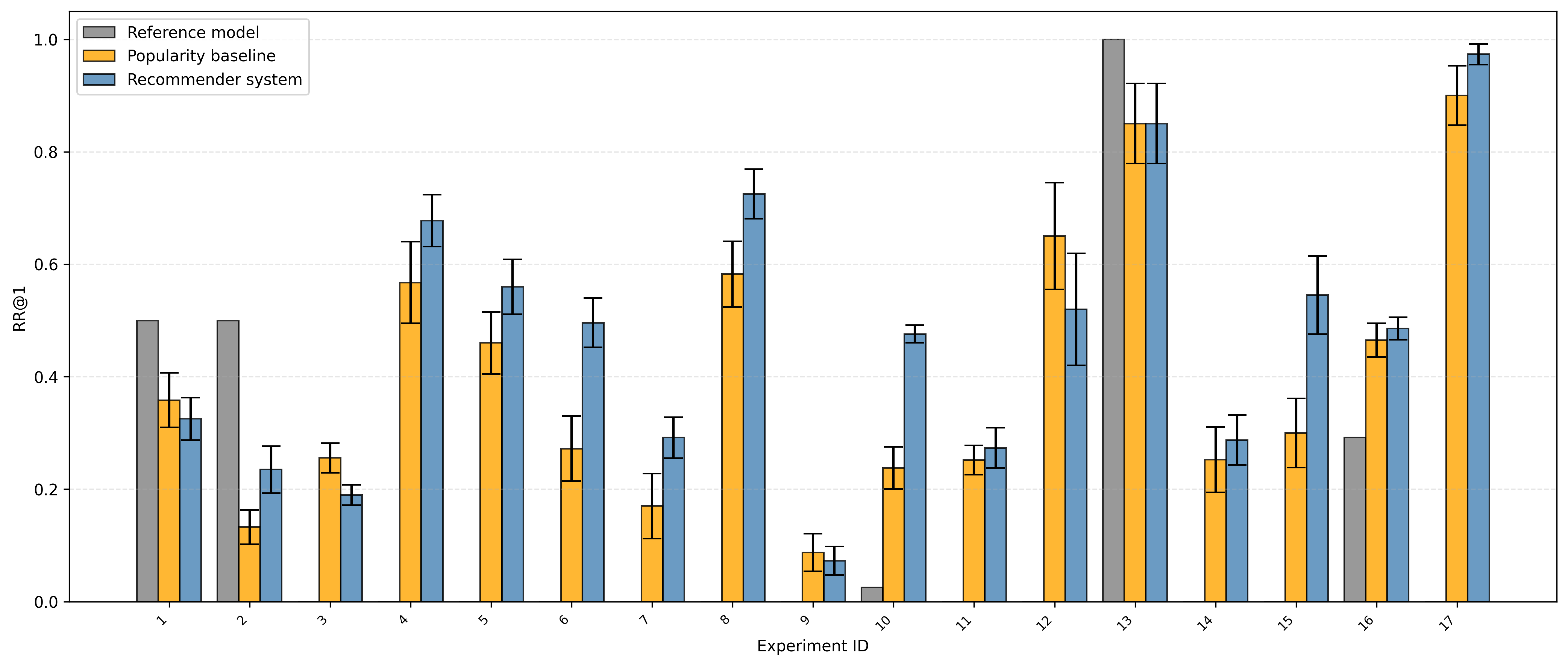
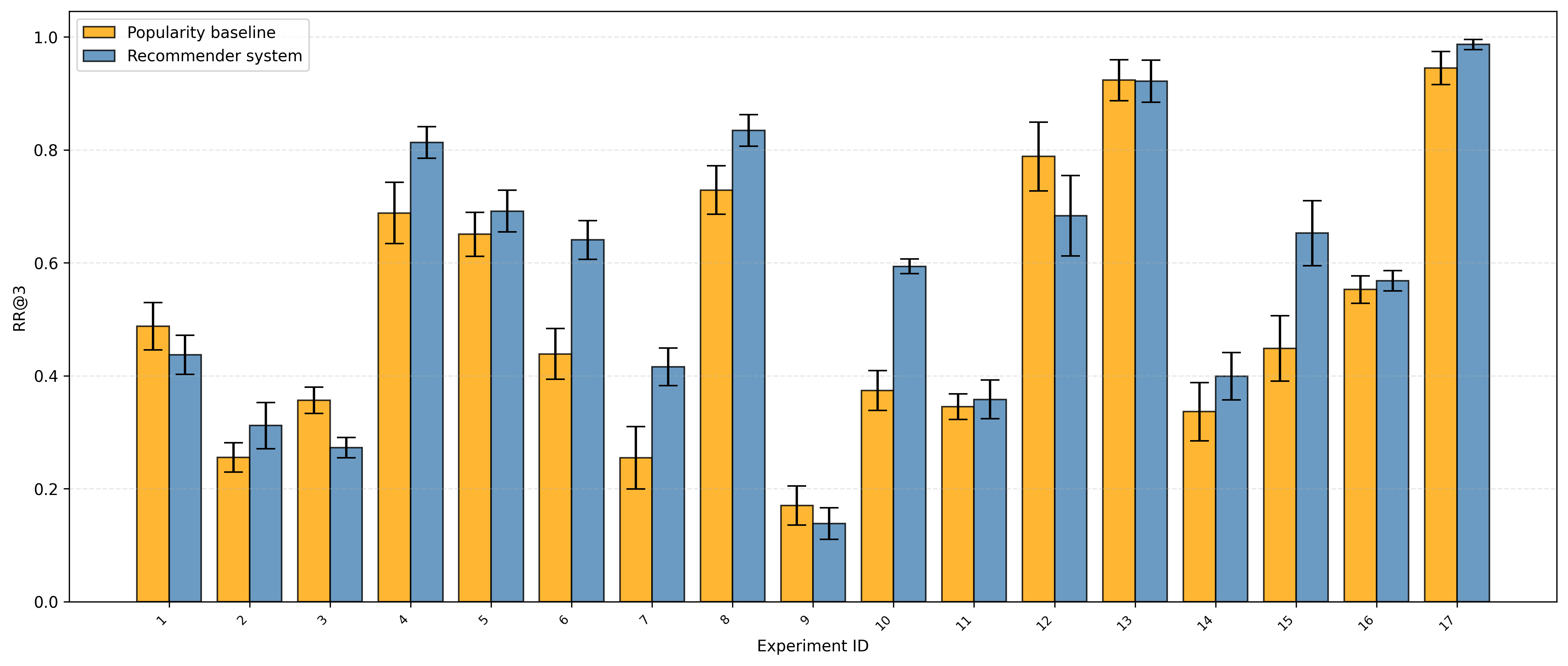
Figure 5: RR@1 per experiment; the hybrid recommender notably outperforms both the reference model and the best popularity-based item derived from a 75% sparse matrix.
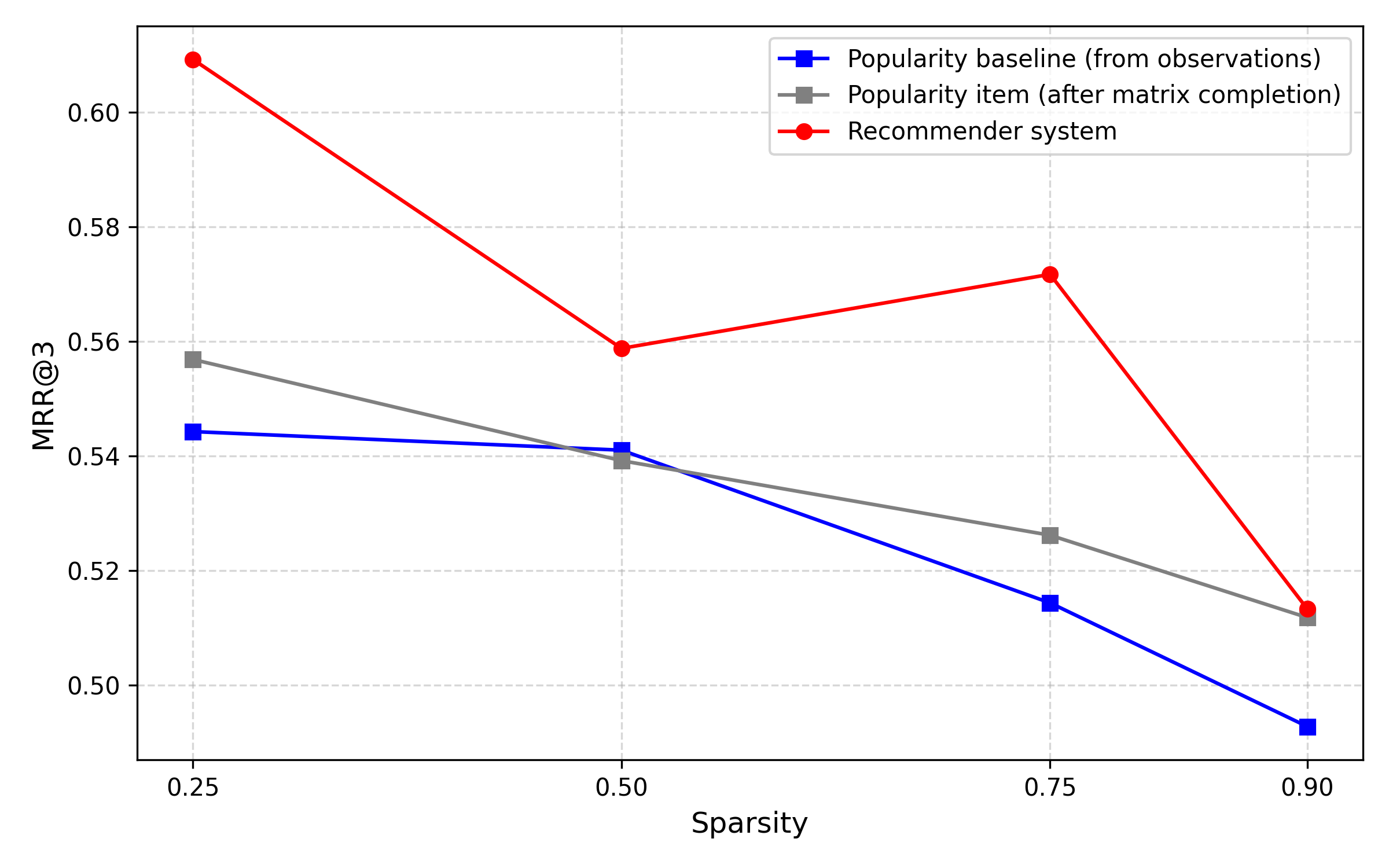
Figure 6: MRR@3 across varying sparsity; the hybrid system maintains superior ranking performance as sparsity increases.
Regret Analysis
The regret metric directly quantifies practical risk—the empirical performance loss when using the recommender (or baselines) rather than the ground-truth optimal model. Across sparsity regimes, the hybrid recommender yields the lowest mean regret, maintaining improvements even as data becomes highly sparse. For moderate sparsity (s=0.75), mean regret for the hybrid approach is 0.094 versus 0.110 (popularity) and 0.131 (reference model).
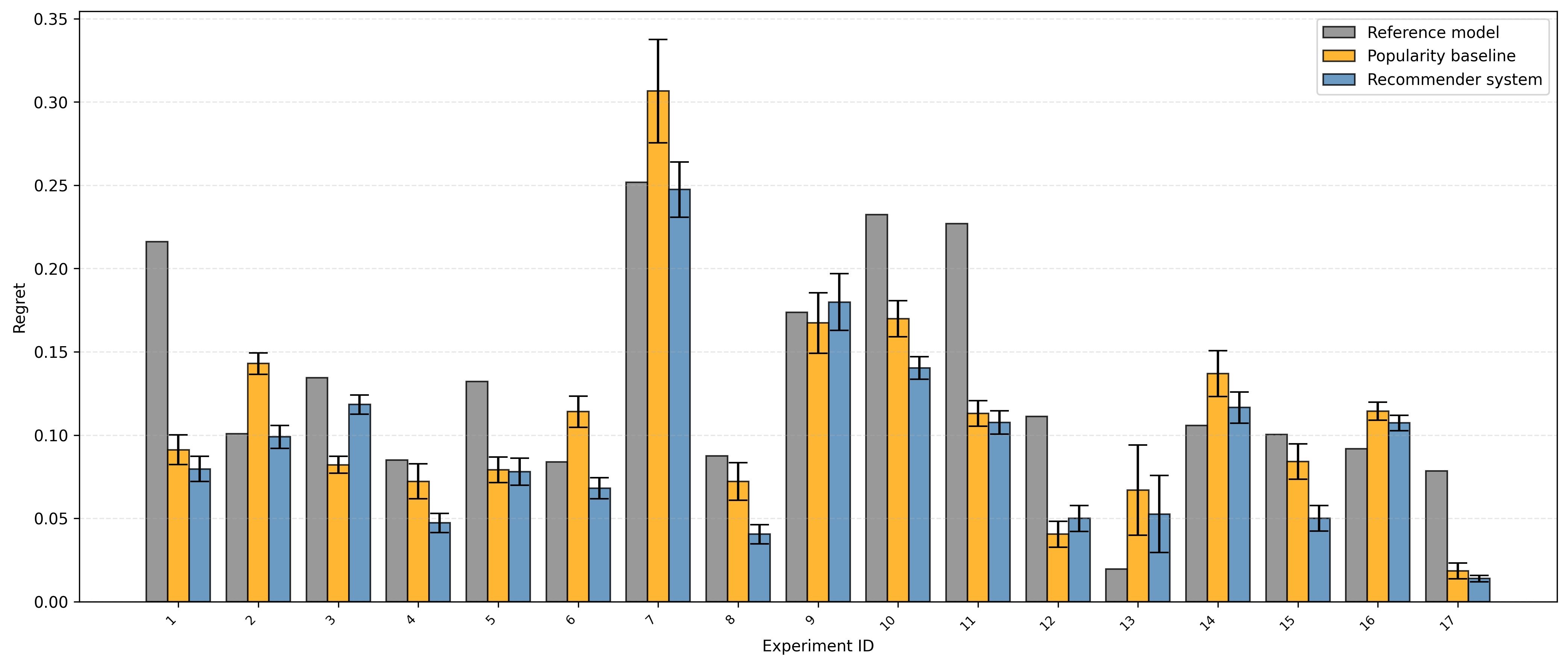
Figure 7: Per-experiment regret values, demonstrating that the recommender generally minimizes performance risk compared to baselines.
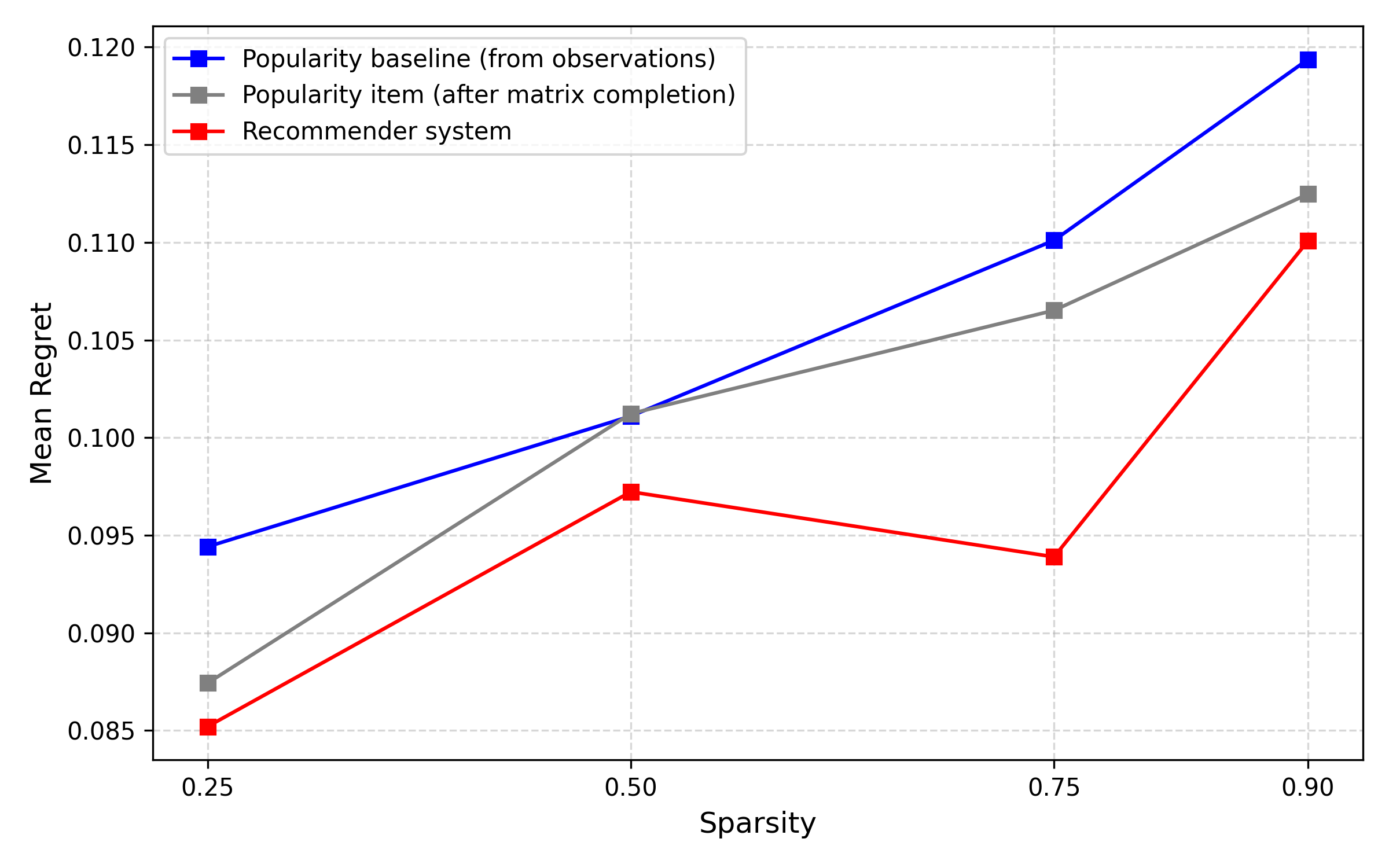
Figure 8: Averaged regret for all methods across sparsity regimes; the recommender system consistently exhibits the lowest overall regret.
Qualitative analysis of specific CFD cases with high and low recommender regret elucidates failure modes—e.g., overprediction of gas void fraction in high regret cases—versus near-optimal flow field predictions in low regret scenarios.
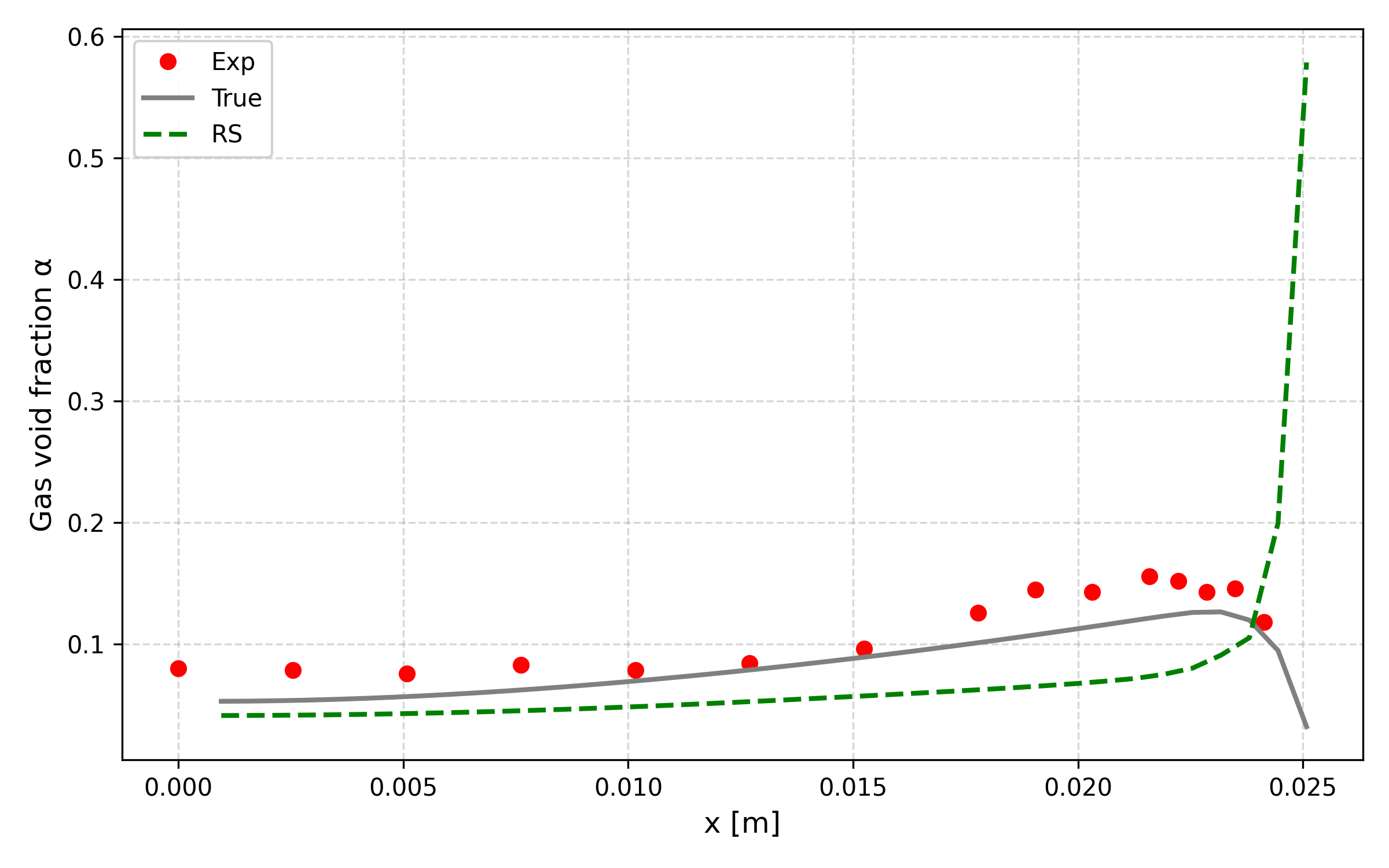
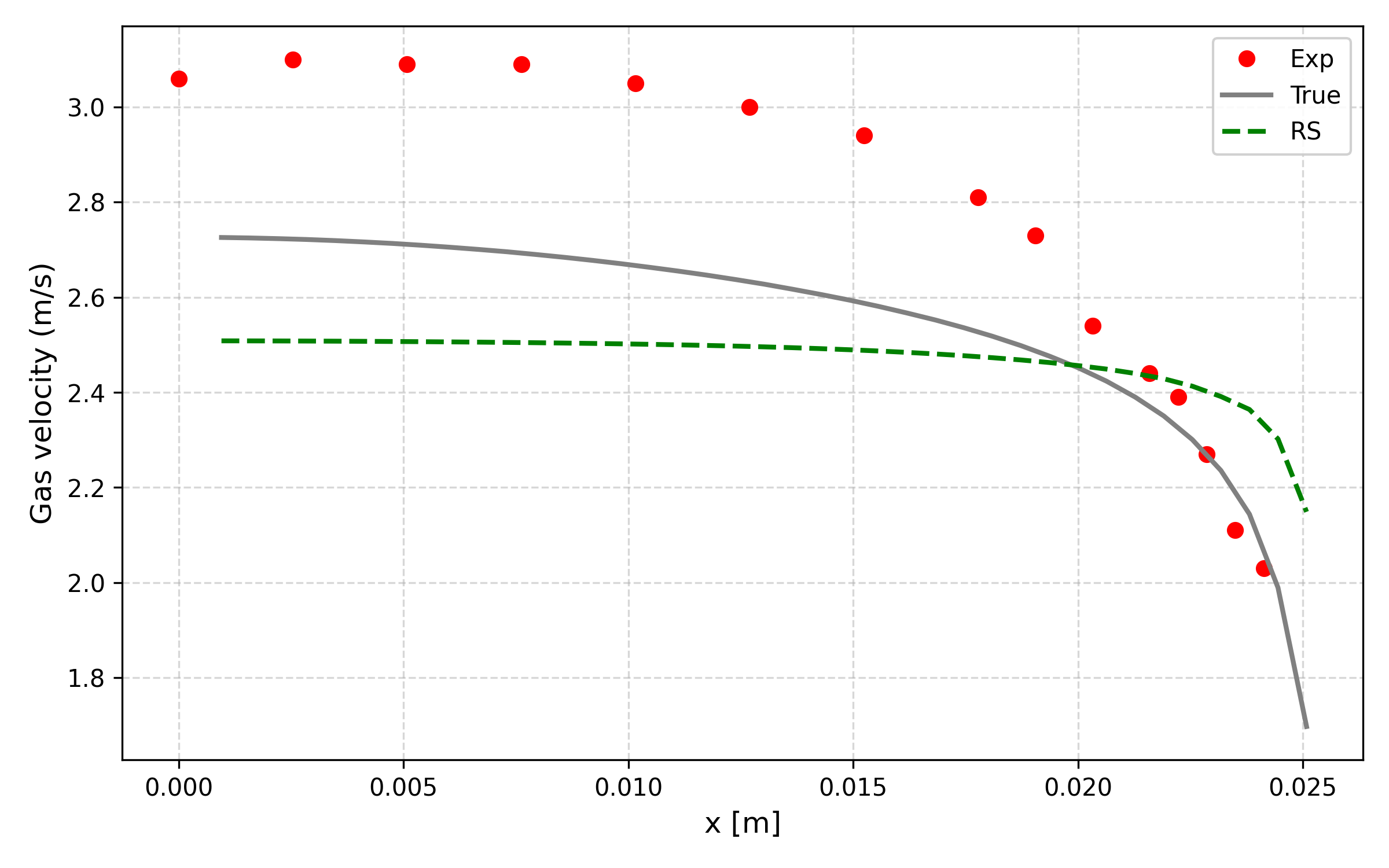
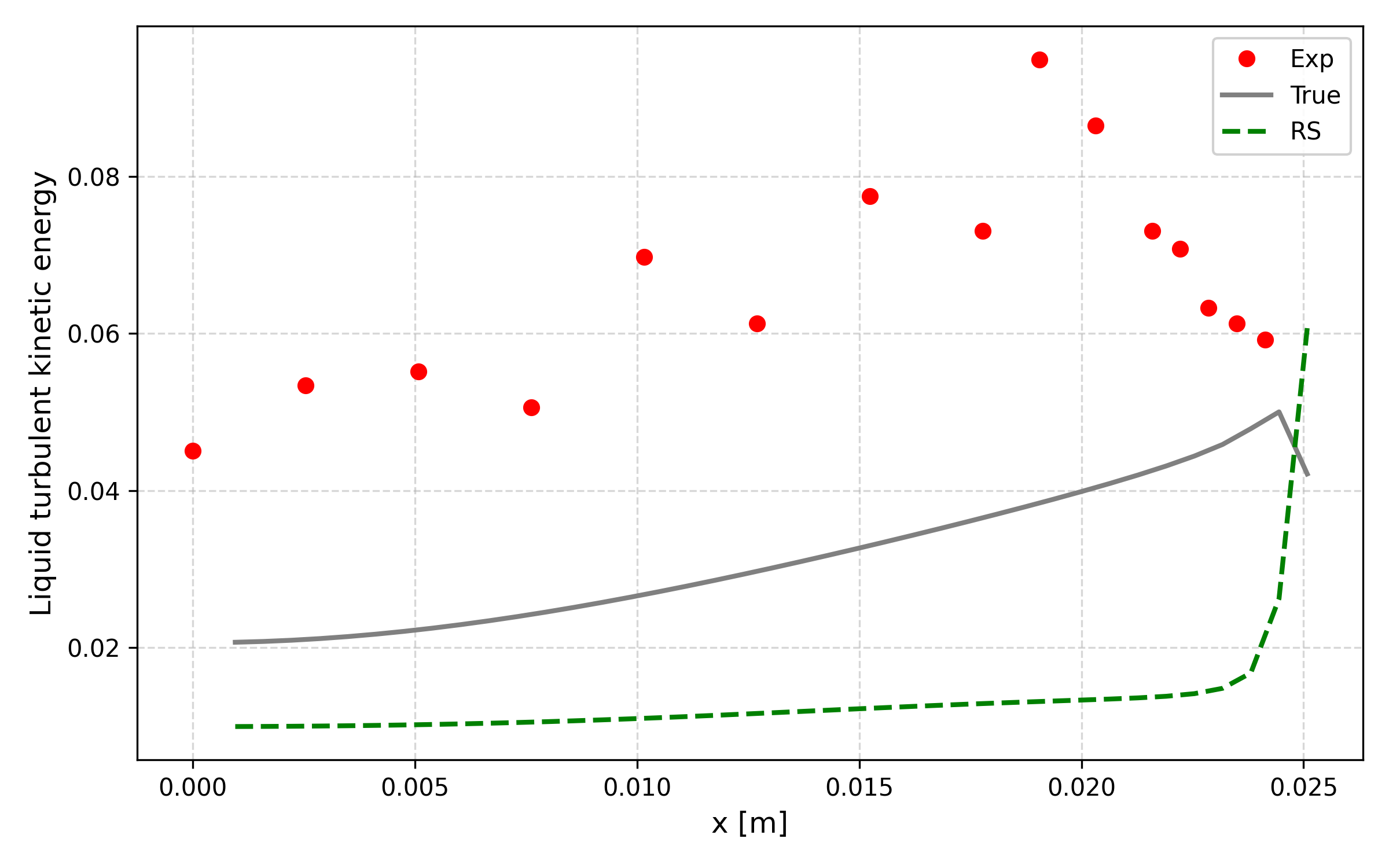
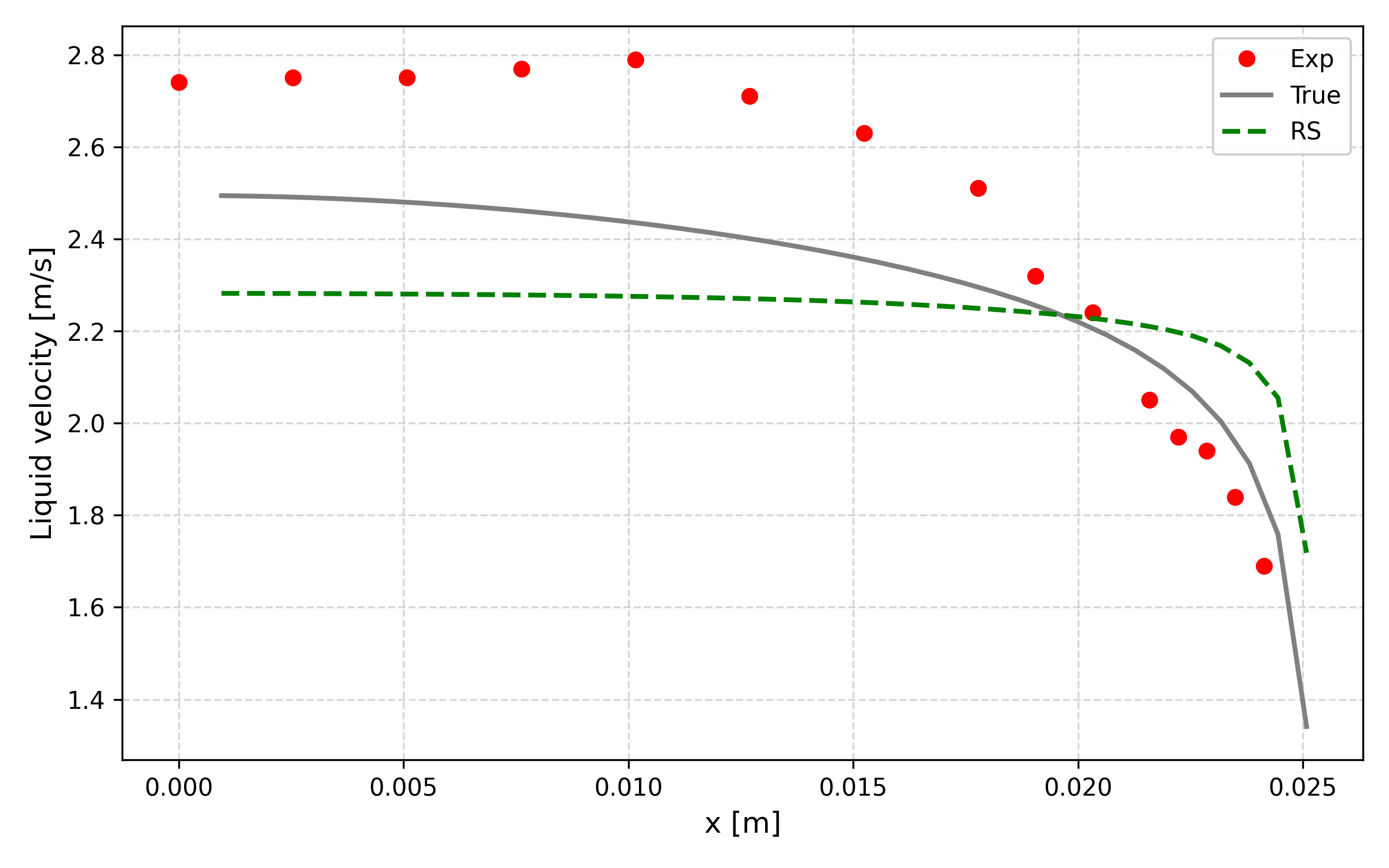
Figure 9: Gas void fraction validation in a high-regret case, exemplifying significant deviation from experimental reference data.
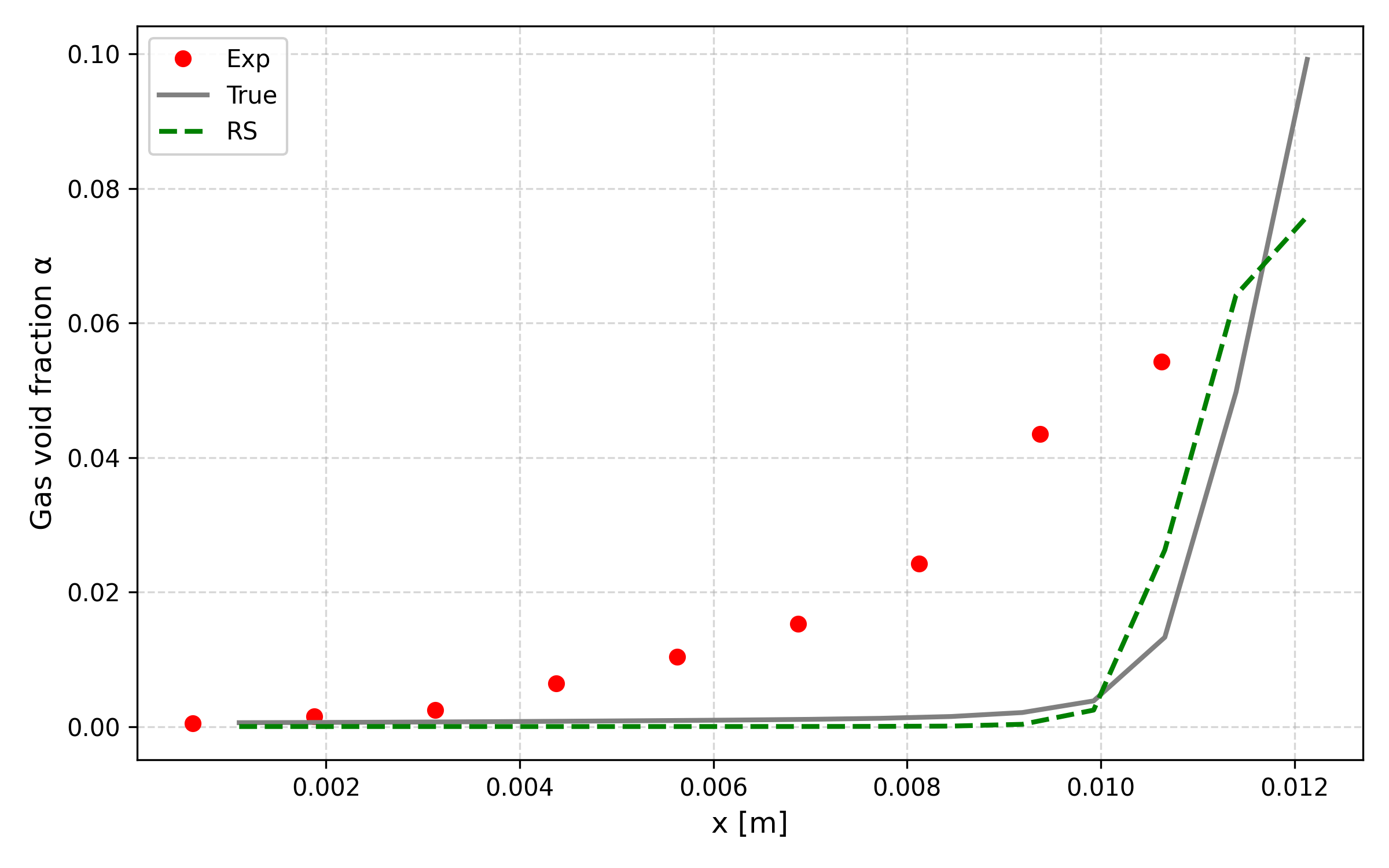
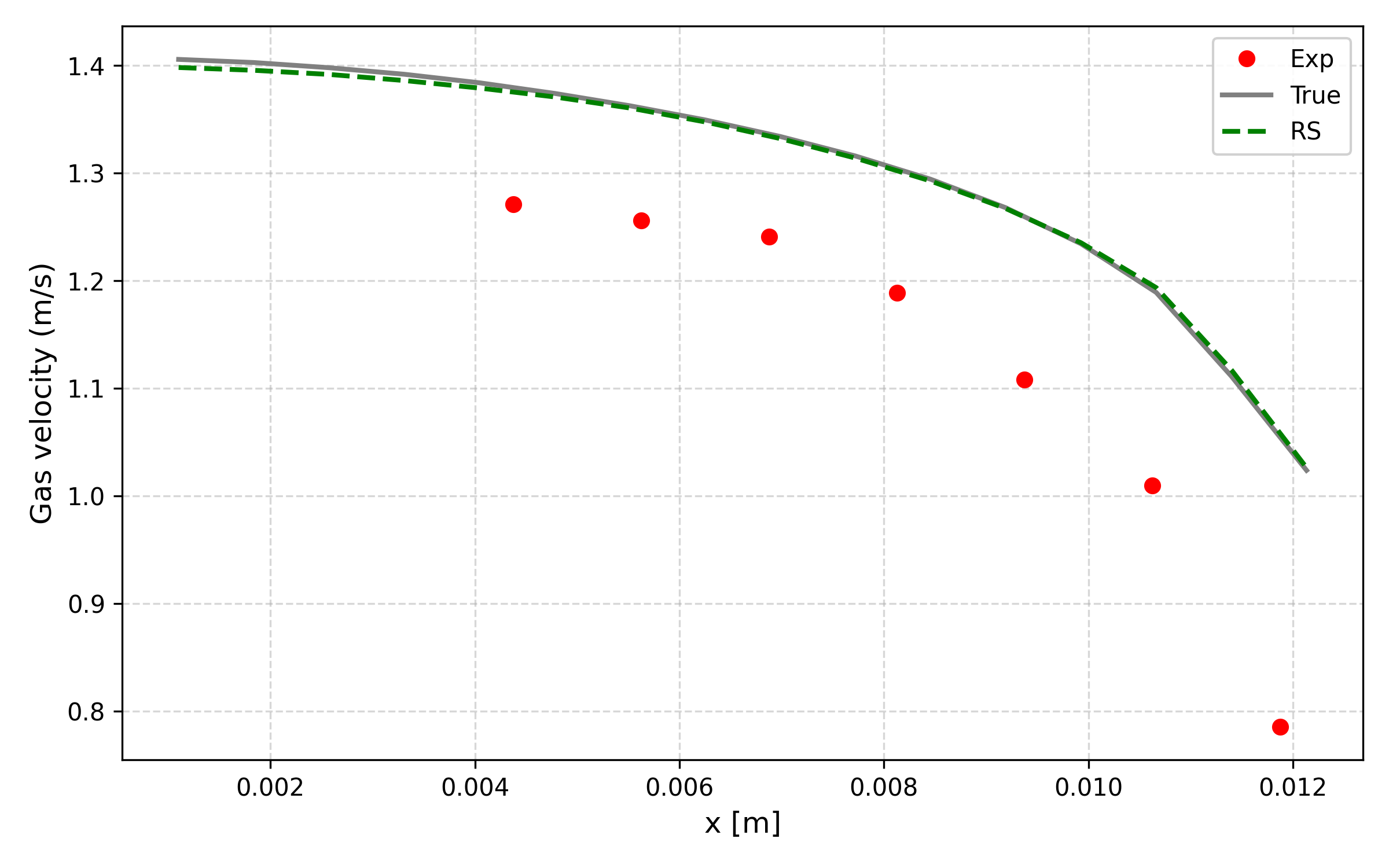
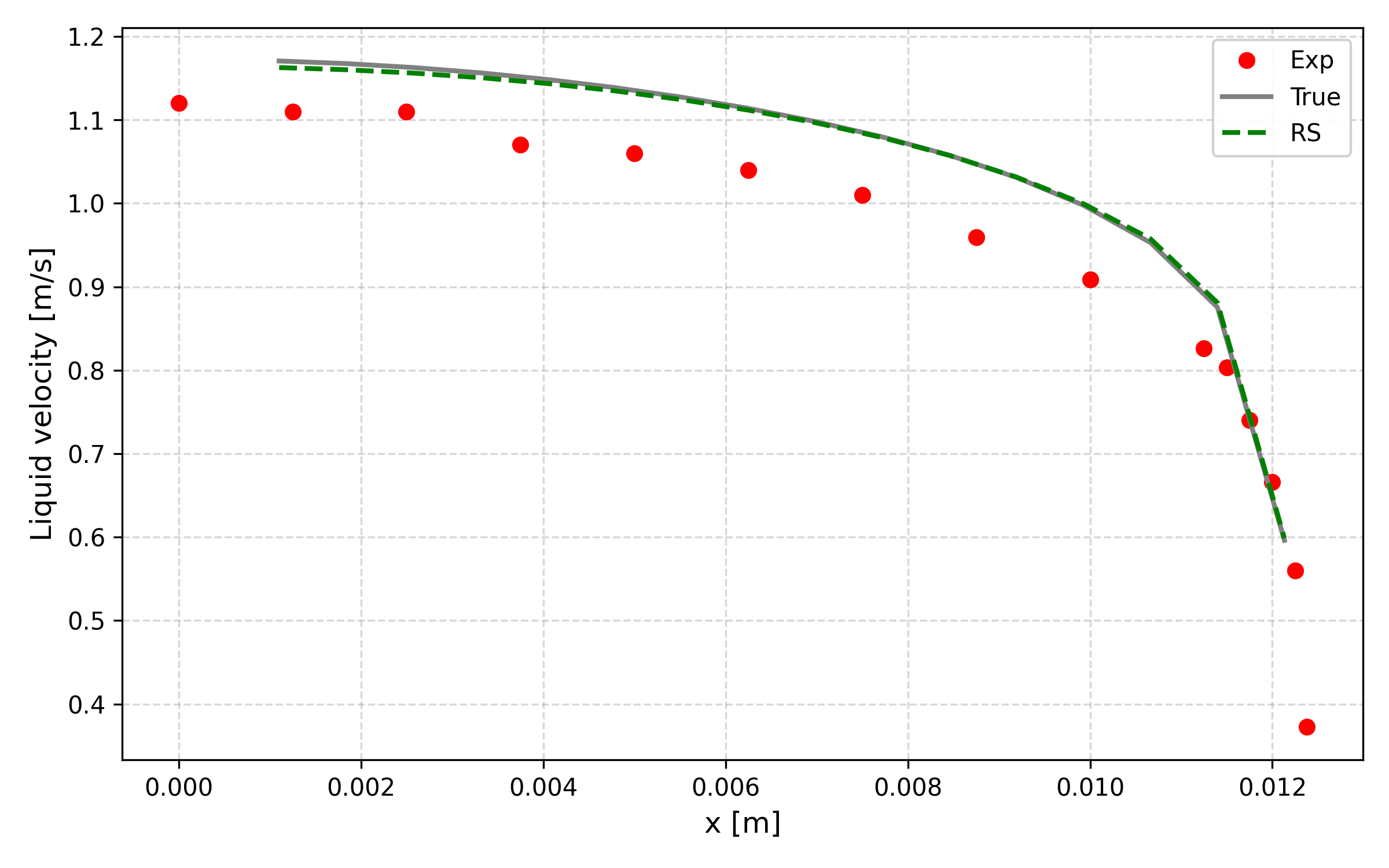
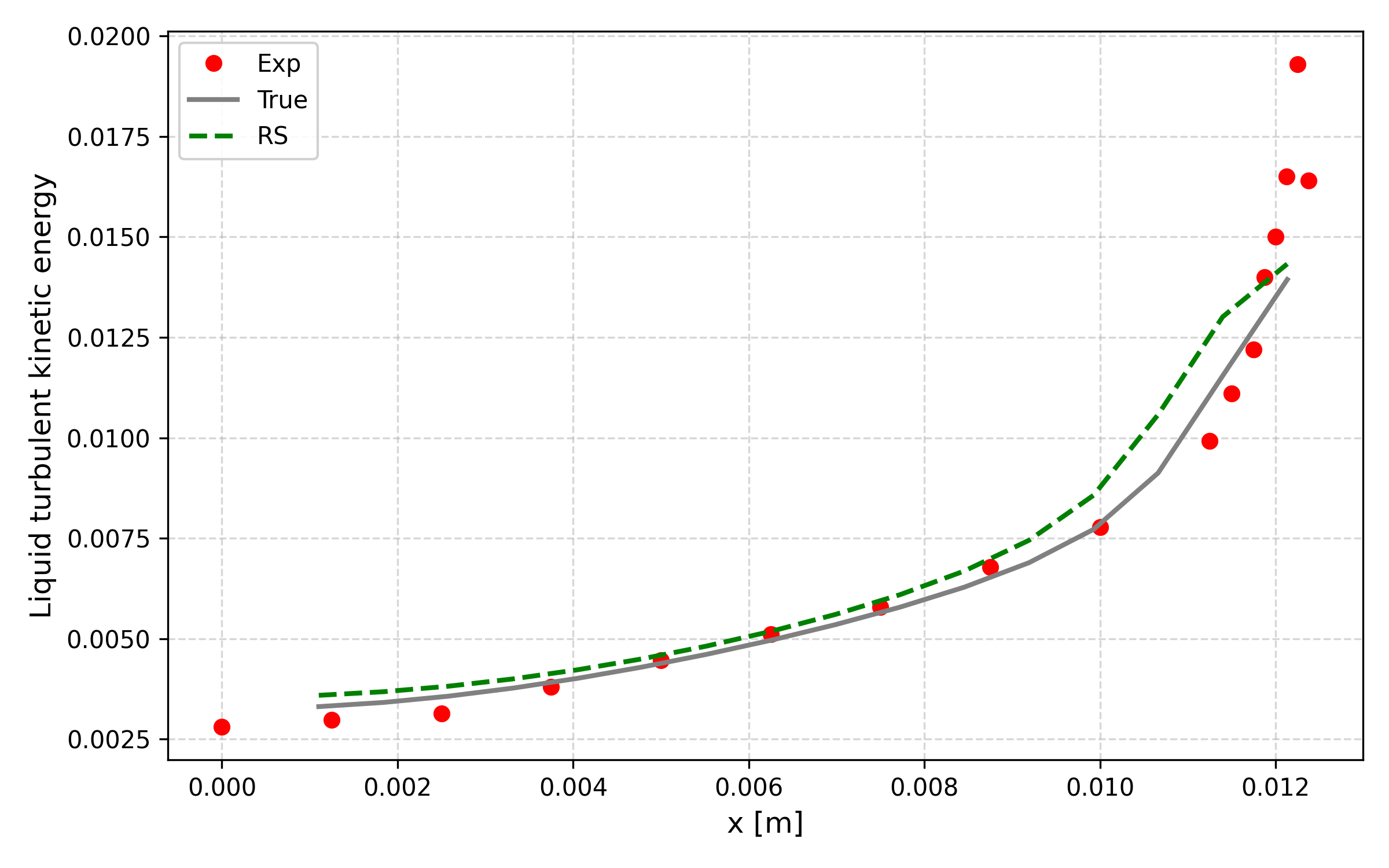
Figure 10: Gas void fraction profiles in a low-regret case, highlighting the recommender's success in reproducing experimental flow structures.
Implications and Future Directions
Practical Utility for CFD and Beyond
By formalizing closure model selection as a hybrid cold-start recommendation task, the framework enables data-driven model selection without reliance on prior case-specific simulation, directly addressing the core practical obstacle in complex CFD workflows. This architecture is scalable to the much larger combinatorial closure model spaces encountered in industrial applications, provided continuous expansion of shared validation data repositories.
The approach facilitates systematic, transparent evidence reuse—highlighting promising model combinations based on historical similarities—while exceeding the capacity for manual human knowledge aggregation. Risk-aware evaluation metrics offer practical relevance by directly reflecting operational consequences of sub-optimal model selection.
Theoretical Generalization
The proposed methodology extends the application domain of recommender systems into scientific workflows with combinatorial configuration spaces, sparse label matrices, and highly structured metadata. The ablation results reinforce the critical role of feature-driven personalisation in scenarios with severe cold-start constraints—this finding is broadly relevant to expert systems in scientific machine learning, automated simulation design, and algorithm portfolio optimization.
Open Challenges and Future Work
Limitations include the restriction to a subspace of closure model combinations, implicit treatment of numerical instability through zero-imputation, and the reliance on human-specified metadata. Future work should expand to inductive and uncertainty-aware matrix factorization (e.g., orthogonal inductive matrix completion [ledent2021orthogonal]), explicit multi-objective performance modeling (e.g., accuracy vs. stability trade-offs), and automated extraction/normalization of metadata from simulation archives. Mechanisms for out-of-distribution detection and uncertainty quantification are critical for deployment in industrial or safety-relevant environments.
Conclusion
This paper demonstrates that a hybrid, metadata-informed recommendation system significantly enhances closure model selection in multiphase CFD under realistic cold-start and data-sparse conditions. By integrating collaborative performance inference with content-based neighborhood selection, the system materially reduces both ranking error and regret versus generic baselines or expert-designed models. The results signal the broader potential for advanced recommendation architectures to transform model selection in scientific computing, especially in parameter-rich and evaluation-costly domains requiring reliable, data-driven decision support (2604.09112).

