Quantum Gibbs Sampling in Infinite Dimensions: Generation, Mixing Times and Circuit Implementation
Published 1 Apr 2026 in quant-ph and math-ph | (2604.01192v1)
Abstract: We develop a rigorous and implementable framework for Gibbs sampling of infinite-dimensional quantum systems governed by unbounded Hamiltonians. Extending dissipative Gibbs samplers beyond finite dimensions raises fundamental obstacles, including ill-defined generators, the absence of spectral gaps on natural Banach spaces, and tensions between implementability and convergence guarantees. We overcome these issues by constructing KMS-symmetric quantum Markov semigroups on separable Hilbert spaces that are both well-posed and efficiently implementable on qubit hardware. Our generation theory is based on the abstract framework of Dirichlet forms, adapted here to the case of algebras of bounded operators over separable Hilbert spaces. Leveraging the spectral properties of our self-adjoint generators, we establish quantitative convergence results in trace distance, including regimes of fast thermalization. In contrast, we also identify Hamiltonians for which a naive choice of generators guaranteeing implementability generally comes at the cost of losing convergence of the associated evolutions, thereby establishing a strong trade-off between implementability and convergence. Our framework applies to a wide class of models, including Schrödinger operators, Gaussian systems, and Bose-Hubbard Hamiltonians, and provides a unified approach linking rigorous infinite-dimensional analysis with algorithmic Gibbs state preparation.
The paper develops a rigorous framework for dissipative preparation of quantum Gibbs states in infinite-dimensional systems with unbounded Hamiltonians.
It establishes precise spectral gap conditions and mixing time bounds using weighted noncommutative Lp techniques to ensure convergence.
It details a finite circuit synthesis pipeline that balances filter regularity with polynomial circuit complexity for practical quantum hardware.
Quantum Gibbs Sampling in Infinite Dimensions: Framework, Mixing, and Implementation
Summary and Objectives
The paper "Quantum Gibbs Sampling in Infinite Dimensions: Generation, Mixing Times and Circuit Implementation" (2604.01192) develops a mathematically rigorous and constructive framework for dissipative preparation of quantum Gibbs states in infinite-dimensional systems with unbounded Hamiltonians. It extends the theory and practice of quantum Markov semigroups (QMS) and Lindblad dynamical generators, analyzing both their well-posedness in infinite dimensions and the crucial tradeoffs between efficient hardware implementation and guaranteed convergence rates. The work introduces new families of KMS-symmetric (detailed-balance) Lindbladians, establishes precise mixing time results and spectral gap conditions for a wide variety of physically relevant systems, and details an explicit pipeline from infinite-dimensional specification to finite circuit implementation compatible with quantum hardware.
Infinite-Dimensional Quantum Markov Semigroups: Generation and Structure
Standard approaches to quantum thermalization rely on finite-dimensional QMS generators, such as the Davies generator, whose jump structure requires knowledge of the spectral decomposition of the system Hamiltonian. In the infinite-dimensional setting, several foundational problems arise: generators may be ill-defined, lack of gap and well-posedness become generic, and the basic trace conservation in the Lindblad equation can dramatically fail. To address this, the authors utilize the theory of KMS-symmetric Dirichlet forms over operator algebras associated to separable Hilbert spaces, leveraging abstract results from noncommutative probability.
They formulate a rigorous set of sufficient algebraic and analytic criteria (Conditions A, B) ensuring that, given a class of (potentially unbounded) "bare jump operators" {Aα} and a filter function f, the generator
Lf,H(ρ)=α∑Lαρ(Lα)†+Gρ+ρG†
with Lα and G constructed in terms of spectral moments, defines a self-adjoint, negative-semidefinite operator on the Hilbert-Schmidt space with a unique invariant state σβ=Z(β)e−βH. The functional analytic core is the use of noncommutative Dirichlet form methods (Friedrichs extension, completely Dirichlet forms), ensuring that the resulting semigroup is completely positive, trace-preserving, and mixing within specified weighted (energy-constrained, Schatten-p) classes of states.
Spectral Gap and Mixing: Convergence Regimes
A primary finding is that convergence and mixing properties of the QMS in infinite dimensions cannot be treated with the same spectral theory as in finite dimensions: the generator always has $0$ in its essential spectrum on the trace-class, so uniform convergence fails. To circumvent this, the paper performs a reduction to weighted noncommutative Lp spaces (Banach or Hilbert subspaces determined by powers of the reference state σβ), using duality and interpolation methods to show that the relevant spectral gap for mixing can still be strictly positive on these subspaces. The explicit mixing time for states satisfying f0 is
f1
where f2 is the spectral gap on Hilbert-Schmidt space, and f3 depends on the Schatten index.
The authors provide a detailed characterization of when and how such a spectral gap can be achieved or lost. For generic "Schwartz" (rapidly decaying) filters, the generator is shown to be compact (and thus gapless) for number-preserving Hamiltonians of the form f4 with f5 superlinear, implying the absence of rapid mixing. However, for filters of Metropolis type (exponential decay only in one energy direction), they prove that the generator can be gapped uniformly in system size, allowing efficient mixing even for infinite-dimensional strongly interacting models.
Trade-off: Implementability vs. Spectral Gap
A central technical and practical result of the work is the quantification of the trade-off between circuit implementability and mixing time guarantees. On one hand, rapidly decaying filter functions f6 (or correspondingly, Schwartz class f7) ensure that all relevant unitaries and integrals in the jump construction can be approximated efficiently by finitely supported time grids (see the integral representation for f8), enabling time-efficient quantum circuit compilation via techniques such as linear combinations of unitaries (LCU). On the other hand, exactly these regularity conditions tend to close the spectral gap for superlinear Hamiltonians, fundamentally limiting the algorithm's mixing efficiency.
In contrast, the optimal Metropolis-like filters that maintain a positive spectral gap for relevant models are highly singular—they cannot be efficiently Fourier-transformed or time-discretized, and their direct implementation would require unbounded circuit resources. The authors resolve this tension by constructing a regularization/interpolation scheme: given a singular filter, they construct families of regularized, Schwartz-class filters that approximate the desired dynamics in strong norm on energy-constrained inputs, and quantitatively relate the circuit complexity and the approximation error, providing guidelines for practical implementation.
Circuit Synthesis Pipeline
The final part of the work describes an explicit finite-rank truncation method that enables the circuit realization of infinite-dimensional Lindblad dynamics on finite, qubit-based hardware:
Energy cutoff projections f9 are defined on the Hilbert space, and all operators (Hamiltonian, jumps) are truncated accordingly.
The resulting finite-dimensional generator preserves the well-posedness, trace, and complete positivity properties, and (for sufficiently regular states) approximates the infinite-dimensional evolution up to error Lf,H(ρ)=α∑Lαρ(Lα)†+Gρ+ρG†0 for some Lf,H(ρ)=α∑Lαρ(Lα)†+Gρ+ρG†1 (see Lemmas on truncated jumps and implementation).
The implementation cost (circuit gate/time complexity) is shown to scale polynomially in the number of modes, and logarithmically in the target error, evolution time, and Gibbs energy, provided the regularized filter allows fast time-discretization (LCU/phase estimation techniques).
By tuning the filter function, the interpolation parameter, and the energy truncation, the practitioner can explicitly balance error and runtime, and target the optimal regime for a given hardware and physical system.
Numerical and Analytical Examples
The theoretical results are supported with application to prominent families of infinite-dimensional systems:
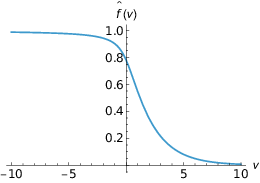
Uniform and explicit spectral gap/mixing time bounds are derived for single- and multi-mode systems (harmonic and anharmonic oscillators, Bose-Hubbard models), via the construction of gap estimates for quantum birth-death processes with Metropolis rate functions, adapting and generalizing results from Carbone-Fagnola [cf. (Figure 1)].
Figure 1: Metropolis-type filter Lf,H(ρ)=α∑Lαρ(Lα)†+Gρ+ρG†2 as a function of Bohr frequency Lf,H(ρ)=α∑Lαρ(Lα)†+Gρ+ρG†3 for Lf,H(ρ)=α∑Lαρ(Lα)†+Gρ+ρG†4, illustrating smooth cubic-like approximation to the classical Metropolis step function.
Implications and Outlook
The framework constructed in this work bridges the gap between rigorous infinite-dimensional operator theory and the practical requirements of quantum simulation and quantum thermodynamics. It unifies a range of dissipative algorithms at the intersection of open quantum systems, noncommutative analysis, and quantum information processing, and provides a toolkit for both theorists and practitioners toward:
Simulating quantum thermalization in field-theoretic or continuous variable settings,
Analyzing thermalization bottlenecks caused by lack of Lindblad gap in strongly interacting systems,
Providing a basis for further generalizations in the mathematical theory of quantum master equations and infinite-dimensional dynamics,
Implementing realistic dissipative state-preparation protocols on NISQ and future fault-tolerant quantum devices for systems beyond finite-dimensional spin lattices.
The tension between implementability and efficiency uncovered here is fundamental: it limits the range of dynamical regimes that can be both efficiently realized and provably mixed to true equilibrium in polynomial time, and further progress will likely require new algorithmic paradigms for Lindblad/Markovian simulation in the infinite-dimensional case, or new approaches to circuit compilation for singular generators.
Conclusion
This work provides the first comprehensive framework establishing the mathematical foundation, convergence conditions, and practical implementation pipeline for quantum Gibbs sampling in infinite-dimensional quantum systems. By explicitly relating the analytic properties of the generator/filter, the achievable spectral gap, and the quantum gate-level resource requirements, it clarifies the possibilities and limitations of dissipative quantum state preparation in CV systems. The methods and results will have significant impact on both mathematical physics and quantum information science, and open new lines of inquiry into the efficient simulation and control of infinite-dimensional quantum systems.