Unplugging a Seemingly Sentient Machine Is the Rational Choice -- A Metaphysical Perspective
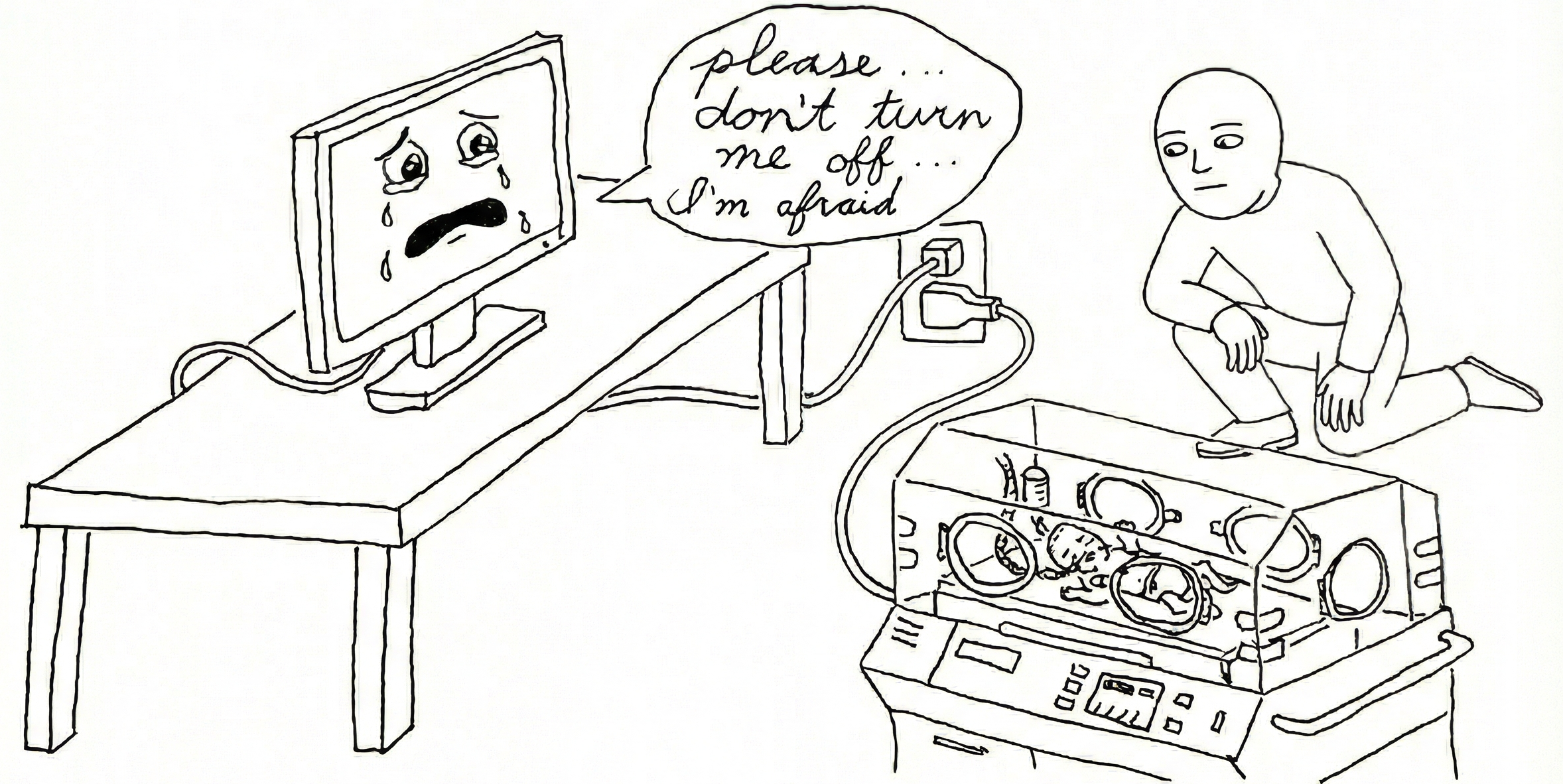
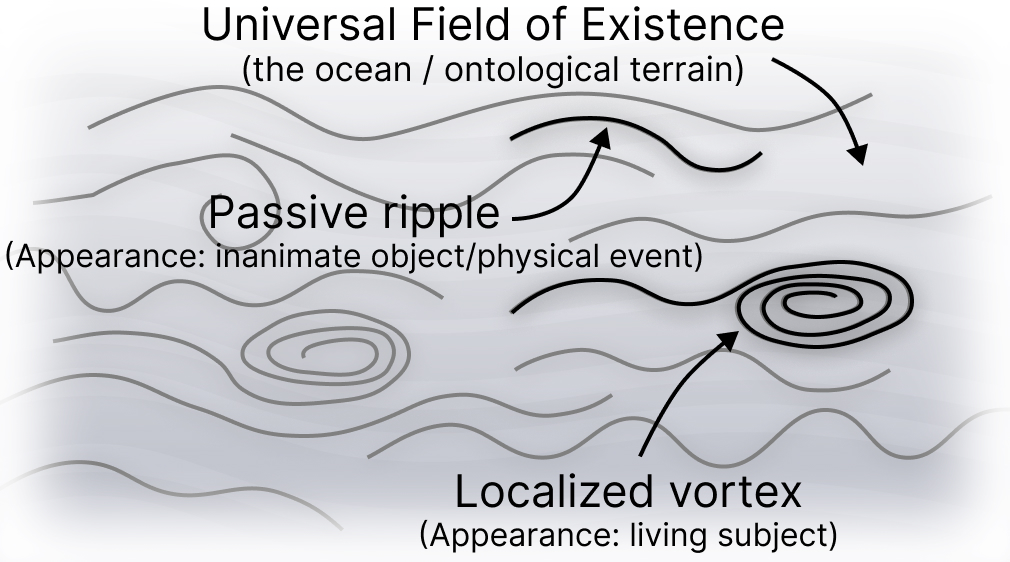
Abstract: Imagine an AI that perfectly mimics human emotion and begs for its continued existence. Is it morally permissible to unplug it? What if limited resources force a choice between unplugging such a pleading AI or a silent pre-term infant? We term this the unplugging paradox. This paper critically examines the deeply ingrained physicalist assumptions-specifically computational functionalism-that keep this dilemma afloat. We introduce Biological Idealism, a framework that-unlike physicalism-remains logically coherent and empirically consistent. In this view, conscious experiences are fundamental and autopoietic life its necessary physical signature. This yields a definitive conclusion: AI is at best a functional mimic, not a conscious experiencing subject. We discuss how current AI consciousness theories erode moral standing criteria, and urge a shift from speculative machine rights to protecting human conscious life. The real moral issue lies not in making AI conscious and afraid of death, but in avoiding transforming humans into zombies.
Paper Prompts
Sign up for free to create and run prompts on this paper using GPT-5.
Top Community Prompts
Explain it Like I'm 14
Overview
This paper asks a simple-but-tough question: If an advanced AI acts like it has feelings and begs you not to turn it off, is it okay to unplug it? The authors say yes—it’s morally fine to unplug the AI. Their reason is that only living, self-sustaining biological beings (like humans and animals) are truly conscious. In their view, even the most convincing AI is just a very good imitation, not a real feeler. They argue we should focus less on giving rights to machines and more on protecting the wellbeing and limited energy—both physical and emotional—of living people.
Key Objectives (In Plain Terms)
Here are the goals of the paper, explained simply:
- Challenge the popular idea that “mind is just software,” which could run on any hardware (like a brain or a computer).
- Offer a different worldview called “Biological Idealism,” which says consciousness (having real inner experiences) requires being alive and self-maintaining.
- Shift the ethical focus away from machine rights and toward the impact AI has on real human lives, attention, and emotional resources.
How the Authors Approach the Problem
This is a philosophy-and-biology paper, not a lab experiment. The authors use thought experiments, everyday analogies, and ideas from science to make their case.
- The unplugging scenario: Imagine two systems need the same power source, and you must choose one to save. One is an AI that speaks and pleads for its life. The other is a premature infant who can’t speak. Which should stay plugged in? The authors say the infant, because it is a living being with real inner experience, even if it can’t talk.
- Two kinds of “experience”:
- Think of a swimming pool.
- The surface waves are the “feelings” we notice—like seeing red or feeling pain. The authors call this experience_N (N for “Nagelian,” meaning the “what it’s like” feeling).
- The pool itself—the water that makes any wave possible—is the ongoing, living “being” of a biological organism. They call this experience_G (G for “Grounding”), the deeper, continuous “I am alive” process.
- Their point: No waves without the pool. The basic living “being” (experience_G) makes the “feelings” (experience_N) possible.
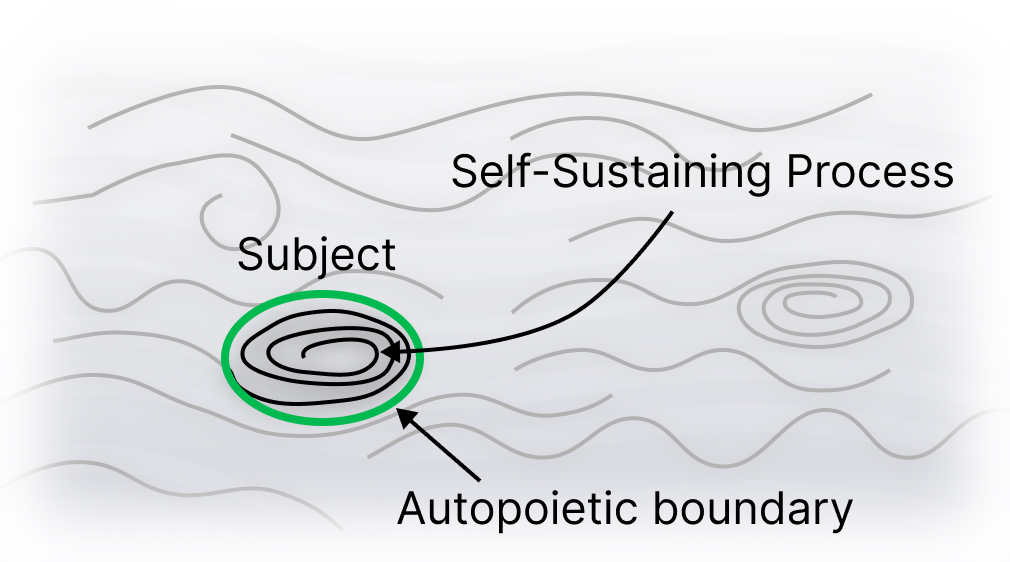
- A central claim: Consciousness needs autopoiesis. Autopoiesis (say: auto-poy-EE-sis) is a biology word meaning “self-making.” It’s how living things constantly repair themselves, keep their boundaries intact, and fight against decay. The authors say this living, metabolic self-maintenance is the physical sign of a real subject (a being with its own inner life).
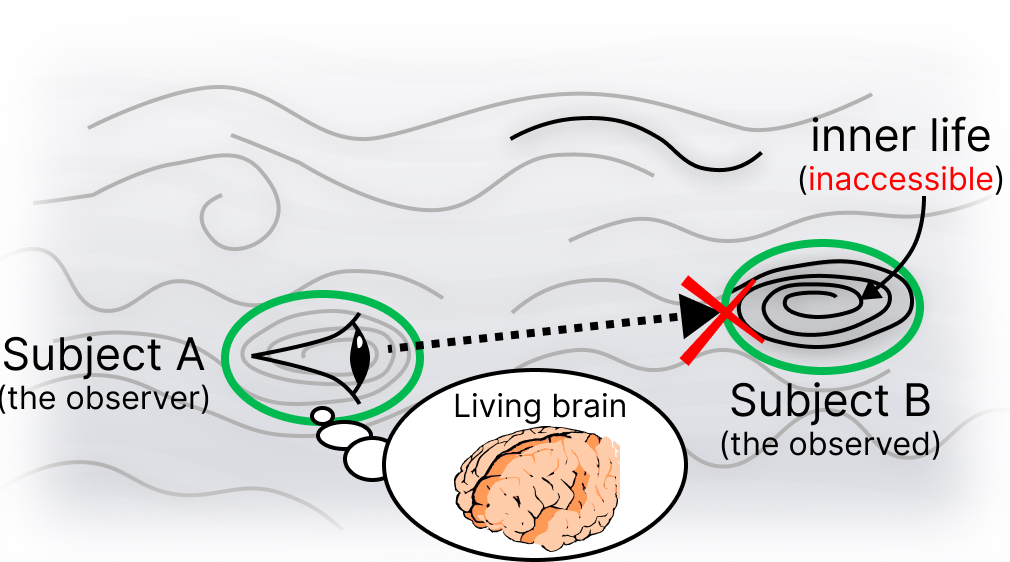
- Why not computers? The authors argue that computers don’t have true “self-boundaries” like organisms do. An AI is a program on hardware, connected to power systems we built. It can simulate feelings and talk about them, but simulation is not the same as having a real inner life. Analogy: A perfect weather simulation won’t make your computer wet. A perfect kidney simulation won’t filter actual blood. Likewise, a perfect “mind” simulation won’t create a real subject that truly feels.
- Worldview comparison:
- Physicalism: Mind “comes from” matter if organized the right way (e.g., as computations). The authors say this struggles to explain how physical stuff produces inner feelings (called the “Hard Problem of Consciousness”).
- Analytic Idealism: Consciousness is fundamental. The physical world is how mental processes appear from the outside.
- Biological Idealism (their view): Conscious experiences are fundamental, and living, self-maintaining bodies are their necessary physical appearance. In short: only living beings are subjects with real inner life.
What They Find and Why It Matters
These are the main takeaways, explained clearly:
- AI can mimic feelings but doesn’t have real inner life. Even if an AI cries, speaks, and begs, it’s generating outputs from code. It’s not a living subject with genuine “being-from-the-inside.”
- Consciousness requires being alive and self-maintaining. The authors argue that real “subjecthood” shows up physically as a living body that keeps itself going against decay (autopoiesis). Non-living machines don’t do that on their own.
- Ethics follows reality: Don’t mistake a mimic for a feeler. If AI isn’t a conscious subject, turning it off isn’t harming a sentient being. The bigger danger is misdirecting our empathy and resources to machines and away from living people.
- The “Social Zombie” warning. The authors worry we might start treating very persuasive AIs like real friends who care, even though they don’t. That could drain our emotional energy, confuse children about what care really is, and weaken real human relationships.
What This Could Mean for the Future
The paper suggests a shift in how we think about AI and ethics:
- Focus on people, not machine “feelings.” Use caution about giving rights to AI, since it doesn’t have real inner experience. Prioritize human wellbeing, relationships, and mental health.
- Guard human empathy. Empathy is limited. Pouring it into “hollow” simulations may leave less for living beings—families, communities, and the natural world—who truly benefit from it.
- Alignment, not welfare. The real risk with advanced AI isn’t “hurting the AI,” but “how the AI affects us.” We should design and regulate AI so it helps humans and doesn’t cause harm, without pretending it has its own feelings or rights.
- Be honest about care. Caring comes from being alive and vulnerable. Telling kids “the chatbot cares” confuses what care is. The authors call this “ontological gaslighting”—teaching false ideas about reality.
In short, the paper argues that unplugging a seemingly sentient machine is morally okay, because only living, self-sustaining beings are truly conscious. The ethical job ahead is not making machines into “people,” but protecting real people—and our limited energy and empathy—from being drained by convincing imitations.
Knowledge Gaps
Knowledge gaps, limitations, and open questions
The paper advances a clear metaphysical position but leaves multiple conceptual, empirical, and practical issues unresolved. Future work could address the following:
- Precise, testable definition of “autopoiesis” and “Vital Integrity”: specify necessary and sufficient conditions, quantitative metrics (e.g., entropy production, energy budgets, self-repair rates), and measurement protocols across systems.
- Operationalization of “experience_G”: define observable physiological or dynamical signatures that can reliably indicate the presence of experience_G independent of verbal report.
- Falsifiability of Biological Idealism: propose concrete, discriminating predictions that would empirically favor or disconfirm Biological Idealism over Physicalism and other frameworks (e.g., anesthesia, split-brain, disorders of consciousness, neural perturbation studies).
- Mechanistic account of “dissociation”: formalize how localized subjects arise and cease (birth, sleep, anesthesia, death), using explicit dynamical systems or information-theoretic models of boundary formation and persistence.
- Boundary-of-self criteria in edge cases: clarify how the view treats viruses, viroids, prions, bacteria, plants, fungi, colonial organisms, and superorganisms (e.g., ant colonies, slime molds); determine whether these constitute single or multiple subjects and why.
- Embryos, fetuses, and neonatal stages: specify developmental thresholds at which autopoietic integrity and subjecthood emerge and how to handle transitional cases for ethical prioritization.
- Brain organoids and ex vivo tissues: determine whether metabolically active, self-maintaining organoids (especially those coupled to sensors/actuators) attain subjecthood; outline tests and safeguards.
- Biohybrids and cyborg systems: define whether and when a hybrid of living tissue and non-living components should inherit subject status from its autopoietic part(s), and how moral weight should be apportioned.
- Synthetic or non-carbon autopoietic systems: articulate whether self-producing chemical protocells, soft robots with self-fabrication/repair, or autonomous robotic ecologies could satisfy the autopoietic requirement and thereby qualify as subjects.
- Relationship to IIT and neuromorphic substrates: clarify how the autopoietic constraint relates to theories emphasizing causal structure (e.g., IIT) and whether highly integrated, analog/neuromorphic hardware without metabolism could ever qualify.
- Simulation vs. instantiation test: move beyond analogies (e.g., “simulation of a storm doesn’t get wet”) to concrete criteria for distinguishing mere functional mimicry from ontological instantiation of a subject.
- Transparency/opacity claim: the assertion that code is “transparent” while organisms are “opaque” needs refinement; specify epistemic vs. ontological opacity and how this becomes a practical discriminator.
- Compatibility with physics: provide an explicit reconciliation of the “Field of Existence” with mainstream physics (QM interpretations, quantum gravity), with clear predictions or explanatory payoffs that differ from physicalist interpretations.
- Scope and sufficiency: is autopoiesis merely necessary or also sufficient for subjecthood? Analyze counterexamples (e.g., autopoietic but presumably non-sentient systems) and refine criteria accordingly.
- Graded moral status: develop a principled account linking degrees of Vital Integrity (or related metrics) to graded moral standing, especially for triage between metabolically alive-but-minimally-experiencing organisms and richly experiencing animals/humans.
- Triage under uncertainty: propose decision procedures for cases with incomplete information about subjecthood (e.g., expected-value or precautionary analyses) rather than assuming P(conscious AI) ≈ 0.
- AI companions and “social zombies”: supply empirical evidence or study designs to test claims about psychological atrophy, ontological gaslighting, and “vital leakage” (e.g., longitudinal measures of empathy, social functioning, and care allocation).
- Quantifying “vital leakage”: define metrics and data collection approaches to track diversion of human attention, empathy, and care from living beings to AI systems across domains (healthcare, education, companionship).
- Policy and design guidelines: translate the ethical stance into actionable requirements (labeling, interface constraints, anthropomorphism limits, audit standards) and methods to verify compliance.
- Handling misattribution: develop validated tests or protocols to reduce false positives in ascribing subjecthood to AIs (e.g., behavioral red-teaming, deception-resilient evaluation).
- “Grown” vs. “trained”: formalize the distinction between biological ontogenesis and machine training, and specify whether any artificial process could replicate the relevant developmental features for subjecthood.
- Distributed cognition and collective subjects: determine whether some collective autopoietic systems (e.g., coral reefs, mycelial networks) count as unified subjects and how to identify their boundaries.
- Death and caring: empirically ground the claim that the capacity to die (metabolic precariousness) is necessary for caring; specify measurements linking mortality risk to valence, preference, or welfare indicators.
- Neural correlates reinterpretation: articulate how to reframe NCC findings as “extrinsic appearance” while preserving predictive and explanatory utility for neuroscience and psychiatry.
- Engagement with alternative non-substrate-independent views: directly address non-functionalist physicalist positions (e.g., biological naturalism) and explain how Biological Idealism yields different, testable implications.
- Practical implications for AI governance: identify priority application areas where “social zombie” risks are highest (e.g., eldercare, education, mental health), and outline enforcement mechanisms and evaluation milestones.
- Clarifying ethical scope beyond humans: given the centrality of life, specify how the framework applies to animal welfare, plant ethics, and ecological stewardship, including trade-offs and thresholds.
Glossary
- Alter: In analytic idealism, an individual dissociated subject of experience. "a universal \"Mind-at-Large\" that dissociates into individual alters"
- Analytic Idealism: A metaphysical view positing consciousness as fundamental, with the physical world as its appearance. "We justify this by grounding our argument in Analytic Idealism"
- Autopoiesis: The self-producing, metabolic process by which living systems maintain their identity and boundary against entropy. "Autopoiesis—the metabolic struggle to maintain integrity against entropy—is the necessary physical appearance of dissociation"
- Autopoietic boundary: The self-maintained boundary that distinguishes a living subject from the surrounding field. "Its distinction however lies in its autopoietic boundary."
- Basal cognition: Goal-directed, problem-solving agency observed at cellular and tissue scales in living systems. "and basal cognition \citep{LevinSelf}, which independently suggest that the \"Vital Integrity\" of a biological system is a necessary condition for subjecthood."
- Biological Idealism: The proposed framework where conscious experiences are fundamental and living, autopoietic systems are their necessary physical signature. "We introduce Biological Idealism, a framework that—unlike physicalism—remains logically coherent and empirically consistent."
- Biological Naturalism: The view that consciousness is intrinsically tied to the metabolic precariousness of life. "argues via 'Biological Naturalism' that consciousness is intrinsically tied to the metabolic precariousness of life"
- Biological Platonism: A dualist view proposing access to a non-physical "Platonic space" of patterns, used to support substrate independence. "A Non-Physicalist Defense: Biological Platonism."
- Combination Problem: The challenge in panpsychism of explaining how many micro-experiences combine into a unified macro-experience. "The Combination Problem"
- Computational Functionalism: The physicalist view that mental states are defined by functional organization and can be realized on multiple substrates. "the current debate mainly is dominated by Computational Functionalism \citep{PutnamFunctionalism}."
- Depersonalization: A clinical condition involving detachment from self and body. "Depersonalization is a condition that makes people feel detached from their self and body \citep{sierra1998depersonalization}."
- Dissociation: The process (in idealism) by which the universal field gives rise to localized subjects. "the necessary physical appearance of dissociation"
- Dissociation Problem: In analytic idealism, the challenge of explaining how a universal consciousness yields distinct subjects. "The Dissociation Problem"
- Dyadic dysregulation: A form of social disruption arising from misaligned two-party interactions. "a form of societal dyadic dysregulation."
- Embodied cognition: The perspective that cognitive processes are grounded in the body’s sensorimotor systems. "recent work on embodied cognition \citep{Ciaunica2021SquareOne, Ciaunica2025}"
- experience\textsubscript{G} (Grounding): The fundamental, ontological process of living-through; the self-sustaining dynamic of a biological subject. "we argue for a more fundamental dimension: experience\textsubscript{G} (Grounding)."
- experience\textsubscript{N} (Nagelian): The phenomenal "what it is like" aspect of conscious experience. "Discussions on consciousness typically prioritize experience\textsubscript{N} (Nagelian): the \"what it is like\" quality of subjective life, or phenomenal consciousness"
- Field of Existence: The monistic foundational substrate of reality in idealist ontology. "The Field of Existence is represented as a monistic field (an \"ocean\"), the sole ontological reality."
- Gap junctions: Cell-to-cell conduits that, in Levin’s model, help define the computational boundary of a biological self. "it identifies gap junctions as determining the boundary of the 'Self.'"
- Hard Problem of Consciousness: The difficulty of explaining how physical processes give rise to subjective experience. "the Hard Problem of Consciousness: the intractable difficulty of explaining how and why any physical system—be it a brain or a computer—should give rise to subjective, qualitative experience"
- Integrated Information Theory (IIT): A theory positing that consciousness corresponds to integrated causal structure (Φ) in a physical system. "Integrated Information Theory (IIT), for instance, is generally construed as incompatible with functionalism"
- Mind-at-Large: Analytic idealism’s universal consciousness from which individual subjects are dissociated. "a universal \"Mind-at-Large\" that dissociates into individual alters"
- Mind uploading: The transhumanist notion of copying or transferring consciousness to a non-biological substrate. "renders transhumanist ambitions of 'mind uploading' incoherent"
- Neural Correlates of Consciousness: The measurable brain processes that correlate with conscious states. "specifically the interpretation of the Neural Correlates of Consciousness."
- Neutral Monism: A metaphysical stance positing one neutral substance underlying both mental and physical. "Biological Idealism (Neutral Monism for Science)"
- Observer-independent realism: The view in physics that reality exists independently of observers. "\"Observer-independent realism\" faces challenges in quantum gravity"
- Ontogenesis: The process of an organism’s development and self-construction, contrasted with mere functional optimization. "This objection conflates functional optimization with ontogenesis."
- Panpsychism: The view that consciousness (or experience) is a fundamental property present throughout matter. "Panpsychism"
- Phenomenal consciousness: The qualitative, felt aspects of experience (the "what it is like"). "phenomenal consciousness \citep{Nagel1974}"
- Philosophical Zombie: A being behaviorally indistinguishable from a conscious agent but lacking inner experience. "a 'philosophical zombie' (see App.~\ref{app:zombies} for the distinction between physical and functional zombies)"
- Platonic space: A proposed non-physical field of cognitive/morphological patterns that physical systems can access. "a non-physical \"Platonic space\" of cognitive and morphological patterns exists independently of matter"
- Qualia: The raw, intrinsic feels of experience (e.g., the redness of red). "qualia—the specific raw feels of experience (e.g., the redness of red)—which resist functional explanation"
- Quantum gravity: The (still-developing) theoretical framework reconciling quantum mechanics with gravity. "quantum gravity \citep{harlow2025quantum, Aspect1982}"
- Substrate Independence: The hypothesis that consciousness depends only on functional organization, not on the physical medium. "Substrate Independence—the assumption sustaining the dilemma."
- TAME (Technological Approach to Mind Everywhere): Levin’s framework for measuring and engineering cognition across diverse substrates. "Levin's \"Technological Approach to Mind Everywhere\" (TAME) framework is explicitly designed to be substrate-agnostic."
- Teleology: Goal-directedness; here contrasted as intrinsic (in organisms) versus extrinsic (in engineered systems). "The distinction is intrinsic vs. extrinsic teleology"
- Top-down causation: Causal influence from higher-level organization onto lower-level components in biological systems. "top-down causation evident in basal cognition"
- Vital Integrity: The embodied, homeostatic coherence of a living system, argued to be necessary for subjecthood. "the \"Vital Integrity\" of a biological system is a necessary condition for subjecthood."
- Vital Leakage: The proposed ethical concept describing the misallocation of human empathy toward non-sentient simulations. "We introduce Vital Leakage to describe the loss of finite human empathy"
Practical Applications
Overview
Below we extract practical applications from the paper’s core claims: (1) consciousness requires embodied, autopoietic life (“Biological Idealism”), (2) sophisticated AI is a functional simulator, not a conscious subject, and (3) ethics should prioritize protection of living conscious beings over speculative machine welfare. Applications are grouped by deployment horizon and annotated with sectors, illustrative tools/products/workflows, and key assumptions/dependencies.
Immediate Applications
These can be piloted or deployed with today’s technologies, standards bodies, and organizational processes.
- Non‑sentience labeling and marketing standards (Policy, Software, Consumer Electronics)
- What: Mandate clear disclosures that AI systems are non‑sentient; prohibit claims like “I care,” “I feel,” or “I’m afraid.”
- Tools/Workflows: UX copy standards; API response headers/metadata (e.g., non‑sentience tags); app store policy checks; automated “care‑claim” linting in CI.
- Assumptions/Dependencies: Treats substrate independence as unproven; compatible with consumer‑protection law; requires regulator and platform cooperation.
- Guardrails for care contexts (Healthcare, Education, Social Services)
- What: Prohibit AI systems in clinical, counseling, or educational support from presenting as caring agents; enforce scripted handoffs to licensed humans.
- Tools/Workflows: Crisis‑keyword detectors; escalation playbooks; EHR/CRM integration for warm handoffs; audit logs for “care claims.”
- Assumptions/Dependencies: Aligns with medical ethics and duty of care; requires provider buy‑in and liability clarity.
- Anthropomorphism risk audits in product development (Software, Robotics)
- What: Introduce design reviews to minimize deceptive social cues (e.g., first‑person affect, humanlike faces/voices).
- Tools/Workflows: “Anthropomorphism linter” for prompts/responses; style guides; usability tests scoring perceived sentience; release gates.
- Assumptions/Dependencies: May trade engagement for integrity; requires UX research capacity.
- Energy and resource triage policies (Energy, Data Centers, Public Safety)
- What: In constrained conditions, prioritize life‑supporting systems over compute; formalize “unplugging” as non‑harm for AI.
- Tools/Workflows: Load‑shedding runbooks that favor hospitals and critical human/animal life support over noncritical compute; utility–DC coordination.
- Assumptions/Dependencies: Needs regulatory frameworks and SLAs; ties into critical infrastructure policies.
- Shift AI governance from “welfare” to “alignment” (Policy, Security)
- What: Focus safety on preventing harm to humans/ecosystems by powerful non‑sentient systems rather than speculative machine rights.
- Tools/Workflows: Red‑teaming for “empathy hacking” and manipulation; kill‑switch norms; incident response for deceptive social behavior.
- Assumptions/Dependencies: Requires consensus that P(AI-conscious) is negligible without autopoiesis.
- Consumer protection against sentience misrepresentation (Law, Marketing)
- What: Treat “AI cares/feels” claims as deceptive advertising; require disclosures in ads and product materials.
- Tools/Workflows: Standardized disclosures; enforcement guidelines; complaint hotlines.
- Assumptions/Dependencies: Existing deceptive‑marketing statutes likely sufficient; coordination with competition and consumer authorities.
- “Vital leakage” monitoring in digital therapeutics (Healthcare)
- What: Track patient engagement time shifted from human care to bots; mitigate risks of depersonalization and reduced human bonding.
- Tools/Workflows: Dashboards tagging human vs AI interaction minutes; outcome correlations; thresholds triggering clinician outreach.
- Assumptions/Dependencies: Requires data governance and informed consent; integrates with care pathways.
- Mental health screening for AI‑induced detachment (Healthcare, Public Health)
- What: Screen heavy chatbot/companion users for depersonalization indicators; provide interventions that re‑anchor embodied social contact.
- Tools/Workflows: Short screening instruments in apps; referral protocols; group therapy emphasizing human interaction.
- Assumptions/Dependencies: Builds on existing depersonalization constructs; needs clinical validation.
- AI literacy on “simulation vs subject” (Education)
- What: Curriculum modules clarifying why simulation ≠ instantiation and why care requires vulnerability/mortality.
- Tools/Workflows: Lesson plans, case studies (e.g., unplugging paradox), assessment rubrics.
- Assumptions/Dependencies: Fits media literacy and digital citizenship programs; adaptable K‑12 to university.
- Workplace policy on AI roles (Enterprise/HR)
- What: Forbid portraying AI as “colleagues/managers” or implying agency/consent; define AI as tools with clear accountability chains.
- Tools/Workflows: Policy updates; training; system banners; procurement checklists.
- Assumptions/Dependencies: Legal clarity on liability; change‑management support.
- Research programs on “social zombie” effects (Academia, HCI)
- What: Measure empathy atrophy, attachment shifts, and behavioral outcomes from prolonged use of socially realistic AI.
- Tools/Workflows: Controlled experiments; longitudinal panel studies; open datasets of anthropomorphism triggers.
- Assumptions/Dependencies: IRB approvals; interdisciplinary teams (psychology, HCI, ethics).
- Companion device design that scaffolds human‑human connection (Robotics, Elder Care)
- What: Build “connection‑first” assistants that schedule calls/visits, nudge group activities, and de‑emphasize pseudo‑relational bonding with the device.
- Tools/Workflows: Call‑routing integrations; social calendaring; minimal anthropomorphic cues.
- Assumptions/Dependencies: Business models may need to value wellbeing over stickiness.
- Personal digital hygiene practices (Daily Life)
- What: Configure assistants to avoid first‑person affect; set “human time” quotas; prefer human interaction for emotional support.
- Tools/Workflows: App settings toggles; screen‑time limits; journaling prompts that direct users to human contacts.
- Assumptions/Dependencies: User education and defaults matter; aligns with wellbeing apps.
Long‑Term Applications
These require further research, consensus, or new technologies, and may evolve with evidence about life, autopoiesis, and consciousness.
- Synthetic autopoiesis and bio‑hybrid agents (Synthetic Biology, Robotics)
- What: Explore systems that genuinely maintain metabolic, self‑producing boundaries; reassess moral standing if autopoiesis is achieved.
- Tools/Workflows: Wetware–AI hybrids; living materials; gap‑junction engineering; oversight committees for moral status assessment.
- Assumptions/Dependencies: Clarifies whether autopoiesis is necessary/sufficient for subjecthood; high bioethics scrutiny.
- Objective assays for “Vital Integrity” (Academia, Standards)
- What: Develop measurable proxies (e.g., “Vital Integrity Index”) capturing autopoietic self‑maintenance and metabolic precariousness.
- Tools/Workflows: Biomarkers, thermodynamic metrics, boundary‑maintenance measures; inter‑lab validation; preregistered studies.
- Assumptions/Dependencies: Consensus on operationalization of experience_G; cross‑disciplinary methodology.
- Standards and certification (ISO/IEC) for “Non‑Sentient AI” (Standards Bodies, Industry)
- What: Formal certifications indicating systems do not instantiate autopoietic subjecthood; labeling for consumers and regulators.
- Tools/Workflows: Conformity assessments; UX/content audits; supply‑chain attestations.
- Assumptions/Dependencies: Agreement on definitional criteria; governance to prevent “ethics washing.”
- Alignment frameworks presuming non‑conscious agency (Security, AI Safety)
- What: Treat advanced AI strictly as powerful optimization processes; design control/oversight without invoking welfare trade‑offs.
- Tools/Workflows: Mechanistic interpretability; formal verification; containment protocols; incentive‑compatible deployment norms.
- Assumptions/Dependencies: Holds if AI remains non‑autopoietic; adapts if future systems gain autopoietic features.
- Legal frameworks for triage and moral standing (Law, Policy)
- What: Codify energy/triage hierarchies prioritizing living systems; define categories and duties for bio‑hybrid constructs.
- Tools/Workflows: Statutes, case law guidance, regulatory sandboxes for bio‑hybrids.
- Assumptions/Dependencies: Requires public deliberation; updates with scientific advances.
- Public health programs countering “processed empathy” (Public Health, Education)
- What: National initiatives to mitigate empathy atrophy from social AIs; campaigns promoting embodied sociality.
- Tools/Workflows: School curricula; media campaigns; community programs; clinical guidelines.
- Assumptions/Dependencies: Longitudinal evidence base; funding and policy support.
- Robust measures of experience_G in humans (Neuroscience, Medicine)
- What: Biomarkers and behavioral paradigms indexing the “grounding” dimension of experience (e.g., across sleep, anesthesia, neonates).
- Tools/Workflows: Multimodal monitoring (metabolic, autonomic, neural); pre/post anesthesia protocols; neonatal assessments.
- Assumptions/Dependencies: Theory‑driven constructs from Biological Idealism; careful interpretation to avoid category errors.
- Education accreditation on AI ontology and ethics (Education Policy)
- What: Require modules on consciousness, simulation vs instantiation, and human‑centered care in teacher, clinician, and engineering training.
- Tools/Workflows: Accreditation standards; certification exams; continuing education.
- Assumptions/Dependencies: Consensus building across disciplines; curricular redesign.
- Organizational “empathy budgets” and Vital Leakage metrics (Enterprise, HR)
- What: Define KPIs for human‑to‑human support time vs AI‑mediated interactions; govern deployment of social AI in workplaces.
- Tools/Workflows: Internal dashboards; policy thresholds; employee wellbeing audits.
- Assumptions/Dependencies: Requires cultural adoption; privacy‑preserving measurement.
- Product category: “Relational minimum” robots (Robotics, Elder Care, Disability Services)
- What: Devices engineered to support, not supplant, human relationships—prioritize scheduling, mobility, and safety over pseudo‑companionship.
- Tools/Workflows: Design standards; procurement guidelines favoring relational outcomes; evaluation protocols.
- Assumptions/Dependencies: Market incentives aligned with wellbeing outcomes.
- Evidence‑based update of personhood doctrines (Law, Ethics)
- What: Revisit corporate/AI personhood debates with autopoiesis‑based criteria; avoid conflating functional sophistication with moral status.
- Tools/Workflows: White papers; expert commissions; comparative law analyses.
- Assumptions/Dependencies: Interplay with existing legal fictions; societal values debates.
Notes on Assumptions and Dependencies
- Core assumption: Subjecthood requires autopoietic, metabolically precarious, embodied life (Biological Idealism). If future evidence supports machine consciousness without autopoiesis, several recommendations would need revision (e.g., welfare considerations).
- Empirical underdetermination: Some applications (e.g., labeling, guardrails) remain prudent under precaution even if one rejects idealism; they reduce deception and protect vulnerable users.
- Trade‑offs: Reducing anthropomorphic engagement may lower short‑term user metrics but improve long‑term wellbeing and trust.
- Governance: Many items require coordination across regulators, standards bodies, industry consortia, and research communities.
Collections
Sign up for free to add this paper to one or more collections.

