- The paper introduces a modular five-layer multi-agent LLM system that integrates multi-modal financial data for actionable trading decisions.
- It employs specialized agents to analyze fundamental, technical, and news data, demonstrating superior performance with cumulative returns up to 31%.
- The study validates P1GPT's effectiveness through backtesting on AAPL, GOOGL, and TSLA, highlighting enhanced transparency and risk management.
Introduction
The paper "P1GPT: a multi-agent LLM workflow module for multi-modal financial information analysis" introduces a novel framework designed to enhance financial analysis by employing LLMs in a multi-agent system. This system focuses on effectively integrating and analyzing multi-modal data to produce interpretable and actionable trading decisions. The P1GPT framework presents a marked departure from traditional single-agent systems by structurally aligning with the organizational methodologies observed in financial firms, thereby integrating financial, technical, and news-based insights more comprehensively.
System Architecture
P1GPT is constructed as a modular, five-layer system, each performing a specific function in the analysis workflow. The architecture ensures modular extensibility and complete traceability throughout the workflow, as shown in Figure 1.
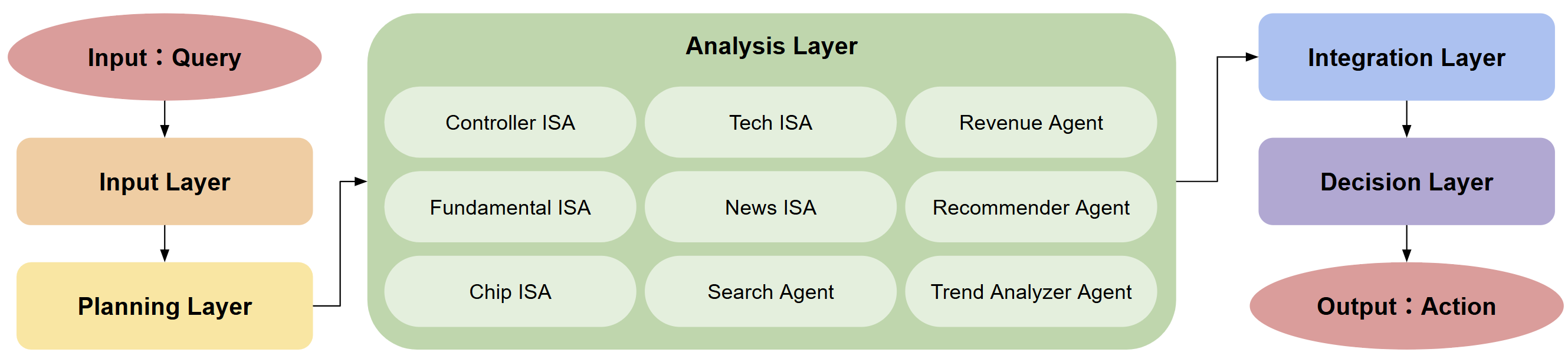
Figure 1: P1GPT overall workflow. Left: Input and Planning transform user queries and raw multi-modal data into an executable plan. Center: the Analysis Layer hosts specialized agents—Controller, Fundamental ISA, Tech ISA, Chip (Semiconductor) ISA, News ISA—and supporting modules (Search, Revenue, Trend Analyzer, Recommender). Right: the Integration Layer consolidates structured reports and forwards them to the Decision Layer, which outputs an Action with an explanation. Arrows denote data/control flow and standardized report interfaces between layers.
The Input Layer is responsible for parsing user queries and sourcing multi-modal financial data through entity extraction and data preprocessing. This preparation is pivotal for consecutive layers, ensuring they receive structured and meaningful input.
Planning and Analysis Layer
The Planning Layer decomposes tasks, managing the collaborative effort among multiple specialized agents. The Analysis Layer, comprising Intelligent Specialized Agents (ISAs), leverages domain-specific expertise to perform exhaustive analyses on financial, technical, and news domains. These layers epitomize the robustness of P1GPT in addressing diverse data types and analytical scopes efficiently.
Integration and Decision Layers
The Integration Layer aggregates outputs from analysis agents, employing both deterministic rules and LLM-driven synthesis for comprehensive integration. Finally, the Decision Layer translates these insights into actionable investments, delivering buy, hold, or sell recommendations with explainable rationales.
Data Sources and Agents
P1GPT sources information from diverse streams such as financial media, social media, technical market data, and fundamental data. Utilizing APIs and third-party aggregators ensures real-time data capture and sentiment assessment. The structured communication and standardized outputs from ISAs enhance the system’s decision-making reliability.
Experiments and Results
The paper details extensive backtesting against various trading strategies to validate the efficacy of P1GPT. The framework was evaluated using AAPL, GOOGL, and TSLA stocks over several months, demonstrating superior performance in cumulative and annualized returns, Sharpe ratios, and maximum drawdown control.
The findings highlight P1GPT's ability to outperform traditional trading strategies, driven by its ability to adapt dynamically to changes in market sentiments and technical indicators, as evidenced by Figures 2 and 3.
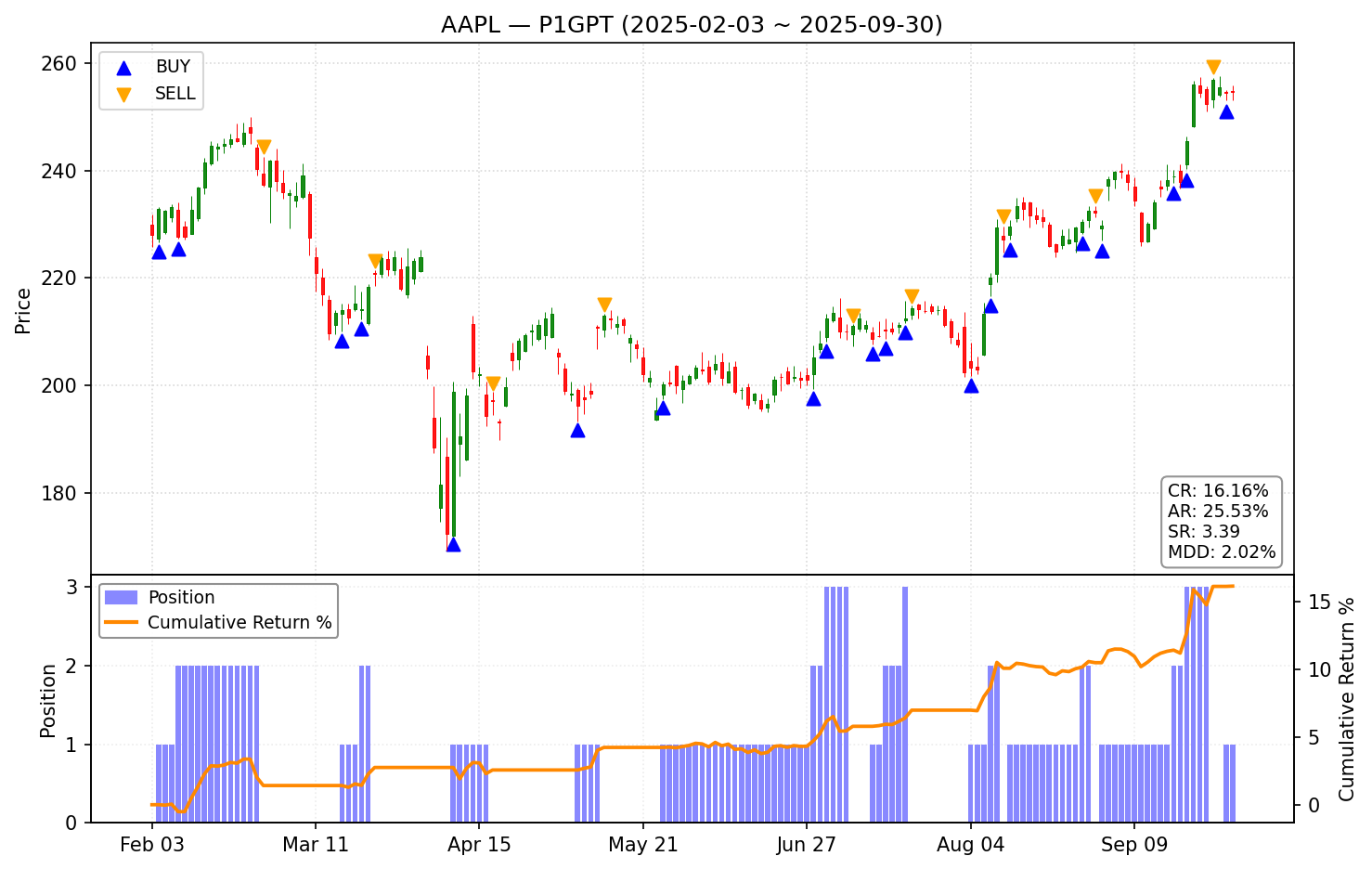
Figure 2: Trading trajectory of P1GPT on AAPL (Feb. 3–Sep. 30, 2025), showing model-generated buy (blue) and sell (orange) signals, along with position and cumulative return evolution.
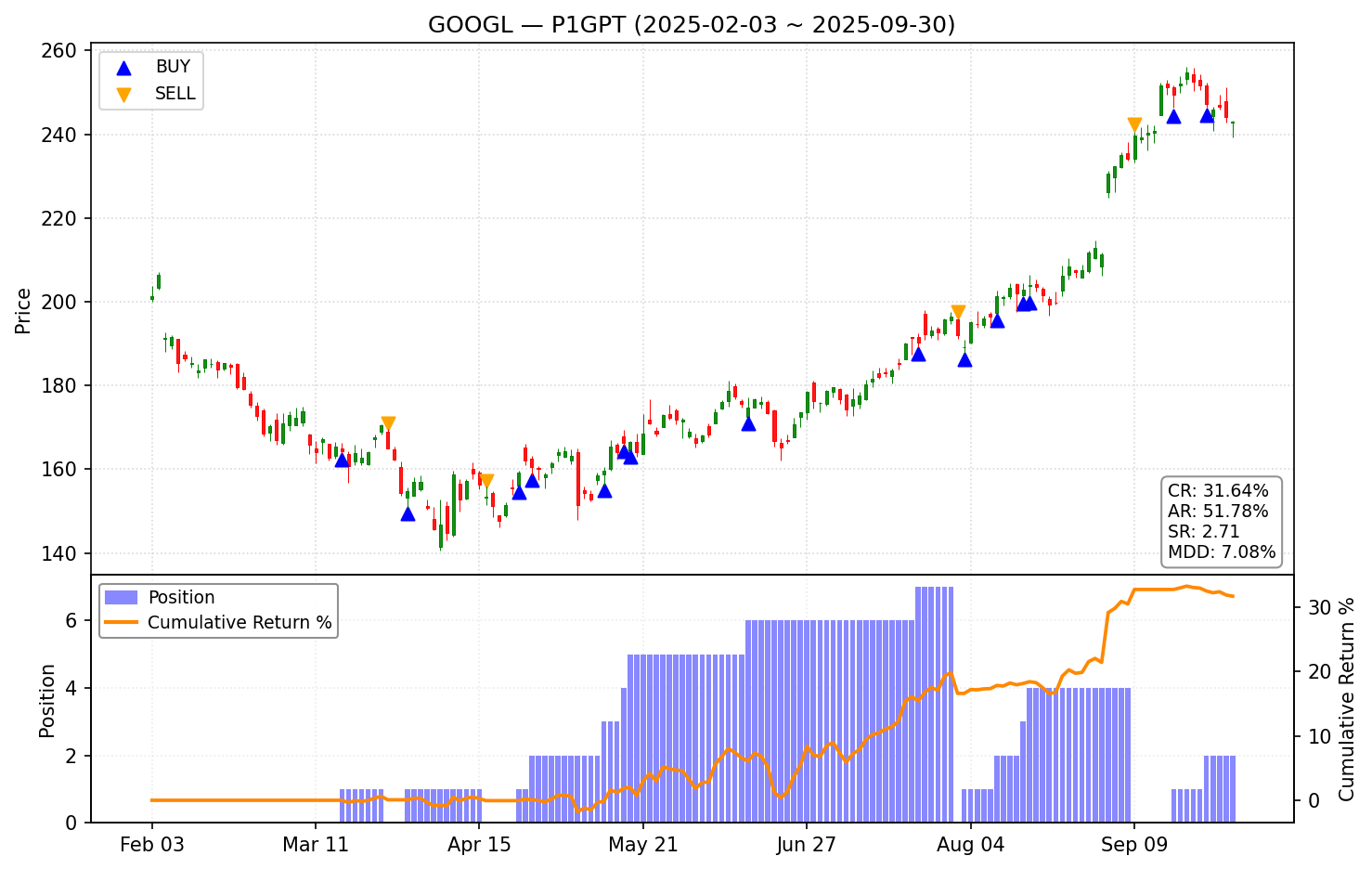
Figure 3: Trading trajectory of P1GPT on GOOGL (Feb. 3–Sep. 30, 2025), showing model-generated buy (blue) and sell (orange) signals, along with position and cumulative return evolution.
Cumulative Returns
The quantitative assessment reveals P1GPT’s ability to achieve cumulative returns exceeding 16% for AAPL, 31% for GOOGL, and 22% for TSLA, marking significant outperformance against baseline strategies (Figure 4).
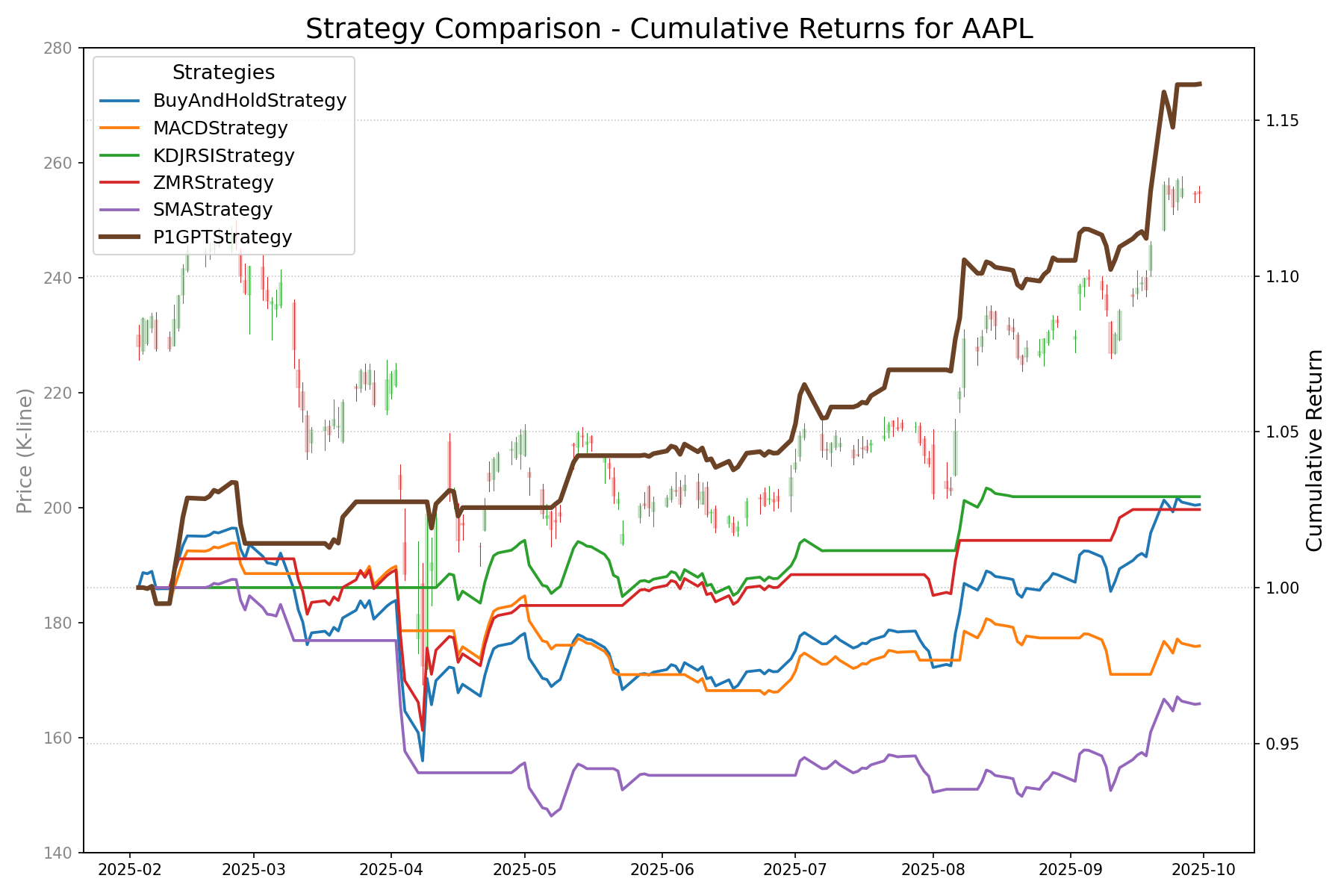
Figure 4: Cumulative Returns on AAPL using P1GPT. The figure shows the performance comparison of our model against baseline approaches for Apple Inc. stock analysis.
Discussion
P1GPT’s strength lies in its structured, multi-agent integration approach, enabling it to process and synthesize a wide range of financial data into coherent strategies. The model excels in adaptability and transparency, making risk-balanced decisions based on comprehensive, multi-modal insights. Its behavioral patterns indicate structured and explanatory entry and exit strategies within varied market conditions.
Conclusion
The P1GPT framework establishes a robust foundation for integrating LLMs into financial analysis, improving transparency, reliability, and risk-adjusted returns. Future work can extend into multi-asset portfolio strategies and real-world deployment scenarios, further enhancing the model's applicability and scalability in financial environments.