Unsupervised Anomaly Detection
This lightning talk explores the challenge of identifying rare and abnormal patterns in data without labeled examples. We'll examine why unsupervised anomaly detection is critical across industries, walk through the major methodological families from density-based methods to deep learning approaches, and understand how practitioners choose and evaluate models when ground truth is unavailable. The presentation concludes with insights into practical deployment, interpretability, and emerging directions in this rapidly evolving field.Script
Imagine searching for needles in a haystack when you've never actually seen a needle before. That's the fundamental challenge of unsupervised anomaly detection, where we must identify rare, abnormal patterns in data without any labeled examples to guide us.
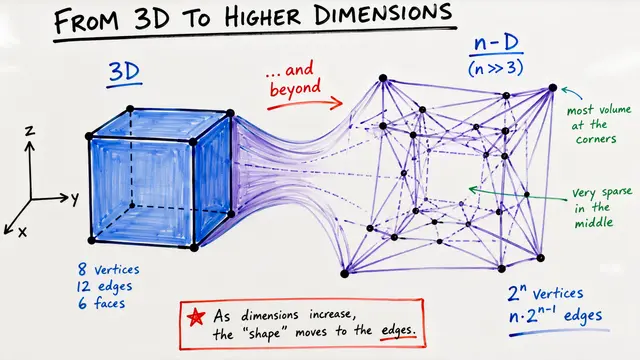
Building on that challenge, the unsupervised setting creates several compounding difficulties. We're working with fully unlabeled data where anomalies are vanishingly rare, often less than 1 percent, and conventional distance measures break down in high-dimensional spaces.
Let's examine the major families of methods that tackle this problem from different angles.
The field divides into complementary paradigms. Classical methods like Local Outlier Factor and Isolation Forest model normality through density and isolation, excelling in lower dimensions, while deep learning approaches reconstruct normal patterns and flag poor reconstructions as anomalies.
Manifold methods offer an elegant alternative by first compressing data into a lower-dimensional latent representation where normal samples form coherent clusters. Techniques like Latent Map Gaussian Process learn smooth nonlinear mappings while providing uncertainty estimates that enhance robustness.
Taking yet another angle, surrogate methods define an explicit target function and measure deviation, while deep metric learning optimizes embeddings so normal samples cluster tightly together. Both approaches benefit from ensemble strategies that deliver competitive benchmark performance.
Understanding the theory is one thing, but how do we actually deploy and evaluate these methods in practice?
Evaluation protocols are carefully designed to simulate real-world conditions. We train exclusively on normal data, reserve anomalies for testing, and use metrics like AUROC and F1-score with unsupervised threshold selection, recognizing that no single method universally excels.
The frontier is expanding rapidly. Federated approaches preserve privacy across distributed data, explainable tree-based and neural models offer interpretable predictions, and specialized architectures handle streaming or multimodal scenarios where traditional batch methods fall short.
Unsupervised anomaly detection transforms the impossible task of finding unknown unknowns into a tractable modeling challenge, one where geometric intuition, probabilistic reasoning, and deep learning converge. To dive deeper into the methods, benchmarks, and evolving research landscape, visit EmergentMind.com.