NTHU-DDD: Driver Drowsiness Dataset
This presentation introduces the National Tsing Hua University Drowsy Driving Dataset, a publicly available benchmark for detecting driver drowsiness through video analysis. We explore its multi-scenario structure, dense annotation scheme, and diverse preprocessing protocols, examine how state-of-the-art deep learning models leverage its spatiotemporal data, review reported performance benchmarks from supervised and unsupervised approaches, and discuss critical limitations including simulated labels and data scale constraints that shape future directions in driver state monitoring research.Script
Every year, drowsy driving causes thousands of preventable accidents. But how do we teach machines to recognize the subtle signs of fatigue before disaster strikes? The National Tsing Hua University Drowsy Driving Dataset provides researchers with a systematic benchmark to tackle exactly this challenge.
Let's begin by understanding what makes this dataset unique.
Building on that foundation, the dataset captures 36 drivers across five distinct scenarios ranging from daylight to infrared night conditions. With over 9 hours of footage segmented into short temporal clips, researchers gain access to tens of thousands of labeled samples that span realistic in-vehicle variations.
Now, what makes these videos truly useful is the annotation richness. Every frame carries not just a drowsy or alert label, but fine-grained markers for eye status, head pose, and mouth actions. However, it's important to note these labels reflect simulated fatigue behaviors rather than physiological measurements.
Next, let's examine how researchers structure and prepare this data for model training.
Proper data organization is critical for valid results. The best practice uses strict subject-independent splits, holding out entire drivers for testing to prevent the model from simply memorizing faces. Meanwhile, the preprocessing pipeline extracts facial landmarks, normalizes image dimensions, and enhances contrast to handle the diverse lighting conditions across scenarios.
With the data prepared, we can now explore the architectures researchers have applied.
Researchers have applied a diverse range of architectures to this dataset. Multi-patch convolutional networks process eyes and mouth separately, while recurrent and transformer models capture how drowsiness evolves across time. Two-stream fusion combines spatial appearance with motion, and unsupervised autoencoders detect anomalies by learning to reconstruct only alert behavior.
These architectures have delivered impressive benchmarks. The top supervised model achieves over 94% accuracy while maintaining real-time throughput, and even unsupervised methods reach above 87% AUC without any drowsy training examples. Yet transformers struggle, achieving just 44% test accuracy despite strong training performance, highlighting the dataset's overfitting challenges.
Finally, understanding the dataset's limitations is essential for advancing this research domain.
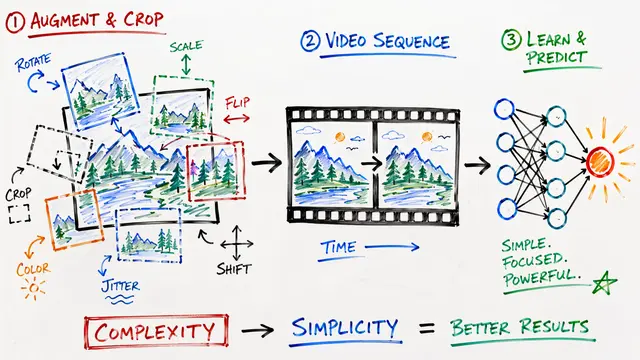
Despite its contributions, the dataset has important limitations. All drowsy states are acted rather than physiologically verified, and the scale remains too small for modern deep networks. The lack of data augmentation and the need for more genuine, diverse driving conditions point to clear next steps for the research community.
NTHU-DDD has become a foundational benchmark, pushing forward our ability to detect driver fatigue through video alone. By addressing its current constraints, the next generation of datasets will bring us closer to truly reliable, real-world driver safety systems. To explore more cutting-edge research in computer vision and safety, visit EmergentMind.com.