How to Read Mathematics? A Study Guide
This lightning talk presents a systematic framework for effectively engaging with mathematical texts, moving beyond passive reading to deliberate cognitive engagement. We'll explore the paper's multistage reading procedure—from initial survey through proof comprehension to big-picture synthesis—and examine its evidence-based perspective on AI tools in mathematical learning, including recent neuroimaging findings that reveal cognitive costs of overreliance on large language models.Script
Most students treat math textbooks like novels, reading page after page hoping comprehension will accumulate. This paper argues that approach is fundamentally broken.
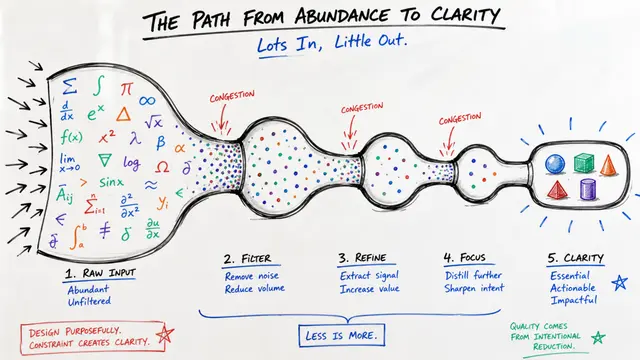
The authors establish a counterintuitive operational metric: comprehension per page, not pages per hour. Reading slowly with deliberate questioning is the foundation, paired with iterative passes rather than single linear progression.
The framework decomposes mathematical reading into five cognitive stages. After surveying the text's logical structure, readers interrogate each definition for its novelty and scope, then dissect proofs for their high-level strategy and line-by-line dependencies, verify understanding through exercises, and synthesize local details back into the overarching narrative.
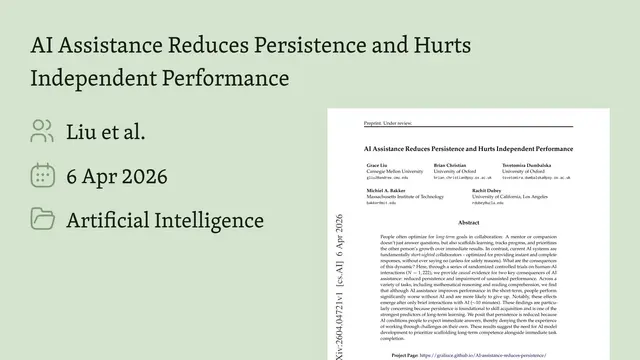
The paper takes a sharp turn into AI, citing neuroimaging research that reveals overreliance on large language models diminishes alpha and beta connectivity in learners' brains. Students who defaulted to AI assistance showed persistent lags in memory recall and reduced sense of ownership over their work.
While the authors acknowledge AI can provide utility in certain contexts, they argue it should never be a default component of mathematical reading. The risk is disintermediation from active reasoning, the very cognitive framework essential for professional mathematical research.
Deep mathematical comprehension isn't a destination you reach by rushing through pages. It's a deliberate climb with precise waypoints, and you can explore the full framework and create your own video at EmergentMind.com.