Nonlinear Cluster Lens Reconstruction
This presentation explores how astronomers use advanced computational methods to map the invisible dark matter in galaxy clusters through gravitational lensing. We'll cover the fundamental nonlinear physics that makes traditional models inadequate, examine cutting-edge reconstruction algorithms that handle thousands of parameters, and discover how these techniques are revolutionizing our understanding of cosmic structure and enabling precision cosmology with next-generation telescopes.Script
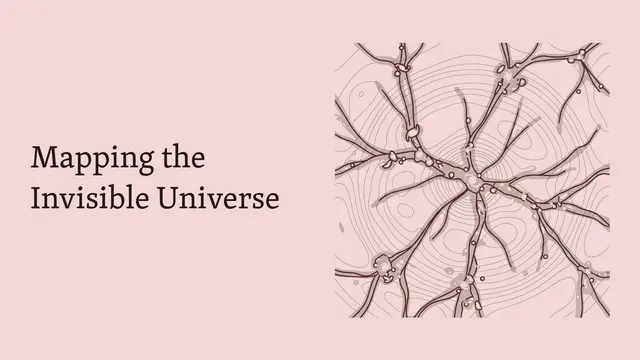
Imagine trying to map an invisible mountain using only the shadows it casts. This is the challenge astronomers face when reconstructing the dark matter in galaxy clusters, where the shadows are distorted galaxies and the mountain is made of matter we cannot see directly.
Let's start by understanding why traditional linear methods fail in cluster cores.
Traditional linear approximations completely fail when the reduced shear approaches unity in cluster cores. The lens equation becomes fundamentally nonlinear, requiring sophisticated methods to handle multiple images and the complex deflections caused by dark matter substructure.
The core mathematics involves mapping source positions through complex deflection angles, with convergence and shear derived from the lensing potential. Modern methods use grid-based inversions handling thousands of parameters, where careful regularization prevents spurious ring-like artifacts.
Now let's explore the algorithmic approaches that make nonlinear reconstruction possible.
The MARS algorithm exemplifies modern free-form methods, using maximum entropy reconstruction with cross-entropy regularization to solve for pixelwise convergence values. Advanced gradient-based solvers can handle over 10,000 parameters while achieving remarkable 0.02 arcsecond precision in source plane scatter.
Genetic algorithms like GRALE take a completely different approach through multi-objective optimization. They generate ensemble solutions that are robust to inherent degeneracies while requiring minimal astrophysical assumptions, using adaptive meshing to boost resolution where constraints are strongest.
The contrast between approaches is striking. Traditional parametric methods rely on fixed mass profiles and built-in assumptions, while modern free-form techniques provide model-independent reconstruction that naturally captures complex substructure through purely data-driven analysis.
Beyond basic lensing, researchers now incorporate sophisticated higher-order effects.
Flexion measurements capture third derivatives of the lensing potential, enabling detection of dark matter subhalos as small as 3 times 10 to the 12th solar masses. This reduces aperture-mass bias from 30% down to just 13% while achieving 10 arcsecond resolution for local mass gradients.
Pixel-based surface reconstruction leverages the complete morphology of giant arcs by forward modeling every pixel through the lens mapping. This allows simultaneous recovery of both lens and source properties, achieving order-of-magnitude improvements in accuracy near critical curves.
The real power emerges when combining multiple types of lensing data.
Combining strong lensing core constraints with weak shear mapping and magnification bias creates a powerful multi-probe approach. This integration explicitly breaks classical degeneracies like the mass-sheet ambiguity that has plagued single-probe analyses.
Hybrid approaches like hybrid-Lenstool combine parametric modeling in cluster cores with free-form grids in the outskirts. Joint optimization across all scales produces unbiased mass profiles with superior smoothness compared to sequential fitting approaches.
Recent advances have extended these methods into three dimensions.
Three-dimensional extensions use adaptive LASSO methods with sparsity-enhancing priors based on multiscale NFW dictionaries. These physically motivated approaches achieve sub-percent redshift bias in cluster detection while maintaining impressively low false-positive rates.
Let's examine the quantitative performance of these sophisticated methods.
The precision achievements are remarkable, with image-plane accuracies of 0.05 to 0.10 arcseconds representing 5 to 10 times improvement over previous models. Modern implementations routinely handle optimizations with over 10,000 parameters thanks to GPU acceleration enabling near real-time analysis.
Systematic control comes through bootstrap resampling to validate uncertainties and cross-validation against parametric models. Physical stopping criteria prevent overfitting while ensemble averaging effectively mitigates reconstruction artifacts that plagued earlier methods.
These technical advances enable transformative science across multiple frontiers.
The cosmological impact spans from dark matter substructure studies at unprecedented scales to precision measurements of the Hubble constant from lensed transients. These methods also enable de-lensing of high-redshift galaxy populations and detailed star formation studies in highly magnified sources.
JWST observations are revealing 2 to 3 times more multiple images with enhanced surface-brightness sensitivity, demanding algorithms that combine Bayesian self-consistency with pixel-level modeling. Next-generation surveys will push these computational methods to their limits.
Future computational advances include automatic differentiation for streamlined gradient calculations and nested Dirichlet processes for intelligent model selection. The goal is truly non-parametric 3D reconstructions running in real-time within survey data pipelines.
Nonlinear cluster lens reconstruction represents a remarkable fusion of fundamental physics, computational innovation, and astronomical discovery, transforming invisible dark matter into precise maps that illuminate the cosmic web itself. To explore more cutting-edge research at the intersection of physics and computation, visit EmergentMind.com.