Galaxy Clusters as Cosmic Telescopes
This presentation explores how galaxy clusters act as gravitational lenses, warping spacetime to magnify distant galaxies and reveal the invisible architecture of dark matter. We'll examine the cutting-edge techniques astronomers use to decode these cosmic magnifying glasses, from parametric modeling to free-form reconstruction, and discover how they're revolutionizing our understanding of cluster mass distribution, high-redshift galaxies, and fundamental cosmology.Script
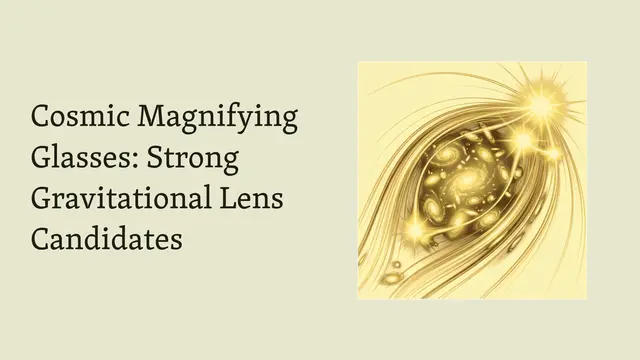
Imagine the universe's most massive structures acting as giant magnifying glasses, bending light from the most distant galaxies and revealing secrets hidden in both dark matter and cosmic history. Galaxy clusters, weighing as much as a quadrillion suns, create some of the most spectacular gravitational lenses in the cosmos.
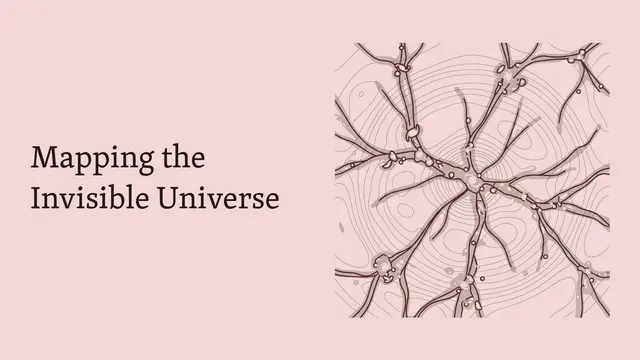
Building on this cosmic lens phenomenon, researchers face a fundamental challenge in mapping dark matter within galaxy clusters. Unlike traditional methods that rely on assumptions about cluster equilibrium, gravitational lensing provides a direct probe of the mass distribution.
Let's dive into the physics that makes these cosmic telescopes work.
The mathematics of strong lensing reveals itself through several key observables that encode the cluster's mass distribution. When a cluster's gravitational field is strong enough, it creates multiple images of the same background galaxy, each following a different light path around the lens.
Moving to practical implementation, researchers have developed two complementary philosophies for reconstructing cluster mass distributions. The choice between parametric and free-form approaches often depends on whether the cluster appears relaxed or is actively merging.
The actual modeling process follows a systematic workflow that transforms observed lensing features into detailed mass maps. Each step requires careful attention to systematic uncertainties, particularly in the identification of multiple image families.
Now let's explore the remarkable scientific discoveries enabled by cluster lensing models.
This spectacular example demonstrates the exquisite detail possible with cluster strong lensing. The numbered features in the multiple images allow astronomers to reconstruct the local lens properties with remarkable precision, revealing not just the cluster's mass but also detailed structure in the lensed galaxy itself.
Cross-validation studies using both simulated and real clusters have revealed impressive consistency in mass measurements. The Hubble Frontier Fields provided crucial test cases, showing that while detailed 2D maps can vary between models, integrated mass quantities are remarkably robust.
Perhaps the most intriguing tension has emerged in galaxy-galaxy strong lensing within clusters. The observed abundance of these events significantly exceeds predictions from Lambda CDM simulations, suggesting either missing physics in the models or new insights about dark matter substructure.
Beyond mass mapping, clusters serve as nature's most powerful telescopes for studying the early universe. The magnification they provide has revolutionized high-redshift galaxy studies, and JWST is now revealing lensing features that were completely invisible to previous generations of telescopes.
Cluster lensing has become a powerful laboratory for testing fundamental dark matter physics. The technique can probe both the small-scale cutoffs predicted by warm dark matter models and the macroscopic effects expected from self-interacting dark matter scenarios.
Cluster lensing is emerging as a powerful cosmological probe through time-delay measurements of multiply-imaged supernovae and quasars. The technique offers a potentially independent route to measuring the Hubble constant, though systematic uncertainties in magnification maps remain a key challenge.
Despite these successes, several systematic challenges continue to limit the precision of cluster lensing studies.
The Achilles heel of cluster lensing lies in magnification uncertainties that can exceed statistical errors, particularly at the high magnifications most valuable for studying faint galaxies. Different modeling teams can produce significantly different magnification maps even when using the same observational constraints.
On the observational front, the lack of spectroscopic redshifts for many multiple image systems remains a bottleneck. Additionally, the very center of clusters often lacks strongly lensed images, making it difficult to distinguish between different dark matter profile models in the core regions.
The future of cluster lensing is being revolutionized by new space-based observations and upcoming surveys.
JWST is already transforming cluster lensing by revealing multiple image systems that were invisible to Hubble. Early observations of clusters like SMACS J0723 show the dramatic improvement in constraint power when many more lensing features are available for modeling.
The upcoming Euclid mission will shift cluster lensing from detailed studies of individual systems to statistical analyses of vast samples. This transition will enable population-level tests of dark matter physics and provide the large samples needed for precision cosmology.
The field is also advancing methodologically, with new approaches to handle the complexity of multi-plane lensing and the development of automated techniques that can scale to the data volumes expected from next-generation surveys.
Cluster strong lensing stands at the intersection of dark matter physics, galaxy evolution, and precision cosmology, transforming some of the universe's most massive structures into precision instruments for fundamental physics. Visit EmergentMind.com to explore the latest developments in gravitational lensing and discover how these cosmic telescopes continue to reshape our understanding of the universe.