Who's Responsible When AI Agents Act Autonomously?
This presentation explores a provocative framework for assigning legal responsibility in autonomous AI systems. Drawing on Promise Theory, it argues that responsibility should often flow downstream—to the agent that accepts and executes a recommendation—rather than automatically to the model provider or developer. The talk examines how promises, autonomy, and conditional cooperation reshape accountability in agentic AI systems composed of LLMs, orchestrators, tools, and users.Script
An Large Language Model recommends an action, but the AI wrapper decides whether to execute it. When that execution causes harm, who bears responsibility—the model that suggested it, or the agent that accepted and carried it out?
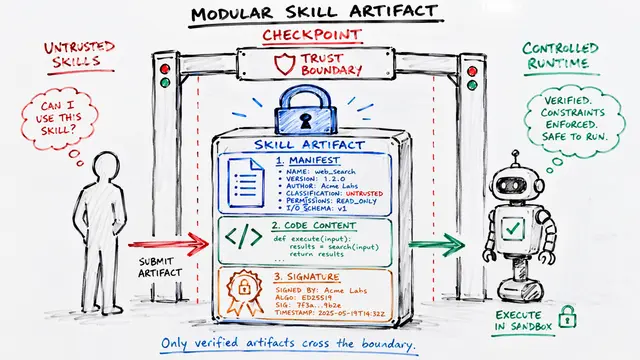
Promise Theory treats each component as an autonomous agent. The Large Language Model provider promises to generate text. The orchestrator promises to coordinate actions. The tool promises to return data. No agent can promise anything on behalf of another, because autonomy means each controls only its own behavior.
The Downstream Principle reverses our usual intuition. Responsibility belongs to the agent that accepts an upstream input, not the one that generated it. The receiver decides whether to trust, verify, reject, or act—and that decision makes them causally responsible.
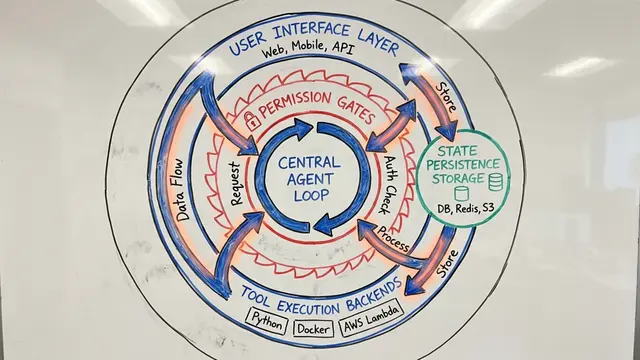
In an agentic AI stack, the orchestrator accepts the user's request, evaluates the Large Language Model's output, authorizes tool access, and validates results before taking action. This coordination role carries substantial responsibility, because the orchestrator is the downstream agent with final authority to proceed or refuse.
When harm occurs, conventional legal analysis often searches for a single responsible party. But in distributed AI systems, causation may involve the model provider's limitations, the integrator's acceptance decision, inadequate validation, tool failures, and user choices. The framework asks which promises were made, which were accepted, and where the decisive autonomous decision occurred.
As AI agents grow more capable and autonomous, responsibility will hinge on explicit promises, auditable decisions, and conditional cooperation. Visit EmergentMind.com to explore the full paper and create your own videos unpacking the future of AI accountability.