AgentOS: From Application Silos to a Natural Language-Driven Data Ecosystem
This presentation explores AgentOS, a radical reimagining of operating system architecture that transforms the OS from a collection of isolated applications into a continuous knowledge discovery pipeline. Instead of traditional graphical interfaces, AgentOS presents a single natural language portal backed by an Agent Kernel that interprets ambiguous user intent, orchestrates multi-agent workflows, and constructs personal knowledge graphs. The system reframes core OS functions as data mining challenges—intent disambiguation, skill retrieval as recommendation, and workflow automation through sequential pattern mining—while introducing semantic security mechanisms to address the unique risks of LLM-driven agents. This architectural shift establishes a foundation for intent-centric, continuously learning personal computing platforms.Script
Current AI agents like OpenClaw operate as legacy applications within traditional operating systems, creating architectural mismatches that manifest as semantic information loss, brittle action pipelines, and unstructured permission escalation. This paper proposes AgentOS, a radical reconceptualization: the operating system as a continuous knowledge discovery pipeline, shifting focus from deterministic software engineering to real-time intent mining and agent orchestration.
Today's AI agents exist in what the authors call a Shadow AI scenario. They operate invisibly within traditional operating systems designed for human-driven applications, not autonomous agents. This mismatch creates fragmentation, where agents lose semantic context as they interact through interfaces built for humans, and introduces serious security vulnerabilities because the OS has no native understanding of agent intent or behavior.
AgentOS eliminates this mismatch through a fundamental architectural redesign.
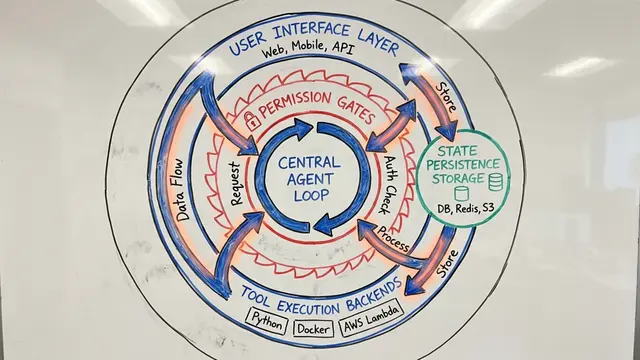
The desktop disappears entirely, replaced by a Single Port for natural language interaction. The Agent Kernel becomes the computational core, interpreting ambiguous user directives and orchestrating execution through multiple specialized agents. Instead of monolithic applications, the system operates on Skill Modules, fine-grained workflow components that users can define and modify through conversation. The kernel explicitly manages Large Language Model resource scheduling, dynamically allocating context windows and token budgets to prevent resource contention under concurrent agent execution.
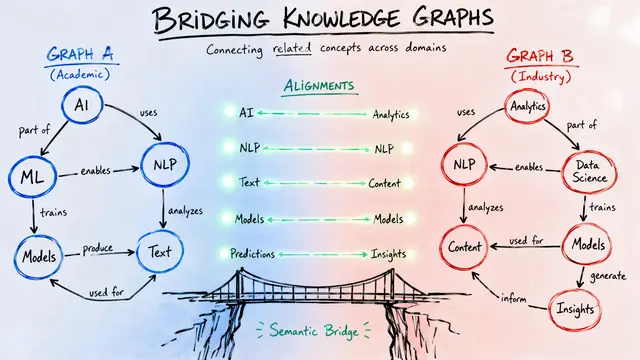
AgentOS transforms core operating system functions into knowledge discovery challenges. The kernel constructs Personal Knowledge Graphs that ground natural language requests in user history and behavioral patterns, enabling contextual disambiguation without explicit user specification. Skill retrieval becomes a recommendation problem, where embedding-based architectures jointly encode situational context and functional metadata to surface relevant capabilities. Sequential Pattern Mining algorithms analyze temporal logs of agent actions to identify repeated workflows, which the kernel then automates, synthesizing macros that eliminate redundant user interactions.
The probabilistic nature of large language model-driven agents amplifies security risks that traditional access control cannot address. AgentOS introduces a semantic firewall that performs real-time analysis of both intent and data provenance, detecting adversarial inputs and preventing privilege escalation through semantic manipulation. Because agents can hallucinate or execute erroneous actions, the system mandates robust, millisecond-latency state rollback mechanisms, allowing rapid reversal of incorrect action trajectories before damage propagates.
AgentOS reframes operating system design as a continuous data mining problem, where the kernel must infer intent, recommend capabilities, and adapt to behavioral patterns in real time. This architectural vision establishes the foundation for intent-centric computing platforms where users articulate goals naturally and the system orchestrates autonomous execution. Visit EmergentMind.com to explore more research and create your own presentation videos.