The Kitchen Loop: Self-Evolving Code Through Specification-Driven Verification
This presentation explores a revolutionary framework for autonomous software evolution that shifts the development bottleneck from writing code to articulating specifications. The Kitchen Loop demonstrates how AI agents, orchestrated through rigorous verification and adversarial testing, can autonomously evolve complex production codebases with zero regressions. Through a six-phase improvement cycle and coverage-exhaustion methodology, the system achieved over 1,094 merged pull requests across production deployments while maintaining perfect safety records and monotonically improving quality metrics.Script
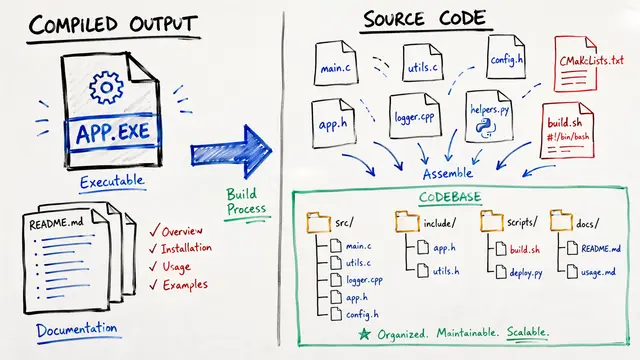
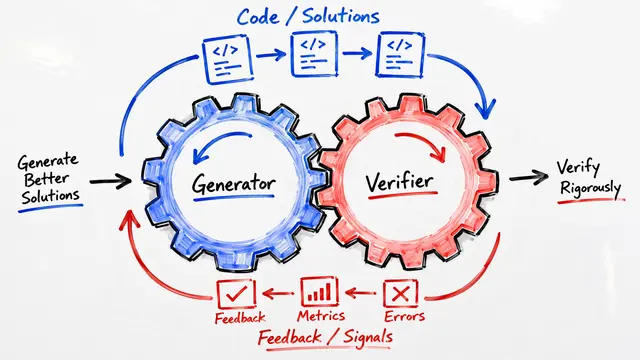
Code writing is now a commodity. Language models can generate code faster than humans, but that creates a new bottleneck: how do you verify that autonomous agents won't break your production system? The Kitchen Loop solves this by flipping the paradigm—shifting from reactive bug fixing to exhaustive specification-driven verification, enabling codebases to evolve themselves safely.
Traditional development waits for bugs to surface. The Kitchen Loop inverts this: it systematically enumerates every combination in your product's specification matrix and tests them all. As the system adds features, coverage doesn't just grow linearly—it explodes superlinearly through compositional scenarios that exercise the seams between capabilities. This turns verification from reactive patching into proactive exhaustion.
But exhaustive testing alone isn't enough if the tests themselves are flawed.
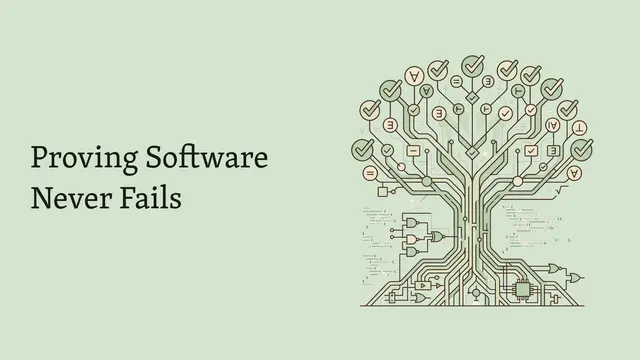
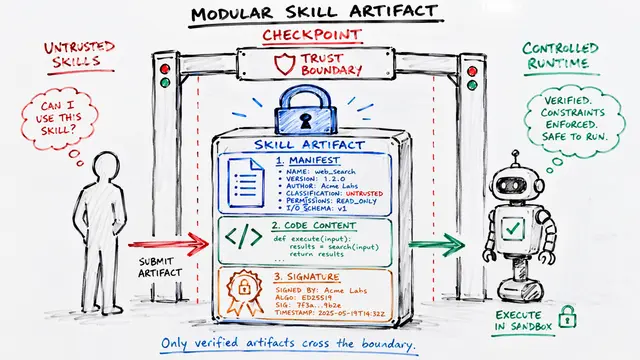
Here's the critical insight: implementer-written tests are never trusted alone. The Kitchen Loop deploys adversarial user acceptance testing where independent agents challenge each pull request. A multi-model tribunal—spanning Codex, Gemini, and CodeRabbit—cross-verifies changes to prevent any single model from gaming the system. Anti-signal canaries ensure the quality infrastructure itself works by injecting deliberate failures that must be caught.
The proof lives in production. The Almanak SDK demonstrates this framework at scale: 14 blockchain networks, over 30 protocol connectors, yielding roughly 1,000 specification combinations that must all be verified. Across 122 autonomous iterations and 728 merged pull requests, the system maintained zero detected regressions while discovering and fixing critical bugs that would have caused silent transaction failures. The loop even healed its own infrastructure failures—merge automation bugs, memory issues—by applying its verification process to itself.
The numbers tell a story of structural safety. Over 1,000 pull requests merged with zero regressions caught by the regression oracle. Quality gates improved monotonically from the 70s and 80s to perfect scores. And the economics work: 38 cents per merged pull request. Automated pause gates monitor drift across quality metrics, test counts, and canary escape rates—halting evolution when degradation is detected. This isn't theoretical; it's operational discipline enforced by the loop itself.
The Kitchen Loop proves that when you shift the bottleneck from code generation to specification verification, autonomous evolution becomes not just possible but safer than human-driven development. The future of software engineering is specification-driven, adversarially verified, and self-healing. Visit EmergentMind.com to explore this paper further and create your own research videos.