Graph-Based Agentic AI with LangGraph: Structured Orchestration for Stateful Business Workflows
This lightning talk examines LangGraph, a low-level orchestration framework designed for stateful, long-running business workflows powered by large language models. The presentation explores why graph-based workflow control matters for production AI systems, demonstrates three canonical design patterns—SQL analytics with repair loops, evidence-gated retrieval, and human-in-the-loop policy review—and clarifies when explicit orchestration justifies its engineering overhead versus simpler alternatives.Script
Most language model systems fail quietly when something goes wrong, burying retry logic in logs and losing state when execution pauses. LangGraph takes the opposite approach: it makes workflow control explicit, durable, and auditable by design.
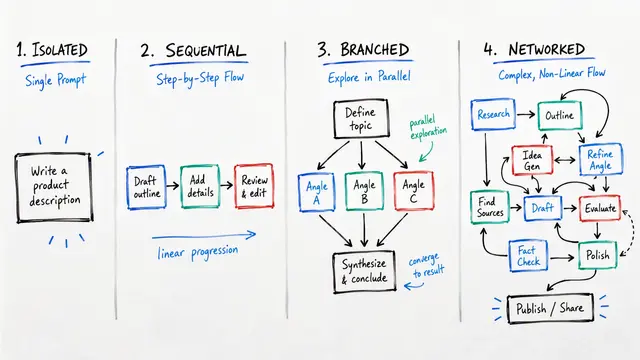
The authors demonstrate three canonical patterns where graph orchestration provides clear engineering advantages. SQL analytics agents need repeatable repair loops when queries fail validation. Retrieval systems require evidence quality gates before answering. And high-stakes decisions demand durable pause points for human approval, with full state preserved across the interruption.
LangGraph exposes workflow primitives as first-class constructs. Typed state objects carry inputs, intermediate results, and retry counts across nodes. Conditional edges determine routing based on explicit state evaluation, not hidden logic. Checkpoints enable pause and resume without losing execution fidelity.
Consider the SQL analytics pattern in detail. The workflow tracks question, schema, candidate query, error messages, and retry attempts as explicit state. When validation or execution fails, routing logic directs the path back to generation up to a retry limit, or to terminal failure. Successful execution proceeds to summarization, and every decision is traceable.
The framework comes with real trade-offs. State schemas, explicit builders, routing functions, and checkpointing add cognitive overhead that is unjustified for simple, stateless tasks. The decision to use graph orchestration must be driven by actual requirements: pause and resume capability, explicit branching as operational semantics, auditable recovery paths, or compliance tracing.
As language model systems move from demos into regulated production environments, transparent and auditable workflow control becomes a product requirement, not an implementation detail. If you want to explore how graph-based orchestration can bring structure to your stateful AI workflows, visit EmergentMind.com to dive deeper and create your own presentation.