GPIC: The First Giant Permissive Image Corpus for Visual AI
This lightning talk introduces GPIC, a groundbreaking 100-million-image dataset designed to solve critical reproducibility and accessibility challenges in visual generative modeling. We explore how legacy benchmarks have become saturated, why proprietary datasets block scientific progress, and how GPIC's permissive licensing, rigorous construction pipeline, and novel evaluation metrics create a new foundation for transparent, scalable research in text-to-image generation and beyond.Script
Most image datasets used to train AI are either locked behind corporate walls or slowly disappearing as web links rot. GPIC changes that with 100 million fully permissive images, each carrying a legal guarantee for research and commercial use.
The authors built a four-stage pipeline to ensure quality and legality. Images are sourced exclusively from Flickr and Wikimedia with permissive licenses, filtered for quality and safety, deduplicated using visual similarity in feature space, and captioned with a specialized vision-language model selected for its quality-throughput tradeoff.
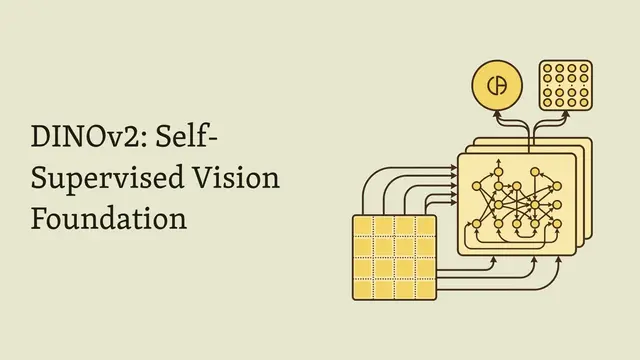
Traditional benchmarks like ImageNet have hit a ceiling: models now score better on FID than real images do, a clear sign the metric is broken. The authors introduce FD-DINOv2, computed in DINOv2 feature space, which remains unsaturated and preserves discriminative power even for state-of-the-art models.
GPIC's evaluation protocol is designed to catch overfitting. The benchmark compares generated images against a held-out 1 million image test set, not the training data, and explicitly discourages training models to optimize FD-DINOv2 directly. The authors also release a baseline model achieving an FD-DINOv2 of 76.25 to anchor future comparisons.
The authors acknowledge a deliberate tradeoff: deduplication is conservative because permissive data is expensive to acquire. Some near-duplicates remain, but manual inspection and collision checks confirm the prevalence is low. Every image retains full attribution metadata to ensure legal traceability.
GPIC removes the legal and practical barriers that have fragmented the field for years. With permissive licensing, stable hosting, and transparent benchmarking, the authors have built a foundation for reproducible visual AI research. Explore the full dataset and create your own lightning talks at EmergentMind.com.