SynthFace Dataset Overview
This presentation explores the SynthFace dataset family, focusing on the landmark SYN-1M collection of one million parametrically generated face images. We examine its 3D morphable model foundation, rigorous annotation scheme, and experimental validation showing that synthetic pre-training can close the gap with real-world data through strategic fine-tuning. The talk highlights how explicit control over identity, pose, and illumination has made SynthFace a cornerstone for privacy-preserving research and bias auditing in facial recognition systems.Script
A single face recognition model trained on one million images that never existed has outperformed systems trained on half a million real photographs. SynthFace makes this possible by generating faces not from cameras, but from controlled mathematical equations.
SynthFace builds on the Basel Face Model, a parametric system where every face is a point in a learned statistical space. Shape and skin tone emerge from sampling Gaussian coefficients, while illumination follows a 27-dimensional spherical harmonics model derived from thousands of real lighting conditions.
This mathematical precision translates into a dataset with unusual properties.
SYN-1M contains 10,000 synthetic identities, each rendered 100 times under systematically varied conditions. Every image comes with perfect annotation because the rendering parameters themselves are the labels. No guesswork, no crowdsourced errors, just mathematical certainty.
But does training on equations actually work when tested on real faces?
A FaceNet model trained only on SynthFace reaches 89% accuracy on controlled poses but falls to 80% on unconstrained photos. The gap is real. Synthetic data alone leaves performance on the table, especially when faces appear in truly wild conditions.
Here is where SynthFace proves its value. Pre-training on synthetic data, then fine-tuning with just 100,000 real images, beats a model trained on real data alone. The synthetic foundation transfers robustly. Even a modest real-world correction closes the gap and sets a new efficiency benchmark.
SynthFace did not end the story; it opened the door.
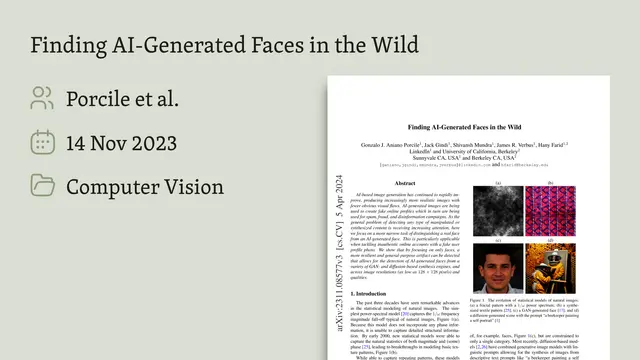
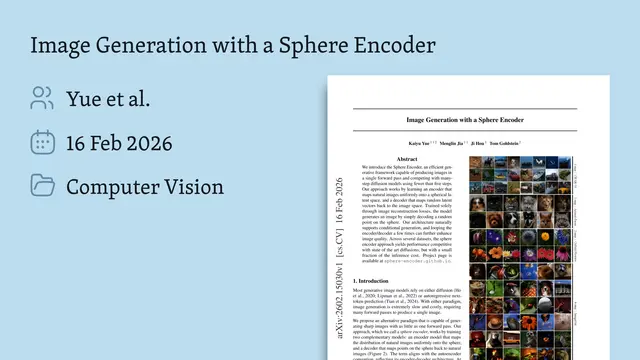
SynthFace established a template. Later systems replaced parametric rendering with StyleGAN and diffusion models, pushing visual realism far beyond 96 pixel squares. But the core insight remains: when you control the generative process, you control the labels, the diversity, and the ethical footprint.
One million faces that never existed taught us how to see the ones that do. Visit EmergentMind.com to learn more and create your own videos.