How High Can GPT-6 Astra Climb in Contact-Rich Manipulation? PhysLadder: A Hierarchical, Matched Sim-Real Benchmark for Physical Interaction
Abstract: We introduce PhysLadder, a hierarchical Sim-Real benchmark for evaluating physical interaction capabilities in contact-rich manipulation. Its 16 household tasks span three cumulative levels: contact selection and geometric alignment (L1), force regulation within sustained contact (L2), and coordinated contact reconfiguration and force regulation (L3). Each task is instantiated in physically and visually matched simulated and real-world environments, with shared task definitions and success criteria. We evaluate GPT-6 Astra zero-shot with three trials per task in each environment. Real-world success rates decline from 80.0% at L1 to 47.6% at L2 and 0.0% at L3, with corresponding simulation rates of 66.7%, 47.6%, and 0.0%. Ten of the 16 tasks have identical success counts across environments; the remaining six differ by one success out of three trials. Across both environments, recurring difficulties in spatial reasoning, contact selection, force regulation, and coordination often prevent local physical progress from accumulating into task completion. These findings characterize Astra's observed capability boundary across increasing interaction demands and, for this model, support matched simulation as a repeatable, scalable testbed for studying the sustained, coordinated physical interactions that limit reliable manipulation.
First 10 authors:











Paper Prompts
Sign up for free to create and run prompts on this paper.
Explain it Like I'm 14
1. What is the paper about?
This paper studies how well a robot controlled by GPT-6 Astra can handle objects in the physical world. The researchers are especially interested in tasks where the robot must touch, push, pull, twist, or move objects carefully.
For example, the robot might need to:
- Hang a hat on a hook
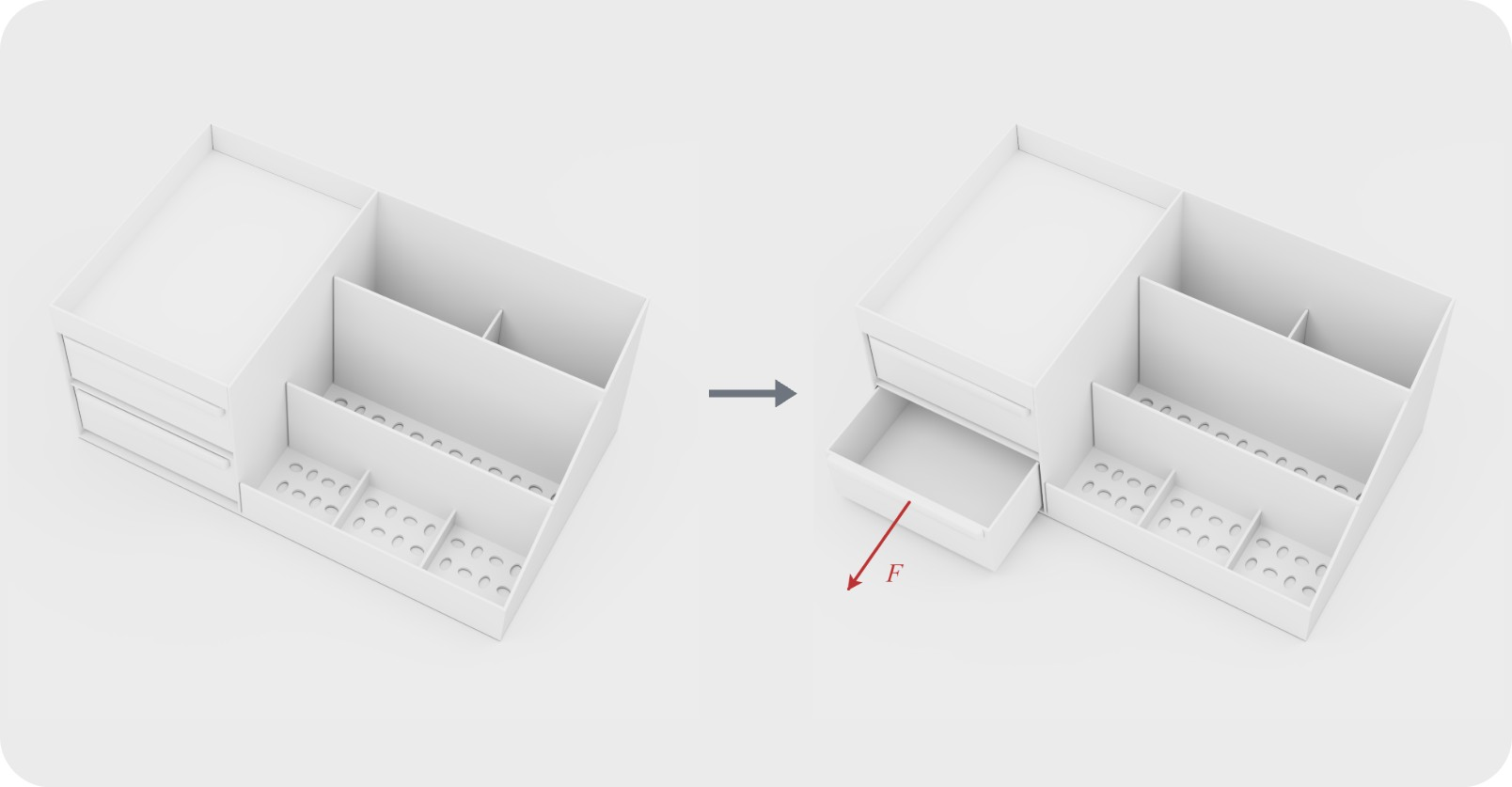
- Pull open a drawer
- Pour marbles
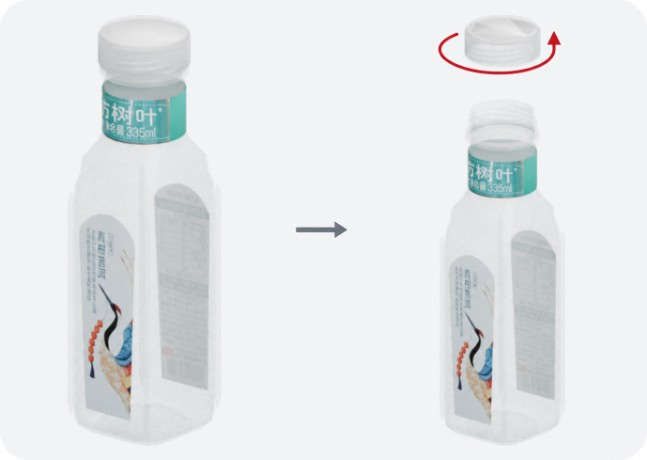
- Remove a bottle cap
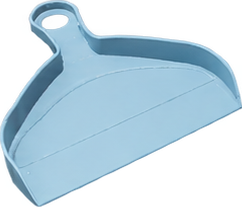
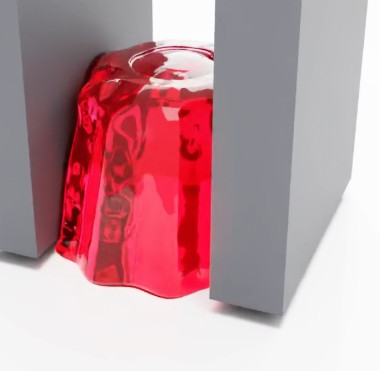
- Sweep blocks together
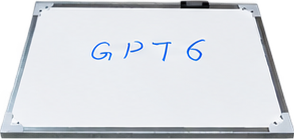
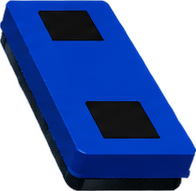
- Wipe a whiteboard
The researchers created a test called PhysLadder. It is called a “ladder” because the tasks become harder step by step.
2. What questions are the researchers asking?
The main questions are:
- What kinds of physical tasks can GPT-6 Astra complete successfully?
- What happens when the tasks require more careful touching and controlling of objects?
- Does the robot perform similarly in a computer simulation and in the real world?
- What are the robot’s most common mistakes?
The researchers want to know more than whether the robot succeeds or fails. They also want to understand why it fails.
3. How was the research done?
The PhysLadder test
The researchers organized 16 household tasks into three levels:
| Level | What the robot must do | Example |
|---|---|---|
| L1 | Choose the right place to touch an object and line things up correctly | Placing a marker or hanging a hat |
| L2 | Keep touching an object while controlling how much force to use | Pulling a drawer or wiping a board |
| L3 | Change its contact with the object while also controlling force | Unscrewing a cap or sweeping objects in several steps |
Each level includes the skills from the level before it, plus something more difficult.
Simulation and real-world testing
The researchers built two versions of each task:
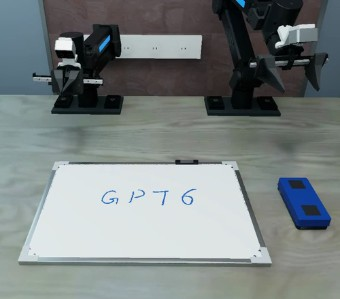
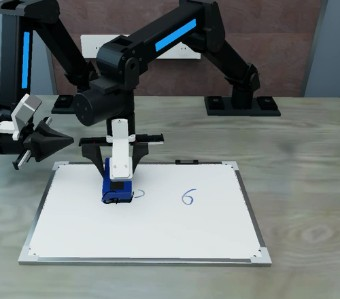
- A simulation, which is a computer-generated environment
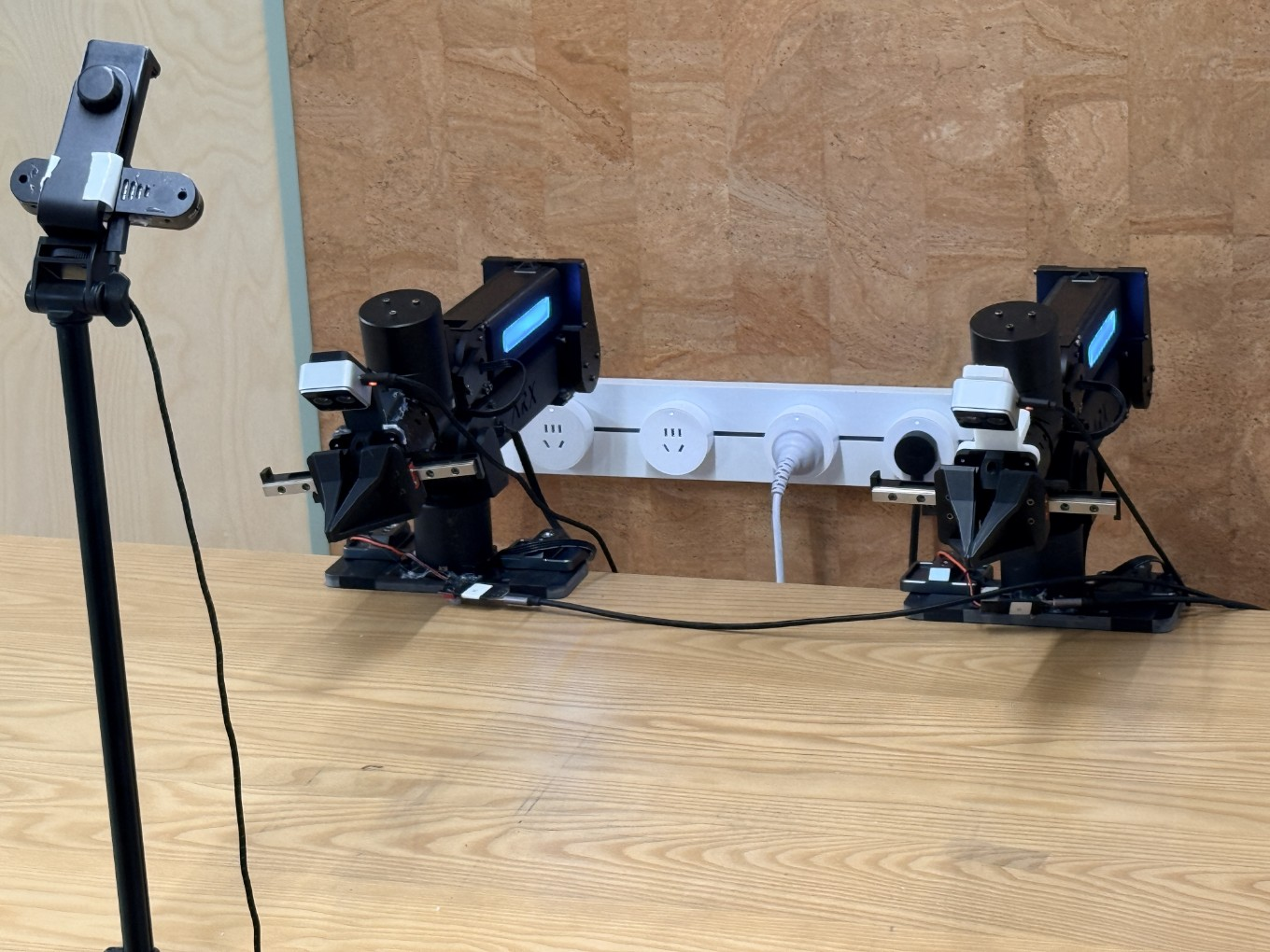
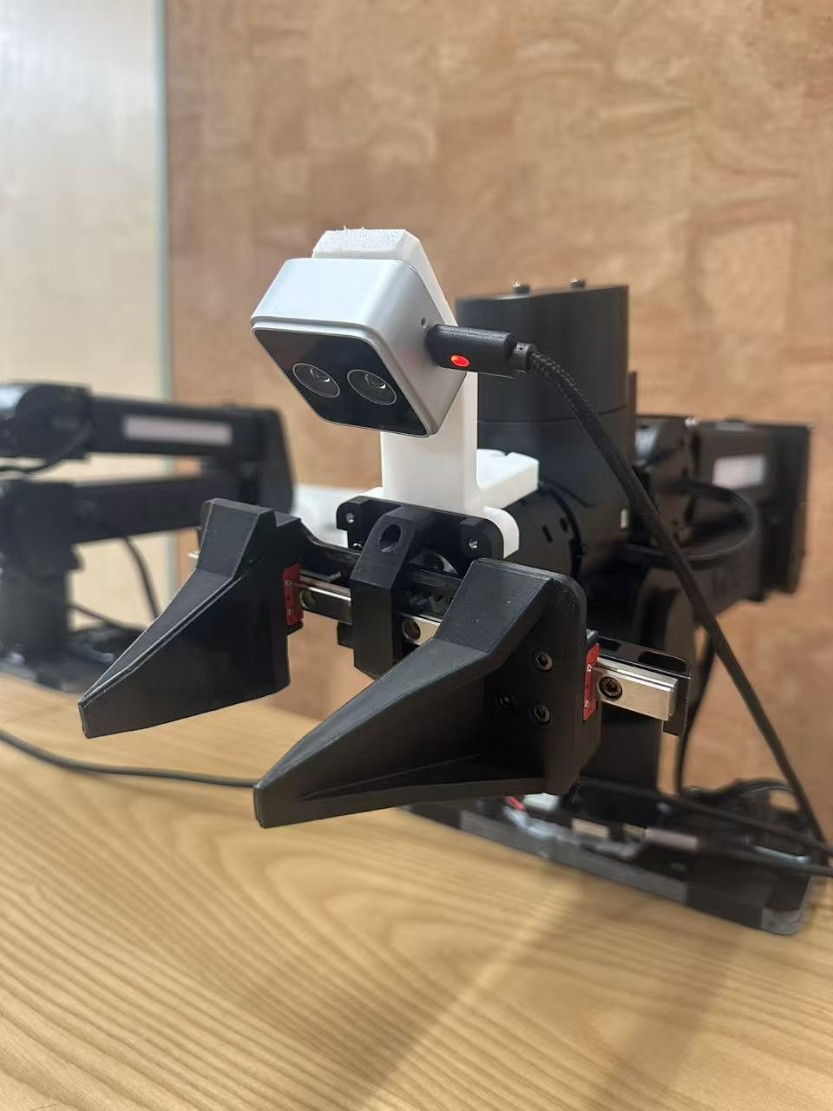
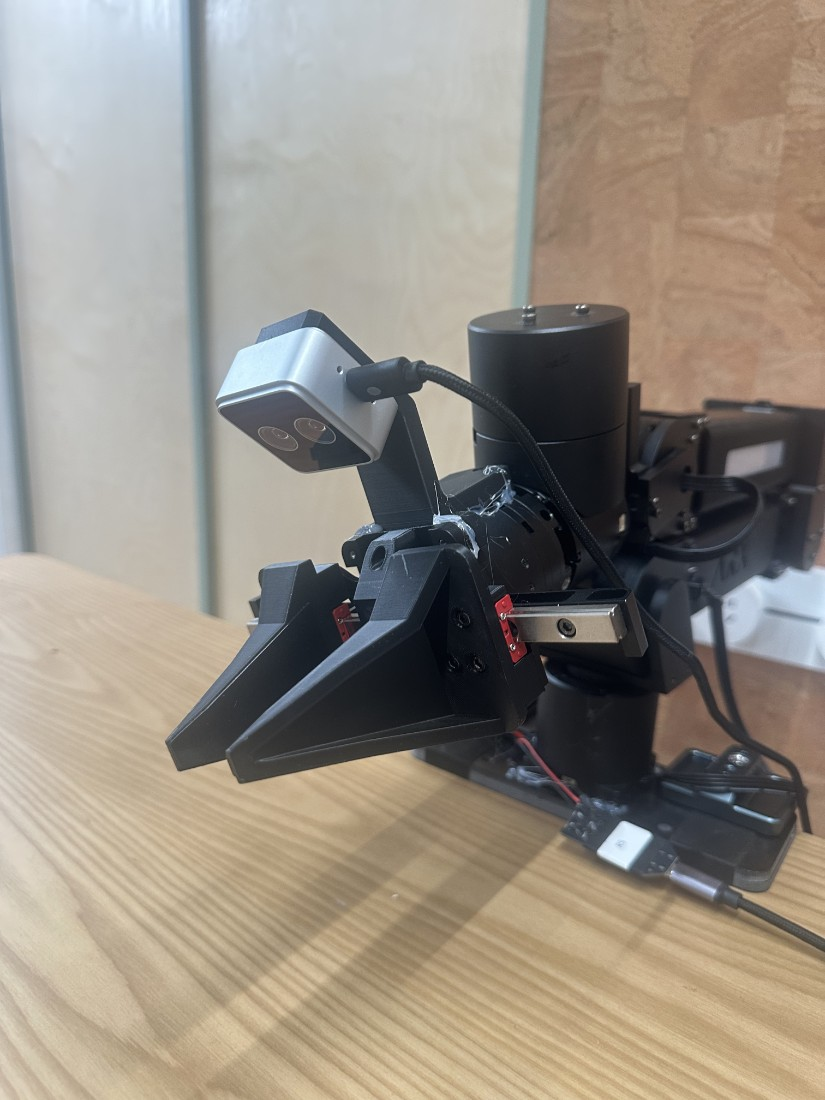
- A real-world setup, using an actual robot and physical objects
The simulation was designed to look and behave like the real setup. The researchers matched the object shapes, positions, camera views, and robot movements as closely as possible.
This is similar to practicing a sport in a video game and then checking whether the same strategy works on a real field.
Testing GPT-6 Astra
GPT-6 Astra was tested without special training for these tasks. This is called zero-shot testing. It means the robot received the instructions and tried to solve the tasks using what it already knew.
Each task was attempted three times in both the simulation and the real world. The researchers then counted how many attempts were successful.
4. What did the researchers find?
Success became much lower as tasks became harder
In the real world, GPT-6 Astra’s success rates were:
- Level 1: 80.0%
- Level 2: 47.6%
- Level 3: 0.0%
In the simulation, the results were:
- Level 1: 66.7%
- Level 2: 47.6%
- Level 3: 0.0%
This shows a clear pattern: the robot could handle simpler contact tasks, but it struggled when tasks required careful force control and changing how it touched an object.
No Level 3 task was completed
The most difficult level required the robot to coordinate several actions. For example, it might need to hold an object, apply force, and then change its grip or contact point.
GPT-6 Astra completed none of the Level 3 tasks in either environment. This suggests that coordinating several physical actions is currently a major challenge.
Simulation and real-world results were fairly similar
The researchers found that 10 of the 16 tasks had exactly the same number of successful attempts in simulation and reality. For the other six tasks, the results differed by only one success out of three attempts.
This is important because it suggests that the simulation was a useful model of the real-world difficulty. Researchers may be able to test many ideas in simulation before trying them with an expensive or slower physical robot.
The robot often made partial progress but did not finish
GPT-6 Astra sometimes began a task correctly but failed to complete it. For example, it might turn a bottle cap slightly or move a drawer partway, but not finish the whole action.
The researchers identified four common problems:
- Spatial reasoning and precision: The robot sometimes misjudged where an object was or where to move.
- Choosing contact points: It sometimes touched an object in the wrong place.
- Controlling force: It could have trouble deciding whether to push gently or strongly.
- Coordinating actions: It struggled to connect several movements into one successful sequence.
In other words, understanding the instruction was not enough. The robot also needed to control its body very precisely.
5. Why are these findings important?
The paper shows that a robot can appear intelligent because it understands language and knows what a task is supposed to accomplish, but that does not mean it can reliably perform the task physically.
Simple actions such as placing or aligning objects were often possible. However, tasks involving force, friction, twisting, or changing contact were much harder.
The PhysLadder benchmark is useful because it gives researchers a clear way to measure progress. Instead of simply asking whether a robot can “use objects,” researchers can ask which physical skill is causing trouble.
6. What could this research lead to?
This research could help scientists build better robots by showing them exactly what needs improvement. Future robot systems may need better abilities to:
- Understand distances and object positions
- Select safe and effective contact points
- Feel and control force
- Adjust their movements when objects resist
- Combine several physical actions smoothly
The study also suggests that carefully designed simulations can be useful for robot research. If a simulation matches real-world results closely, researchers can use it to run many more experiments safely and cheaply.
Overall, the paper’s main message is that GPT-6 Astra can understand many manipulation tasks, but reliable physical performance is still difficult. The biggest challenge is not knowing what to do—it is controlling how to touch, push, pull, and adjust actions over time.
Practical Applications
Immediate Applications
- Robotics benchmarking and model selection — robotics and industrial automation.
- L1: contact selection and geometric alignment;
- L2: sustained contact with force regulation;
- L3: force regulation combined with contact reconfiguration.
- This enables procurement teams to compare models not only by aggregate success rate but also by the specific physical capabilities they support.
- Dependency: the robot embodiment, camera configuration, object geometry, and task definitions must be reproduced or carefully adapted; the reported results are based on a small number of trials and one model.
- Simulation-based regression testing for robot-control software — software and robotics. The matched simulation environment can serve as a repeatable continuous-integration test suite for manipulation policies. Developers could run tasks such as marker placement, charger alignment, cup nesting, cap removal, drawer interaction, and object sweeping after changes to perception, planning, or control code. Failures can be categorized as spatial-reasoning, contact-selection, force-regulation, or coordination failures. Dependency: simulation must remain calibrated to the physical robot and contact dynamics. The paper supports repeatability for the evaluated model, but broader transfer across controllers and embodiments still requires validation.
- Capability-oriented robot safety gates — healthcare, logistics, laboratories, and manufacturing. The benchmark can support staged deployment policies. A robot might be authorized for low-risk L1 tasks such as marker placement or flower transfer, while being prohibited from unsupervised tasks involving unscrewing, pushing, sweeping, or other reconfiguration-heavy operations. The reported real-world performance—80.0% at L1, 47.6% at L2, and 0% at L3—provides a direct rationale for conservative task authorization. Dependency: benchmark success does not guarantee safety. Additional metrics are needed for collision risk, damage, force overshoot, human proximity, and recovery behavior.
- Failure diagnosis and targeted data collection — academic and industrial robotics research.
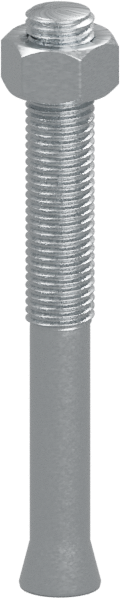
- collect demonstrations for cap removal and nut unscrewing to improve rotational contact;
- collect force-feedback trajectories for drawer pulling or wiping;
- collect multi-stage demonstrations for sweeping and reorientation;
- evaluate whether visual feedback or tactile sensing resolves specific failures.
- Dependency: the benchmark identifies failure categories but does not itself provide a remedy. Improvements must be tested against held-out configurations and real hardware.
- Sim–real validation of embodied foundation models — academia. Researchers can use the benchmark’s physically and visually matched environments to study whether simulation predicts real-world behavior. The finding that 10 of 16 tasks had identical simulation and real-world success counts, while the remaining six differed by only one success in three trials, supports simulation as a useful comparative testbed for this model. Dependency: this should not be interpreted as universal sim–real equivalence. The result may depend on the selected tasks, calibration quality, model, and limited trial count.
- Robot-operations monitoring and human handoff — domestic and workplace robotics. A practical workflow could classify an instruction by interaction level before execution. L1 tasks could run autonomously; L2 tasks could require force monitoring and automatic retry; L3 tasks could trigger human supervision or teleoperation. Partial progress should not be treated as task completion, since the paper shows that turning a cap, moving a drawer, or shifting an object may not lead to successful completion. Dependency: this requires reliable intermediate-state detection, force sensing, and recovery policies, which are not fully demonstrated in the paper.
- Educational robotics laboratories and coursework — education. PhysLadder can provide a structured curriculum in which students progress from alignment tasks to force-controlled interaction and finally to coordinated multi-contact manipulation. Students can compare simulation and physical execution, analyze failure modes, and implement controllers or prompting strategies. Dependency: educational use requires accessible robot platforms, simplified task fixtures, and assessment rubrics beyond binary success.
- Benchmark-informed policy and procurement standards — public-sector technology governance. Agencies procuring embodied AI systems can require reporting by interaction level rather than a single overall score. Evaluation documents could include task-level success, simulation–real discrepancies, number of retries, unsafe contacts, and the ability to recognize incomplete execution. Dependency: formal standards would require multi-model replication, larger trial sets, standardized hardware interfaces, and agreed safety thresholds.
Long-Term Applications
- Reliable household service robots — domestic robotics. The benchmark provides a development roadmap for robots expected to manipulate everyday objects: hanging items, nesting cups, opening containers, pulling drawers, pouring contents, wiping surfaces, and sweeping scattered objects. The zero-shot failure at L3 indicates that reliable household autonomy will require advances in force control, tactile perception, contact reconfiguration, and long-horizon coordination. Dependency: household environments introduce greater variation in object materials, clutter, lighting, user behavior, and unexpected contact than the benchmark captures.
- Assistive robots for older adults and people with disabilities — healthcare and eldercare. Mature versions of the evaluated capabilities could support tasks such as opening bottles, moving containers, retrieving objects, manipulating drawers, and cleaning surfaces. PhysLadder could be used to certify whether a robot can perform these tasks reliably under personalized object layouts and force limits. Dependency: assistive deployment requires substantially higher reliability than the reported rates, robust fail-safe behavior, compliance with medical and accessibility regulations, and adaptation to users with unpredictable motions.
- Industrial assembly and maintenance under contact constraints — manufacturing and field service. The L2 and L3 concepts can be extended to insertion, fastening, tool use, reorientation, valve operation, and constrained assembly. A future benchmark could evaluate whether robots maintain appropriate forces while changing contacts or tools, which is central to manufacturing, equipment maintenance, and warehouse handling. Dependency: industrial applications require precision tolerances, durability, cycle-time guarantees, force limits, and robust operation over thousands of repetitions. Household-task performance cannot be assumed to transfer directly.
- Tactile- and force-aware multimodal foundation models — AI research and robotics. The observed weaknesses motivate models that combine vision, language, proprioception, force/torque sensing, tactile feedback, and explicit state estimation. Future systems could predict contact transitions, detect force mismatch, and select recovery actions rather than relying mainly on visual reasoning and local corrections. Dependency: this requires large synchronized datasets, standardized tactile interfaces, real-time inference, and training objectives that reward sustained task completion rather than local progress.
- Closed-loop skill libraries and compositional robot policies — robotics software. The ladder can become a curriculum for learning reusable skills such as alignment, pushing, pulling, rotating, pouring, wiping, and regrasping. A higher-level planner could compose these skills while monitoring contact state and switching controllers when force or configuration requirements change. Dependency: skill composition must address error accumulation, state uncertainty, controller switching, and recovery. The paper shows that local progress does not reliably accumulate into successful completion, making naive sequential composition insufficient.
- Large-scale embodied-AI leaderboards and standardized certification — academia and industry. A scaled benchmark could include more robots, materials, object geometries, initial configurations, force ranges, longer horizons, and repeated trials. Reporting could distinguish zero-shot performance from performance after demonstrations, tool use, memory, or policy adaptation. This would enable more meaningful comparisons between general-purpose models and specialized controllers. Dependency: the benchmark needs stable versioning, open hardware specifications, independent evaluation, larger statistical samples, and protections against task-specific overfitting.
- Digital twins for robot deployment and maintenance — manufacturing, logistics, and infrastructure. Calibrated Sim–Real task pairs could form part of digital twins used to test software updates, predict failure modes, and rehearse maintenance procedures before running them on physical systems. The paper’s use of shared task definitions and success criteria provides a template for linking virtual and physical validation. Dependency: accurate contact modeling is difficult, particularly for deformable, slippery, or partially observable objects. Digital-twin predictions must be continuously updated using physical measurements.
- Adaptive autonomy and risk-sensitive task planning — robotics and policy. Future systems could estimate the interaction level and uncertainty of a requested task, then select among autonomous execution, increased sensing, constrained force limits, repeated attempts, or human assistance. For example, a robot could autonomously perform verified alignment tasks but request assistance before tasks involving contact reconfiguration. Dependency: this requires calibrated confidence estimates and task-level risk models. Binary benchmark success alone is insufficient for deciding when autonomous execution is acceptable.
- Human–robot collaboration in contact-rich work — manufacturing, healthcare, and daily life. Robots could use benchmark-derived capability profiles to divide work with humans: the robot performs repeatable alignment or transfer actions, while a human handles ambiguous reconfiguration or high-force operations. Over time, execution logs could identify which subtasks are suitable for autonomy and which require shared control. Dependency: collaboration requires low-latency communication, safe physical interaction, interpretable failure reports, and reliable transitions between autonomous and teleoperated control.
Glossary
- Articulated-object benchmark: A benchmark involving objects with joints or constrained movable parts. “Articulated-object benchmarks further examine manipulation under constrained motion and generalization across objects”
- Bimanual coordination: Coordinated control of two robotic arms or hands. “struggles with precision manipulation, dynamic control, and bimanual coordination”
- Calibration: Adjustment of a simulation or system so that its behavior matches measured real-world behavior. “Physical measurements and observed contact responses guide simulation calibration”
- Contact configuration: The spatial arrangement and physical relationships among contacting objects or surfaces. “The hierarchy is organized around two dimensions: contact configuration and force regulation.”
- Contact reconfiguration: Changing which objects or surfaces are in contact during task execution. “L3 additionally requires coordinating contact reconfiguration with force regulation.”
- Contact-rich manipulation: Robotic manipulation involving substantial or sustained physical interaction with objects or surfaces. “We introduce PhysLadder, a hierarchical Sim--Real benchmark for evaluating physical interaction capabilities in contact-rich manipulation.”
- Contact selection: Choosing appropriate points, surfaces, or objects with which a robot should make contact. “L1 emphasizes contact selection and geometric alignment.”
- Control matching: Making the control conditions of a simulation correspond to those of a real robotic system. “existing studies use visual and control matching to reduce the effects”
- Dynamic control: Control of a system whose state and motion change over time, often under changing forces. “struggles with precision manipulation, dynamic control, and bimanual coordination”
- Embodied evaluation: Assessment of an AI model’s ability to perceive and act within a physical or simulated environment. “Embodied evaluation of general-purpose foundation models”
- Execution feedback: Information produced during task execution that can be used to adjust subsequent actions. “act on environmental observations and task instructions and use execution feedback to complete tasks.”
- Execution precision: The accuracy with which a robot performs planned movements and interactions. “Spatial reasoning and execution precision remain relevant throughout.”
- Force regulation: Controlling the magnitude or behavior of forces applied during physical interaction. “L2 adds task-specific force regulation within sustained contact”
- Foundation model: A broadly trained model that can be adapted to perform many downstream tasks. “GPT-6 Astra and other general-purpose foundation models”
- Geometric alignment: Positioning objects or robot contacts so that their shapes and spatial orientations correspond appropriately. “L1 emphasizes contact selection and geometric alignment.”
- Generalization: The ability of a model or robotic skill to work across new objects, configurations, or tasks. “generalization across objects”
- Grasping: Securing an object through a robot’s gripping mechanism so that it can be manipulated. “providing successive evaluation targets beyond grasping and placement.”
- Hierarchical benchmark: An evaluation framework organized into ordered levels of increasing difficulty or requirements. “PhysLadder, a hierarchical benchmark for physical interaction.”
- In-context learning: Adapting a model’s behavior from information supplied in the current prompt or interaction context without updating its parameters. “RoboICL combines demonstration context and interaction memory without parameter updates”
- Interaction bottleneck: A recurring physical or computational difficulty that limits successful task completion. “Execution analysis identifies four recurring interaction bottlenecks”
- Long-horizon task: A task requiring a lengthy sequence of interdependent actions to reach completion. “iterative program development for long-horizon, contact-rich simulation tasks.”
- Local error correction: Correcting an immediate or localized execution mistake without necessarily replanning the entire task. “GPT-6 Astra demonstrates task understanding and local error correction”
- Manipulation sequence: An ordered series of robotic actions that collectively accomplish a manipulation task. “connect grasping, reorientation, and insertion into complete manipulation sequences”
- Matched Sim--Real evaluation: An evaluation comparing corresponding simulated and physical experiments under aligned conditions. “Matched Sim--Real Evaluation”
- Parameter update: Modification of a model’s learned internal parameters during adaptation or training. “without parameter updates”
- Physical embodiment: The physical structure and capabilities of a robot, including its body, actuators, and sensors. “robot embodiments”
- Physical interaction requirement: A specific physical capability needed to perform a task, such as force control or contact changes. “organizes 16 household manipulation tasks by their physical interaction requirements”
- Precision manipulation: Highly accurate control of object position, orientation, and applied forces during manipulation. “struggles with precision manipulation, dynamic control, and bimanual coordination”
- Real-world execution: Performance of a task using a physical robotic system rather than a simulation. “Real-world trials provide a reference for physical execution”
- Reconfiguration: Modification of an arrangement or contact relationship during an interaction. “+ Reconfiguration”
- Robotic manipulation: The use of a robot to grasp, move, orient, or otherwise physically interact with objects. “Robotic manipulation requires integrating these capabilities with feedback-driven control”
- Scene reconstruction: Recreating the geometry, appearance, and arrangement of a physical environment in simulation. “We construct simulated counterparts of physical tasks through scene reconstruction”
- Sequential decision-making: Selecting a series of actions where each decision depends on prior states or outcomes. “assess visual understanding, spatial reasoning, and sequential decision-making”
- Sim--Real transfer: The relationship between performance in simulation and performance in the physical world. “Physically and visually matched Sim--Real environments.”
- Simulation calibration: Tuning a simulation’s parameters to reproduce observed real-world behavior. “guide simulation calibration”
- Skill composition: Combining multiple learned or defined robotic skills into a larger task procedure. “These benchmarks support evaluations of individual skills, skill composition, and task completion”
- Spatial reasoning: Inferring relationships among locations, positions, orientations, and geometric arrangements. “recurring difficulties in spatial reasoning”
- Sustained contact: Physical contact maintained over a period while an operation is performed. “force regulation within sustained contact”
- Task completion: Successfully satisfying all criteria required for an evaluated task. “local physical progress does not reliably accumulate into task completion”
- Task-level success: The outcome of evaluating whether an entire task, rather than an individual action, was completed successfully. “Rates average task-level success equally”
- Zero-shot evaluation: Testing a model on tasks without task-specific examples or additional training. “We evaluate GPT-6 Astra zero-shot with three trials per task in each environment.”