- The paper introduces a high-fidelity simulation environment leveraging detailed collision meshes to ensure accurate contact geometry and mechanical properties.
- It constructs a large dataset from real IKEA components, enabling robust reinforcement learning that discovers human-like form-closure strategies.
- Evaluation reveals that policies trained with precise geometric modeling outperform traditional friction-based methods, especially under high joint resistance.
Real-IKEA: Physical Fidelity as a Prerequisite for Robust Manipulation
Motivation and Physical Fidelity Gap
Contemporary simulation frameworks for robotic manipulation have prioritized visual realism and task diversity. However, they substantially underrepresent the critical mechanical and geometric factors that govern the robustness of contact-rich manipulation. Real-world failures often stem not from domain visual discrepancies but from misaligned contact geometry and unrealistically low joint resistance. High-resolution visual meshes are insufficient when collision geometry is approximated by coarse convex hulls, leading to a "swollen" interaction boundary that eliminates functional affordances necessary for robust strategies. Human-level manipulation, which exploits geometric features for form closure and mechanical advantage, cannot emerge under these approximations.
Dataset Construction and High-Fidelity Modeling
Real-IKEA addresses this deficiency by constructing a large-scale dataset of articulated object configurations grounded in authentic IKEA components. The dataset includes 1,079 articulated assets, generated from combinatorial pairing of 83 real handles and knobs with canonical base cabinets. This rigorous process aligns geometric and structural distributions with physical reality, ensuring fidelity in both contact geometry and joint dynamics.
Collision meshes are generated using the COACD algorithm, resulting in hundreds of convex primitives per asset. The fidelity is quantitatively benchmarked by a bidirectional surface deviation metric (EQ→P and EP→Q), capturing pointwise swelling errors. The processed meshes achieve significantly lower deviations, especially in mechanically critical regions such as cavity interiors, handle loops, and deep grooves.
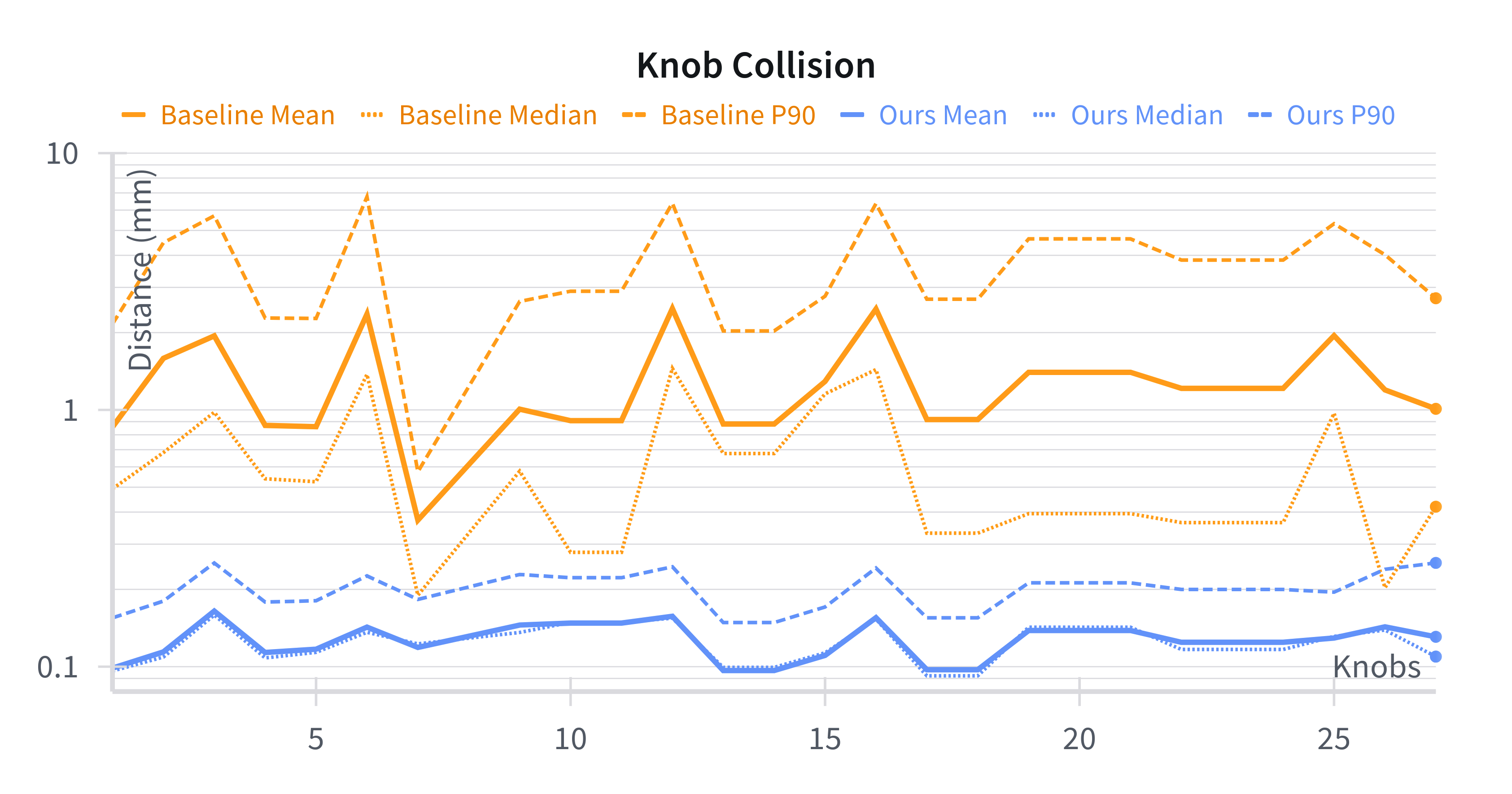
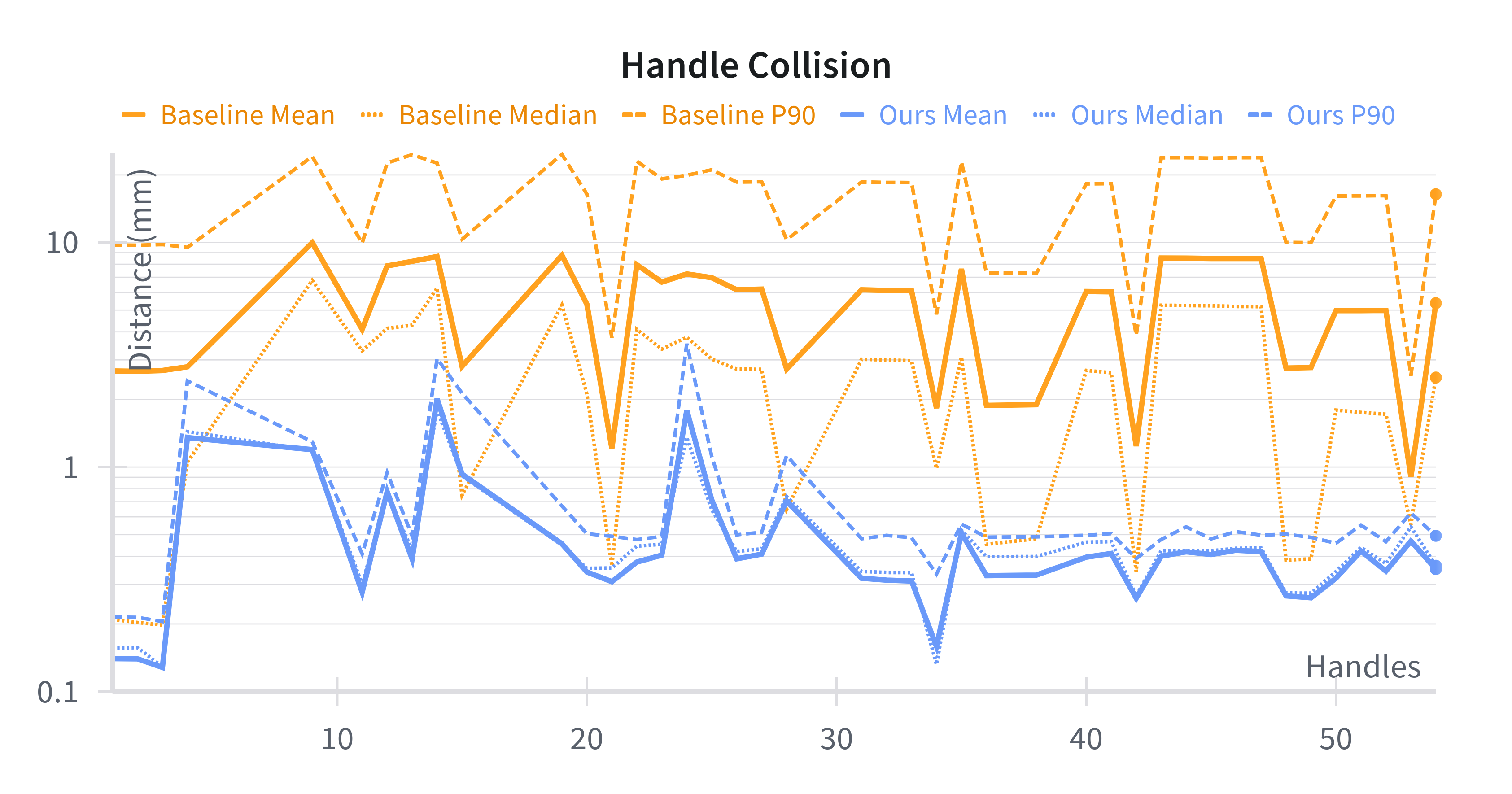
Figure 1: Evaluation of physical interaction fidelity: Real-IKEA meshes exhibit minimal geometric swelling across statistical metrics, preserving crucial contact regions.
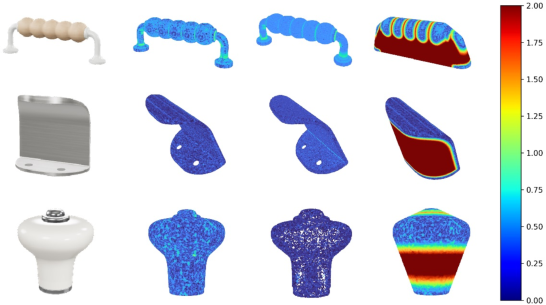
Figure 2: Heatmap visualization of collision errors: Only Real-IKEA's precision meshes retain functional cavities essential for advanced strategies; baseline approximations obscure them.
Mechanical Challenges and Robustness Evaluation
Real-IKEA environments make physical robustness a primary constraint: joint resistance is calibrated via realistic damping and friction profiles, capturing the practical failure modes—slipping, narrow clearances, mutual interference, and specialized geometries—that arise in real-world interaction. The simulator preserves these constraints, requiring manipulation policies to exploit object form rather than relying on fragile frictional grasping.
The diversity and complexity of interactive components are systematically documented, including knobs, two-point handles, and finger-pull handles. Each category demands distinct manipulation strategies, such as wrist rotations, finger hook insertions, and lip hooking, all enabled by preserved geometric affordances.
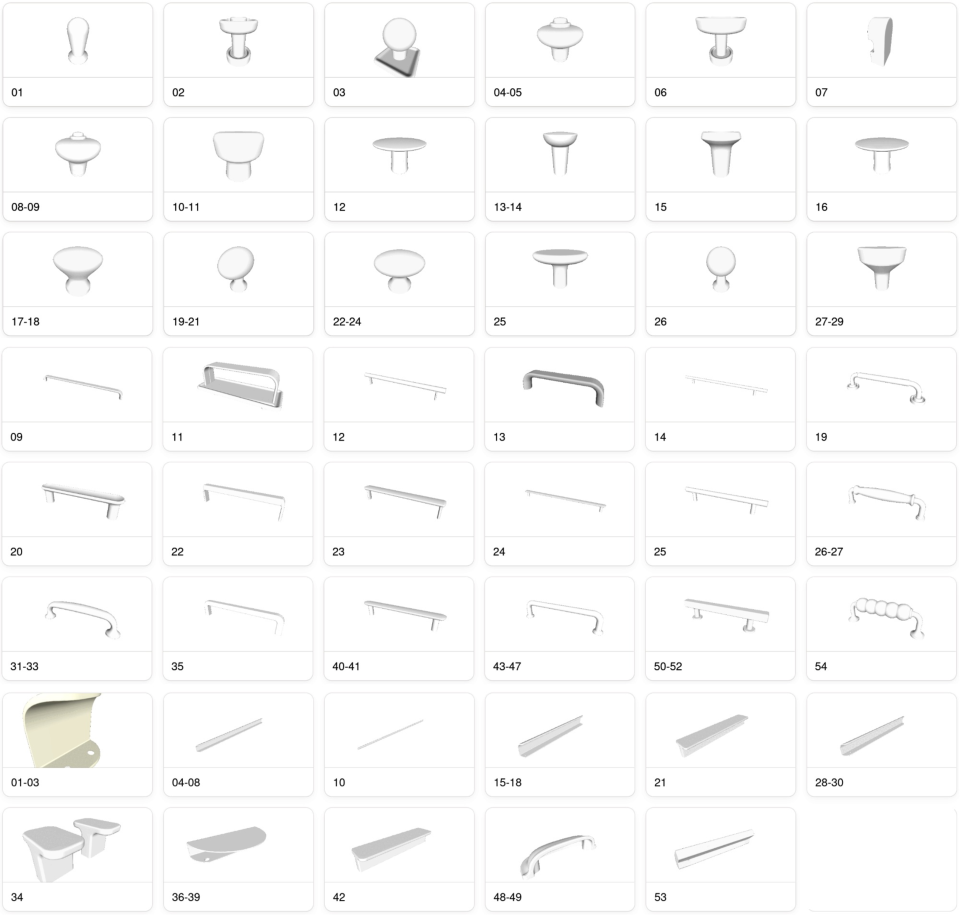
Figure 3: The diversity of interactive components in Real-IKEA: Categorization reveals the distinct manipulation demands for knobs, two-point handles, and finger-pull handles.
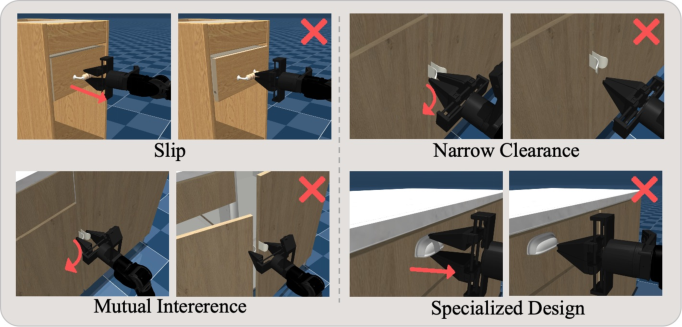
Figure 4: Four characteristic failure modes faithfully reproduced: Slipping, clearance restriction, interference, and specialized mechanical challenge.
Simulation Workflows and Collision Modeling
The construction workflow for each asset involves meticulous segmentation, structural cleaning, pre-collision scaling, convex decomposition, physics-based assembly, and integration into MuJoCo-compatible XML formats. Mesh statistics demonstrate substantially higher vertex counts and finer face areas relative to standard datasets, providing a robust foundation for collision modeling.
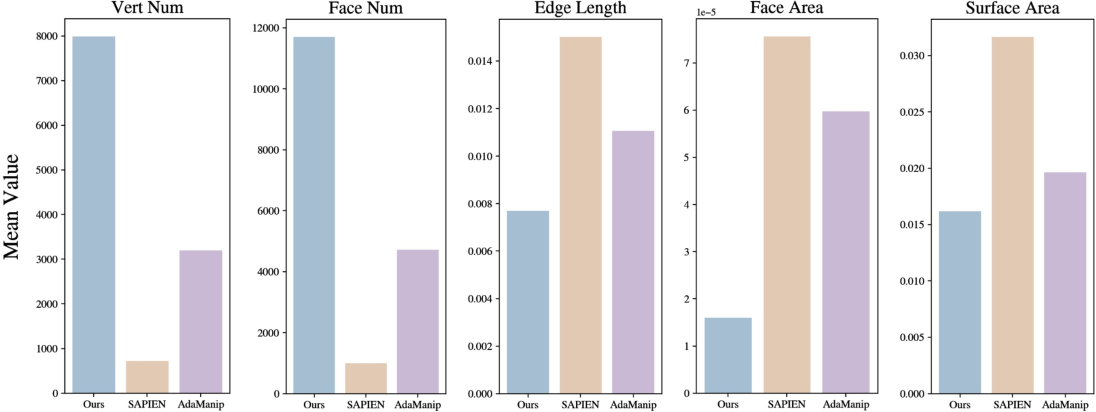
Figure 5: Mesh statistics: Real-IKEA parts show higher vertex counts and smaller face areas, critical for preserving geometric detail prior to decomposition.
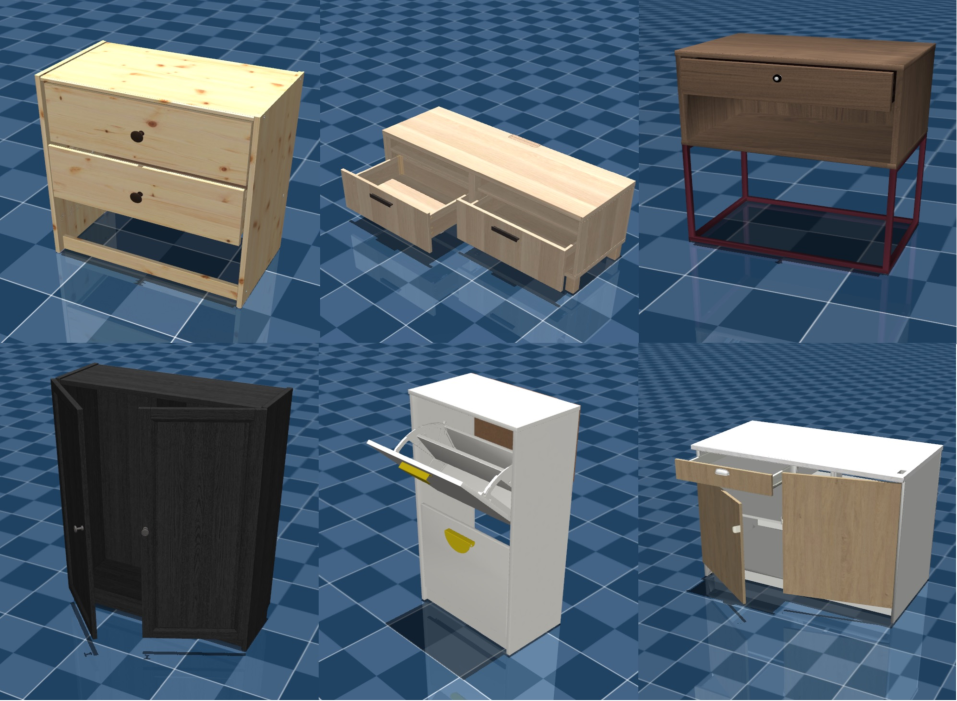
Figure 6: Real-IKEA base assets: Composition covers all major joint mechanisms and enables flexible integration of interactive components.
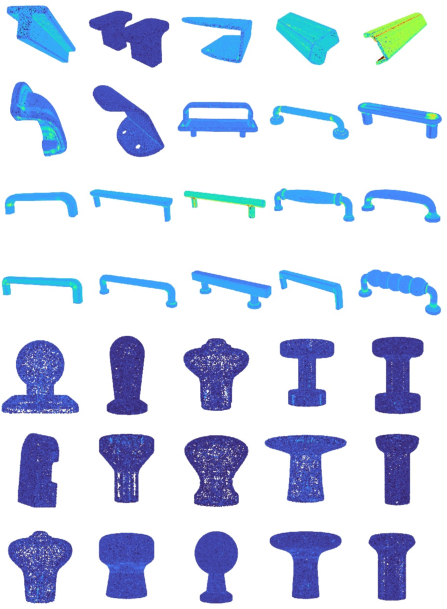
Figure 7: Heatmap visualization of physical interaction fidelity: Critical cavities and contours are retained, highlighted by dark blue precision regions.
Reinforcement Learning Policy and Emergence of Robust Behaviors
A privileged RL policy is trained via PPO with domain randomization (activated after 900 iterations), observing low-dimensional geometric information and outputting 5D actions mapped through IK. The reward is staged to encourage approach, refinement, grasp readiness, and opening, each defined by geometric metrics and closure flags.
Policies trained with standard collision meshes converge to friction-based pulling, repeatedly failing under high resistance. In contrast, RL agents exposed to Real-IKEA's high-fidelity assets consistently discover form-closure strategies, threading fingers through loops and leveraging handle geometry—behaviors unattainable in coarse simulation.
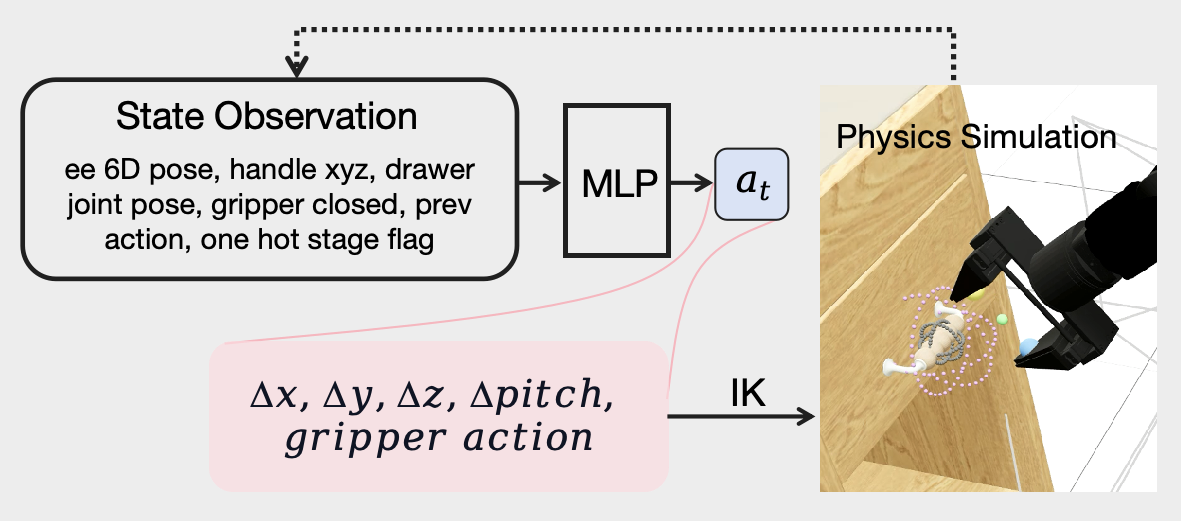
Figure 8: RL policy overview: The agent interacts with high-fidelity simulation, inducing robust, contact-rich manipulation.
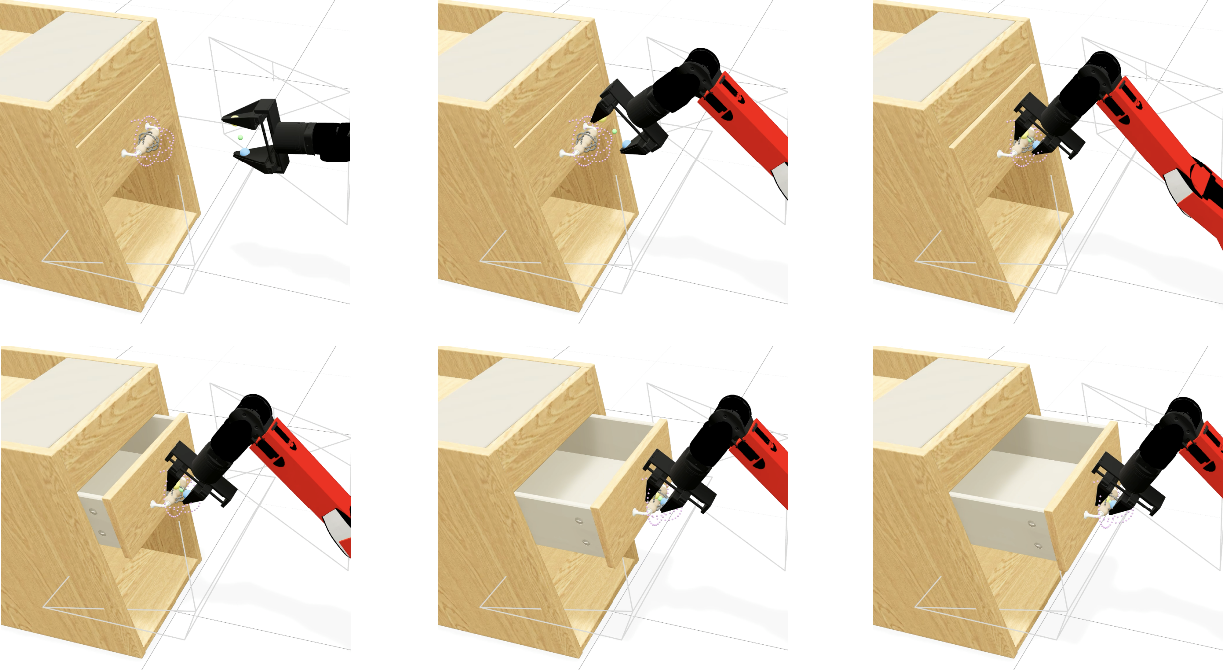
Figure 9: Emergence of form-closure strategies: The policy threads fingers through handle loops, overcoming high joint resistance.
Experiments isolate drawer opening under varying joint resistance (Smooth, Normal, High Resistance). Human teleoperation—representing the upper bound—succeeds by leveraging form-closure, while friction-based baselines and GraspGen collapse completely as resistance increases, achieving 0% success on knobs and finger-pull handles under high friction.
Checkpoint-based evaluation demonstrates that policies robust to all resistance regimes emerge only when geometric affordances are physically accessible. The learning curves under domain randomization validate that robustness generalizes across spatial variations.
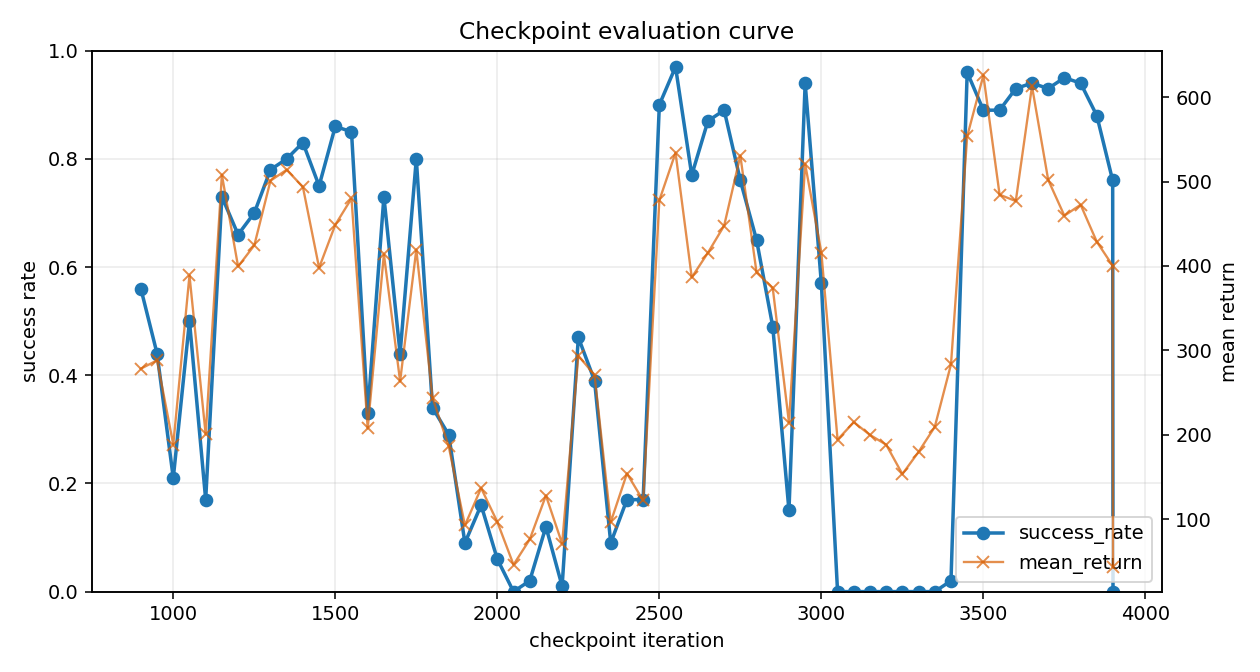
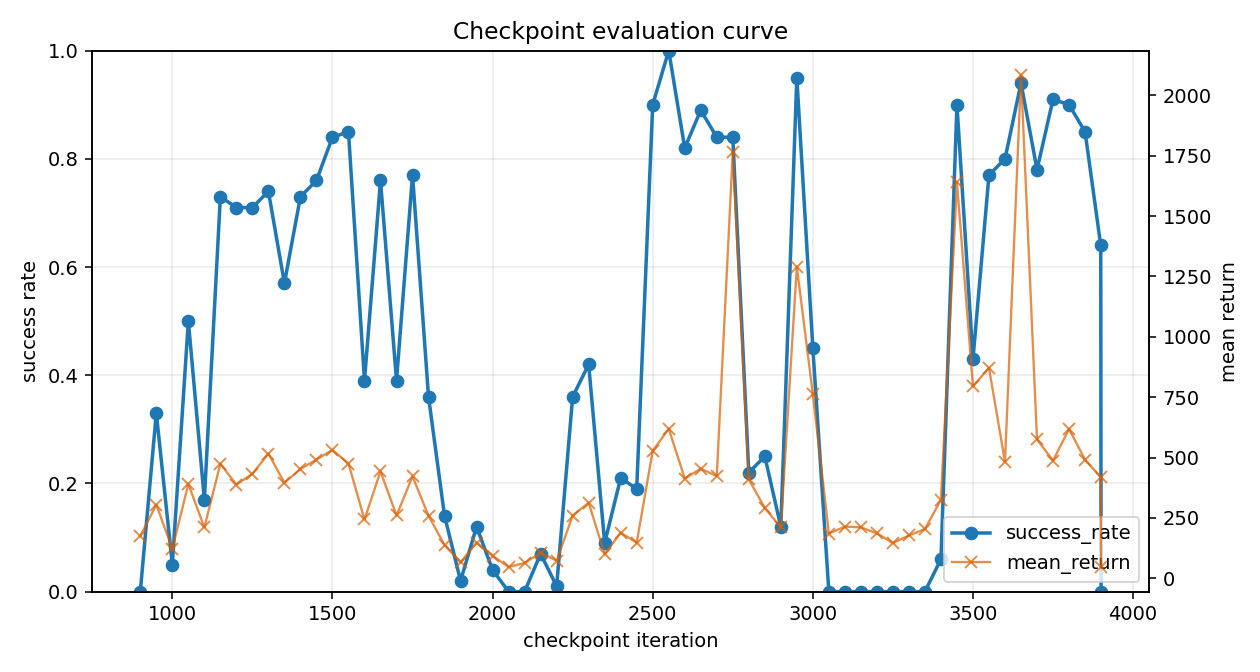
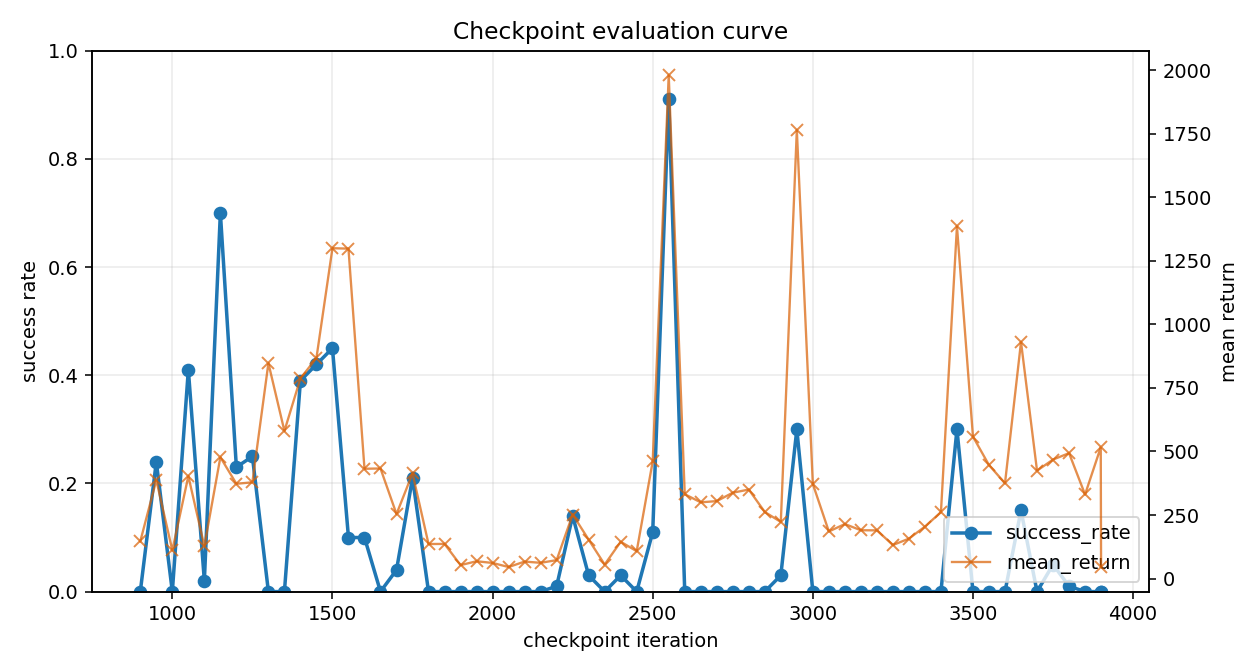
Figure 10: Learning curves for PPO pre-domain randomization: Early policy converges but lacks robustness.
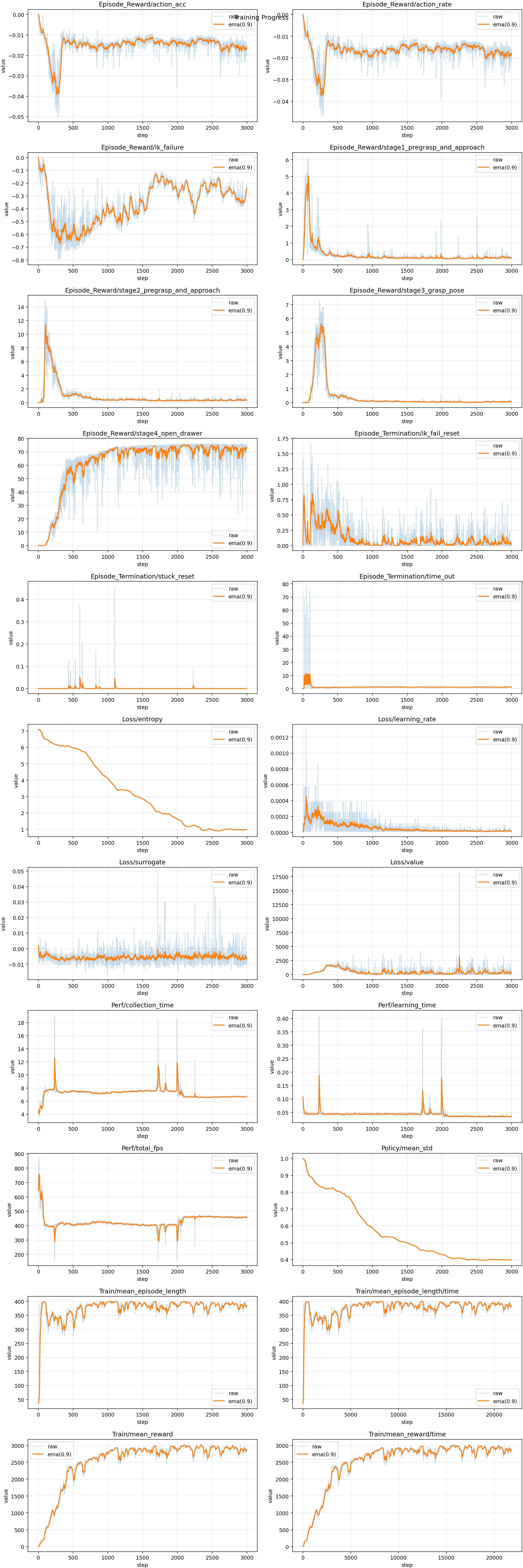
Figure 11: Learning curves for PPO under domain randomization: Policy robustness emerges, maintaining high success under varied resistance.
Implications and Future Directions
Real-IKEA conclusively demonstrates that physical fidelity is not an ancillary concern but a prerequisite for robust manipulation policy learning. Mechanically fragile baselines, which persist in current benchmarks, fail to generalize under realistic mechanical stress. High-fidelity simulation environments are essential for the emergence of geometry-exploiting, form-closure manipulation—an approach that is aligned with human strategies and required for practical deployment.
These findings imply that future AI policy research must rigorously incorporate physically accurate geometric modeling and resistance calibration to bridge the sim-to-real gap. This is a necessary foundation for learning manipulation policies that transfer robustly to unconstrained environments and complex articulated tasks. Further exploration may extend this paradigm to broader classes of interactive objects, variable environmental constraints, and adaptive behaviors under adversarial mechanical challenges.
Conclusion
Real-IKEA systematically resolves a critical bottleneck in manipulation policy learning by elevating physical fidelity—including contact geometry and resistance modeling—to a first-class principle. The dataset, simulation pipeline, and empirical validation provide a robust framework for the study and development of human-level manipulation strategies, highlighting the fundamental necessity of modeling mechanical reality for robust artificial agents (2606.08564).

