Hakken: Predicting future discoveries to fill the gaps in today's knowledge
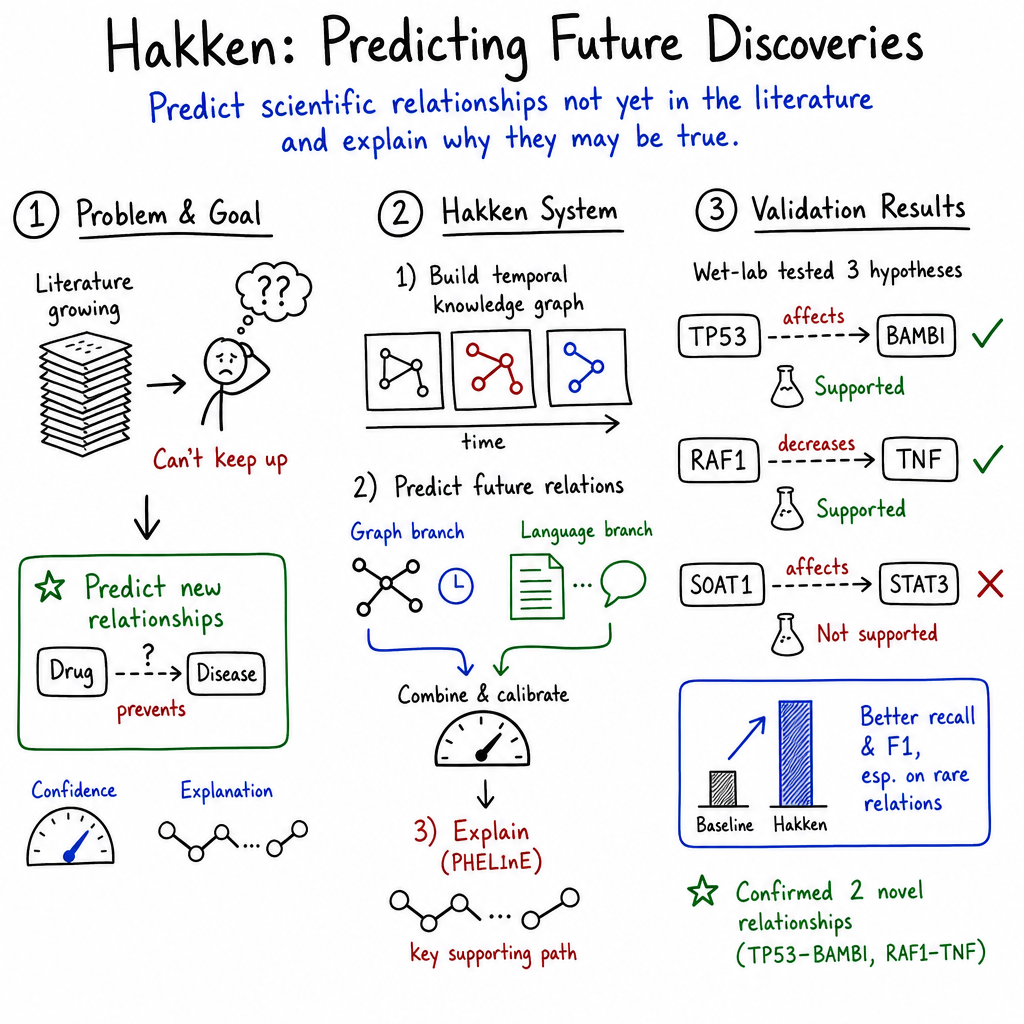
Abstract: We present Hakken, a domain-agnostic prediction and explanation system performing knowledge prediction, i.e., growing scientific knowledge by establishing novel relationships, ones that are not limited to the deductive hull of previous knowledge. Hakken uses a transformer-based prediction model built on temporal sequences of knowledge graphs extracted from vast bodies of research publications, fused with an LLM's semantic knowledge, to predict the presence and define the type of as-yet undocumented relationships between scientific concepts. It then calls a model-agnostic explanation framework to provide accompanying information for each prediction that allows scientists to evaluate the suggested new relationship. While general purpose, we demonstrate Hakken's practical capabilities by applying it to the biomedical domain. There, Hakken's prediction model establishes a new benchmark for time-aware multi-label relation prediction, and we show that the model's output stays coherent and informative over extended time spans in historic data. In addition, we scored 1.5 million above-confidence-threshold hypotheses related to aging, qualitatively validated batches of these predictions with biologists and progressed three of them for empirical validation in wet-lab. Two predictions with potentially significant impact in the context of drug discovery and repurposing were confirmed, introducing previously undocumented interactions between TP53 and BAMBI, and between RAF1 and TNF, to biomedical science.





Paper Prompts
Sign up for free to create and run prompts on this paper.
Top Community Prompts
Explain it Like I'm 14
1. What is the paper about?
This paper introduces Hakken, an artificial intelligence system designed to help scientists discover new scientific ideas.
Scientists publish millions of papers, making it impossible for one person to read everything. Hakken reads information from scientific research and looks for possible connections that have not yet been officially discovered or written about.
The researchers tested Hakken mainly in biomedicine, especially in research about genes, diseases, aging, and cancer.
A useful way to imagine Hakken is as a very fast research assistant that:
- Reads and organizes scientific knowledge.
- Notices patterns that people may have missed.
- Suggests new relationships between scientific ideas.
- Explains why each suggestion might be reasonable.
- Helps scientists decide which ideas are worth testing in the laboratory.
2. What questions did the researchers ask?
The paper focuses on several main questions:
- Can AI predict scientific relationships that may be discovered in the future?
- Can it identify not just that two things might be connected, but also how they are connected?
- Can it make useful predictions even when the relationship has never appeared in the scientific literature?
- Can it explain the evidence behind its predictions?
- Will scientists find the predictions useful enough to test in real laboratory experiments?
- Can the system help with important biomedical problems, such as cancer, aging, and drug development?
For example, Hakken might ask whether two genes are connected and then predict a specific relationship, such as:
“Gene A may increase or decrease the activity of Gene B.”
This is more detailed than simply saying that the two genes are somehow related.
3. How did the researchers build and test Hakken?
Organizing scientific knowledge as a network
Hakken represents scientific information as a knowledge graph. A knowledge graph is like a giant map made of:
- Points, representing things such as genes, drugs, diseases, or proteins.
- Lines, representing relationships between those things.
For example:
1 2 3 |
Drug A ── treats ──> Disease B Gene X ── affects ──> Gene Y Protein P ── interacts with ──> Protein Q |
The researchers also included time. This means the system could see when a relationship first appeared in published research. In this way, it could learn from the past and try to predict what might appear in the future.
Combining graphs with written text
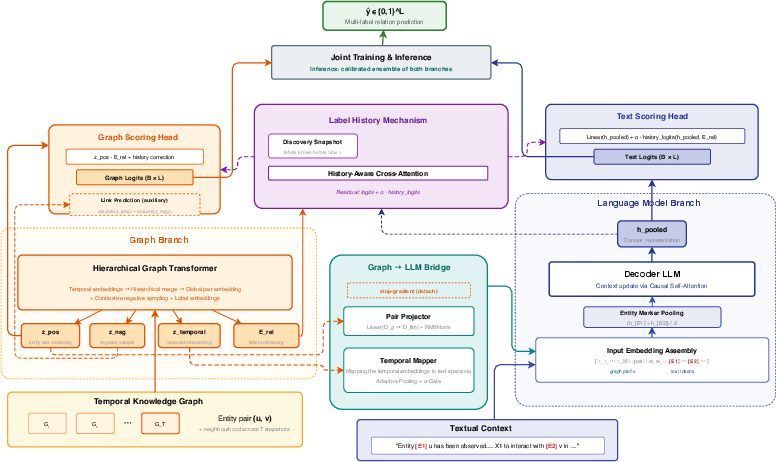
Hakken uses two major sources of information:
- The knowledge graph: This shows how scientific concepts are connected and how those connections change over time.
- Scientific text: This provides the meanings and background information found in research papers.
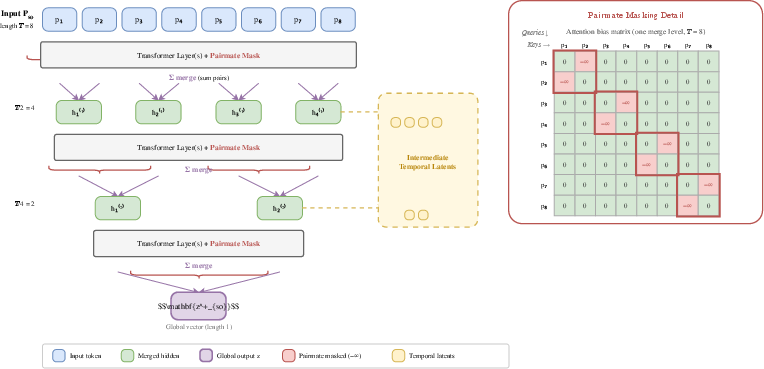
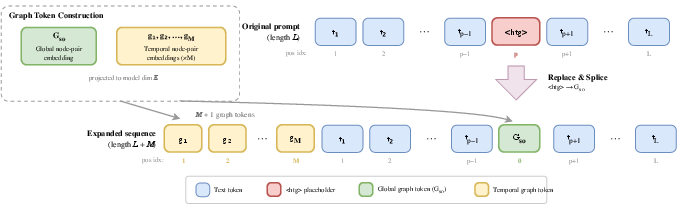
The prediction model, called THiGERLLM, combines these sources. It uses a type of AI called a transformer, which is also related to the technology behind many modern LLMs.
The graph part is similar to looking at a social network. If two people are not directly connected, we might still guess they know each other because they share many friends. Hakken uses a similar idea, but with scientific concepts and relationships.
The text part helps the system understand what each concept means. This is especially useful when the graph contains only a few connections.
Testing on past and future information
The researchers trained Hakken using older scientific information and then tested whether it could predict relationships that appeared in later publications.
This is called temporal testing. It is similar to giving a student only information available before 2020 and asking whether the student can predict discoveries published after 2020.
The researchers compared Hakken with several other methods, including:
- Random guessing.
- Methods that only study the structure of the knowledge graph.
- Methods that compare similar concepts.
- Earlier AI models created by the same research group.
- Rule-based systems.
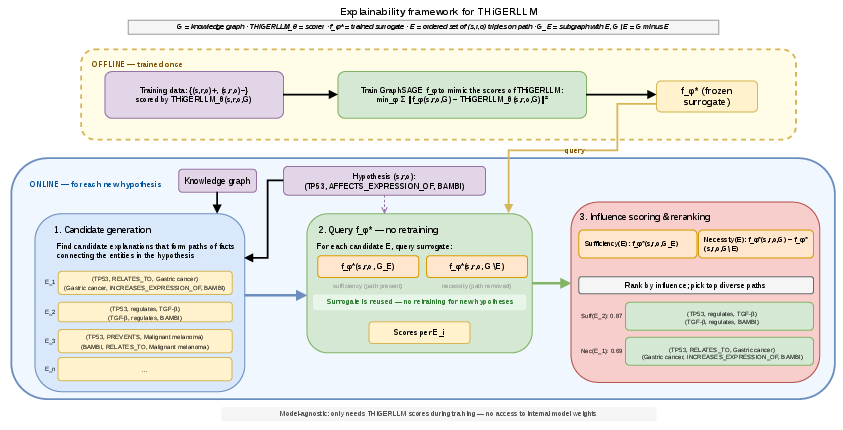
Explaining predictions with PHELInE
Hakken also includes an explanation system called PHELInE.
PHELInE looks for chains of known facts that connect the two concepts in a prediction. For example:
1 2 3 |
Gene A affects Protein B Protein B is involved in Process C Process C affects Gene D |
This chain might help explain why Hakken thinks Gene A and Gene D could be connected.
PHELInE checks two ideas:
- Sufficiency: Is this group of facts enough to support the prediction?
- Necessity: Does the prediction become weaker if these facts are removed?
This is similar to solving a mystery by asking both:
“Is this clue enough to support the explanation?”
and:
“Would the explanation fall apart without this clue?”
Laboratory testing
The researchers created more than 1.5 million possible hypotheses related to aging and selected three for laboratory testing with biomedical scientists.
These predictions were:
- TP53 may affect BAMBI.
- RAF1 may affect TNF.
- SOAT1 may affect STAT3.
The researchers then worked with an independent research organization to test them in laboratory experiments.
4. What did the researchers find?
Hakken performed well at predicting future relationships
Hakken was generally one of the best-performing systems in the computer tests.
Its older version, THiGER, was slightly better at some measures, especially for common types of relationships. However, THiGERLLM was better at finding a wider variety of relationships, including less common ones.
This is important because unusual or rare relationships may be especially valuable in science. They might represent:
- New areas of research.
- Previously overlooked biological processes.
- Possible targets for new medicines.
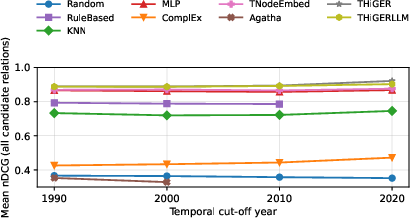
Its predictions remained useful over time
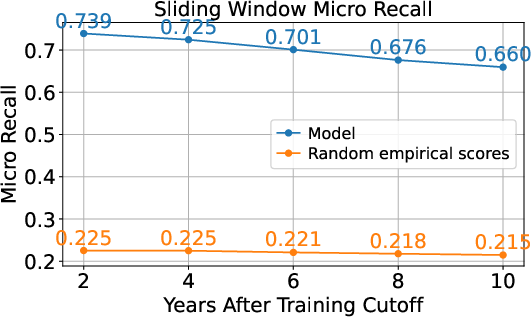
The researchers tested whether Hakken could predict discoveries several years into the future.
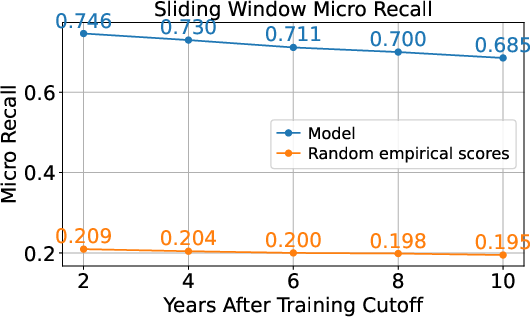
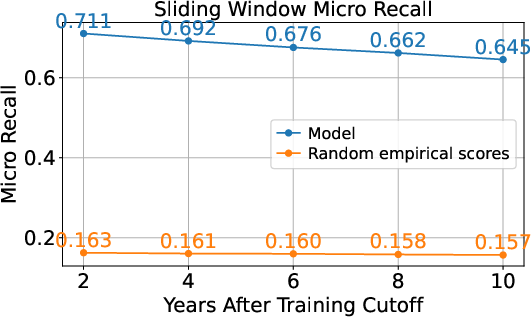
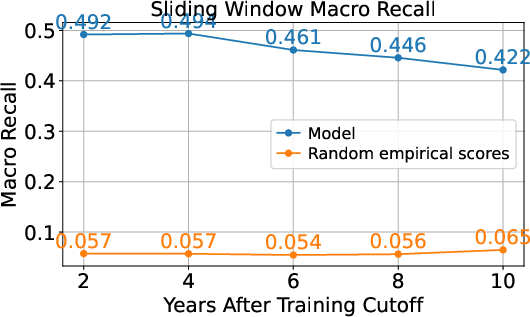
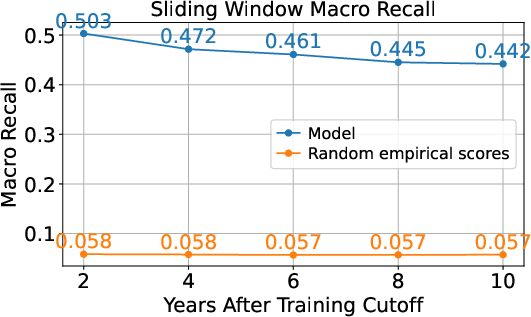
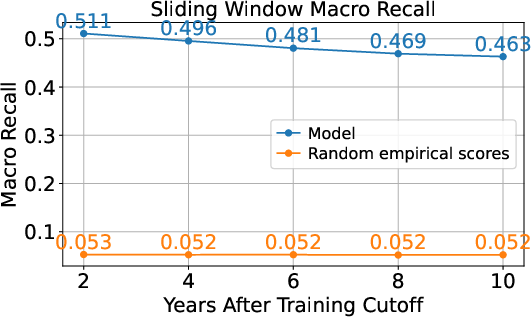
Its performance became somewhat weaker for more distant predictions, which is expected: predicting something ten years ahead is harder than predicting something two years ahead. However, the system still performed much better than random guessing.
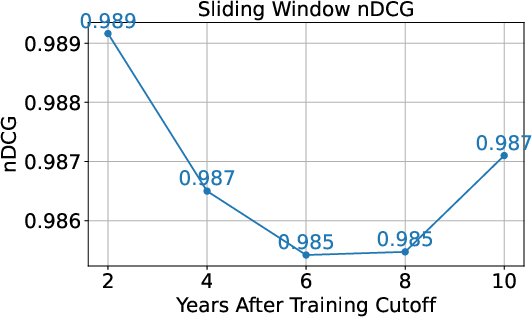
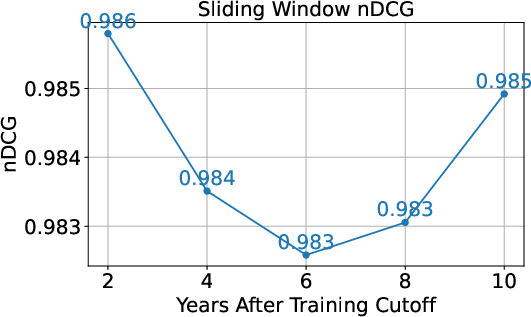
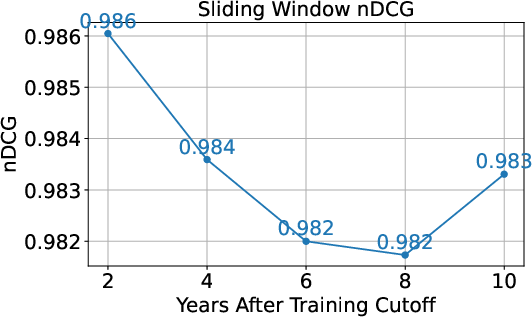
The researchers also found that Hakken usually continued to place the most promising predictions near the top of its list. This means scientists could use the ranking to decide which ideas to investigate first.
Two predictions were confirmed in the laboratory
Two of the three selected predictions received supporting evidence:
- TP53 and BAMBI: The experiments supported a functional relationship between the gene TP53 and the expression of BAMBI.
- RAF1 and TNF: The experiments supported a relationship between RAF1 and the regulation of TNF.
The third prediction, involving SOAT1 and STAT3, was not supported under the experimental conditions used.
These results are important because they show that Hakken did more than find patterns in computer data. It helped suggest relationships that scientists had not previously recorded and that could be tested successfully in the laboratory.
Hakken could provide useful explanations
Scientists who tried the system liked the explanations that came with the predictions. Rather than receiving only a statement such as “these two genes may be connected,” researchers could also see known facts and pathways that helped support the suggestion.
This makes the predictions easier to judge and may help scientists decide whether an idea is worth testing.
5. Why does this research matter?
Hakken could help scientists deal with the enormous amount of published research. Instead of reading every paper themselves, researchers could use Hakken to search for promising connections that might otherwise remain hidden.
Possible uses include:
- Finding new drug targets.
- Suggesting ways to reuse existing medicines.
- Understanding how genes contribute to cancer or aging.
- Identifying connections between diseases and biological processes.
- Exploring new materials or agricultural methods.
- Helping researchers choose which experiments to perform.
For example, the TP53–BAMBI and RAF1–TNF findings might eventually contribute to research on cancer, inflammation, or new treatments. However, these discoveries still require more experiments before they can be used as medical treatments.
Conclusion
The paper shows that AI can help scientists move beyond simply summarizing what is already known. Hakken attempts to predict what might become known next.
Its main strengths are that it:
- Combines scientific text with a network of known facts.
- Considers how knowledge changes over time.
- Suggests specific new relationships.
- Explains the evidence behind its predictions.
- Produces ideas that can be tested in real experiments.
The system is not a replacement for scientists. Its predictions can be wrong, and they must be checked through experiments. Instead, Hakken acts like a powerful brainstorming and research tool. By helping scientists notice promising possibilities earlier, it could speed up discovery and lead to new medicines, technologies, and scientific breakthroughs.
Knowledge Gaps
Knowledge gaps, limitations, and open questions
- Limited domain validation: Hakken is evaluated primarily in biomedicine; its claimed domain generality remains untested through systematic, comparative evaluations in fields such as materials science, agriculture, physics, or social science.
- Small wet-lab validation sample: Only three hypotheses were experimentally tested, with two receiving supporting evidence. This is insufficient to estimate the system’s general precision, reproducibility, or practical discovery rate.
- Selection bias in experimental validation: The three hypotheses were chosen by experts from a large pool based on subjective judgments of relevance and interestingness, so the reported validation rate may not represent the performance of randomly selected or automatically prioritized predictions.
- Restricted biological scope: Wet-lab testing focused on a curated set of aging-related genes and selected experimental systems, leaving unclear whether Hakken performs similarly for other diseases, molecular entities, cell types, tissues, organisms, and biological mechanisms.
- Incomplete characterization of confirmed relationships: The experiments establish functional associations between TP53–BAMBI and RAF1–TNF but do not fully determine causal direction, molecular mechanism, dose dependence, pathway mediation, or context dependence.
- Unresolved false-positive rate: Because unobserved relations are treated as potentially undiscovered rather than definitively false, the paper cannot establish how many high-confidence predictions are incorrect.
- No systematic prospective evaluation: The study does not report a large-scale, preregistered prospective trial in which predictions are generated before independent researchers attempt validation under predefined criteria.
- Temporal leakage remains possible: Although task-specific text is restricted by publication date, the pretrained Mistral model may have absorbed information published after the nominal cutoff. The extent and effect of this leakage are not quantified.
- Publication and reporting bias: The knowledge graph is derived from published literature, which overrepresents positive, popular, and well-funded findings while underrepresenting null results, failed experiments, unpublished work, and research from less visible communities.
- Extraction-error propagation: The paper does not quantify errors from entity recognition, relation extraction, entity normalization, ontology mapping, duplicate removal, or timestamp assignment, although these errors may directly affect both predictions and explanations.
- Ambiguity in relation semantics: The 23 relation types are not shown to have consistent meaning, granularity, directionality, or inter-annotator agreement across biomedical subdomains. The effect of relation-label noise on performance is unresolved.
- Insufficient treatment of contradictory evidence: The representation records the first occurrence of a fact but does not adequately model disagreement, refutation, uncertainty, or changes in experimental context across publications.
- Overreliance on first occurrence dates: Treating the first reported occurrence as the decisive temporal signal ignores delayed recognition, repeated rediscovery, retractions, preprints, publication delays, and differences in research intensity across topics.
- No analysis of entity and relation drift: The historical experiments mention terminology and entity drift but do not separately measure how changes in naming, ontology structure, biological understanding, or relation definitions affect long-horizon performance.
- Potential confounding by popularity: Predictions may favor entities and relations that are already highly studied or densely connected. The paper does not establish whether Hakken can discover genuinely low-resource or structurally isolated relationships.
- Limited baseline and ablation evidence: The paper does not provide sufficiently detailed ablations isolating the contributions of the LLM, temporal encoder, graph branch, label history, ontology features, calibration, or text sampling strategy.
- Unclear benefit of language-model fusion: THiGERLLM improves some macro-level metrics but underperforms THiGER on weighted F1 and nDCG. The specific conditions under which textual evidence helps or harms prediction remain unexplained.
- Restricted text input: The language branch uses 20 randomly sampled sentences mentioning each entity separately, without requiring sentences to mention the entity pair. It remains unclear whether this sampling strategy captures relational evidence or introduces substantial irrelevant context.
- Random sentence sampling is not assessed: The robustness of predictions to different sampled sentences, numbers of sentences, publication sources, and retrieval methods is not reported.
- Calibration validity is uncertain under distribution shift: Confidence scores are calibrated on held-out data, but the paper does not evaluate calibration across future years, rare relations, new entities, new domains, or substantially different publication distributions.
- Confidence scores lack decision-theoretic interpretation: The reported confidence represents estimated truth probability under the observed data and model assumptions, but the relationship between confidence, experimental success probability, and research utility is not established.
- Negative-label assumptions remain problematic: Benchmark precision and F1 treat relations not observed after the cutoff as negatives, despite the paper acknowledging that many may be undiscovered truths. This makes conventional classification metrics difficult to interpret.
- Limited evaluation of ranking utility: Although nDCG and recall are reported, the study does not quantify how efficiently researchers can identify experimentally valuable hypotheses under realistic budgets, such as the top 10, 100, or 1,000 candidates.
- No cost-sensitive evaluation: Predictions are not evaluated according to experimental cost, feasibility, expected effect size, safety, or translational value, even though the paper proposes applications in drug discovery.
- Long-horizon validation is observational: Historic back-testing measures whether relations later appeared in the literature, not whether they were biologically true before publication. This conflates scientific predictability with publication and discovery processes.
- Stable ranking may reflect dataset structure rather than durable scientific insight: The reported nDCG stability is not tested against popularity-matched, degree-matched, or field-specific null models that could distinguish genuine predictive structure from persistent citation or co-occurrence patterns.
- PHELInE explanations are surrogate-based: The explanations approximate THiGERLLM through a GraphSAGE surrogate, but the paper does not quantify surrogate fidelity, explanation faithfulness, or how often the surrogate’s influential paths disagree with the original model.
- Explanation quality is not independently evaluated: PHELInE explanations are described as useful and received positive qualitative feedback, but there is no blinded expert assessment against human-generated explanations, mechanistic validity, sufficiency, or completeness.
- Path-based explanations may be misleading: A graph path that influences a prediction need not represent a causal or biological mechanism. The paper does not distinguish mechanistic evidence from associative or extraction-induced paths.
- Explanation search is constrained: Wet-lab explanations are limited to shortest paths of typically 2–4 hops, potentially excluding longer, convergent, conditional, or non-path-based mechanisms.
- Necessity and sufficiency estimates may not reflect retraining effects: PHELInE approximates score changes under graph perturbations using a surrogate rather than actually retraining THiGERLLM, so the validity of its counterfactual interpretation is unresolved.
- Explanations omit textual and temporal evidence: PHELInE primarily exposes graph paths, while the prediction model also uses publication text, temporal signals, label history, and ontology information. The explanations may therefore fail to account for important sources of model behavior.
- Human workflow impact is undermeasured: Feedback from researchers at seven organizations is described as overwhelmingly positive, but the study does not report sample size, participant selection, task-based usability measures, inter-rater agreement, time savings, or effects on hypothesis quality.
- Risk of automation bias is unexplored: The paper does not test whether confidence scores and explanations cause researchers to overtrust incorrect predictions or overlook plausible hypotheses that receive lower scores.
- Reproducibility is limited: Key details such as data-cleaning rules, entity-pair construction, candidate-pair sampling, training hyperparameters, thresholds, calibration procedures, and full prediction outputs are not sufficiently specified in the provided text.
- Commercial data limits independent replication: Part of the dataset is commercially licensed, potentially preventing external researchers from reproducing the benchmark and validating the reported results.
- No robustness analysis across corpora: Performance is not systematically compared across PMC, MEDLINE, PubTator3, and other biomedical databases to determine whether results depend on a particular corpus or extraction pipeline.
- Potential institutional and geographic bias is unexamined: The literature sources and language-model training data may underrepresent research from particular countries, institutions, languages, or publication venues.
- No evaluation of retractions or corrected findings: The system may preserve relationships extracted from retracted, superseded, or methodologically discredited publications, but the handling of such evidence is not described.
- Quantitative and conditional knowledge is absent: The current representation cannot express effect sizes, concentration or quantity ratios, environmental conditions, cell-state dependence, temporal order, or uncertainty, limiting the scientific specificity of generated hypotheses.
- No prediction of when discoveries will occur: Hakken ranks candidate relationships but does not forecast their likely discovery or publication time, despite temporal information being central to the model.
- No prediction of downstream scientific impact: The system does not estimate whether a predicted relationship will generate follow-up discoveries, therapeutic applications, citations, or changes in a research field.
- Experimental-design generation remains unimplemented: The paper identifies experimental design as a major next step but does not determine how Hakken could translate a predicted relation into a valid, discriminating, and resource-aware experiment.
- Causal discovery is not established: The framework predicts relations and uses associative graph evidence; it does not demonstrate that it can identify causal effects or distinguish direct interactions from confounding, mediation, or correlation.
- Generalization to genuinely novel entities is unclear: Evaluation largely concerns entities already present in the graph. Performance on newly discovered entities, sparse entities, emerging concepts, or entities absent from training data remains unresolved.
- Ethical and safety implications are not assessed: The paper does not examine risks from generating biomedical hypotheses that could enable unsafe experimentation, misdirect clinical research, amplify biased evidence, or be misused outside expert oversight.
Practical Applications
Immediate Applications
The paper’s validated contribution is an AI-assisted workflow for generating, ranking, and explaining previously undocumented relationships in scientific knowledge graphs. The following applications are deployable now using the demonstrated system, although most should support—not replace—expert review and empirical validation.
- Biomedical hypothesis discovery and literature-based discovery — healthcare and life sciences.
Researchers can use Hakken to identify candidate gene–gene, gene–disease, drug–target, enzyme–gene, and drug–disease relationships that are not explicitly documented in the literature. A practical workflow is:
- select a disease, pathway, gene set, or therapeutic area;
- generate candidate relations with calibrated confidence scores;
- inspect PHELInE’s supporting relational paths;
- prioritize hypotheses for review or laboratory testing. This is directly supported by the validated predictions linking TP53–BAMBI and RAF1–TNF. Feasibility depends on access to sufficiently comprehensive, high-quality biomedical literature, reliable entity normalization, and expert assessment of whether a predicted relation is biologically meaningful.
Drug discovery and drug repurposing prioritization — pharmaceutical and biotechnology industries.
- prioritize compounds for mechanism-of-action studies;
- identify existing drugs with plausible new indications;
- rank target combinations for preclinical investigation;
- reduce the number of hypotheses sent to expensive assays.
- The score should be interpreted as evidence from the literature rather than as a probability of clinical efficacy. Dependencies include regulatory-grade validation, proprietary data integration, experimental confirmation, and controls for publication bias.
- Researcher-facing hypothesis exploration through a graphical interface — academia and industry.
- predicted hypotheses;
- calibrated confidence scores;
- explanatory graph paths;
- related or potentially relevant papers;
- filters for recent, older, or less-connected literature.
- This could become a laboratory or research-group “hypothesis triage” workflow. Its usefulness depends on intuitive visualization, up-to-date indexing, transparent provenance, and integration with existing reference-management and laboratory-information systems.
- Explainable AI-assisted scientific review — academia, research management, and peer review.
- hypotheses grounded in several independent mechanisms;
- predictions driven by a single potentially spurious path;
- relationships supported by indirect or weakly connected evidence.
- This is immediately useful for preparing grant proposals, planning literature reviews, and evaluating AI-generated hypotheses. The main assumption is that graph paths correspond sufficiently well to meaningful scientific mechanisms; explanations remain model-based evidence, not causal proof.
- Systematic literature review and knowledge-gap mapping — academia and policy research.
- research-program design;
- review-paper scoping;
- identification of neglected diseases or mechanisms;
- mapping of fragmentation between subfields.
- This application depends on coverage and representativeness of the source literature. Missing publications, terminology changes, language restrictions, and uneven publication rates can distort the apparent knowledge gaps.
- Experimental prioritization in biology — laboratories and contract research organizations. Research teams can combine Hakken predictions with domain-specific feasibility criteria—available cell lines, assay cost, expected effect size, biosafety, and reproducibility—to select a small number of experiments. The paper demonstrates this workflow by generating over 1.5 million aging-related hypotheses, filtering them, and selecting three for wet-lab testing, two of which received confirmatory evidence. A critical dependency is that laboratory validation remains necessary; one of the three selected hypotheses was not supported under the chosen experimental design.
- Cross-domain discovery in agriculture and materials science — industrial and academic R&D.
- identifying combinations of agricultural practices associated with crop outcomes;
- finding links between soil, climate, and cultivation concepts;
- suggesting undocumented chemical or materials relationships;
- mining historical technical literature for overlooked ideas.
- Deployment requires domain-specific ontologies, relation schemas, entity resolution, and sufficient timestamped literature. The examples in the paper are prototypes rather than fully validated production systems.
- Research-policy intelligence and funding allocation — public agencies and foundations. Funding bodies could use temporally indexed predictions to detect emerging scientific opportunities, identify underexplored connections, and compare areas where future discovery potential appears high. The system could support—not automate—portfolio reviews and calls for proposals. This depends on avoiding the use of model scores as direct measures of scientific importance, societal value, or funding priority, since the model primarily reflects patterns in available literature.
- Personal and team-level research assistance — daily professional workflows. Scientists can use Hakken as a structured “second reader” that proposes connections they may not have considered while drafting a research plan or investigating a new topic. A practical workflow is to submit a known entity pair or candidate relation, inspect the score and explanations, then verify the underlying papers manually. This is feasible now but requires user training to prevent overconfidence in plausible-sounding predictions.
Long-Term Applications
These applications require improvements in representation, validation, scale, or integration beyond what the paper currently demonstrates.
- Quantitative and conditional scientific prediction — biomedical, chemical, agricultural, and engineering sectors. Future versions could represent not only that a relation exists, but also its magnitude, direction, dose, time dependence, environmental conditions, and experimental context. For example, the system could predict that a compound affects a target only within a specified concentration range or under a particular cellular condition. This requires richer knowledge graphs, standardized quantitative extraction, uncertainty modeling, and methods that distinguish correlation from causal and conditional effects.
- Time-to-discovery forecasting — research planning and technology foresight.
- short-, medium-, and long-term validation horizons;
- when a hypothesis is likely to become experimentally testable;
- how rapidly an emerging research area may develop.
- This depends on modeling changes in scientific attention, funding, experimental capability, terminology, and publication behavior. Long-horizon predictions are particularly uncertain, despite the paper’s finding that useful ranking signal persists over extended periods.
- Forecasting the downstream impact of discoveries — science policy and strategic R&D. A future system could estimate whether a predicted relationship is likely to unlock many subsequent findings, treatments, materials, or technologies. Such an “impact forecast” could help prioritize research with potentially high network-level consequences. It would require historical models linking discoveries to later citations, experiments, patents, clinical developments, and industrial adoption, while correcting for citation and publication biases.
- Automated experimental-design generation — laboratory automation and AI co-scientist systems.
- model systems and controls;
- perturbations and dosages;
- assays and readouts;
- replication strategies;
- alternative explanations and falsification tests.
- This requires integration with laboratory protocols, safety constraints, robotics, statistical power calculations, and laboratory execution platforms. Human scientists and institutional oversight would remain essential, particularly in biomedical and high-risk settings.
- Closed-loop AI-guided experimentation — robotics and industrial R&D. Hakken predictions could feed robotic laboratories or materials-discovery platforms, with experimental results returned to the knowledge graph for continual updating. Potential applications include automated testing of gene perturbations, catalysts, formulations, or material combinations. This requires reliable machine-readable protocols, standardized experimental metadata, reproducible instrumentation, active-learning methods, and safeguards against reinforcing erroneous or biased predictions.
- Clinical decision support and therapeutic discovery — healthcare. Confirmed gene–pathway and drug–disease predictions could eventually inform biomarker discovery, target validation, and individualized treatment research. However, clinical deployment would require substantially more evidence: replicated studies, causal validation, clinical trials, patient-level data, bias audits, explainable risk estimates, and regulatory approval. The current system should not be used to diagnose patients, select treatments, or make clinical decisions.
- Materials and chemical invention platforms — energy, manufacturing, and sustainability. A scaled version could combine predicted chemical relationships with molecular simulation, synthesis planning, and property-prediction models to discover catalysts, batteries, photovoltaics, polymers, or low-carbon materials. This would require representing stoichiometry, reaction conditions, physical quantities, synthesis feasibility, and negative results—features not currently central to Hakken’s concept-level relation representation.
- Agricultural decision support and climate-resilient production — agriculture and environmental policy. Expanded models could connect crops, practices, soil properties, pests, weather conditions, and yields to propose locally appropriate interventions. Practical deployment would depend on field trials, regional data, seasonal variability, farmer feedback, and careful treatment of causal and environmental confounding. Predictions extracted from historical literature alone may not transfer reliably to current climates or local farming systems.
- A continuously updated scientific knowledge infrastructure — academia, industry, and government. Hakken could evolve into a shared service that continuously ingests new publications, patents, datasets, protocols, and experimental results; updates temporal knowledge graphs; recalibrates scores; and tracks which predictions have been validated or falsified. Such infrastructure could support federated scientific discovery across institutions. Dependencies include licensing and data-governance agreements, persistent entity identifiers, reproducible model versioning, provenance tracking, privacy protections, and mechanisms for correcting erroneous extracted facts.
- More reliable scientific AI through evidence-aware calibration — all sectors. Future systems could improve confidence estimates by incorporating the number, quality, independence, recency, and consistency of supporting sources rather than treating the first occurrence of a fact as the primary temporal representation. This would make scores more useful for decision-making, but requires methods for detecting duplicated evidence, retracted studies, contradictory findings, and publication bias. Calibration must also be evaluated separately across domains, relation types, and levels of scientific maturity.
- Collaborative human–AI discovery ecosystems — education and professional training. In advanced forms, Hakken-like systems could teach students how to formulate hypotheses, trace evidence paths, compare competing mechanisms, and design validation studies. This could support graduate training and interdisciplinary collaboration. The principal dependency is pedagogical validation: interfaces must encourage critical reasoning and source checking rather than turn model outputs into unexamined answers.
Glossary
- ADMET score: A measure of a substance’s absorption, distribution, metabolism, excretion, and toxicity properties. “alongside other mechanisms like ADMET scores”
- Auxiliary ranking loss: An additional training objective that encourages correct items to receive higher scores than incorrect ones. “the graph branch is additionally trained with an auxiliary ranking loss”
- Back-testing: Evaluating a model by simulating predictions using only information that would have been available at an earlier historical time. “Back-testing the Model on Historic Data”
- Calibration: The process of adjusting predicted scores so that they correspond more accurately to empirical probabilities. “the resulting probabilities as confidence scores”
- Candidate explanation: A proposed set of facts or paths used to explain a model’s prediction. “candidate explanations were restricted to shortest subject--object paths”
- Class-balanced multi-label objective: A training loss that compensates for imbalanced label frequencies when multiple labels may apply simultaneously. “We therefore use a class-balanced multi-label objective”
- Counterfactual probability: The estimated probability of an event under a hypothetical alternative condition. “representing the counterfactual probability that it could already exist in the literature”
- Deductive closure: The complete set of conclusions that can be logically derived from an existing set of facts and rules. “the deductive hull of previous knowledge”
- Domain-agnostic: Designed to operate across subject areas without being restricted to one domain. “a domain-agnostic prediction and explanation system”
- Domain-general: Applicable to multiple scientific fields rather than specialized for one field. “have intentionally been built to be domain-general”
- Entity drift: Changes over time in the meaning, representation, or contextual associations of an entity. “shifts in terminology, or entity drift”
- Entity marker: A token or annotation identifying a particular entity in input text. “When entity markers are available”
- Explainability framework: A system that produces information about the factors supporting a model’s output. “a model-agnostic explanation framework”
- F1 score: The harmonic mean of precision and recall, used to summarize classification performance. “Weighted F1 emphasizes frequent relation types”
- Graph embedding: A vector representation that encodes structural information about a graph node, subgraph, or graph-related object. “The encoder produces a global pair embedding”
- Graph perturbation: A deliberate modification to a graph, such as adding or removing nodes or edges, used to study model behavior. “estimate prediction changes under graph perturbations”
- GraphSAGE: A graph neural-network method that generates node representations by aggregating information from neighboring nodes. “a GraphSAGE-style encoder”
- Held-out validation set: Data excluded from model training and used to calibrate or evaluate the model. “calibrated on a held-out validation set”
- Hypothesis generation: The automated production of proposed, testable relationships or explanations. “the full cycle from hypothesis generation to wet-lab validation”
- Incomplete supervision: A learning setting in which missing labels are not necessarily treated as negative examples. “Training is designed for incomplete supervision”
- Influence score: A numerical estimate of how strongly a fact or explanation affects a model prediction. “After computing these influence scores”
- Knowledge graph: A graph whose nodes represent entities and whose edges represent typed relationships between them. “A knowledge graph is represented as”
- Knowledge prediction: The task of predicting previously undocumented relationships or facts. “We present Hakken, a domain-agnostic prediction and explanation system performing knowledge prediction”
- Label history: Previously known relation labels for an entity pair, used as additional predictive context. “We also incorporate label history”
- Literature-Based Discovery (LBD): The identification of potentially useful connections by analyzing relationships reported across scientific publications. “Technologies like Literature Based Discovery (LBD)”
- Macro recall: Recall calculated separately for each relation type and then averaged, giving equal weight to each type. “Here the recall is first computed per relation type and then averaged”
- Model-agnostic: Usable with different predictive models without requiring access to their internal parameters or training procedures. “a model-agnostic explanation framework”
- Multi-hop path: A graph path connecting two entities through multiple edges or intermediate entities. “typically forming multi-hop paths between subject and object”
- Multi-label classification: A classification setting in which one instance may receive several labels simultaneously. “We formulate this as a multi-label classification problem”
- nDCG: Normalized discounted cumulative gain, a ranking metric that gives greater importance to correctly placing relevant items near the top of a list. “the quality of the predicted ranking”
- Null baseline: A comparison model that preserves score distributions while removing the meaningful relationship between inputs and outputs. “we introduce a null baseline”
- Ontology-based representation: An entity representation derived from its position or descriptors in an ontology. “the ontology-based node representations of and ”
- Ontology: A structured specification of concepts, categories, and relationships within a domain. “ontology files were provided that map each entity to one or more hierarchical domain descriptors”
- Prefix token: A token inserted at the beginning of a language-model input to convey additional information. “projected as prefix tokens and injected into the LLM”
- Pseudo-retraining: Approximate retraining performed with a surrogate model rather than repeatedly retraining the original model. “subsequent surrogate-based pseudo-retraining”
- Relational pattern: A recurring configuration of connected facts or relations in a knowledge graph. “through relational patterns, i.e., contextual subgraphs of facts”
- Surrogate model: A simpler or substitute model trained to approximate the outputs of another model. “a surrogate model trained to approximate prediction scores of THiGERLLM”
- Temporal leakage: The unintended use of information from after the permitted time period during prediction or evaluation. “residual temporal leakage cannot be fully excluded”
- Temporal knowledge graph: A knowledge graph represented as a sequence of time-indexed graph snapshots. “We consider a temporal knowledge graph represented as a sequence of graph snapshots”
- Temporal encoder: A model component that represents patterns and dependencies across time. “which is processed by a temporal encoder”
- Temporal horizon: The future time interval over which predictions are evaluated. “long-horizon prediction”
- Temporal cut-off: A time boundary separating information available for training from information reserved for evaluation. “using a 2020 temporal cut-off”
- Transformer: A neural-network architecture based primarily on attention mechanisms for processing sequential data. “a transformer-based prediction model”
- Wet-lab validation: Experimental testing conducted in a laboratory using biological materials or processes. “progressed three of them for empirical validation in wet-lab”
- Zero-shot: The ability to make predictions for tasks or relationships without having received direct labeled examples of them during training. “the first approach that predicts future relation labels in a multi-label setting”

