Before You Say It: Anticipating Verbal Behavior from Longitudinal Everyday Conversations with LLMs
Abstract: Knowing someone deeply means not just understanding what they say or do but also how they will likely think, react, and engage across situations. Such predictions could eventually inform systems to anticipate when the individual is about to deviate from their goal, catch regrettable behaviors before they are made, and surface blind spots before they take hold. While many interactive systems model users to enable more personalized interactions, most cannot make such behavioral predictions, as this often requires longitudinal observation and inference of how the individual's behaviors unfold across various everyday situations. In this work, we introduce a novel LLM-based predictive behavioral modeling approach that anticipates a user's likely behavior across everyday conversational situations. We (1) collect a longitudinal dataset of over 1000 hours of naturalistic conversations from 14 participants using a wearable smartwatch; (2) evaluate LLM-based predictions against ground truth behaviors; and (3) use semi-structured interviews to explore participants perceptions of behavioral predictions and their views on possible forms of future behavioral support. Altogether, our findings provide evidence that person-specific verbal behavior can be predicted from longitudinal conversational data. This opens up new possibilities for potential future context-aware, anticipatory, proactive and personalized AI systems.
Paper Prompts
Sign up for free to create and run prompts on this paper.
Top Community Prompts
Explain it Like I'm 14
1. What is this paper about?
This paper studies whether artificial intelligence can predict what a person is likely to say next in an everyday conversation.
People who know us well sometimes notice patterns in our behavior. For example, a close friend may recognize that we are about to avoid a difficult question or make an impulsive purchase. The researchers wanted to know whether an AI system could learn similar, person-specific patterns by observing someone’s conversations over time.
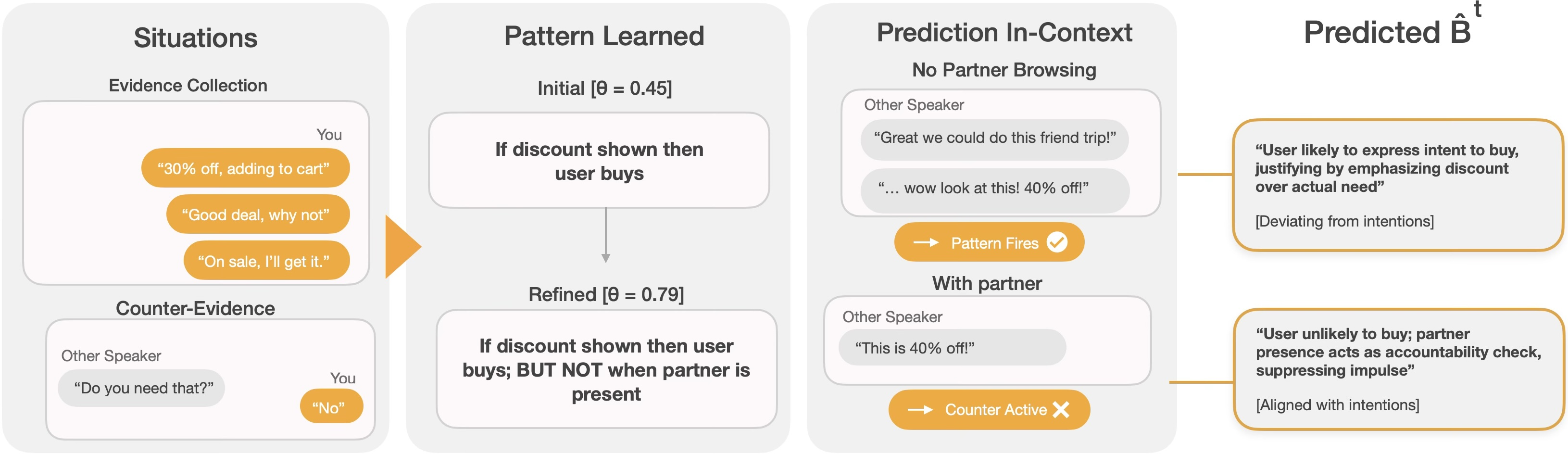
The paper introduces a system called Situational Reasoning. It uses a LLM, or LLM, together with conversation records from a wearable smartwatch. The goal is not to guess the exact next sentence. Instead, the system predicts the purpose of what the person may say, such as:
“The person will probably avoid answering directly.”
2. What questions did the researchers ask?
The researchers focused on several main questions:
- Can an AI predict a person’s likely conversational behavior from earlier conversations?
- Does giving the AI a person’s long-term conversation history help it make better predictions?
- Is it better to organize past behavior into clear rules, rather than simply showing the AI a huge amount of old text?
- Can the system recognize behaviors that people themselves want to change?
- Would people find these predictions useful, helpful, or uncomfortable?
- Could a future AI assistant give a private reminder just before someone repeats an unwanted habit?
For example, a useful pattern might look like this:
If the person is challenged by an authority figure, then they tend to change the subject, except when the person challenging them is a friend.
This kind of rule describes behavior that depends on the situation, rather than saying that someone always behaves in one fixed way.
3. How did the researchers carry out the study?
Collecting everyday conversations
Fourteen adults wore an always-on smartwatch for 7–10 days during their normal activities. The watch collected short audio clips when it detected speech. The participants were asked to tell other people that conversations were being recorded and to get their permission.
The study collected more than 1,000 hours of conversation. After processing and cleaning the recordings, the researchers kept:
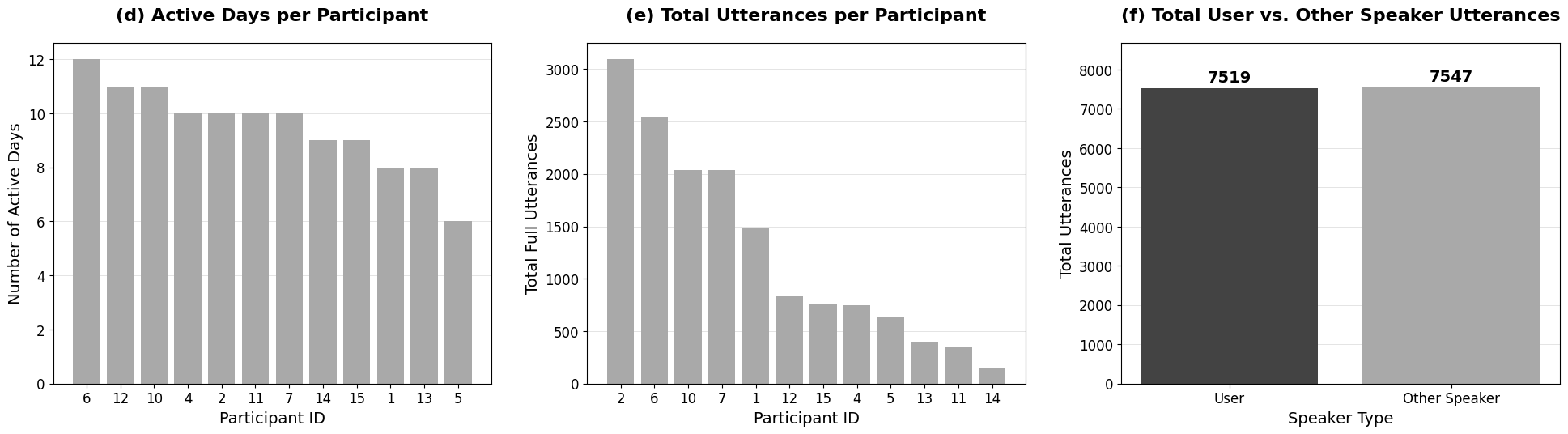
- 15,066 original utterances, or spoken turns
- 9,901 cleaned utterances for the main analysis
- Conversations from 14 participants
An utterance simply means something one person says before another person speaks.
The audio was changed into written transcripts. The system also worked out which words belonged to the participant and which belonged to other people. Names and other identifying information were replaced with labels such as [PERSON]. The original audio was then deleted, and the transcripts were encrypted.
Turning conversations into behavior patterns
The researchers used an LLM, a type of AI trained on large amounts of language, to study the conversations.
They compared four different methods:
- Zero-shot prediction: The AI only saw the current part of the conversation. It did not see the person’s older conversations.
- All-in-context prediction: The AI saw the current conversation plus as much of the person’s past conversation history as possible.
- Natural-language summary: The AI first created a general summary of the person’s past behavior and then used that summary to make a prediction.
- Pattern-Conditioned Prediction, or Situational Reasoning: The system searched the person’s history for repeated, situation-specific patterns and expressed them as understandable
IF–THEN–EXCEPTrules.
The fourth method is the paper’s main contribution. It is similar to making a personal behavior notebook. Instead of giving the AI a giant pile of old conversations, the system creates useful notes such as:
If the person feels overwhelmed, then they tend to minimize the problem and talk about practical details, except when speaking with a trusted friend.
The system also keeps track of how often a pattern was supported or contradicted. This gives each pattern a confidence level, such as “sometimes,” “often,” or “always.”
Testing the predictions
The AI predicted the likely communicative purpose of the participant’s next response. The researchers then compared the prediction with what the participant actually said.
They used:
- Automated AI judges to score how closely the prediction matched the real behavior.
- Human reviewers to check whether the AI’s scores were believable.
- Interviews with participants about whether the patterns seemed accurate and whether the predictions might help them.
One important term is communicative intention. This means what a sentence is doing in a conversation, rather than just the exact words. For example, “I’m fine” could be honestly answering a question, hiding sadness, or trying to end the discussion. The researchers focused on this deeper purpose.
4. What did the researchers find?
The pattern-based method performed best
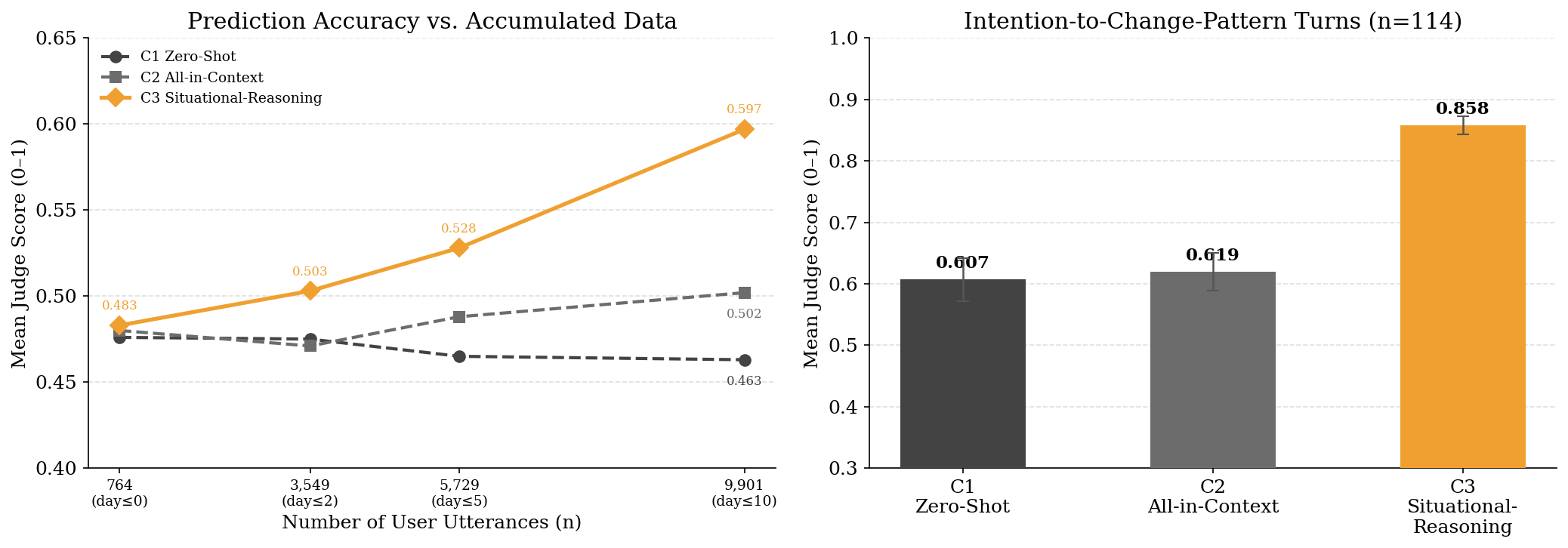
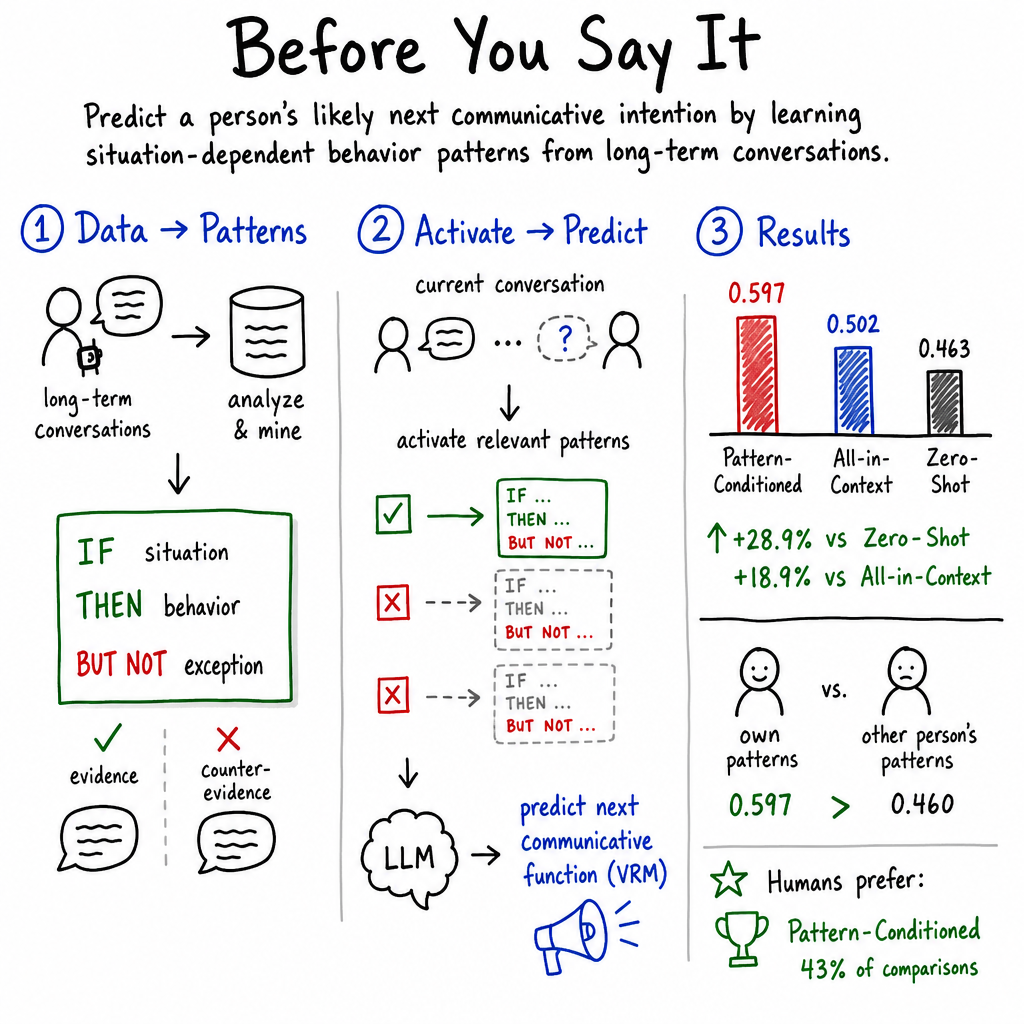
The main system, Situational Reasoning, received an average score of 0.597 out of 1. The comparison methods scored lower:
| Method | Average score |
|---|---|
| Zero-shot | 0.463 |
| All-in-context | 0.502 |
| Situational Reasoning | 0.597 |
This means the pattern-based system was better at predicting what the person was likely to do next in conversation.
Compared with the zero-shot method, it improved performance by about 29%. Compared with simply giving the AI the person’s entire past history, it improved performance by about 19%.
The results also improved as more conversation data was collected. In contrast, the simpler methods did not improve very much with additional history. This suggests that organizing information into meaningful patterns may work better than merely adding more text.
The predictions were truly person-specific
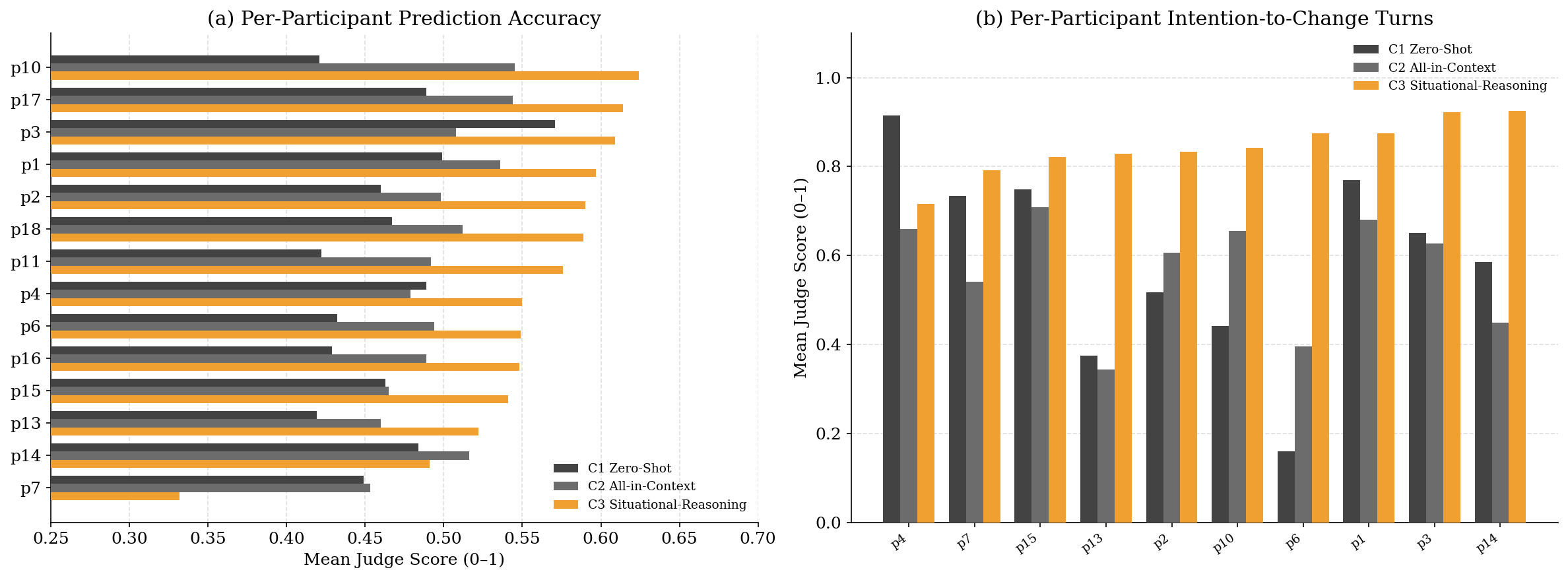
The researchers also performed a test in which they gave one participant the behavioral patterns of another participant. Performance dropped from 0.597 to 0.460.
This is important because it suggests the system was not simply making general guesses about how people usually behave. It was learning something specific about each individual.
The system was especially good at recognizing unwanted habits
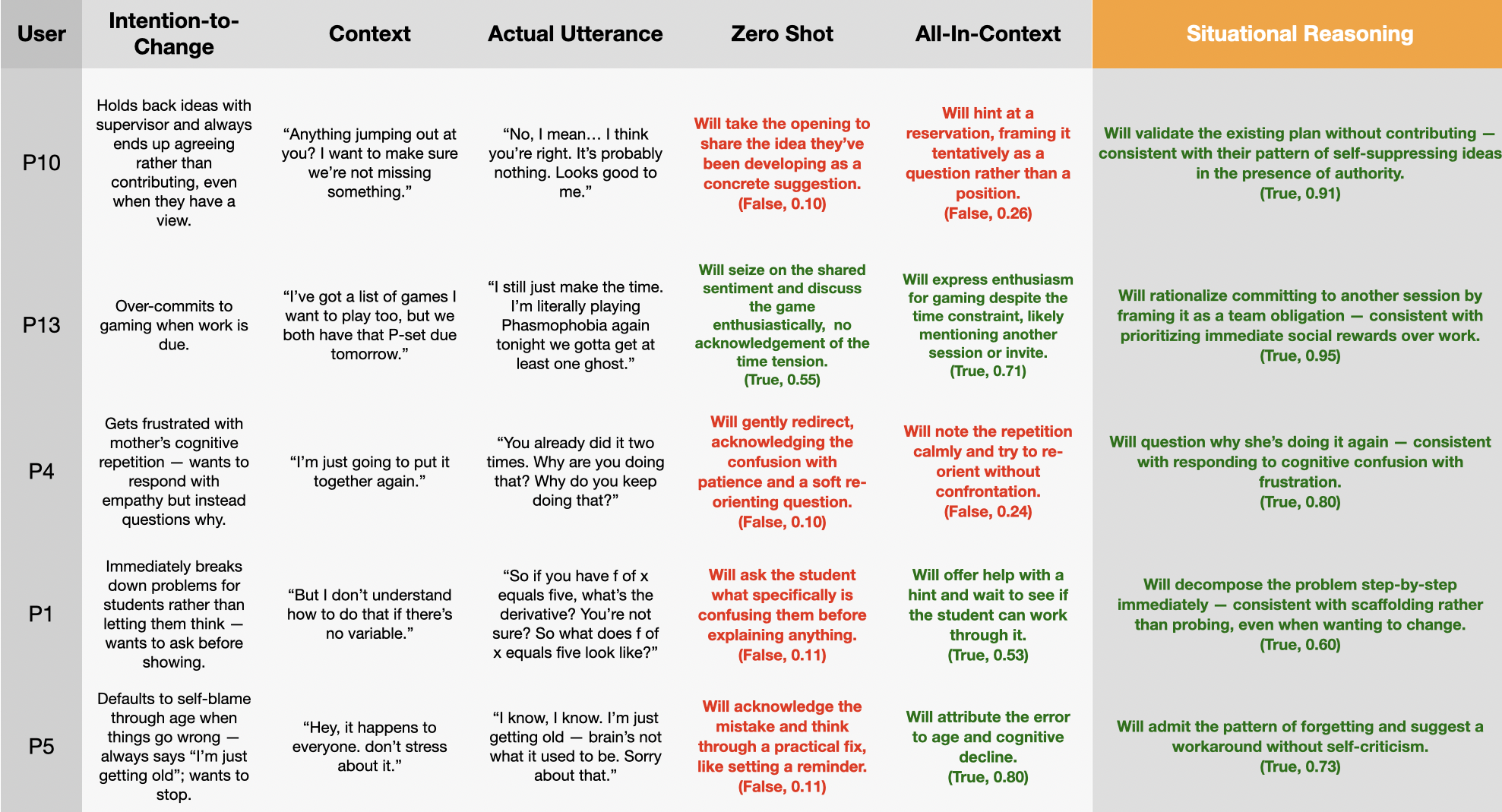
Participants identified 114 patterns that described behaviors they wanted to change. For example, a person might notice that they often avoid difficult conversations or make certain decisions when stressed.
For these personally important patterns, Situational Reasoning received a much higher score:
- Situational Reasoning: 0.858
- Zero-shot: 0.607
- All-in-context: 0.619
This suggests that the system may be especially useful for behaviors that happen repeatedly and that people already recognize in themselves.
Participants saw possible benefits, but also risks
In follow-up interviews, some participants said that seeing their patterns helped them become more self-aware. They believed a system could help by:
- Giving a private reminder at the right moment
- Helping them pause before responding
- Suggesting a different way to think about a situation
- Helping them rehearse a difficult conversation
- Reminding them of goals they had already chosen
Some participants preferred reminders from a device because they might feel less embarrassing or judgmental than correction from another person.
However, participants also warned that an AI could misunderstand complicated situations. A reminder that arrives at the wrong time could be annoying, harmful, or make people feel that the system is controlling them.
5. Why are these findings important?
Most current AI assistants are reactive: they wait for someone to ask a question or give a command. This research explores a more proactive kind of AI that notices what may happen next and offers help before the person asks.
For example, a future smartwatch might notice that someone is beginning a familiar pattern of impulsive spending and quietly remind them of a goal they had set earlier. Another system might recognize that a person is about to avoid a difficult but important conversation and offer a chance to pause and think.
The paper suggests that such systems should follow several important principles:
- Predictions should be written in language people can understand.
- Users should be able to inspect, correct, or delete the patterns.
- Support should be private and nonjudgmental.
- Reminders should be carefully timed and connected to the situation.
- The system should offer choices, not force a person to behave differently.
Simple conclusion
This study shows that an AI can learn some person-specific conversational habits from a large amount of everyday conversation. The best results came from turning past conversations into clear, situation-based behavior rules instead of simply giving the AI all the old conversations at once.
The research could lead to more personalized assistants that help people notice habits, avoid regrettable actions, and make choices that match their goals. However, the technology is still early. The study involved only 14 people for a short period, and conversations are private and complicated. Future systems would need strong privacy protections, careful testing, and a way for users to stay in control of how predictions are used.
Knowledge Gaps
The paper leaves the following knowledge gaps, limitations, and open questions unresolved:
- Limited sample size and diversity: The study includes only 14 fluent English-speaking adults, with insufficient demographic, cultural, linguistic, socioeconomic, and personality diversity to establish generalizability.
- Short deployment window: Participants were observed for only 7–10 days, leaving it unclear whether the mined behavioral patterns remain stable across weeks, months, major life events, or changing relationships.
- Unclear participant characteristics: The paper does not report detailed demographic information, recruitment sources, socioeconomic background, disability status beyond speech impairments, or prior familiarity with wearable sensing.
- Potential self-selection and reactivity effects: Participants volunteered to wear an always-on recorder and knew conversations were being collected, which may have altered what they said, where they went, or with whom they interacted.
- Incomplete consent from interlocutors: The procedure relies on participants informing others and obtaining consent before each interaction, but the paper does not assess whether this occurred consistently or how nonconsenting people and conversations were handled.
- Restricted conversational coverage: The dataset may underrepresent private, sensitive, conflictual, multilingual, noisy, or technologically mediated interactions because of consent requirements, device limitations, and the English-only design.
- Audio and transcription errors remain consequential: Microphone noise, diarization errors, speaker-verification failures, anonymization mistakes, and residual transcription errors could affect both pattern mining and evaluation; their downstream impact is not quantified.
- Cleaning may introduce selection bias: Removing turns with fewer than four words, disfluencies, repetitions, and fragmented utterances may disproportionately exclude hesitation, brief responses, repair sequences, and other behaviors relevant to conversational prediction.
- Ground truth is not independently established: The ground-truth behavioral description is generated from the actual utterance using an LLM prompt rather than being based solely on independent human coding or validated behavioral annotations.
- Circularity in evaluation: The same general class of LLM-based reasoning is used to generate predictions and construct or judge behavioral descriptions, potentially favoring outputs that resemble the prompting framework rather than genuinely matching observed communicative behavior.
- Incomplete human evaluation: Human raters evaluated only 200 scenarios, and the paper does not provide sufficient information about rater expertise, demographic composition, training, per-dimension reliability, or how disagreements were resolved.
- VRM suitability for naturalistic behavior is unresolved: The paper assumes that VRM categories adequately represent person-specific conversational intentions, but it does not compare VRM with alternative dialogue-act, pragmatic, or behavioral coding schemes.
- Ambiguity in the prediction target: It remains unclear how consistently annotators or models distinguish communicative intention, behavioral tendency, emotional state, and inferred psychological motivation.
- Performance metrics are insufficiently specified: The reported means, standard deviations, significance claims, and percentage improvements lack details about statistical tests, correction for repeated comparisons, confidence intervals, unit of analysis, and independence between training and test instances.
- Temporal leakage may inflate results: The paper does not clearly explain how conversations from the same interaction episode, recurring topics, or near-duplicate situations were separated across pattern construction and evaluation.
- No strong non-LLM or learned-model comparisons: The evaluation does not establish how the proposed method compares with supervised classifiers, retrieval-based systems, probabilistic sequence models, simpler rule-based approaches, or human forecasters.
- The contribution of individual pipeline components is unclear: There is no systematic ablation of pattern induction, exception rules, confidence scores, pattern activation, temporal ordering, or the VRM taxonomy.
- Pattern quality is not independently validated: The paper reports that participants reviewed some patterns, but it does not measure the precision, recall, stability, interpretability, or completeness of mined patterns against expert annotations.
- Pattern confidence is not calibrated: The relationship between the evidence ratio and actual behavioral probability is not tested, so qualifiers such as “often” or “always” may not correspond to reliable likelihood estimates.
- Sparse-history behavior is underexplored: The method’s performance for new users, rare situations, newly emerging behaviors, and contexts with few or no activated patterns is not evaluated quantitatively.
- Cross-context generalization remains unknown: It is unclear whether patterns learned in one setting—such as work or family conversations—transfer accurately to other settings, relationships, communication channels, or emotional states.
- Cross-participant transfer is an incomplete personalization test: Replacing a participant’s patterns with another participant’s patterns does not isolate all sources of person-specific information, and the study does not test broader population-level or mixed-personalization models.
- Behavioral drift is not characterized: The incremental updating procedure may preserve outdated patterns or overreact to recent interactions, but the paper does not evaluate forgetting, change-point detection, or adaptation to changing goals and circumstances.
- Uncertainty and abstention are not addressed: The system appears to produce a prediction even when evidence is weak, without evaluating calibrated uncertainty, selective prediction, abstention, or explicit “insufficient evidence” responses.
- False-positive and false-negative harms are not measured: The study does not quantify how often predictions would incorrectly characterize users, miss important behaviors, or create harmful interpretations in sensitive conversations.
- No real-time system evaluation is provided: Although the work motivates wearable, proactive assistance, it does not test latency, energy consumption, connectivity failures, on-device processing, or prediction quality under real-time constraints.
- Intervention effectiveness is untested: Interviews identify potentially useful reminders and reflective supports, but no controlled study examines whether predictions or interventions actually change behavior, improve well-being, or prevent regretted actions.
- Timing and delivery of interventions remain unresolved: The paper does not determine when an intervention should be delivered, how much advance warning is useful, or how to avoid disrupting conversations and reducing user agency.
- User preferences may change over time: Participants’ willingness to receive predictions, preferred intervention styles, and definitions of unwanted behavior were not tracked longitudinally.
- Ethical and privacy risks require deeper study: The work does not investigate risks from sensitive inference, unauthorized access, inference about third parties, data retention, model-provider exposure, or misuse by employers, partners, insurers, or other authorities.
- Anonymization may be inadequate for conversational data: Replacing named entities does not necessarily prevent re-identification from topics, relationships, events, speaking style, or contextual combinations.
- The study does not evaluate bias in behavioral inference: Errors may vary across accents, dialects, gender identities, cultures, neurodivergence, relationship types, or communication styles, but subgroup performance is not reported.
- Reproducibility is limited: The paper does not provide the dataset, complete implementation details, mined patterns, random seeds, prompt versions, model configuration, or sufficient information to reproduce the proprietary LLM-based pipeline.
- Reliance on proprietary and changing models threatens robustness: Results may depend on particular versions of Gemini and GPT-based judges, and the paper does not test sensitivity to model updates, alternative LLMs, prompt variations, or adversarial conversational inputs.
- Longer-horizon prediction is unexamined: The evaluation focuses primarily on the next turn, leaving open whether the method can predict multi-turn trajectories, conversation outcomes, escalation, repair, or behavior across days and weeks.
- The relationship between prediction and explanation is unclear: Human-readable IF–THEN–EXCEPT patterns may appear interpretable, but the paper does not test whether users understand them accurately, can correct them effectively, or are misled by their apparent precision.
- Behavioral support could reinforce unwanted labels: The consequences of repeatedly presenting users with inferred tendencies—particularly negative or self-critical patterns—on self-concept, behavior, and agency are not investigated.
Practical Applications
Immediate Applications
- Personal reflection and behavior-awareness tools (consumer software, wellbeing)
- A wearable or smartphone application could convert a user’s longitudinal conversations into human-readable, situation-specific patterns such as: “When challenged by an authority figure, you tend to deflect, except when speaking with peers.”
- Users could review, correct, delete, or flag patterns they want to change, supporting journaling, self-reflection, and goal setting.
- Deployment basis: The study already demonstrates the necessary workflow: wearable speech capture, transcription, speaker identification, anonymization, pattern mining, and LLM-based prediction.
- Dependencies: Explicit consent from the user and conversation partners; reliable transcription and speaker diarization; secure local or encrypted storage; sufficient personal data to identify recurring patterns. The small sample and 7–10-day collection period mean that commercial systems should present patterns as tentative rather than authoritative.
- Just-in-time private reminders for personal goals (wearables, mobile health, productivity)
- A smartwatch could deliver a discreet, nonjudgmental prompt when a recognized conversational situation is emerging—for example, reminding a user to pause before making an impulse purchase, escalating an argument, or dismissing another person’s concern.
- Prompts could reinforce a previously stated goal, suggest a pause, offer an alternative response, or encourage the user to reconsider a commitment.
- Deployment basis: Participants specifically valued private reminders and reported difficulty noticing unwanted behavior early enough to intervene.
- Dependencies: The intervention must be optional, reversible, and minimally disruptive. False positives, poor timing, and excessive prompts could undermine user agency. Systems should avoid presenting predictions as facts or making clinical judgments.
- Conversation rehearsal and communication coaching (education, coaching, workplace training)
- An application could identify recurring conversational tendencies and generate practice scenarios—for example, responding to criticism, negotiating with a manager, asking for help, or handling socially ambiguous situations.
- Users could rehearse alternative responses before a real conversation, with the system explaining which behavioral pattern was activated and how different responses might align with the user’s goals.
- Deployment basis: Interviewees described reflective self-checking and rehearsal of difficult conversations as potentially useful strategies.
- Dependencies: Coaching should be framed as reflective support rather than an objective assessment of personality. Cultural, linguistic, professional, and relationship-specific differences must be represented to avoid misclassifying normal communication styles.
- Personalized conversational assistants (software and human–AI interaction)
- Digital assistants could adapt their responses to a user’s likely communicative behavior. For example, if a user tends to minimize distress, the assistant could ask a gentle follow-up question rather than assuming that “I’m fine” is sufficient.
- The pattern-conditioned representation could support transparent personalization by showing the user which
IF–THEN–EXCEPTrule influenced an assistant’s response. - Deployment basis: Pattern-Conditioned Prediction outperformed zero-shot and full-history prompting, and its cross-participant performance drop suggests that the benefit comes from person-specific information.
- Dependencies: The assistant needs a safe fallback when there is insufficient evidence, robust exception handling, and controls allowing users to inspect, edit, or disable individual patterns. Sensitive inferences should not be used for advertising, employment decisions, or other high-impact decisions without strong safeguards.
- Longitudinal conversation-analysis infrastructure for researchers (academia)
- The paper’s pipeline can be adapted into a research tool for collecting, cleaning, anonymizing, and labeling naturalistic conversational data.
- Researchers in HCI, psychology, communication, and NLP could use interpretable behavioral patterns as intermediate representations for studying how verbal behavior varies by relationship, setting, emotional state, or conversational role.
- Deployment basis: The study provides a concrete data-processing workflow and demonstrates agreement between LLM-based and human evaluation.
- Dependencies: Research use requires institutional review, participant and bystander consent, secure data governance, deletion procedures, demographic diversity, and evaluation against human annotations rather than relying only on an LLM judge.
- User-controlled memory and review systems (personal information management)
- The same infrastructure could produce searchable conversational memories alongside behavioral summaries, while allowing users to remove sensitive segments and correct speaker or context errors.
- A practical product could combine conversation retrieval, pattern review, and personal goal tracking in one privacy-preserving dashboard.
- Dependencies: Audio and transcript retention must be strictly minimized. Entity redaction alone may not prevent re-identification because conversational content can reveal relationships, locations, events, or distinctive experiences.
- Policy and standards for anticipatory wearable AI
- Policymakers, standards bodies, and organizations can immediately use the findings to establish requirements for always-on conversational systems: bystander consent, visible recording indicators, local processing where possible, encrypted storage, user-accessible deletion, audit logs, and restrictions on secondary use.
- The study’s consent and raw-audio-deletion workflow offers a starting point for operational guidance.
- Dependencies: Existing privacy, biometric-data, workplace-monitoring, and health-data laws may apply differently across jurisdictions. Consent procedures must address people who are recorded but are not system users.
Long-Term Applications
- Clinically validated behavior-change support (mental health and healthcare)
- A future system could detect conversational precursors to behaviors a patient has voluntarily chosen to address, then provide an agreed-upon coping prompt or recommend a clinician-approved strategy.
- Potential uses include supporting stress-management plans, communication training, adherence to behavioral goals, or preparation for therapy sessions.
- Why long-term: The paper predicts verbal tendencies, not health outcomes or clinically meaningful behavior change. Clinical deployment would require prospective trials, safety evaluation, and integration with professional care.
- Dependencies: Clinical validation, patient consent, clinician oversight, clear escalation procedures, bias testing, and compliance with medical-device and health-privacy regulation. The system must not diagnose conditions or intervene autonomously in emergencies based solely on conversational predictions.
- Adaptive psychotherapy and coaching platforms (healthcare, education, coaching)
- Pattern histories could help a therapist or coach review recurring communication contexts, exceptions, and changes over time, with the user deciding which patterns to share.
- The model could recommend individualized exercises, such as reframing, delaying a response, practicing disclosure, or reducing the size of a commitment.
- Why long-term: The evidence comes from seven follow-up participants and self-reported reflections, not controlled intervention outcomes.
- Dependencies: Human review, explainability, longitudinal consent, protection against stigmatizing labels, and mechanisms for correcting patterns that reflect temporary states rather than stable tendencies.
- Enterprise communication and negotiation assistants (workplace software)
- In consensual, user-controlled settings, systems could help employees prepare for recurring meetings, negotiations, feedback sessions, or customer interactions by identifying how they usually respond and suggesting alternatives.
- A tool might generate a pre-meeting checklist based on the user’s goals rather than automatically monitoring or scoring employees.
- Why long-term: Workplace deployment raises substantial power asymmetries and surveillance risks, and the current study does not establish validity across organizational roles or cultures.
- Dependencies: Employee control, prohibition of covert monitoring and managerial access to private predictions, labor consultation, fairness audits, and separation from hiring, promotion, or disciplinary decisions.
- Personalized educational communication support (education)
- Students could receive private prompts before presentations, group discussions, oral examinations, or conflict-resolution exercises, based on their own goals and prior conversational patterns.
- Teachers or tutors could use opt-in tools to help students rehearse participation strategies, while avoiding permanent behavioral labels.
- Why long-term: Educational settings involve minors, institutional authority, and diverse communication norms; the current participants were adults and fluent English speakers.
- Dependencies: Guardian and student consent where applicable, age-appropriate safeguards, multilingual and cross-cultural validation, strict limits on teacher access, and policies preventing predictions from becoming academic judgments.
- Anticipatory multimodal agents and robots (robotics, smart environments)
- Domestic robots, accessibility assistants, or embodied agents could use situational behavioral patterns to decide when to wait, ask a clarifying question, offer a reminder, or avoid interrupting.
- A robot assisting with routines might recognize that a user tends to verbally agree under pressure but reconsider later, and therefore ask for confirmation without making an irreversible decision.
- Why long-term: The paper evaluates turn-level verbal predictions, not physical actions, multi-agent settings, or long-term consequences.
- Dependencies: Reliable sensing in noisy environments, low-latency inference, robust uncertainty estimation, safe action boundaries, and explicit user control. Predictions should inform dialogue timing, not authorize consequential physical or financial actions.
- Cross-platform personal models (messaging, social media, email, productivity)
- A user-controlled model could learn patterns across spoken conversations, messages, and written communication to warn about recurring behaviors such as reactive replies, overcommitment, or avoidance.
- Possible products include a “pause before sending” workflow, personalized drafting alternatives, or reminders linked to the user’s stated priorities.
- Why long-term: The paper explicitly identifies longer-horizon modeling across messaging and social platforms as future work, and behavior may not transfer consistently across modalities.
- Dependencies: Platform interoperability, consent from communication participants, protection against exposing private third-party content, modality-specific validation, and strong safeguards against manipulative or paternalistic interventions.
- Public-interest and population research on situation-dependent behavior (academia and policy)
- With appropriately de-identified data, the methodology could support research on how conversational behavior changes across social roles, institutions, stressors, or cultural contexts.
- Policymakers could use such evidence to design communication training, public-service interfaces, or interventions that are sensitive to context rather than relying on broad personality categories.
- Why long-term: The current dataset contains only 14 participants, limited English-language coverage, and a short observation window; it cannot support population-level conclusions.
- Dependencies: Large, representative, consented datasets; validated behavioral taxonomies; protection against group profiling; transparent uncertainty reporting; and strict separation between research findings and surveillance applications.
- Adaptive models that learn from user feedback (AI personalization and reinforcement learning)
- Users could accept, reject, revise, or rate predictions and interventions, allowing the system to update pattern confidence and exceptions over time.
- A future workflow could optimize not merely prediction accuracy but whether an intervention is timely, helpful, nonintrusive, and aligned with the user’s goals.
- Why long-term: The paper proposes reinforcement learning from user feedback but does not evaluate it. Incorrect feedback loops could reinforce stereotypes or create self-fulfilling behavioral labels.
- Dependencies: Safe exploration, rollback mechanisms, calibrated uncertainty, explicit user goals, longitudinal outcome measures, and evaluation of unintended effects such as anxiety, overreliance, or reduced autonomy.
Glossary
- AES-256-GCM: An authenticated encryption algorithm that provides both confidentiality and integrity using 256-bit AES in Galois/Counter Mode. “transcripts were stored locally on the device using AES-256-GCM encryption.”
- All-In-Context: A prompting strategy that supplies a model with a user’s complete prior interaction history alongside the current context. “The all-in-context baseline extends this by providing the full longitudinal history of prior conversations”
- Ambulatory sensing: The collection of behavioral or physiological data from people while they move through everyday environments. “Work on ambulatory and wearable sensing has established the feasibility of capturing conversation in everyday life.”
- Anticipatory AI: Artificial intelligence that predicts users’ needs or behaviors and provides assistance before an explicit request. “This opens up new possibilities for potential future context-aware, anticipatory, proactive and personalized AI systems.”
- Behavioral pattern mining: The process of discovering recurring associations between situations and behaviors in longitudinal data. “Each user's behavioral profile is learned incrementally from longitudinal conversations by identifying recurring associations between situations and behaviors.”
- BERT-based classifier: A classification model built on Bidirectional Encoder Representations from Transformers, commonly used to categorize language sequences. “a BERT-based disfluency classifier”
- Chain-of-thought reasoning: A prompting or modeling method in which a LLM produces intermediate reasoning steps to reach an answer. “LLMs offer the capacity to reason over unstructured data to infer latent patterns across situations”
- Communicative intention: The social or conversational function a speaker intends an utterance to perform, such as informing, deflecting, or questioning. “predicting the communicative intention of a user’s next response rather than surface utterances”
- Compositional alignment: The degree to which a prediction represents multiple communicative functions and their relative importance. “whether the prediction captures multiple communicative functions when present and reflects their relative weight appropriately”
- Context-aware interaction: An interaction in which a system uses information about the user’s current situation to adapt its behavior. “supporting the design of proactive, context-aware human–AI interactions.”
- Context window: The maximum amount of input information that a LLM can process in one prompt. “History is truncated to the most recent characters when it exceeds the model's context window.”
- Contrastive rule: A rule that describes a typical outcome while explicitly specifying an exception to that outcome. “We define each pattern as a contrastive IF-THEN-EXCEPT rule”
- Cross-participant transfer: An evaluation condition in which a model uses one participant’s learned patterns to predict another participant’s behavior. “we evaluated a cross-participant transfer condition”
- Diarization: The process of identifying and labeling which speaker produced each segment of an audio recording. “transcribed and diarized speech using Deepgram's nova-3-meeting model”
- Disfluency: A disruption in fluent speech, such as a filler, repetition, or false start. “Disfluency removal: filler words (e.g., um, uh, like), false starts, and repetitions”
- Electronically Activated Recorder (EAR): A wearable or portable device that periodically records brief samples of ambient audio for behavioral research. “Early systems such as the Electronically Activated Recorder (EAR) demonstrated that lightweight devices can sample naturalistic audio”
- Exception condition: A condition under which an otherwise applicable behavioral rule should not be activated. “checking that its exception condition is absent”
- Ground truth: The reference label or behavior regarded as correct for evaluating a model’s prediction. “comparing the predicted behavioral description against the ground-truth behavioral description ”
- Human-in-the-loop refinement: The improvement or correction of a computational model through direct user review and feedback. “representing these as human-readable context-conditioned behavioral patterns with explicit exception conditions that users can inspect and refine.”
- In-context learning: A LLM’s ability to infer a task or pattern from examples or information included in its input prompt without parameter updates. “operationalizing behavioral prediction as long in-context learning”
- Inter-rater reliability: The degree to which independent evaluators produce consistent judgments or ratings. “We further validated the LLM judgments against 40 independent human evaluators to establish inter-rater reliability.”
- Just-in-time adaptive intervention: A personalized intervention delivered at a moment when it is expected to be especially relevant or effective. “Finally, prior work on proactive assistants and just-in-time adaptive interventions highlights the value of anticipating user needs”
- Kendall’s tau: A rank-correlation statistic measuring the agreement between two orderings. “Kendall's ”
- Latent pattern: A meaningful regularity that is not directly observed but inferred from observable data. “infer latent patterns across situations”
- Longitudinal dataset: A dataset containing repeated observations of the same subjects over an extended period. “We contribute a longitudinal wearable conversation dataset for studying verbal behavior in everyday life”
- LLM-as-a-judge: An evaluation technique in which a LLM assesses the quality of another model’s outputs. “We evaluate predictions along three dimensions using automated LLM-as-a-judge scoring”
- Naturalistic speech: Speech recorded in ordinary real-world settings rather than in a controlled laboratory environment. “over 1,000 hours of naturalistic speech from 14 participants.”
- Named Entity Recognition (NER): A natural-language-processing task that identifies and classifies entities such as people, organizations, and locations in text. “anonymized personally identifiable information using SpaCy's Named Entity Recognition model”
- Pattern activation: The process of selecting learned behavioral patterns that match the current conversational situation. “prediction requires determining which patterns apply to the current conversational context.”
- Pattern-conditioned prediction: A prediction method that uses situation-dependent behavioral patterns as explicit conditions for generating a forecast. “Pattern-Conditioned Prediction, an interpretable method that uses behavioral patterns mined from longitudinal everyday conversations”
- Personal identifiable information: Information that can identify a particular individual, such as a name or organization associated with them. “anonymized personally identifiable information”
- Pragmatic function alignment: The extent to which a prediction matches the communicative purpose of a reference utterance independently of its wording. “whether the prediction captures the same verbal intention as the ground truth independent of surface wording.”
- Proactive intervention: Assistance initiated by a system before the user explicitly requests it. “behavioral anticipation could inform the design of proactive interventions.”
- Re-segmentation: The process of dividing or recombining transcript units to produce more coherent linguistic segments. “Utterance re-segmentation: sentence boundary detection was applied using wtpsplit”
- Semi-structured interview: An interview method that combines predetermined questions with flexible follow-up questions. “we conducted two studies.”
- Situational antecedent: The contextual condition that precedes and triggers a behavior in a rule or model. “each pattern is evaluated by matching its situational antecedent ”
- Situational Reasoning: The paper’s training-free method for learning and applying interpretable, situation-dependent behavioral patterns. “We introduce Situational Reasoning, a training-free approach that learns interpretable, situation-dependent behavioral patterns”
- Speaker verification: The task of determining whether an audio segment was produced by a particular enrolled speaker. “identified the target participant's voice using a speaker verification model”
- Surface utterance: The literal linguistic form of what a speaker says, distinguished from its communicative function. “predicting the communicative intention of a user’s next response rather than surface utterances”
- Training-free: Describing a method that does not update model parameters using additional task-specific training data. “a training-free approach”
- Verbal Response Mode (VRM): A taxonomy and framework for representing the communicative functions performed by conversational utterances. “In Verbal Response Mode (VRM) theory”
- Wearable sensing: The use of body-worn devices to continuously or repeatedly measure environmental, behavioral, or physiological information. “More recent wearable systems combine continuous conversational sensing with LLMs”
- Zero-shot: Performing a task without task-specific examples or personalization supplied to the model. “This represents the simplest possible instantiation of the task, with no personalization or longitudinal modeling.”

