Full-Pipeline Inference Optimization for MiMo-V2.5 Series: Pushing Hybrid SWA Efficiency to the Limit
Abstract: We present a full-pipeline inference optimization for the MiMo-V2.5 model family, which combines Hybrid Sliding Window Attention (Hybrid SWA), sparse Mixture-of-Experts (MoE), and multimodal encoders. While Hybrid SWA can ideally reduce both attention compute and KVCache storage significantly compared to Full Attention, realizing these gains in production requires substantial engineering effort. We systematically optimize the KVCache system with layerwise prefetch, SWA-aware prefix cache trees, and specialized placement strategies, achieving strict SWA storage and high cache hit rates. We further build GCache, a high-performance distributed cache infrastructure with RDMA-optimized networking, and develop a KVCache-affinity router to reduce computation while preserving load balancing. We also optimize for multimodal inputs, including GPU image preprocessing, parallel video decoding, and multimodal cache sharing. Together, these optimizations constitute the first large-scale LLM serving system in production that efficiently covers the Hybrid SWA + MoE + multimodal composite architecture.
First 10 authors:
Paper Prompts
Sign up for free to create and run prompts on this paper.
Top Community Prompts
Explain it Like I'm 14
What is this paper about?
This paper explains how Xiaomi’s MiMo-V2.5 family of AI models was tuned to run much faster and cheaper in the real world, especially on very long inputs and with images, audio, and video. The models use three big ideas together:
- Hybrid Sliding Window Attention (Hybrid SWA): the model mostly looks back only a short distance, and only some layers look at everything.
- Mixture-of-Experts (MoE): different parts (“experts”) of the model handle different tokens so not all parts work at once.
- Multimodal encoders: the model can handle text plus images, audio, and video.
The paper shows how Xiaomi turned the “on paper” efficiency of these ideas into actual speed and cost savings in production.
What questions were they trying to answer?
In simple terms:
- How can we make a powerful long-context AI model fast and cheap to run?
- How do we store and reuse the “memory” of past tokens without wasting space?
- How can we make many computers share this memory smoothly and quickly?
- How do we schedule work so short, easy tasks don’t get stuck behind long, hard ones?
- How can we speed up both the “reading” phase (prefill) and the “writing” phase (decode)?
- How do we make image/video/audio processing fast and well-batched?
How did they solve it? (Methods in everyday language)
Think of the model as a student writing an essay:
- Attention is like looking back at notes. Full Attention = flipping through the whole notebook every time. Sliding Window Attention = checking only the last few pages most of the time, and occasionally looking at the whole notebook.
- KVCache is the “memory” the student keeps so they don’t re-read everything. If you store the entire notebook every time, you run out of space. If you store only the recent pages when possible, you save lots of space.
Here’s what they built:
1) Smarter “memory” for attention (KVCache)
- Two memory pools: one for “full-look” layers and one for “windowed” layers, so most layers only store a small, recent slice. This keeps storage linear in the window size instead of the whole sequence.
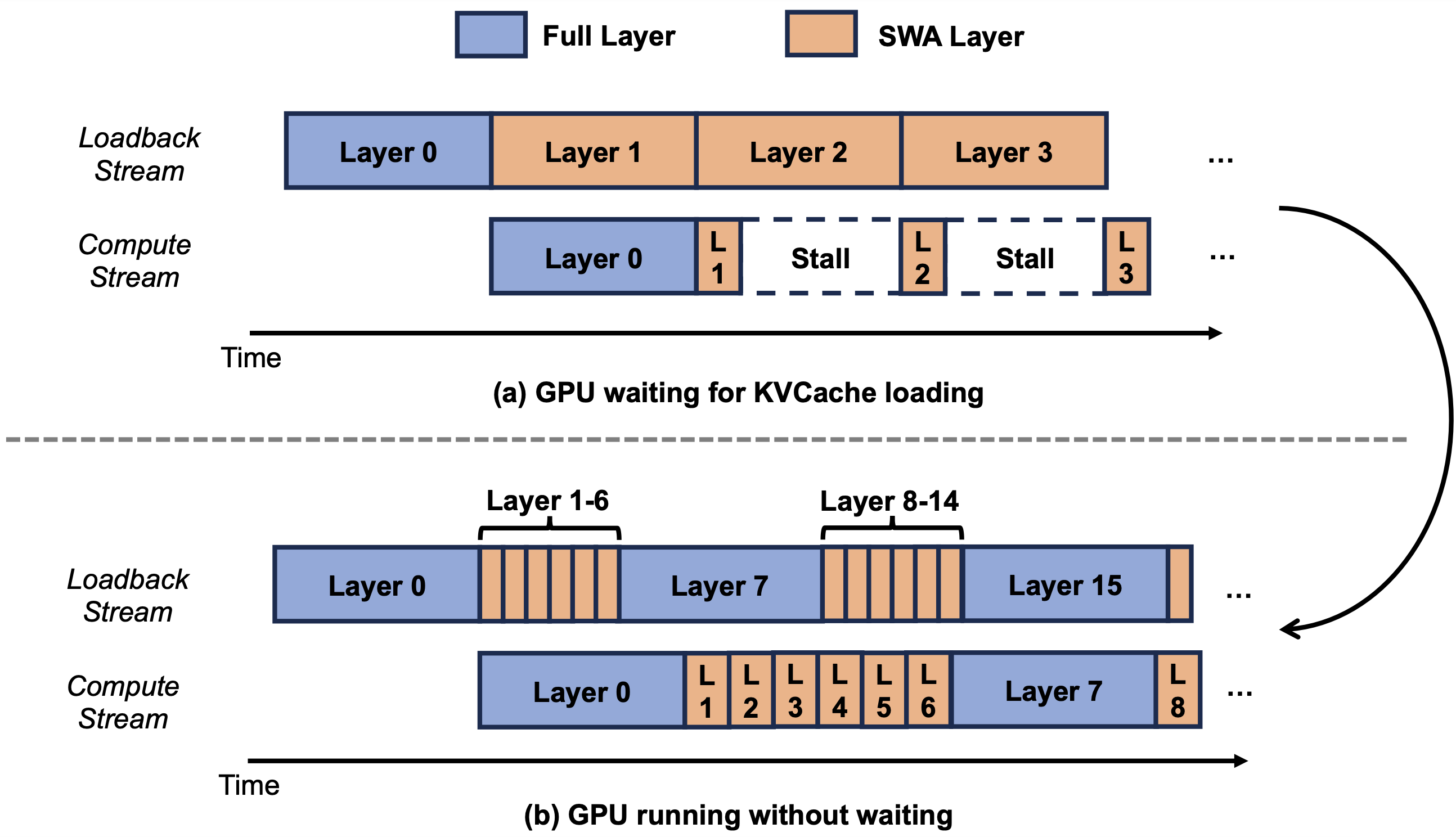
- Layer-by-layer prefetch: they load just the needed memory right before each layer runs, overlapping loading and computing so the GPU doesn’t sit idle.
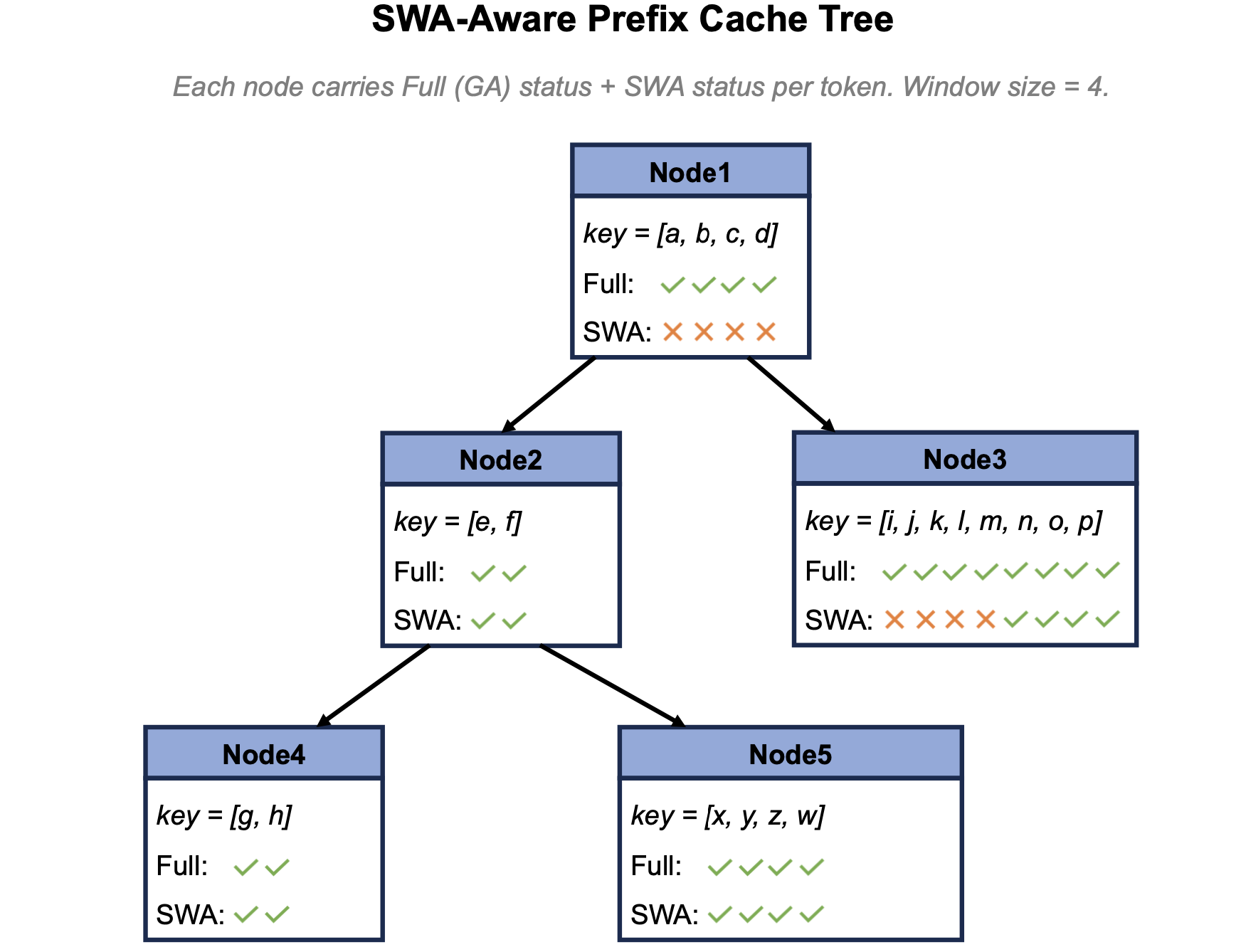
- “Window-safe” prefix reuse: when two requests share the same beginning, the system checks that the needed recent part is actually still stored. That avoids reusing broken or missing memory.
- Keeping caches in sync: the GPUs, the host machines, and shared storage may each have parts of the “memory.” They added rules to keep them consistent and to avoid losing useful shared prefixes.
2) A fast shared storage called GCache
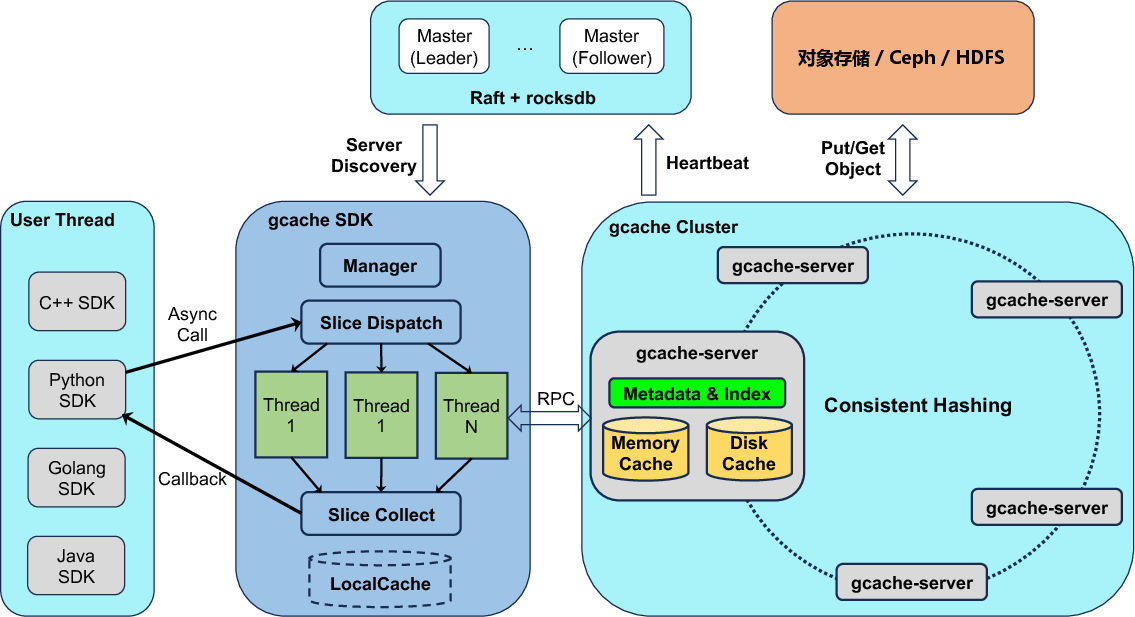
- Picture a shared pantry close to the kitchen. GCache is a distributed “pantry” for model files and cached memories that all machines can use quickly.
- It uses high-speed networking (RDMA), smart slicing of large reads, and co-lives on the same servers as the GPUs to cut costs.
- It’s decentralized and highly available, so if a machine fails, the system can recover quickly.
3) Better scheduling and routing
- KVCache-affinity routing: send requests with similar beginnings to the same machines that already have those beginnings cached. This boosts “hits” and reduces waiting.
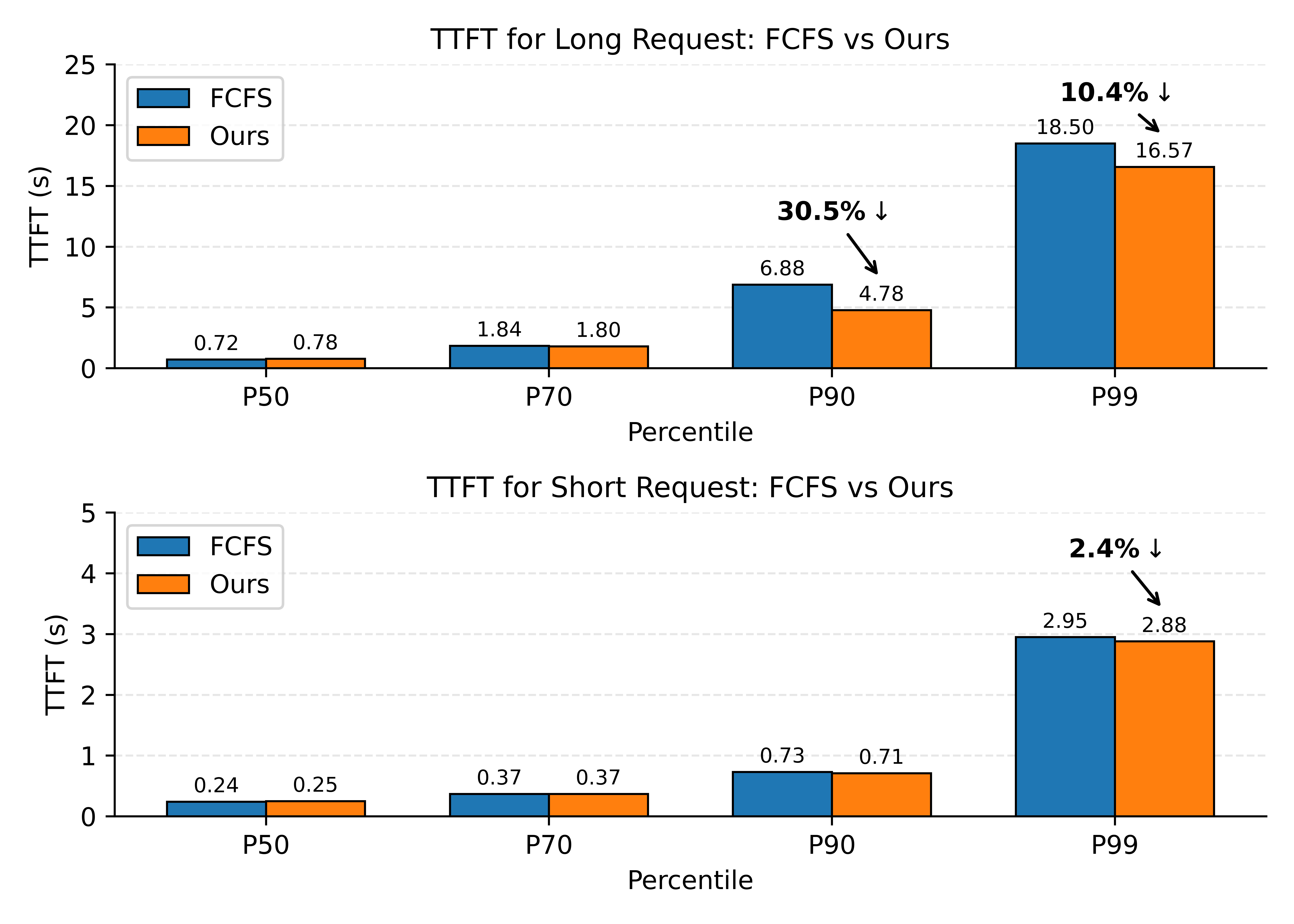
- Fairness and speed: prioritize requests that can reuse more cache so they finish fast, but add a “wait-time penalty” so long tasks don’t starve.
4) Prefill speed-ups (the “reading” phase)
- Adjusted MoE parallelism now that the cache is small: by storing less KVCache, they could use fewer cross-machine “experts” and reduce communication, improving performance.
- Length bucketing: group similar-length requests so short ones don’t get slowed by very long ones.
- Fix system-level slowdowns: they disabled a conflicting OS setting that caused random performance gaps.
5) Decode speed-ups (the “writing” phase)
- More efficient GPU memory use so one machine can handle more requests at once.
- Enable MTP (Multi-Token Prediction) earlier: teach the model to confidently predict several next tokens at once from the start, not only after many tokens. This makes early decoding much faster.
6) Multimodal (images/audio/video) pipeline upgrades
- Do image prep (resize/normalize) on the GPU, not the CPU.
- Download and decode images/video in parallel so GPUs don’t wait.
- Batch multiple users’ image/audio encodes together for better GPU use.
- Cache multimodal embeddings consistently and share them across GPUs on a node.
What did they find, and why is it important?
Key results, explained simply:
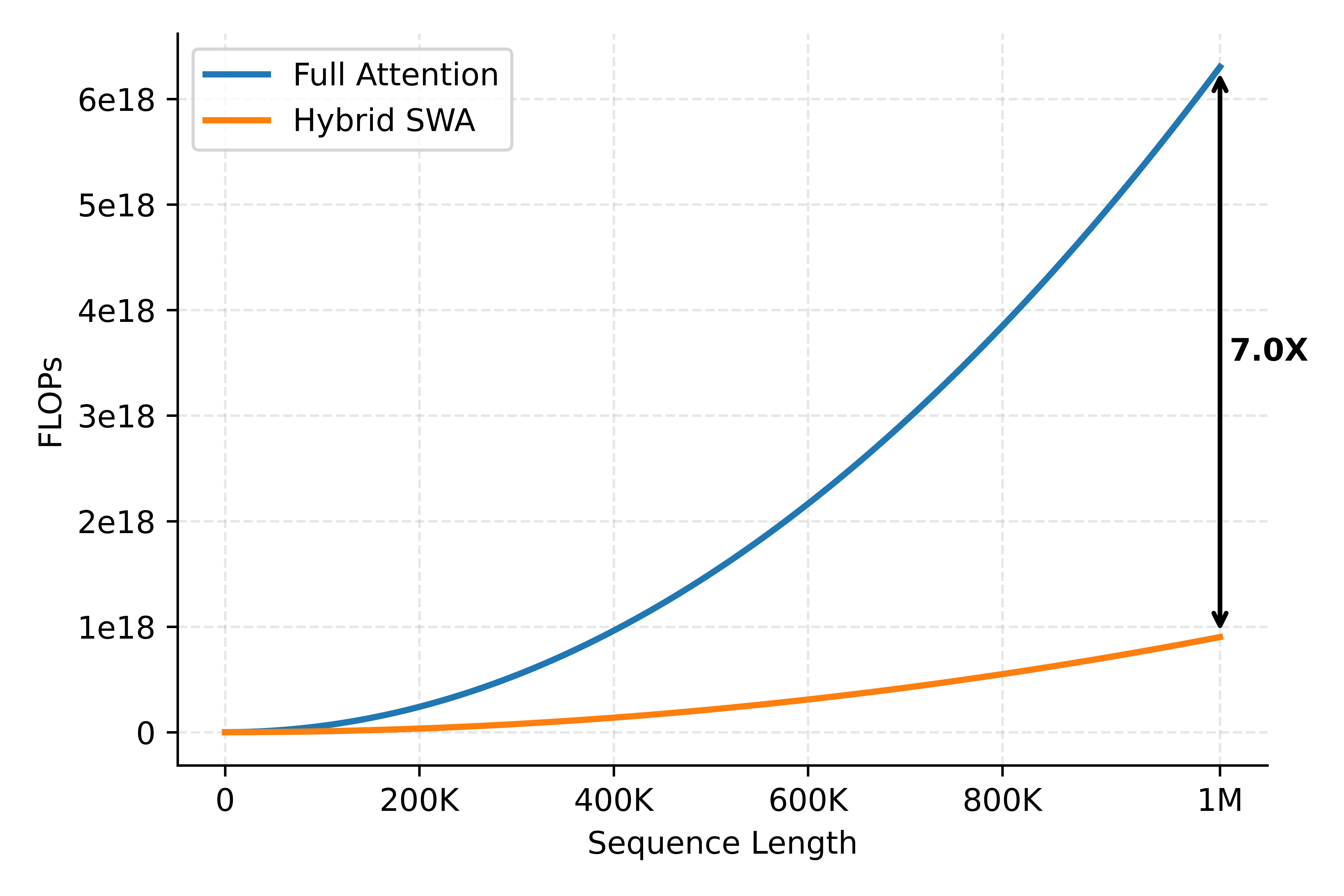
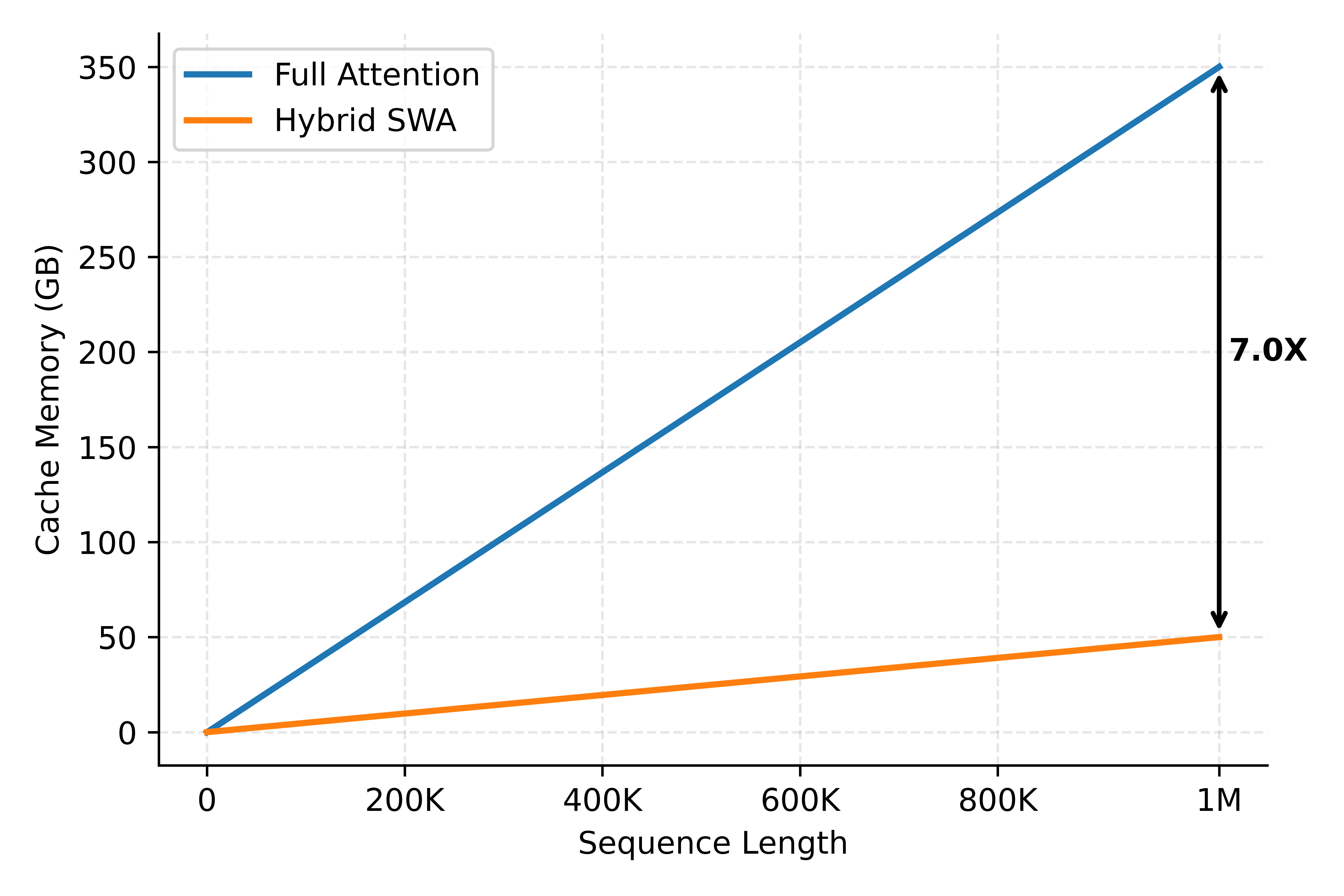
- Much less memory for attention: Hybrid SWA brings about a 7× drop in “memory of past tokens” compared to Full Attention in theory, and their engineering makes that real in production.
- High cache reuse: server-side KVCache hit rates average about 93% and can exceed 95% for heavy users. This means the system often reuses past work.
- Faster routing and queuing: their scheduler increased certain cache hits by ~25% and per-node input throughput by ~30%. It also cut the “time to first token” (TTFT) for long requests by about 30% at the P90 level without hurting short ones.
- Prefill performance gains: smaller expert parallelism became possible thanks to smaller caches, giving around 40% end-to-end improvement.
- Decode improvements: enabling early MTP boosted early-token speeds up to 2.3×, which matters a lot in short, chatty exchanges.
- Multimodal throughput: encoder throughput doubled (QPS from 15 to 30) without increasing latency, and long video decoding time dropped from 156 seconds to 23 seconds.
These changes mean lower costs, faster responses, and better support for very long contexts and mixed media.
Why does this matter?
- For users: faster replies, lower costs, and smoother experiences with long documents, multi-turn agents, and mixed media (text + images/audio/video).
- For developers: it proves that the mix of Hybrid SWA + MoE + multimodal can be made efficient at scale, not just in theory.
- For the community: Xiaomi contributed parts of these optimizations back to open source (like SGLang), helping others build efficient systems more easily.
In short, the paper shows how careful engineering turns smart model ideas into real-world speed and savings, making advanced AI more practical and affordable.
Knowledge Gaps
Unresolved knowledge gaps, limitations, and open questions
Below is a single, consolidated list of concrete gaps and open questions that remain after this work, intended to guide future research and engineering.
- Lack of end-to-end quality evaluation: no empirical analysis of how Hybrid SWA (window size, number/placement of full-attention layers) affects model accuracy on long-context and multimodal tasks, including potential regressions versus full attention.
- Window-size sensitivity: no methodology or results for choosing (e.g., 128) under varying workloads or domains; unclear trade-offs between smaller for efficiency and larger for long-range dependency modeling.
- Training–inference alignment: “dual-semantic consistency” between SWA and full-attention layers is mentioned as a challenge but no experiments show that training objectives or layer selection maintain quality during inference at scale.
- Generality across architectures: unclear whether the KVCache design and prefix tree semantics extend to other attention sparsity patterns (e.g., dilated, block, hybrid windows), non-MoE models, or different transformer variants.
- Formal correctness of SWA-aware reuse: the “window-safe length” rule is principled, but there is no formal proof or adversarial testing that it prevents all pseudo-hit and stale-KV failure modes under concurrency and tiered evictions.
- Cross-tier consistency model: the system repairs L1/L2/L3 SWA occupancy mismatches opportunistically, but provides no explicit consistency model, staleness bounds, or correctness guarantees during transient mismatches.
- Failure-mode characterization: daily node failures are acknowledged, yet there is no quantification of their impact on correctness, P99 latency, throughput, or hit-rate decay during and after failovers.
- Single-replica L3 risk: GCache operates with single-replica storage under co-deployment; the probability and cost of correlated failures, data loss, and recomputation bursts are not analyzed against SLOs.
- Security and privacy of KV/embedding caches: no discussion of encryption, access control, data isolation, or retention policies for user prompts and multimodal embeddings cached across nodes and tiers (especially with RDMA and shared memory).
- Cache invalidation with model updates: no strategy for invalidating or migrating KV/embedding caches across model/weight/tokenizer/normalization updates to prevent silent reuse of incompatible entries.
- Eviction policy design: several heuristic policies (e.g., retaining SWA at fixed positions for short/medium sequences) are introduced without ablations quantifying trade-offs against long-prefix workloads or overall hit-rate/latency.
- Router scoring and fairness: the match-weight vs. load penalty (Eq. 1) lacks parameterization details, stability analysis under skewed demand, or guarantees against long-tail starvation beyond a heuristic wait-time penalty.
- TTFT–throughput trade-offs: prioritizing cache-friendly requests reduces TTFT P90, but the impact on aggregate throughput, tail latencies of cache-cold jobs, and fairness under multi-tenant load is not quantified.
- Static length buckets: the three-tier bucketing (0–64K/64K–256K/256K–1M) may underperform under shifting distributions; no adaptive or learned bucketing and no analysis of fragmentation or bucket-boundary thrashing.
- Parallelism auto-tuning: EP/DP/PP/MoE configurations are manually chosen; no automatic tuner or policy to adapt to different GPUs, KV pressure, batch mix, or traffic patterns while maintaining SLOs.
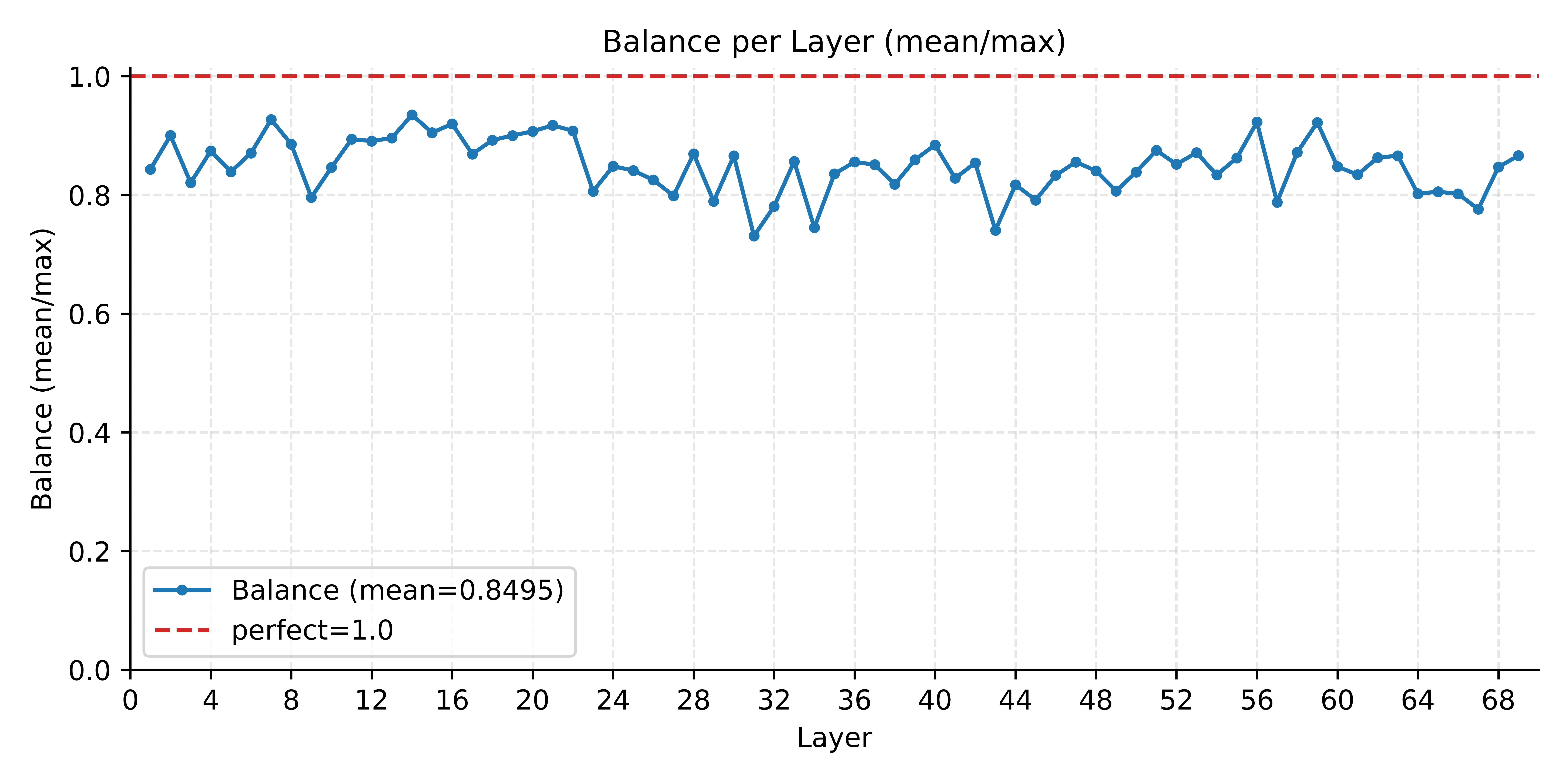
- MoE load-balance robustness: although average expert balance is high, the system lacks safeguards for tail events (e.g., bursty skew, expert collapse), detection thresholds, or remediation strategies in production.
- Decode MTP quality impacts: enabling prefill MTP boosts speed, but there is no measurement of acceptance rates beyond 256 tokens, error propagation, or any effect on response quality/hallucination rates.
- Interaction with other accelerations: speculative decoding, constrained decoding, and draft models are not considered; unclear how they interact with SWA KV policies, router affinity, and MTP layers.
- Quantization compatibility: the paper does not evaluate how SWA KV sparsity interacts with KV/weight quantization (e.g., 4–8 bit, FP8) and the resulting accuracy/latency trade-offs.
- Hardware portability: results emphasize high-bandwidth NICs and HBM; there is no evaluation on varied hardware (A100/L40S/PCIe-only) or mixed clusters, nor guidance on degradation and tuning.
- Cross-region and multi-datacenter scaling: GCache throughput is impressive intra-cluster, but no analysis of WAN latency, cross-AZ consistency, or geo-replication for global deployments.
- Observability and diagnostics: no description of metrics, alerting, or tracing to detect SWA occupancy drift, pseudo-hits, cache oscillations, or router-induced skew before user-visible degradation.
- Multimodal preprocessing equivalence: GPU-side resize/normalize/patchify and parallel video decoding may introduce numerical/ordering differences; there is no validation that quality matches CPU pipelines or training-time preprocessing.
- Multimodal cache keying: consistent hashing improves hits, but key construction, collision handling, and invalidation under content changes (e.g., re-encoding, different resize) are unspecified.
- Ordering and determinism in video: parallel decoding splits frames across threads, but determinism guarantees, synchronization of per-frame metadata, and impact on temporal encoders are not addressed.
- Interplay with batching and latency: cross-request encoder batching doubles QPS, but there is no analysis of head-of-line blocking, per-modality batch mixing effects, or tail latency under bursty arrivals.
- Resource isolation: cache affinity may route hot prefixes to specific nodes; potential multi-tenant interference, noisy-neighbor effects, or quota mechanisms are not discussed.
- Energy and cost per token: storage and networking costs are discussed qualitatively, but there is no measurement of energy efficiency, , or a comprehensive cost-per-token breakdown across prefilling, decoding, and multimodal.
- Reproducibility and baselines: claimed gains (e.g., 25% L2 hit-rate uplift, 30% throughput increase, 40% prefill performance) lack full experimental details, datasets, or open-source code sufficient for independent replication.
- Applicability beyond SGLang: many optimizations are tied to SGLang and GCache; portability and integration with other serving stacks (e.g., vLLM, TensorRT-LLM, Ray) remain untested.
- Ultra-long contexts beyond 1M: performance and quality behavior at >1M tokens, and potential need for dynamic windowing or periodic global attention refresh, are not explored.
Practical Applications
Overview
The paper delivers a production-proven, full-pipeline optimization stack for serving long-context, multimodal MiMo-V2.5/Pro models that combine Hybrid Sliding Window Attention (Hybrid SWA), sparse MoE, and image/audio/video encoders. Key innovations include strict O(W) SWA KVCache via a dual-pool design, an SWA-aware prefix cache tree (“window-safe length”), a high-performance distributed L3 cache (GCache) with RDMA, a KVCache-affinity router (LLM-Router) to maximize L2 hits and reduce TTFT, optimized prefill/decode pipelines (e.g., MTP in prefill, memory tuning), and encoder-side throughput gains (GPU preprocessing, cross-request batching, parallel video decode). These unlock large, immediate reductions in cost and latency for long-context and multimodal inference.
Below are practical, real-world applications, grouped by deployment readiness.
Immediate Applications
These can be deployed now using the described methods and systems (MiMo-V2.5(+Pro), SWA-aware KV systems, GCache, LLM-Router, SGLang integrations).
- Enterprise knowledge assistants over massive corpora (Sector: software, enterprise IT)
- What: Long-context assistants for policy docs, wikis, tickets, code monorepos, contracts.
- Why: O(W) SWA KVCache shrinks memory ~7×; SWA-aware prefix reuse + GCache sustain >90% hit rates; length bucketing and router affinity preserve throughput.
- Tools/workflows: “KVCache-aware RAG server” for Confluence/SharePoint/Git; IDE plug-ins that reuse system-prompt/cache across teams.
- Assumptions/dependencies: SGLang v0.5.7+ with upstreamed fixes; Redis-backed LLM-Router; RDMA-capable NICs for best performance; privacy controls for cache TTL/eviction.
- Customer support and contact center copilots with long conversational histories (Sector: customer service/BPO)
- What: LLMs that remember weeks/months of multichannel interactions (text, screenshots, call audio).
- Why: High KV hit rates via consistent hashing + router affinity; GPU-side image/audio preprocessing reduces latency; TTFT prioritization improves responsiveness for cache-friendly sessions.
- Tools/workflows: “Session-aware router” that pins returning customers to nodes with cached prefixes; shared system prompts for consistent tone/policies.
- Assumptions/dependencies: Data retention policies aligned with cache TTL; opt-in mapping of session IDs to consistent-hash keys.
- Financial analysis copilots for long filings and earnings calls (Sector: finance)
- What: Rapid Q&A and summarization over 10Ks, 8Ks, historical reports, and call transcripts/video.
- Why: SWA reduces memory bandwidth and storage; parallel video decoding + cross-request encoder batching doubles encoder QPS; MTP accelerates early decode for short answers.
- Tools/workflows: “Filings workbench” that caches per-fund/system prompts; scheduled re-use of embeddings/prefixes across analyst teams.
- Assumptions/dependencies: Compliance (audit trails of cache usage, PII handling); on-prem or VPC deployment for sensitive data.
- Healthcare document and imaging assistants (Sector: healthcare)
- What: Longitudinal EMR summarization, cross-visit comparisons; multimodal: clinician notes + radiology series or ultrasound clips.
- Why: GPU preprocessing for large images; parallel video decode for long studies; SWA KV reductions enable longer contexts per GPU.
- Tools/workflows: Hospital on-prem cluster with SWA-aware KV tiering; cache sharing for department-standard prompts and templates.
- Assumptions/dependencies: HIPAA/GDPR-compliant caching (encryption, TTLs, access logs); on-prem deployment likely required.
- Education content processing and lecture/meeting summarization (Sector: education, productivity)
- What: Efficient summarization of long lectures, MOOCs, and multi-hour meetings with slides/video/audio.
- Why: Parallel video decode reduces 1-hour video processing from 156 s to 23 s; encoder cross-request batching increases GPU utilization; MTP speeds short-form outputs.
- Tools/workflows: “Course auto-summarizer” that reuses course-level prompts; batch processing pipelines for large archives.
- Assumptions/dependencies: Rights to process content; stable ingress bandwidth and storage for video.
- Media monitoring and compliance (Sector: media, trust & safety)
- What: Large-scale ingestion and summarization of news videos, broadcasts, and social clips.
- Why: Encoder DP with TP=1 for small encoders; consistent hashing for multimodal cache boosts hit rates by ~30%; RDMA-powered L3 reduces storage/network bottlenecks.
- Tools/workflows: “Multimodal encoder farm” with cross-request batching; cache keys by source/program/segment.
- Assumptions/dependencies: Content licensing; appropriate moderation policies.
- API/MLOps providers: cost-optimized long-context LLM serving (Sector: cloud/AI platforms)
- What: Lower TCO for hosted long-context/multimodal LLM endpoints.
- Why: Co-deployed GCache (memory+NVMe) provides L3 at near-zero extra cost; L2/L3 hit improvements via router affinity; NUMA and CUDA graph tuning increase concurrency.
- Tools/workflows: PD-disaggregated clusters; autoscaling policies keyed to cache pressure rather than pure QPS.
- Assumptions/dependencies: Fleet with high-speed NICs; node failure handling integrated with GCache SDK timeouts.
- Research labs running long-context and multimodal experiments (Sector: academia)
- What: Cheaper ablations on context lengths, agentic multi-turn chains, and MoE behaviors at scale.
- Why: Strict O(W) KV permits 1M+ token contexts within budget; stable L3 increases TTL for reproducible runs; scheduling/bucketing controls variance.
- Tools/workflows: “SWA-aware prefix-tree testbeds” and SGLang PRs to replicate production routing and caching strategies.
- Assumptions/dependencies: Access to MiMo-V2.5 weights and SGLang backend; RDMA optional but beneficial.
- Internal robotics/logistics ops with offline planning (Sector: robotics, supply chain)
- What: Batch planning over long histories of sensor logs and task narratives; not real-time control.
- Why: SWA KV reductions enable processing long logs on fewer GPUs; multimodal encoders handle images/video of environments.
- Tools/workflows: “Long-horizon planner” that reuses depot- and task-specific prefix caches for repeated routes.
- Assumptions/dependencies: Offline/near-real-time constraints; privacy of operational data.
Long-Term Applications
These require further research, scaling, integration, or standardization beyond the current production system.
- Standardized SWA-aware KVCache APIs across frameworks (Sector: software infrastructure, open source)
- What: Common ABI for dual-pool KV, window-safe prefix semantics, and tiered cache coherence to ease adoption beyond SGLang.
- Why: Broadens portability of Hybrid SWA models and caching strategies across serving stacks.
- Dependencies: Community consensus, reference implementations, test harnesses.
- Memory and network co-design for KVCache (Sector: hardware, datacenter)
- What: CXL-style memory pooling, KV-aware NIC offloads, and RDMA-first fabrics tuned to KV access patterns.
- Why: Paper shows networks are underutilized; specialized paths could cut latency and cost further.
- Dependencies: Vendor support (GPU/NIC/CXL), kernel/drivers, ecosystem maturity.
- Federated or cross-region KV reuse for global services (Sector: cloud platforms, policy)
- What: Secure cross-DC cache propagation for shared system prompts and popular prefixes.
- Why: Extends TTL/coverage for global workloads; reduces redundant compute.
- Dependencies: Strong encryption, tenancy isolation, data residency compliance frameworks.
- Privacy-preserving cache governance and certifications (Sector: policy, compliance)
- What: Formal TTL policies, audit trails, and certification regimes (HIPAA/GDPR/ISO) for KV/embedding caches.
- Why: Widespread use of long TTL caches in regulated sectors needs standardized guardrails.
- Dependencies: Regulator guidance, industry working groups, secure-by-design cache products.
- Persistent, lifelong personal assistants (Sector: daily life, education, productivity)
- What: Assistants retaining years of personal context across devices and modalities.
- Why: SWA drastically lowers memory footprint for long histories; cache trees can partition personal timelines.
- Dependencies: On-device/offline variants (quantization, mobile GPU kernels), user-consent and privacy-preserving TTLs.
- Multi-agent systems with shared, SWA-aware context trees (Sector: software, autonomous agents)
- What: Agents that coordinate via shared KV prefixes (tools, knowledge bases) while maintaining per-agent SWA windows.
- Why: The dual-index prefix tree enables safe reuse boundaries and independent evictions.
- Dependencies: Multi-tenant prefix-tree abstractions, conflict resolution, agent orchestration standards.
- Healthcare-grade multimodal copilots with image/video pipelines (Sector: healthcare)
- What: Regulatory approved pipelines for radiology/echo video triage and longitudinal narrative synthesis.
- Why: Parallel video decoding and GPU preprocessing already cut latency; next step is validated clinical integration.
- Dependencies: Clinical trials, bias/safety evaluation, FIPS-validated encryption for caches.
- Energy- and cost-aware procurement and right-sizing (Sector: policy, datacenter ops)
- What: Procurement guidelines that align NIC/GPU/storage choices with SWA-informed workloads.
- Why: Paper notes overprovisioned NICs; right-sizing reduces capex/opex and carbon footprint.
- Dependencies: Tooling to model workload/cache behavior; industry benchmarks and SLAs.
- Edge/robotics on-device long-context inference (Sector: robotics, embedded)
- What: SWA-based models running on constrained devices for local logs and video.
- Why: O(W) memory profile fits better on edge; multimodal preprocessing pipelines can be adapted.
- Dependencies: Kernel-level optimizations for non-NVIDIA accelerators, aggressive quantization/pruning, intermittent connectivity-aware caching.
- Content factories and media analytics at scale (Sector: media, advertising)
- What: Massive batch encoding/summarization of archives with cross-request batching, encoder DP farms, and cache-aware routing.
- Why: The paper’s encoder throughput doubling and parallel video decode support industrial-scale pipelines.
- Dependencies: Workflow schedulers integrating consistent hashing, budget-aware cache TTLs, rights management.
- Finance-grade audit and risk controls for cached inference (Sector: finance, compliance)
- What: Audit trails linking outputs to cache hits/misses and data lineage; cache-aware model risk assessment.
- Why: Cache reuse can affect outputs; model risk teams need traceability.
- Dependencies: Instrumentation for per-token cache provenance; governance standards.
Cross-cutting assumptions and dependencies
- Hardware: Benefits scale with GPUs that have sufficient HBM, and clusters with RDMA-capable NICs; co-deployed NVMe improves L3 economics.
- Software: SGLang (≥0.5.7) or equivalent serving stack with SWA-aware KV dual-pools, window-safe prefix trees, and PD disaggregation; Redis-backed LLM-Router or similar.
- Workload: Greatest gains in long-context, multi-turn, or multimodal scenarios; short contexts see smaller improvements.
- Governance: Cache TTLs and reuse across sessions/users require clear privacy/compliance policies; regulated sectors may mandate on-prem isolation and encryption.
- Reliability: Co-deployed GCache relies on robust failure detection and fast recompute paths; consistent hashing and session pinning underpin hit-rate improvements.
Glossary
- Agentic scenarios: Multi-turn, tool-using application settings where an AI agent maintains and grows long contexts across steps. "In agentic scenarios, multi-turn conversations cause the context to grow continuously"
- Chunked Prefill: A prefill strategy that processes long inputs in fixed-size chunks to manage compute and memory during the initial pass. "In Chunked Prefill scenarios, where prefill is largely compute-bound, this directly translates to a proportional reduction in prefill cost."
- Consistent hashing: A key-distribution technique that evenly maps keys to servers and minimizes remapping upon cluster changes. "Consistent hashing on keys determines storage locations."
- CUDA Graph: A CUDA feature that captures and replays a fixed sequence of GPU operations to reduce launch overhead and improve memory efficiency. "CUDA Graph memory tuning: Optimized CUDA Graph parameters to reduce wasted memory, increasing KVCache capacity."
- D2H transfer: Device-to-host memory copy, typically moving GPU-resident data back to CPU memory. "and asynchronously write device SWA KV via D2H transfer."
- Data Parallelism (DP): Replicating the model across devices and splitting batches across replicas to scale throughput. "fewer DP (Data Parallelism) instances, reducing the impact of attention load imbalance between DPs;"
- EPD disaggregation: Separating Encoder, Prefill, and Decode into distinct services/components for scalability and specialization. "stability fixes for EPD disaggregation in the MiMo-V2.5 series"
- Expert Parallelism (EP): Distributing Mixture-of-Experts across devices/ranks so different experts run in parallel. "a smaller EP (Expert Parallelism) during the prefill stage yields better performance and throughput"
- GCache: Xiaomi’s distributed, multi-tier cache used for model distribution and as L3 KV cache, optimized for high throughput/low latency. "GCache is a high-performance general-purpose cache system developed by the Xiaomi storage team"
- GDR: GPUDirect RDMA; direct NIC-to-GPU-memory data paths that bypass CPU memory to maximize network throughput. "under GDR scenarios, due to higher HBM bandwidth, single-process throughput reaches approximately 350~GB/s"
- GQA: Grouped Query Attention; attention variant that groups queries to reduce memory/access cost. "significantly improves compute efficiency over pure GQA,"
- H2D transfer: Host-to-device memory copy, typically moving data from CPU to GPU memory. "Naturally aligns at the next H2D transfer --- no active repair needed."
- HiCache: A hierarchical KV cache system (e.g., L1/L2/L3 tiers) in the serving stack for storing and reusing attention KV states. "After all three HiCache tiers are refactored to be SWA-aware, the device, host, and storage backend each maintain their own state of 'which positions have valid SWA.'"
- Hybrid Sliding Window Attention (Hybrid SWA): An attention scheme interleaving local sliding-window layers with occasional global full-attention layers to cut compute/storage while preserving long-range reasoning. "Hybrid Sliding Window Attention (Hybrid SWA), sparse Mixture-of-Experts (MoE), and multimodal encoders."
- KVCache: The key-value tensors stored from previous tokens to speed autoregressive attention during inference. "KVCache memory usage similarly drops close to 1/7."
- KVCache-affinity router: A scheduler that routes requests to workers likely holding matching KV cache to maximize hit rates and reduce recomputation. "and develop a KVCache-affinity router to reduce computation while preserving load balancing."
- L3 KVCache: The third-tier (backend/remote/disk) storage for KV cache, used to extend capacity beyond device and host memory. "as the L3 KVCache for the inference engine."
- Layerwise KVCache Prefetch: Fetching KV cache per layer just-in-time to overlap IO with compute and minimize stalls. "Layerwise KVCache prefetch: (a) the compute stream stalls waiting for KVCache loading; (b) SWA-aware layerwise scheduling overlaps loadback and compute so GPU runs without waiting."
- Mixture-of-Experts (MoE): An architecture with many specialized expert sub-networks where only a sparse subset is activated per token. "sparse Mixture-of-Experts (MoE)"
- MTP (Multi-Token Prediction): A decoding acceleration technique where the model predicts multiple future tokens per step. "The MiMo-V2.5 series natively supports 3-layer MTP (Multi-Token Prediction) to accelerate decode output"
- NUMA balancing (numa_balancing): An OS mechanism that automatically migrates memory pages across NUMA nodes, which can interfere with application-level placement. "The numa_balancing kernel parameter in certain Ubuntu systems conflicts with SGLang's numa-node configuration"
- PD disaggregation (Prefill/Decode disaggregation): Deploying prefill and decode stages on separate nodes/services to optimize resource use and throughput. "even with Prefill-Decode (PD)-disaggregated deployment, current inference frameworks struggle to saturate network bandwidth"
- RadixAttention: A prefix-KV reuse mechanism relying on radix-tree matching rules that map token-equality to KV hits under full attention. "The traditional RadixAttention hit rule is built on a simple assumption:"
- Raft: A consensus protocol used for highly-available metadata management and service discovery in distributed systems. "The Master uses a Raft-based highly-available deployment,"
- RDMA: Remote Direct Memory Access; networked memory operations that bypass the CPU to reduce latency and increase throughput. "single-process RDMA read throughput reaches 170~GB/s"
- Sliding Window Attention (SWA): Attention limited to a fixed-size local window, reducing compute and KV storage compared to full attention. "interleaving local Sliding Window Attention (SWA) with global Full Attention across layers:"
- SWA-aware prefix cache tree: A prefix tree augmented with SWA validity info so reuse only occurs over segments whose SWA KV is still within the window. "SWA-aware prefix cache tree: each node carries per-token Full Attention status and SWA status, with window size 4; nodes track which tail tokens still have valid SWA slots."
- Tensor Parallelism (TP): Splitting model tensors and their computations across multiple devices to scale model size/throughput. "Since the Encoder model is relatively small, setting TP1 degrades performance."
- Time To First Token (TTFT): The latency from request arrival to the first generated token, a key user-perceived metric. "causing TTFT P99 to become abnormally long"
- Time-To-Live (TTL): The duration a cache entry is retained before eviction, affecting reuse probability. "extend Cache TTL (Time-To-Live) and improve KV Cache hit rates."
- Window-safe length: The maximum prefix length guaranteed to have valid SWA KV slots (within the sliding window), used to avoid unsafe reuse. "Matching rules upgraded to ``window-safe length'':"