- The paper introduces a novel token-operations inference optimization framework for large models that integrates multi-model fusion, routing, cascading, and ensembling to reduce inference costs.
- It details advanced techniques including model capability profiling with benchmarks like MMLU, BIG-bench, and HELM to enable adaptive, scenario-dependent execution.
- Empirical results demonstrate up to 2x cost reduction and notable token-level acceleration, supporting scalable and robust production AI systems.
Token-Operations-Oriented Inference Optimization for Large Models
Multi-Model Fusion: Capability Profiling and Adaptive Execution
The paper proposes a systematic architecture for token-oriented inference optimization, emphasizing multi-model fusion as a foundational mechanism for scalable large model operations. Core technologies include model capability boundary quantification, intelligent routing, cascading, and ensembling. Capability profiling moves beyond leaderboard-based evaluation, instead quantifying task-specific boundaries through standardized benchmarks (e.g., MMLU, BIG-bench, HELM), human preference platforms (Arena), and application-driven mappings, enabling robust evidence systems for scheduling decisions. Recent industrial systems evolve from general rankings toward traceable scenario-dependent evaluation infrastructures, supporting continuous monitoring and risk grading.
Intelligent routing transforms the traditional "send all requests to main model" inefficiency into a cost-quality balance, deploying discriminators and semantic retrieval for dynamic request assignment. Contemporary systems demonstrate dual objectives: maximizing cost efficiency by diverting low-complexity requests to auxiliary models, and maximizing performance via routing to domain-specialized models. Empirical results (e.g., Hybrid LLM and RouteLLM) reveal up to 2x cost reduction without quality loss, with mainstream providers (Amazon Bedrock, OpenAI GPT-5 router) integrating adaptive routing as a production capability.
Cascading capitalizes on dynamic difficulty assessment, sequentially escalating requests through model chains with runtime validators. FrugalGPT and Mixture-of-Thought Cascade validate up to 98% cost reduction relative to strong models, or accuracy gains at constant cost. The paradigm shifts verification from static classifiers to consistency-based signals and self-verification, extending to token-level acceleration (speculative decoding) integrated into modern inference frameworks.
Ensembling structures enable parallel invocation and output fusion, surpassing single-model ceilings for complex tasks. Methods span self-consistency sampling, heterogeneous model ranking/voting, and multi-agent aggregation. The computational premium of ensembling restricts routine deployment, instead complementing cascading and routing in high-value scenarios.
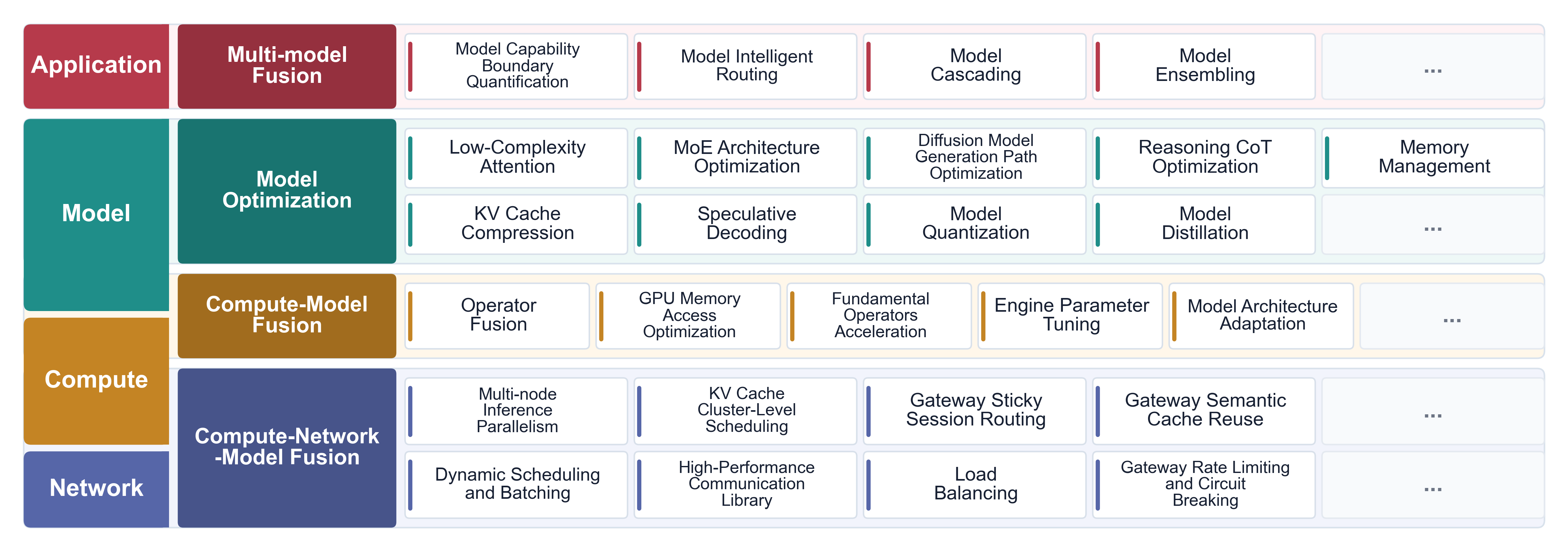
Figure 1: Overview of large model inference optimization technologies.
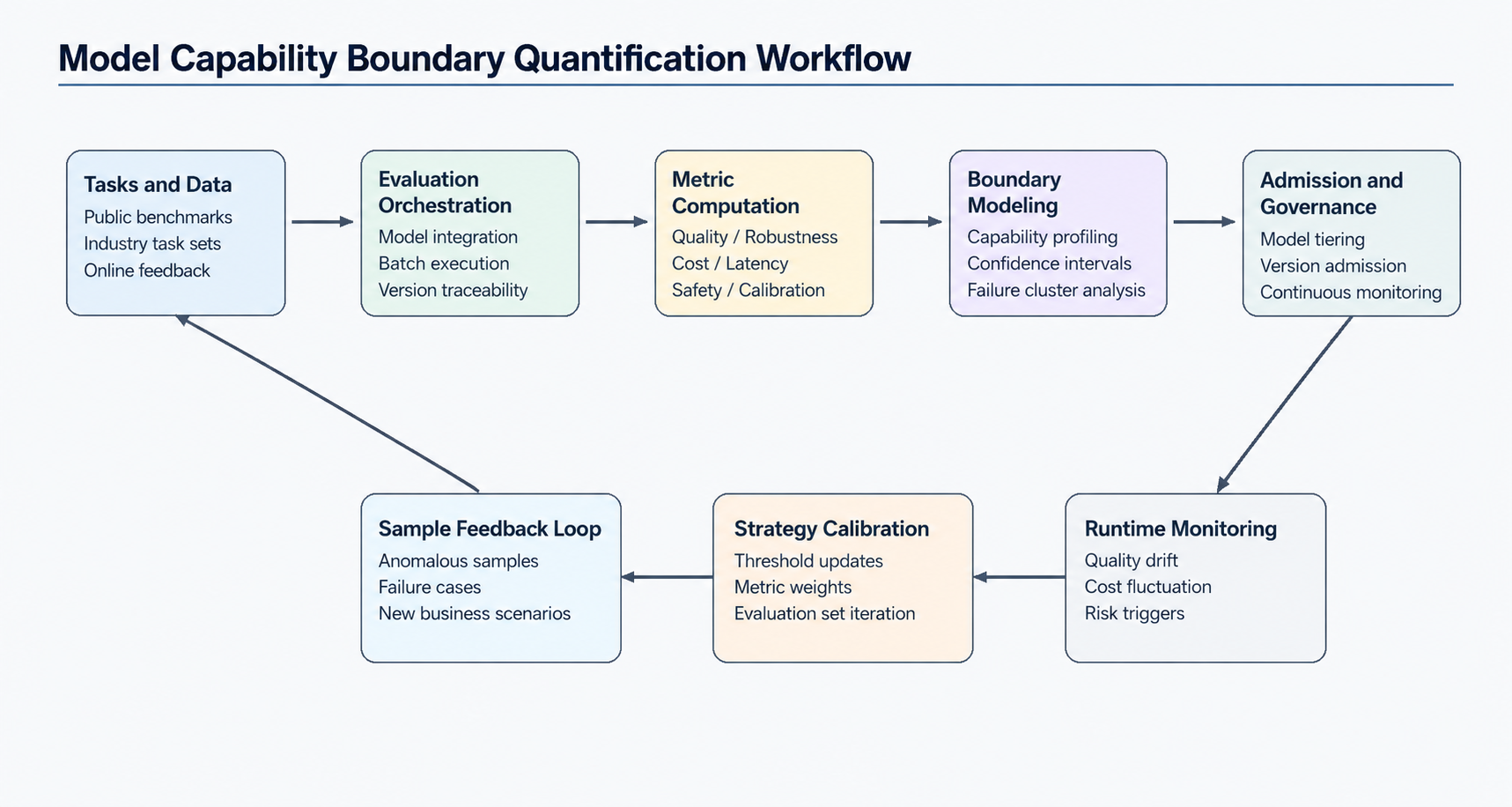
Figure 2: Model capability boundary quantification workflow.
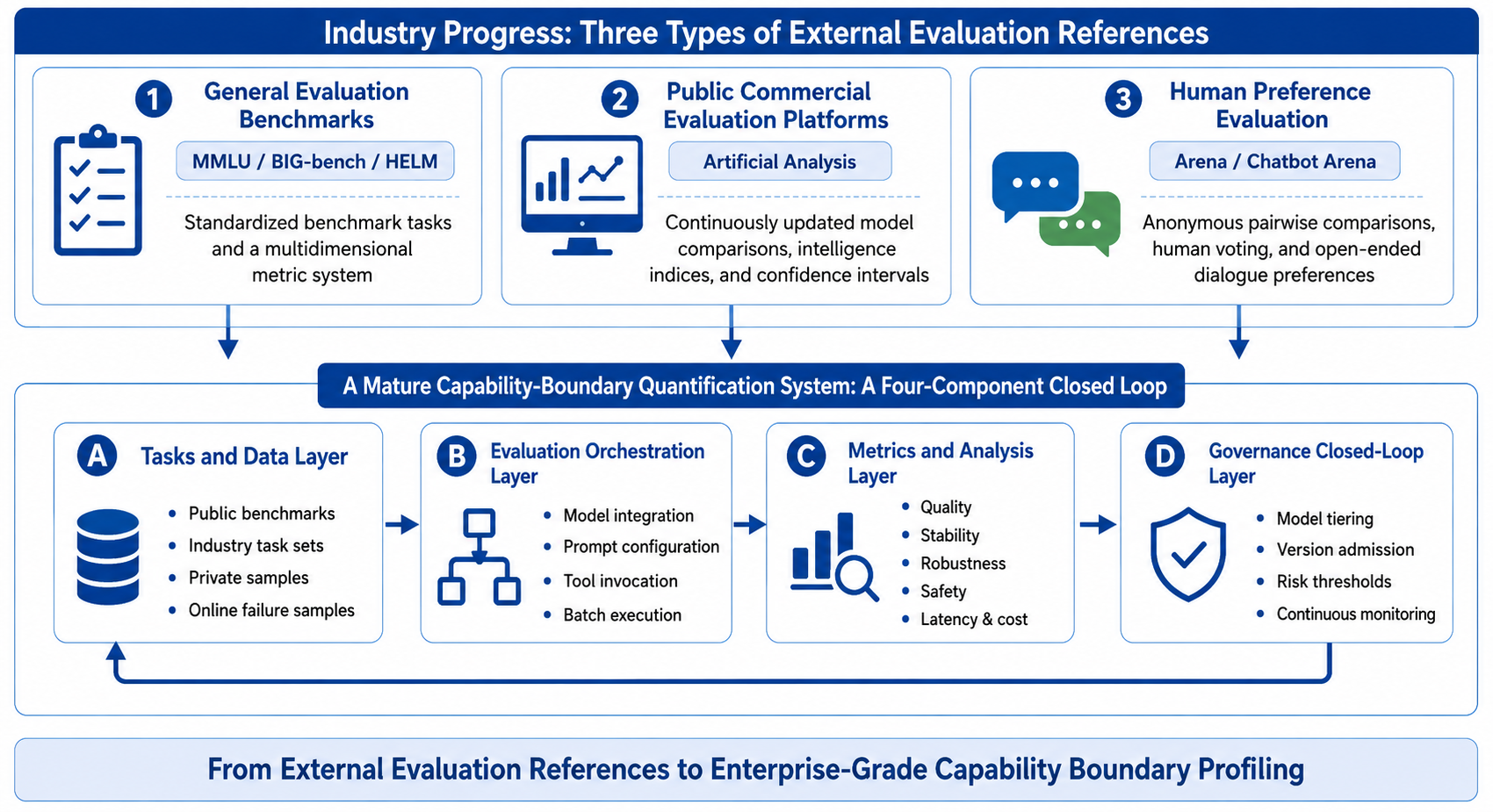
Figure 3: Industry progress and system architecture for model capability boundary quantification.
Model Optimization: Structural, Process, and Compression Pathways
Model optimization reduces per-token generation cost across nine technical axes. Low-complexity attention mechanisms dominate long-context scaling, with modern models balancing full-attention compression (GQA/MLA), hybrid/sparse attention, and state-space recursion (Mamba, Jamba). Resource-aware designs suppress KV cache growth while preserving global modeling. Current systems (MiniMax, Qwen, DeepSeek families) orchestrate hybrid attention and MoE integration, with million-token contexts now practical via CSA/HCA hybrids.
MoE architectures provide scalable capacity under sparse activation, but deployment efficacy depends critically on expert specialization, load balancing, and communication strategies (EPLB, DeepEP). Straggler mitigation and heterogeneous grouped experts further refine throughput and cost. Diffusion and flow-matching models accelerate inference via trajectory compression (ShortDF, TrajXfer) and training-free cache scheduling, achieving strong FID improvements and up to 15x acceleration with minimal quality loss.
Chain-of-thought optimization aligns reasoning efficiency with correctness, using budget-adaptive reward calibration (DAST, Yuanjing LLM CoT), compressive rationales, and dynamic length allocation. Reasoning-centric foundation models (DeepSeek-R1, OpenAI o1) integrate reinforcement learning for reasoning trajectory transfer, while adaptive slow thinking substantially reduces unnecessary token consumption.
Memory management organizes, compresses, and recalls historical information, enabling continual learning and long-horizon reasoning. Recent advances fuse explicit memory (vector/graph databases), parametric memory (LoRA/Fine-tuning), and latent memory (KV cache, tokens), orchestrated through trainable reinforcement-learning policies (MEM1, MEMAgent).
KV cache compression and context compression jointly constrain memory footprint and bandwidth. Innovations include importance-driven eviction (Scissorhands, SnapKV), quantization (KIVI, TurboQuant), radix-tree prefix reuse (RadixAttention), and input-side compression (LLMLingua, MInference). Production systems combine these for throughput scaling under long-context and high-concurrency constraints.
Speculative decoding realizes token-level acceleration, shifting from classical two-model drafting to multi-head prediction (Medusa), self-speculation (LayerSkip), feature-level drafting (EAGLE family), and parallel tree-based verification (SpecInfer). Empirical results report up to 6.5x acceleration for multi-round generation.
Quantization and distillation compress large models for edge and multi-tenant deployment. Post-training weight quantization (GPTQ, AWQ), activation quantization (SmoothQuant), fine-tuning (QLoRA), and runtime adaptive kernels are standard in vLLM, TensorRT-LLM ecosystems. Distillation proceeds from white-box feature alignment through chain-of-thought transfer (Orca), skill internalization (AgentTuning), and on-policy distribution correction (MiniLLM, HEAL), with entropy-guided repair mechanisms enabling students to break teacher ceilings.
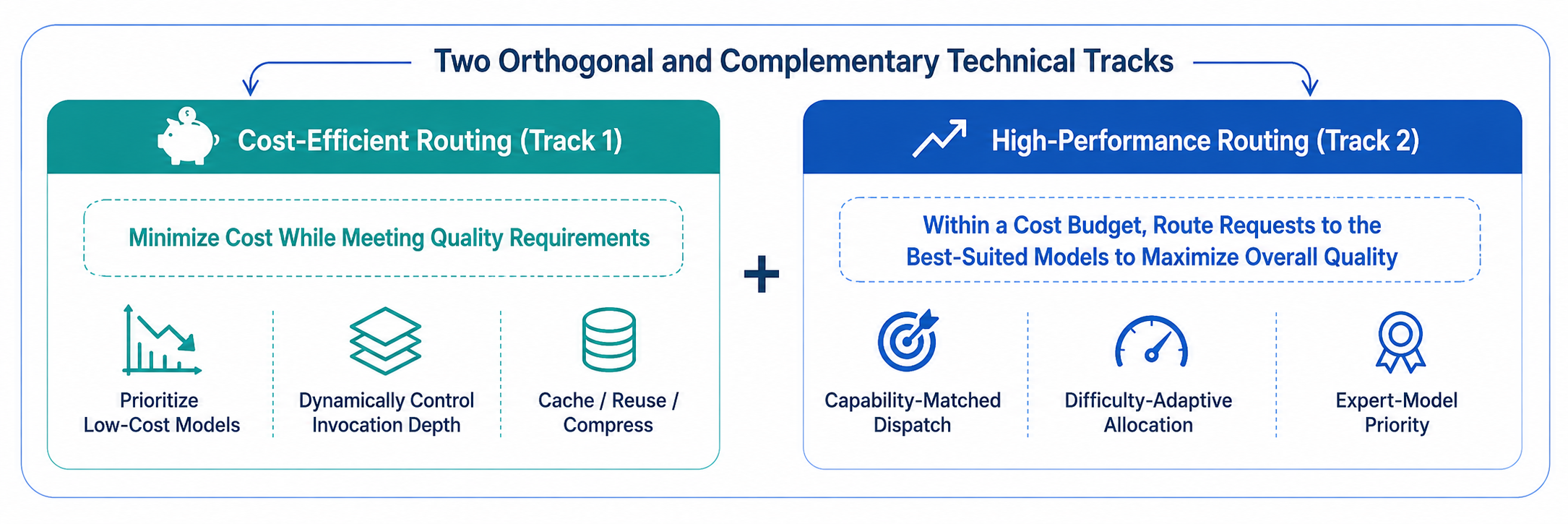
Figure 4: Cost-effective and high-performance routing.
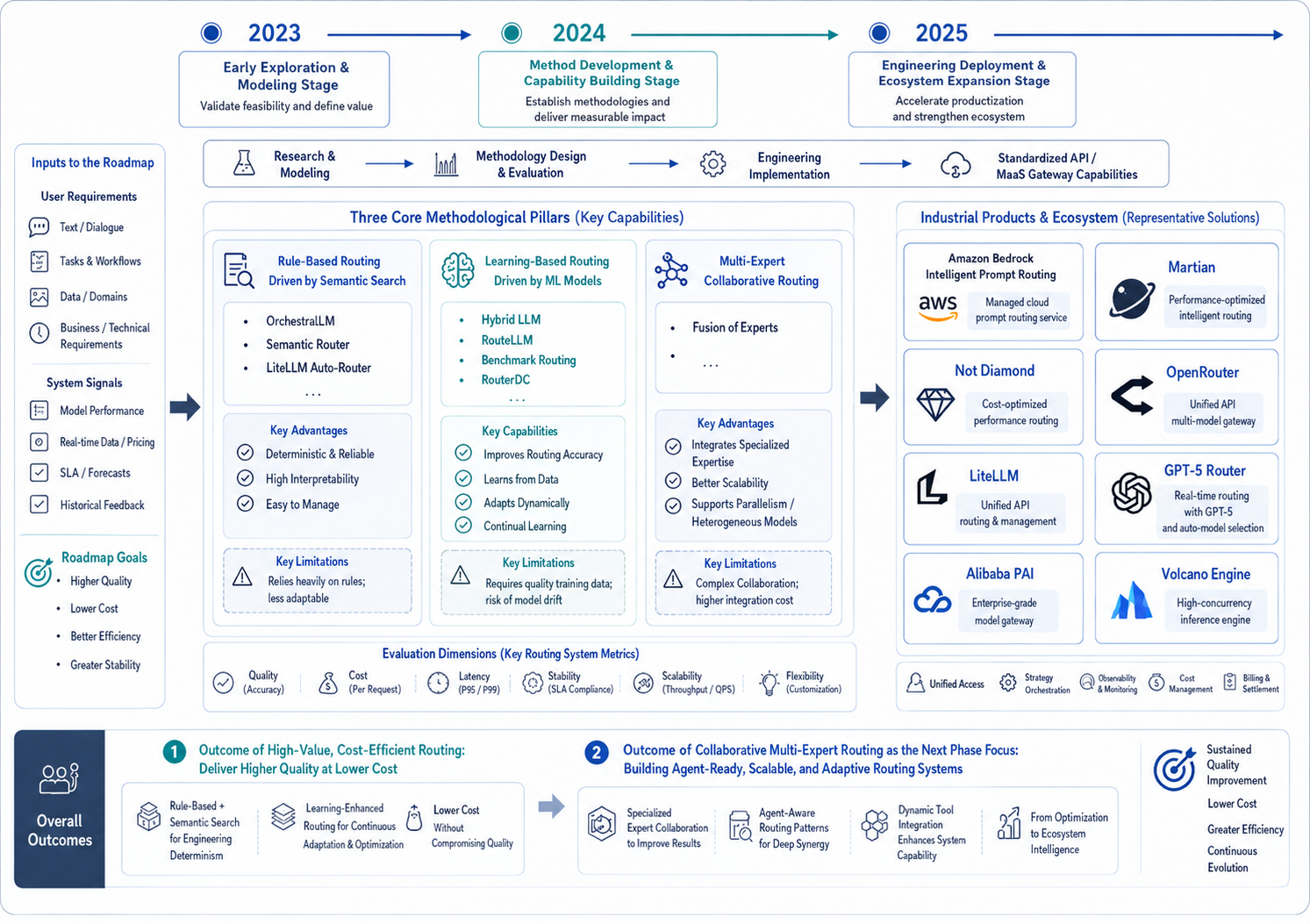
Figure 5: Industry progress in intelligent routing.
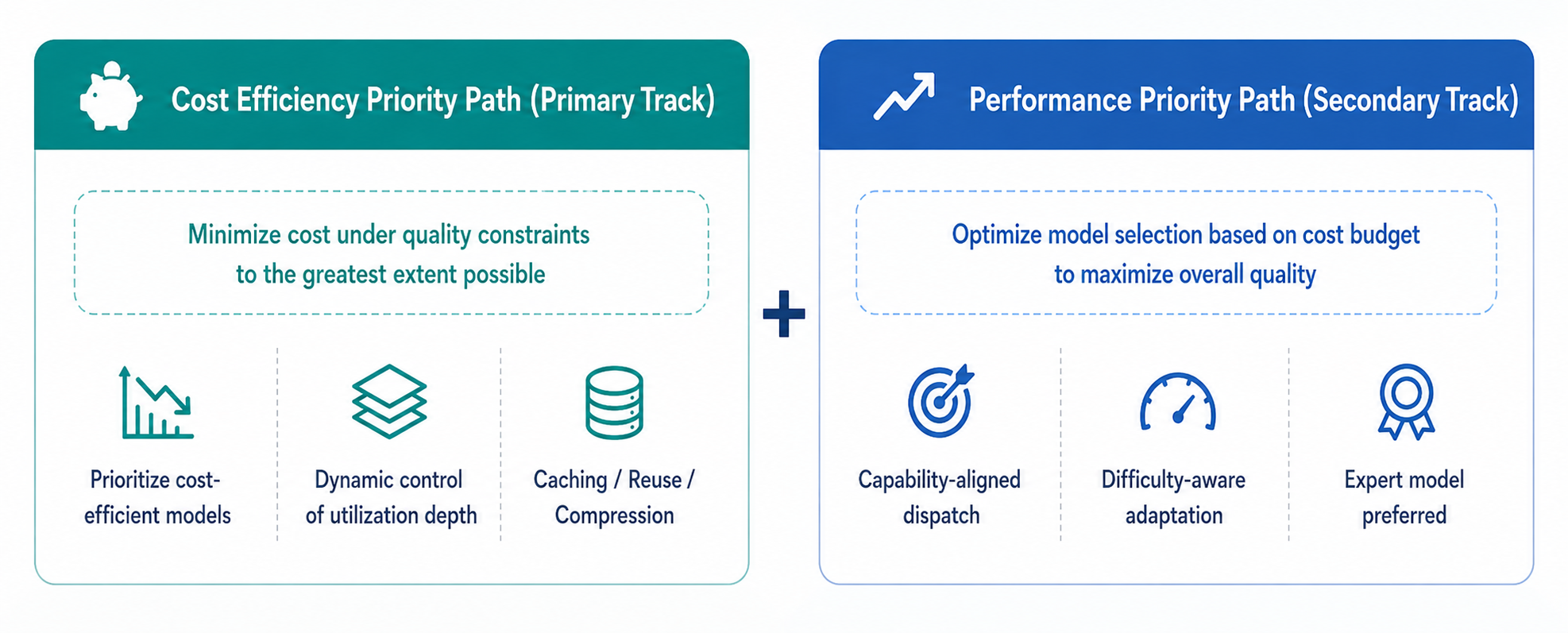
Figure 6: Scenario-oriented objectives of model cascading.
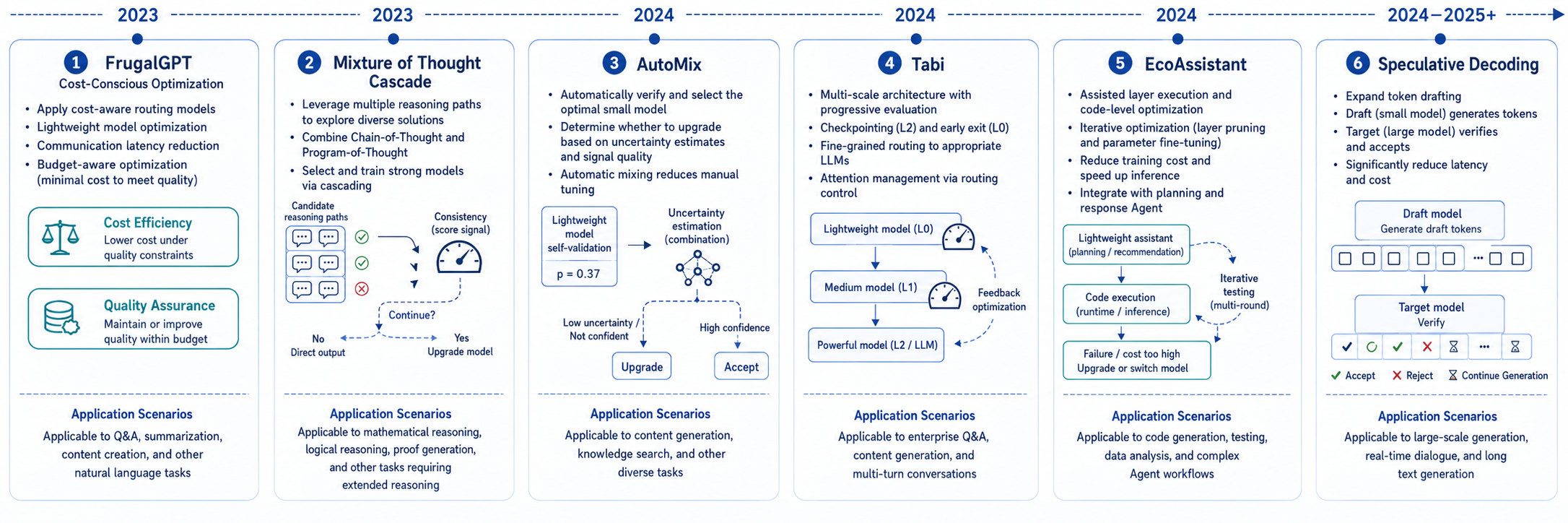
Figure 7: Evolution of model cascading.
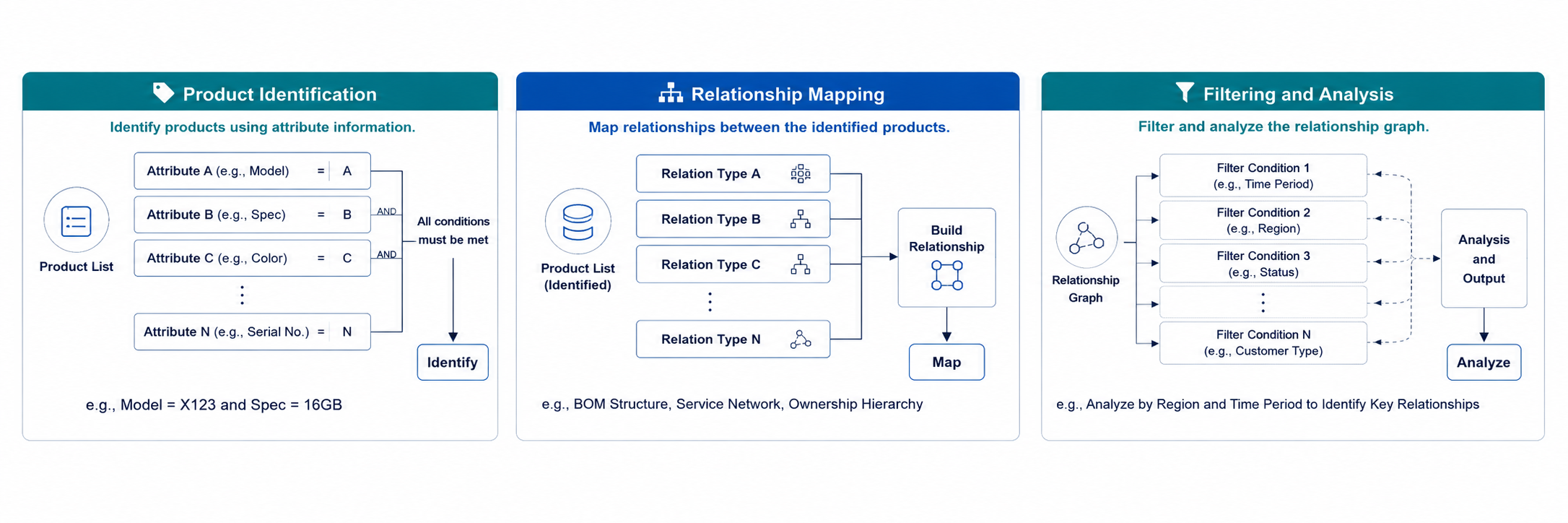
Figure 8: Three forms of model ensembling.
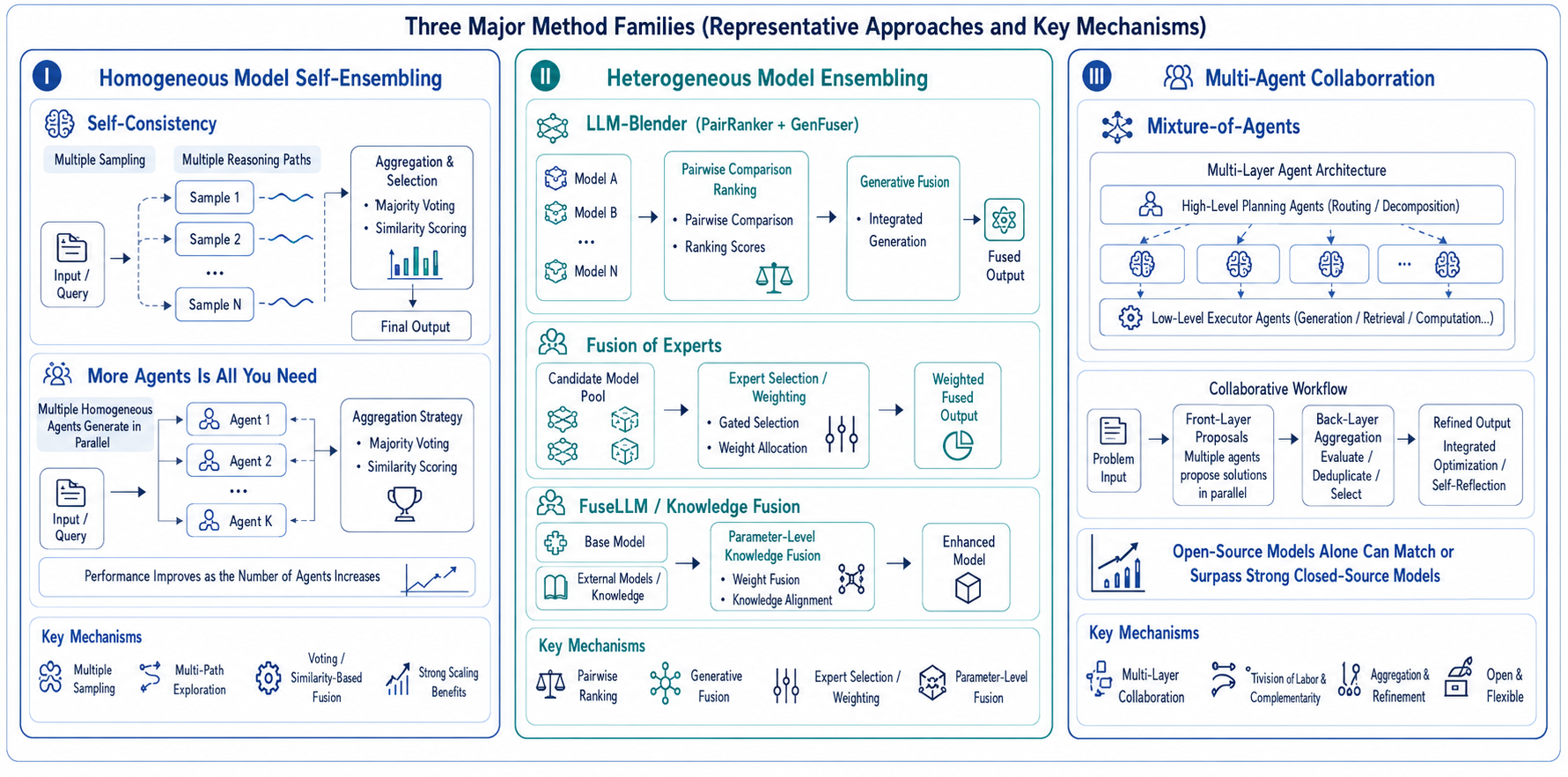
Figure 9: Three major industry approaches to model ensembling.
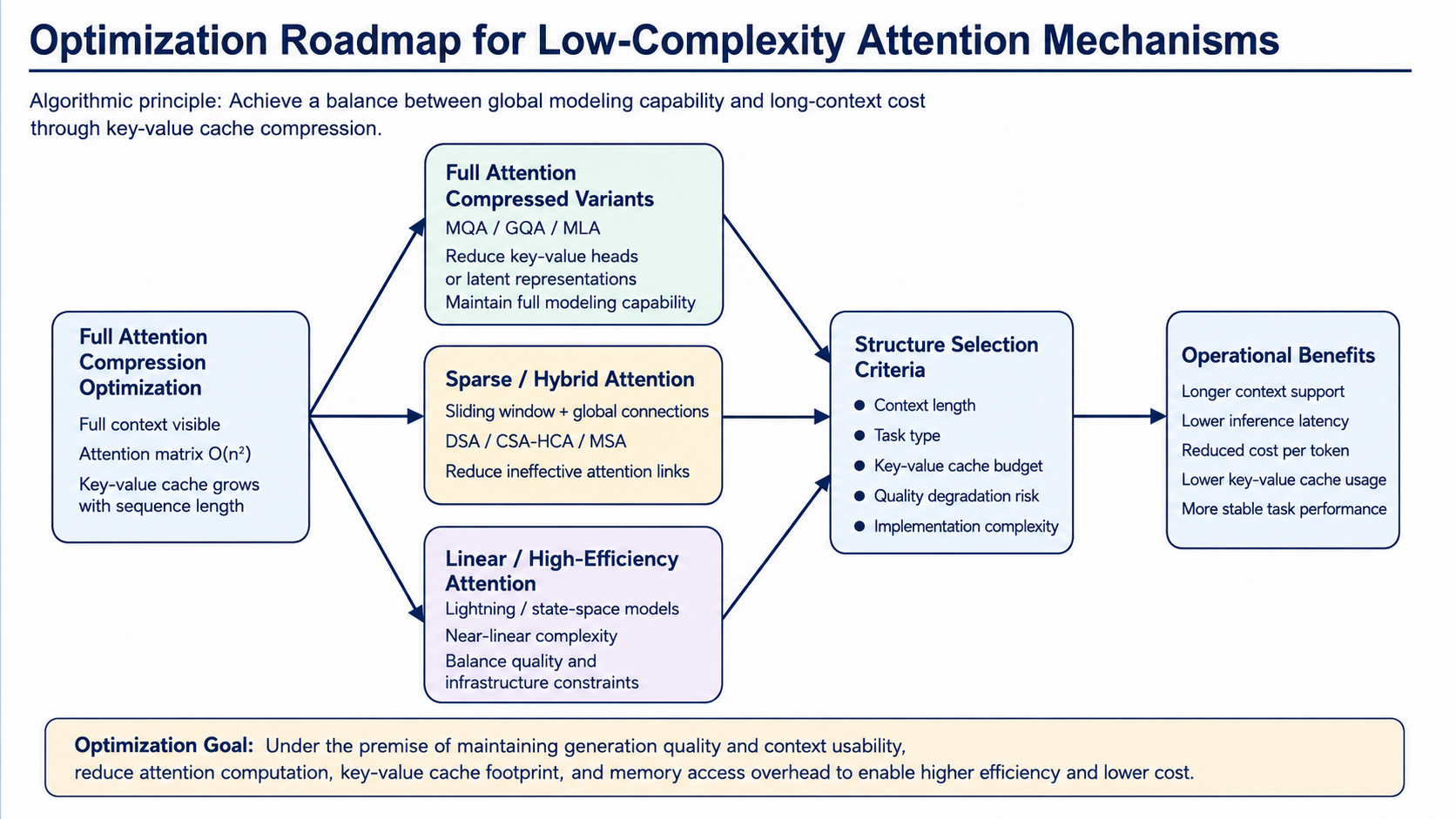
Figure 10: Optimization pathways for low-complexity attention mechanisms.
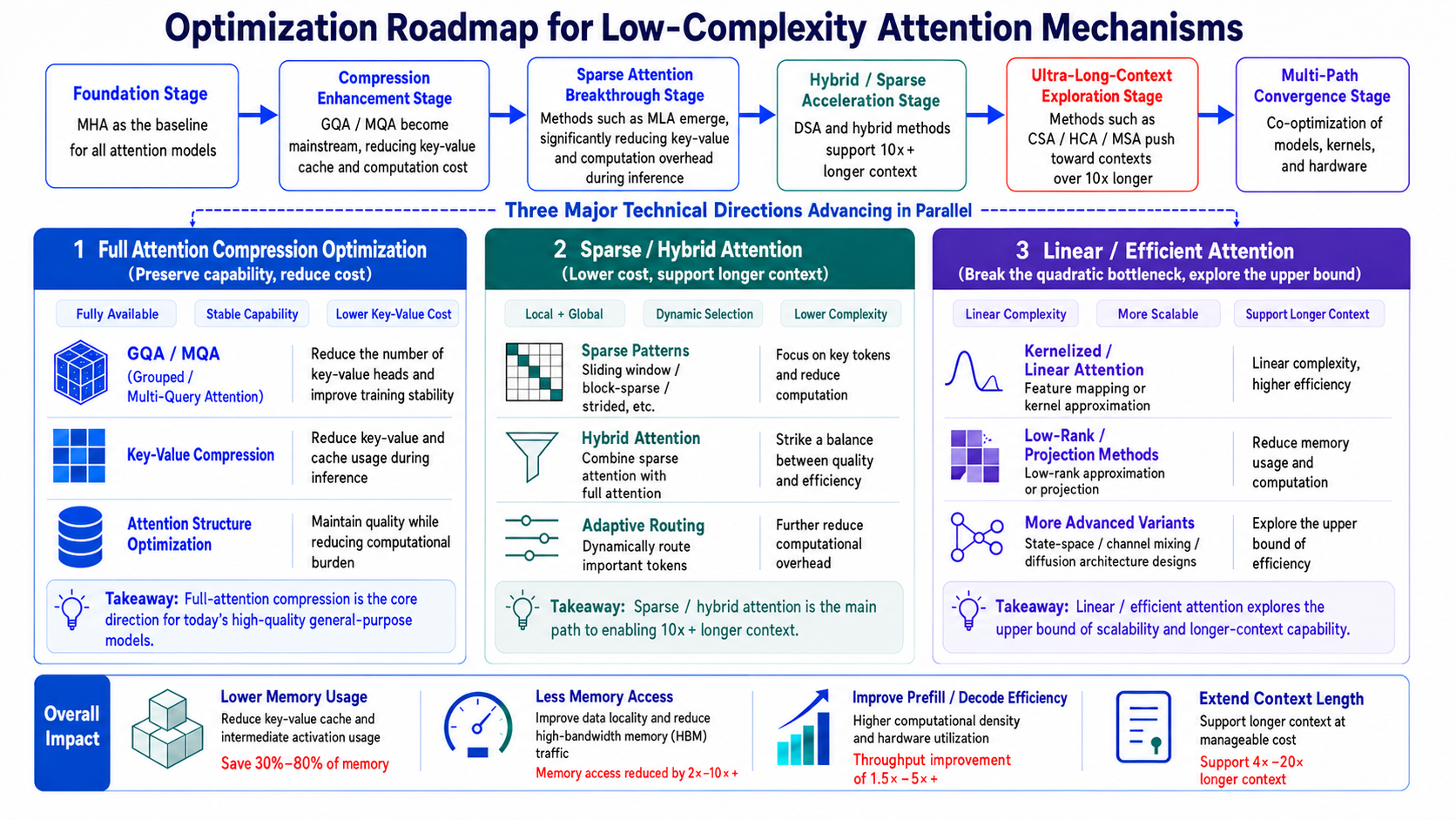
Figure 11: Industry progress in low-complexity attention mechanisms.
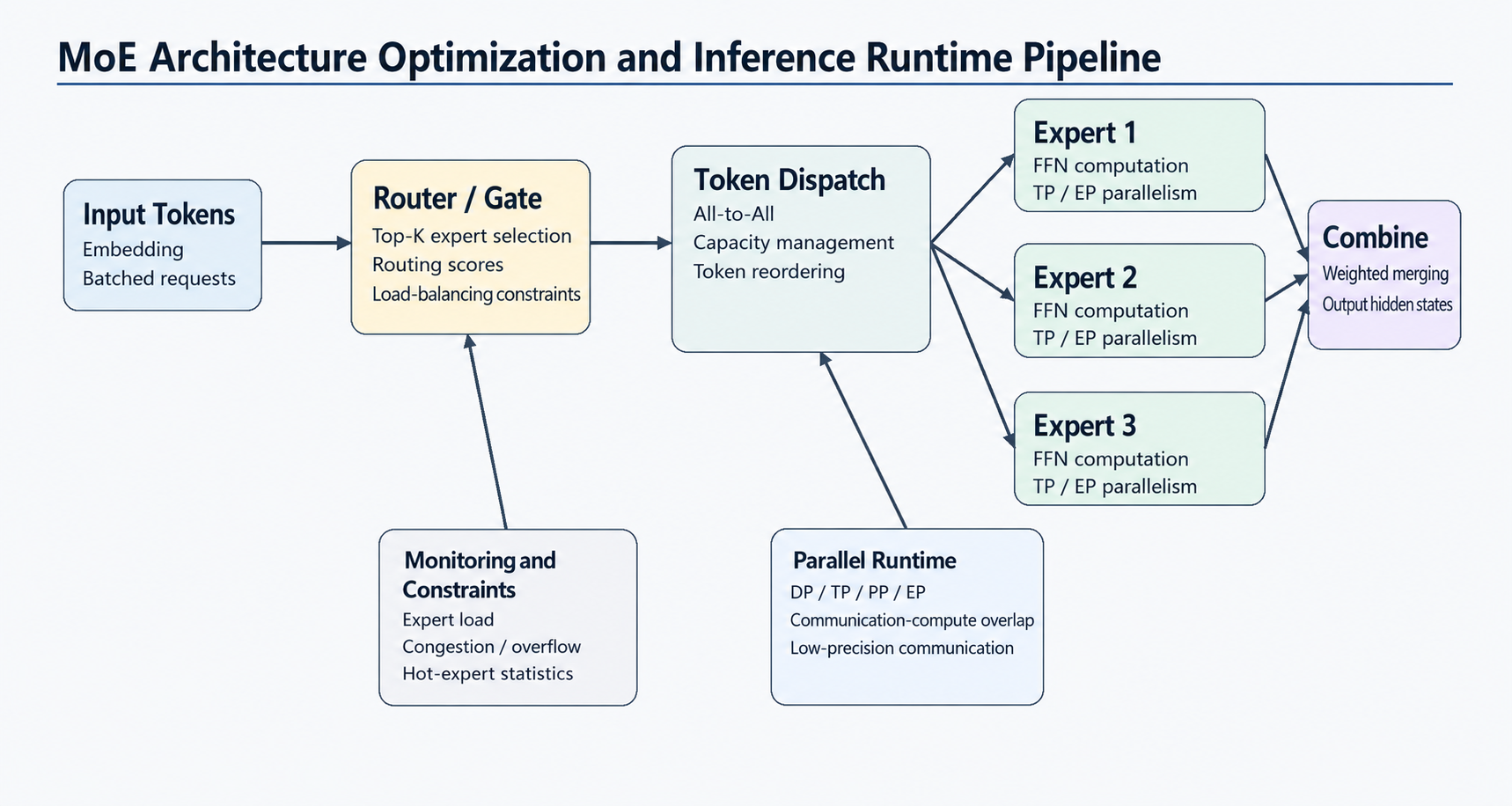
Figure 12: MoE architecture optimization and inference runtime pipeline.
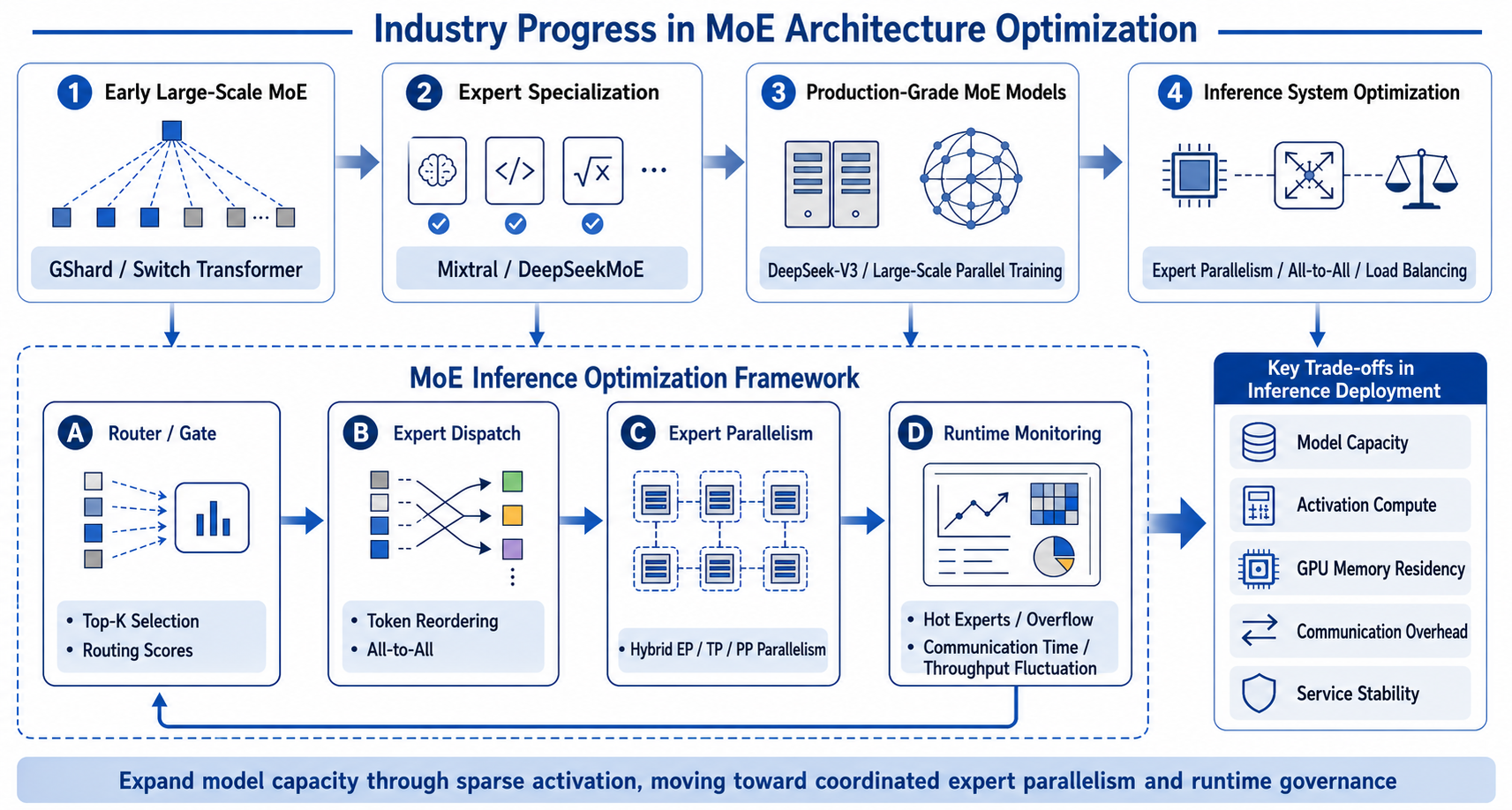
Figure 13: Industry progress in MoE architecture optimization.
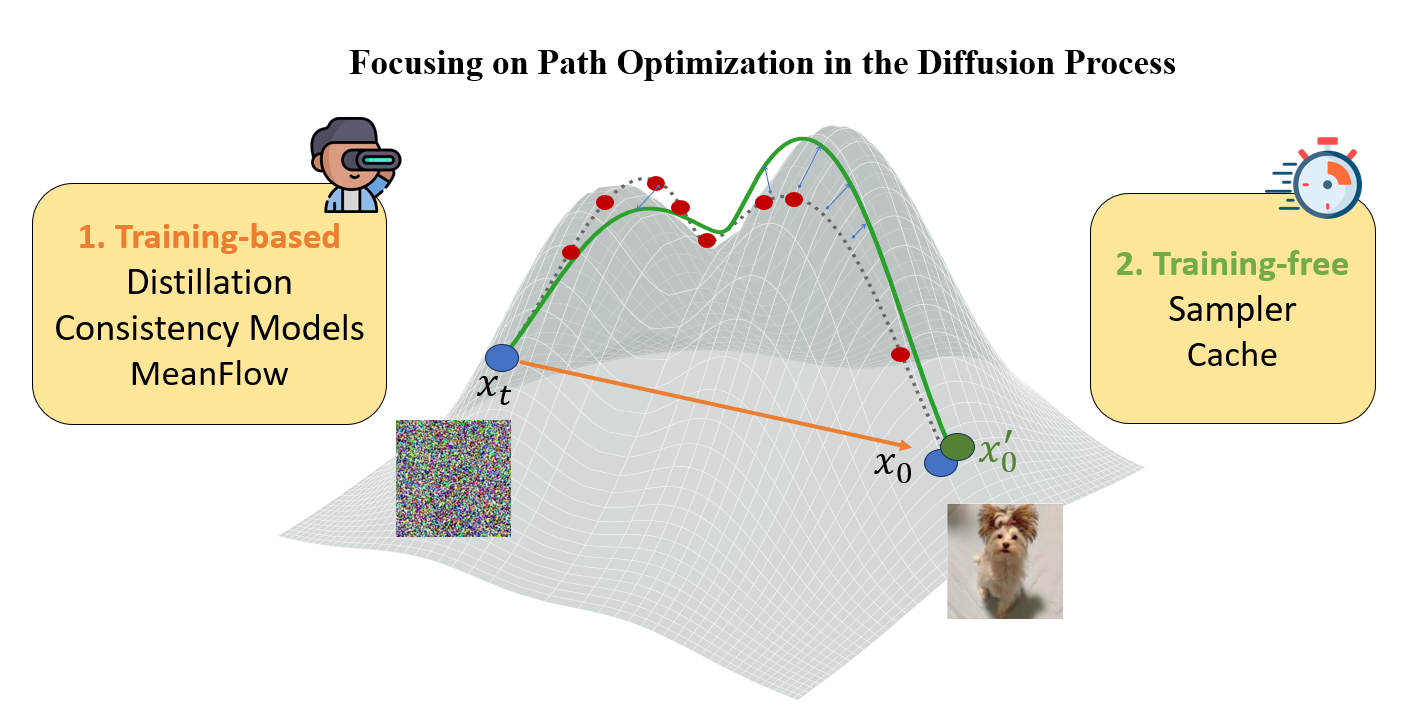
Figure 14: Illustration of generation path optimization for diffusion models.
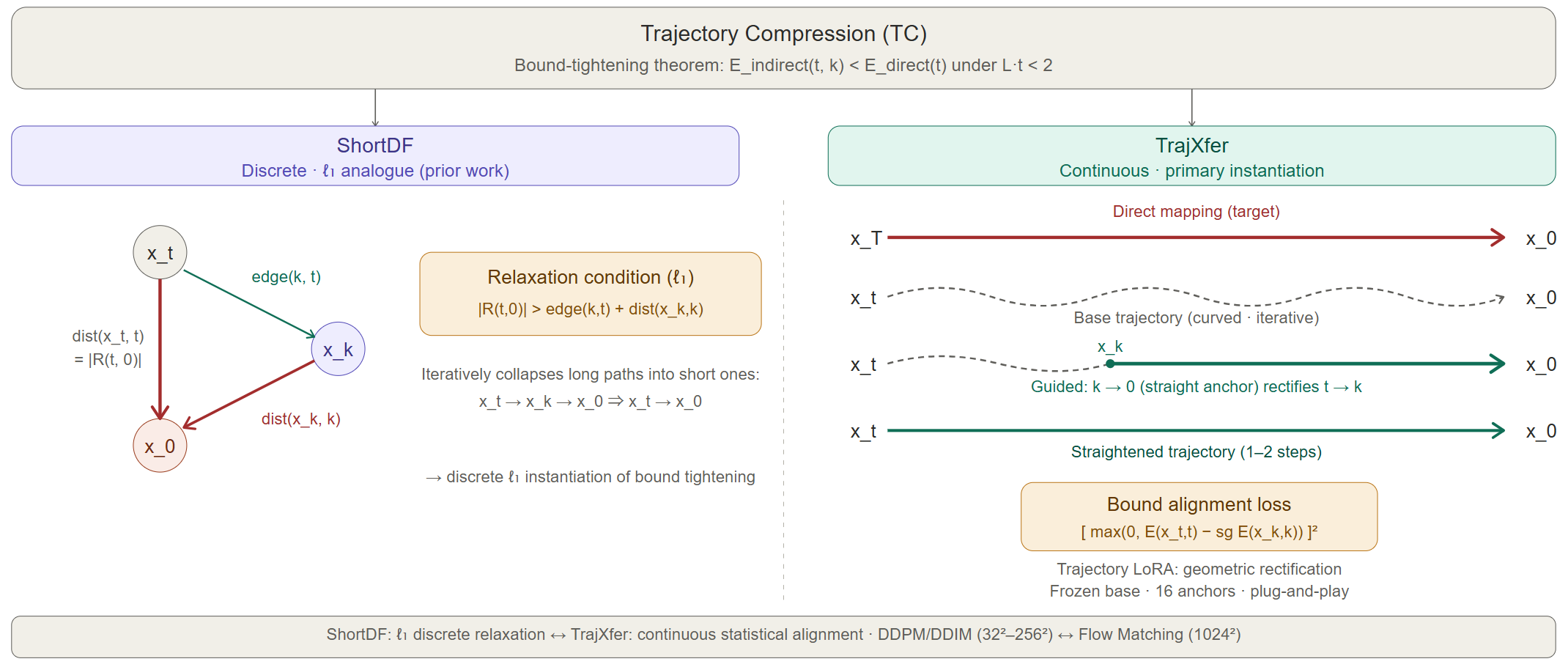
Figure 15: Two complementary instances under the unified TC framework---ShortDF and TrajXfer.
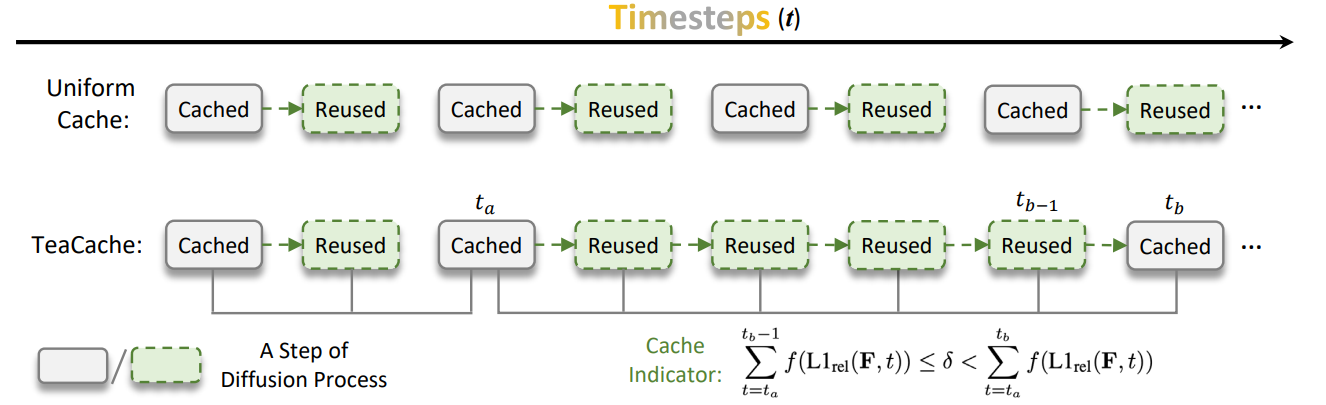
Figure 16: Trajectory Optimization Rules of TeaCache; adapted from Reference~\cite{ref064}.
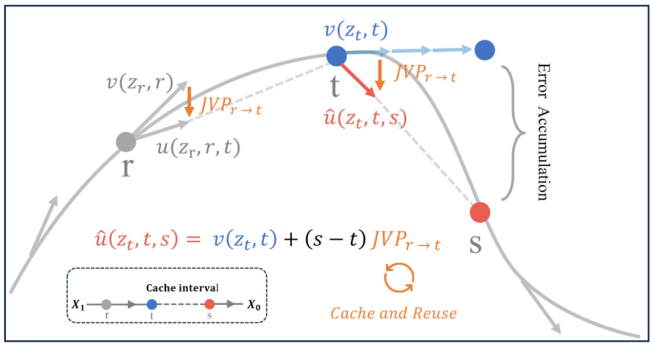
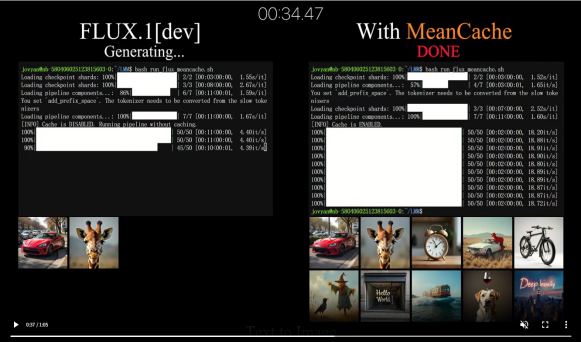
Figure 17: MeanCache Optimizes Generation Trajectories from the Perspective of Average Velocity.
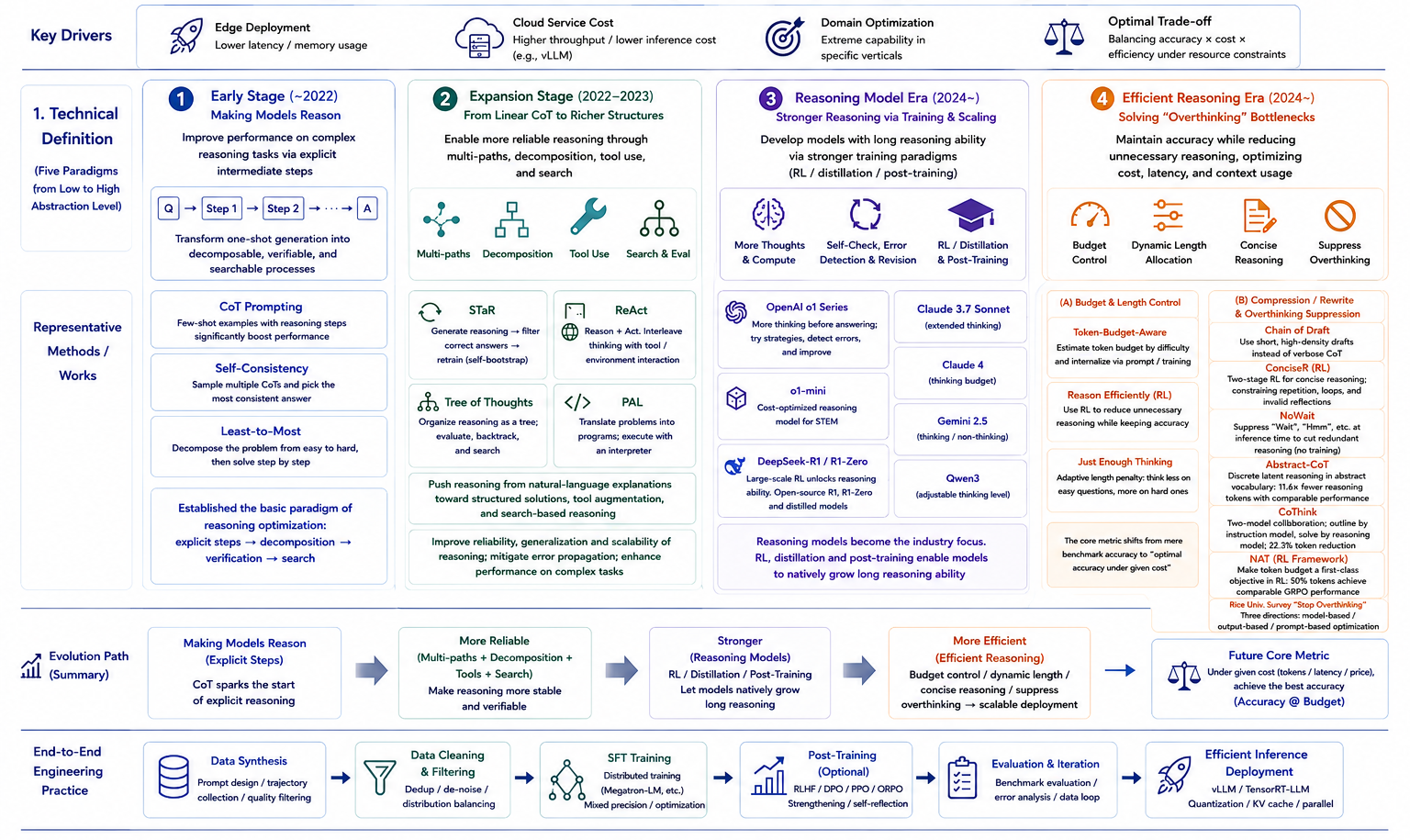
Figure 18: Industry development path of reasoning chain-of-thought optimization.
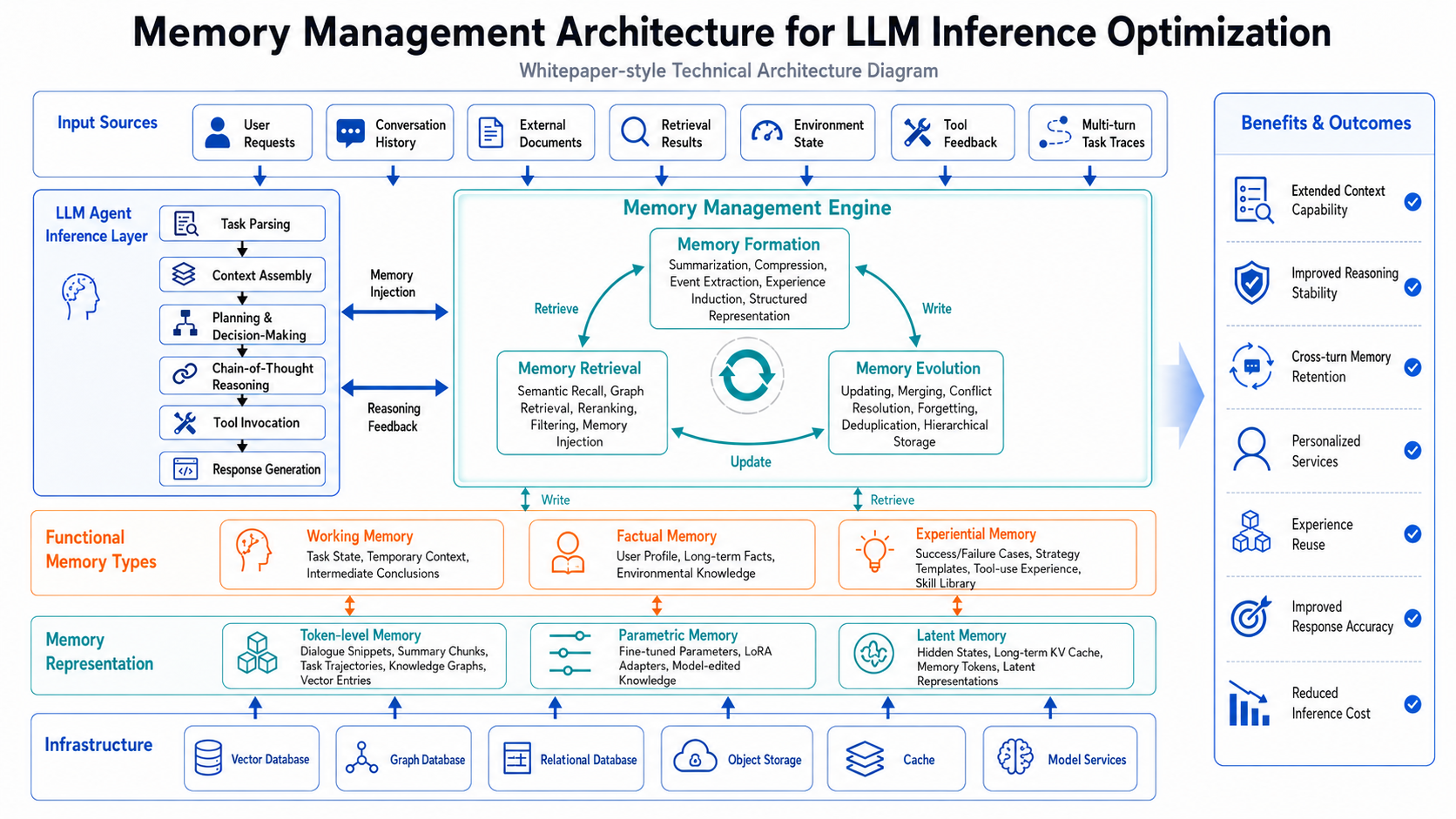
Figure 19: Memory management architecture for LLM inference optimization.
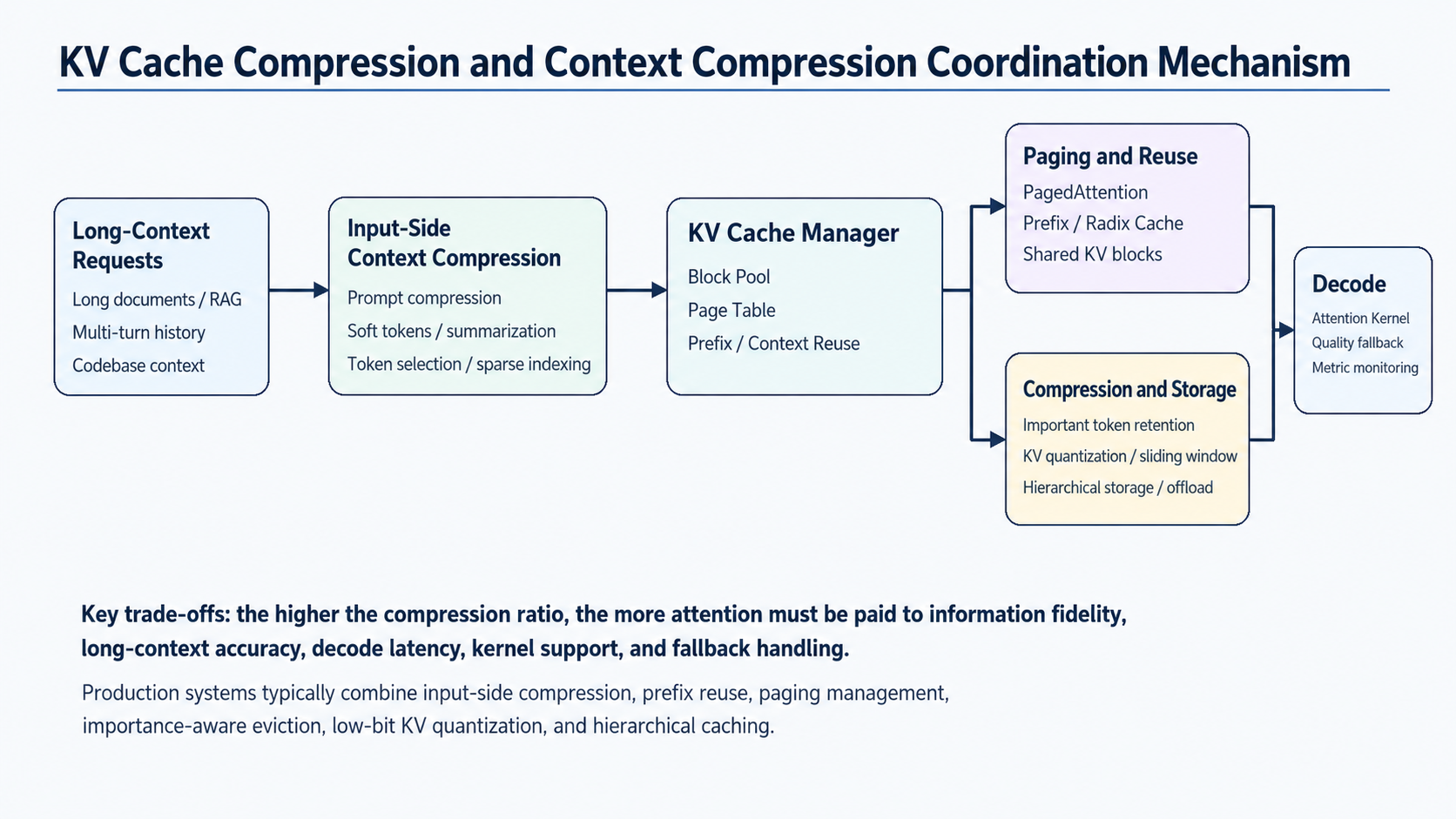
Figure 20: Collaborative mechanism between KV cache compression and context compression.
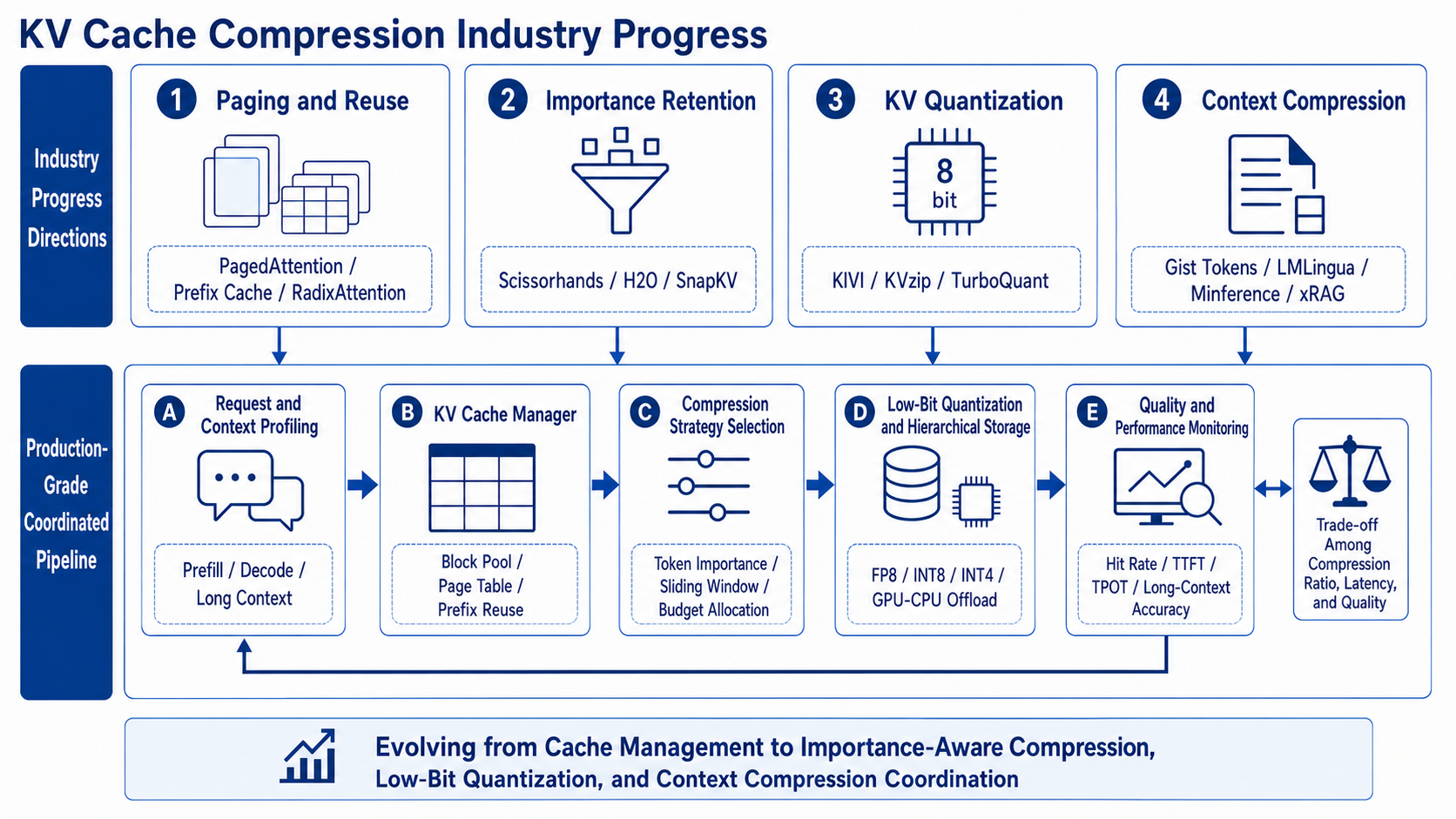
Figure 21: Industry progress in KV cache compression.
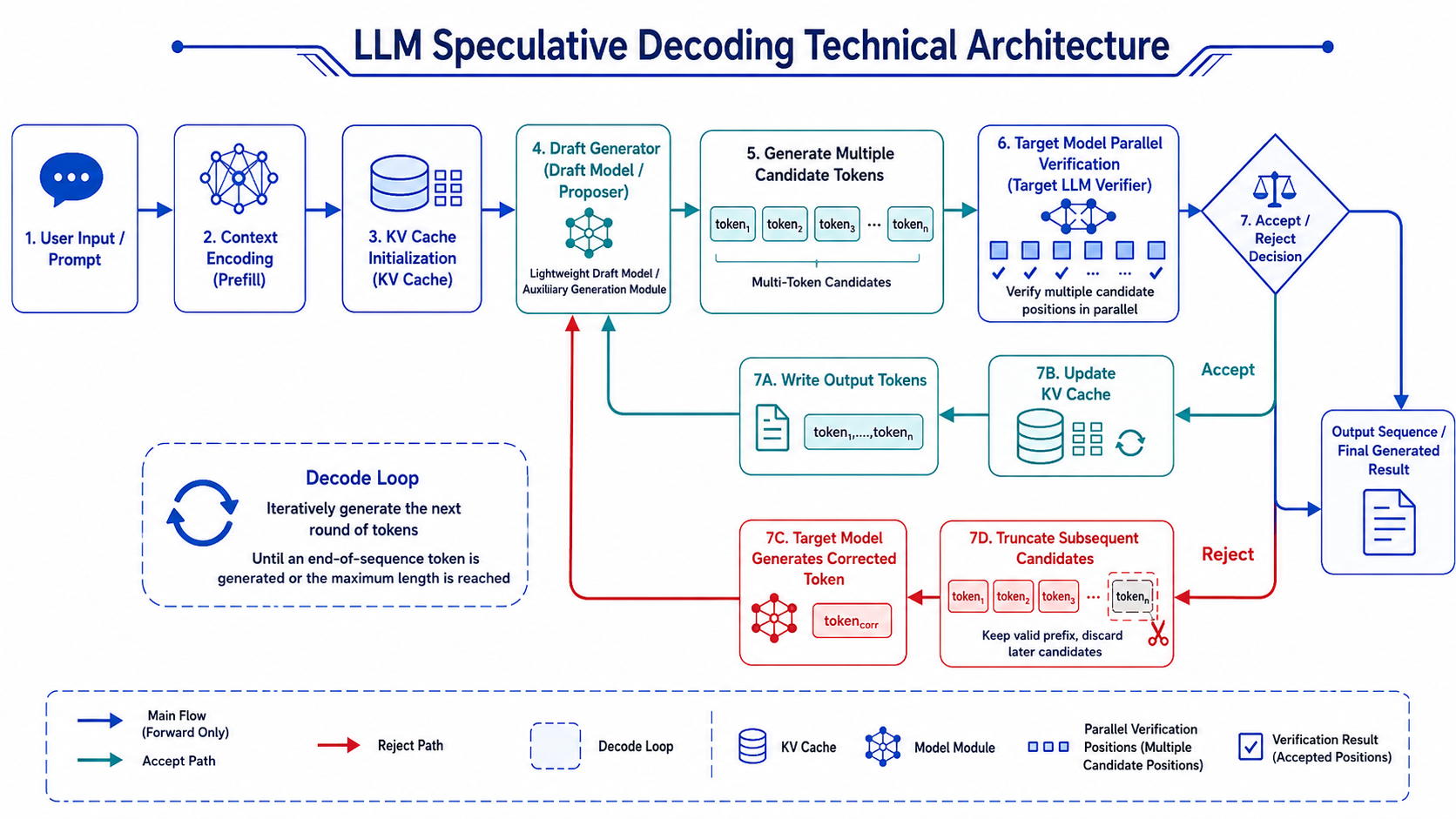
Figure 22: Technical architecture of LLM speculative decoding.
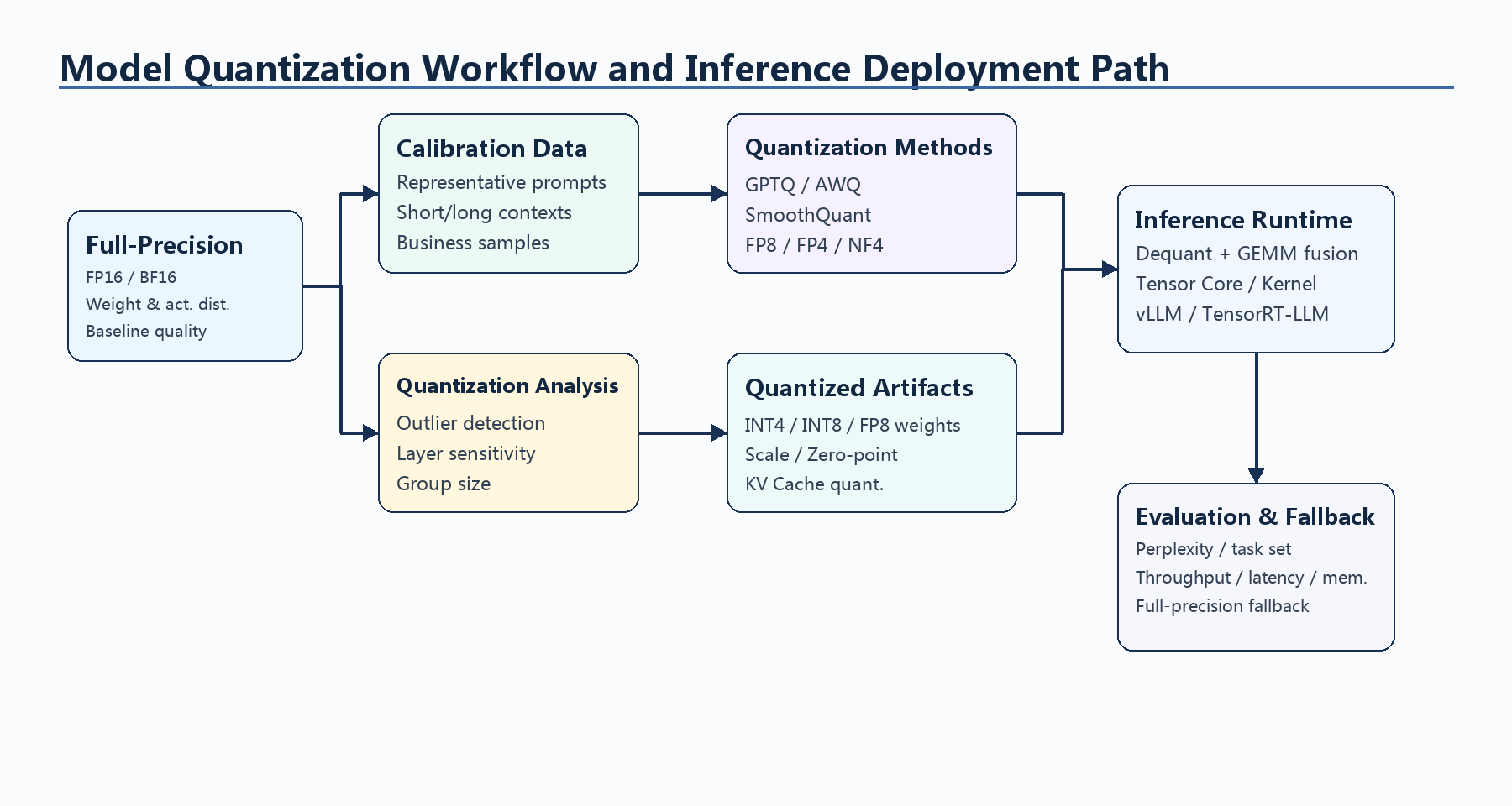
Figure 23: Model quantization workflow and inference deployment pipeline.
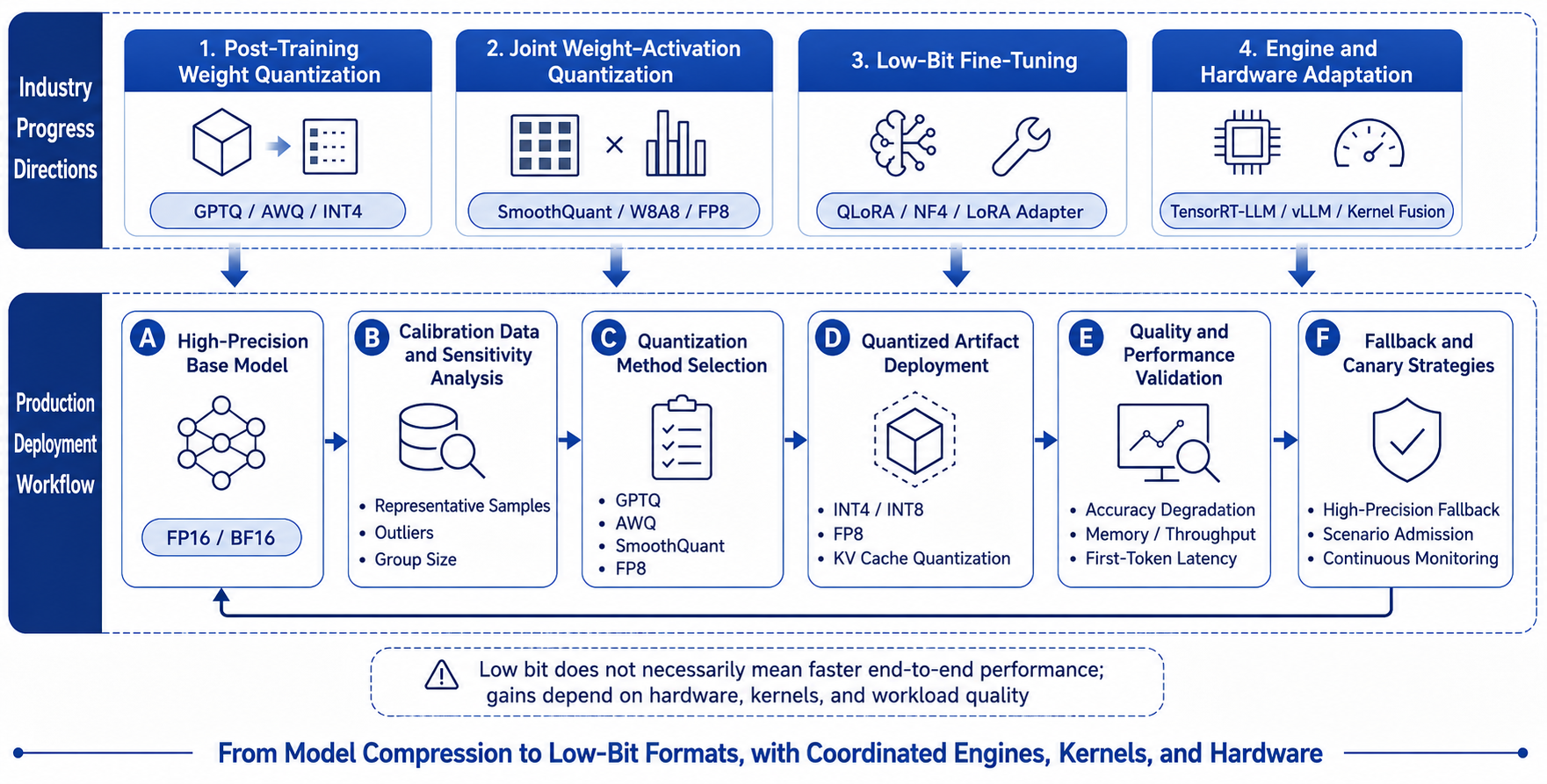
Figure 24: Industry progress in model quantization.
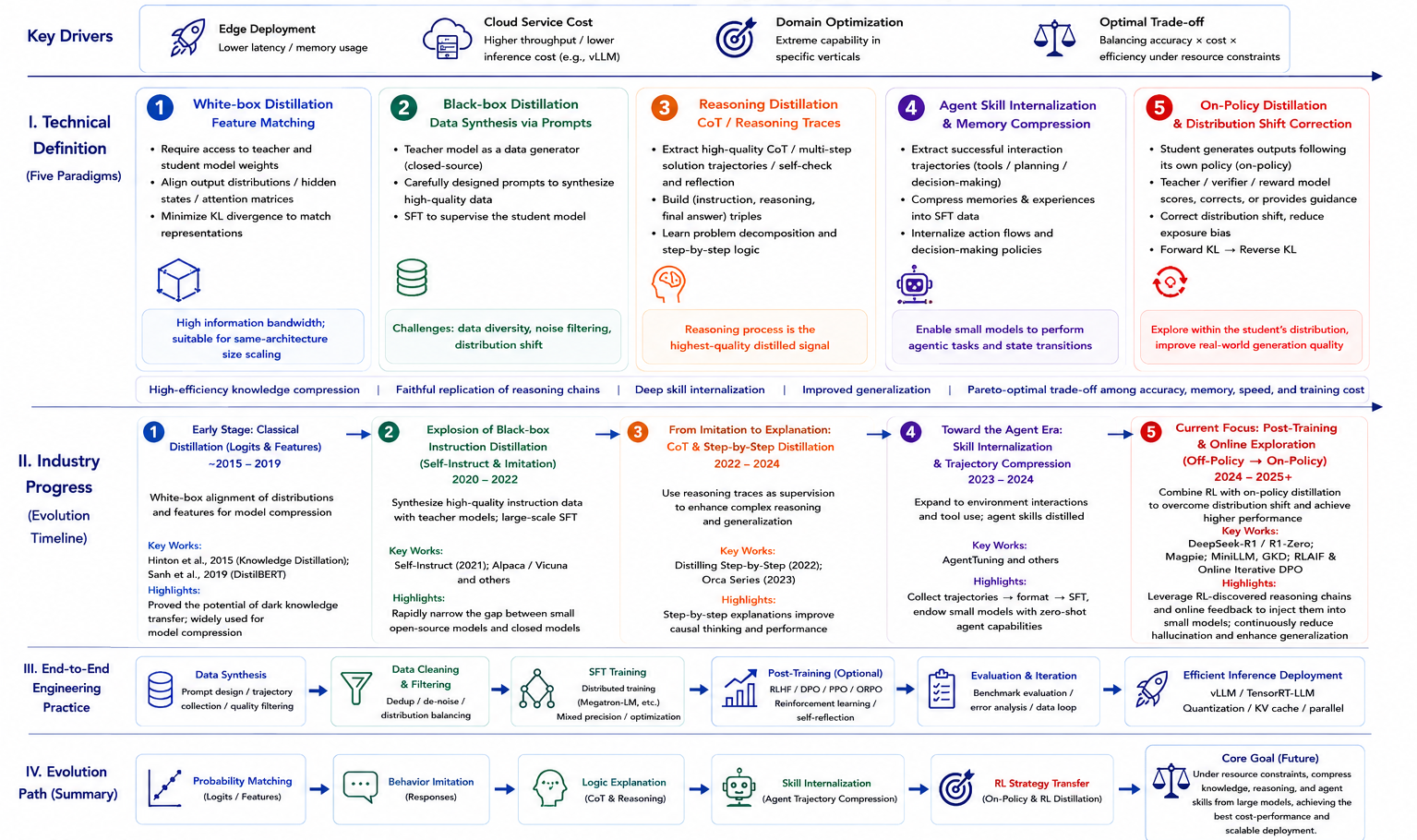
Figure 25: Industry progress in model distillation.
Compute-Model Fusion: Operator, Memory, and Engine Optimization
Compute-model fusion bridges model structure and hardware execution. Operator fusion compiles subgraph patterns (Attention, MLP, MoE Grouped GEMM) into fused kernels, exemplified by FlashAttention-3 and cuDNN SDPA, reducing intermediate memory accesses and kernel launches. Memory access optimization leverages contiguous/block-wise layouts (PagedAttention, RadixAttention), asynchronous overlap, and hierarchical storage (Mooncake), supporting efficient cache migration and reducing OOMs.
Fundamental operator acceleration thrives on architecture-aware kernels (DeepGEMM), balancing throughput and latency across prefill/decode stages, with adaptive padding removal (TMA Grouped GEMM) reducing compute waste. Engine parameter tuning orchestrates parallelism (TP, PP, DP, EP, CP), batching, chunked prefill, and KV cache quotas for optimal TTFT and goodput. Model architecture adaptation ensures compatible integration across attention types, positional encoding, quantization, and multimodal components, scaling deployment across heterogeneous hardware.
Compute-Network-Model Fusion: Cluster-Level Serving
Cluster-level fusion integrates model inference, compute resources, and network communication. Multi-node parallelism merges expert load balancing (EPLB, DeepEP), batch size adaptation, and dynamic replica placement. KV cache cluster scheduling elevates cache management to system-wide resources, with prefix hashing, radix-tree, tiered storage, and cross-engine cache sharing (LMCache, Mooncake, TensorRT-LLM). Gateway sticky session routing coordinates session affinity for cache hits, integrating hierarchical cache strategies and content-aware binding for VRAM/RAM/SSD-assisted cache recovery.
Semantic cache reuse enhances API gateway response with embedding-based similarity search and small-model verifiers, achieving >80% cost reduction in vertical domains and solving semantic drift vulnerabilities. Dynamic batching combines continuous, chunked prefill/decode with in-memory live migration (Llumnix, QLM, NanoFlow), balancing SLOs, priority, and pool utilization. High-performance communication libraries (NCCL, UCX, NIXL) support all-to-all, topology-aware, and data-plane abstraction, with device-side APIs fusing comm/compute and MoE-structured optimization.
Load balancing progresses from round-robin/weighted scheduling to semantic-aware and adaptive rate limiting, integrating token generation analysis for intelligent distribution. Gateway rate limiting and circuit breaking migrate toward dynamic quota adaptation, WASM plug-ins, and intelligent degradation to SLMs or small models under overload.
Conclusion
Token-operations-oriented inference optimization represents a shift from isolated model acceleration toward system-level collaborative engineering, requiring coordinated optimization of model selection, attention structures, cache management, hardware execution, network scheduling, and service governance. The paper rigorously surveys architectures, methods, and empirical advances supporting scalable, low-cost, and robust MaaS platforms. Future developments will embrace multi-objective optimization, dynamic adaptation, and heterogeneous orchestration across models, compute clusters, and network infrastructure. As agentic and long-context workloads proliferate, inference optimization becomes central to operational efficiency, resilience, and token service maturity in production AI systems.

