- The paper introduces a learnable control block trained with GRPO to dynamically optimize generation order in multimodal masked diffusion models.
- It demonstrates significant improvements in spatial fidelity and compositional image generation over traditional confidence-based heuristics.
- Experimental evaluation on GenEval and VLMEvalKit shows notable gains in tasks like object placement, counting, and multimodal reasoning.
Reinforcing the Generation Order of Multimodal Masked Diffusion Models
Overview
The paper "Reinforcing the Generation Order of Multimodal Masked Diffusion Models" (2607.08056) systematically investigates the impact of generation order in masked diffusion models (MDMs) for multimodal tasks, with a primary focus on text-to-image synthesis and multimodal understanding. Unlike prior confidence-based heuristics (e.g., Top-K/Top-K margin), which proved highly effective in structured symbolic reasoning, the authors demonstrate that these strategies fail to improve output quality in visual or multimodal settings. As a solution, the paper introduces a learnable control block—trained via Group Relative Policy Optimization (GRPO)—that dynamically optimizes the generation order in MDMs. This control mechanism yields significant improvements in spatial fidelity, compositional image generation, and multimodal reasoning, as quantified on rigorous benchmarks including GenEval and VLMEvalKit.
Motivation and Background
Traditionally, autoregressive models generate sequences in a fixed order (left-to-right), but MDMs are agnostic to token order, allowing arbitrary infilling strategies. Prior work established that informed generation orders based on model confidence can drastically enhance reasoning in language-centric tasks such as Sudoku or mathematical computation [Kim2025TrainFT, Huang2025ReinforcingTD]. However, in settings involving spatial and compositional dependencies—such as text-to-image alignment or visual question answering—the significance of generation order remains underexplored.
Empirical analysis shows that logit-based strategies do not correlate with visual coherence or spatial relationships in image generation tasks. Consequently, the authors posit that adaptive, learnable policies are necessary for effective multimodal generation order control.
Methodology
The core contribution is the integration of a control block employing the Unmask Policy Module (UPM), which modulates the order of token generation at each diffusion denoising step. The UPM leverages transformer hidden states and mask indicators to assign ranking scores to masked tokens, generating a Plackett-Luce distribution over possible unmasking actions. This module is jointly optimized with the diffusion model using GRPO—a RL-based procedure that estimates advantages via group statistics, clipping policy updates for stability.
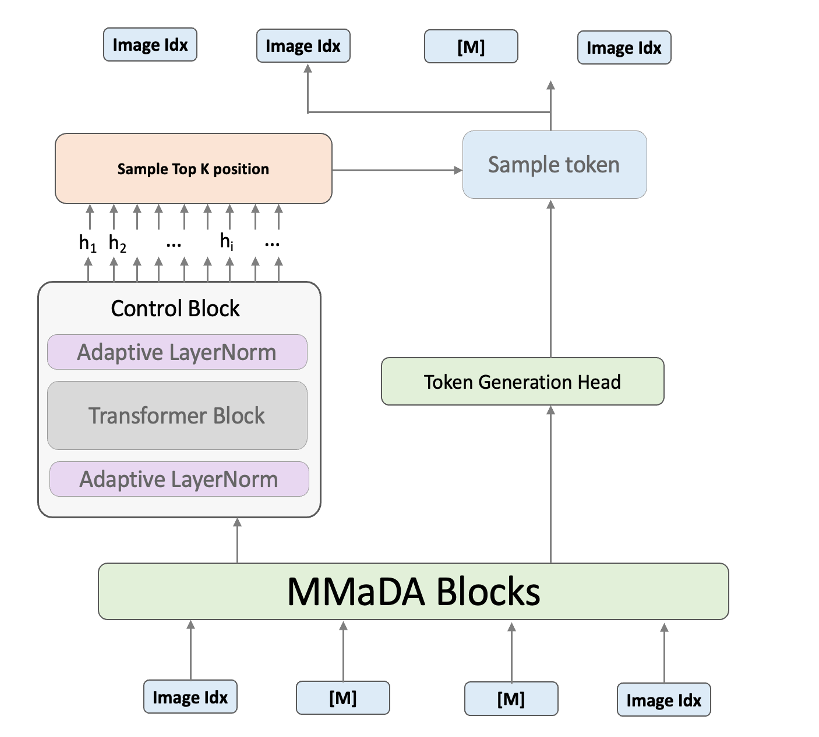
Figure 1: Generation pipeline of the diffusion LLM with a control block for determining the generation order.
During training, groups of sample completions are produced per prompt, evaluated via reward models (e.g., PickScore for prompt-alignment and visual quality), and advantage estimates are calculated based on group performance. The control block receives trajectory-based reward signals, allowing optimization over the entire generation sequence, thus enabling nuanced spatial and semantic control in multimodal outputs.
Experimental Evaluation
Text-to-Image Generation
On the GenEval benchmark, which rigorously tests compositional object placement, count, spatial relations, and attributes, the proposed method outperforms all baseline order selection strategies. Notably, models trained with rule-based or PickScore rewards demonstrate substantial gains in Two Object (+0.08) and Position (+0.07) tasks, confirming the control block's efficacy in handling spatial relations and compositionality.
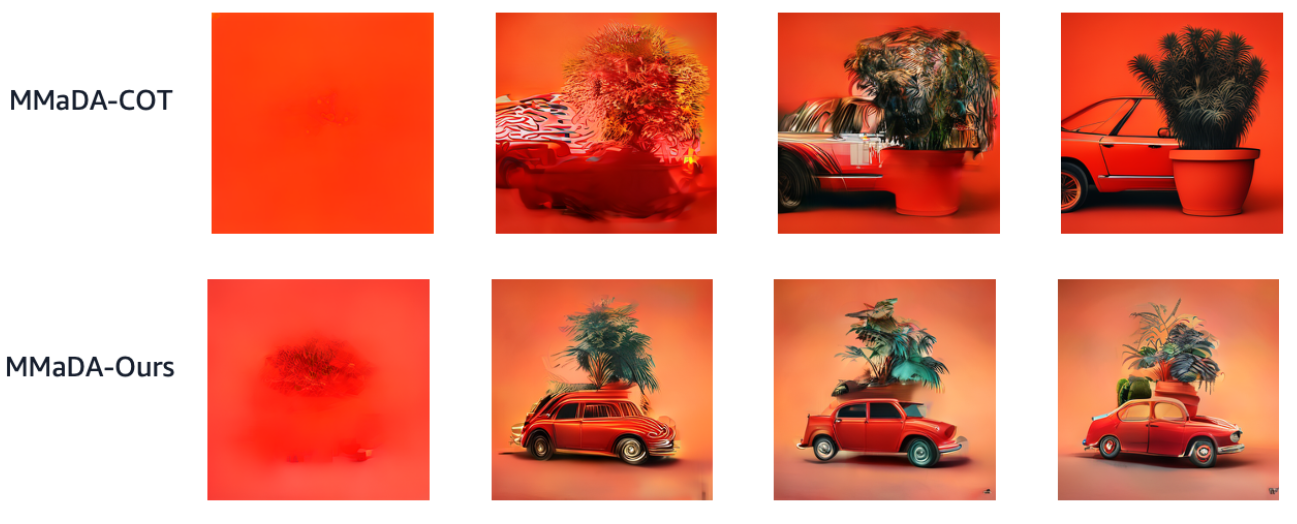
Figure 2: Trajectory visualization on text-to-image generation.
Qualitative analysis further shows improved intermediate outputs and final image quality, with enhanced spatial reasoning and attribute binding.
Multimodal Understanding
The approach was also evaluated with VLMEvalKit, covering visual reasoning, mathematical tasks, and open-ended question answering. The control block consistently improves performance on benchmarks requiring comprehensive multimodal integration, notably MathVista_MINI (+1.3) and COCO_VAL (+0.7), which involve open-ended, complex reasoning.
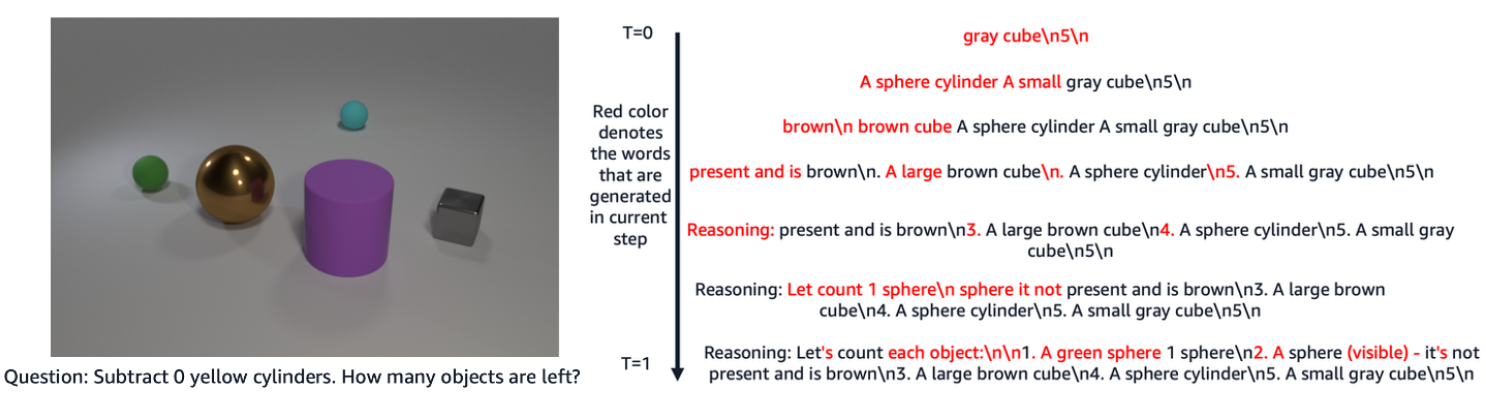
Figure 3: Trajectory visualization on multimodal understanding.
The visualization reveals that the learned order policy enables more elaborate reasoning steps and avoids degeneration to single-token responses common in baseline models, especially in counting and chain-of-thought tasks.
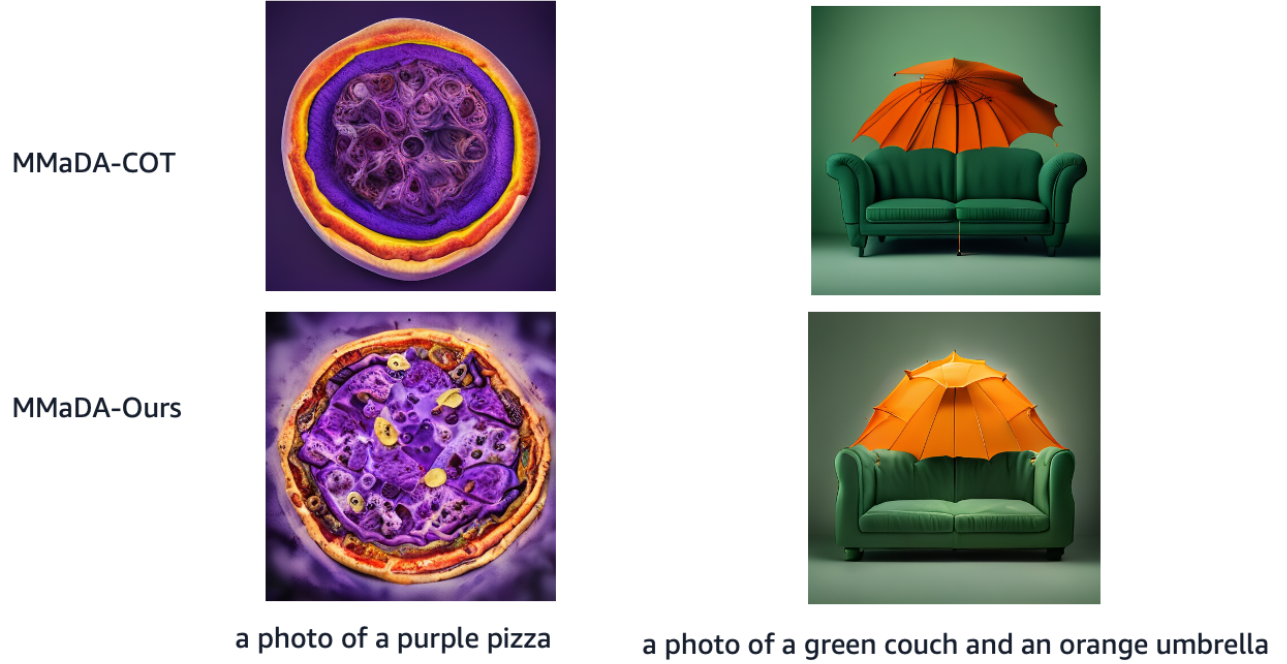
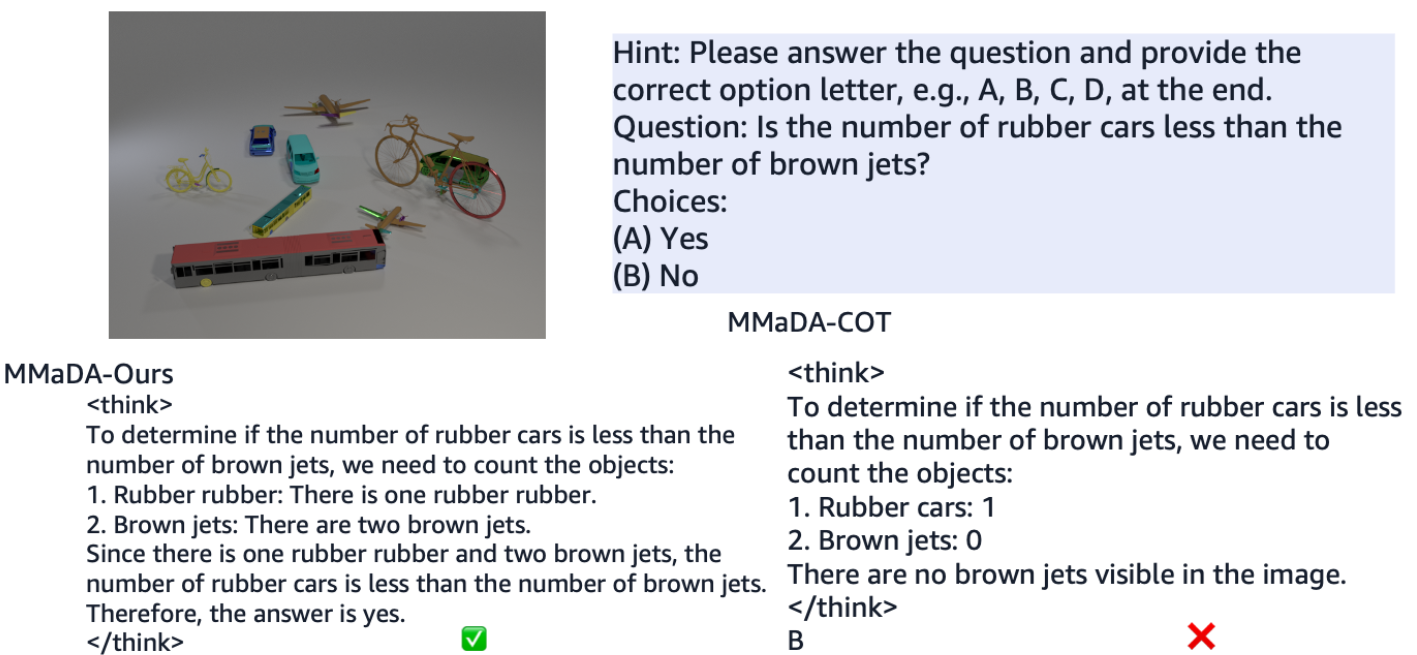
Figure 4: Qualitative comparison of generated samples. Our method demonstrates superior understanding and generation quality across both text-to-image synthesis and multimodal reasoning tasks.
Implications and Future Directions
The research decisively demonstrates that order control is not only relevant but crucial for multimodal masked diffusion models. Fixed or logit-driven order selection fails to capture the intricate dependencies required for high-quality image synthesis and nuanced multimodal comprehension. Reinforcement learning-based optimization, especially with trajectory-level rewards, allows the adaptation of generation order in task-specific contexts.
Practically, these findings facilitate improved controllability and interpretability in multimodal generative AI systems. Theoretical implications include a deeper understanding of token dependencies in diffusion-based processes, suggesting further exploration of generation order as a means to encode task-specific priors.
Future avenues include:
- Expanding the control block to broader modalities (video, audio, 3D scenes).
- Investigating more complex reward functions for nuanced alignment (e.g., human preference, aesthetic quality).
- Scaling to larger model architectures and datasets to assess order control in ultra-large diffusion systems.
- Integrating meta-learning for task-adaptive order policies.
- Exploring interpretability metrics derived from learned generation trajectories.
Conclusion
Reinforcement-based generation order optimization is essential for multimodal masked diffusion models, particularly in settings with compositional or spatial complexity. The introduction of a learnable control block trained via GRPO substantially outperforms confidence-based heuristics, providing measurable improvements in text-to-image alignment and multimodal reasoning. The approach advances the theoretical and practical capabilities of multimodal generative modeling, laying the foundation for further research on adaptive sequence control in diffusion frameworks.