- The paper demonstrates an integrated DFT, SQS, and supervised ML approach to predict and rank NaCl-type entropy-stabilized oxide compositions.
- The optimized MLP model achieves a test RMSE of ~4.2 kJ/mol, reducing DFT requirements to just 10% of the configuration space.
- High-throughput screening validates key trends, highlighting thermodynamic constraints and experimental phase separation in candidate oxide systems.
Data-Driven Prediction of NaCl-Type Entropy-Stabilized Oxide Compositions: A Synthesis of First-Principles and Supervised Learning
Introduction and Motivation
The investigation of entropy-stabilized oxides (ESOs) in the NaCl-type (rocksalt) structure represents a significant challenge in computational materials design due to the vast configurational complexity and the competition with known ordered phases. Given the combinatorial magnitude of possible equimolar quinary mixtures derived from 16 chemically diverse cations, experimental and direct ab initio explorations are infeasible for full coverage. This paper develops a computational framework that integrates DFT, special quasirandom structures (SQS), and supervised ML to efficiently predict and rank candidate compositions for single-phase entropy stabilization.
Computational Framework and Methodology
Reference Database and Thermodynamic Modelling
A consistent DFT database was constructed covering all relevant binary and ternary ordered oxides for the 16 chosen cations, computed at both GGA and meta-GGA levels to allow accurate convex-hull construction. Energetic referencing is strictly handled, incorporating zero-point energy (ZPE) corrections using linear mixing for disordered structures. Disordered rocksalt oxides are modelled using SQS supercells with convergence criteria based on correlation RMSE and DFT energy fluctuations, selecting a 60-atom cell for quinary phases.
Configurational contributions to finite-temperature stability are explicitly treated by calculating the Gibbs energy with the ideal configurational entropy correction appropriate for the mixed-cation/ordered-anion rocksalt topology. The stabilization temperature Tstab is defined where the predicted Gibbs energy of the ESO first falls onto the convex hull formed by all known and computed reference phases.
Machine Learning Model Development
Descriptor Engineering and Model Selection
Supervised ML models are trained on a set of 416 DFT-evaluated quinary SQS-NaCl structures selected for compositional diversity. Descriptor optimization, informed by correlation analysis,
concentrates inputs to composition, atomic number, atomic density, electronegativity, atomic radius, periodic column, and valence electron count. This balance minimizes collinearity while retaining essential physics of oxide stability.
Three ML algorithm classes—linear regression, random forests, and multilayer perceptrons (MLP)—are benchmarked using stratified 4-fold cross-validation. Strong numerical results are reported: the optimized MLP achieves a test RMSE of approximately 4.2 kJ/mol (∼20–25 meV/atom), outperforming linear models and reducing DFT computation needs to just 10% of the system space. This magnitude of error is notable given the system complexity and is sufficient to confidently rank ESOs within several hundred kelvin in Tstab.
MLP-based predictions show high fidelity when compared with direct DFT values across the full dataset.
High-Throughput Screening and Stability Trends
The MLP predictor enables exhaustive screening of all 4,368 equimolar quinary mixtures. The model successfully recovers known NaCl-type ESOs as those with the lowest predicted stabilization temperatures. The ten most promising candidates, as ranked by Tstab, display compositions that respect average valence matching and structural compatibility typically with average cation oxidation states of +2, aligning with the rocksalt prototype’s strict chemical constraints.
Experimental Validation and Decomposition Analysis
The paper provides a direct comparison between the predicted phase stability and experimental solid-state synthesis for selected ESO compositions. In-depth analysis of three representative systems illustrates key findings:
- (Cu,Fe,Mg,Sr,Zn)O: Experimental mapping reveals cationic segregation, especially Sr-Fe-based phases, corroborated by computed decomposition, which points to SrFeO₃₋ₓ as a stable competing phase not initially included in the hull. The predicted ESO stability temperature (>4000 K) vastly exceeds the melting point, accounting for failure to form a homogeneous phase.
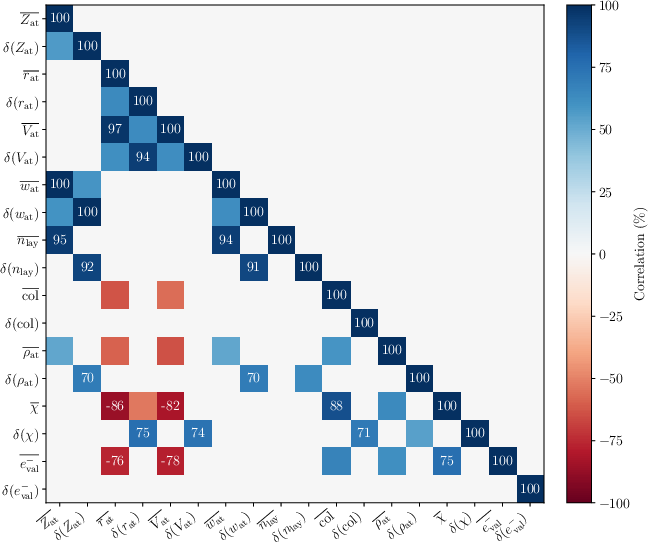
Figure 1: SEM/EDS mapping for the Cu–Fe–Mg–Sr–Zn–O system, showing phase separation and limited cation solubility.
- (Ca,Co,Cu,Mg,Zn)O and (Ca,Cu,Mg,Ni,Zn)O: Both exhibit phase separation with CaO-rich domains and limited solubility of Ca²⁺ in the rocksalt matrix, as identified by XRD and chemical mapping.
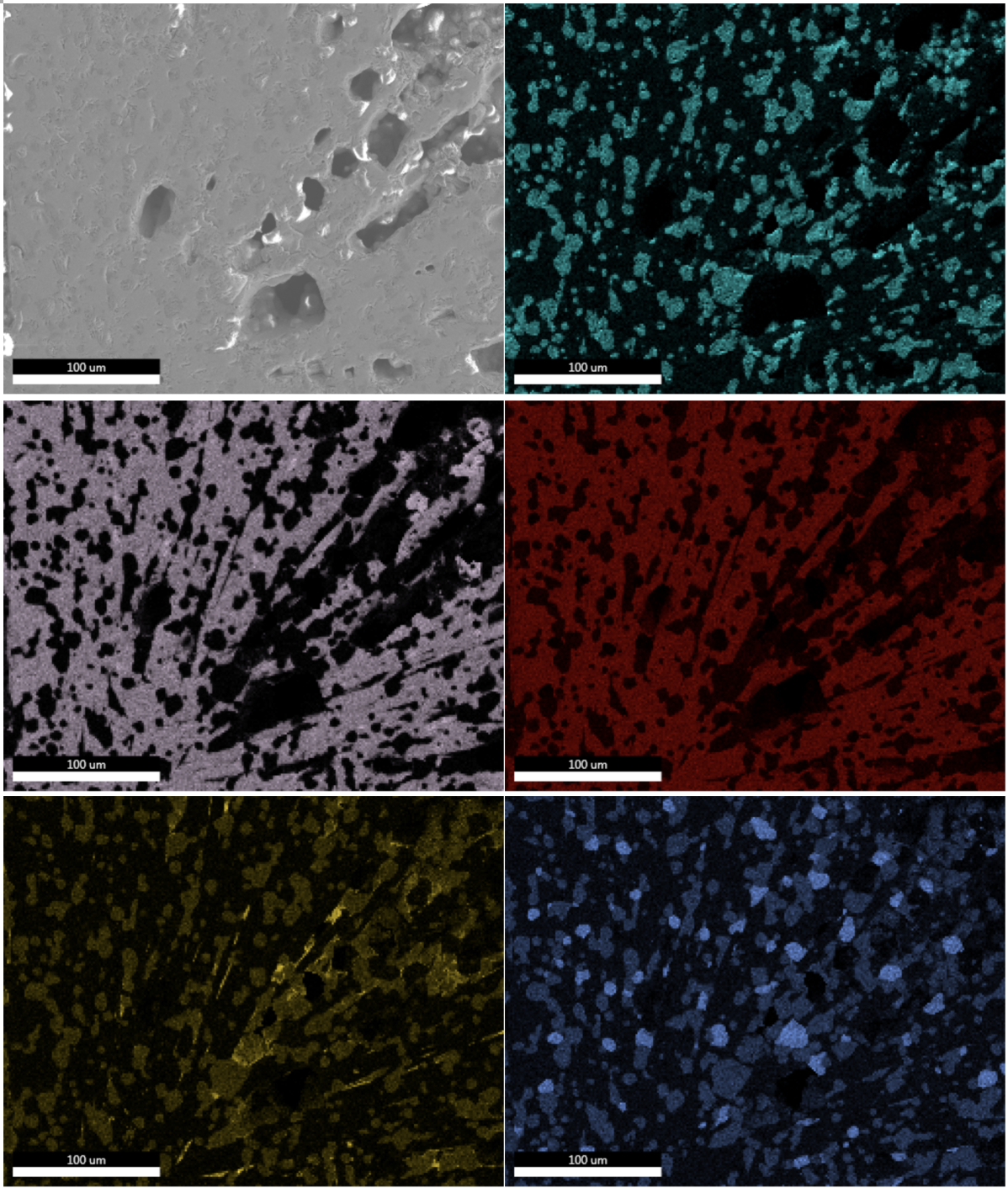
Figure 2: SEM/EDS mapping for (Ca,Co,Cu,Mg,Zn)O, highlighting the spatial segregation of cations, especially Ca.
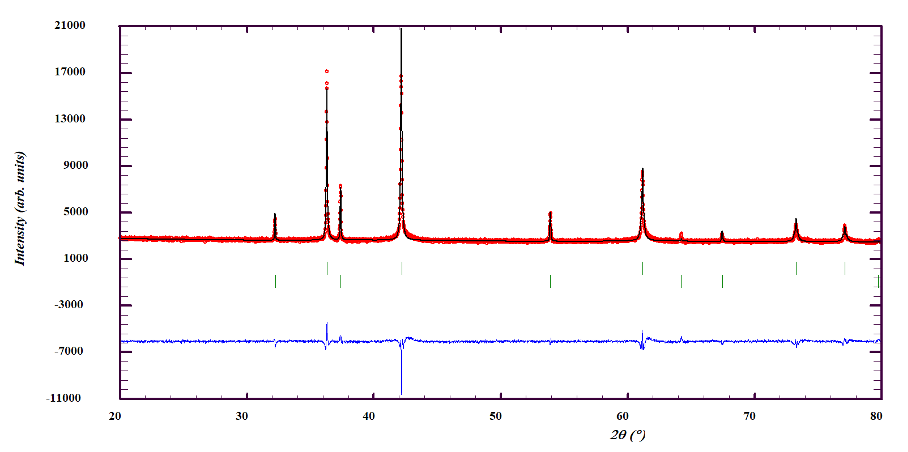
Figure 3: SEM/EDS mapping for (Ca,Cu,Mg,Ni,Zn)O with clear Ca domain formation.
Computed decomposition paths and stabilization temperatures are consistent with experimental findings—Ca segregation and the ultimate thermodynamic inaccessibility of homogeneous quinary ESOs with significant Ca content at synthesis-achievable temperatures.
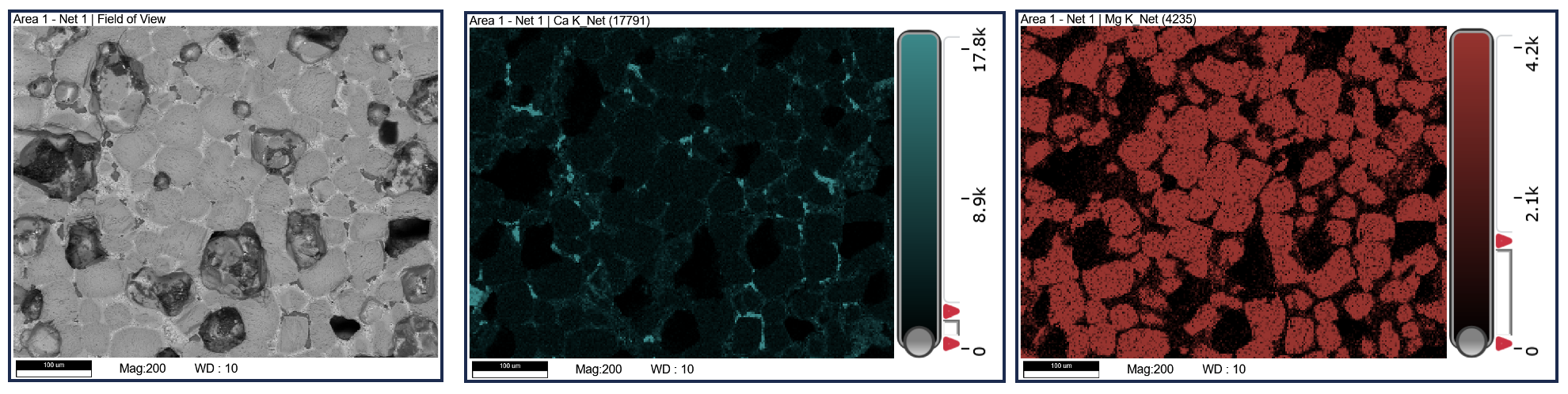
Figure 4: Temperature dependence of phase stabilities in the Ca–Co–Cu–Mg–Zn–O and Ca–Cu–Mg–Ni–Zn–O systems, showing late stabilization of the equimolar phase far above the melting points.
Implications and Outlook
The results show that stability of multicomponent rocksalt ESOs is not dictated by configurational entropy alone; enthalpic penalties due to charge imbalance, cation-oxygen bonding preferences, or stable lower-order oxide formation often preclude single-phase formation. The approach thus provides both a practical route to prioritize experimental targets and a computational probe into the underlying chemical physics restraining high-entropy oxide phase formation.
Importantly, this workflow demonstrates:
- Accurate extrapolation of stability trends in high-dimensional composition spaces with dramatically fewer DFT calculations via ML.
- That only a subset of the theoretical ESO combinatorial space is achievably single-phase under practical synthesis conditions, with kinetic and thermodynamic limitations sharply limiting equimolar homogeneity, especially for systems with pronounced cation size/charge disparity.
- That careful curation of the thermodynamic reference (especially inclusion of lower-order and ternary competing phases) is essential for meaningful phase diagram prediction, as omission leads to large errors in stabilization temperature estimation.
The optimized ML model, integrated with SQS-DFT data, is well-suited for additional extension to non-equimolar compositions, inclusion of vibrational and magnetic entropy effects, and incorporation of additional structure-property descriptors, including those for liquid phases. Expansion of this framework could facilitate the rational discovery of high-entropy ceramics beyond the rocksalt archetype and open doors for systematic alloying in other complex functional oxide families.
Conclusion
This work delivers an efficient high-throughput paradigm for the thermodynamic screening and targeted synthesis of rocksalt-structure ESOs by merging SQS-DFT with supervised ML. The model provides a credible roadmap for identifying experimentally relevant candidate compositions while elucidating the compositional factors governing phase stability in high-entropy oxides. Its numerical efficacy and experimental validation suggest this combined approach is poised to play a significant role in the future of multicomponent material discovery and optimization.