- The paper introduces FRFDet with two key modules—IBS and SFRCF—to enhance small object detection in UAV imagery.
- It employs symmetric sampling to suppress redundancy and scale-aware fusion to mitigate semantic drift, significantly boosting AP.
- Validated by ablation and entropy analyses, FRFDet balances accuracy and computational efficiency for real-world UAV applications.
FRFDet: Efficient UAV Small Object Detection with Symmetric Sampling and Scalable Fusion
Small object detection in unmanned aerial vehicle (UAV) imagery presents unique challenges, notably severe background clutter, detail degradation, and semantic-spatial misalignment—especially under adverse conditions such as low illumination, weather variability, and sensor noise. Conventional object detectors, including modern DCNN/Transformer-based architectures, fail to sufficiently suppress redundancy or adapt fusion strategies to model scale, degrading performance for objects occupying less than 8% of image area or smaller than 32×32 pixels.
This paper introduces FRFDet, a single-stage, computationally efficient detector with two pivotal modules: Inverse Bidirectional Sampling (IBS) for redundancy suppression and spatial alignment, and Scale-Feature Relationship Cross-Fusion (SFRCF) for adaptive, model-scale-aware semantic integration.
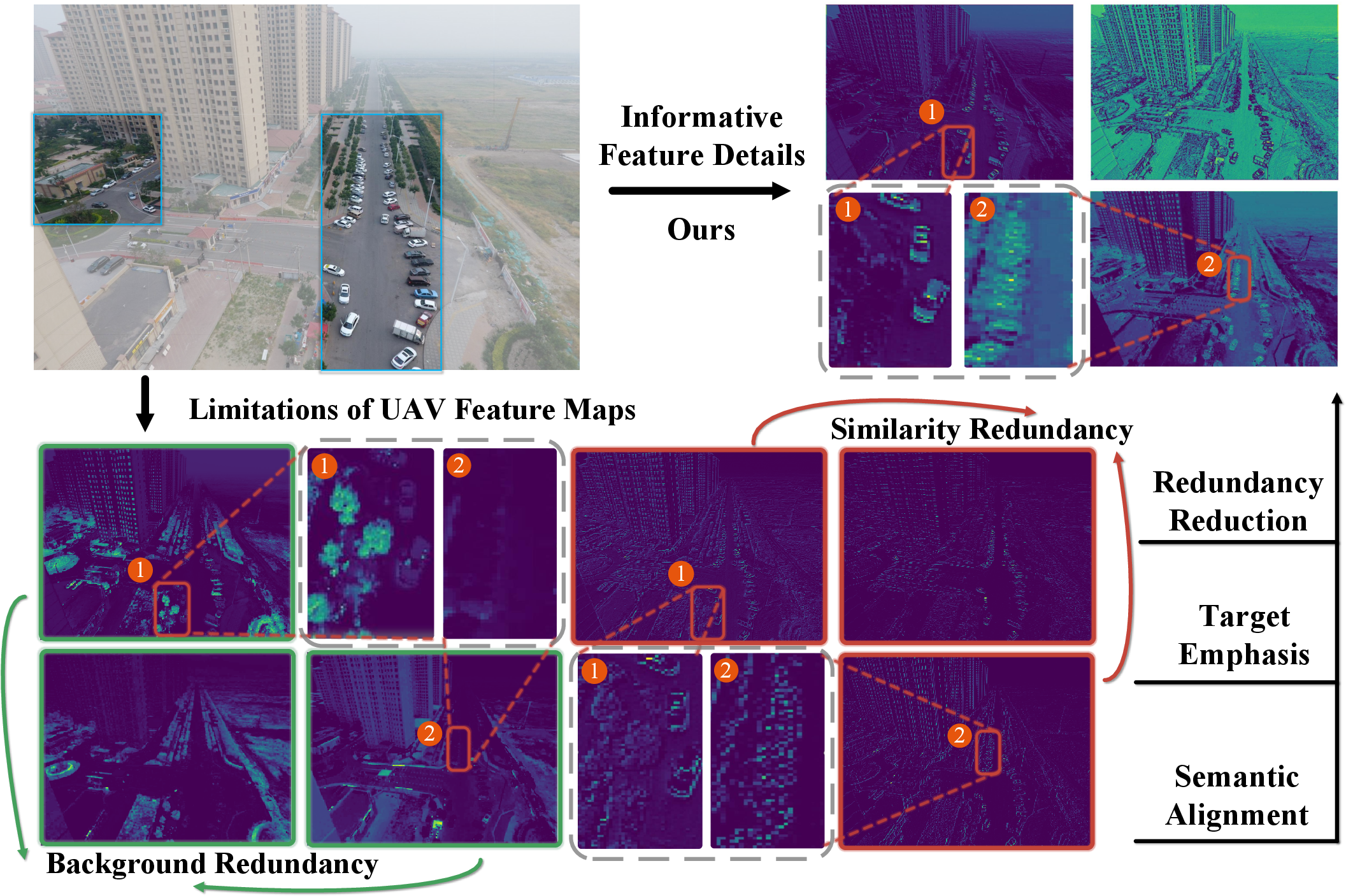
Figure 1: Feature map comparison. Standard sampling shows strong redundancy, while our method enhances small-object saliency and semantic consistency.
FRFDet Architecture and Key Contributions
FRFDet’s backbone/neck/head structure incorporates symmetric sampling via IBS and scalable cross-level fusion via SFRCF.
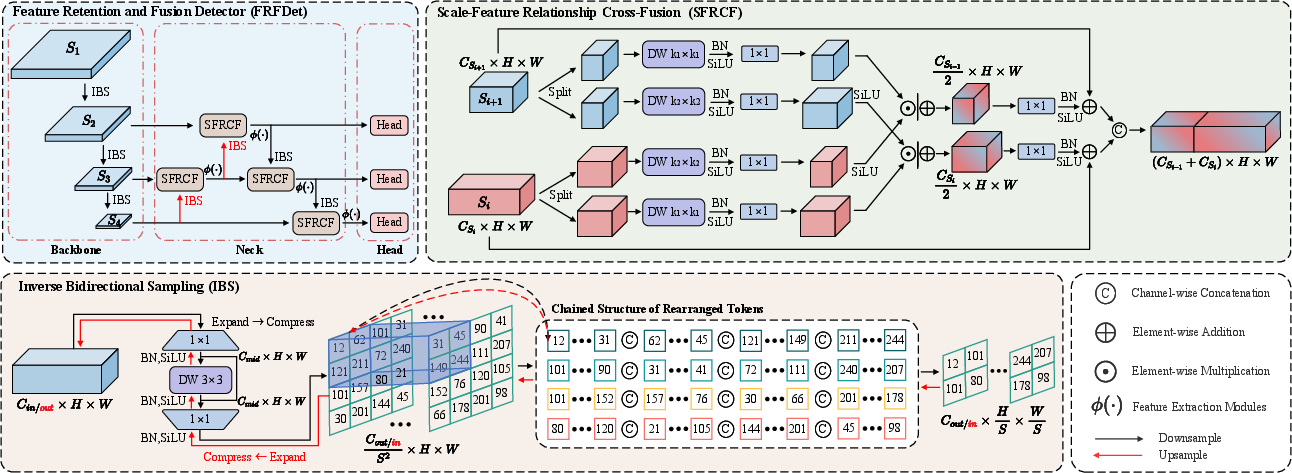
Figure 2: Overview of FRFDet. IBS enables symmetric down-/up-sampling, and SFRCF performs scale-aware cross-fusion to reduce semantic drift.
Inverse Bidirectional Sampling (IBS)
Unlike asymmetric downsampling (strided conv/pooling) and upsampling (interpolation), IBS enforces approximate structural symmetry. The channel expansion–compression unit and spatial reorganization are learnable, structure-preserving, and operate in both encoding (IBS-D) and decoding (IBS-U) directions. The design ensures robust detail preservation and background suppression, as quantitatively validated by increased foreground entropy and reduced background entropy.
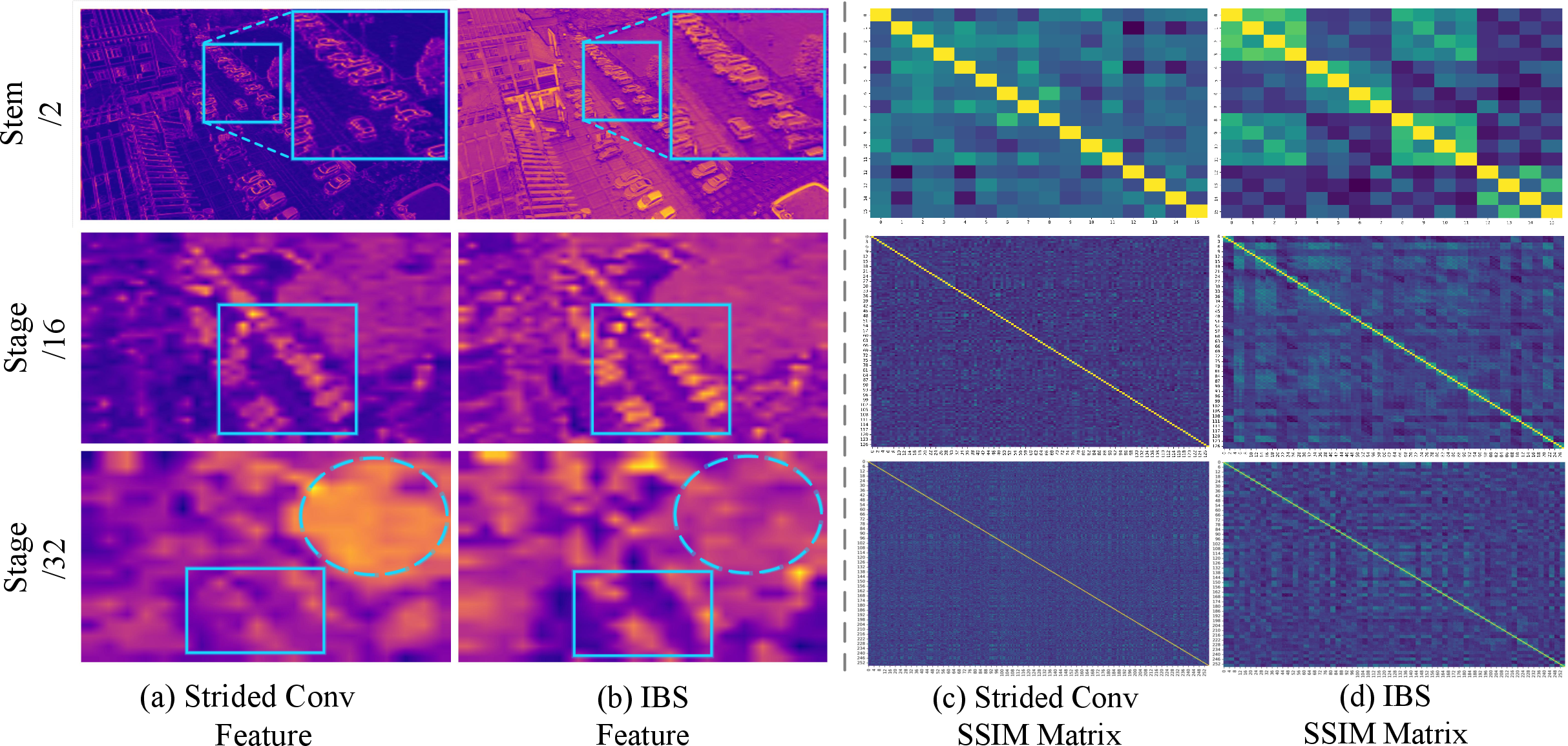
Figure 3: Feature maps and Structural Similarity Index Measure (SSIM) matrices across stages. Boxes indicate targets; brighter colors in (c) and (d) denote higher channel similarity.
Scale-Feature Relationship Cross-Fusion (SFRCF)
SFRCF investigates fusion strategy across model scales (width/depth). Element-wise multiplication (nonlinear cross-group modulation) is applied to compact models to enhance representation; additive fusion is used for larger architectures to mitigate quadratic interaction entanglement and stabilize gradient propagation. This scale-adaptive design directly addresses semantic drift and detail loss prevalent in UAV detection pipelines.
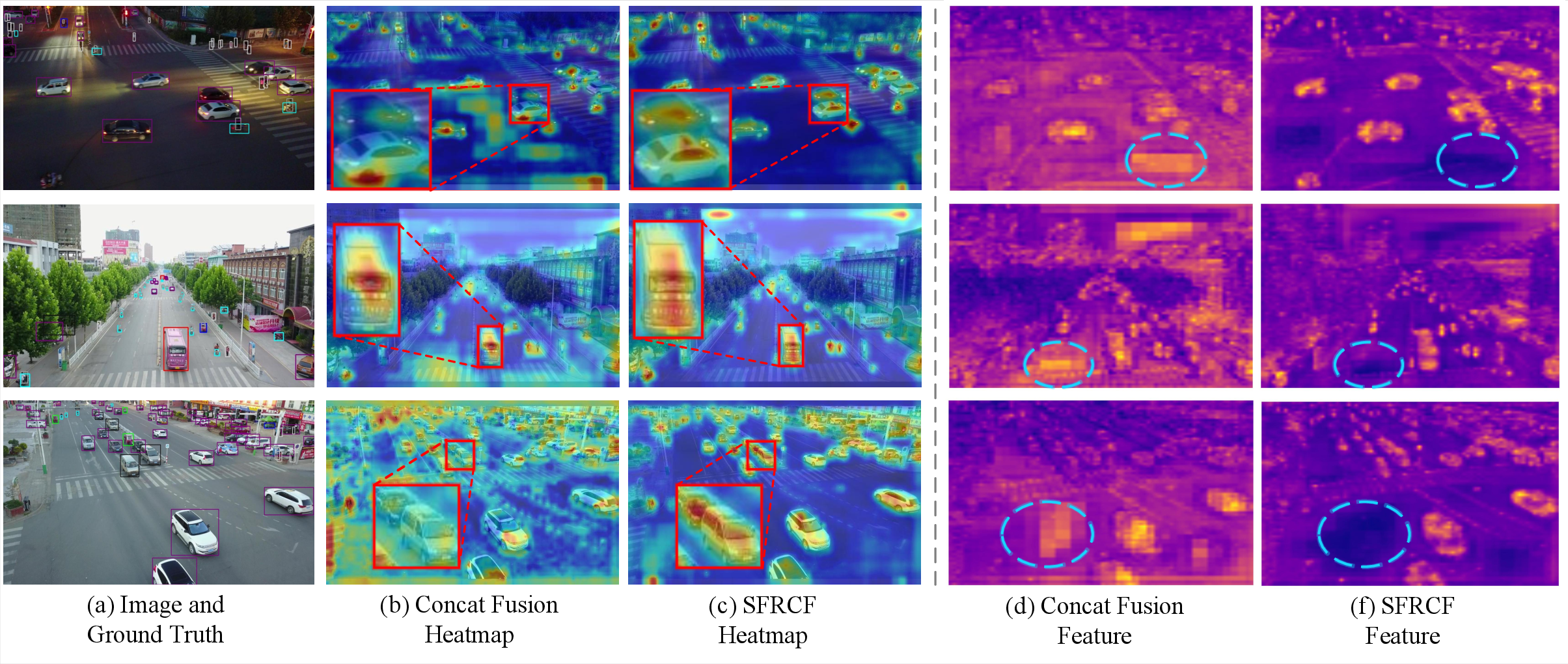
Figure 4: Fusion visualizations on VisDrone. Naive fusion shows background bias, while SFRCF enhances target features.
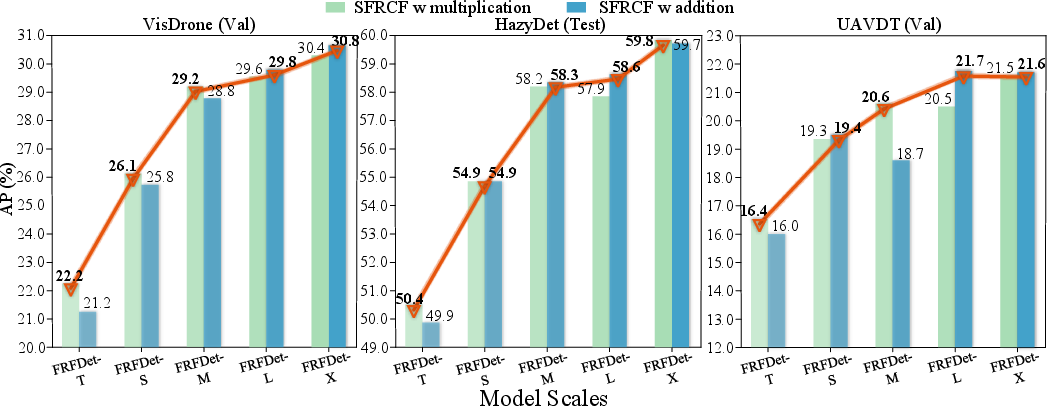
Figure 5: Comparison of AP at different scales of FRFDet on three UAV datasets, employing various fusion strategies.
The entropy differential between foreground and background, measured across multiple UAV datasets, confirms that IBS increases discriminative power and SFRCF reduces background uncertainty, both leading to tighter semantic boundaries and improved object feature expressiveness.
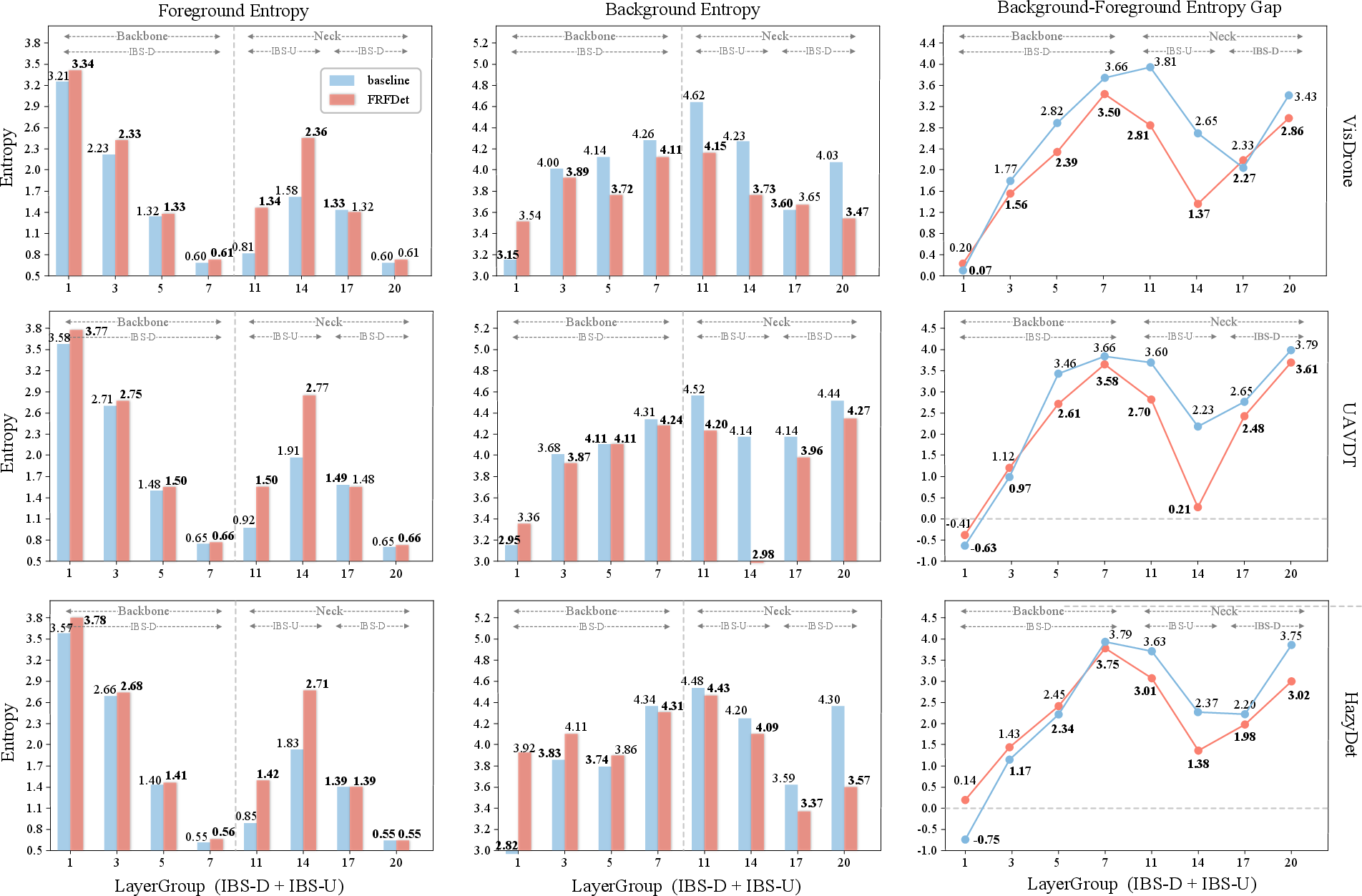
Figure 6: Quantitative visualization of foreground and background entropy for FRFDet’s IBS compared to the baseline model across three UAV datasets.
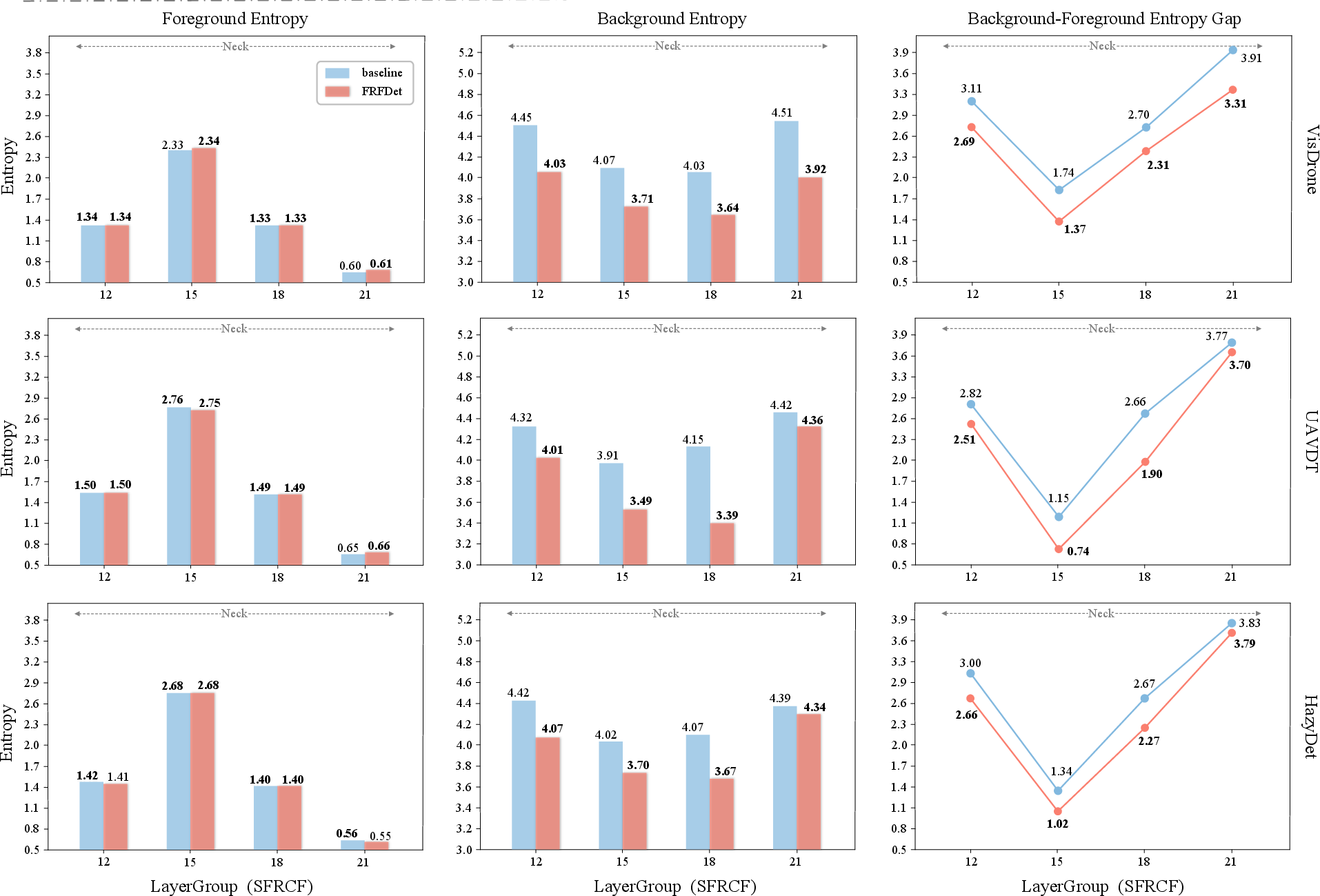
Figure 7: Quantitative visualization of foreground and background entropy for SFRCF in our FRFDet compared to the baseline model across three UAV datasets.
Comprehensive ablations reveal:
- IBS improves AP by +2.2% (VisDrone); optimal expansion ratio r=2 for channel expansion-compression
- SFRCF contributes a further +0.9% AP gain on compact models; hierarchical kernel adaptation improves fusion
Quantitative and Qualitative Results
FRFDet achieves competitive performance across VisDrone, UAVDT, HazyDet, and MS COCO:
- VisDrone: FRFDet-S outperforms YOLO11-S, DTSSNet, RemDet-S by up to +2.7% AP with fewer parameters/FLOPs. FRFDet-X achieves 30.8% AP with 94.6 FPS at half the parameters of RemDet-X. With cluster-based cropping, AP reaches 41.5%.
- UAVDT: FRFDet-L achieves 21.7% AP, surpassing previous UAV-centric architectures.
- HazyDet: FRFDet-X achieves 59.8% AP; FRFDet-P improves over TOOD by +3.0% AP in synthetic and +1.4% AP in real foggy scenes, demonstrating robustness to severe visibility degradation.
- MS COCO: Compact variants (T/S) outperform YOLO8–YOLO12 by up to +1.8% AP.
Qualitative evaluations further demonstrate superior detection granularity and reduced category confusion versus state-of-the-art baselines.
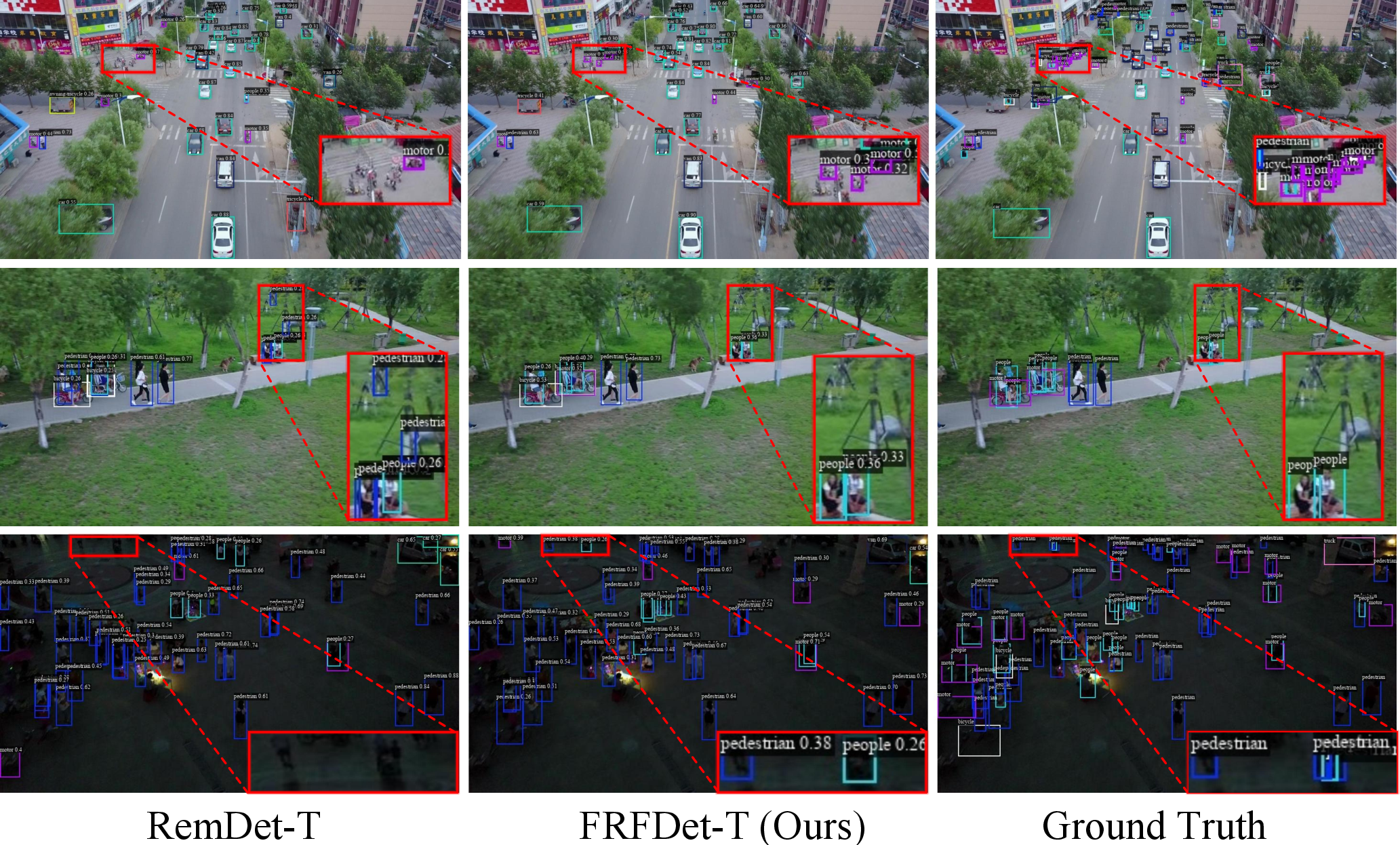
Figure 8: Visualization of detection results on VisDrone, comparing FRFDet-T with RemDet-T under the from-scratch training mode.
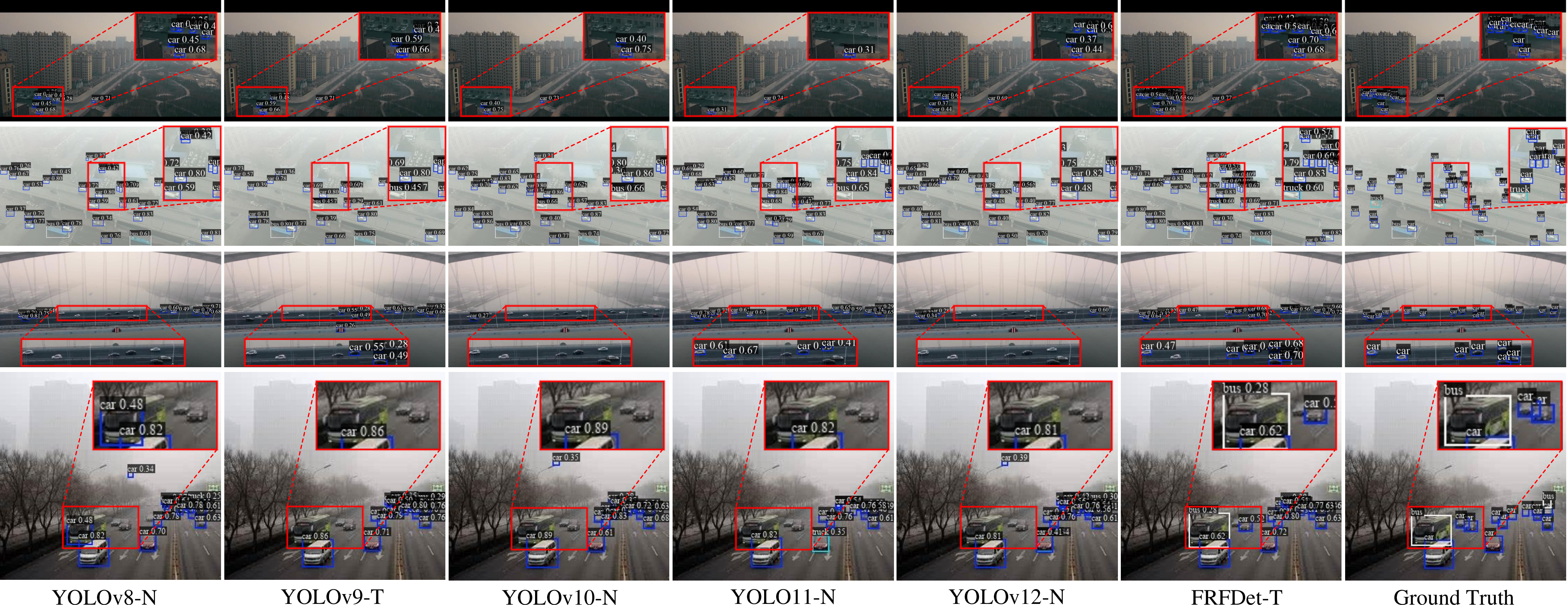
Figure 9: Visualization of detection results on HazyDet's RDDTS, comparing FRFDet-T with state-of-the-art real-time detectors under the from-scratch training mode.
Practical and Theoretical Implications
FRFDet offers a superior trade-off among accuracy, computational cost, and scalability, making it suitable for resource-constrained UAV deployment scenarios. The scale-adaptive fusion paradigm establishes a direct link to neural scaling laws, suggesting general applicability in both UAV and generic detection pipelines. The entropy-based analysis provides a formal justification for architectural choices, aligning practical performance gains with theoretical foundations.
Limitations and Future Directions
FRFDet’s supervised, single-modal paradigm limits generalization in unseen scenarios. The integration of language-image-video multimodal capabilities, leveraging techniques from VLLMs and diffusion models, is a promising direction for enhancing robustness and extending coverage to complex UAV environments.
Conclusion
FRFDet establishes new standards for efficient UAV small object detection via symmetric sampling and scalable fusion. The design is validated by strong numerical results across benchmarks and rigorous ablation/information-theoretic analyses. Future work should focus on multimodal extensions and broader dataset collection to facilitate robust, real-world aerial perception.