- The paper presents a novel framework, PreSIST, that uses vision-language models and survival analysis to predict instance-level object persistence in dynamic scenes.
- It employs quantile parameterization and Bayesian filtering to estimate object survival, achieving high accuracy in zero-shot contexts.
- The approach enhances long-term robotic mapping and SLAM by integrating commonsense reasoning with an efficient vision-only student model for real-time deployment.
Introduction and Motivation
Long-term autonomous robotic perception requires models that capture not just the static state of environments, but the dynamics of object presence and movement over time. Traditional mapping and SLAM pipelines often assume environmental stationarity or address changes only reactively, updating beliefs after direct contradictory evidence. This myopic approach can lead to brittleness and out-of-date world models, particularly when object movement is context-dependent but unpredictable using semantic class alone. For instance, the persistence of a car varies widely when parked versus stopped at a traffic light, despite identical category labels.
PreSIST ("Predictive Scene-conditioned Instance Survival over Time") directly addresses this lack of instance- and context-aware persistence reasoning by integrating vision-LLMs (VLMs) into a probabilistic temporal prediction framework. This approach augments survival analysis-based persistence filtering by utilizing the rich commonsense reasoning of large-scale vision-language systems, thus enabling robust, zero-shot survival priors for arbitrary objects in open-world scenes.
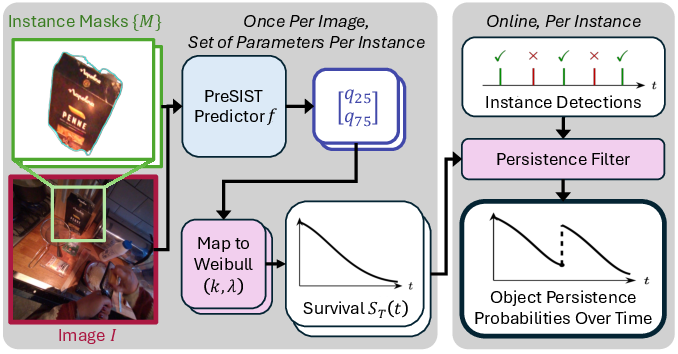
Figure 1: PreSIST pipeline overview; from an input image and instance masks, the system produces per-instance survival priors, which seed a Bayesian persistence filter for probabilistic temporal prediction.
Methodology
Survival Modeling and Quantile Parameterization
PreSIST leverages the Bayesian persistence filter formalism, separating the estimation of a survival prior (modeled as a Weibull distribution) from online evidence incorporation. Each instance in an image is associated with an estimated survival function ST(t), parametric in shape (k) and scale (λ), corresponding to the expected duration an object will remain at its observed location before moving. Rather than predict (k,λ) directly, the system uses two quantiles (q25,q75) as its primary output; this representation is more interpretable and stable for both LLM reasoning and downstream regression.
PreSIST-Lang: Vision-Language Prompted Persistence Estimation
The PreSIST-Lang variant orchestrates a pipeline of VLM prompting and language-only reasoning:
- Scene Description: A VLM generates a caption of the full scene, emphasizing dynamics, human activities, and contextual cues relevant to object movement.
- Instance Description: For each detected object mask, the system creates masked and context-emphasized views, which are fed to a VLM to yield instance-specific descriptions (e.g., noting support, interactions, or imminent motion).
- Persistence Reasoning: A LLM is prompted with the scene and instance descriptions and outputs (q25,q75) for each object. This step encourages identification of context-processes affecting persistence (e.g., "is this bus about to depart?"), rather than relying solely on object class heuristics.
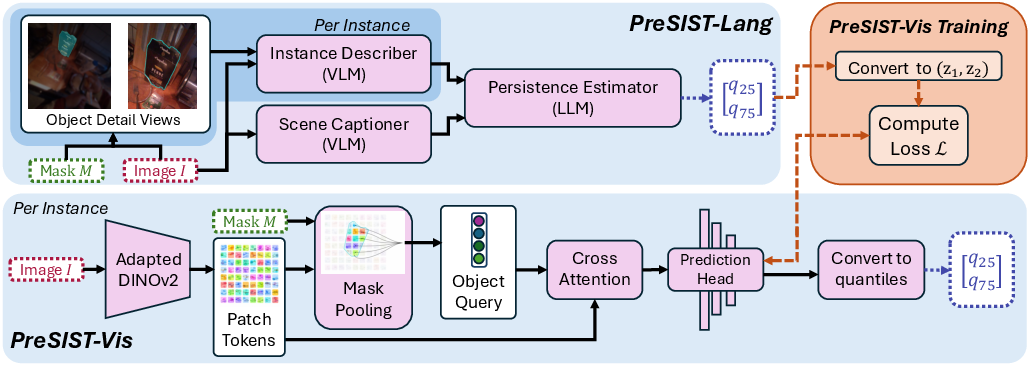
Figure 2: Architecture of PreSIST-Lang (VLM-based prompting + LLM reasoning) and PreSIST-Vis (vision-only, mask-pooled cross-attention network).
PreSIST-Vis: Vision-Only Student Model
To remove online dependence on large VLMs, a vision-only student model, PreSIST-Vis, is trained to regress (q25,q75) directly from (I,M). The model uses a frozen DINOv2 ViT-L/14 backbone with lightweight adapters and mask-based pooling to aggregate context and instance-specific features; cross-attention then combines context and object characteristics to produce quantile estimates. Notably, PreSIST-Vis is trained entirely on pseudo-labels generated by PreSIST-Lang, enabling efficient, scalable deployment with minimal domain shift.
Experimental Results
Zero-Shot Persistence Prediction
PreSIST methods were evaluated on a novel dataset of in-the-wild object persistence intervals, spanning indoor and outdoor domains across varying timescales.
- PreSIST-Lang demonstrated the lowest mean absolute error (MAE) and highest balanced accuracy in most domains among vision-LLM baselines.
- PreSIST-Vis achieves MAE and accuracy close to PreSIST-Lang but at two orders of magnitude faster inference speed, outperforming class-level priors and vision-only lookup baselines.
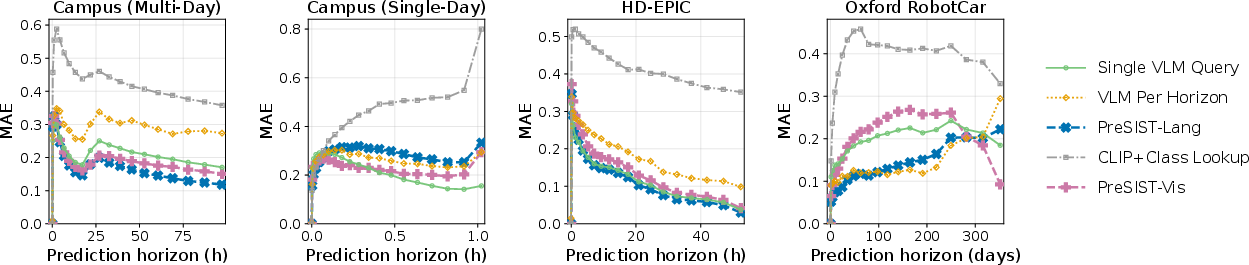
Figure 3: Persistence prediction MAE across future time horizons; PreSIST models are consistently superior to class-prior and single-query baselines.
Both PreSIST variants exhibited strong context-dependent discrimination: e.g., predicted persistence for "car" is high when parked, low when at a stoplight, reflecting correct adaptation to scenario context, which class-level baselines cannot achieve.
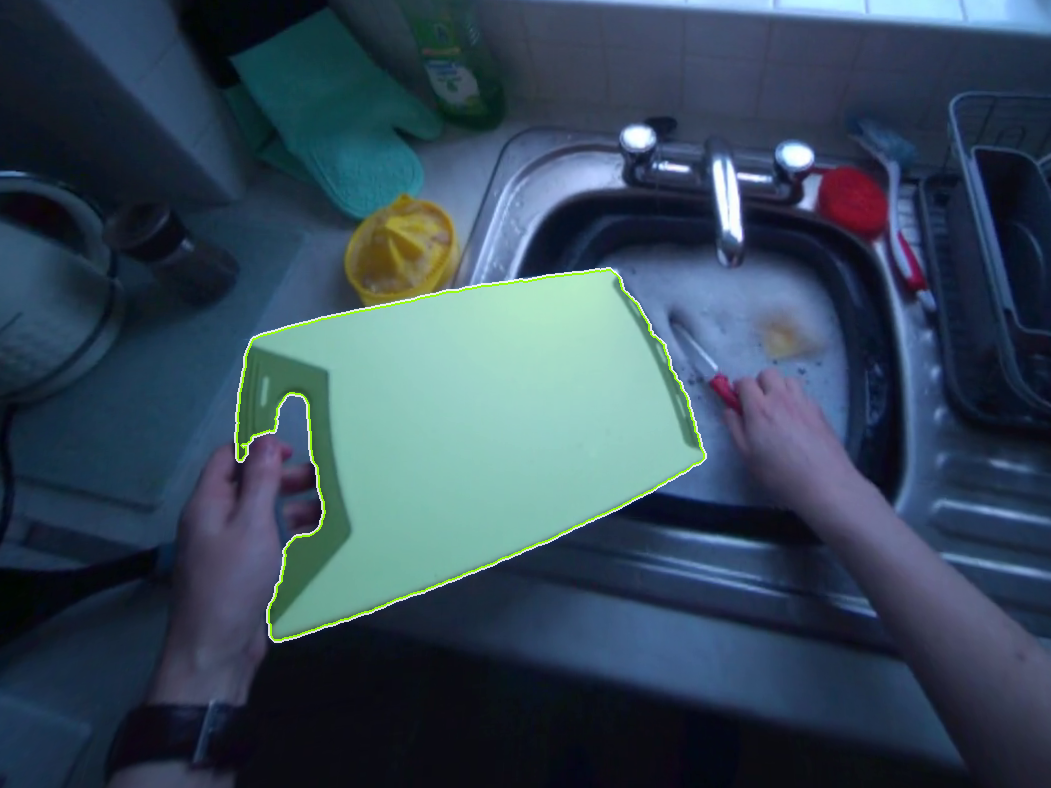
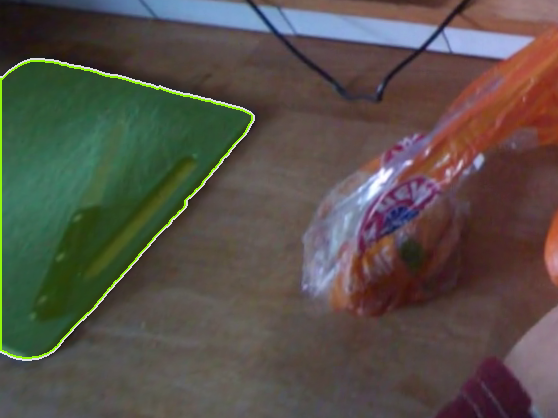
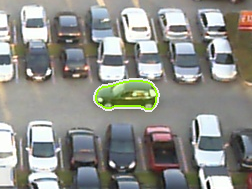
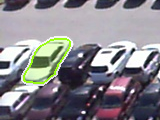
Figure 4: Qualitative predictions for different object-context pairs illustrating the context-sensitive estimation of PreSIST methods.
Generalization and In-Context Training Analysis
On parking lot scenes with varying amounts of in-context training, PreSIST exhibits robust, zero-shot generalization, outperforming in-context learned baselines (including those using exponential, log-normal, and mixture models) when training data is sparse. Only with extensive training do some baselines approach or marginally surpass PreSIST performance, indicating the strength of open-world, context-aware priors.
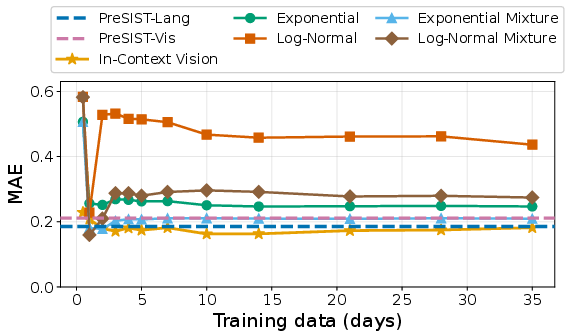
Figure 5: MAE vs. training set size for PKLot data; PreSIST achieves superior zero-shot performance and remains competitive as data increases.
Ablation Studies
Ablations confirm that:
- Instance-region-only context significantly degrades performance (both in vision and vision-language versions).
- Pretrained visual backbones are essential for generalization; removing or freezing substantially reduces transfer performance.
- Parameterizing the survival prior with quantiles, rather than native Weibull parameters, yields better or comparable performance.
- PreSIST-Lang outperforms alternative VLM and direct-parameter baselines, while Gemini Robotics-ER 1.6 backbone offers slightly improved results over open-weight LLMs.
Downstream Application: Long-Term Visual Relocalization
Utilizing PreSIST for feature persistence filtering on a long-term grocery store relocalization task leads to increased RANSAC inlier ratios, reduced pose estimation iterations, and improved translation and orientation accuracy. Persistence heatmaps correlate with product turnover, confirming the utility of context-aware persistence priors for robust mapping.
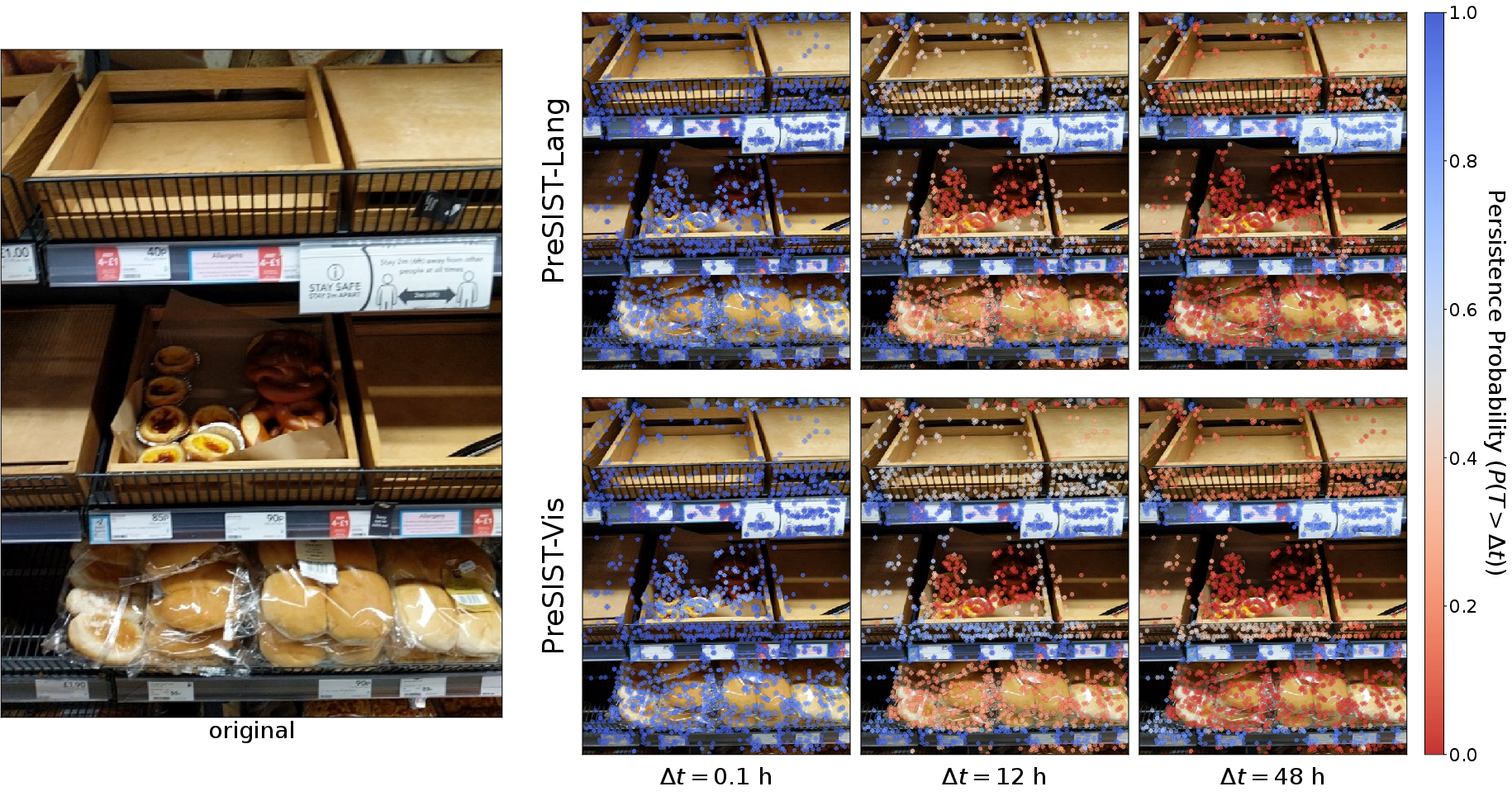
Figure 6: Per-pixel persistence probability visualization indicates which map features are expected to persist or disappear at a given horizon, highlighting shelf stability and product turnover.
Implications and Future Directions
PreSIST demonstrates the substantial practical value of integrating VLM-based commonsense reasoning with probabilistic survival analysis for temporal scene understanding. The approach enables:
- Accurate, zero-shot, open-world persistence estimation for arbitrary objects and scenes.
- Efficient student models for online deployment that inherit the context sensitivity of expensive VLM pipelines.
- Downstream improvements in persistent mapping and SLAM, enabling more robust long-term autonomy in changing environments.
Theoretically, PreSIST bridges foundation model reasoning with survival modeling, suggesting new avenues for integrating language, vision, and temporal prediction in robotics and scene understanding.
Potential future research includes:
- Exploiting video or multi-frame temporal context for even richer persistence cues.
- Employing non-parametric or more expressive multi-modal survival priors to capture complex, non-stationary object dynamics.
- Incremental, semi-supervised fine-tuning of PreSIST-Vis with additional environment-specific pseudo-labels or targeted ground-truth, combining open-world and in-context signals.
Conclusion
PreSIST introduces a scalable framework for scene-conditioned, instance-level object persistence prediction, operationalizing vision-LLM capabilities within survival analysis-based persistence filtering. The system yields clear gains in zero-shot temporal prediction and downstream spatial reasoning tasks, and presents a blueprint for further research at the intersection of multimodal AI, robotic autonomy, and long-term environmental modeling.
Reference: "PreSIST: Vision-Language-Informed Object Persistence Prediction in Open-World Scenes" (2607.04057)