- The paper demonstrates that secondary detuning (Δ2) triggers sharp resonance-induced transitions in amplitude, creating localized high-sensitivity regimes.
- The study employs a reduced two-mode nonlinear oscillator model to map parameter spaces and identify robust threshold phenomena in phononic comb generation.
- Results reveal that optimal sensitivity is achieved near drive activation thresholds, offering actionable insights for enhancing metrological sensing in MEMS/NEMS systems.
Nonlinear Sensitivity of Phononic Frequency Combs: Dynamic Structure and Sensing Implications
Introduction
The paper "On the Nonlinear Sensitivity of Phononic Frequency Combs to Physical Perturbations" (2607.03837) presents a systematic investigation of phononic frequency combs (PFCs) within nonlinear, coupled oscillator systems, with a focus on their quantitative sensitivity to physical parameter variations relevant for metrological sensing applications. By leveraging a reduced two-mode autoparametric resonance model, the authors disentangle the impact of drive and dissipation parameters—primary detuning, secondary detuning, drive amplitude, and the ratio of modal damping—on both amplitude and frequency observables. The results reveal a highly non-uniform and structured sensitivity landscape, demonstrating critical implications for the engineering of PFCs as precision sensing platforms.
Mathematical Framework for Nonlinear Dynamics
A coupled system of second-order nonlinear ODEs models the two vibrational modes with quadratic coupling, driven near internal 2:1 resonance, excluding cubic Duffing nonlinearity:
x¨1+2γ1x˙1+ω12x1+α22x22=Fcos(ωDt) x¨2+2γ2x˙2+ω22x2+α12x1x2=0
A multiple-scale ansatz yields slow-time complex envelopes ψ1, ψ2 governed by:
∂τ∂ψ1=−if−(1+iΔ1)ψ1+iψ22
∂τ∂ψ2=−(γ21+iΔ2)ψ2+2iψ1ψ2∗
with normalized parameters: Δ1 (drive detuning), Δ2 (subharmonic detuning), f (scaled drive), and γ21 (coupling of modal damping rates). This framework enforces a true 2:1 internal resonance and focuses on quadratic coupling as the essential ingredient for comb generation.
Steady-State Structure and Spectral Coherence
Direct numerical integration demonstrates robust limit-cycle dynamics characterized by stable, phase-locked oscillations of both modes and emergence of sharp frequency combs in the spectral domain.
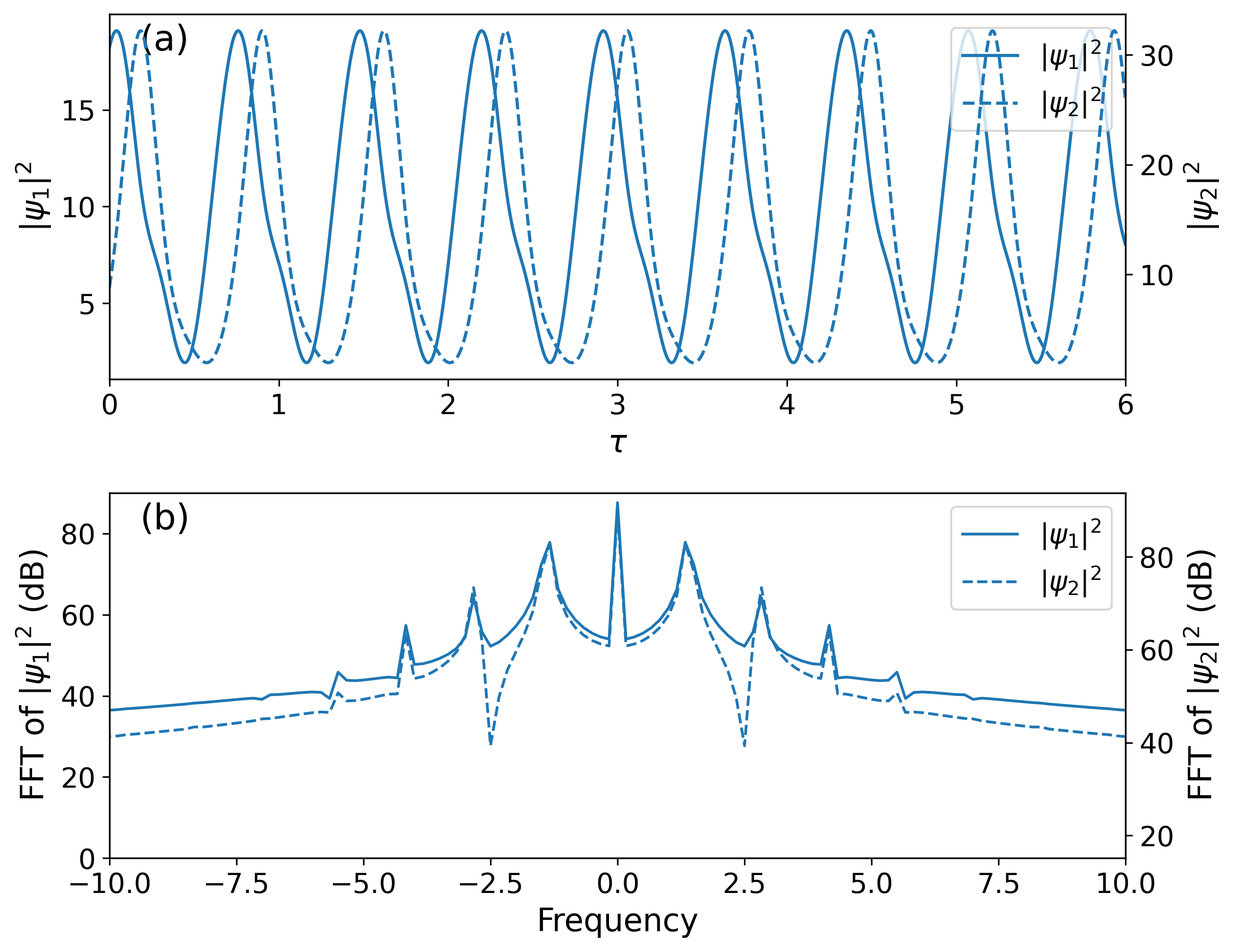
Figure 1: Time evolution and Fourier spectra of modal intensities, indicating phase-locked oscillatory states and equidistant spectral lines characteristic of a phononic frequency comb.
Notably, the comb is a property of the full coupled system—both ψ1 and ψ10—rather than arising from individual modes. The system consistently evolves onto a collective, phase-stable nonlinear state, with the spectrum revealing symmetric, well-separated comb lines.
Parametric Dependence of Modal Intensities
The response of modal intensities to parameter variations is organized by which physical mechanism (detuning, drive, damping) is perturbed.
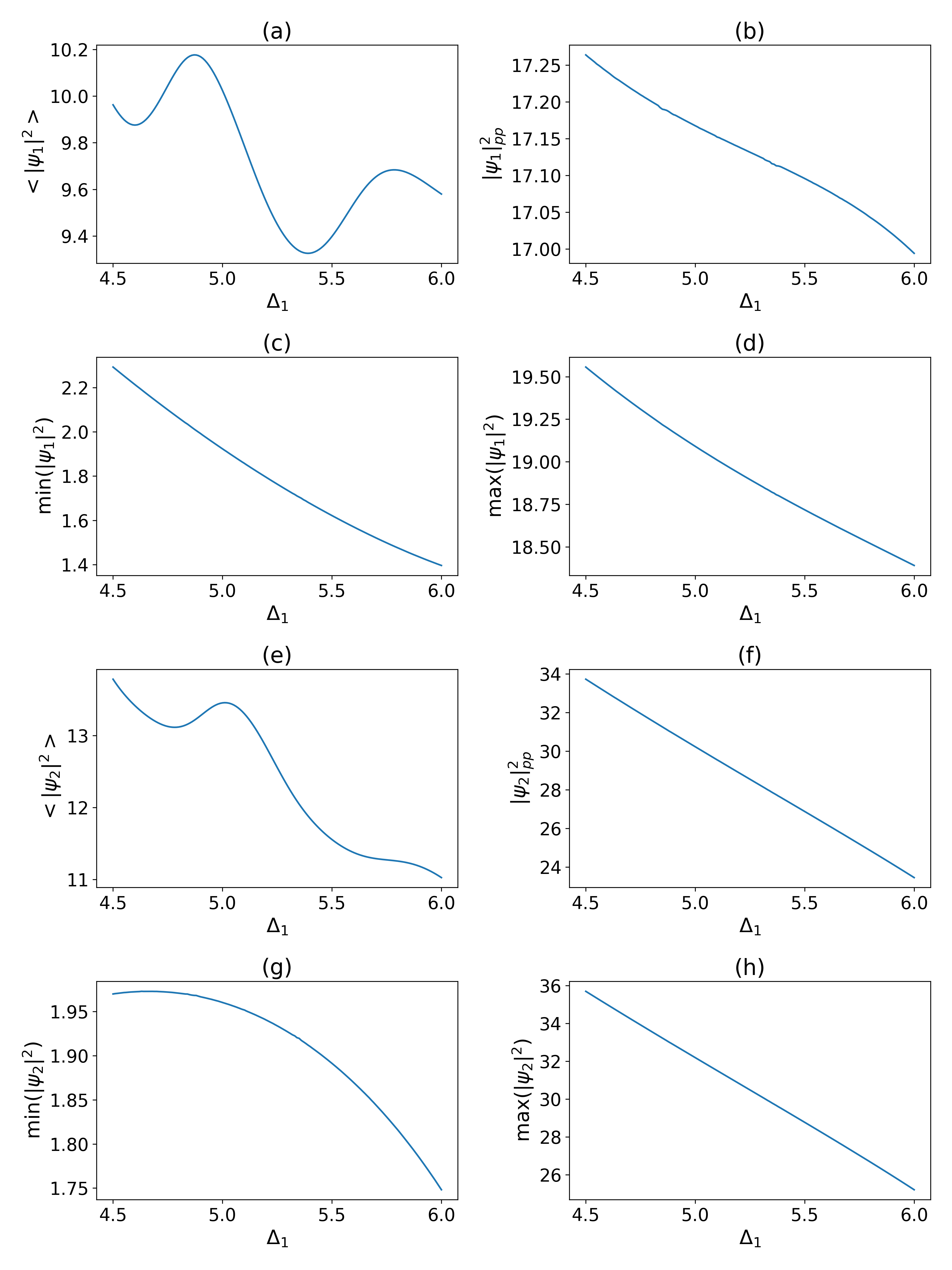
Figure 2: Evolution of modal intensities as a function of the primary detuning ψ11, indicating smooth, monotonic amplitude modulation across the detuning axis.
Varying ψ12 induces gradual, monotonic amplitude modulation with no evidence of bifurcation, underscoring that primary detuning primarily tunes the overall energy landscape without destabilizing the comb structure.
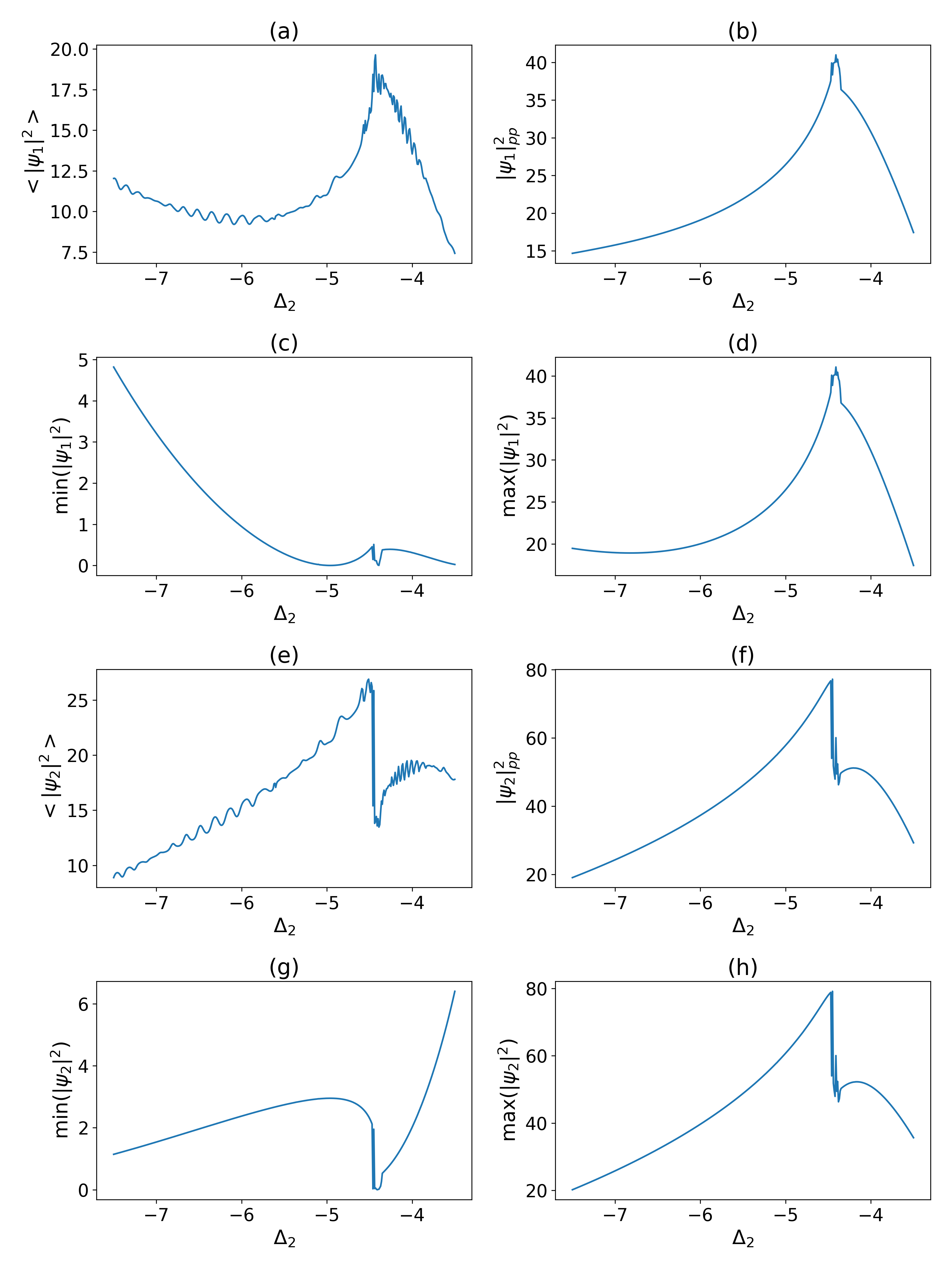
Figure 3: Modal intensity evolution with respect to secondary detuning ψ13, revealing sharp transitions and localized amplification near resonance conditions.
In contrast, ψ14 controls the resonance condition for subharmonic excitation, with modal intensities exhibiting abrupt transitions—large amplification and sudden jumps—at critical values. This non-analytic sensitivity identifies ψ15 as the principal parameter for discrete regime shifts and resonance-induced amplification.
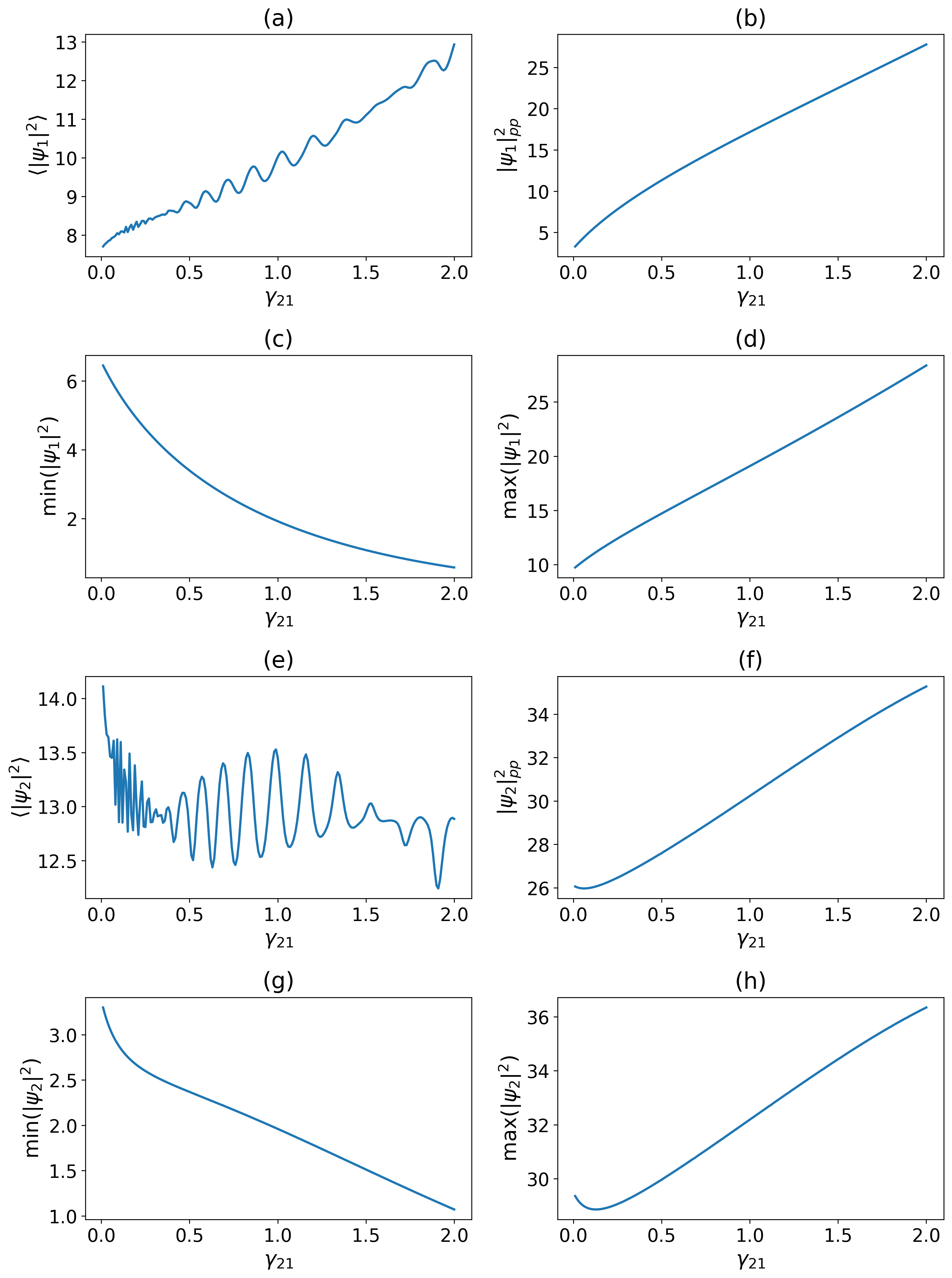
Figure 4: Modal intensity evolution versus relative damping ψ16, highlighting gradual redistribution of energy without discontinuities across coupling strength.
Modulating ψ17 redistributes energy between modes in a continuous manner, confirming that damping ratio controls amplitude apportionment but not limit-cycle stability or resonance thresholds.
Joint Parametric Mapping and Threshold Phenomena
A full mapping over ψ18, ψ19, and ψ20 elucidates the topology of the threshold and the boundaries for comb existence.
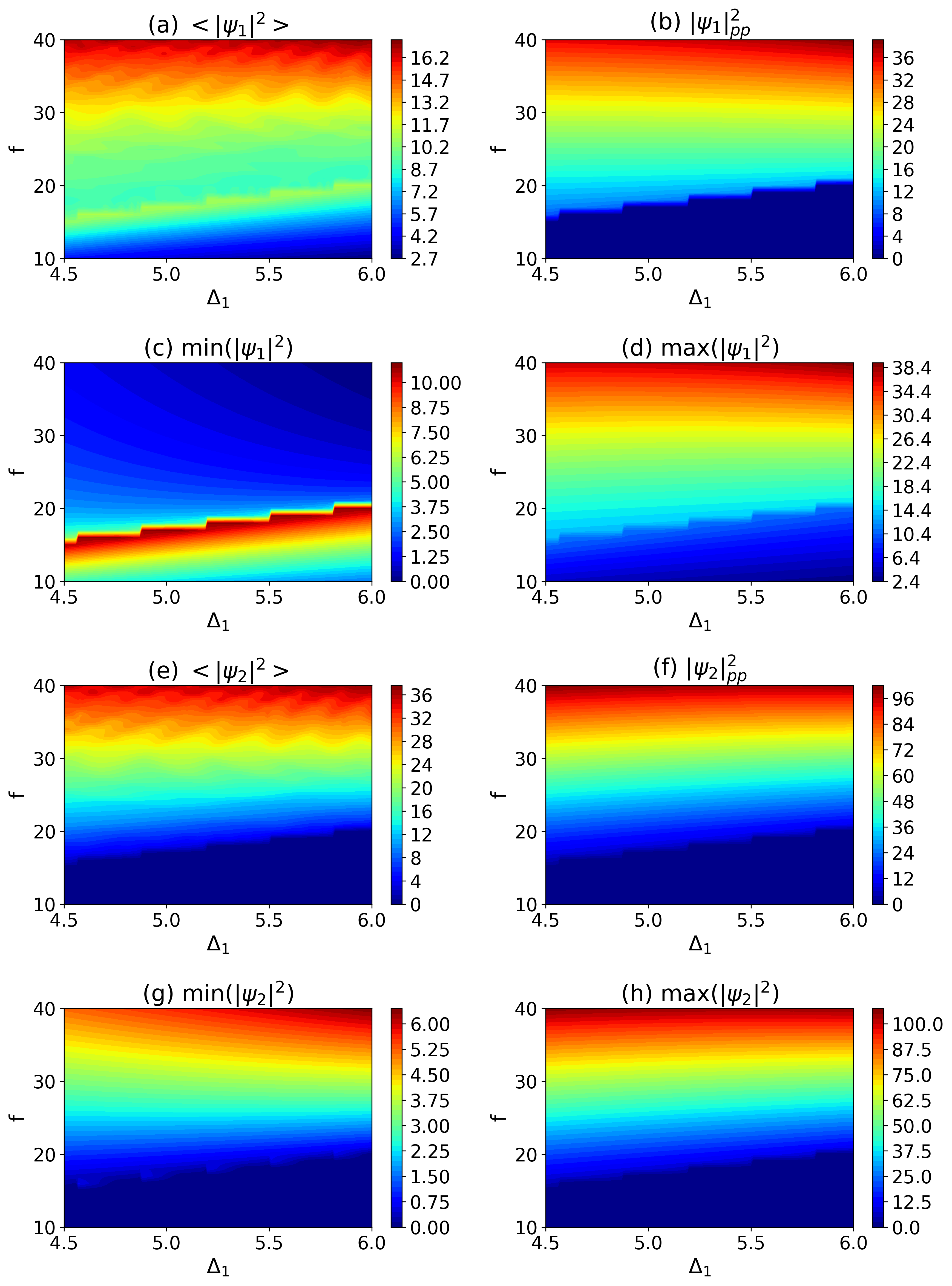
Figure 5: Modal intensities as joint functions of ψ21 and ψ22, exhibiting drive-dominated smooth scaling and a well-defined oscillation onset threshold.
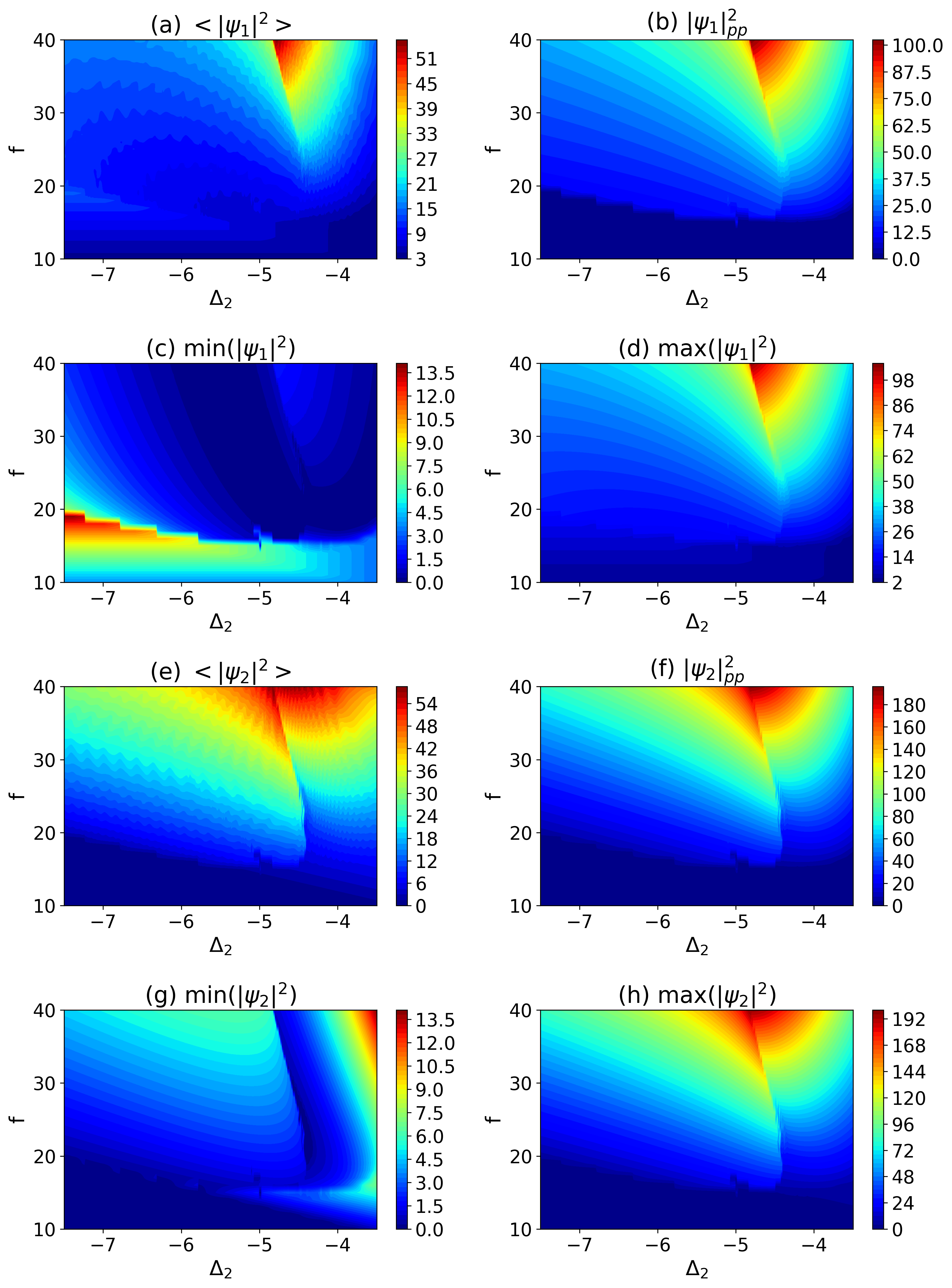
Figure 6: Joint dependence of modal intensities on ψ23 and ψ24, showing a sharp resonance band and thresholded amplification, localized in parameter space.
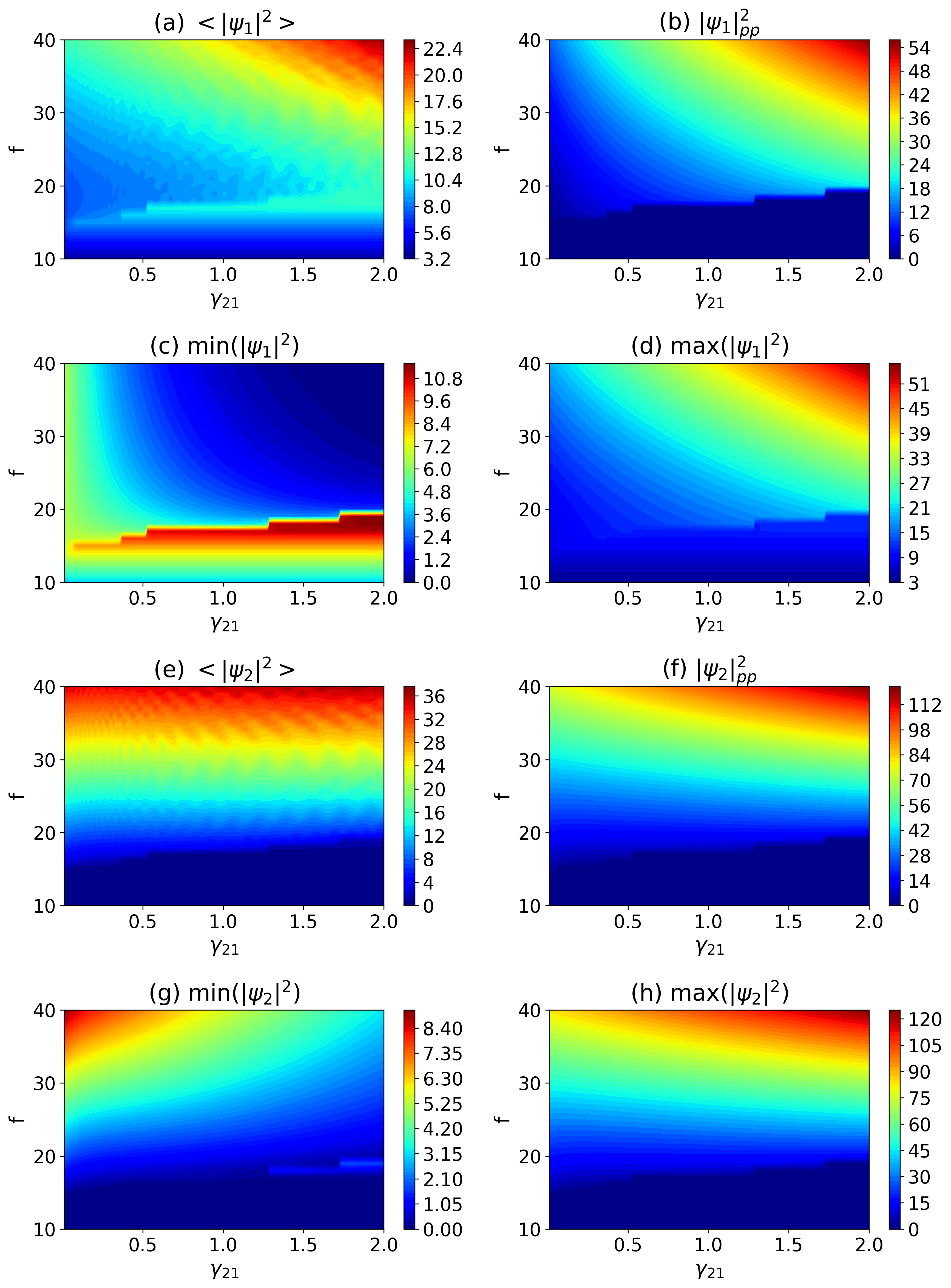
Figure 7: Intensity evolution as a function of both relative damping and drive, with monotonic transitions and absence of sharp bifurcations.
The comb amplitude responds smoothly and monotonically to ψ25 except near the drive activation threshold, beyond which oscillations rapidly intensify. The resonance boundary is sharply delineated for ψ26 but broadly distributed for ψ27.
Differential Sensitivity Analysis
Differential sensitivity maps identify localized parameter submanifolds where the PFC response—both amplitude and frequency—is maximally or minimally susceptible to perturbations.
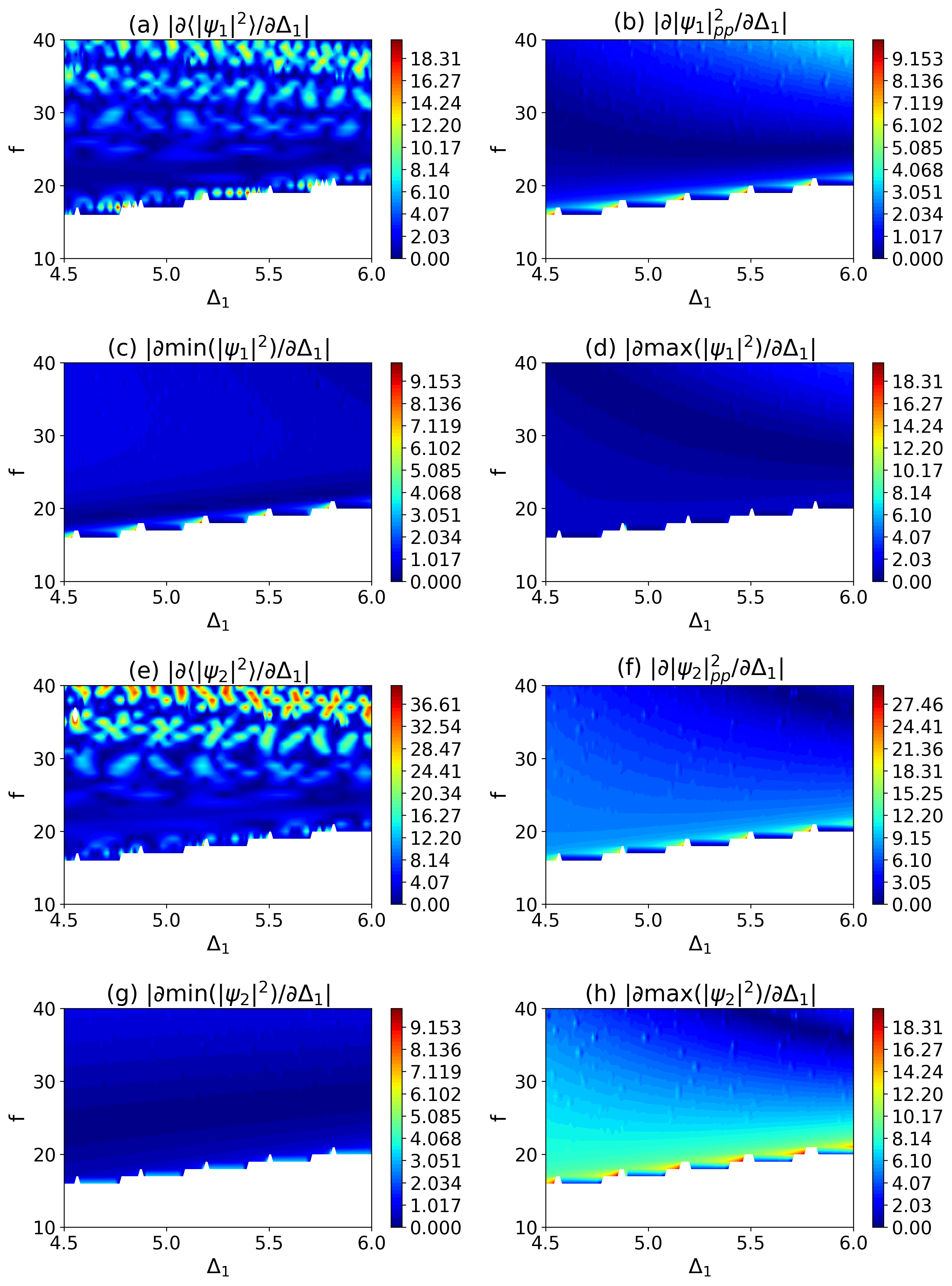
Figure 8: Sensitivity of modal intensities with respect to ψ28—sensitivity peaks highly localized near the activation boundary, especially around ψ29–∂τ∂ψ1=−if−(1+iΔ1)ψ1+iψ220.
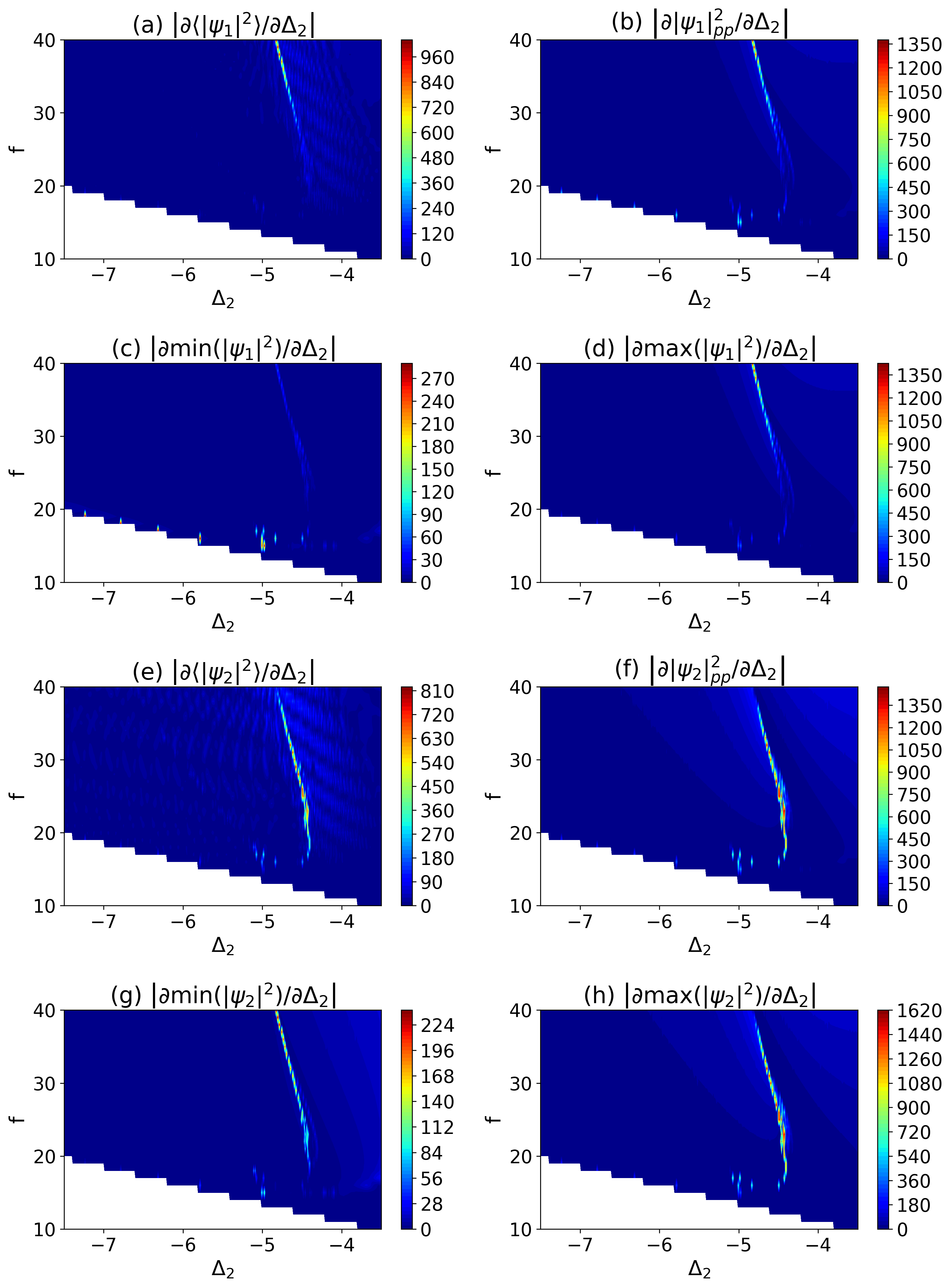
Figure 9: Intensity sensitivity to ∂τ∂ψ1=−if−(1+iΔ1)ψ1+iψ221—pronounced, sharp resonance ridges mark maximal sensitivity, sharply contrasting the broader ∂τ∂ψ1=−if−(1+iΔ1)ψ1+iψ222 response.
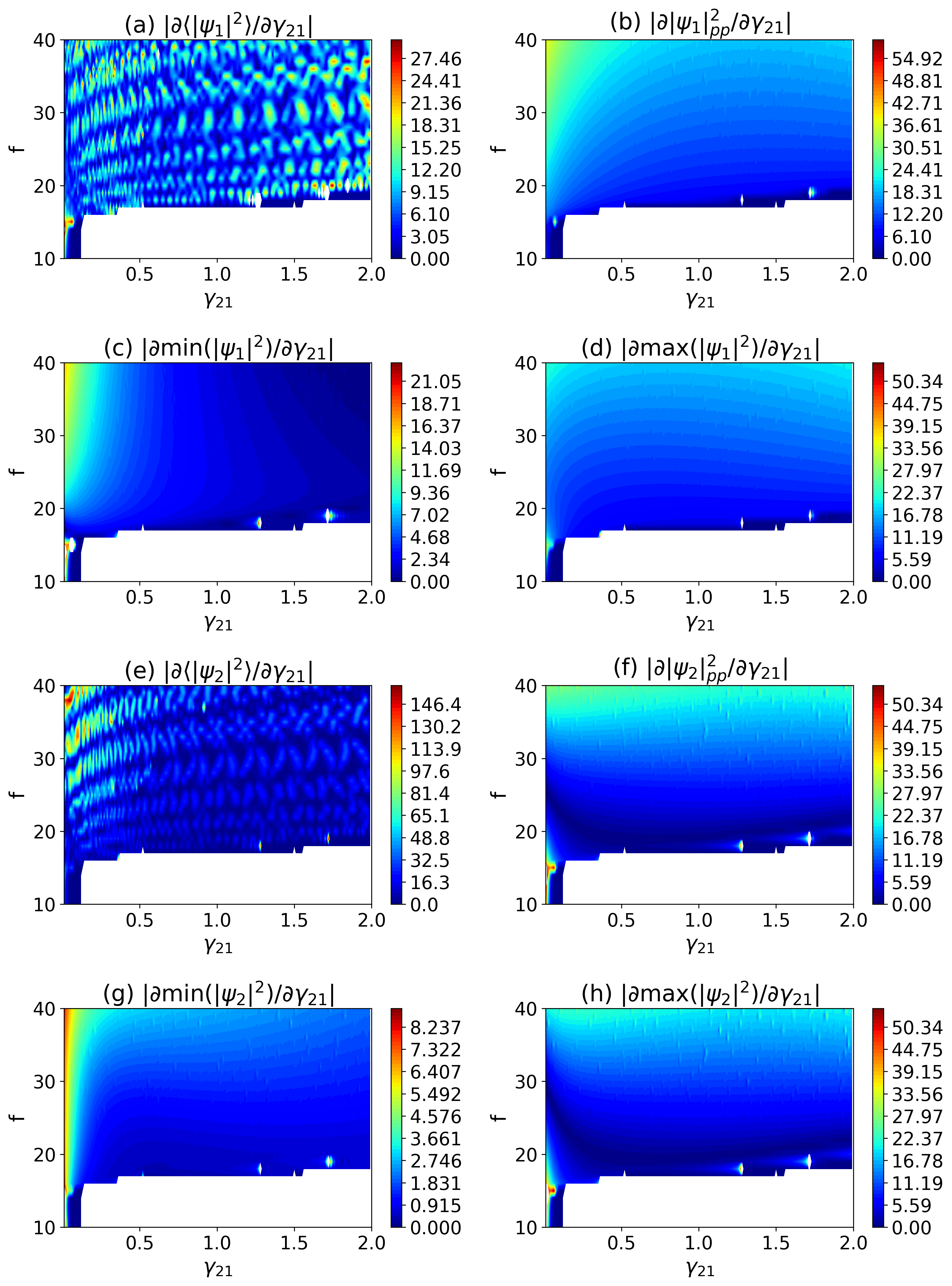
Figure 10: Sensitivity of intensities to ∂τ∂ψ1=−if−(1+iΔ1)ψ1+iψ223, showing no sharp discontinuity but continuous gradients, especially at low coupling and near threshold.
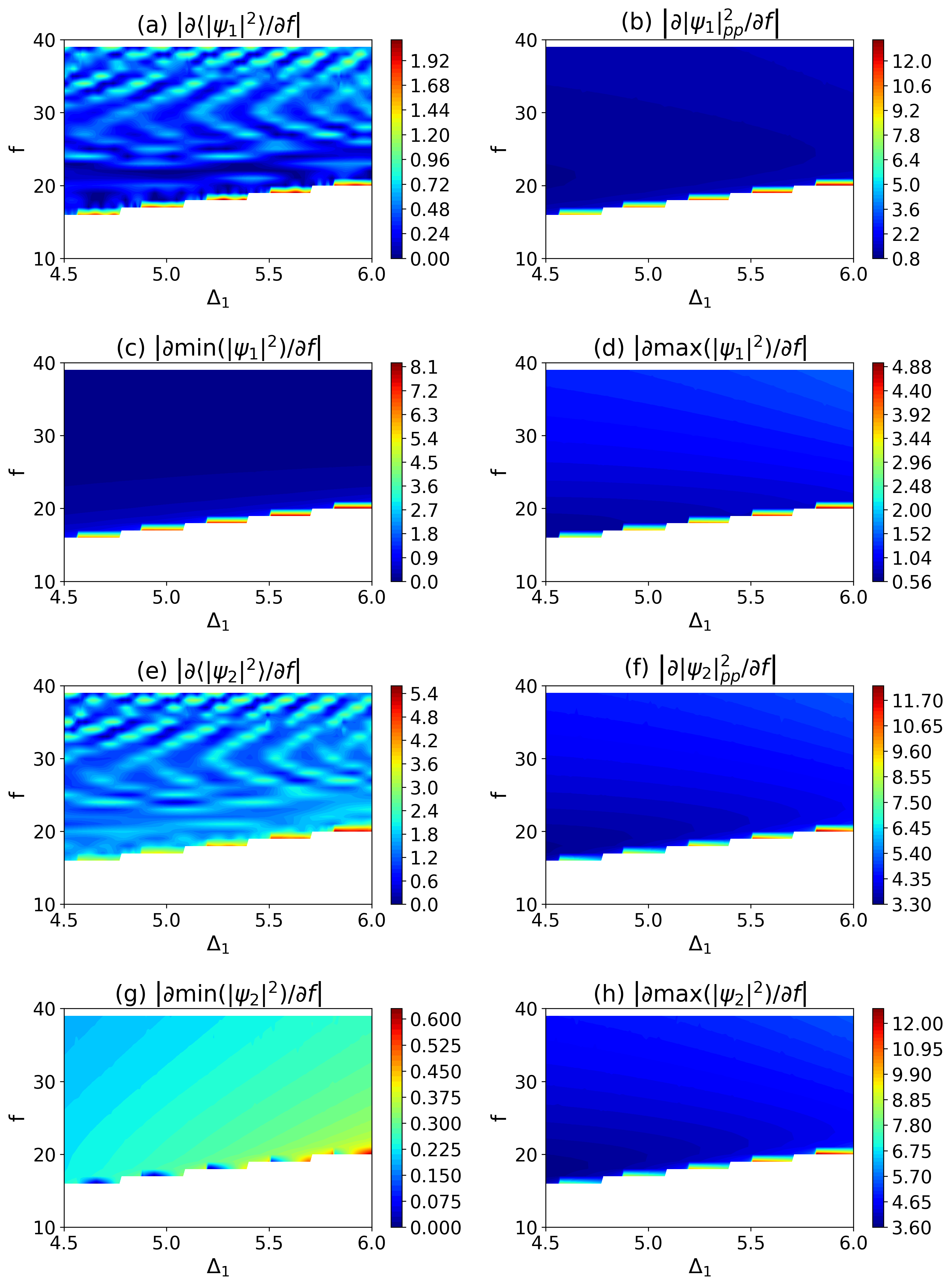
Figure 11: Sensitivity to ∂τ∂ψ1=−if−(1+iΔ1)ψ1+iψ224 as a function of ∂τ∂ψ1=−if−(1+iΔ1)ψ1+iψ225, confirming pronounced threshold effects and sharp–narrow sensitivity zones at activation, with robustness deep inside the comb regime.
Sensitivity to ∂τ∂ψ1=−if−(1+iΔ1)ψ1+iψ226 and ∂τ∂ψ1=−if−(1+iΔ1)ψ1+iψ227 is largest near the oscillation onset and diminishes rapidly as ∂τ∂ψ1=−if−(1+iΔ1)ψ1+iψ228 increases, indicating that PFCs are inherently robust to excitation fluctuations once above threshold. In contrast, secondary detuning (∂τ∂ψ1=−if−(1+iΔ1)ψ1+iψ229) controls highly localized sharp transitions.
Frequency Structure and Synchronization Phenomena
The paper also characterizes the oscillation frequencies of both modes, uncovering frequency locking, mode switching, and bifurcation signatures:
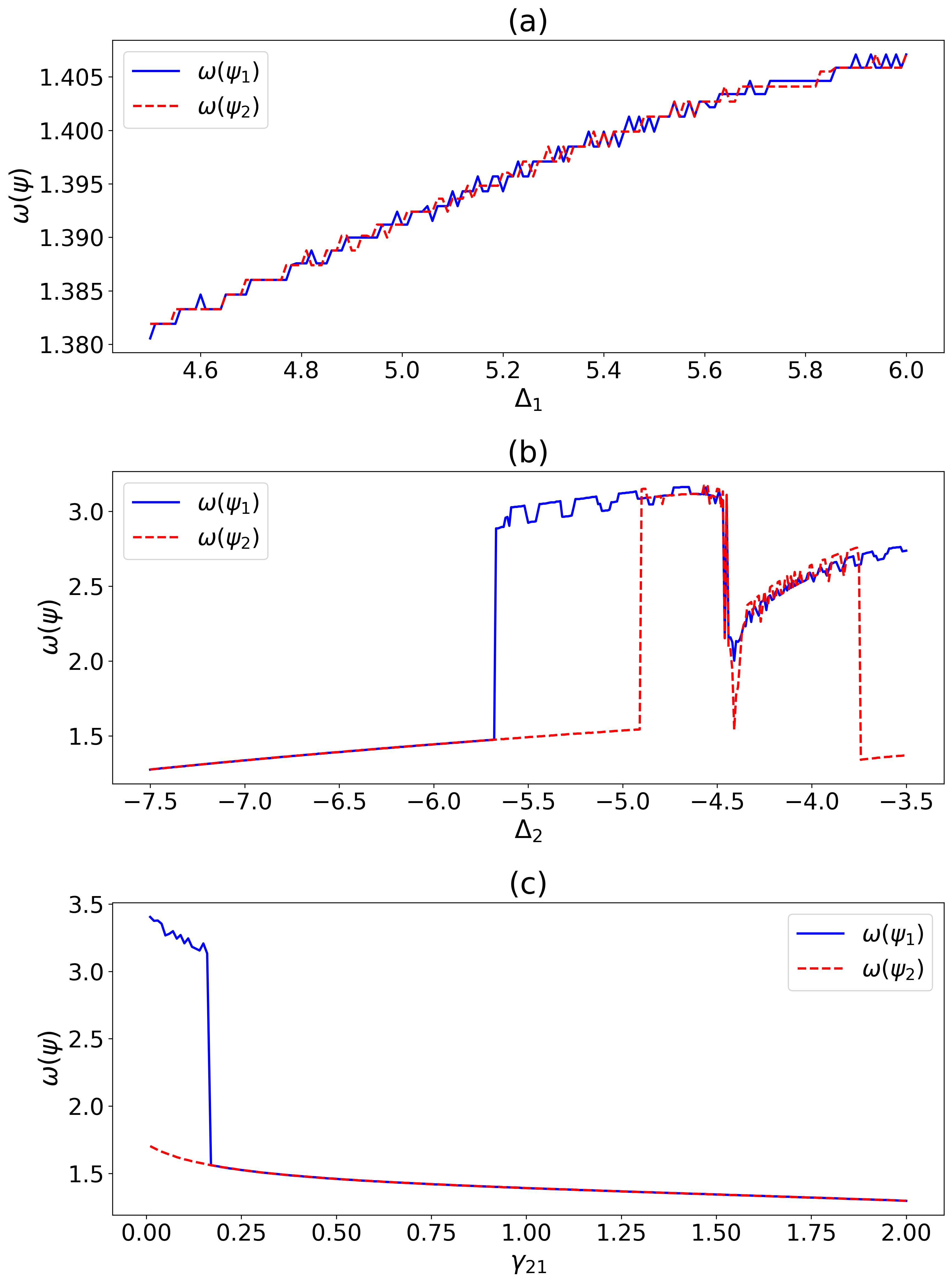
Figure 12: Modal frequencies versus detuning and coupling, showing monotonic shifts, sharp jumps at resonance/bifurcation, and synchronization with increasing coupling.
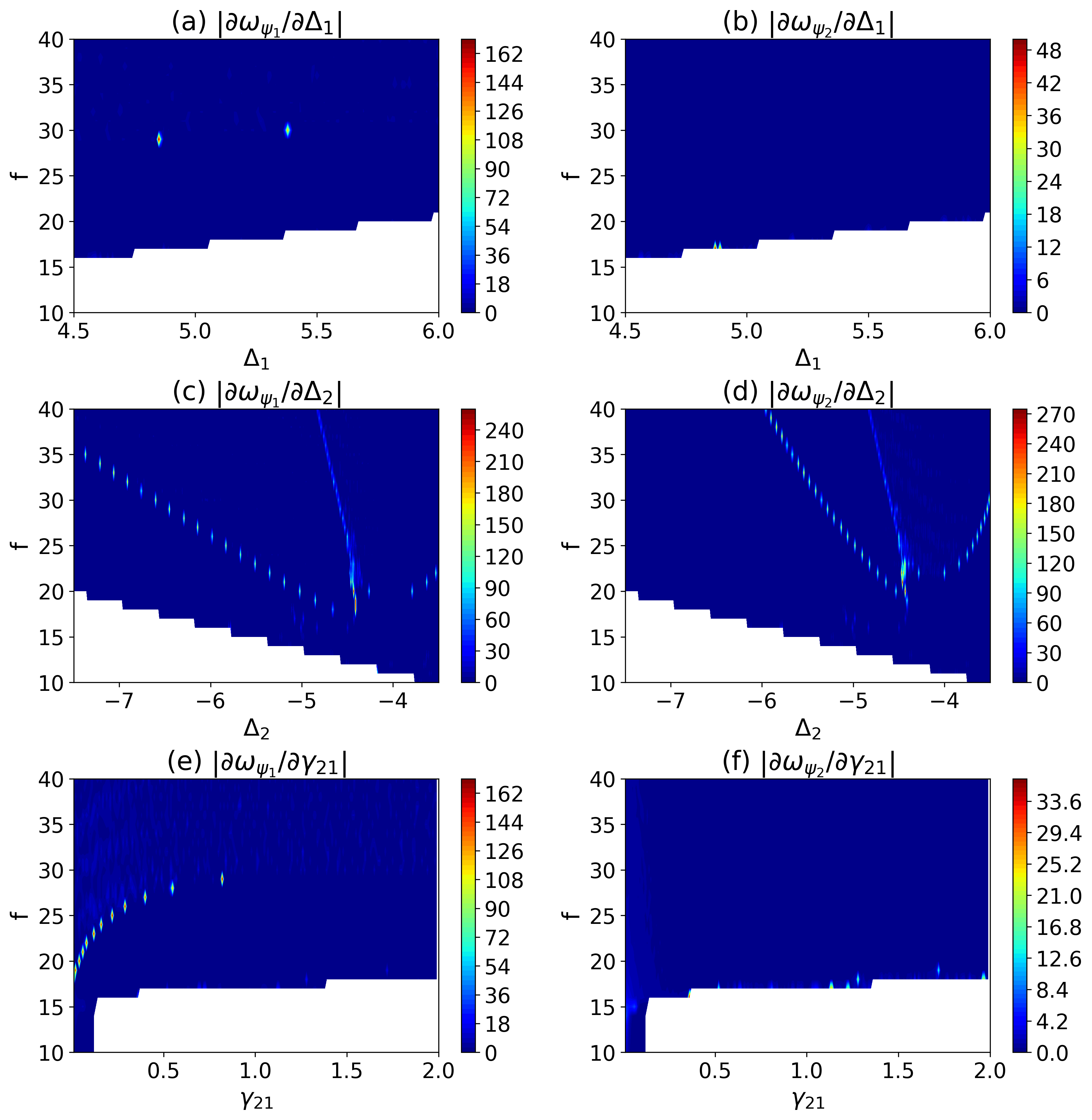
Figure 13: Frequency mapping across major parameter planes; pronounced resonance ridges and frequency jumps align with threshold and synchronization phenomena.
Complementing amplitude results, sensitivity of the frequencies exposes sharp bifurcation loci—most notably for ∂τ∂ψ2=−(γ21+iΔ2)ψ2+2iψ1ψ2∗0 and ∂τ∂ψ2=−(γ21+iΔ2)ψ2+2iψ1ψ2∗1—that precisely coincide with regions of abrupt amplitude modulation and mode switching.
Figure 14: Differential sensitivity of mode frequencies, with highly localized maxima at resonance and bifurcation transitions, particularly as a function of ∂τ∂ψ2=−(γ21+iΔ2)ψ2+2iψ1ψ2∗2 and ∂τ∂ψ2=−(γ21+iΔ2)ψ2+2iψ1ψ2∗3.
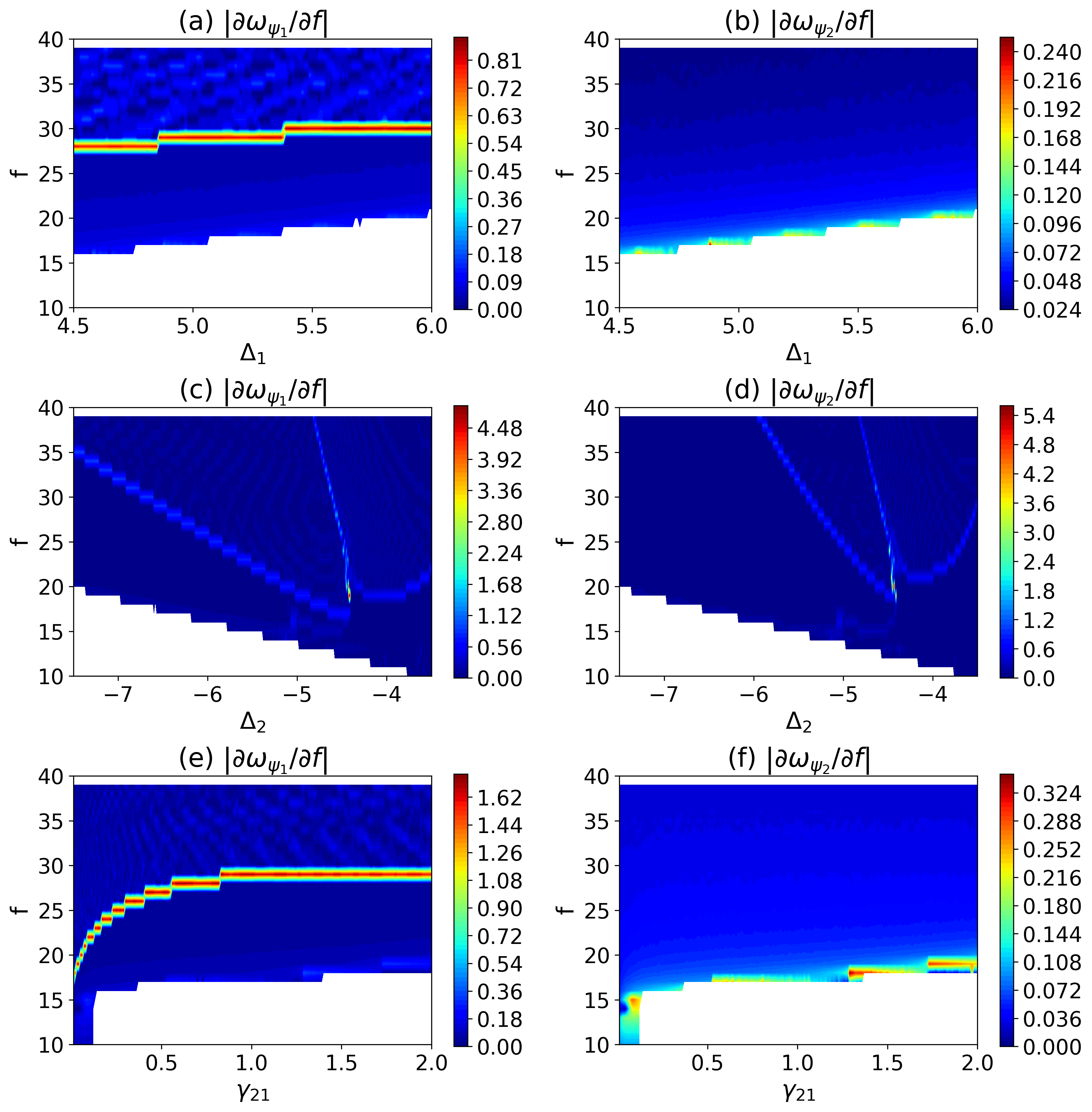
Figure 15: Sensitivity of frequencies to ∂τ∂ψ2=−(γ21+iΔ2)ψ2+2iψ1ψ2∗4, with strong localization at activation and resonance loci and evident asymmetry between the two modes.
The primary mode (∂τ∂ψ2=−(γ21+iΔ2)ψ2+2iψ1ψ2∗5) governs temporal coherence and is dominant in frequency response, while the secondary (∂τ∂ψ2=−(γ21+iΔ2)ψ2+2iψ1ψ2∗6) is more involved in nonlinear amplitude amplification.
Discussion: Mechanisms and Implications
The sensitivity of PFC observables derives from the interplay of three principal mechanisms: autoparametric resonance, nonlinear saturation, and mode-coupling synchronization. The analysis demonstrates that
- Primary detuning (∂τ∂ψ2=−(γ21+iΔ2)ψ2+2iψ1ψ2∗7) governs smooth, monotonic scaling and preserves dynamical continuity
- Secondary detuning (∂τ∂ψ2=−(γ21+iΔ2)ψ2+2iψ1ψ2∗8) defines sharply localized resonance boundaries with abrupt transitions in observables, acting as the main lever for sensitivity engineering
- Drive amplitude (∂τ∂ψ2=−(γ21+iΔ2)ψ2+2iψ1ψ2∗9) establishes a well-defined threshold for comb onset, localizing maximal sensitivity at the bifurcation but conferring substantial robustness at higher excitation
- Relative damping (Δ10) shifts energy balance continuously without generating bifurcations
These results show that the nonlinear PFC system self-organizes its own sensitivity topology, with high-sensitivity regions confined to specific resonance, threshold, or synchronization manifolds and broadly robust behavior elsewhere. This directly informs the architectural design of nonlinear sensing platforms where selective, parameter-aware enhancement of response is desirable.
Practical implications span MEMS/NEMS resonator design, phononic metrology, nonlinear signal processing, and quantum-limited detection schemes, offering explicit recipes for tuning, stabilizing, or localizing the sensitivity of phononic comb-based sensors. The underlying methodology also generalizes to other nonlinear coupled oscillator platforms in photonics, microwave, and condensed matter domains.
Conclusion
This work establishes a comprehensive, parameter-resolved framework for nonlinear sensitivity in phononic frequency combs. By systematically mapping amplitude and frequency observables across the key driving, detuning, and damping axes, the study uncovers both the structural topography of robust operation and the sharply localized regions of maximal parametric sensitivity. The findings demonstrate that sensitivity in PFCs is not uniformly distributed but rather reflects the geometric and dynamical structure of autoparametric resonance, nonlinear saturation, and coupling-induced synchronization. These insights provide a rigorous foundation for sensitivity engineering in next-generation nonlinear phononic sensing systems, enabling deliberate exploitation of localized high-sensitivity regimes while ensuring global dynamical stability.