- The paper demonstrates that gate-controlled symmetry breaking in suspended graphene enables tunable nonlinear regimes, driving deterministic high-harmonic generation, phononic comb formation, and period-doubling cascades.
- The experiments quantitatively extract quadratic and cubic nonlinear coefficients and validate a coupled-mode framework through precise amplitude scaling with drive voltage.
- The work paves the way for zero-Q static power frequency multipliers, reconfigurable phononic systems, and hardware-based optimization in 2D mechanical resonators.
Tunable Nonlinear Landscapes and Multimodal Dynamics in Graphene Nanoelectromechanical Systems
Introduction
The paper investigates the dynamical regimes enabled by highly tunable nonlinearities in suspended monolayer graphene nanoelectromechanical system (NEMS) resonators, focusing on the interplay between gate-controlled static tension, symmetry breaking, and mode coupling near internal resonance conditions (2607.04724). By leveraging both quadratic and cubic nonlinearities, the work demonstrates controlled transitions across distinct mechanical phenomena: deterministic integer high-harmonic generation (HHG), phononic frequency comb formation, and nonlinear period-doubling cascades, all in a single device and without requiring parametric or multi-tone driving. These observations are underpinned by quantitative extraction of the device’s nonlinear coefficients and supported by a coupled-mode framework.
Device Architecture and Gate-Tuned Nonlinearities
The system comprises a suspended graphene membrane ("graphene drumhead") with a capacitive geometry, actuated via an AC drive and a DC back-gate voltage that statically tunes the membrane tension and, crucially, sets the equilibrium position. The key innovation lies in electrical control of the out-of-plane symmetry and thus the nonlinear terms in the mode’s potential energy landscape.
Immediately after establishing the experimental configuration, the authors show how the effective potential in displacement X, V(X)=21KX2+31ζX3+41βX4, evolves as the gate voltage is varied, with ζ and β being the quadratic and cubic (Duffing) nonlinear coefficients, respectively. The gate-induced symmetry breaking directly modulates ζ and the strength of the quadratic intermodal coupling, enabling access to 1:2 internal resonance (IR) as the fundamental and a higher mode become dispersively tuned to a frequency ratio of $1:2$.
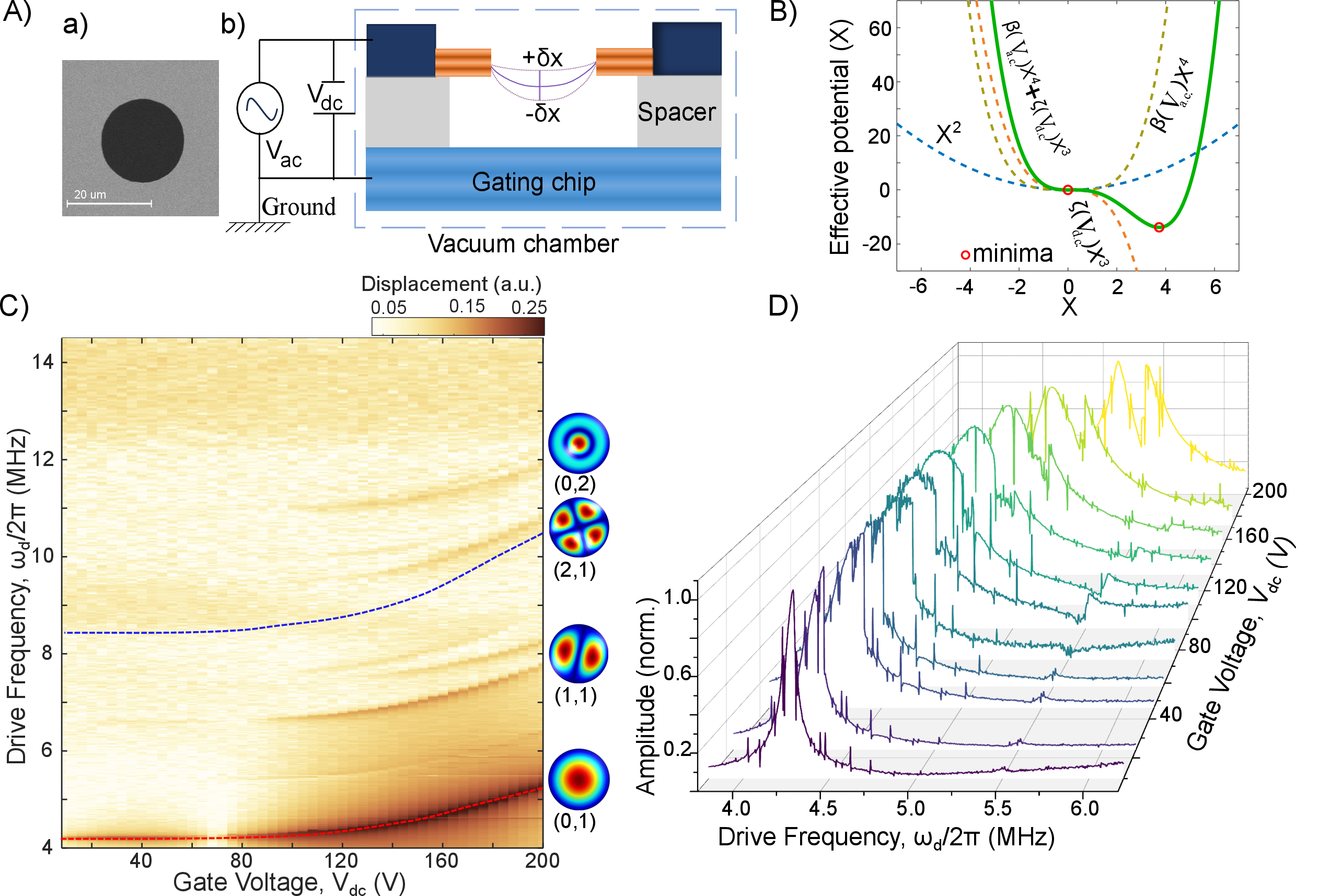
Figure 1: Device layout, capacitive architecture, gate-tunable potential, modal dispersion, and amplitude response illustrating 1:2 internal resonance onset.
Regime I: Deterministic High-Harmonic Generation via Quadratic Nonlinearity
At the gate-tuned 1:2 IR condition, the system departs from the typical quasi-periodic frequency combs and instead exhibits sequential, deterministic excitation of integer harmonics under single-tone drive. The observed onset ordering and amplitude scalings---A2∝V2, A3∝V3, A4∝V8---substantiate the dominance of three-wave quadratic processes at lower drives, with higher-order (quartic) and cascaded nonlinearities only contributing at elevated amplitudes.
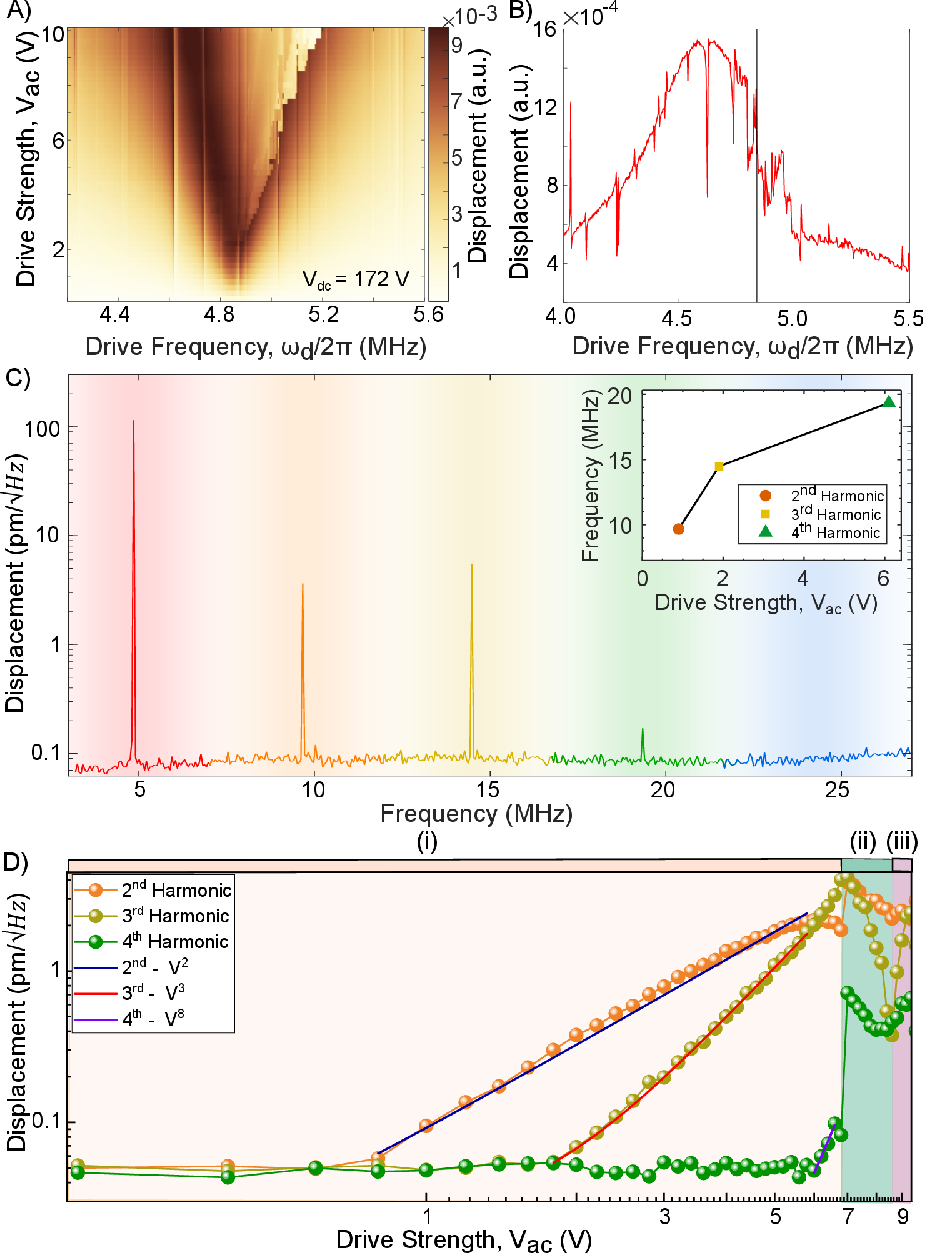
Figure 2: Integer high-harmonic generation, mode splitting, and precise amplitude scaling of harmonics as a function of drive voltage.
The measured power laws align with the coupled-mode analytic model under the 1:2 IR condition; the emergence of the spectral dip in the fundamental’s response with increasing drive explicitly marks the strengthening of quadratic coupling and onset of energy transfer to the higher mode. The extracted coefficients are ζ≈1.16×10⁹ N/mV(X)=21KX2+31ζX3+41βX40 and V(X)=21KX2+31ζX3+41βX41 N/mV(X)=21KX2+31ζX3+41βX42, confirming a strong quadratic regime unique to atomically thin systems.
Past a defined threshold in drive amplitude, the spectral output abruptly switches from isolated harmonics to a dense, phase-locked frequency comb, with main line spacing V(X)=21KX2+31ζX3+41βX43 kHz and extension over hundreds of kHz. Further drive increase yields a period-doubling cascade---signatured by halving of line spacing---that eventually leads into chaotic regimes.
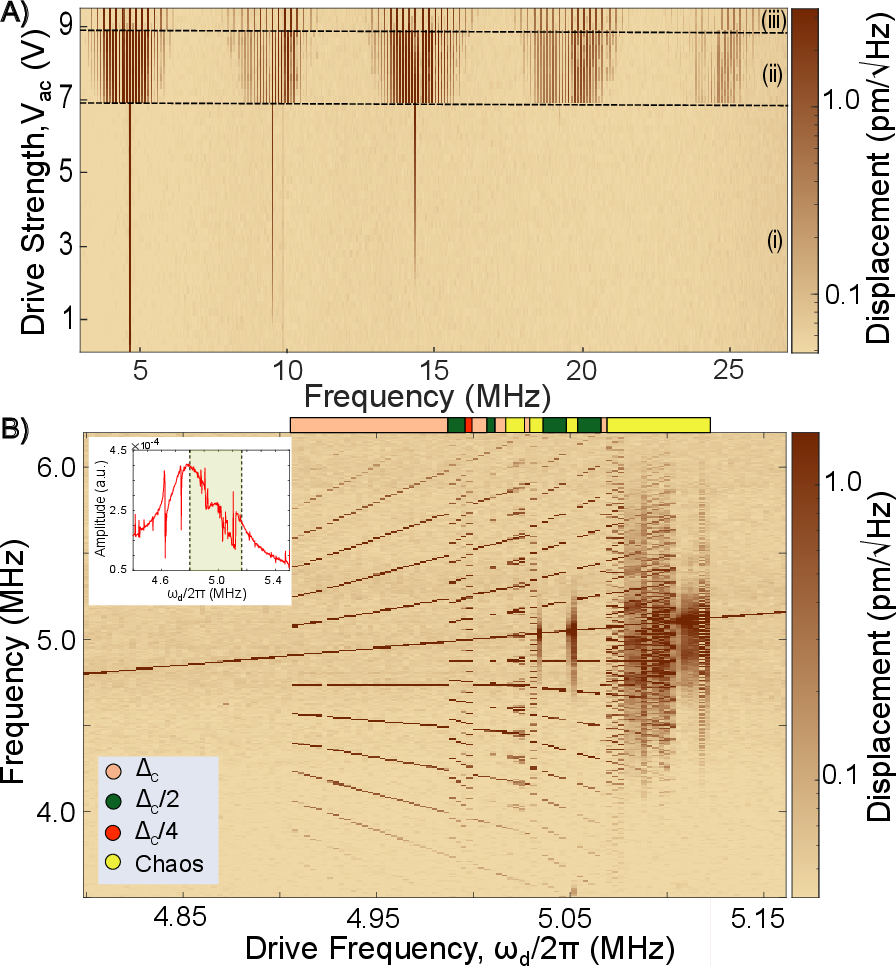
Figure 3: Evolution from HHG to comb generation and period-doubling cascade with drive amplitude and drive frequency sweeps.
These results are consistent with universal nonlinear dynamics in driven coupled oscillators, presenting the archetypal Feigenbaum period-doubling route to chaos [Strogatz2018, Ott2002]. Importantly, a reverse period-doubling transition is captured: the comb spacing doubles, the line density reduces by half, and spectral weight redistributes to even-order sidebands, effectively annealing the device back into a regular, high-amplitude periodic orbit.
The experiments are supported by high-resolution mappings of the spectral dynamics with both drive and detuning, as well as direct simulation of the reduced coupled-mode equations, further validating the modal interaction mechanism and the tunability of bifurcation structure.
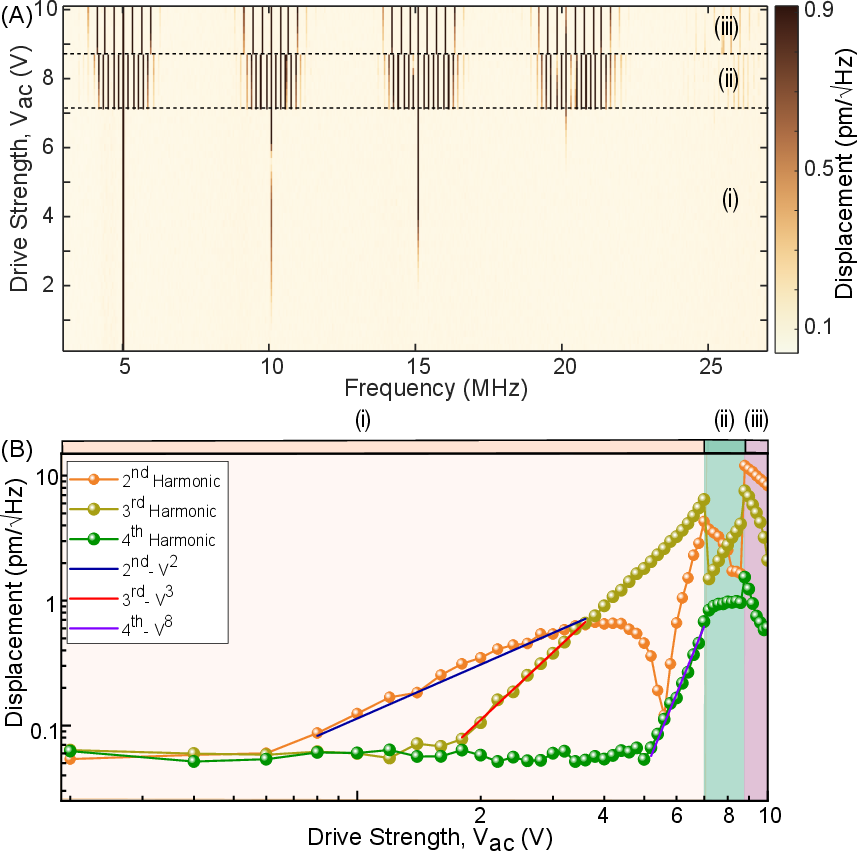
Figure 4: Spectral evolution under direct drive at 1:2 IR, capturing harmonic formation, comb generation, and reverse period-doubling transitions and their associated peak amplitude scaling.
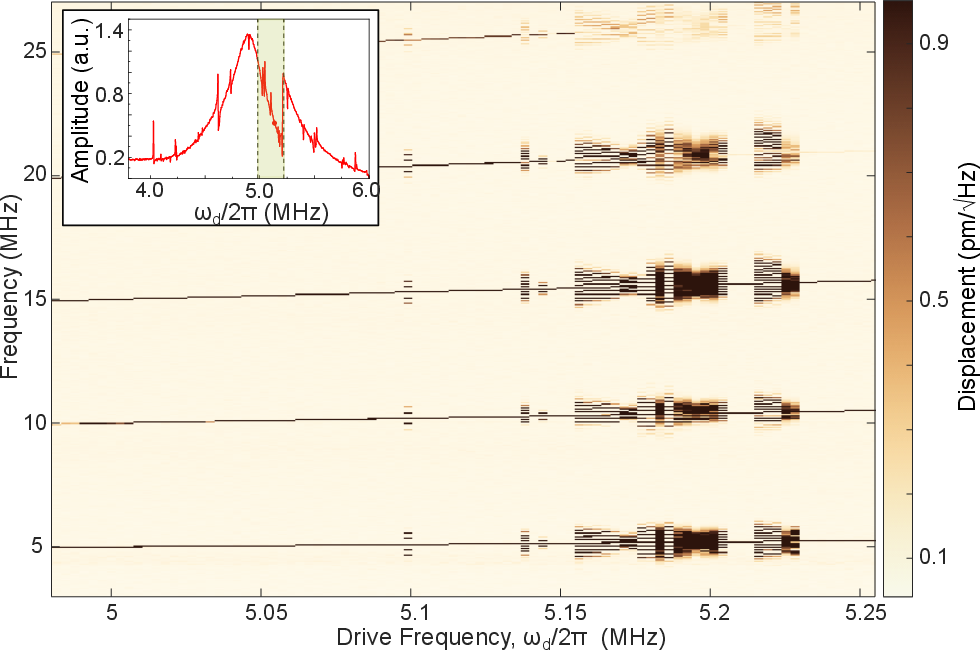
Figure 5: Frequency detuning dependence of spectral features, highlighting the parameter window supporting diverse nonlinear regimes.
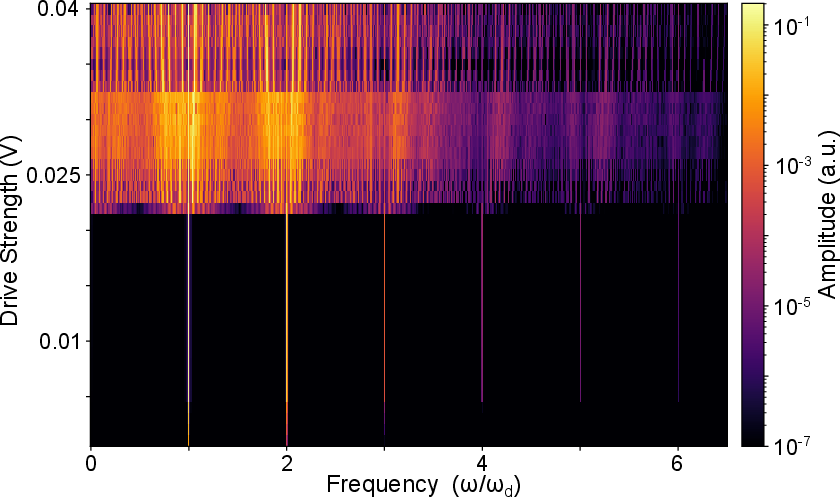
Figure 6: Simulation of spectral map versus drive strength reproducing the experimentally observed sequence of dynamic regimes.
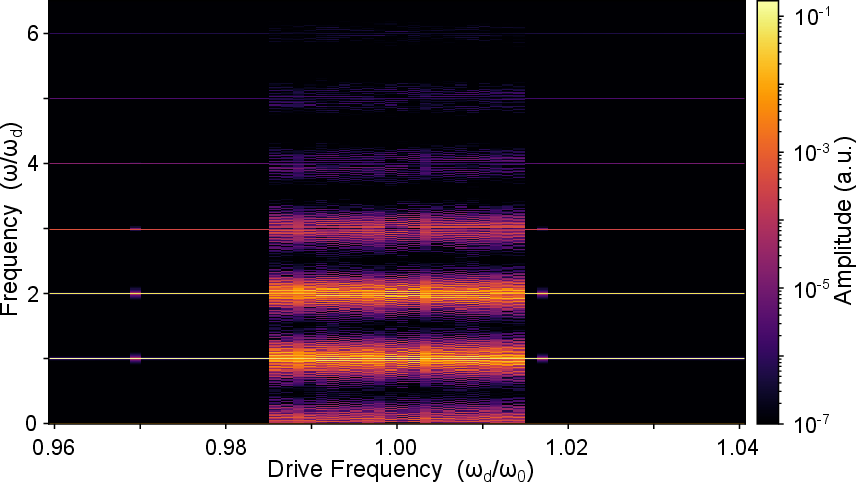
Figure 7: Simulated spectral map as a function of drive frequency, matching measured responses and bifurcation sequences.
This work demonstrates full electrical programmability of nonlinear dynamical states in a pristine 2D mechanical resonator, spanning controlled HHG for frequency multiplication, comb generation for spectral synthesis, and chaos/annealing cycles relevant for unconventional computing platforms such as mechanical Ising machines [PhysRevResearch.4.013149]. Notably, all transitions occur in a single device, mediated solely by the gate bias and driving amplitude, indicating the functional diversity achievable without geometry or architecture changes.
Practical consequences include:
- Zero-Q-static-power frequency multipliers: Harmonics can be selected dynamically by gating, eliminating the need for new circuitry or device fabrication.
- Broadband, tunable phononic combs: The platform supports deterministic, phase-locked mechanical combs, distinct from quasi-periodic or stochastic regimes observed previously; this is advantageous for reference standards, sensing, and interface with quantum transduction protocols.
- Programmable access to nonlinear bifurcations: The observed reverse period-doubling supports hardware-based approaches for annealing in neuromorphic or Ising-type hardware.
Theoretically, results reinforce the role of quadratic (three-wave) interactions in atomically thin membranes, offering an alternative to traditional Kerr (Duffing, four-wave) dominated dynamics. The ability to selectively enhance these terms by symmetry breaking significantly extends the nonlinear landscape of NEMS platforms.
Outlook and Future Directions
The structured controllability of deterministic harmonic, comb, and chaotic dynamics in a gated, suspended graphene device opens avenues for new integrated phononic and multi-modal systems. Scaling to coupled arrays or including active feedback could enable reconfigurable mechanical computing, robust radio-frequency signal processing, or hybrid quantum–classical interfaces.
Immediate open questions include:
- How robust is the deterministic comb regime to disorder, temperature, or environmental couplings?
- Can the reverse period-doubling annealing path be harnessed for global optimization in mechanical networks?
- What are the ultimate limits of frequency stability and synchronization among multiple such devices?
Bridging these mechanical nonlinearities to on-chip optomechanical or hybrid electronic–phononic systems portends route to both classical and quantum-enhanced devices with high functional density.
Conclusion
This study rigorously maps the parameter space of a highly nonlinear graphene NEMS resonator, showing experimentally and analytically that gate-defined symmetry breaking and mode coupling drive a sequence of deterministic nonlinear phenomena: integer high-harmonic generation, phononic comb formation, and controlled period-doubling bifurcation cascades. The work establishes a framework wherein these regimes are fully programmable via bias voltages and drive strength, opening new prospects for integrated nonlinear phononics and computation in two-dimensional systems.
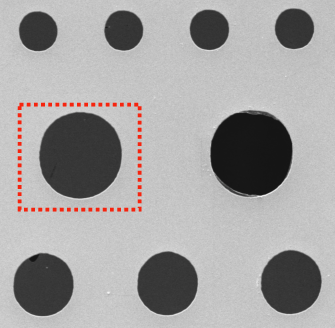
Figure 8: SEM micrograph of the monolayer graphene device, illustrating the atomically thin, suspended geometry underpinning the observed nonlinear phenomenology.