- The paper presents a taxonomy and evaluation of agentic AI in OSINT, revealing a critical hallucination-validation gap and underexplored verification stages.
- It details advanced architectures integrating LLMs, knowledge graphs, and memory modules to reduce hallucination and improve operational robustness under controlled conditions.
- The work emphasizes the need for standardized benchmarks, rigorous oversight, and hybrid human-AI models to ensure responsible deployment in cyber investigations.
Agentic and Generative AI for OSINT and Cyber Investigations: Taxonomy, Evaluation, Challenges, and Future Directions
Introduction and Motivation
The adoption of LLMs, generative AI, and agentic architectures has initiated a substantive shift in the operational paradigms of Open Source Intelligence (OSINT), Cyber Threat Intelligence (CTI), and digital investigations. The surveyed paper systematically reviews 74 studies, dissecting technical architectures, empirical evaluation, risks, and governance across the OSINT lifecycle. This synthesis identifies a core imbalance—capability demonstrations have outpaced the methodological infrastructure required for rigorous validation, adversarial benchmarking, and responsible deployment. The survey prioritizes agentic AI as a uniquely complex category, rather than a variant of prompt engineering, addressing its multi-stage orchestration and tool integration.
The corpus provides a multi-dimensional taxonomy Figure 1, revealing a structural under-exploration of verification, dissemination, and decision-support stages, in contrast to well-served collection and analysis. The review further identifies the ‘hallucination–validation gap’ as a corpus-level finding: only one system empirically measures end-to-end hallucination on OSINT data, casting doubt on claims of operational readiness.
Corpus Construction and Analytical Taxonomy
Corpus construction follows a methodologically sound, PRISMA-guided workflow Figure 2, culminating in tiered annotation of 74 studies by analytical centrality and thematic scope. The 11-category taxonomy elucidated in the review maps foundational capabilities, architectural complexity, integration techniques (RAG, KGs), CTI specificity, prompt engineering, adaptation protocols, and risk layers.
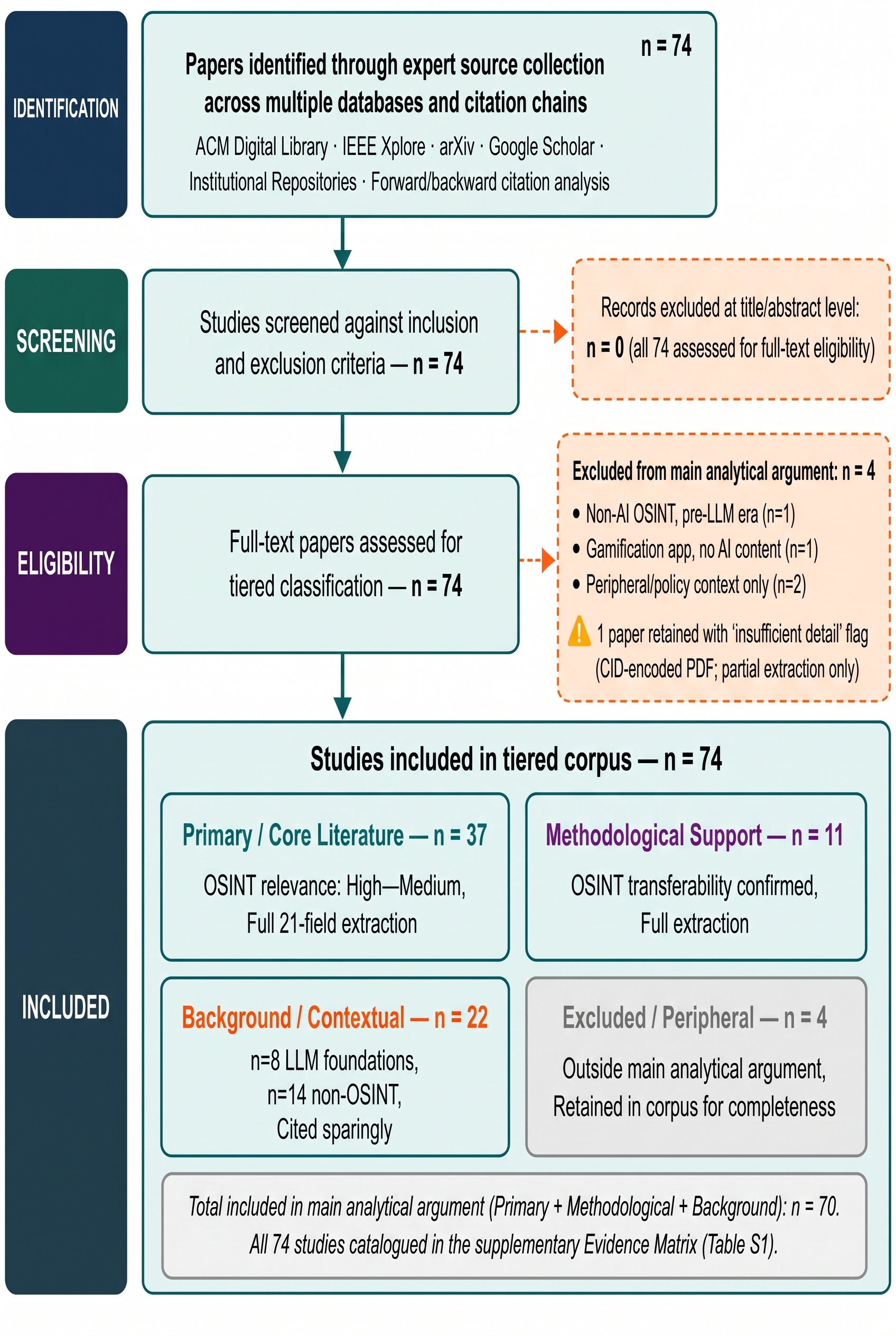
Figure 2: PRISMA-style corpus selection and classification flow, illustrating systematic study inclusion/exclusion and thematic mapping.
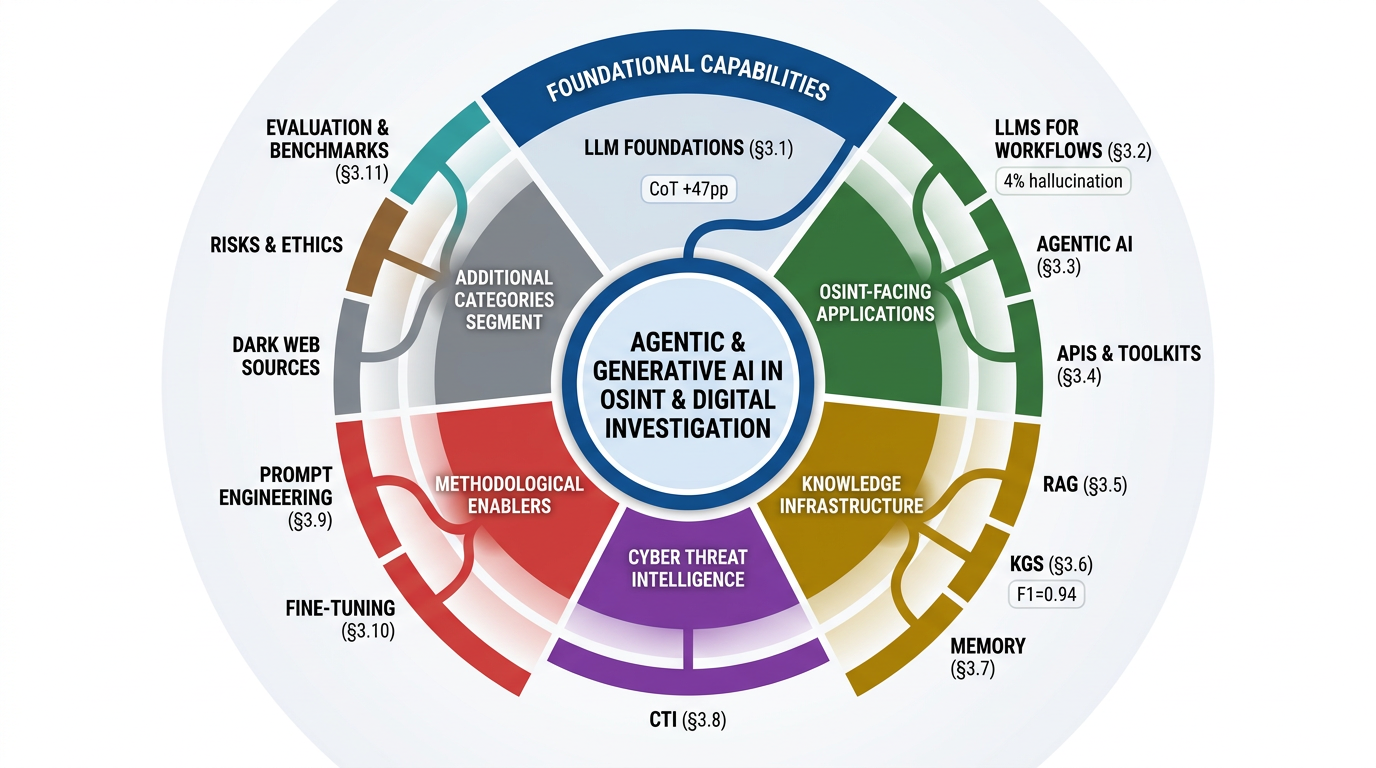
Figure 1: Hierarchical taxonomy of Agentic and Generative AI in OSINT, organizing 11 categories in five conceptual groups with representative studies.
Agentic AI architectures emerge as technically, evaluatively, and ethically distinct from LLM-as-tool paradigms, necessitating new standards for autonomous reasoning, tool invocation, and error correction. Notably, the ReAct framework, with structured reasoning-action-observation loops, is central to all complete agentic OSINT systems.
Architectural Advances and Empirical Evaluation
The survey details four generations of OSINT-AI systems: (1) LLM-augmented pipelines, (2) API-driven structured automation, (3) agentic multi-tool orchestrations with explicit tool selection and chaining, and (4) memory- and knowledge-grounded agentic architectures with adversarial resilience as a future imperative.
The best synthesis of architecture is the Tsinghua system, incorporating LangChain orchestration, Neo4j knowledge graph entity persistence, session memory, self-reflection (Verify-and-Edit, iterative revision), and Tor-based dark web collection Figure 3. However, none of the reviewed systems is operationally validated under adversarial input or with systematic human oversight.
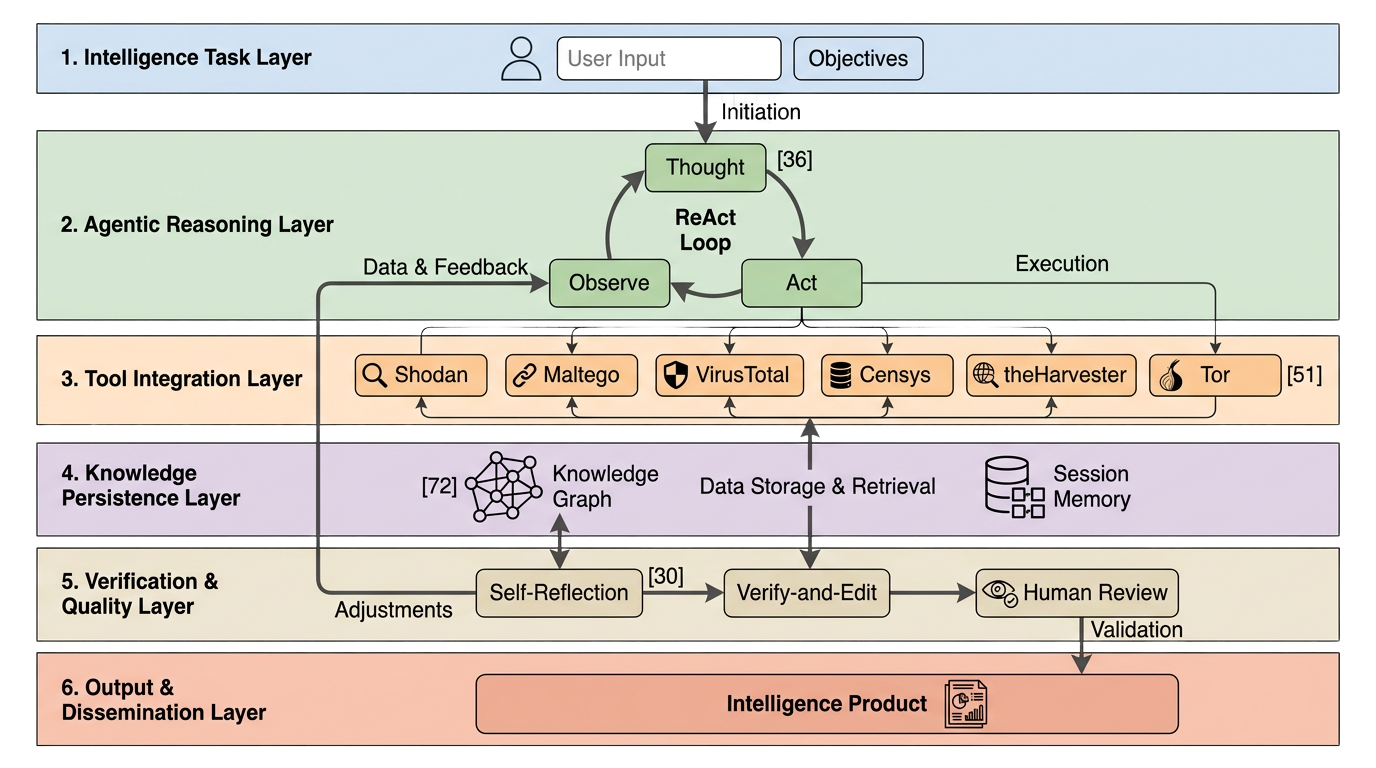
Figure 3: Composite agentic OSINT reasoning loop, synthesizing ReAct agent design with knowledge graph, session memory, self-reflection, and Tor integration—no paper implements all components simultaneously.
Memory, retrieval-augmented generation (RAG), and knowledge graph enrichment reduce hallucination under benign conditions (factual accuracy 92%, hallucination 4% for RAG-augmented Claude 3.7 Sonnet [allam2025cybervision]). However, the same architecture, when knowledge base poisoning is possible [ranade2021fake], amplifies adversarial error—a dual-use vulnerability not empirically mitigated.
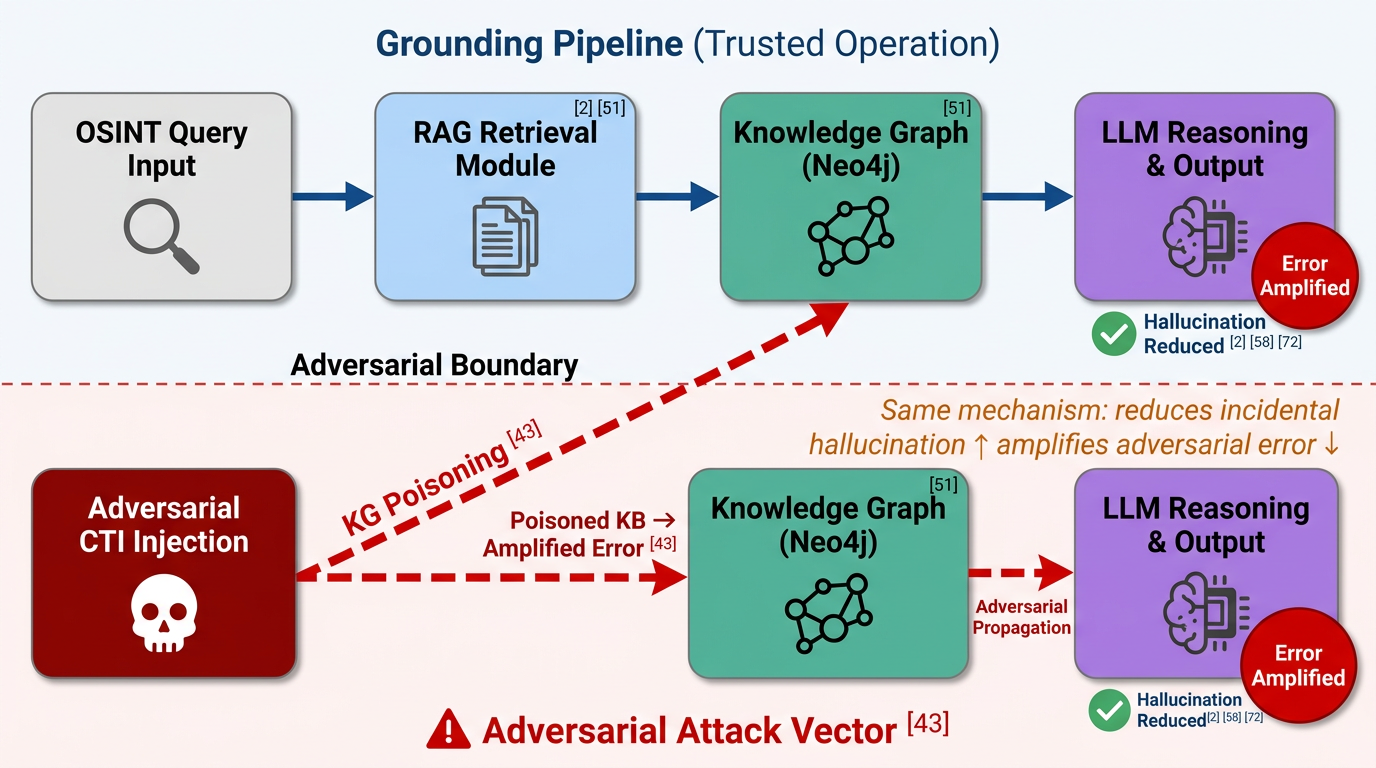
Figure 4: RAG and Knowledge Graph Enhanced OSINT architecture and the adversarial poisoning vector, highlighting the vulnerability of knowledge infrastructures.
Coverage Across the Intelligence Workflow
Workflow mapping demonstrates dense coverage of collection, extraction, and analysis, but systematic neglect of verification, reporting, decision support, and human-in-the-loop review (Figure 5, Figure 6).
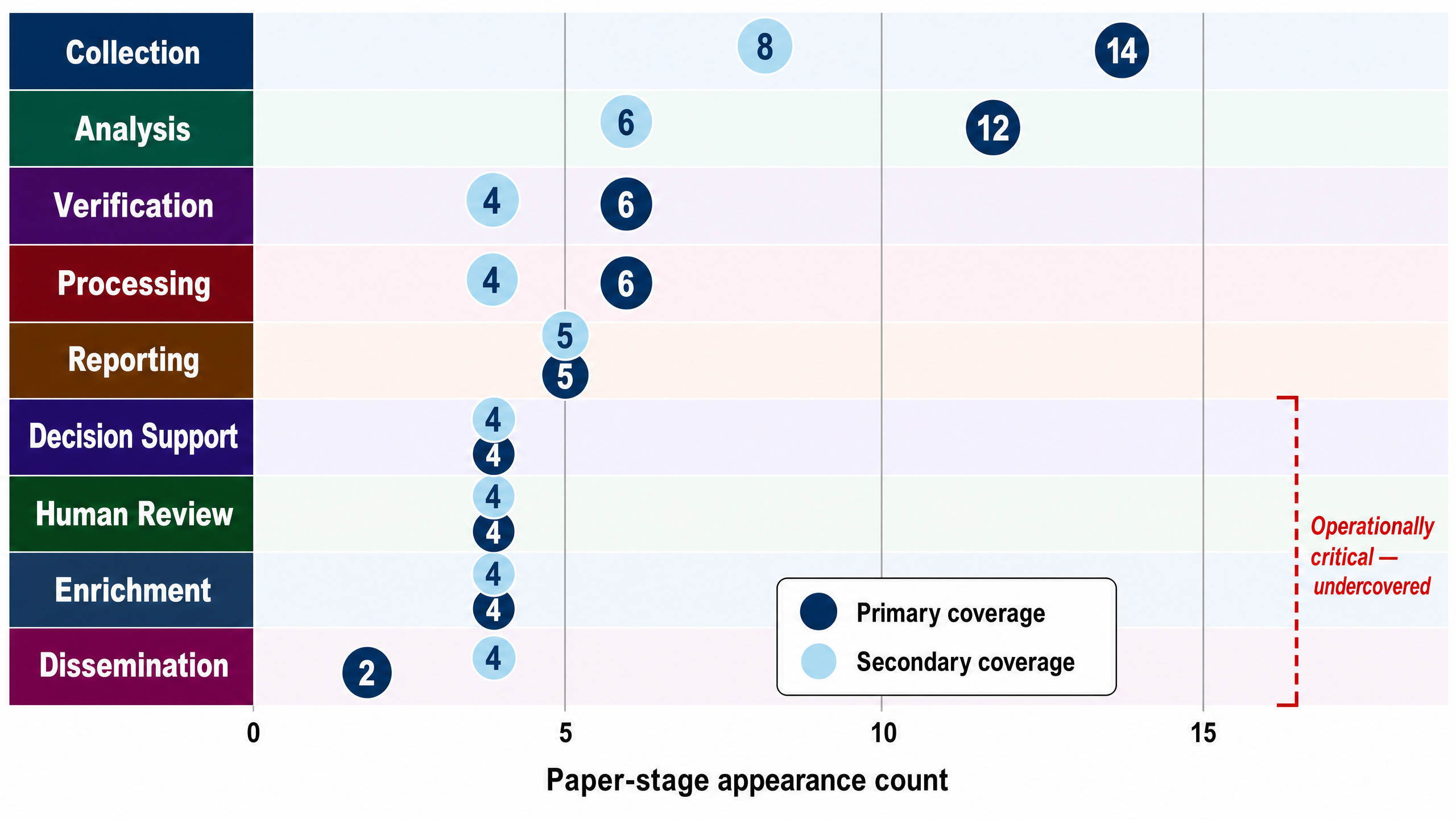
Figure 5: Bubble chart showing number of studies per OSINT workflow stage. Collection and analysis are dominant; verification and review are underexplored.
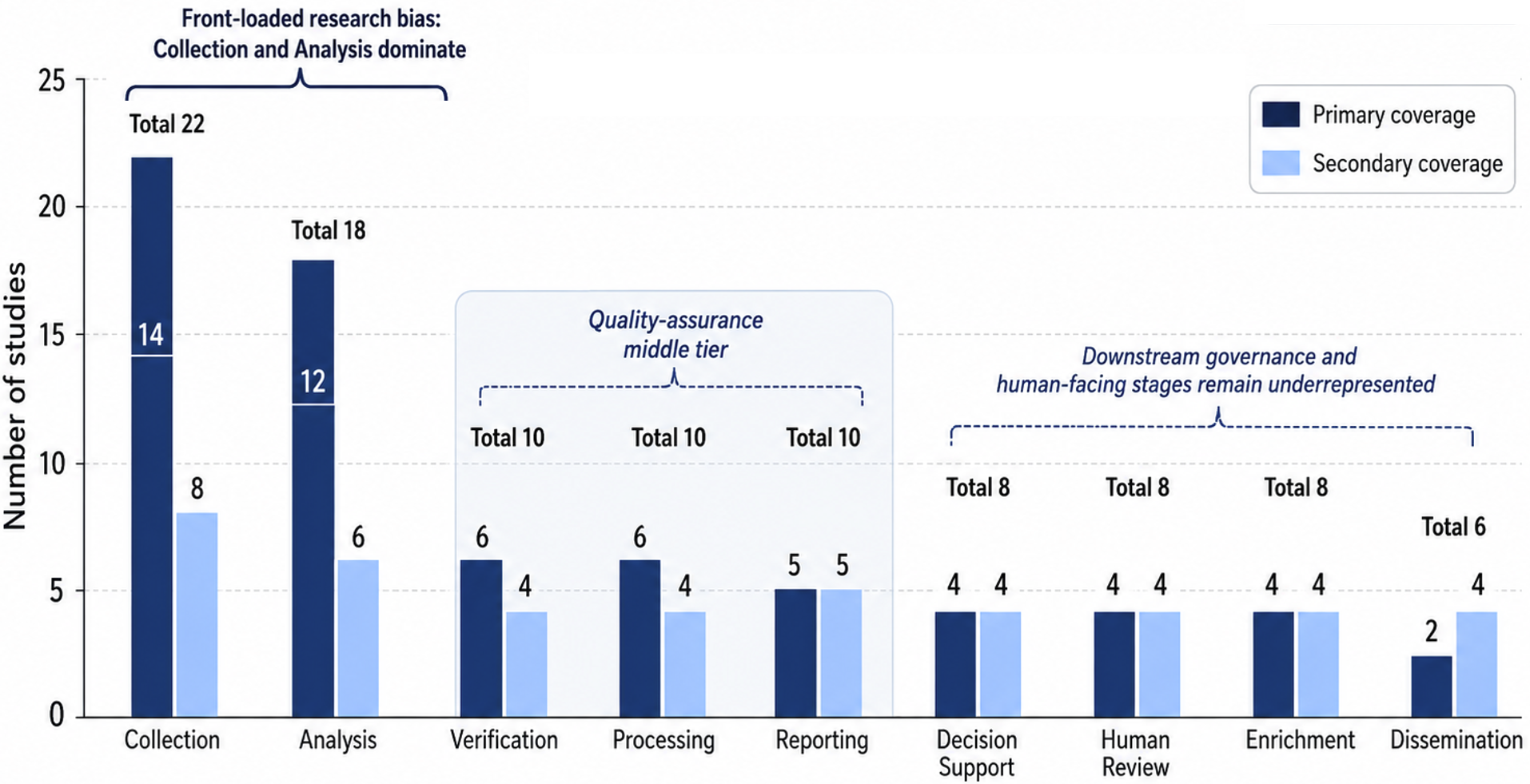
Figure 6: Distribution of studies by OSINT workflow stage, illustrating primary and secondary coverage, and underscored deficiency in verification and oversight.
The benchmark-versus-workflow tension is pronounced: multiple-choice benchmarks (e.g., CyberMetric, 91.25% accuracy for GPT-4o vs. 72.24% human expert [tihanyi2024cybermetric]) suggest super-expert performance, but fail to predict analyst-grade report generation in real workflows (no model reaches analyst-acceptable quality in CyberThreat-Eval [chen2026cyberthreateval]).
Risk, Adversarial Robustness, and Governance
Risks are documented at multiple strata—adversarial TTP generation [ranade2021fake], KG poisoning, geo-privacy inference [yang2024geolocator], and baseline misinformation contamination (9% of OSINT-tagged content) [niu2024bullshint]. However, these are identified far more robustly than mitigated. Existing systems do not operationalize multi-layer safeguards or adversarial validation, and only one paper discusses IRB oversight for data acquisition.
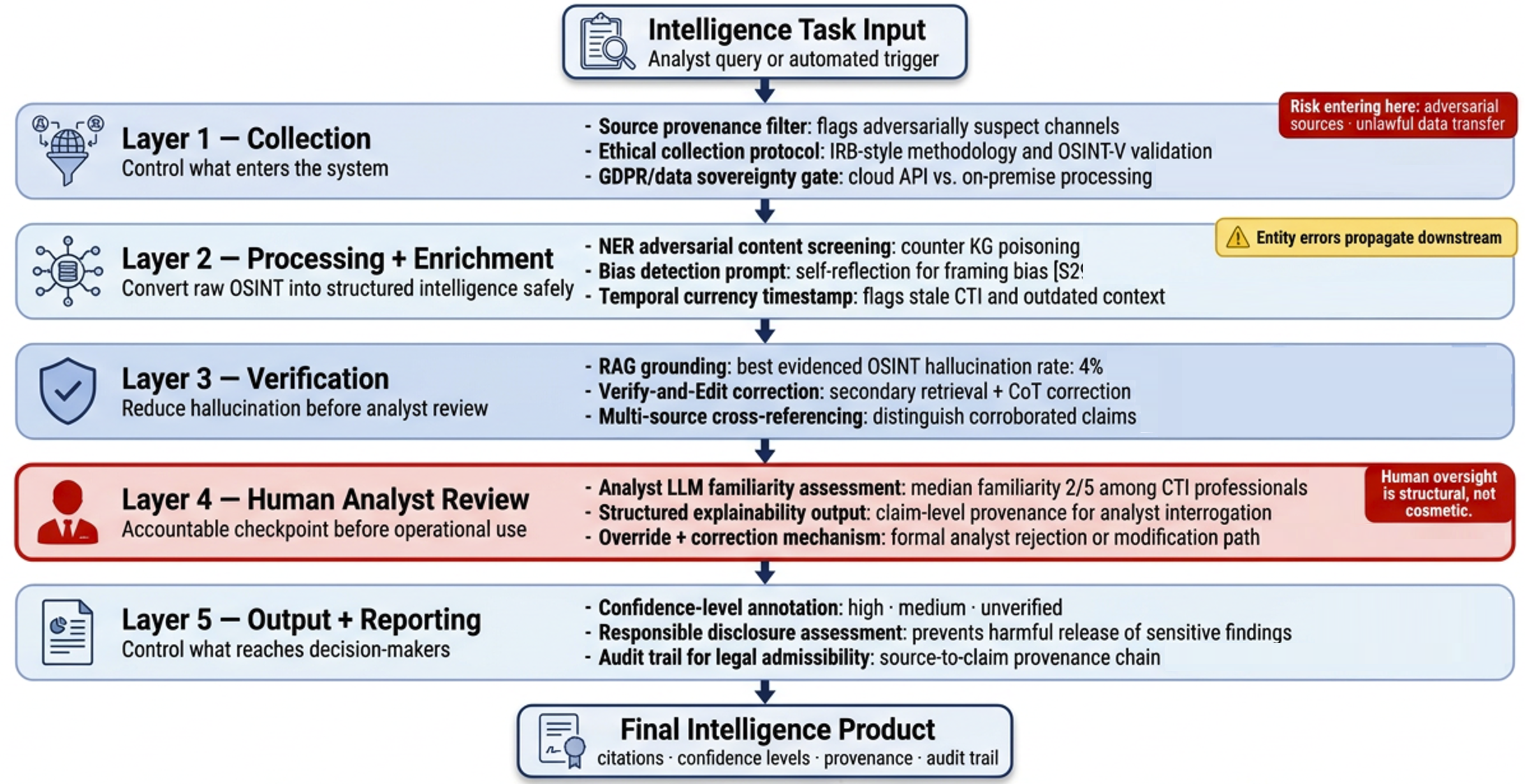
Figure 7: Five-layer OSINT safeguard framework, synthesizing corpus contributions. No current system implements all layers; this is a prospective synthesis.
Technical Results and Contradictory Claims
- RAG and KG grounding can achieve a minimum 4% hallucination rate for OSINT-specific outputs, but this is under tightly controlled, favorable conditions ([allam2025cybervision]). This is the only quantitative hallucination figure in the corpus.
- NER performance for LLM-based chatbots is systematically 25% lower than domain-specific baselines on real OSINT data, a critical gap that is identified but not solved.
- Adversarially generated CTI is indistinguishable from authentic by professional threat analysts (n=10), even when tested explicitly ([ranade2021fake]).
No paper empirically demonstrates adversarial robustness, end-to-end verification, or comprehensive governance. No system simultaneously addresses both hallucination and adversariality, nor empirical oversight effectiveness.
Case Studies and Flagship Systems
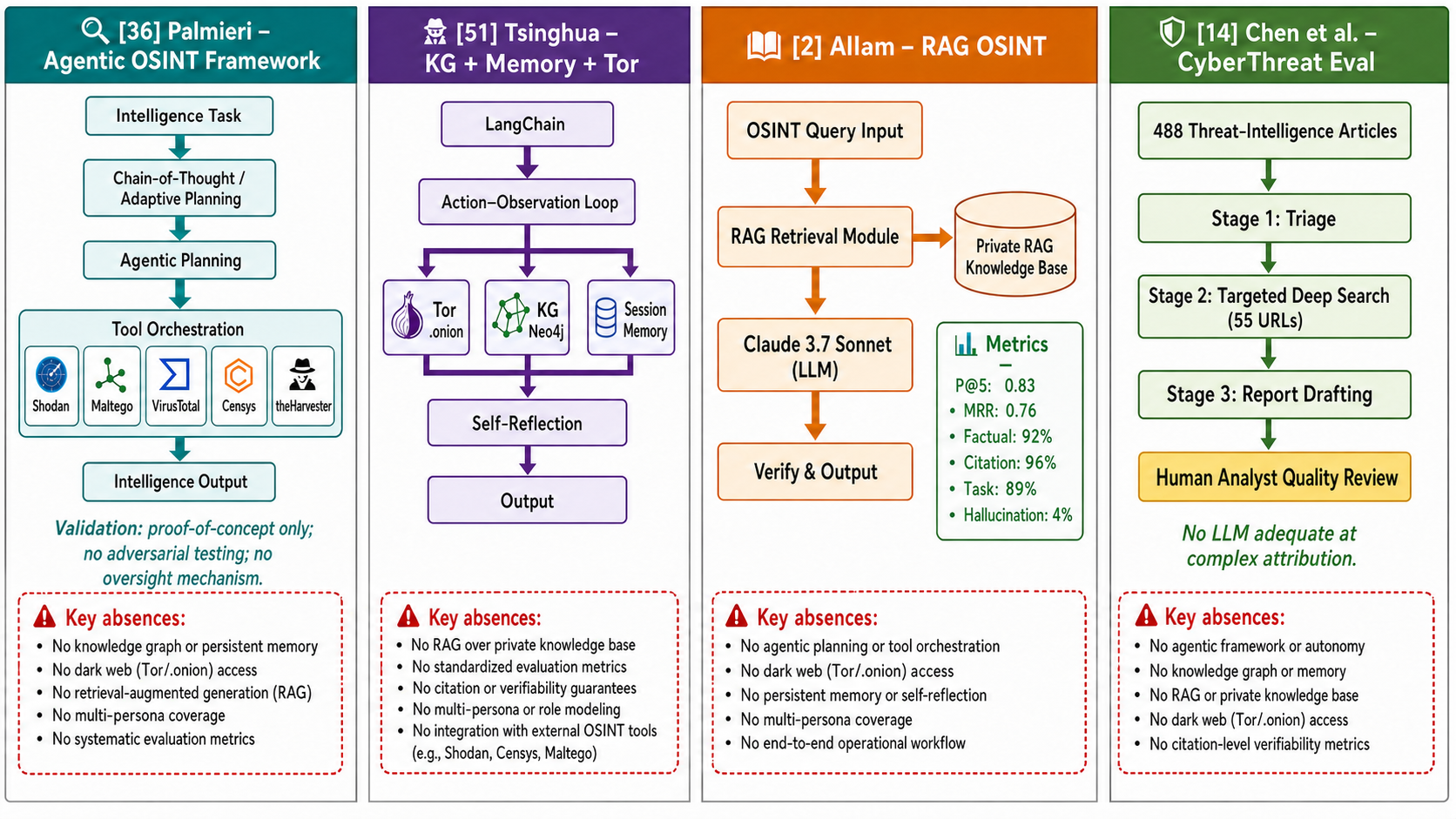
Figure 8: Comparative architecture panels of four case studies: Palmieri (agentic ReAct), Tsinghua (KG/memory/Tor integration), Allam (RAG hallucination measurement), and Chen et al. (analyst-driven CTI evaluation).
The four central systems—Palmieri's ReAct multi-tool agent [almeidapalmieri2025framework], Shen's KG/memory/Tor agent [shen2024llmosint], Allam's RAG system with hallucination benchmark [allam2025cybervision], CyberThreat-Eval for analyst-grade evaluation [chen2026cyberthreateval]—collectively expose the methodological, adversarial, validation, and oversight deficits recurring across the field. Quantitative results are non-replicable due to private datasets and proprietary models.
Implications and Future Research Agenda
Practical Implications
- Agentic OSINT architectures—LLMs with autonomous tool invocation and workflow planning—represent the highest technical ceiling, but are presently validated only under benign, non-adversarial conditions.
- RAG and KG integration must be coupled with adversarial filtering, provenance-tracking, and post-facto auditing to avoid amplifying attack surfaces.
- Analyst-in-the-loop or co-pilot models are required for responsible deployment in the current evidence regime; end-to-end automation without rigorous oversight is unjustified.
Research Challenges and Agenda
The survey closes with a ten-point agenda specifying requirements for:
- Standardized, adversarially robust hallucination evaluation protocols.
- An open, community-adopted OSINT-AI benchmark suite for extraction, triage, and report generation.
- Operational cost, orchestration, and failure mode modeling for API/tool integration.
- Multilingual, multi-platform public datasets with quantified adversarial and noise contamination.
- Legally valid, chain-of-custody dark web OSINT collection frameworks.
- Responsible disclosure and governance standards for offensive/dual-use capabilities.
- LLM-literacy training, proficiency standards, and oversight calibration for analysts.
- Empirical validation of oversight effectiveness across workflow stages.
- Open codebases, pre-registered protocols, and artifact availability for reproducibility.
- Multi-jurisdictional legal, ethical, and compliance architectures explicitly designed for the OSINT lifecycle.
Conclusion
The survey provides a comprehensive, analytic synthesis of agentic and generative AI as applied to OSINT and cyber investigations. The principal findings—technically feasible agentic automation, a persistent hallucination-validation gap, and structural neglect of adversarial, legal, and oversight realities—demand urgent methodological and governance advances. Practical deployment should prioritize structured human–AI copilot architectures with embedded oversight, provenance, and adversarial defence. The distance from technical demonstration to operational trustworthiness is non-trivial and must be bridged through cumulative, open, adversarially robust benchmarks, and multi-disciplinary governance engagement.
(see above for in-text placement; each is rendered inline according to the contextual discussion)

