- The paper offers detailed 0.75–5 μm spectra for 37 nearby brown dwarfs, establishing empirical benchmarks for atmospheric models.
- It rigorously compares observations with five atmospheric model grids, revealing significant discrepancies in predicting molecular features and vertical mixing.
- Findings emphasize the need for improved models that integrate cloud physics and non-equilibrium chemistry to accurately capture brown dwarf atmospheres.
SPHEREx Infrared Spectroscopy of Nearby Brown Dwarfs: Benchmarks and Model Discrepancies
Introduction
This study presents a comprehensive sequence of 0.75–5 μm spectra of 37 nearby brown dwarfs—spanning spectral types L0 to Y4—measured by the SPHEREx all-sky survey, and conducts a rigorous comparison against leading substellar atmospheric model grids. SPHEREx offers spectral resolution R∼40–$100$ and signal-to-noise ratios that enable unprecedented characterization of dominant molecular features shaping brown dwarf atmospheres, capturing upwards of 80% of their emergent bolometric luminosity. By uniting targets of typical field age and composition with sequences at low gravity and subsolar metallicity, this work establishes critical empirical benchmarks for atmospheric models, which are essential due to persistent systematic discrepancies in their derivation of brown dwarf parameters.
SPHEREx Survey and Spectral Scope
SPHEREx, a NASA Medium Explorer mission, provides all-sky infrared spectrophotometry in 102 channels from 0.75–5 μm, achieving deep sensitivity and fine spectral sampling across its wavelength coverage. This vastly improves upon the broadband photometry of previous all-sky surveys (e.g., 2MASS, WISE) by resolving the molecular bands and continuum windows crucial for atmospheric diagnostics. The SPHEREx dataset enables robust mapping of core opacity features—H2O, CH4, CO, CO2, and H2 CIA—across the full field brown dwarf sequence, and includes coverage of rarely sampled 3–5 μm bands that are sensitive to disequilibrium chemistry and vertical atmospheric mixing.
The dominance of various molecular species as a function of wavelength and their interplay in the SPHEREx spectral regime is evident:
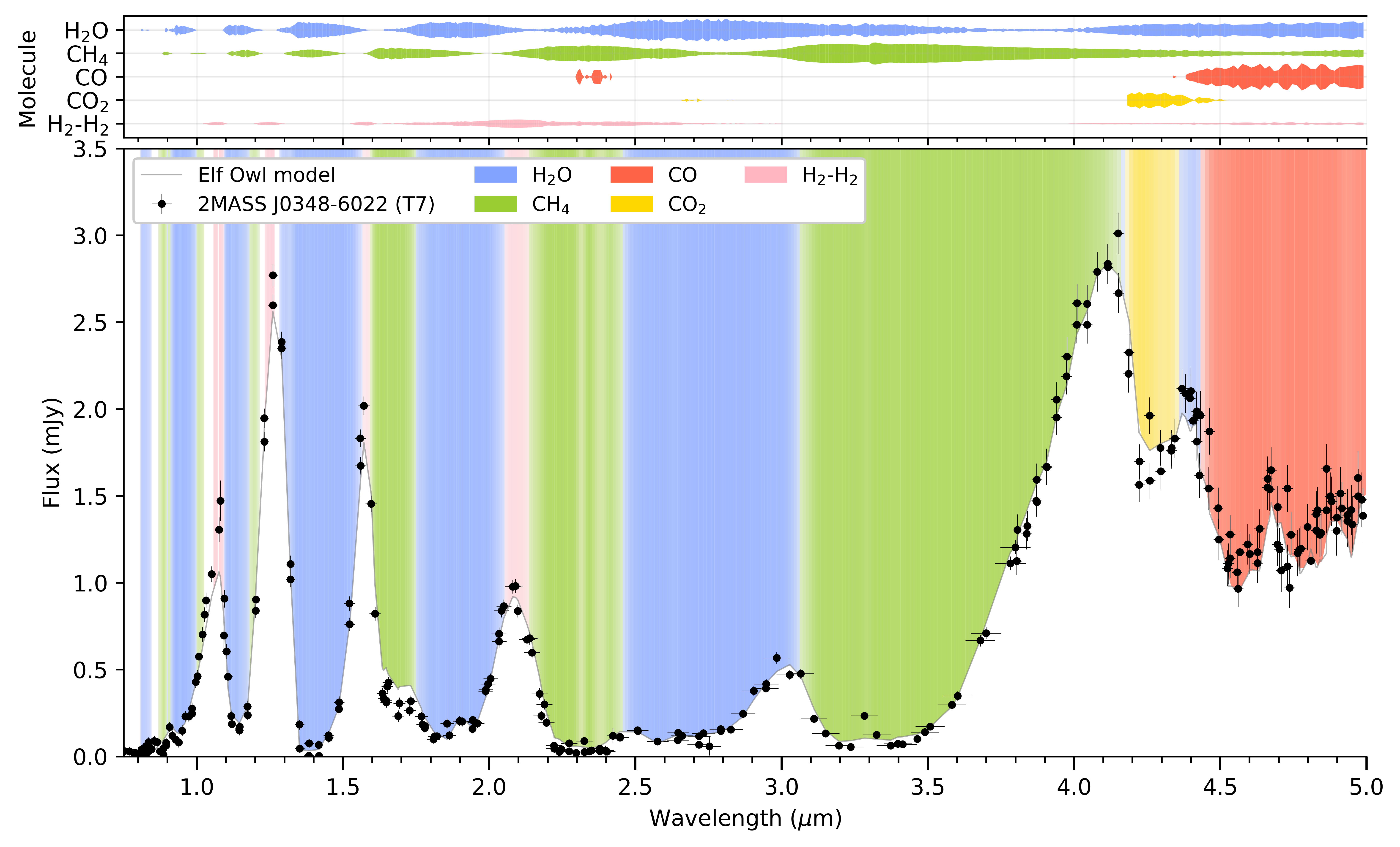
Figure 1: The 0.75–5 μm SPHEREx spectrum for a representative T7 field dwarf, illustrating primary molecular opacity contributors. HR∼400O and CHR∼401 bands alternate throughout, with CO and COR∼402 features emerging at longer wavelengths, and a newly apparent weak CHR∼403 emission at 3.3 R∼404m signaling possible thermal inversion.
Observational Characterization of Brown Dwarf Sequences
The field sequence from L0 to Y4 is systematically delineated by temperature-sensitive molecular band depth, interplay of opacity windows, and transitions of dominant chemical species. Across the L dwarfs, the development of CHR∼405 absorption and sharp J/H/K window profile changes are observed, with a marked reversal of peak heights through the L/T transition—a fingerprint of changing atmospheric chemistry and cloud clearing:
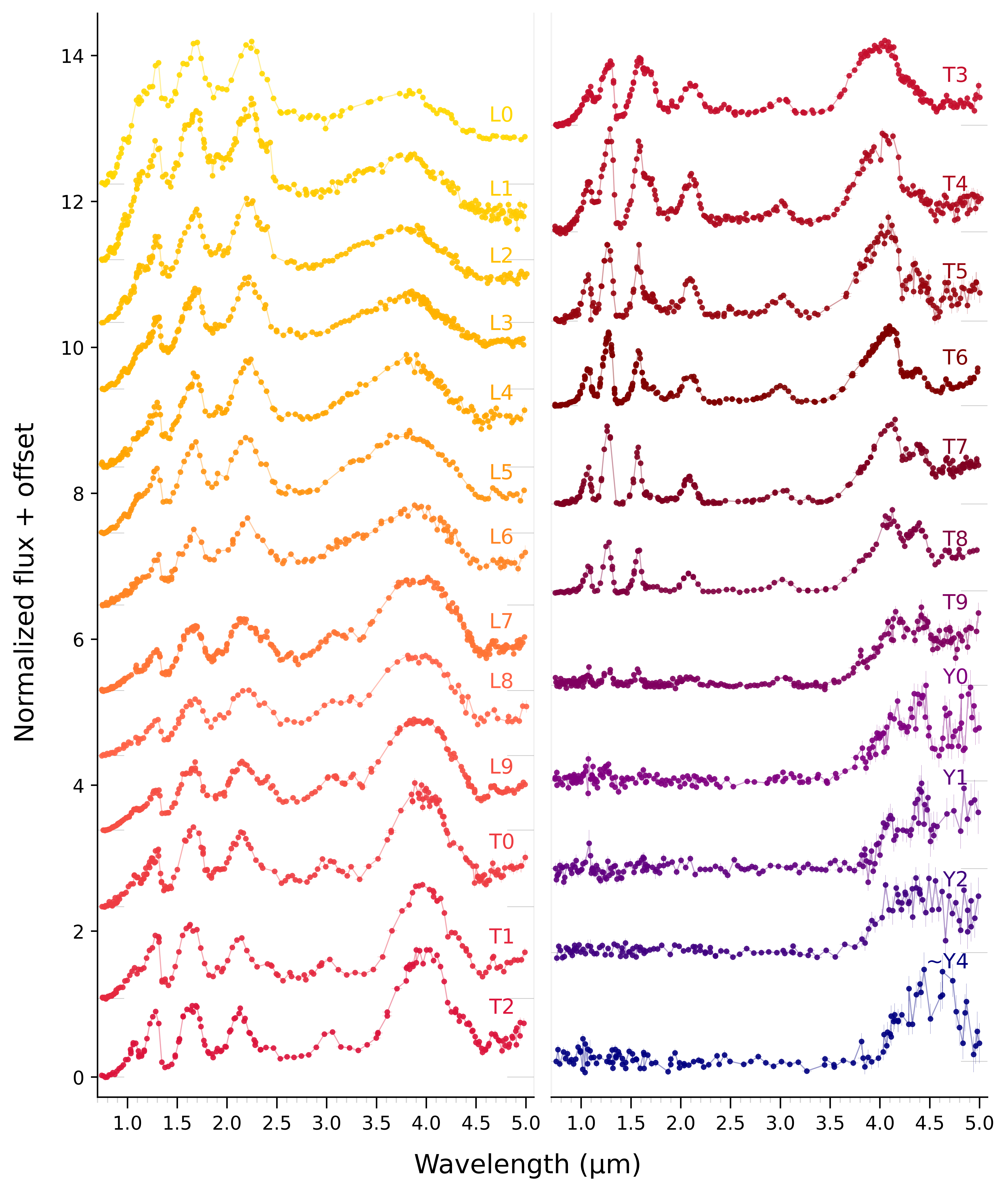
Figure 2: The SPHEREx field sequence, normalized by the 3.7–4.7 R∼406m flux, displays the evolution of spectral morphology and molecular features as a function of spectral type.
Low-gravity sequences (L0, L5) show reduced water feature amplitude and pronounced K-band peaks, indicative of broader, more isothermal photospheres dominated by cloud scattering. Low-metallicity objects, especially amongst L subtypes, manifest in significantly higher NIR flux ratios and the dominance of HR∼407-HR∼408 CIA opacity at higher pressures as metallicity decreases:
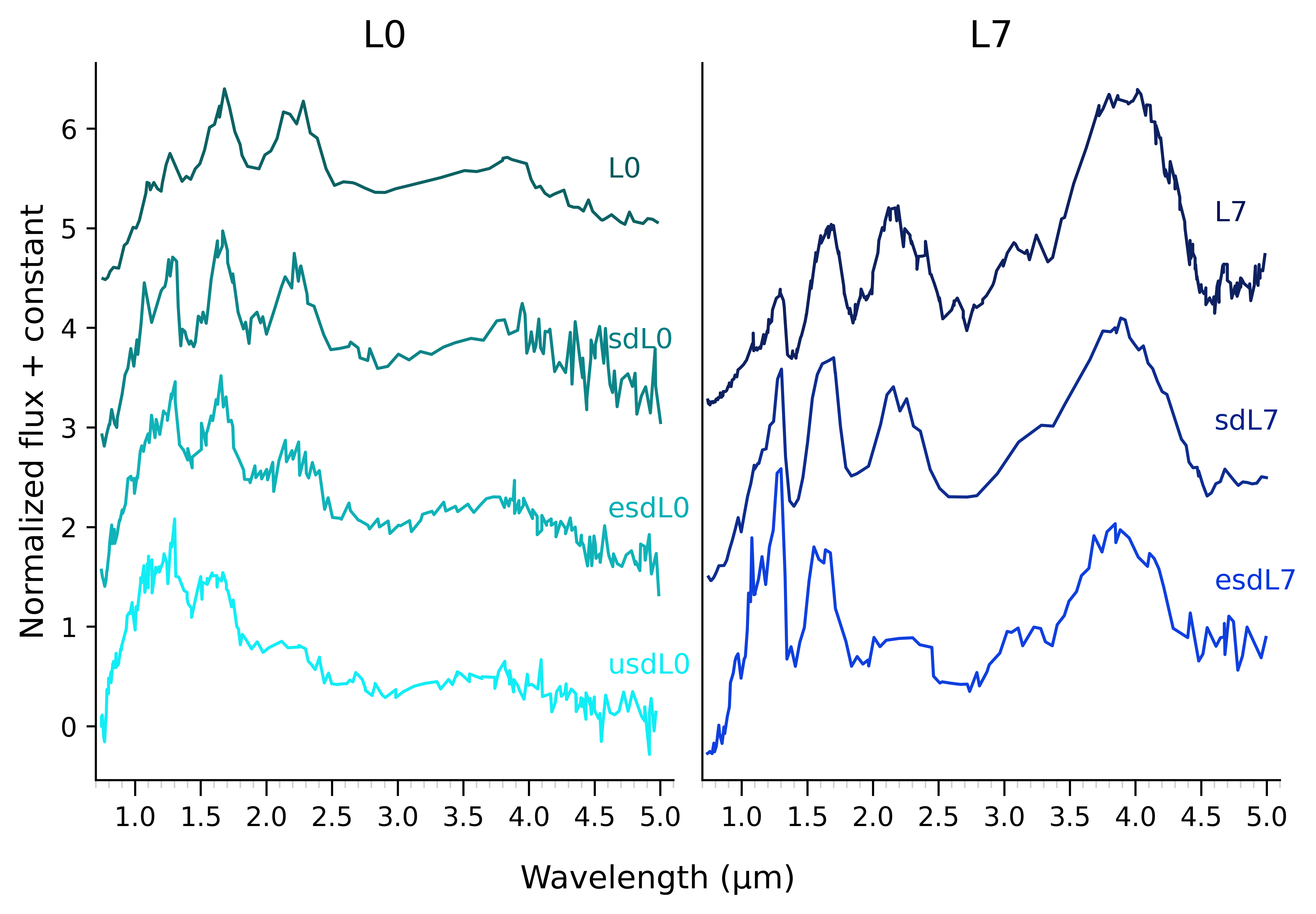
Figure 3: A progression in L0/L7 brown dwarfs with decreasing [Fe/H], emphasizing the enhanced NIR continuum and diminished molecular absorption in lower-metallicity objects.
Quantitative Model Comparison
A suite of five contemporary atmospheric model grids (ATMO2020, ATMO2020++, BT-Settl, Sonora Diamondback, Sonora Elf Owl) were used for forward-model comparison against the SPHEREx data. Despite matching nominal physical inputs (e.g., R∼409, $100$0, [Fe/H]), substantial model-to-model discrepancies are found—especially in the 3–5 $100$1m windows that are critically sensitive to carbon chemistry and vertical mixing, with flux variations often reaching factors of $100$2:
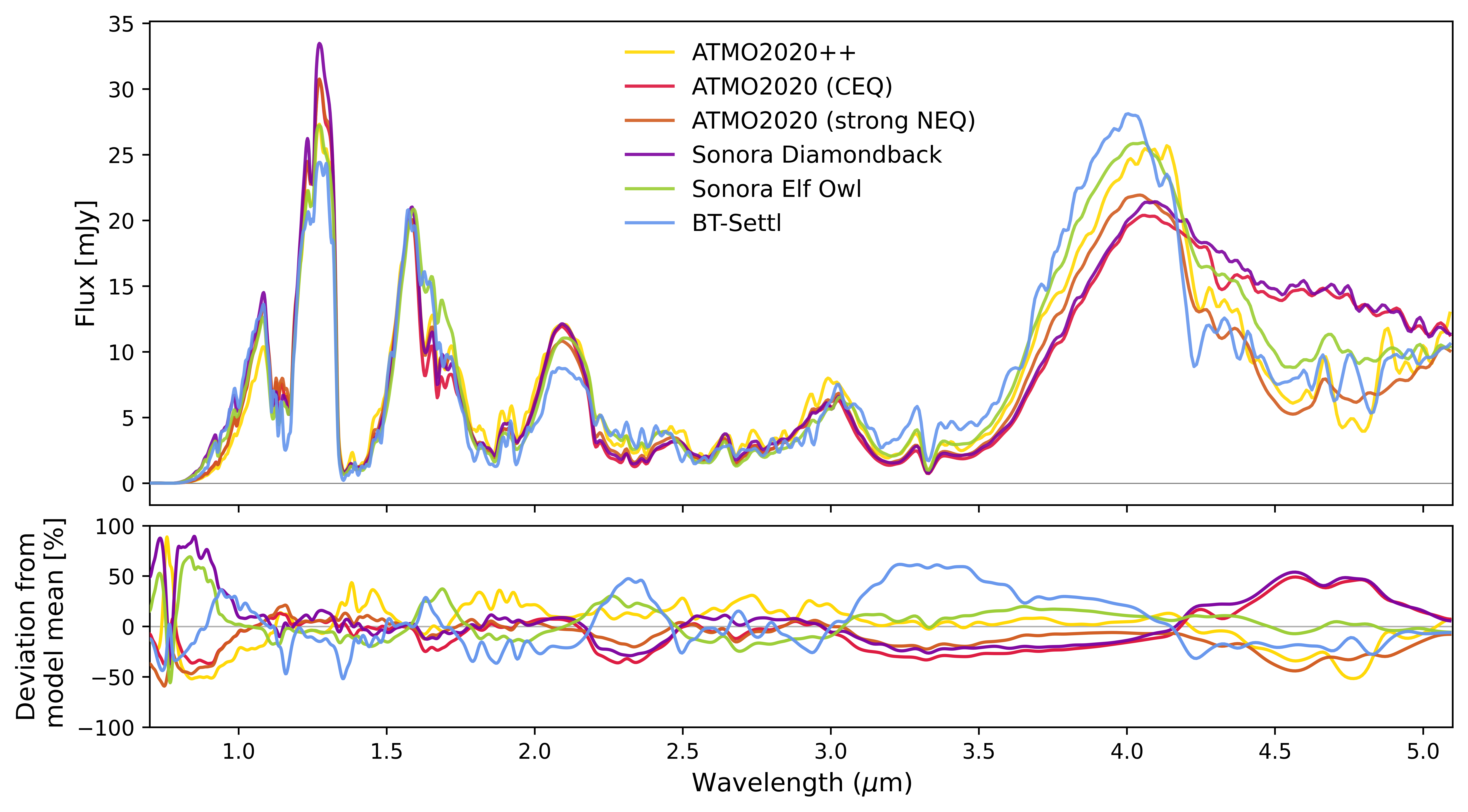
Figure 4: Comparison of model spectra at identical physical parameters, revealing strong departures in mid-infrared (3–5 $100$3m) flux due to differences in chemistry and mixing assumptions.
Model fits across the sample routinely yield $100$4, even for high S/N spectra, emphasizing that parameter inferences are dominated by model systematics rather than observational errors.
Spectral Indices and Chemical Diagnostics
Custom spectral indices centered on CH$100$5, CO, and CO$100$6 features were defined relative to the 4 $100$7m window to extract chemical evolution trends with spectral type and to benchmark model capabilities:

Figure 5: Definition of CH$100$8, CO, and CO$100$9 indices on a T6 dwarf spectrum, normalized at the relatively continuum-like 4 μ0m window.
These indices exhibit a monotonic progression across the sequence, tightly correlating with spectral type and atmospheric temperature. Notably, the observed CO and COμ1 indices decrease sharply between T6 and T7 (corresponding to μ21000–700 K), mapping the turnover to CHμ3-dominated chemistry. Model grids broadly reproduce the qualitative trend but differ significantly in amplitude and locus; notably, the Sonora Elf Owl models with weaker vertical mixing (log μ4) are favored by the data, in contrast to the higher mixing rates commonly inferred from other studies.
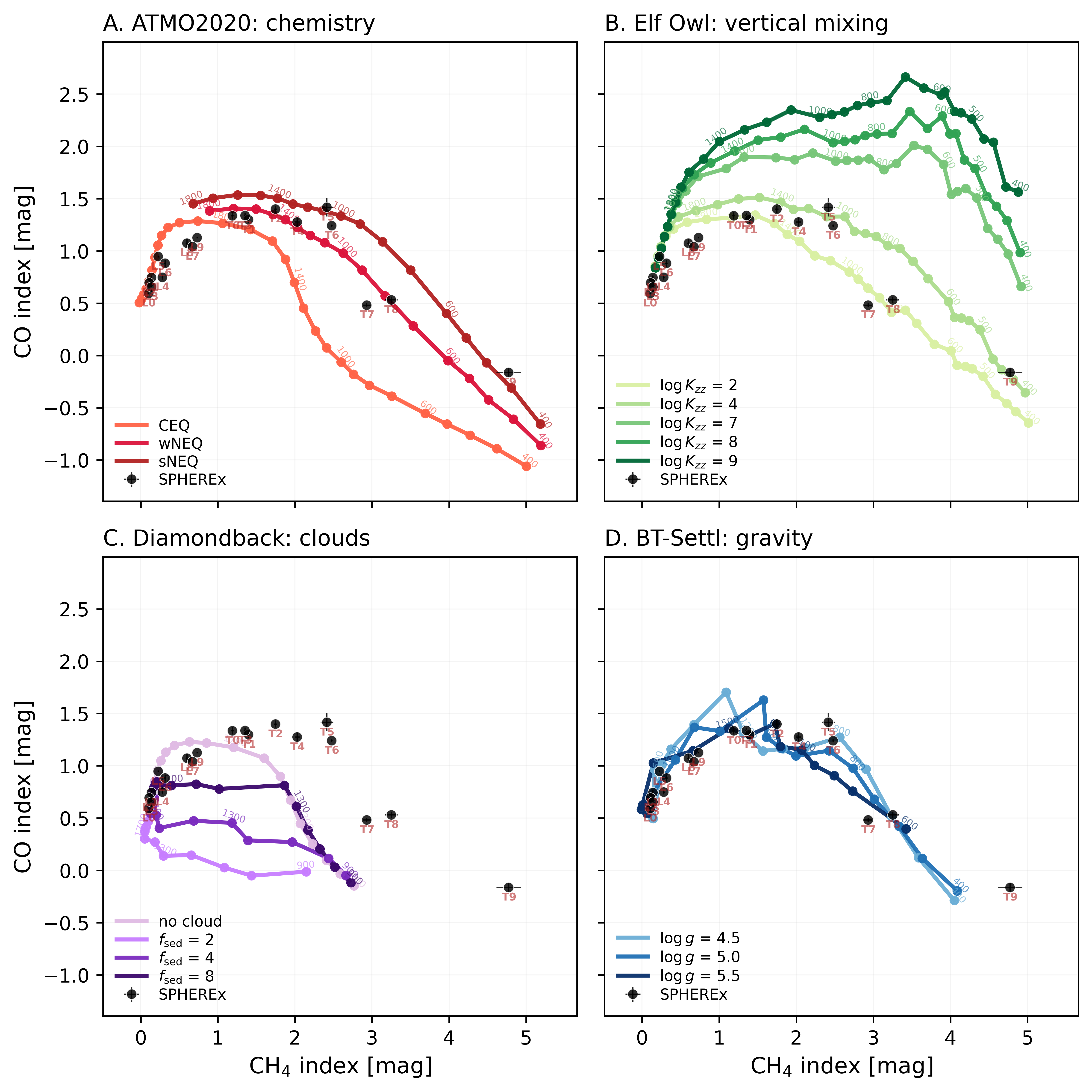
Figure 6: Observed and model-derived CHμ5 and CO index strengths, showing a sharp CO downturn near T6/T7, while early T/L types provide closer alignment with equilibrium chemistry assumptions.
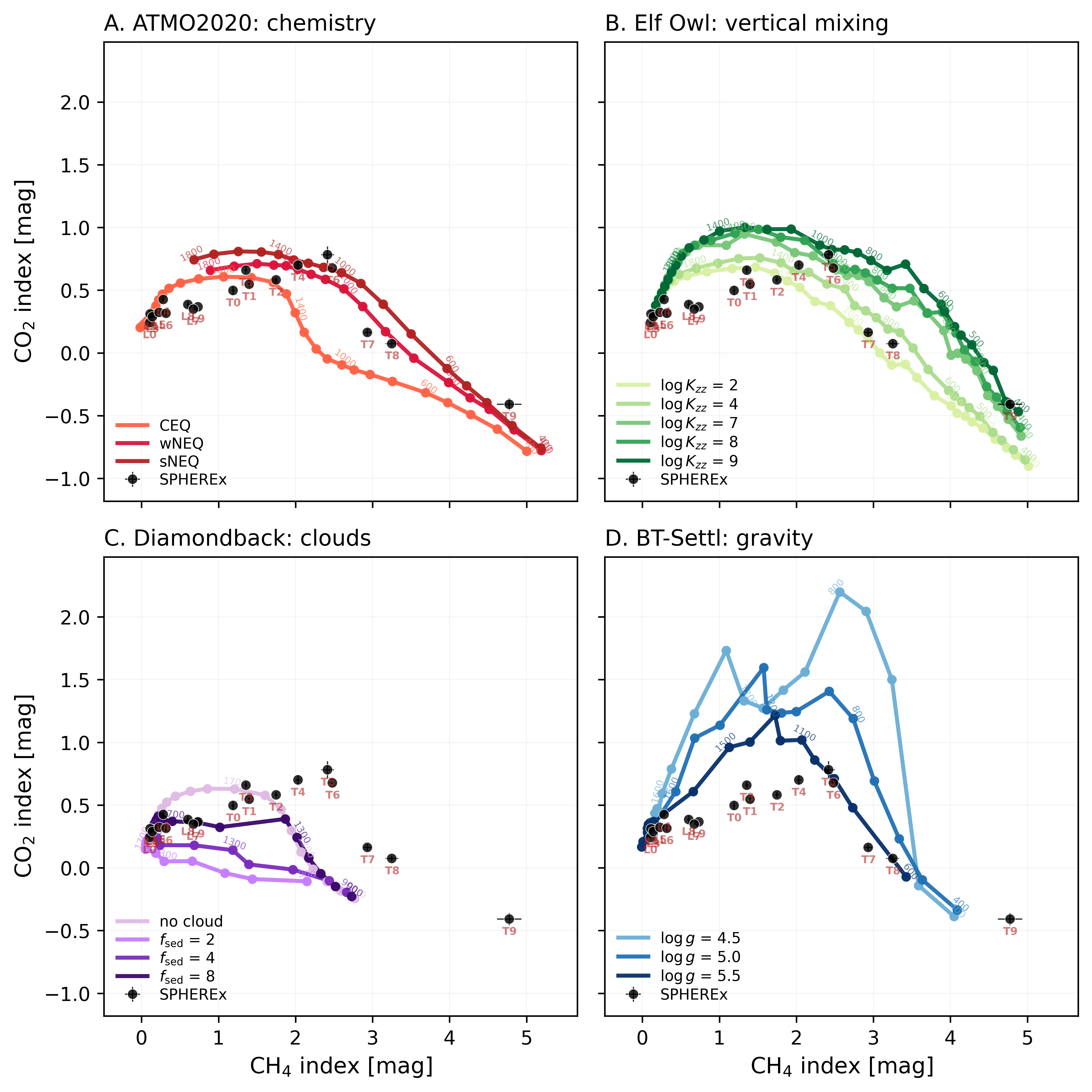
Figure 7: A similar comparison for the CHμ6/COμ7 indices reinforces the trend: COμ8 absorption diminishes with advancing spectral subtype and is again poorly matched by all models beyond T6.
Degeneracies and Model Limitations
Model explorations across metallicity, gravity, C/O, and μ9 parameter axes demonstrate that the spectral indices are simultaneously sensitive to multiple atmospheric inputs, rendering interpretation highly degenerate—particularly regarding mixing rate versus metallicity effects on carbon abundances:
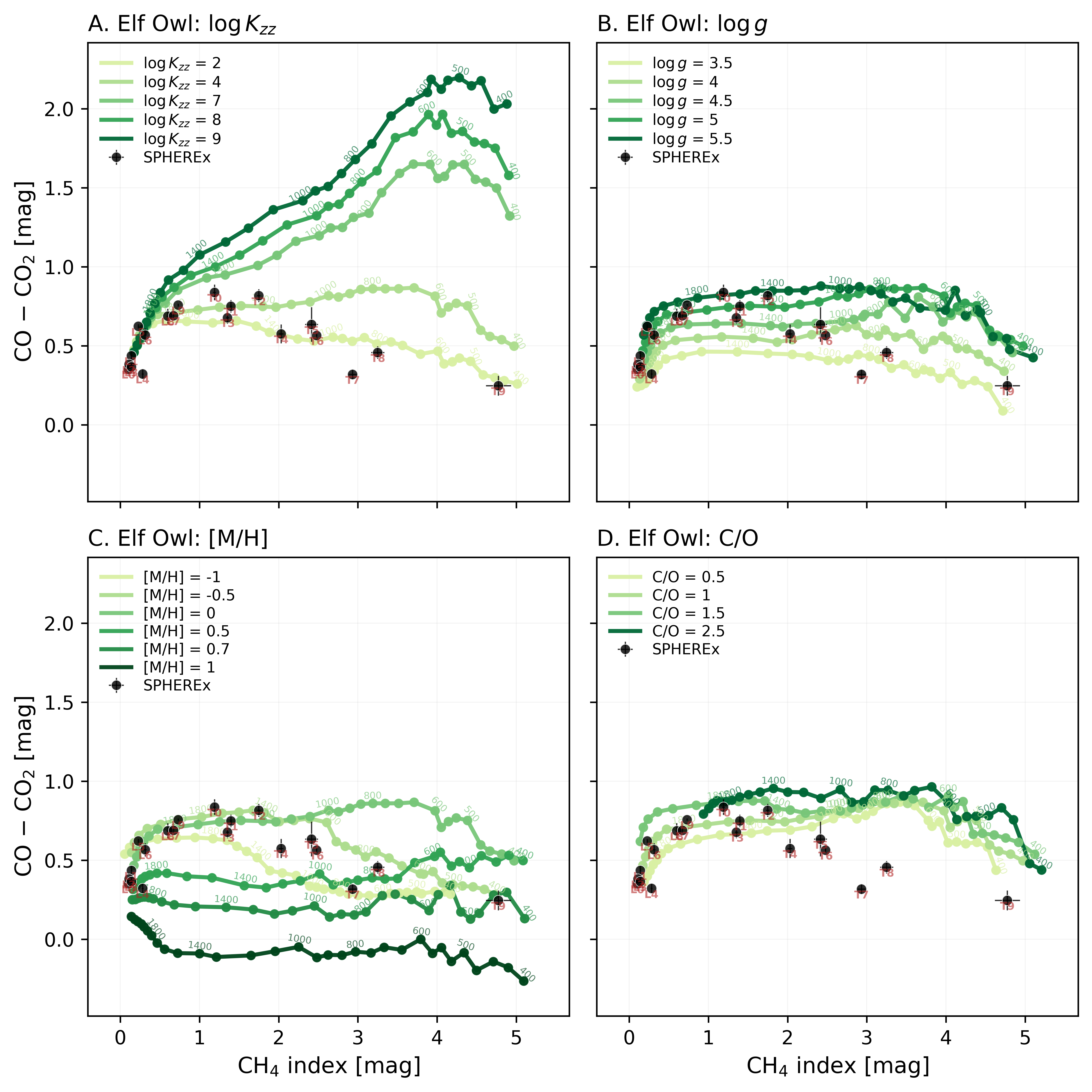
Figure 8: The relationship between CH20 and (CO–CO21) index illustrates the multidimensional degeneracy, with empirical sequences poorly reproduced by any single axis of model variation.
Implications and Outlook
This work underscores that despite advances in atmospheric modeling and laboratory molecular data, current substellar model grids are systematically unable to reproduce the field sequence of high S/N brown dwarf spectra at the precision offered by SPHEREx. The model deficiencies are especially acute at the L/T transition and in features linked to disequilibrium carbon chemistry. The strong preference for weak vertical mixing models in field dwarfs is not fully commensurate with expectations from population-level studies, highlighting a disconnect between model input physics and observed trends.
Practically, the SPHEREx spectral atlas provided can serve as a calibration resource for future substellar and exoplanet atmospheric studies, as well as a safeguard to prevent brown dwarfs from contaminating high-22 galaxy searches in deep survey data. From a theoretical standpoint, these benchmarks emphasize the need for integrated models that connect cloud microphysics, atmospheric mixing, and molecular opacities in a manner that self-consistently reproduces observed substellar SEDs.
Conclusion
The SPHEREx survey delivers benchmark-quality spectra for 37 nearby brown dwarfs over the 0.75–5 23m range, documenting empirical trends across temperature, surface gravity, and metallicity. Major atmospheric model grids fail to fit the detailed features in these spectra, especially where vertical mixing and cloud sedimentation affect mid-infrared chemistry-sensitive windows. The data suggest model improvements are urgently needed at the interface of non-equilibrium chemistry and cloud formation physics. As the SPHEREx mission continues, expanded samples and increased S/N will reshape empirical characterization and, by extension, direct model refinement, ultimately benefitting both substellar and exoplanetary atmospheric studies (2607.00543).