- The paper introduces bilby-antiglitch, a framework that jointly models GW signals and glitches to overcome biases in astrophysical parameter estimation.
- It employs a parametric AntiGlitch model integrated with advanced waveform families to restore Gaussian residuals and robustly recover signals.
- The method improves log Bayes factors and reduces computational overhead, ensuring accurate tests of General Relativity even in noisy data.
Signal Plus Noise Inference for Gravitational-Wave Data Contaminated by Non-Gaussian Transients
Introduction and Motivation
The analysis of gravitational-wave (GW) signals is hindered by the frequent occurrence of short-duration, non-Gaussian noise transients—so-called "glitches"—arising from terrestrial sources, which violate the fundamental stationary Gaussian noise assumption underlying traditional Bayesian inference frameworks. These glitches overlap with astrophysical GW signals, causing significant biases in the inference of source parameters and potentially resulting in spurious claims of new physical phenomena. Existing mitigation approaches, such as waveform-informed glitch subtraction (e.g., BayesWave) and auxiliary-channel-based methods (e.g., gwsubtract), are widely used but have notable limitations, including simplified signal representations, potential overfitting risks, and restricted interpretability.
This work introduces bilby-antiglitch, an inference framework built upon the standard bilby Bayesian sampler that enables joint modeling and inference of both GW signals and short-duration non-Gaussian glitches with a parametric, quasi-physical approach. By leveraging the AntiGlitch glitch model and integrating with state-of-the-art waveform families and sampling tools, bilby-antiglitch overcomes the aforementioned limitations, providing robust astrophysical inference even in glitch-contaminated data.
Methodology: Joint Signal and Glitch Inference
The standard GW parameter estimation framework models the data as d=h+n, where h is the injected signal and n is stationary, Gaussian noise, allowing the use of the Whittle likelihood for Bayesian inference. In the presence of a glitch g, the correct model becomes d=h+n+g, invalidating the stationary Gaussian noise assumption and resulting in a likelihood with heavier tails (increased probability of outliers).
The proposed joint inference approach extends the model parameter space to include both the astrophysical signal (θ) and the glitch (β): m=M(θ)+G(β). The AntiGlitch model parameterizes each glitch by five frequency-domain parameters per interferometer: amplitude, phase, peak frequency, bandwidth, and central time. While this increases the dimensionality of the inference problem, it reduces overfitting, improves interpretability, and leverages prior knowledge of glitch phenomenology.
A key property of this joint scheme is that after marginalizing or subtracting both the signal and glitch model from the data, the residuals revert to near-Gaussian, restoring the assumptions underpinning the Whittle likelihood.
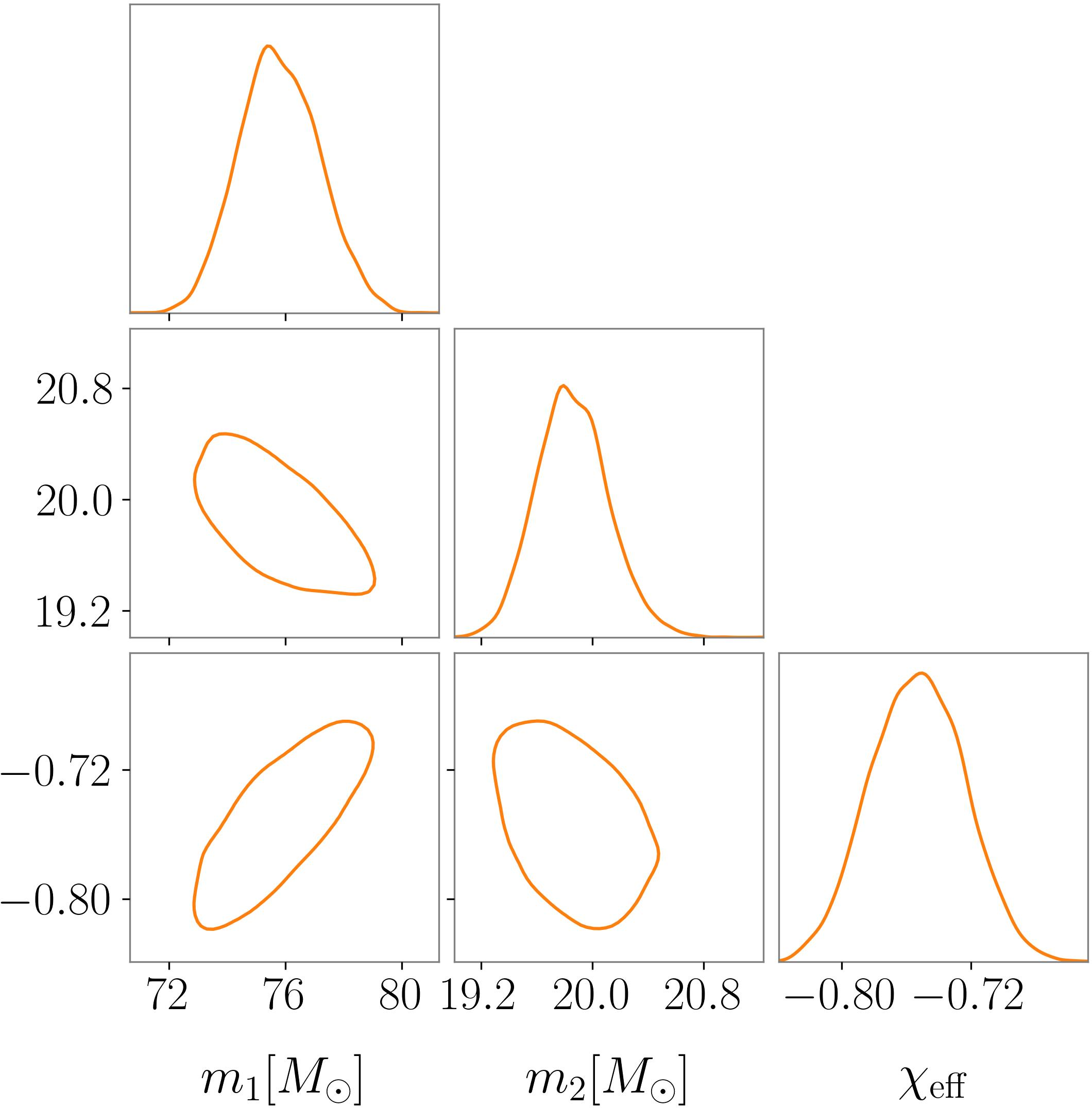
Figure 1: The spectrogram of a simulated GW signal in non-Gaussian noise, with the GW150914-like frequency track and an isolated blip glitch preceding merger.
Verification: Synthetic Data and Inference Biases
To evaluate bilby-antiglitch, the authors inject a GW150914-like signal into simulated LIGO-Livingston data overlaid with a high-SNR blip glitch closely preceding the merger. This scenario represents a worst-case for parameter estimation due to significant overlap in time and frequency.
Under traditional (signal-only) inference, substantial parameter biases are observed: the recovered component masses and spin configurations are markedly inconsistent with the true injection, implying, e.g., an artificial heavy, asymmetric binary with anti-aligned, near-extremal spins. This is a direct consequence of the model fitting the non-Gaussian noise excess rather than the true GW signal.
In contrast, bilby-antiglitch successfully recovers the true parameters, with reconstructed GW and glitch waveforms exhibiting high fidelity to their respective injections, and restored statistical consistency with Gaussian residuals.
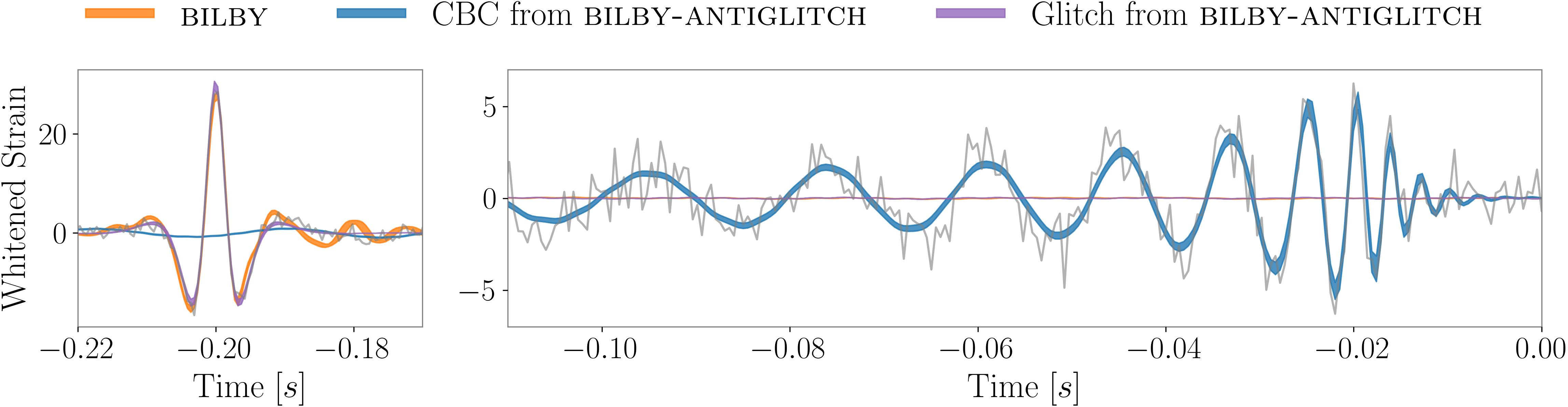
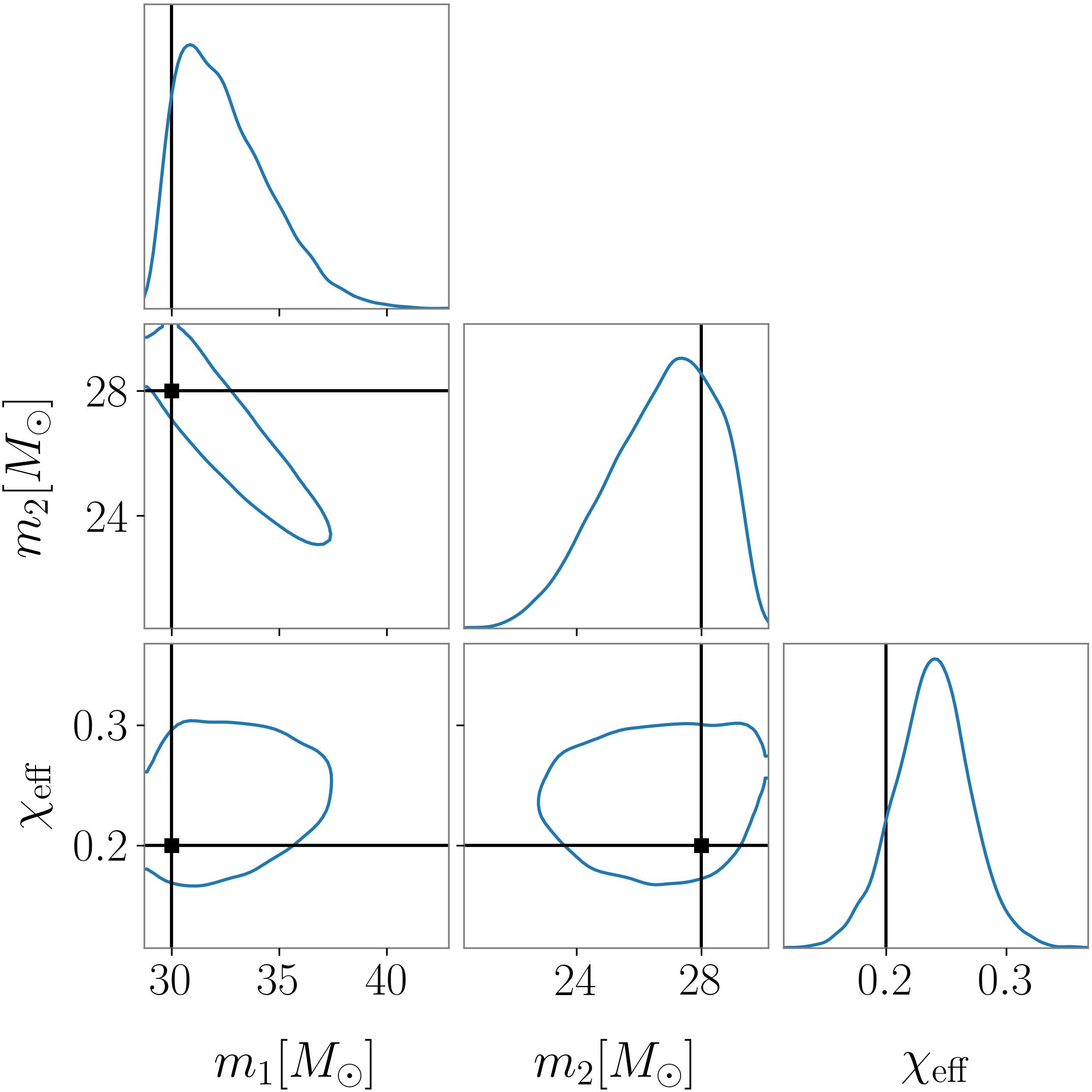
Figure 2: Posterior distributions for component masses and effective aligned-spin compared between joint signal-plus-noise inference and standard signal-only analysis. Crosshairs denote injection values.
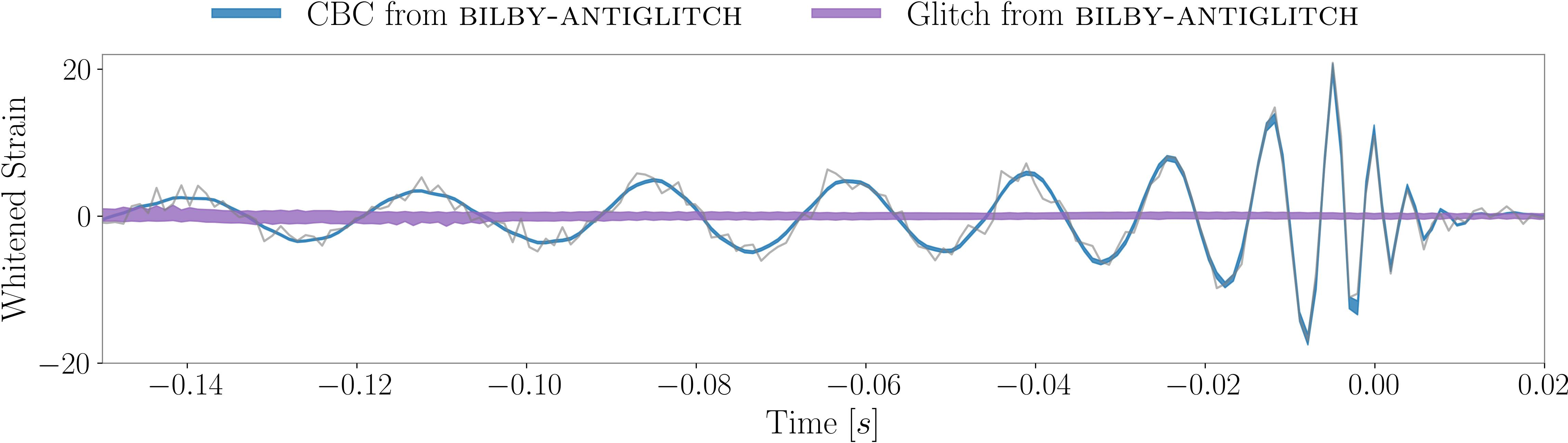
Figure 3: Reconstructed astrophysical and glitch signals, as inferred by bilby-antiglitch, overlaid on whitened detector strain data.
Quantitatively, the joint model improves log Bayes factors (e.g., log10BS/N increases by ∼250) and achieves more faithful SNR recovery for both the GW signal and the glitch. Notably, computational requirements are reduced compared to signal-only inference despite the higher parameter count, attributed to the increased posterior complexity encountered when the model is mis-specified in the presence of glitches.
The authors explicitly demonstrate that, when the joint approach is not used, standard inferences can lead to false violations of General Relativity (GR). For instance, self-consistency tests for the remnant mass and spin across waveform phases yield spurious deviations from GR when the glitch is not modeled, while joint inference reliably recovers GR-consistent results.
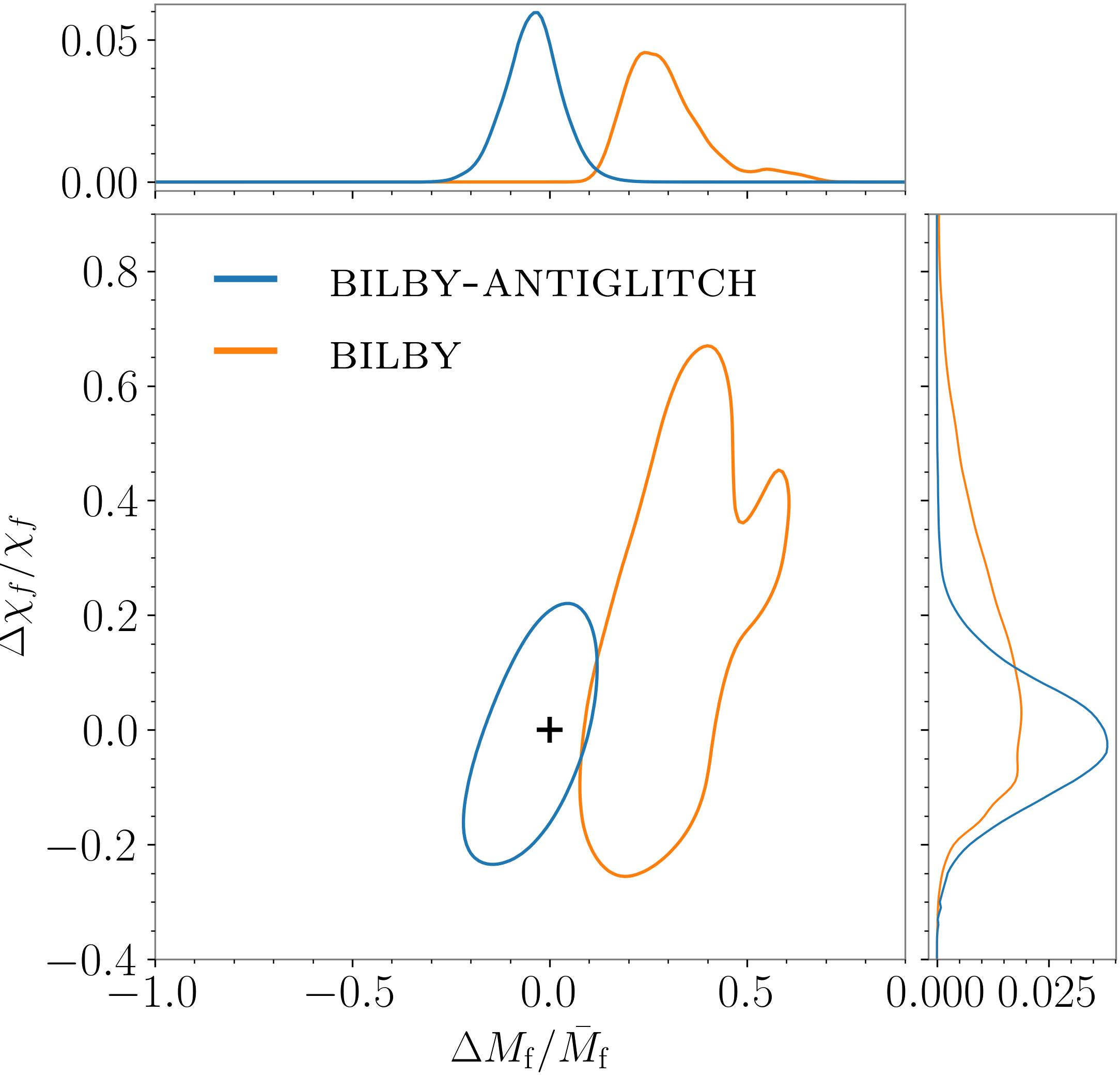
Figure 4: Consistency test for remnant mass/spin across inspiral and merger-ringdown segments under both inference hypotheses—only the joint model recovers GR-consistent posteriors.
Additionally, subtracting the median realization of a glitch from the data (as in common two-stage approaches) can recover the correct astrophysical parameters, but leads to increased uncertainty due to stochastic realization choices, and can partially remove signal power, further advocating for the full joint marginalization approach.
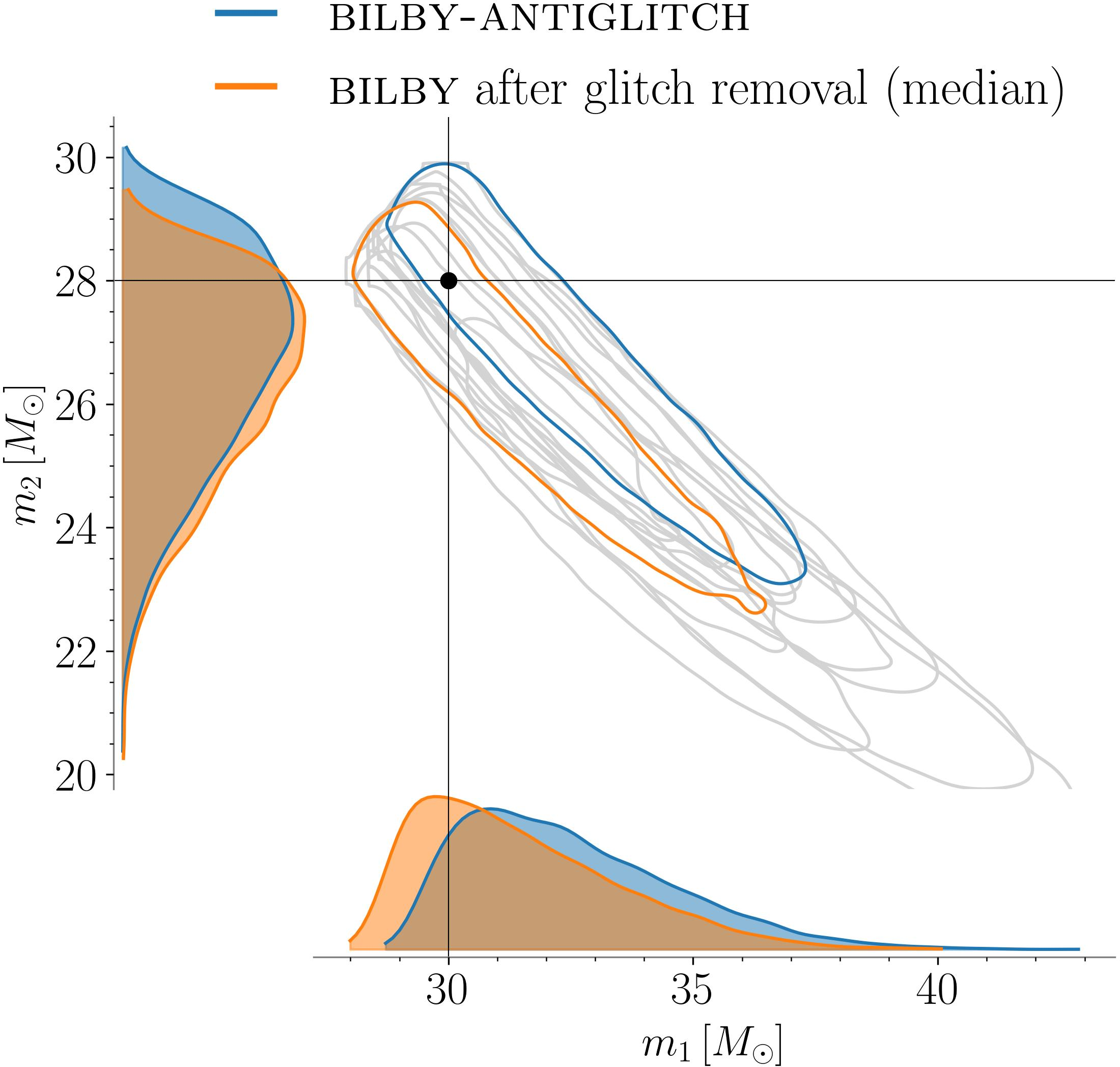
Figure 5: Inferred component mass posteriors with joint, median-subtracted, and stochastic-subtracted strategies, showing biases with signal-only handling of residual glitch realization variance.
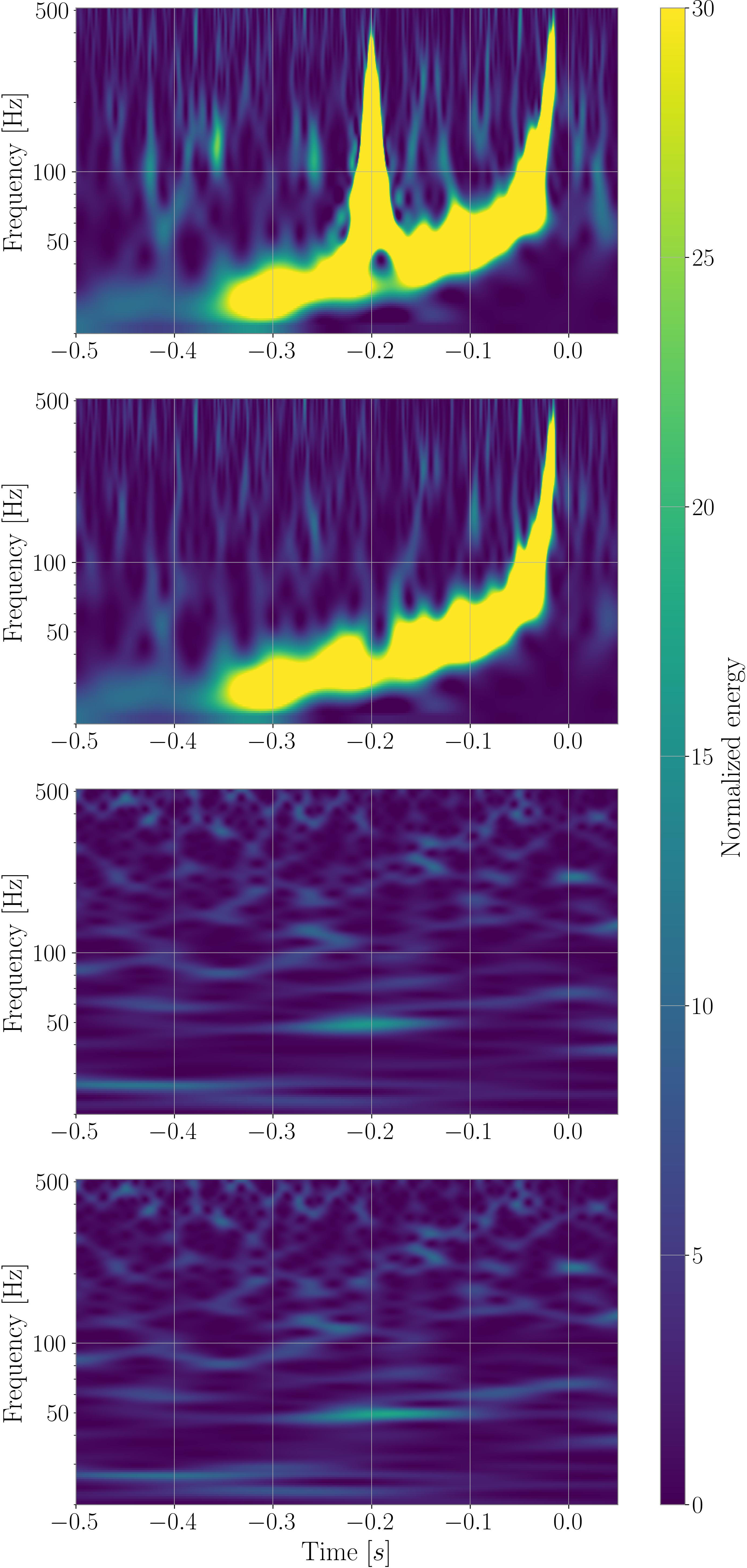
Figure 6: Spectrogram of GW signal after glitch and signal subtraction, illustrating residuals consistent with Gaussian noise.
Application to Real Events: GW250114_082203 and GW200129_065458
GW250114_082203
Re-analysis of GW250114_082203, the highest-SNR binary black hole event detected to date, shows that bilby-antiglitch yields parameter posteriors consistent with previous analyses and with minimal evidence of short-duration glitches. The framework marginalizes over the small, low-frequency perturbations present in the data, with increased computational requirements expected for non-glitch-dominated events due to the larger parameter space.
Figure 3: Bilby-antiglitch waveform reconstructions of the astrophysical event GW250114_082203 and the inferred glitch model projected into LIGO-Livingston.
GW200129_065458
GW200129_065458, initially found to show strong evidence for spin precession, was subject to controversy regarding its sensitivity to non-Gaussian noise due to known calibration issues. The application of bilby-antiglitch demonstrates the robustness of the inferred spin precession signal to short-duration glitch contamination, with posteriors for the spin parameters of the primary black hole remaining statistically consistent with strong in-plane components.
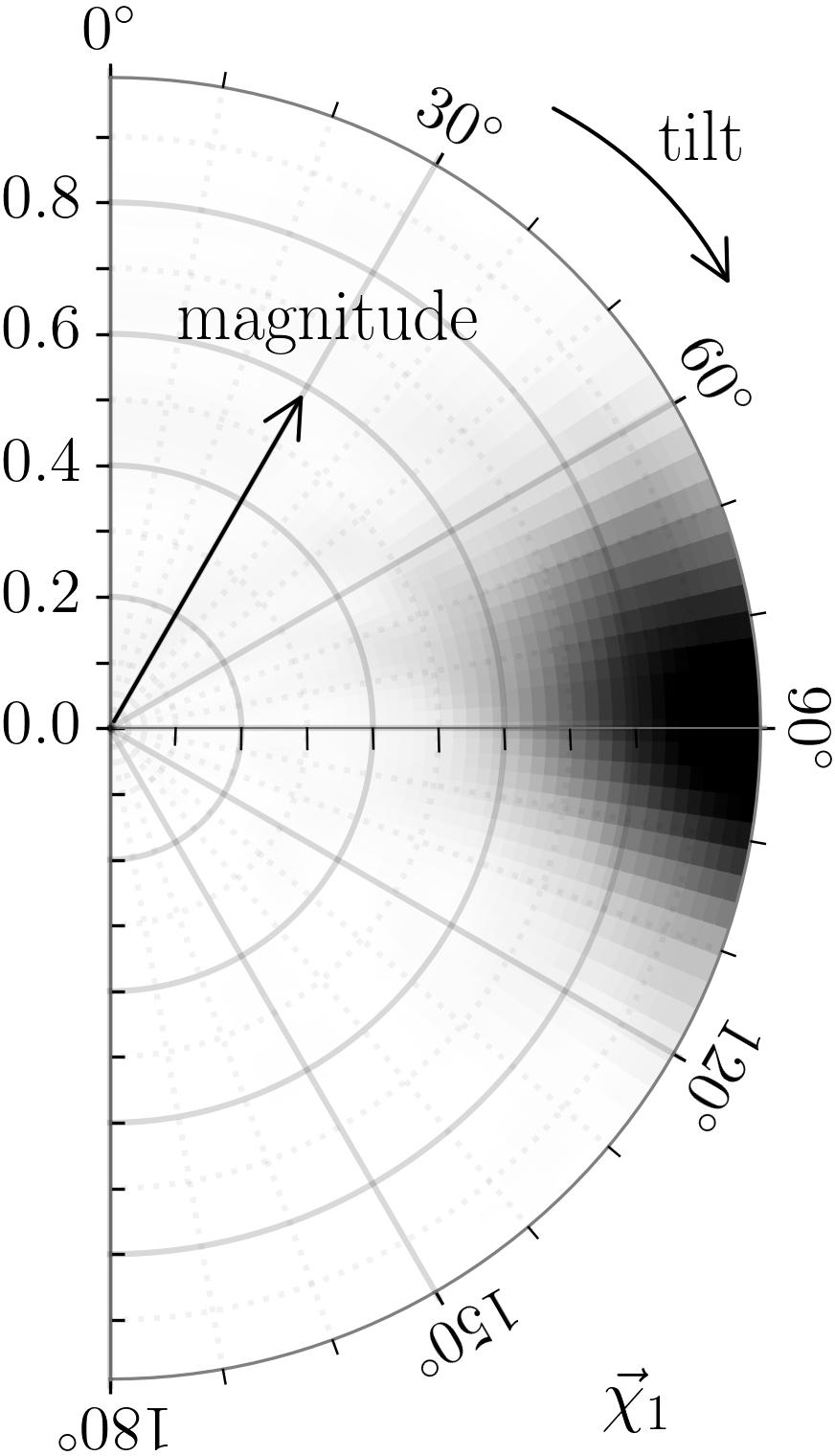
Figure 7: Two-dimensional posterior for the primary black hole’s spin tilts and magnitudes in GW200129_065458, demonstrating maximal precession robust to non-Gaussian noise.
Implications, Theoretical Insights, and Future Directions
The bilby-antiglitch framework rigorously prevents inference biases and false GR violation claims induced by short-duration non-Gaussian transients in GW data, addressing critical limitations of both ad hoc glitch subtraction methods and existing joint-inference models reliant on less interpretable or non-physical glitch parameterizations. By ensuring Gaussianized residuals, the approach facilitates more reliable parameter estimation, tests of GR, and population studies.
The demonstrated computational efficiency stems from restoring posterior convexity via correct likelihood specification, which is especially relevant in challenging noise environments. Furthermore, the modularity of bilby-antiglitch enables straightforward integration of superior glitch models and future extensions, including adaptation to long-duration glitches, application in space-based GW observatories, and synergy with fast-approximate samplers and advanced waveform emulators.
Future work should focus on extending the glitch model space, automating optimal glitch-model selection, and further integrating machine learning-based classification pipelines for rapid data quality diagnostics.
Conclusion
This study outlines a comprehensive joint inference framework for GW signal and glitch modeling, offering improved astrophysical parameter recovery, elimination of biases in the presence of non-Gaussian noise, and computational benefits relative to standard approaches. The bilby-antiglitch scheme provides a foundation for robust GW Bayesian inference, essential for precision GW astrophysics and fundamental tests of gravity in the advanced detector era (2606.31304).