- The paper introduces GPBilby as a robust joint modeling framework that simultaneously estimates gravitational-wave signals and non-Gaussian noise.
- It validates the methodology on both clean and glitch-affected events, demonstrating unbiased astrophysical parameter estimation even in challenging datasets.
- The study shows that flexible Gaussian process noise models, including SHO terms, can absorb waveform systematics to mitigate biases from transient glitches.
Glitch-Robust Bayesian Inference for Gravitational-Wave Transients: An Expert Analysis of "Case studies with GPBilby of glitch-contaminated transient gravitational waves" (2604.02018)
Introduction and Scientific Context
The detection of transient gravitational waves (GWs) has advanced dramatically with the operation of the LIGO–Virgo–KAGRA (LVK) network. While the catalog of observed signals (e.g., GWTC-4.0) is rapidly growing, a substantial fraction of events are affected by non-Gaussian transient noise artifacts (glitches), complicating astrophysical inference. Standard parameter estimation relies on the assumption that detector noise is stationary and Gaussian—a condition often violated in practice. Glitches can bias parameter inference, challenging the robustness of gravitational-wave astrophysics. Traditional approaches—particularly glitch subtraction—are known to leave residuals that can continue to impart astrophysically significant biases. Alternative joint-inference strategies and likelihood-level mitigations are the subject of active investigation.
The paper provides a comprehensive set of case studies employing GPBilby, a time-domain likelihood-based parameter estimation tool that models the astrophysical GW signal with physical waveform templates while simultaneously modeling non-Gaussian noise—including glitches—via a flexible Gaussian process (GP) framework. GPBilby extends canonical noise models by introducing a kernel construction pipeline (leveraging celerite) for the GP component, enabling efficient and physically meaningful noise modeling, including frequency-localized features via simple harmonic oscillator (SHO) terms.
Methodology and Software Enhancements
The core GPBilby methodology is based on formulating the strain data residuals (after waveform subtraction) in the whitened time domain and constructing a GP likelihood with a physically motivated kernel. The most relevant kernel constituents are:
- Jitter term: White noise with tunable variance (models stationary noise).
- SHO term(s): Parameterized by central frequency f0, quality factor Q, and amplitude S0 (captures narrowband, possibly glitch-related features).
A notable software update is reparameterizing frequency through f0 and adopting uniform-frequency priors, aligning prior support with the phenomenologically relevant frequency bands for glitches and GW signals. Calibration uncertainties are now propagated by generating many perturbed realizations of the whitened time-domain strain using frequency-domain calibration envelopes, and the time-dependent standard deviation across these is used as heteroscedastic measurement errors in the celerite GP.
Case Studies: Validation and Glitch Mitigation
Validation on Clean Events
GW150914
The highest-SNR BBH merger signal, devoid of data quality issues, was reanalyzed to test GPBilby's consistency with the canonical Whittle likelihood. Posterior probability distributions for key source parameters (detector-frame mass, mass ratio, spins, etc.) are nearly identical across analyses, with differences well within uncertainties due to power spectral density (PSD) estimation.
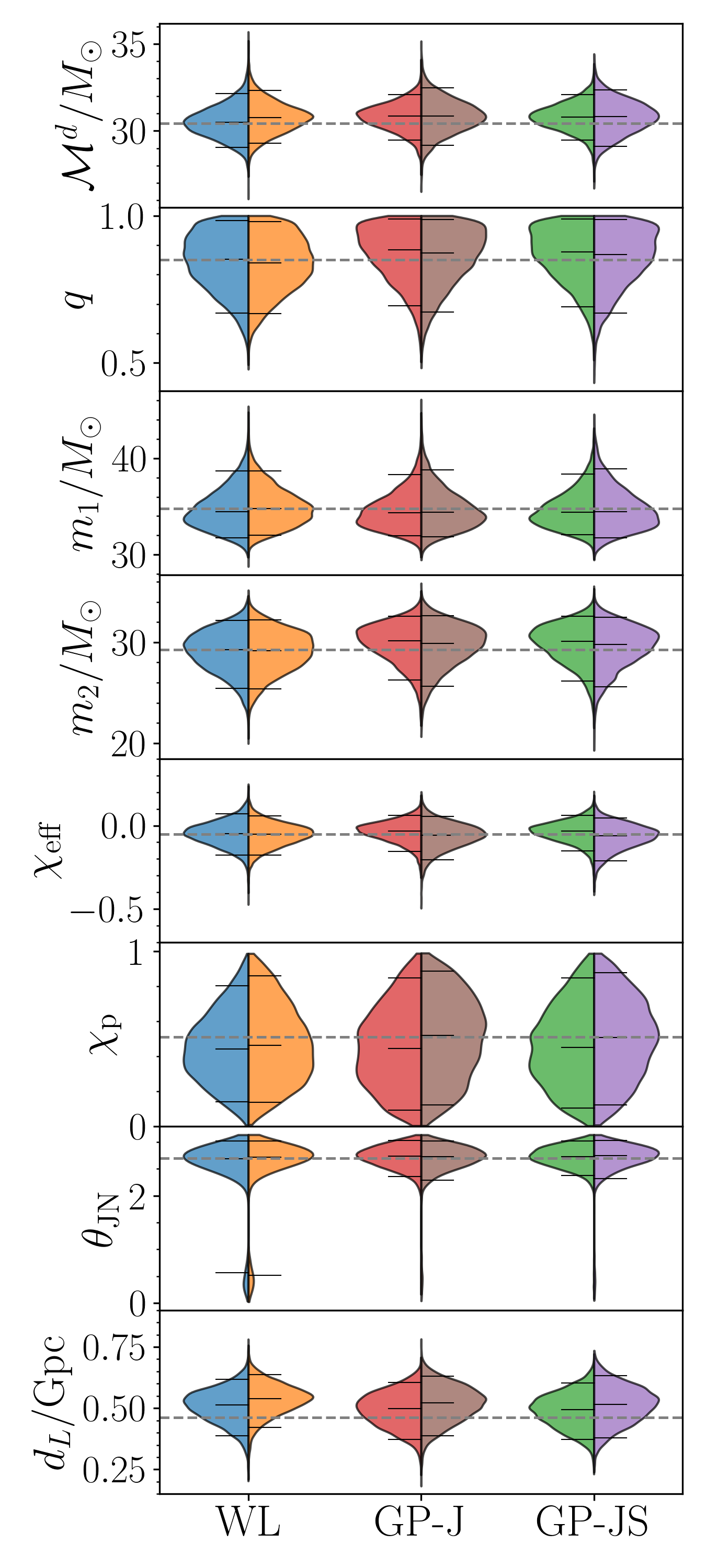
Figure 1: Comparison of posterior distributions for GW150914's key parameters from standard and GPBilby analyses, demonstrating statistical consistency across models.
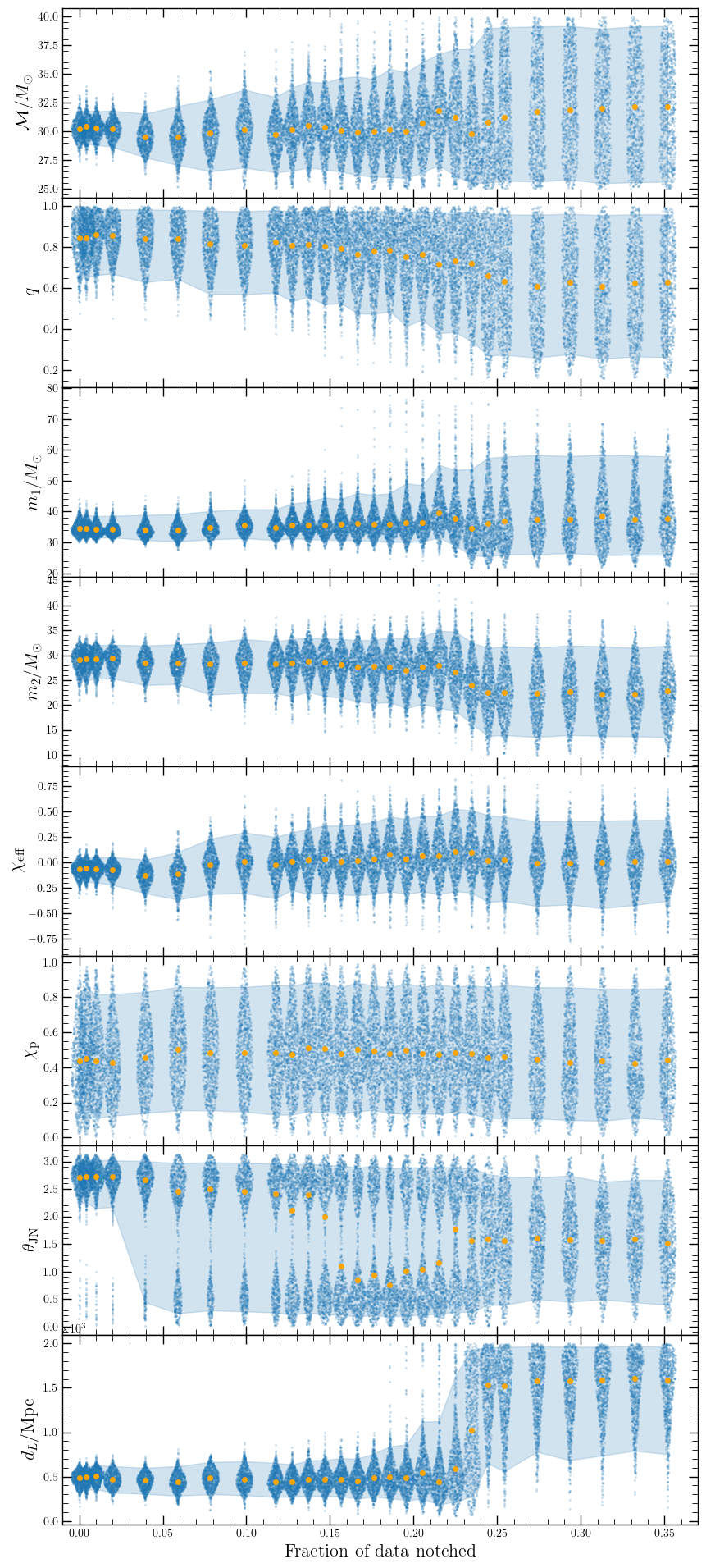
Figure 2: Robustness of posterior intervals for GW150914 as a function of the fraction of notched data near the power-line frequency.
GPBilby detects the presence of instrumental spectral lines (e.g., the 60 Hz power line), recovered by SHO terms, but these features do not bias astrophysical inference.
GW170814 and GW230814
Similar results for GW170814 (three-detector event, moderate SNR) confirm the vanishing bias from the GP model in the absence of significant non-Gaussian noise. GP-enhanced models can provide sharper credible intervals and suppress spurious secondary modes (notably in inclination), showcasing the potential regularizing effect of the GP prior.
For the very loud GW230814, inclusion of an SHO term alters posteriors in a way not attributable to clear detector artifacts. Posterior predictive analyses show the SHO model can absorb high-frequency residuals, highlighting the sensitivity of GPBilby to subtle systematic mismatches between data and waveform models, even absent high SNR glitches.
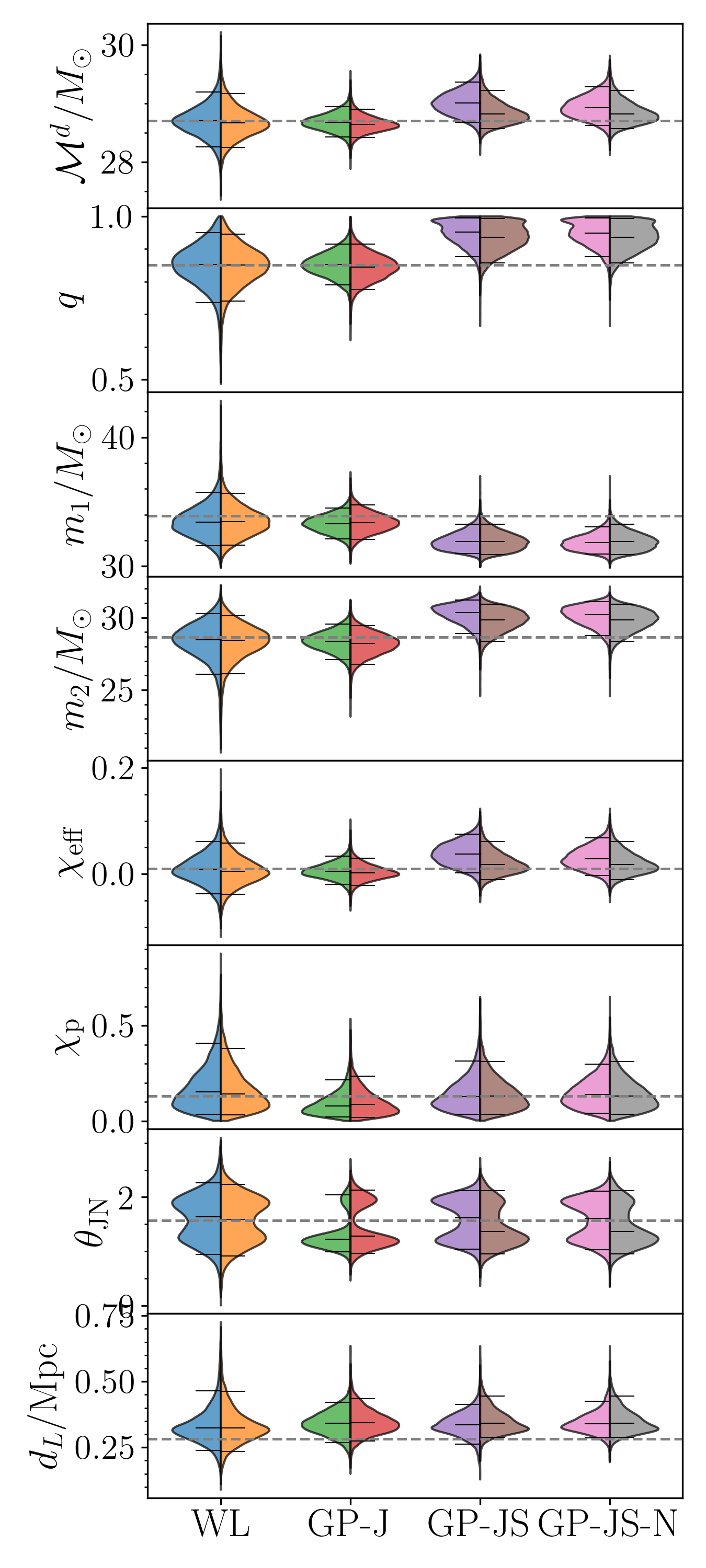
Figure 3: Source-parameter posterior comparison for GW230814, indicating differences induced by jitter-only vs. jitter+SHO noise modeling.
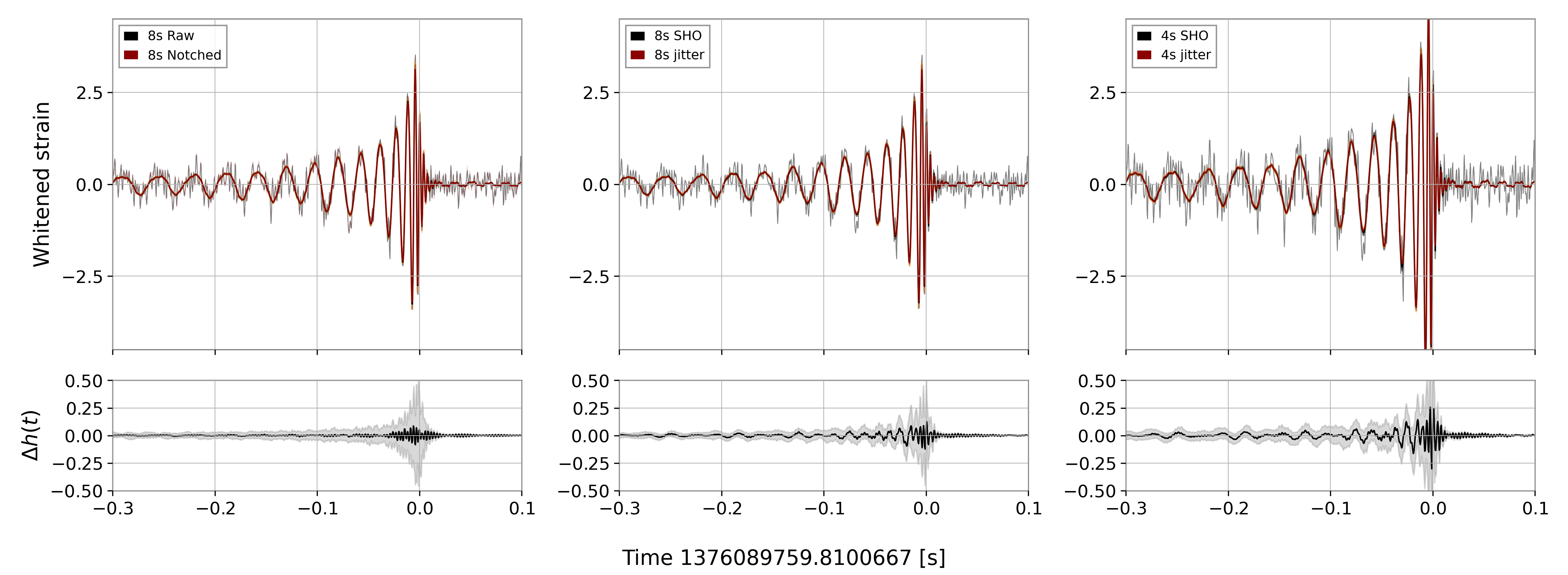
Figure 4: Posterior predictive strain reconstructions for GW230814, comparing noise and waveform model configurations and evidencing residual structure in high-SNR regimes.
Analysis of Glitch-Contaminated Events
GW191109
Glitches in both detectors, overlapping or adjacent to the signal, are directly modeled. Multiple SHO terms are required per detector to account for frequency-localized excess power, confirmed via time-frequency spectrogram diagnostics.
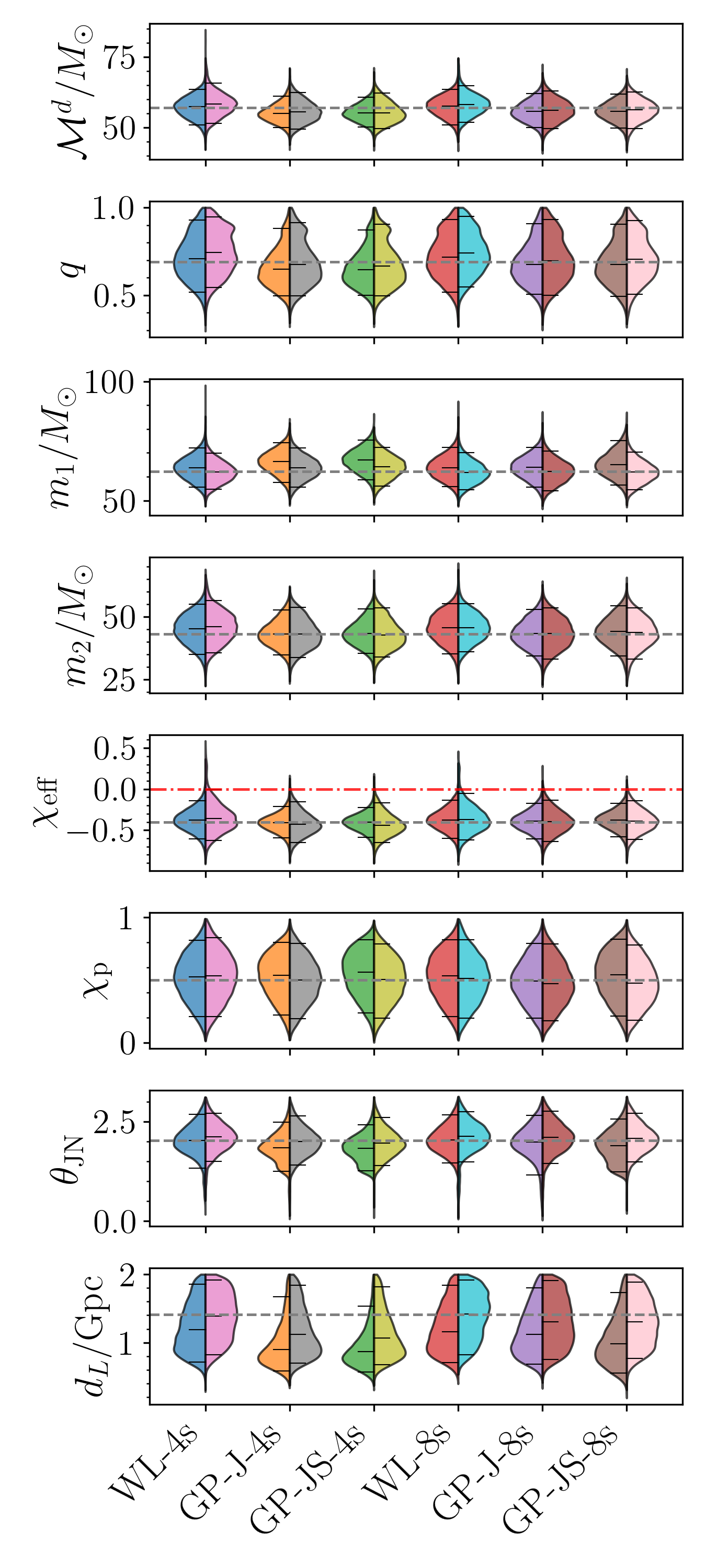
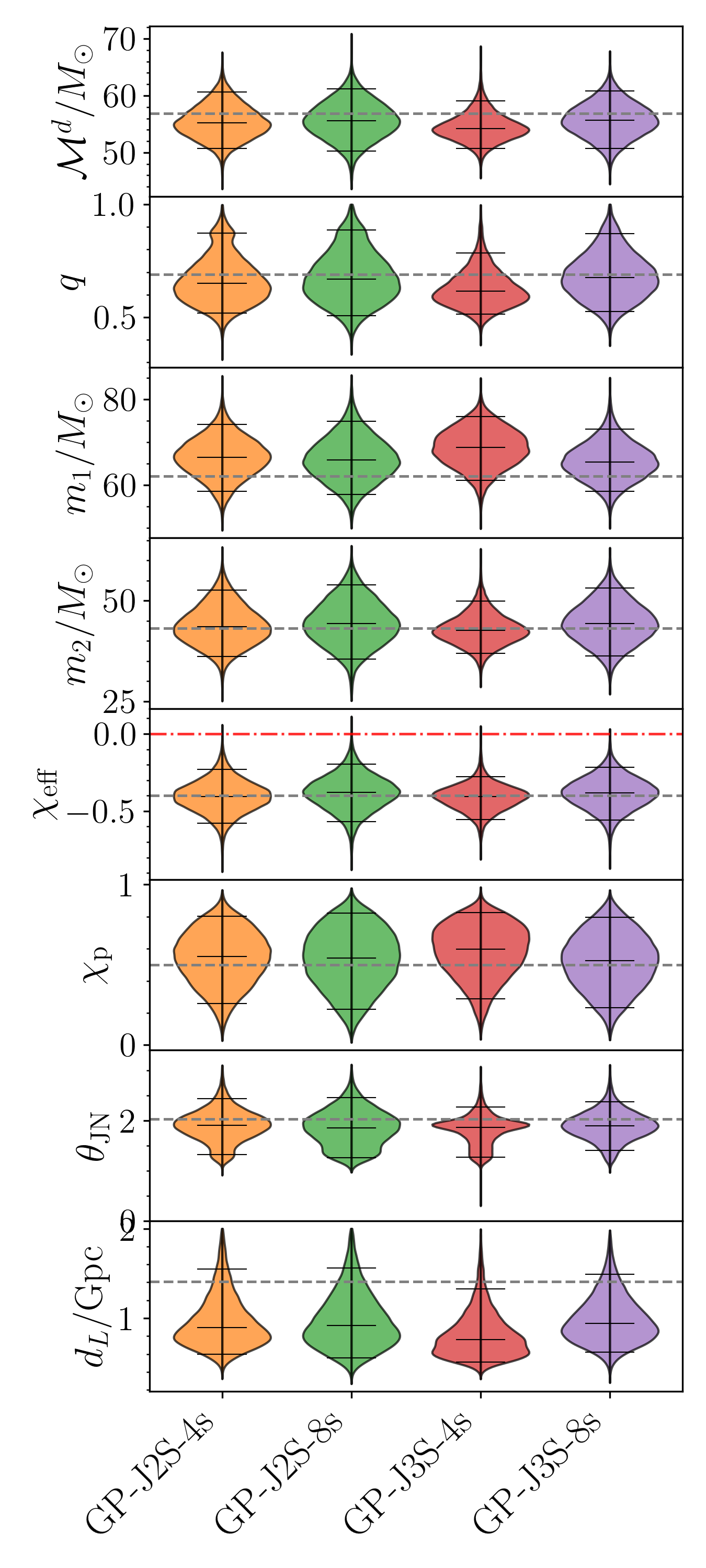
Figure 5: Posterior comparison for GW191109 under increasing glitch model complexity; astrophysical inferences are robust across likelihoods.
Notably, the negative effective spin inference (indicative of a likely dynamical formation scenario) remains stable, and the non-Gaussian noise modeling facilitates an inspiral–merger–ringdown (IMR) consistency test, which was previously infeasible for data-quality reasons.
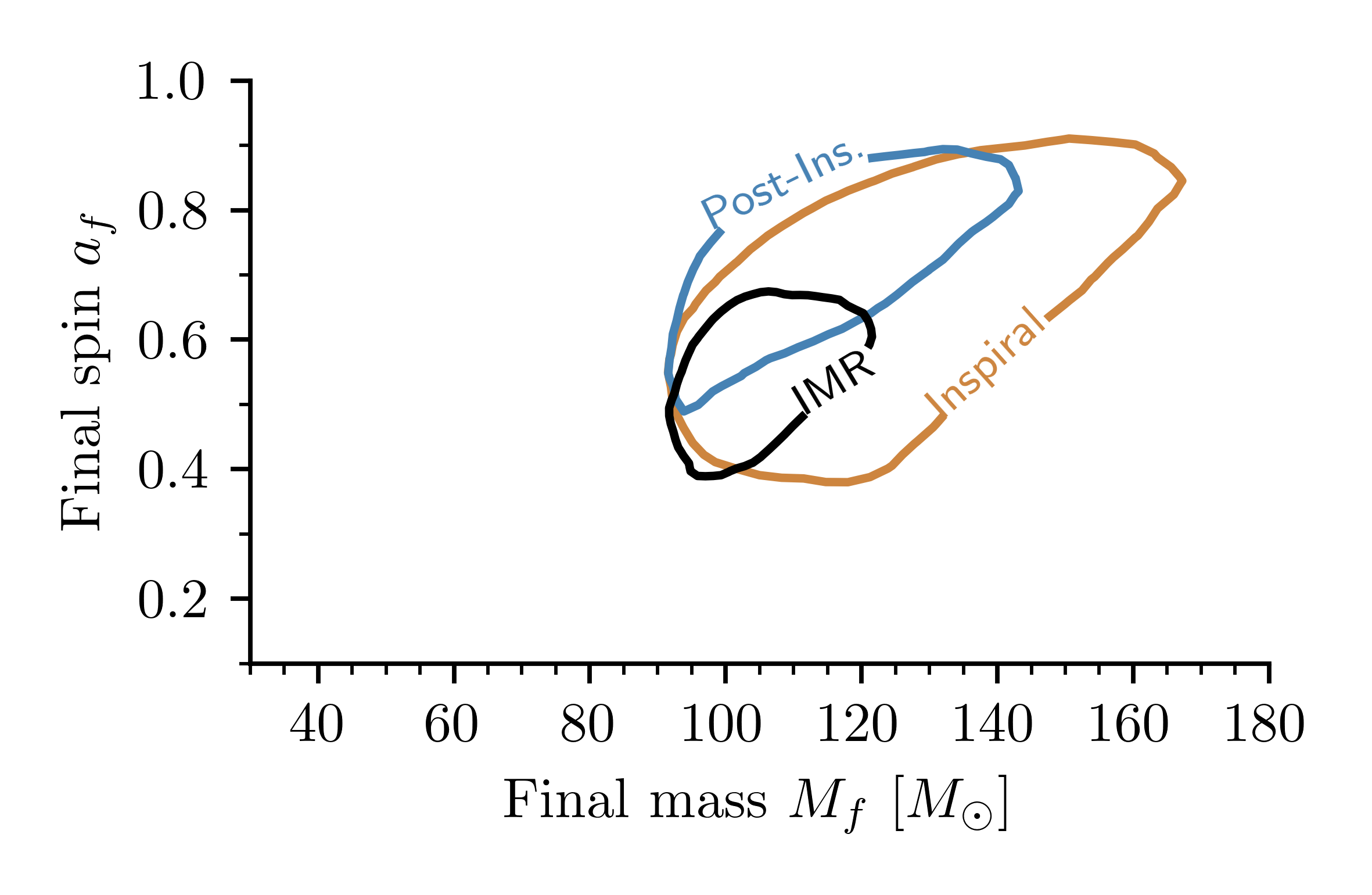
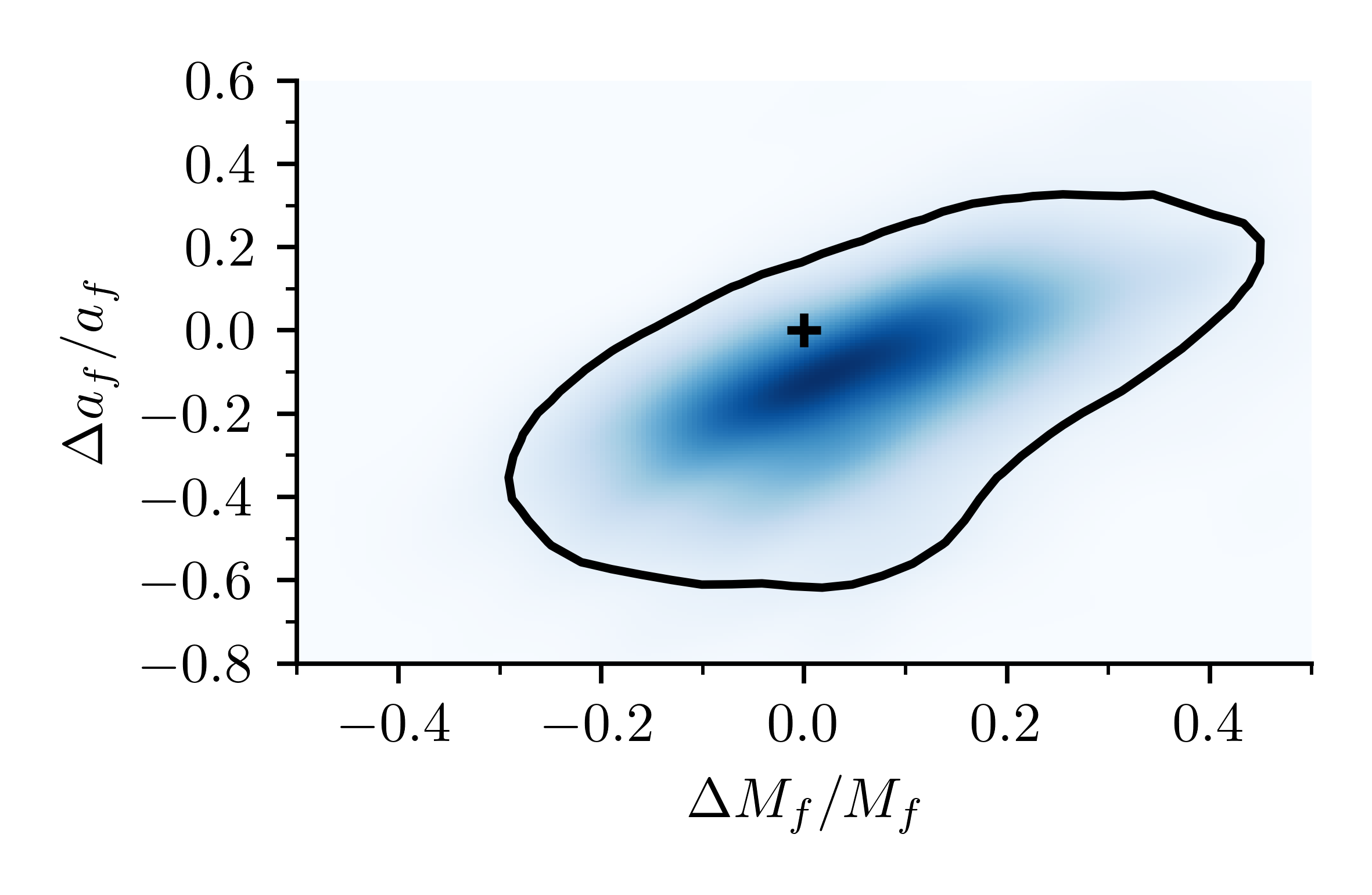
Figure 6: IMR consistency for GW191109, showing remnant parameter posteriors from different signal phases; colored regions indicate credible intervals compatible with general relativity.
GW231113 and GW231123
Low-SNR and high-mass, glitch-affected events are studied comprehensively. For GW231113, GPBilby identifies and marginalizes over glitch power in LLO data without altering astrophysical inference, providing tighter constraints than the standard analysis.
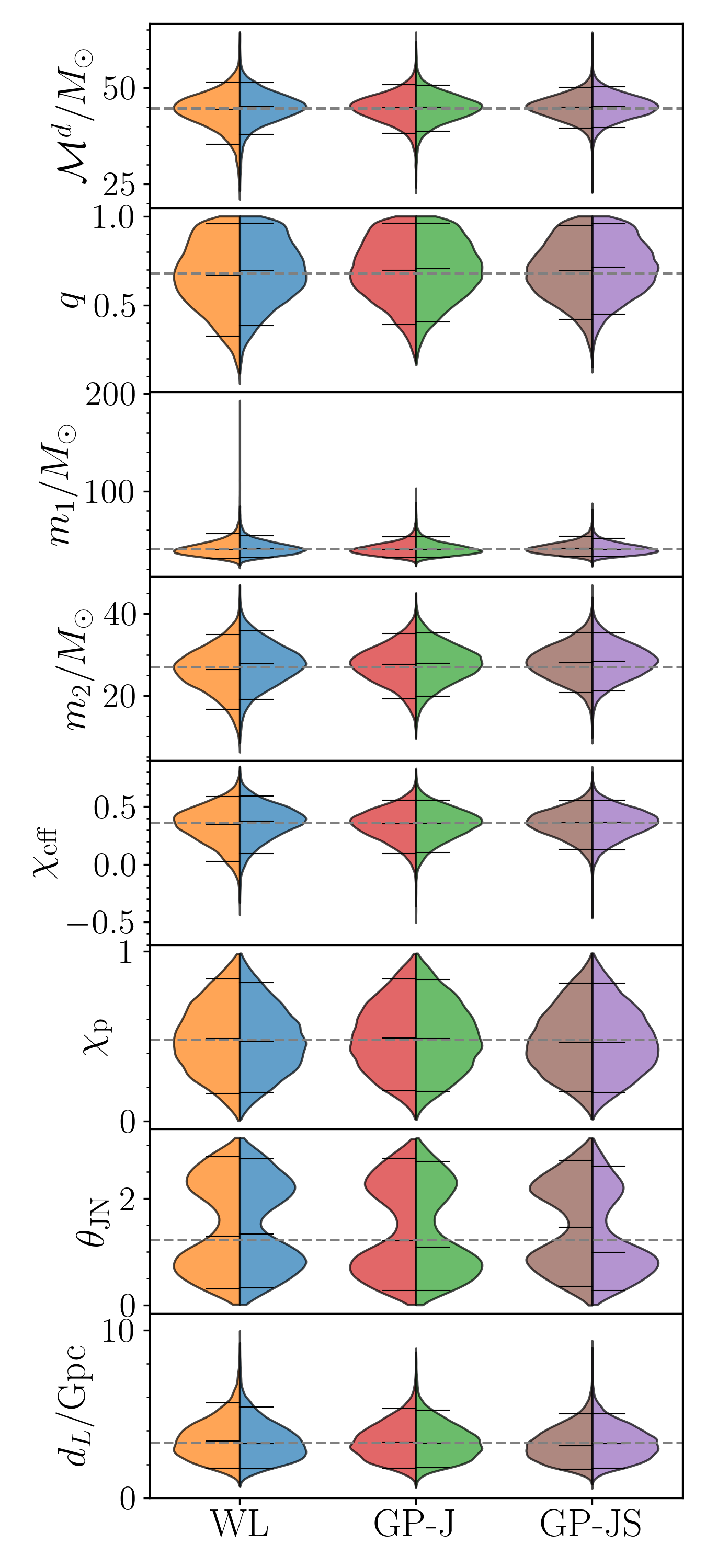
Figure 7: Source-parameter posteriors for GW231113, before and after deglitching, under different likelihood choices.
For the high-mass GW231123, waveform systematics become central: analyses with the IMRPhenomXPHM template reveal coherent residual structure absorbed by the GP, leading to observable shifts in source parameter posteriors—particularly the secondary mass and spin. Using NRSur7dq4, these residuals (and resulting shifts) largely vanish, indicating that the interplay between waveform accuracy and noise model flexibility is critical.
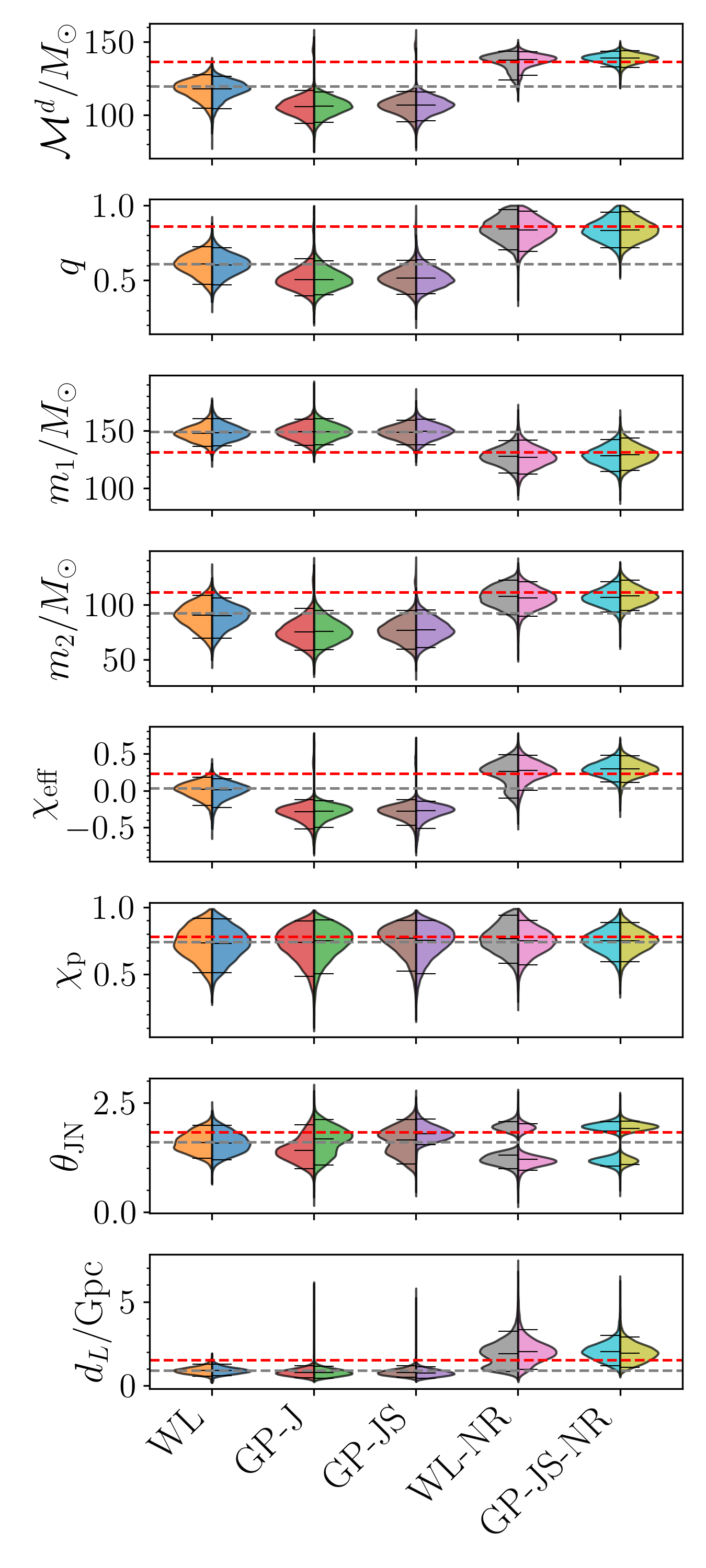
Figure 8: Detailed posterior comparison for GW231123 across waveform models (IMRPhenomXPHM vs. NRSur7dq4) and likelihoods, with GP terms absorbing modeling discrepancies only for the less accurate waveform.
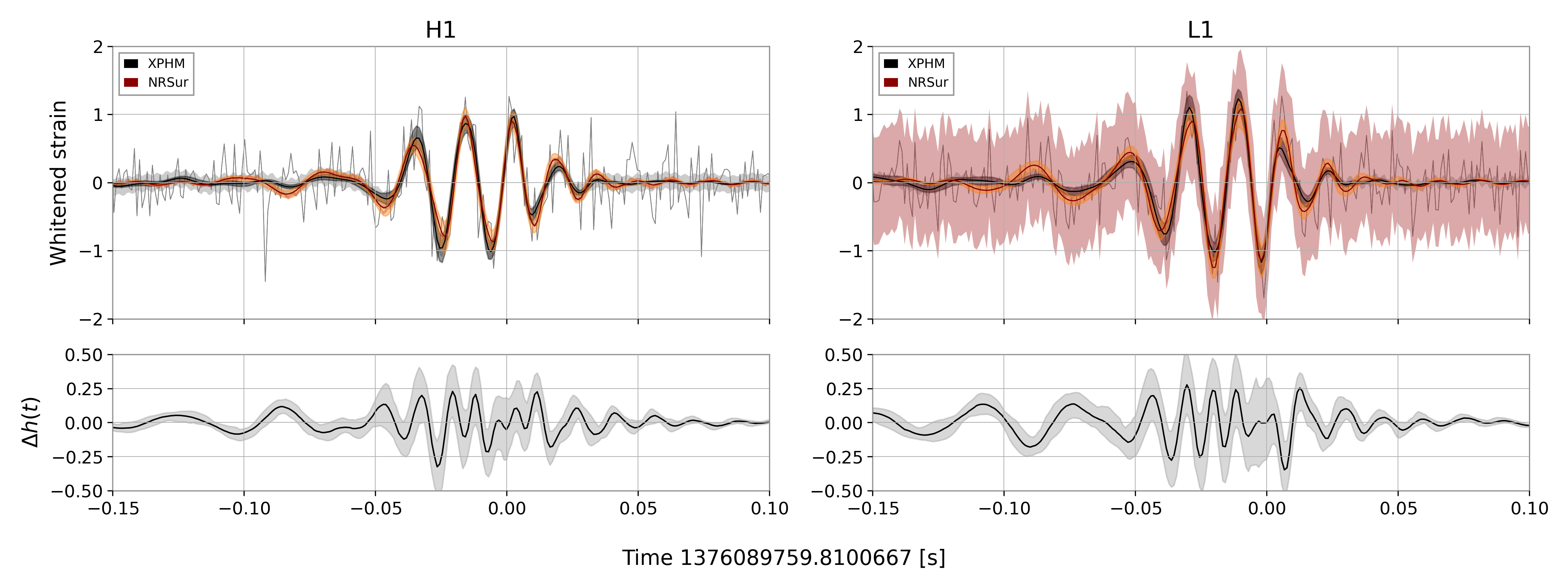
Figure 9: Strain reconstructions for GW231123 under two waveform models illustrating residual differences, especially around the merger; these are mitigated or absorbed by the GP as appropriate.
Ambiguous Candidate GW230630
An instrumental-origin candidate, GW230630, identified as such via excess low-frequency power coincident in both detectors, is tested within the GPBilby framework. Standard BBH waveform fits leave no significant additional residual power for the GP to capture, but this cannot validate the astrophysical origin of the candidate due to limitations in distinguishing coincident glitches from genuine signals at low SNR.
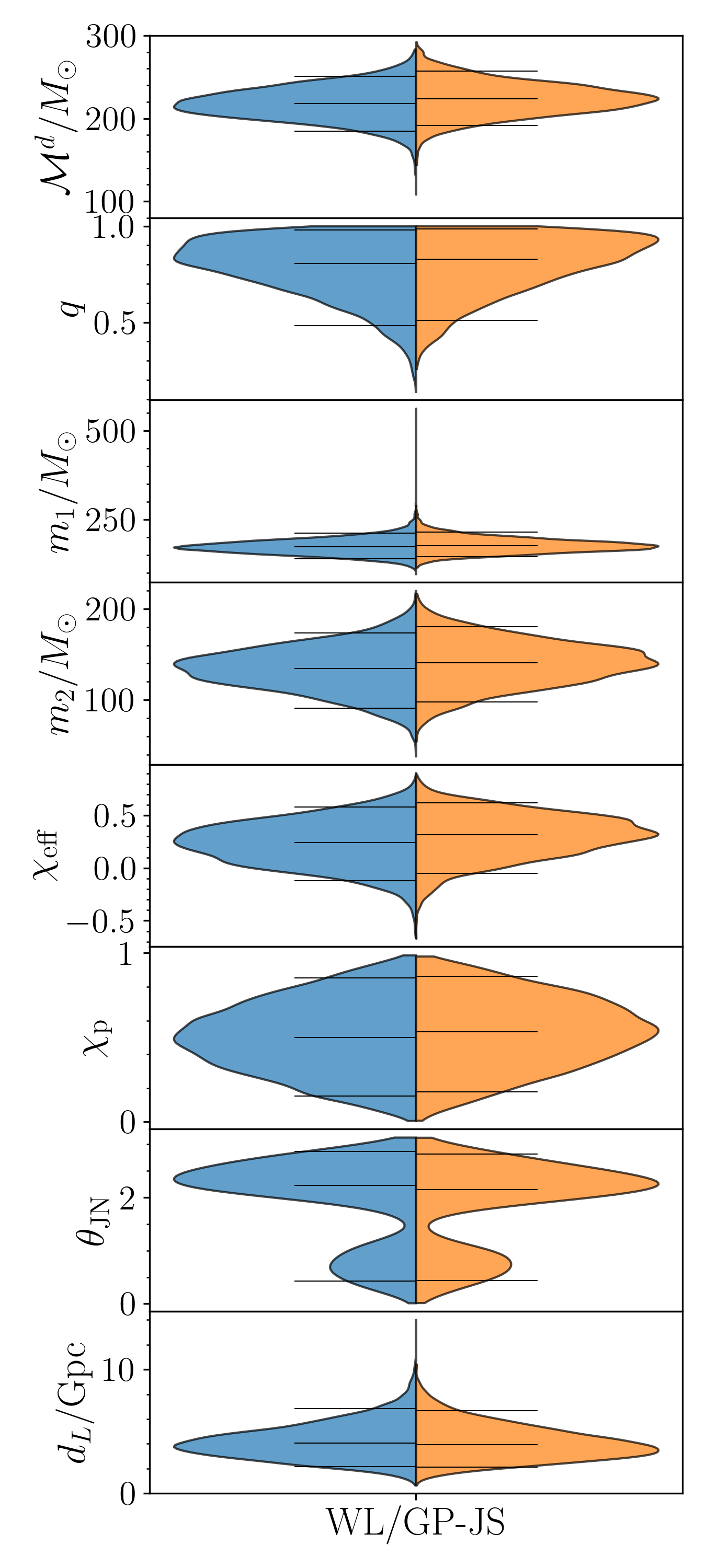
Figure 10: Consistency of source-parameter posteriors for GW230630 under standard and GPBilby analysis, highlighting degeneracy at low SNR with strong instrumental contamination.
Implications, Systematics, and Future Outlook
The paper provides strong evidence that GPBilby is a robust framework for marginalizing over a broad class of noise artifacts—including glitches—without biasing astrophysical parameter estimation when the underlying noise is well characterized. For events with significant non-Gaussian transients, GP terms (and especially the SHO components) coherently capture contaminant features, transferring uncertainty into the noise model and safeguarding inference.
More nuanced behavior arises when waveform systematics are present: the GP component can absorb nonphysical residuals, coupling parameter posteriors to waveform model fidelity and highlighting residuals not apparent in standard likelihood analyses. This diagnostic power is particularly acute in high-mass, high-SNR events and motivates future integration of waveform uncertainty quantification and flexible, possibly learnable, GP kernel design.
Pragmatically, GPBilby and similar methods are essential for population-level inference: robust parameters, correctly marginalized over noise systematics, will underpin future gravitational-wave cosmology, extreme-mass-ratio inspiral studies, and tests of general relativity as detector sensitivity and event rates increase.
Conclusion
This work establishes GPBilby as a flexible, principled, and computationally efficient approach for glitch-robust inference in transient gravitational-wave observations (2604.02018). The demonstrated case studies span the spectrum of signal SNR, noise environment, and waveform robustness. The results underscore the critical importance of joint modeling of signal, non-Gaussian noise, and waveform systematics in future GW data-analysis pipelines. There is a clear path for extensions including more expressive, event-adaptive GP kernels, tightly integrated with advanced waveform systematics treatments, to further enhance reliability in the next phase of gravitational-wave astronomy.