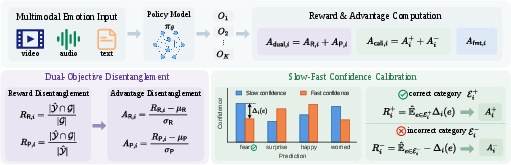
- The paper introduces MER-R1, a novel dual-objective RL framework that synergizes slow and fast thinking to balance precision and recall in emotion recognition.
- It employs category-level confidence calibration to mitigate fast thinking noise while preserving high recall across diverse multimodal affective benchmarks.
- Empirical results demonstrate state-of-the-art performance on MER-UniBench and MME-Emotion, with significant gains in fine-grained emotion recognition and sentiment analysis.
MER-R1: Multimodal Emotion Reasoning via Slow-Fast Thinking Synergy
Introduction
MER-R1 presents a comprehensive analysis and methodological advancement for Multimodal Emotion Recognition (MER) by LLMs. The work identifies and systematically addresses the "thinking paradox" in open-vocabulary MER: explicit, deliberative (slow) reasoning increases interpretability but does not inherently improve recognition accuracy. Contrarily, the authors observe that intuitive, direct (fast) answering often yields higher recall, raising critical questions about the utility of explicit CoT reasoning in emotion understanding. MER-R1 introduces the first explicit synergy framework to disentangle and couple the strengths of fast and slow thinking, achieving state-of-the-art (SoTA) performance across diverse MER and multimodal affective benchmarks (2606.27652).
Analysis of the Thinking Paradox
Prior reinforcement learning from verifiable rewards (RLVR) techniques in MLLMs optimize for explicit reasoning chains, yet empirical evidence shows that slow CoT-based reasoning is overly conservative—thus sacrificing recall for precision and suppressing signal diversity.
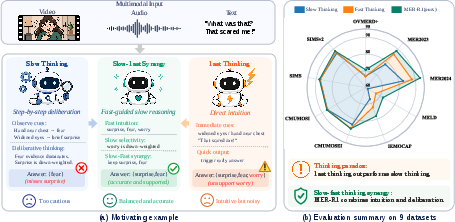
Figure 1: Illustration of the thinking paradox in MER and summary that fast thinking outperforms slow thinking across nine datasets.
Quantitative analyses (Figure 2, Figure 3) reveal that fast thinking provides broader coverage (higher recall, increased prediction diversity, and stronger absolute confidence on correct emotional categories) but at the cost of increased noise (lower precision and a reduced margin to hard negatives). In contrast, slow thinking focuses on selectivity, yielding sparse predictions and higher margins by down-weighting spurious candidate categories, but it simultaneously introduces under-confidence in truly correct predictions.
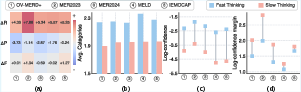
Figure 2: Emotion-wheel-based analysis and quantitative breakdown of recall, precision, and confidence margin across five MER benchmarks.
These findings establish two critical desiderata for optimal multimodal emotion reasoning:
- Preserve fast thinking’s recall-oriented coverage and strong correct-category confidence.
- Retain slow thinking’s precision-oriented selectivity and suppression of spurious predictions.
The MER-R1 Framework
MER-R1 implements slow-fast thinking synergy by formulating a dual-objective RL training protocol augmented with category-level confidence calibration. The training pipeline (Figure 4) incorporates:
Theoretical analysis rigorously demonstrates that dual-objective disentanglement achieves balanced coupling of recall and precision gradients, overcoming the variance-induced bias that plagues scalar F1-based objectives (see the appendix for detailed derivation).
Empirical Results
MER-UniBench and MME-Emotion
MER-R1 achieves new state-of-the-art scores on MER-UniBench, with a mean official score of 83.50, outperforming all prior MLLM-based approaches by at least 5.6 points. Gains are consistent across fine-grained emotion recognition (improvement on OV-MERD+ from 66.86 to 70.68), basic emotion groups, and sentiment analysis.
On the MME-Emotion holistic benchmark, MER-R1 achieves a mean CoT score of 51.5, with notable increments in both recognition and reasoning quality over previous RL-augmented models.
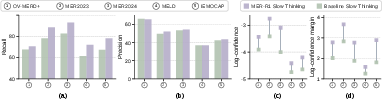
Figure 4: MER-R1’s performance boosts recall, preserves precision, and enhances category-level confidence and confidence discrimination compared to baseline and slow-thinking only models.
Synergistic Effects and Ablations
Comprehensive ablation studies confirm the necessity of each MER-R1 component:
- Reward disentanglement (RD) alone improves recall and mean F1,
- Adding advantage disentanglement (AD) further boosts recognition,
- Full slow-fast confidence calibration (SFCC) achieves optimal results.
Category-level calibration outperforms word-level calibration, and bidirectional adjustment (both correct and incorrect categories) yields superior precision-recall balance and confidence separation.
Qualitative Phenomena
Analysis of prediction dynamics and illustrative examples establish that MER-R1:
- Retains more correct, recall-oriented fast-thinking signals while filtering fast-thinking-induced noise.
- Recovers ground-truth emotion categories that baseline slow reasoning would incorrectly suppress.
- Exhibits robust generalization in both controlled and wild, fine-grained, and multi-label affective settings.
Implications and Future Directions
The explicit decomposition of system-1/system-2 style cognition in affective MLLMs opens multiple research trajectories:
- Extending dual-objective training and confidence calibration beyond emotion recognition tasks into general multimodal reasoning challenges.
- Integrating alternative interpretable reasoning formats that further mitigate the trade-off between coverage and selectivity.
- Investigating more granular (than emotion-wheel level) calibration and domain transfer effects in more abstract affective tasks.
- Optimizing computational efficiency, as the current formulation requires additional fast-thinking forward passes and relies on emotion-wheel mappings.
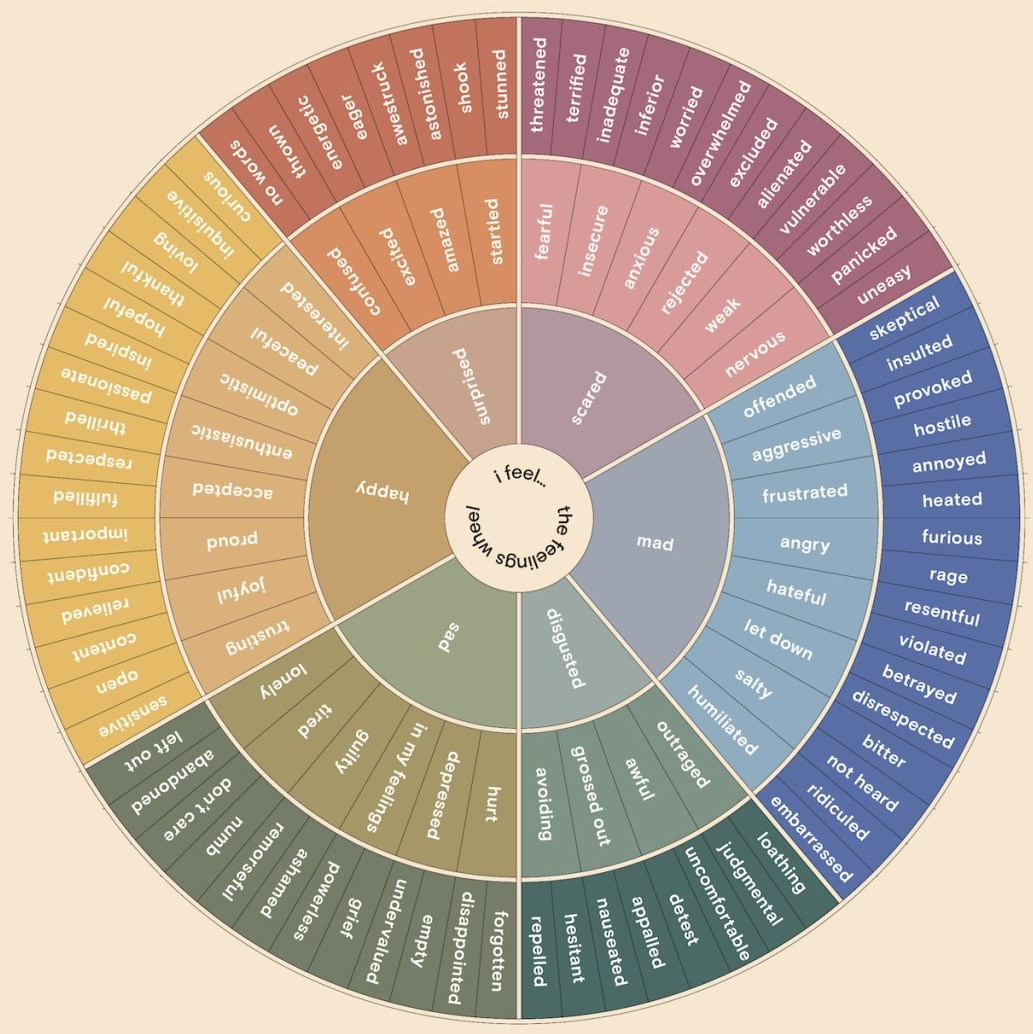
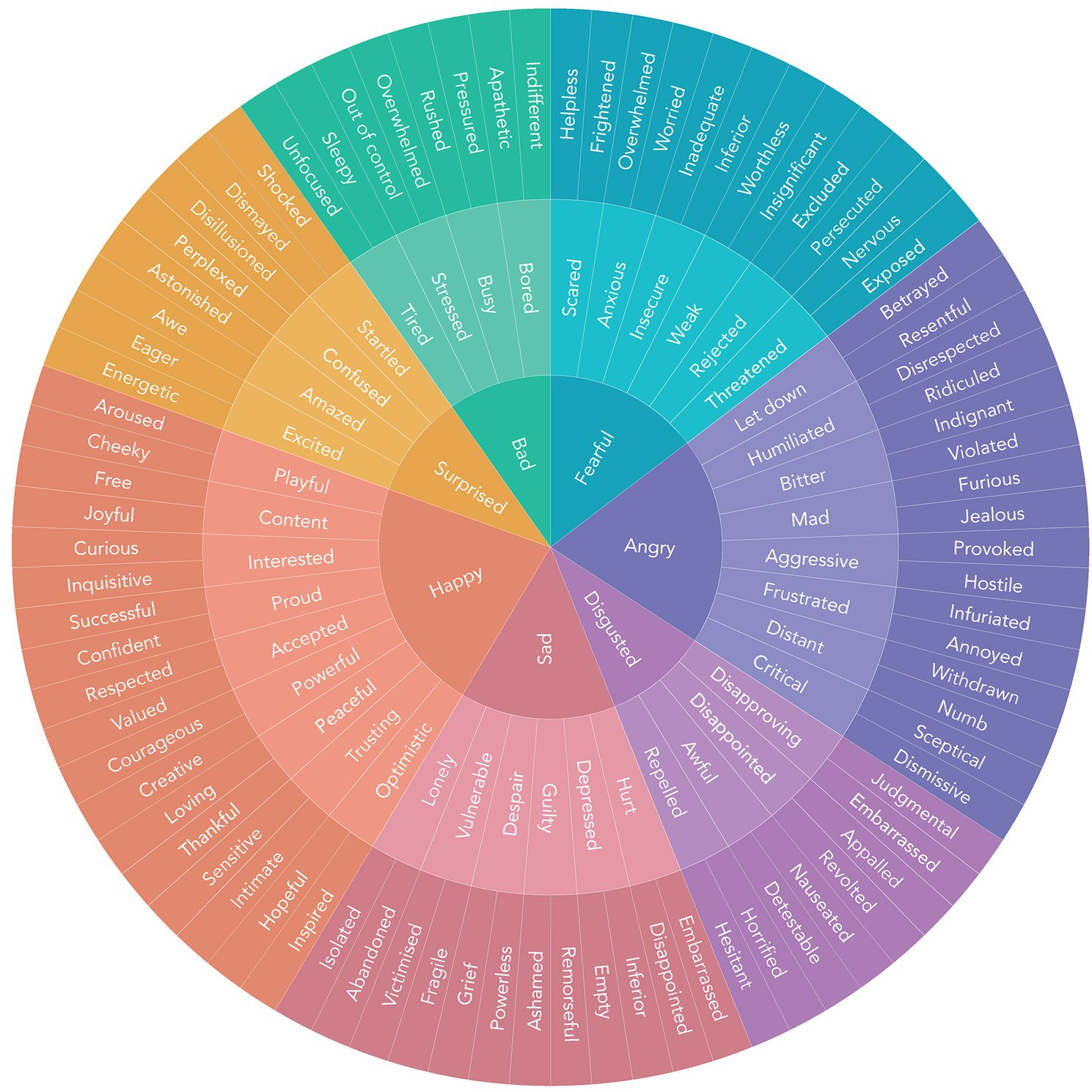
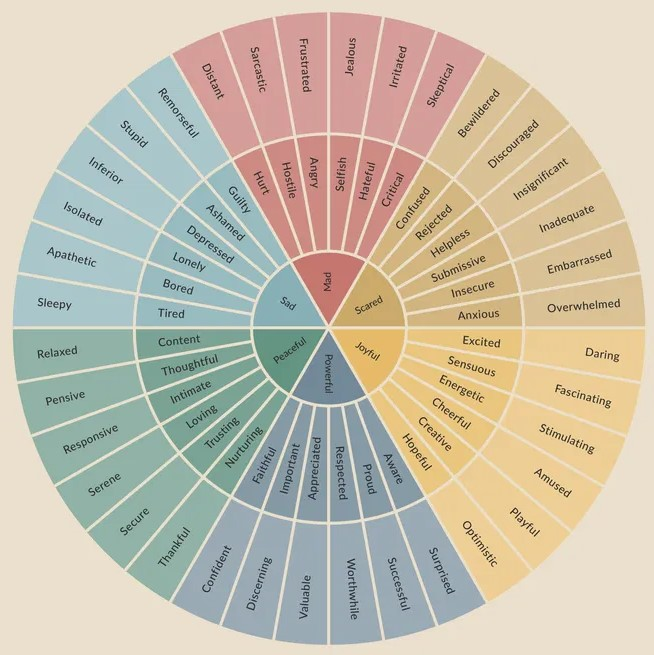
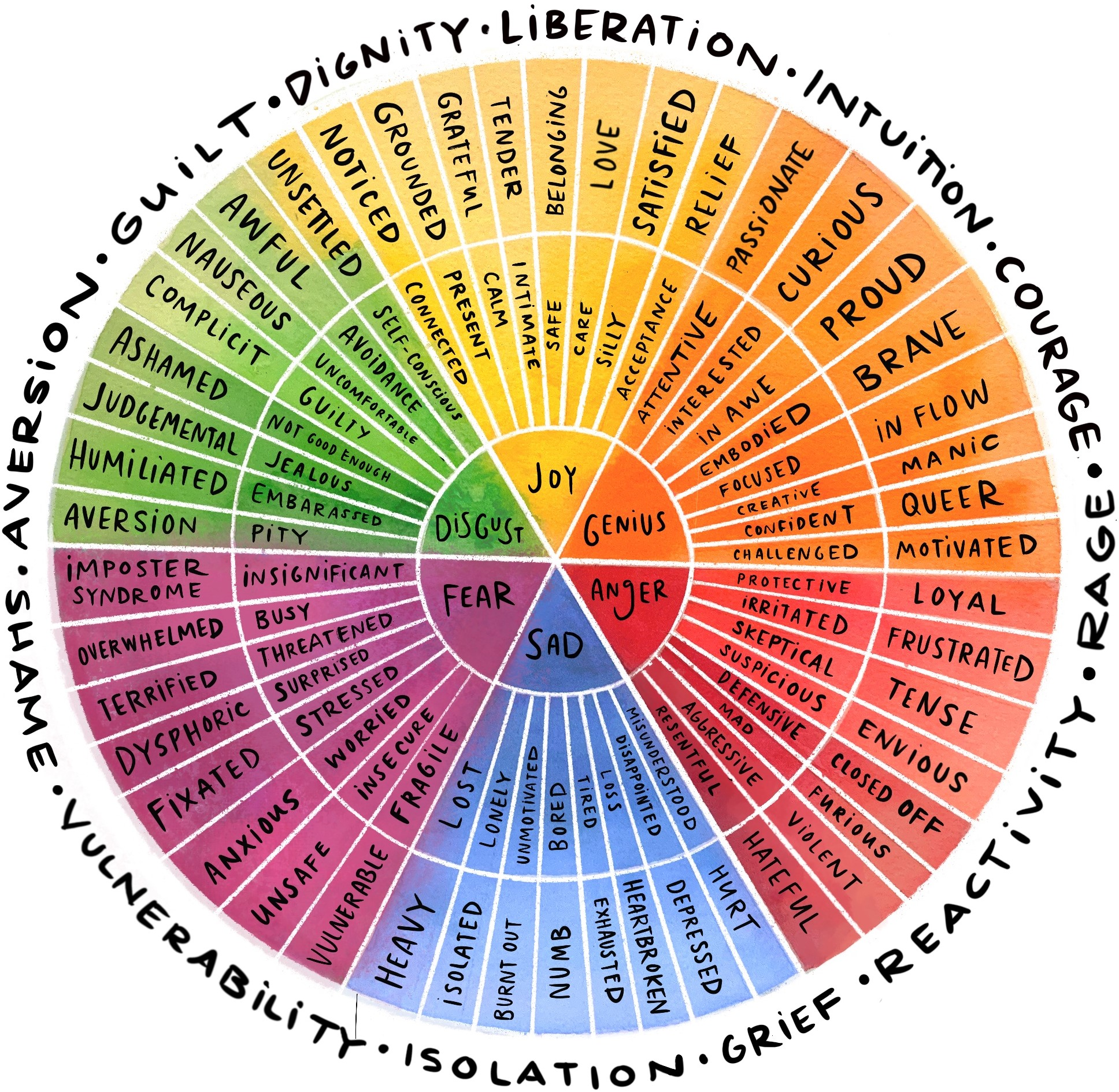
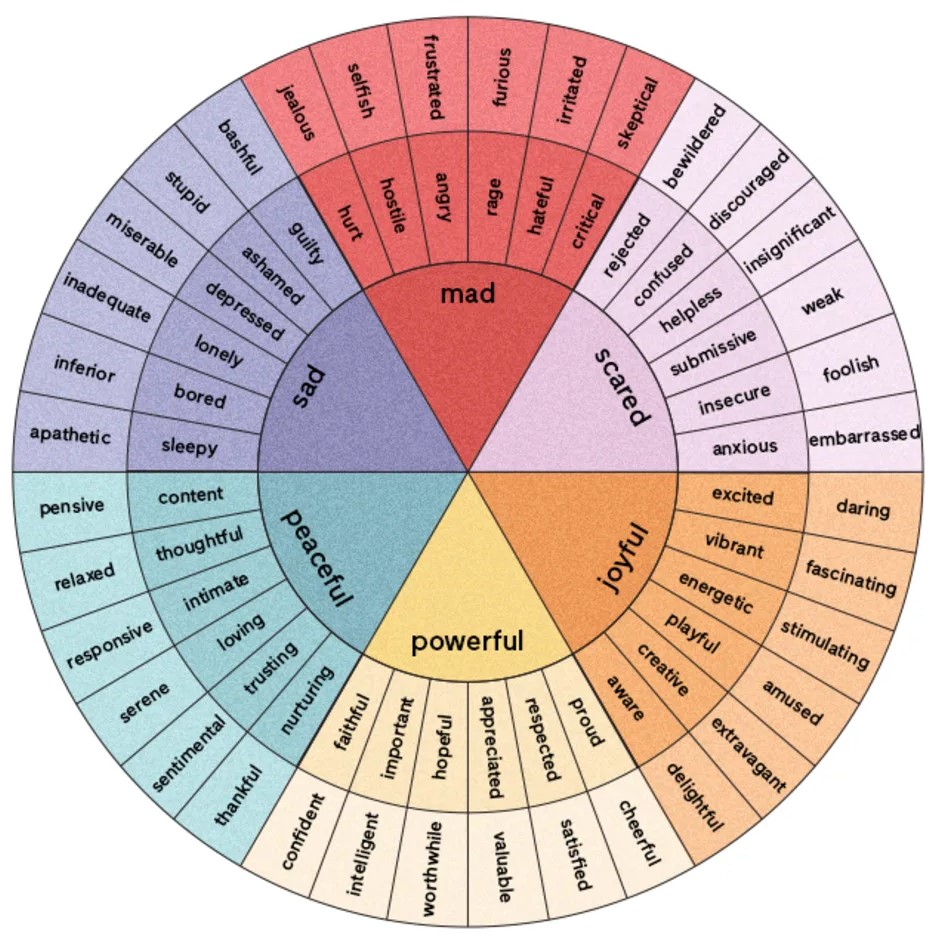
Figure 5: Emotion-wheel diagrams utilized for normalization, essential for robust open-vocabulary evaluation.
Conclusion
MER-R1 provides a rigorous analytic diagnosis of fast versus slow reasoning for multimodal emotion understanding and systematically overcomes prior limitations via disentangled reinforcement learning objectives and slow-fast confidence correction. This design not only yields superior empirical results but also establishes a new research paradigm for balancing intuition and deliberation in MLLM-based affective computing. While generalization to broader multimodal reasoning remains an open question, MER-R1 sets a robust foundation for future development of interpretable, high-precision, high-recall multimodal LLMs.