- The paper introduces a mapping between non-intersecting curve structures in string scattering amplitudes and eigenvalues in Random Matrix Theory.
- The paper demonstrates that area spacing statistics of curves converge to GOE and GUE ensemble characteristics for different angular variables.
- The paper confirms that the Area Form Factor analysis robustly captures multi-dimensional chaotic dynamics and symmetry-dependent behaviors in string scattering.
Multi-Dimensional Chaos in String Scattering: Curve Repulsion and Random Matrix Theory
Introduction
The paper "Multi-dimensional chaos II: String scattering amplitudes, curve repulsion, and RMT" (2606.24490) presents a systematic investigation of chaotic features in string scattering amplitudes dependent on multiple dynamical variables. The authors focus on the scattering processes of highly excited string (HES) states, analyzing how the angular dependence of these amplitudes induces characteristic non-intersecting curve structures in parameter space. They introduce a novel mapping from these curves to eigenvalues in Random Matrix Theory (RMT), particularly via the "area eigenvalues" between adjacent curves, and analyze the statistical distributions of these areas and related spacing ratios. The emergence of curve repulsion, area form factors analogous to SFF, and the mapping to RMT β-ensembles is quantitatively demonstrated, with distinctive ensemble behaviors associated to different angular variables.
Kinematical Setup and String Amplitude Structure
The study centers on the process HES+T→T+T, where a generic highly excited open bosonic string scatters with a tachyonic scalar, yielding two-scalar final states. The kinematical configuration is detailed, with the relevant momentum directions and angular variables parameterizing the scattering and polarization configurations.
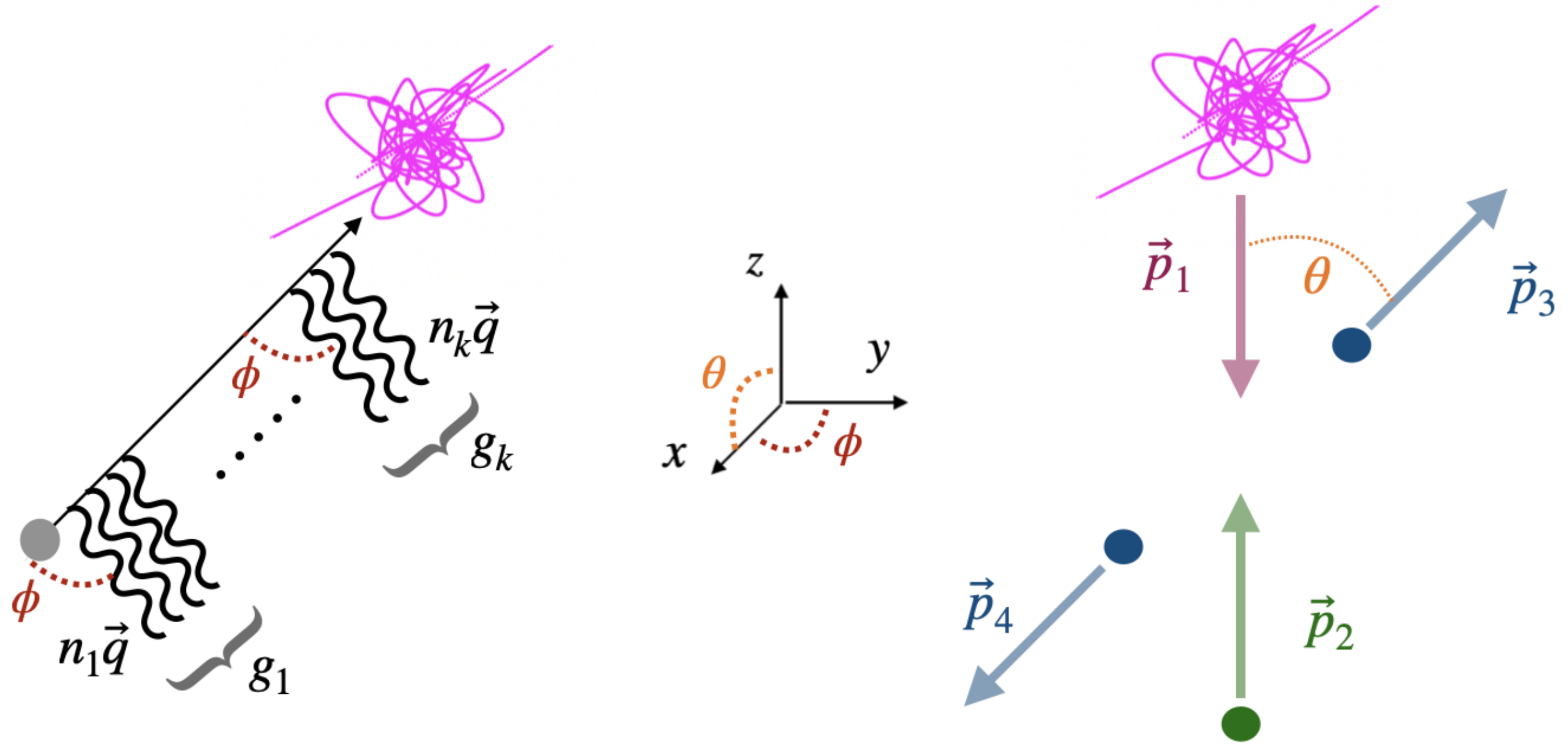
Figure 1: Kinematical configuration of the formation of the DDF HES (left) and the process HES+T→T+T in the center of mass frame (right).
The amplitude is constructed following the formalism in [Firrotta:2024qel], exhibiting dependence on both the scattering angle θ and the polarization angle ϕ. The central structure is determined by a dressing factor composed of products of Jacobi polynomials whose roots generate intricate angular features for the amplitude. At high excitation levels N, and for generic partitions of the state, these features manifest as complex, multi-dimensional chaotic behavior.
Amplitude Topography and Curve Structures
Numerical analyses reveal the amplitude exhibits a topographic landscape with zeros, extrema, ridges, and valleys. The zeros correspond to the roots of the Jacobi polynomials, while curves where the log-derivatives vanish define ridge lines in the (x,y)=(cosθ,cosϕ) plane. The authors argue these curves are non-intersecting, a manifestation of curve repulsion analogous to eigenvalue repulsion in RMT.
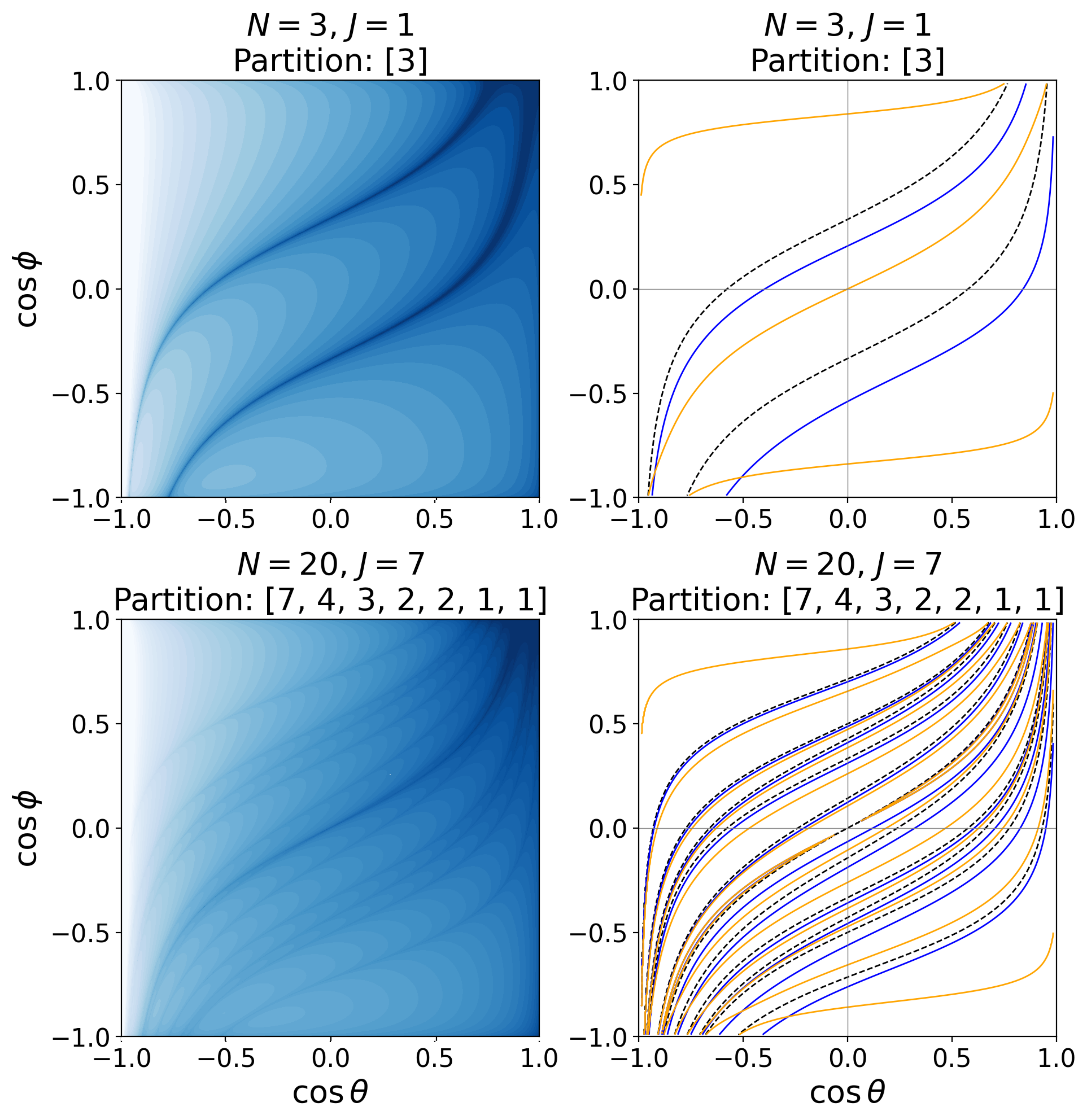
Figure 2: Amplitudes of two states at N=3 and N=20, and their curves; contour plot of log∣D∣ (left); curves of zeros of amplitude and its HES+T→T+T0- and HES+T→T+T1-derivatives (right).
As excitation number HES+T→T+T2 increases, the density and complexity of curves grow, with spacing between curves becoming increasingly erratic. The analysis confirms the non-intersecting property for generic partitions, and introduces the concept of area eigenvalues HES+T→T+T3—areas under the respective curves—used as analogous to spectral eigenvalues for mapping to RMT.
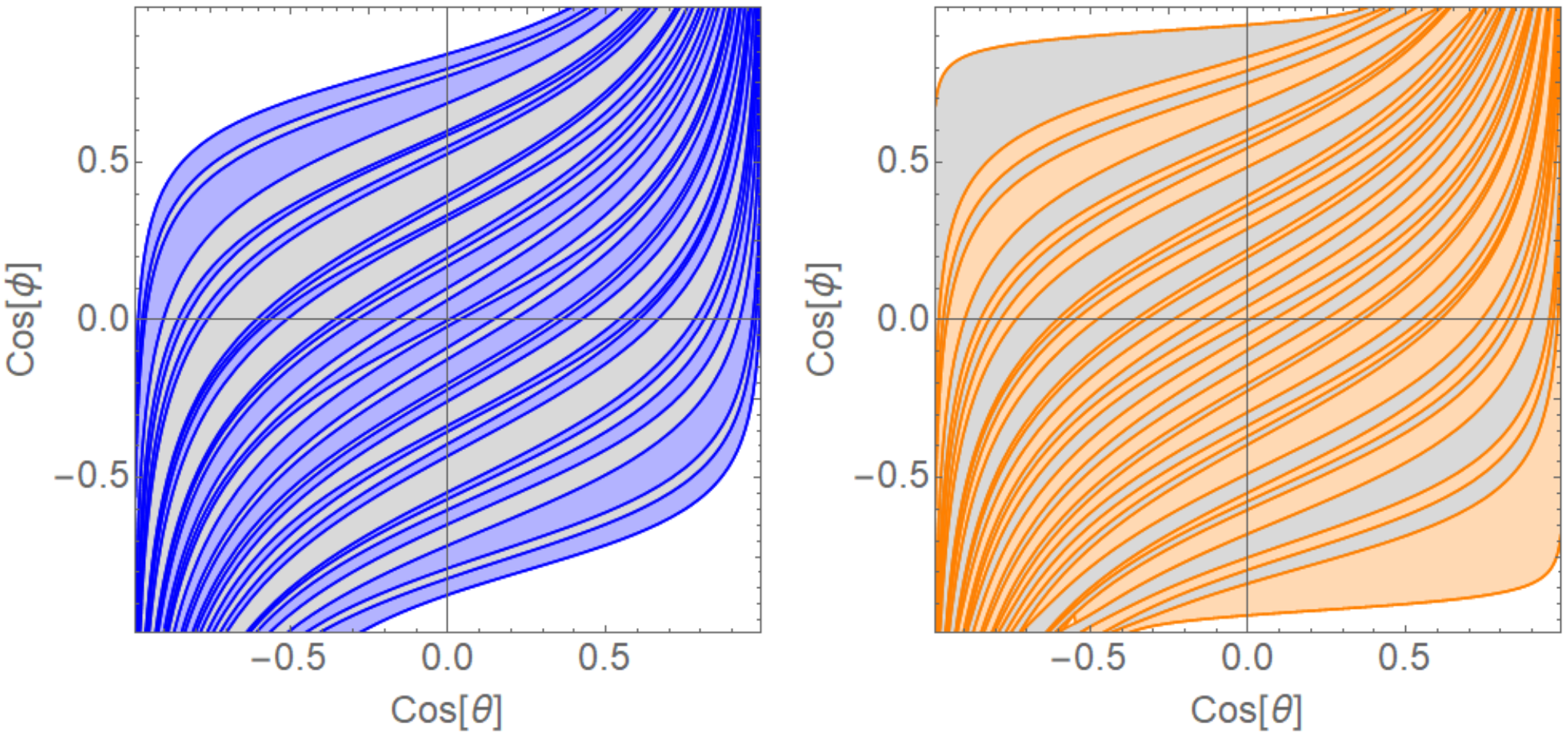
Figure 3: Curves of zeros of the HES+T→T+T4-derivative (left) and HES+T→T+T5-derivative (right) of HES+T→T+T6 for a state with HES+T→T+T7, alternating colored regions indicating area spacings.
Statistical Analysis: Spacing Ratios and RMT Mapping
To probe the statistical properties, the authors compute spacing ratios HES+T→T+T8 where HES+T→T+T9. Spacing ratios over ensembles of randomly partitioned HES states reveal a convergence to RMT Gaussian HES+T→T+T0-ensemble distributions, as characterized in [Atas:2013dis]. Notably, the distributions for curves associated with the scattering angle (HES+T→T+T1) tend toward the GOE value (HES+T→T+T2), while those associated with the polarization angle (HES+T→T+T3) converge toward GUE (HES+T→T+T4). For large HES+T→T+T5, the fit for HES+T→T+T6-curves yields HES+T→T+T7, while HES+T→T+T8-curves yield HES+T→T+T9.
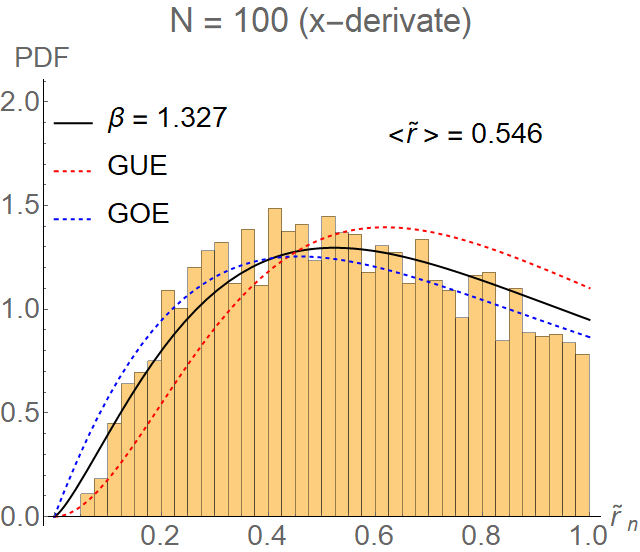
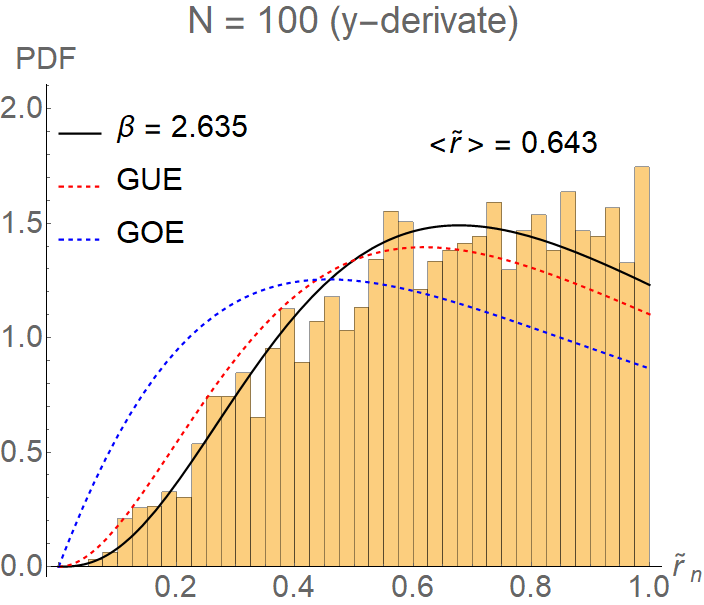
Figure 4: Distributions of ratios of adjacent areas compared to RMT for GOE, GUE, and best-fitted θ0 values, averaged over 100 θ1 states.
This dichotomy highlights a fundamental distinction between the underlying symmetries and dynamical properties of the angular variables, with time-reversal invariance in the scattering angle producing GOE-like behavior, and the polarization angle linked to GUE.
The area eigenvalues enable definition of the "Area Form Factor" (AFF), analogous to the spectral form factor (SFF) used for probing quantum chaotic dynamics. The AFF is shown to display characteristic decline, ramp, and plateau regions, as expected from RMT predictions. The ramp region's slope matches the extracted θ2 values from the spacing ratio fits. Ensemble normalization and subtraction of disconnected pieces are carefully handled to enable direct comparison with universal RMT scaling behavior.
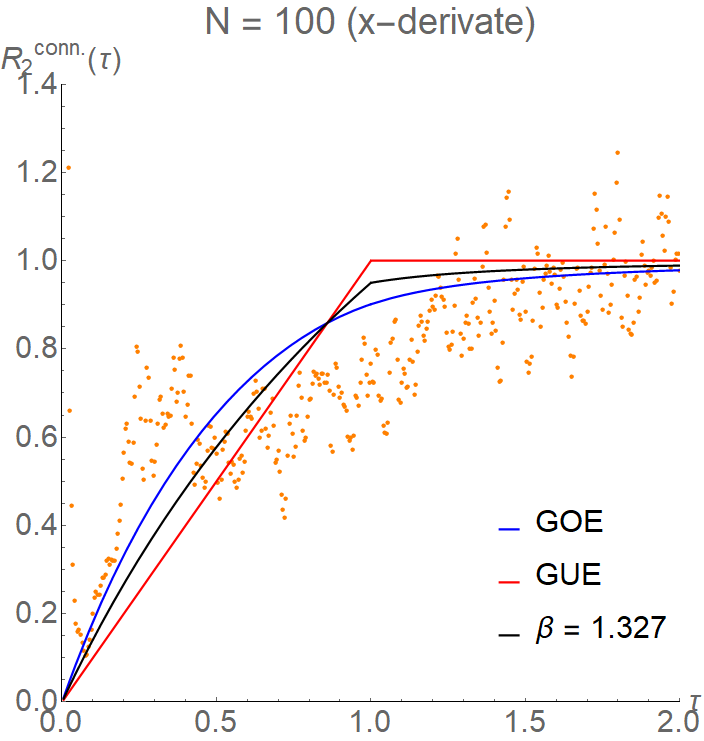
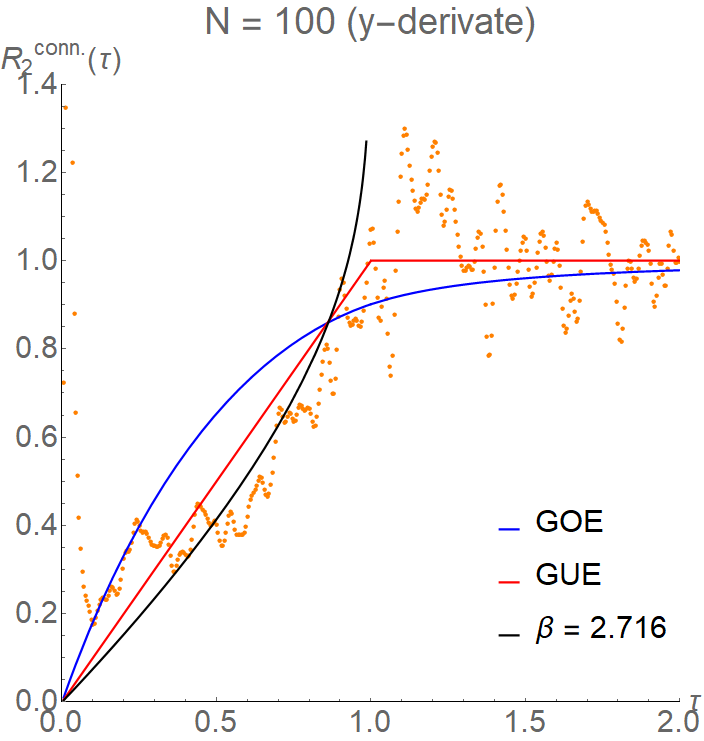
Figure 5: Connected part of the AFF for θ3, using areas under curves as eigenvalues and averaging over 100 partitions.
Complementary analyses across different θ4 confirm consistency of the mapping, with ramp and plateau features displayed robustly for both derivative types.
Supplemental Visual Evidence
The supplemental figures further reinforce the statistical and dynamical claims:
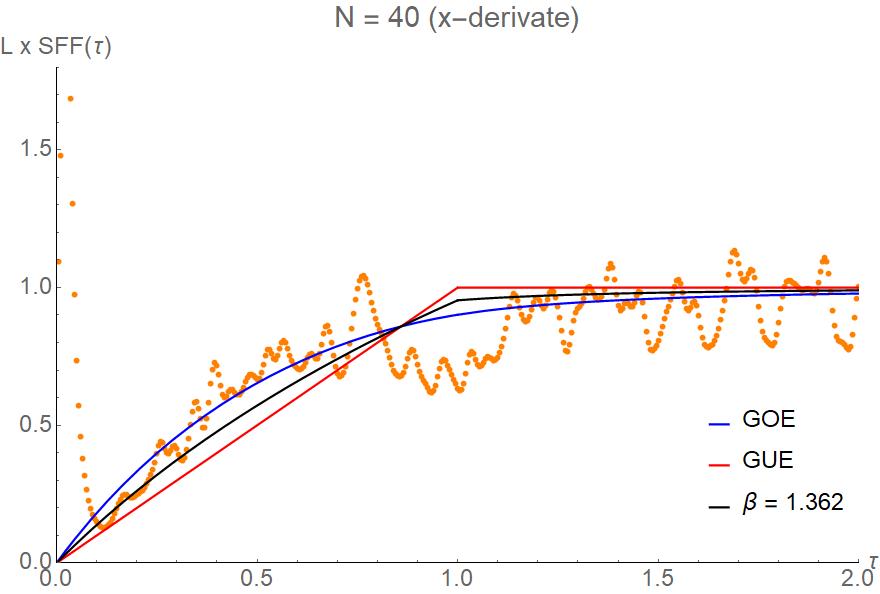
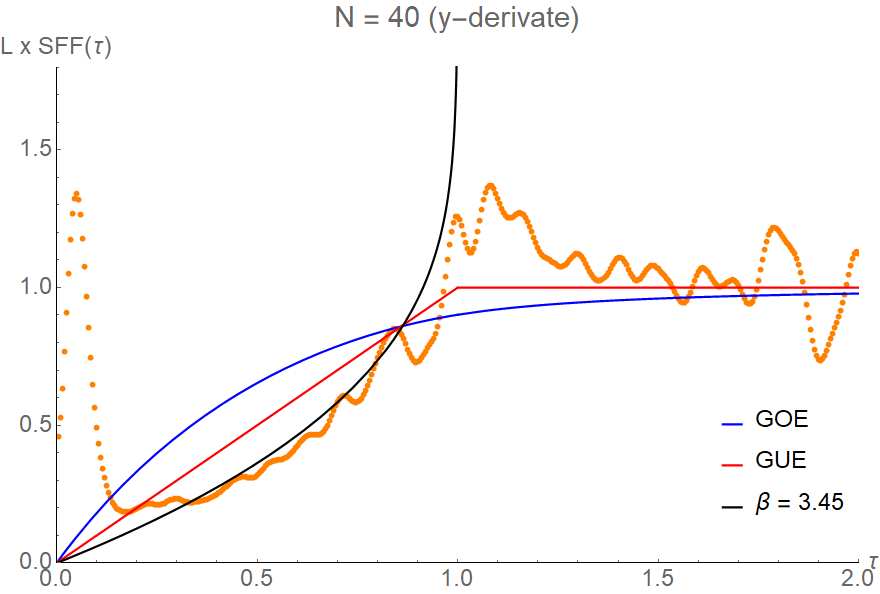
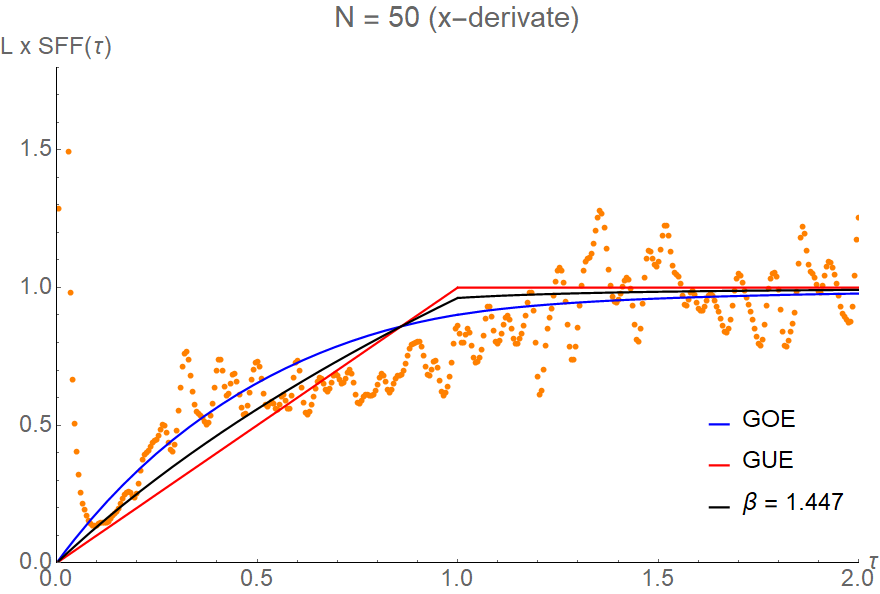
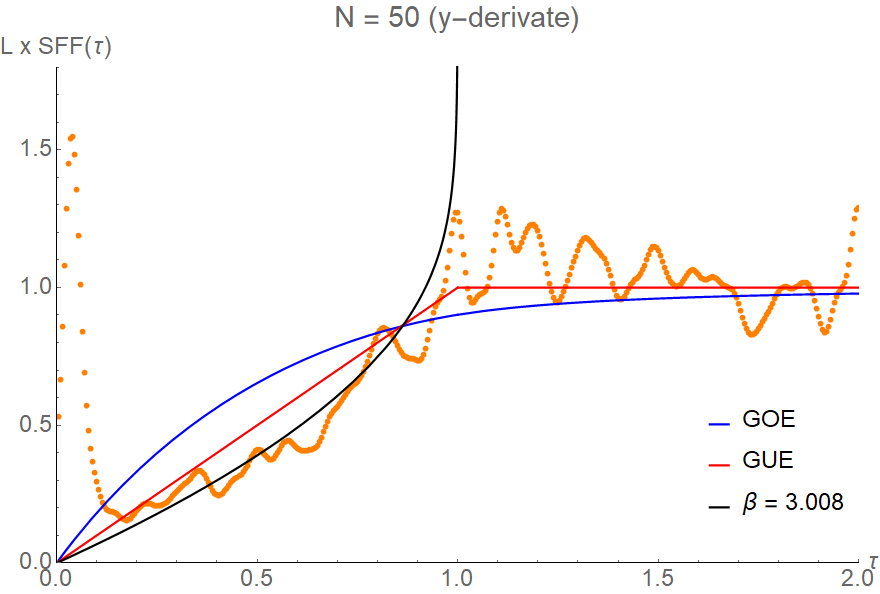
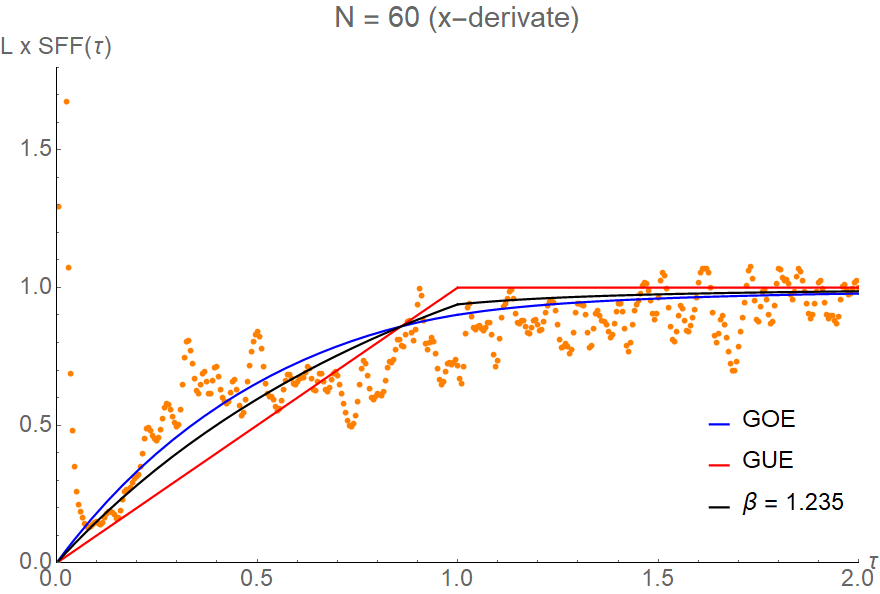
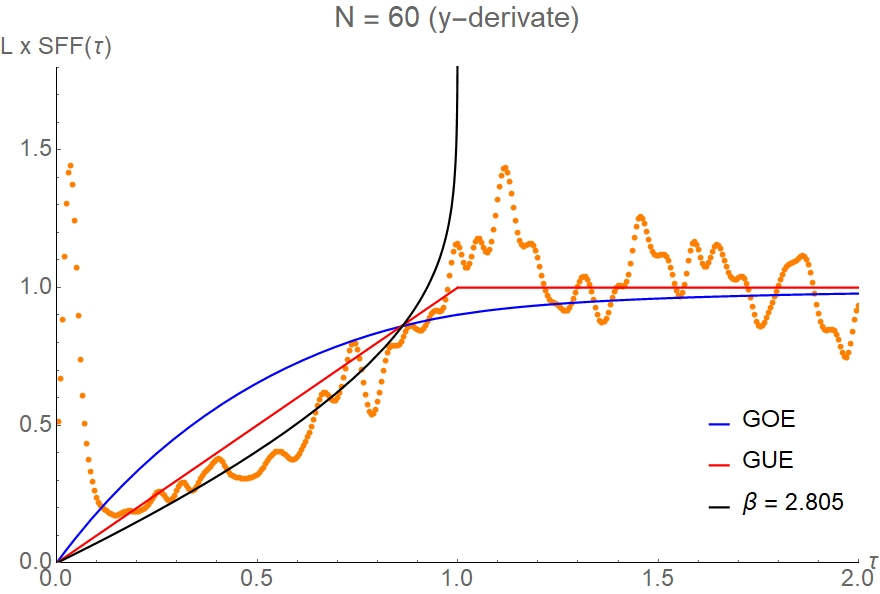
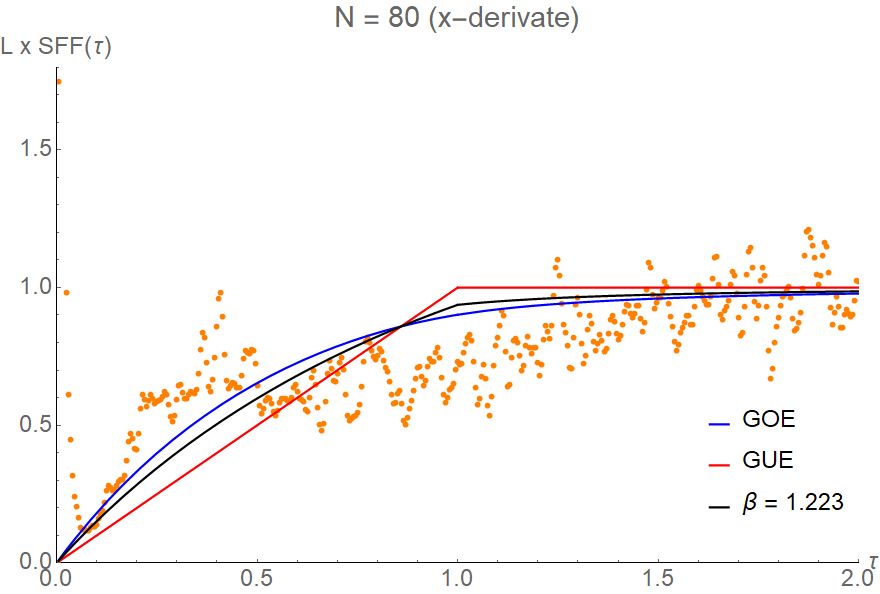
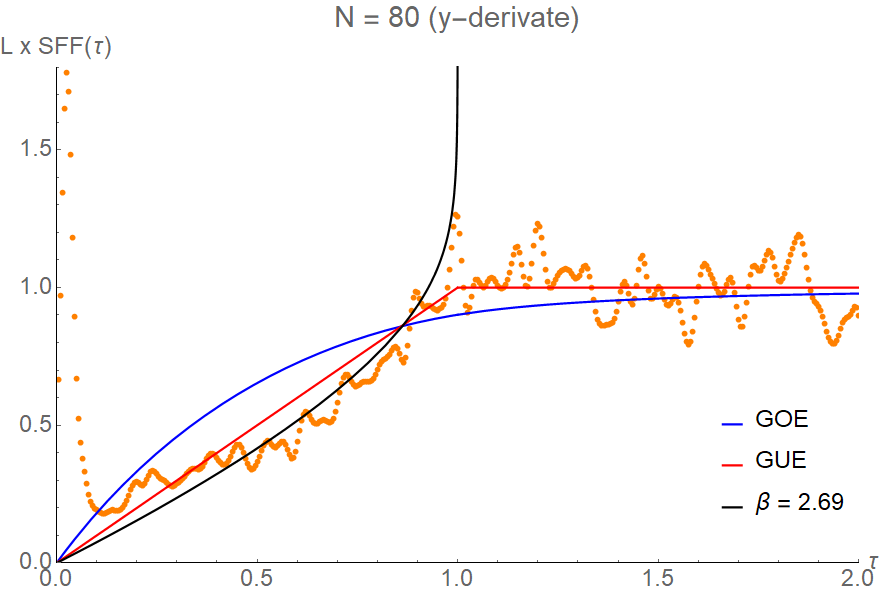
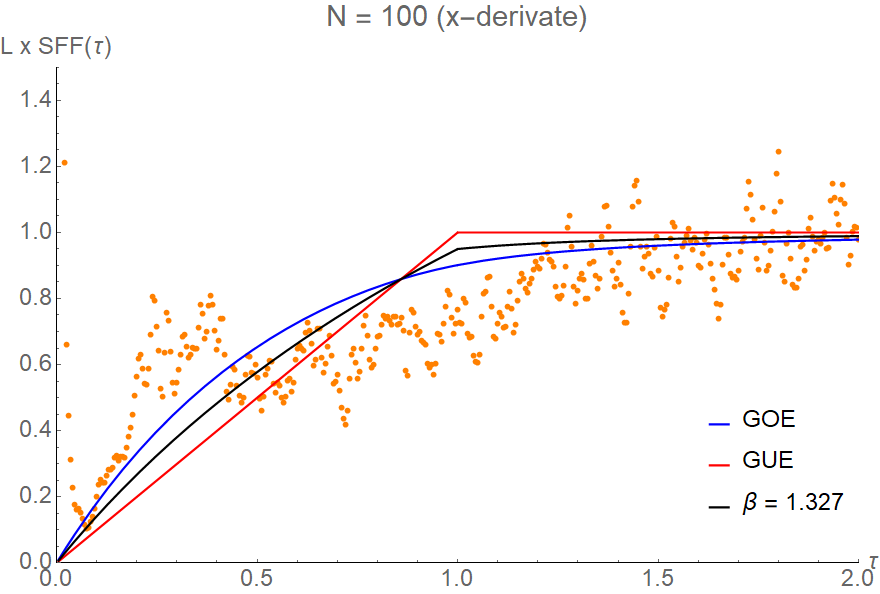
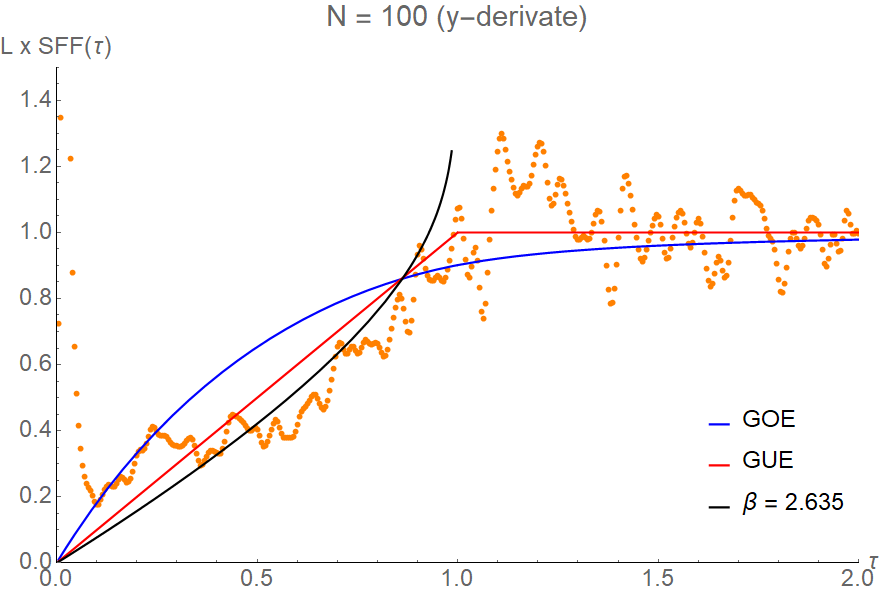
Figure 6: Connected part of the AFF on a linear scale for θ5, left/right columns for θ6/θ7 derivatives, showing ensemble scaling.
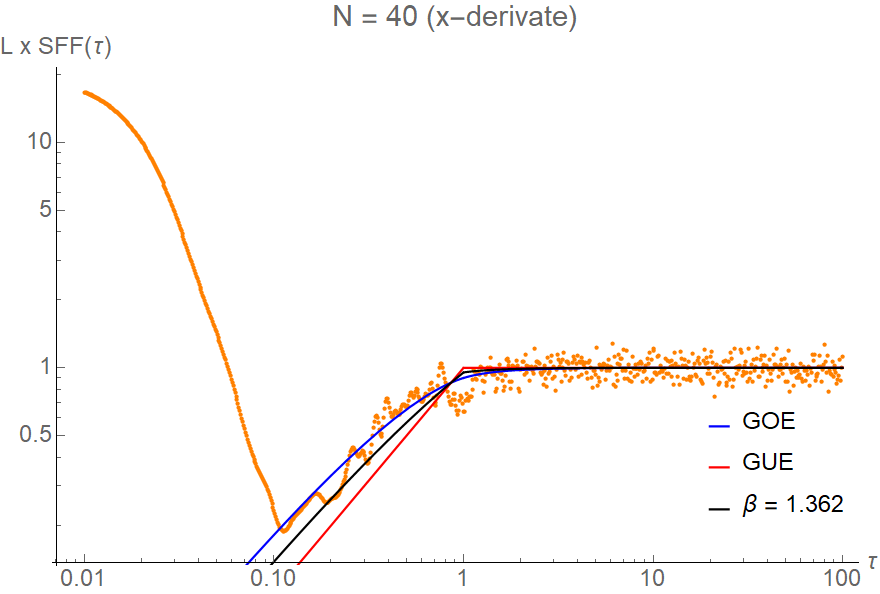
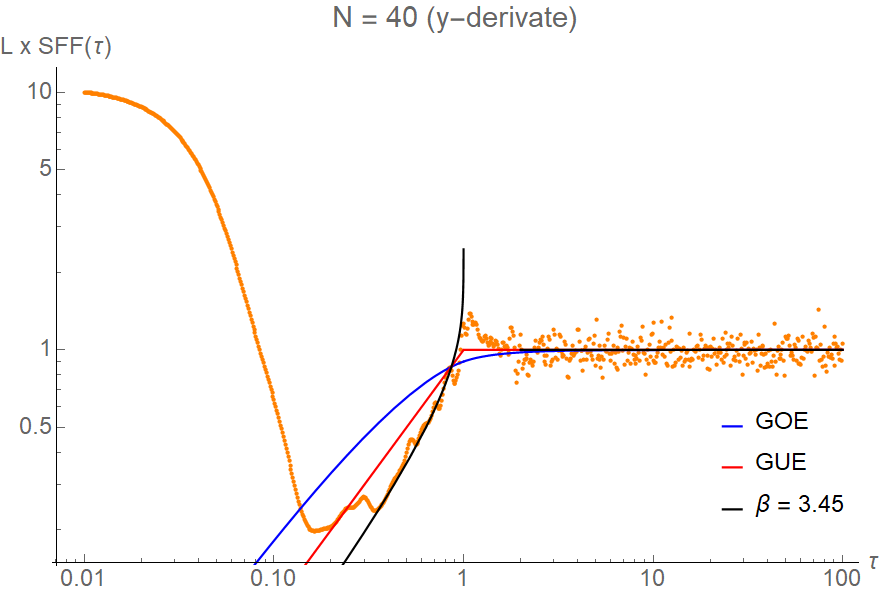
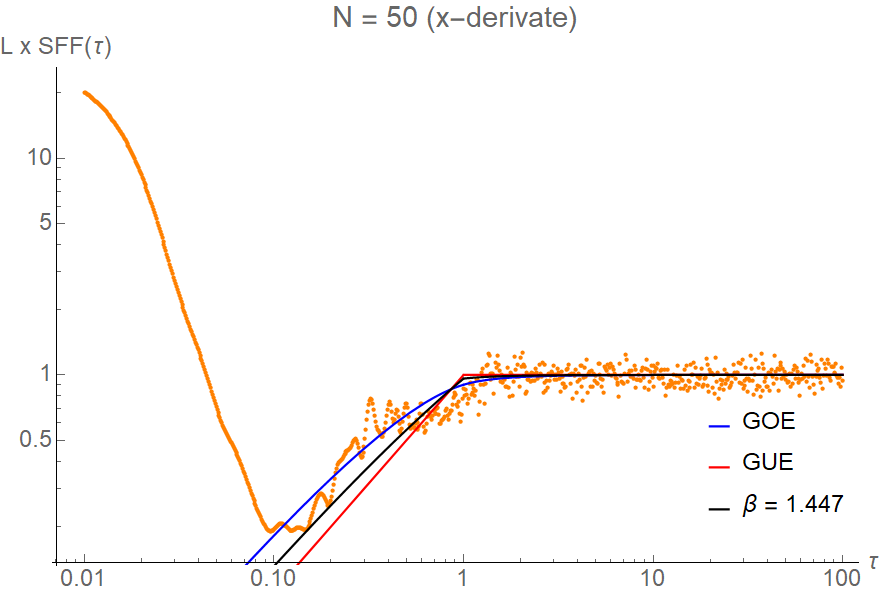
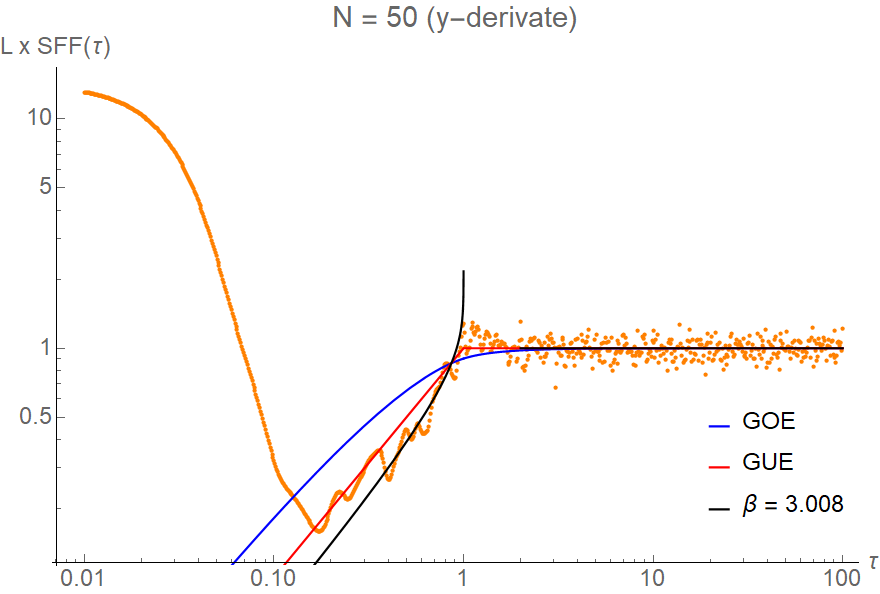
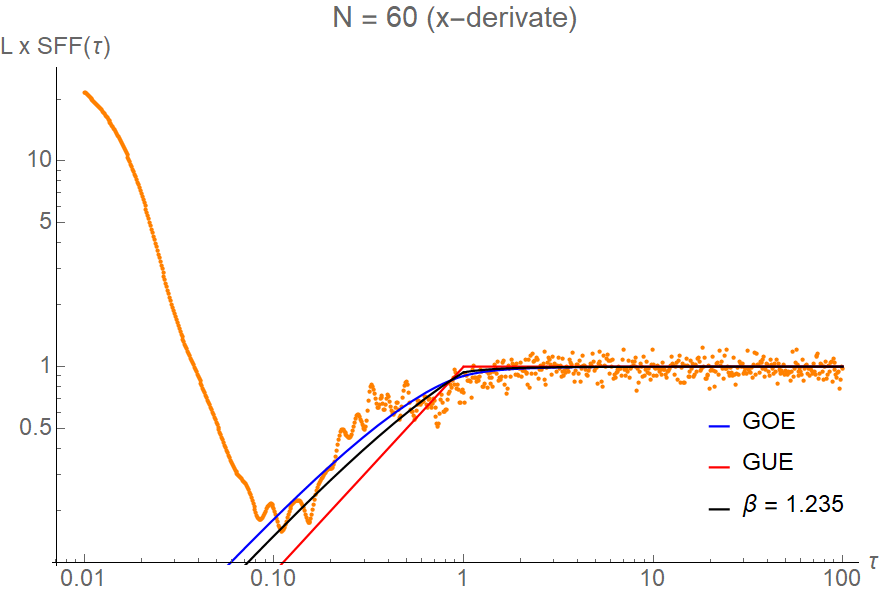
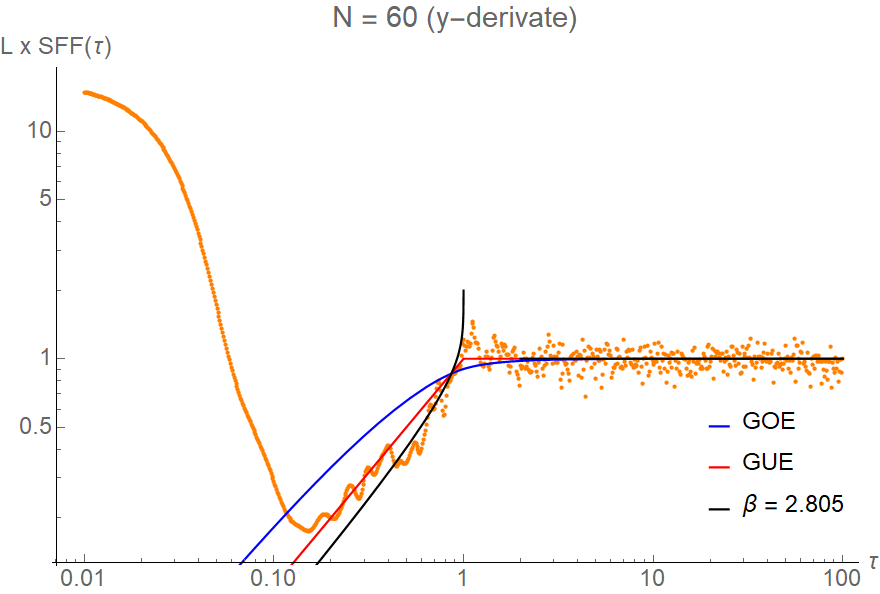
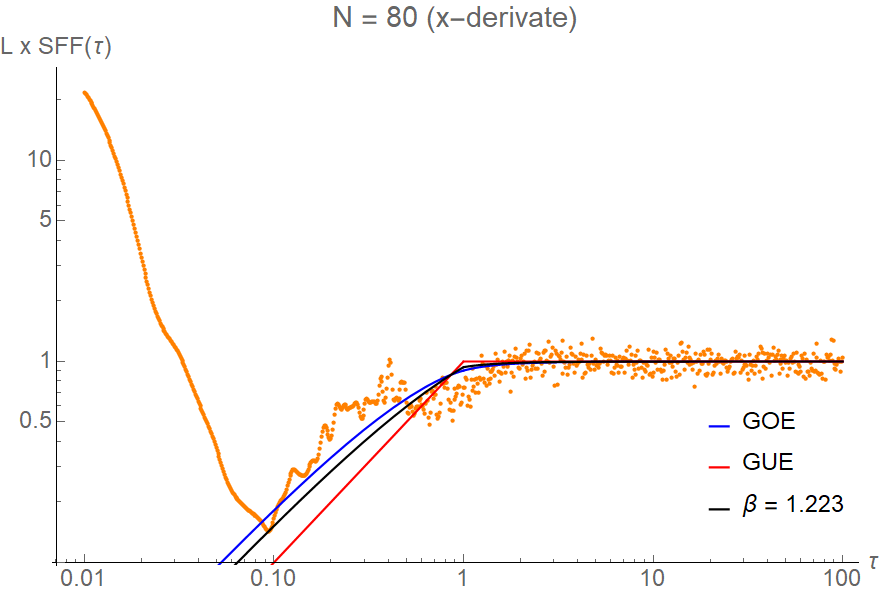
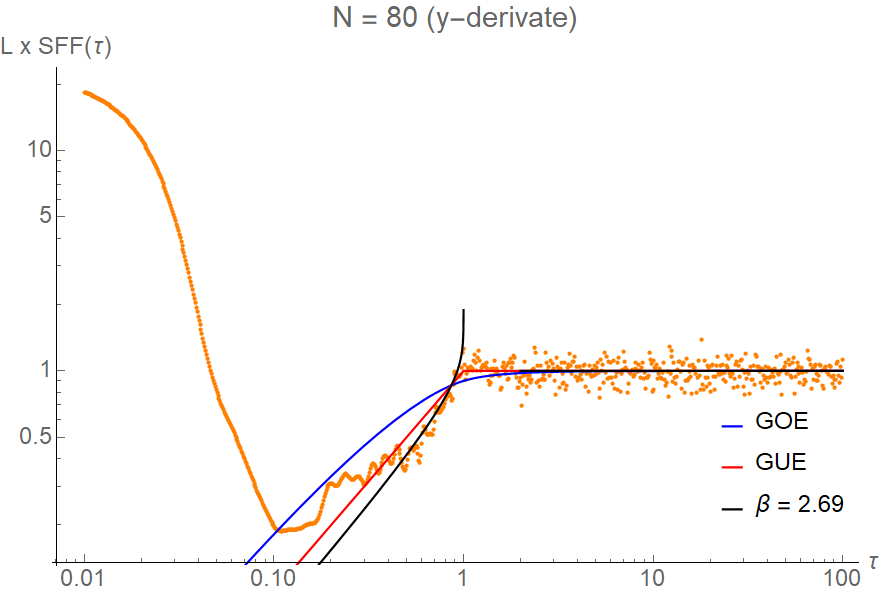
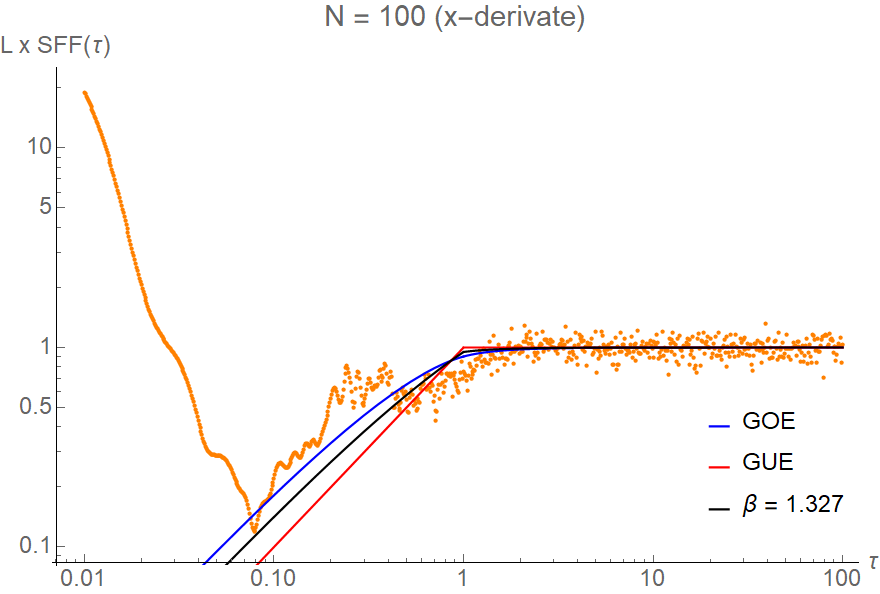
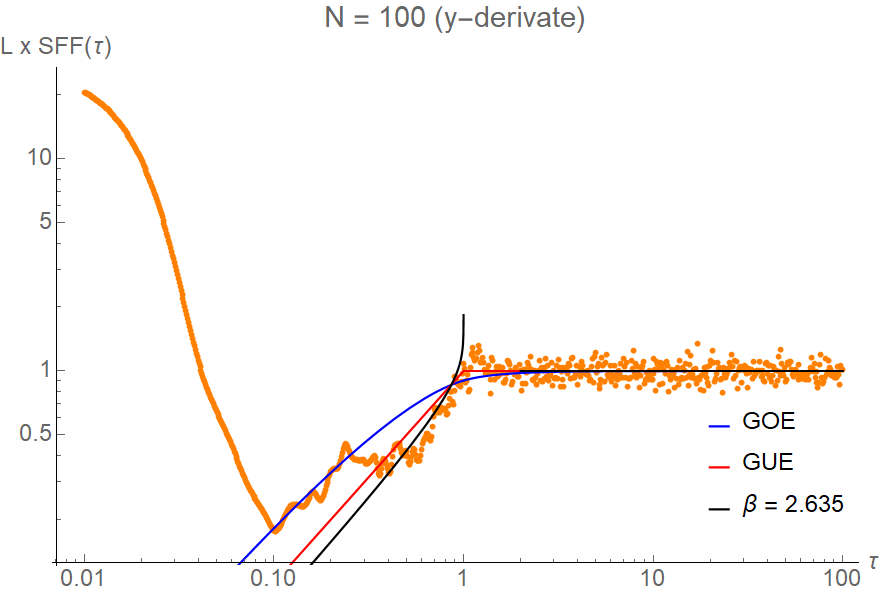
Figure 7: Full AFF on a log scale, highlighting decline-ramp-plateau for θ8 and θ9 derivatives across ϕ0 values.
The mapping of two-dimensional curve structures in chaotic string amplitudes to RMT eigenvalue statistics substantiates the universality of chaos in quantum systems with many degrees of freedom. The contrasting ensemble behaviors for different angular variables deepen the understanding of symmetry and dynamical invariance in string theory scattering processes. The technical procedure of converting areas under non-intersecting curves to spectral eigenvalues for statistical analysis opens prospects for generalizations to higher dimensions, e.g., non-intersecting surfaces, as well as connections with broader frameworks like Random Tensor Theory (RTT).
Potential extensions include:
- Characterizing the conditions for random distributions of extrema points in higher-dimensional scattering.
- Systematic identification of curve repulsion in other chaotic string and QFT processes, particularly multibody scattering amplitudes.
- Projecting RTT eigenvalues onto RMT via area-based mappings.
- Analysis of chaotic signatures in one-loop mass corrections and decay widths for HES states [Grimaldi:2026zgv, Bianchi:2026wts].
- Theoretical exploration of how multi-dimensional chaos transitions in the S-matrix encode thermalization and scrambling dynamics relevant to quantum gravity.
Conclusion
This paper rigorously demonstrates the emergence of multi-dimensional chaos in string scattering amplitudes, establishing a formal statistical correspondence with RMT via the constructed area eigenvalues. The identification of curve repulsion and the scaling properties of area spacings and form factors delineate a robust mapping between the microscopic angular complexity of string scattering and macroscopic universal chaos indicators. The results sharpen the understanding of symmetry-dependent ensemble behaviors in quantum chaotic systems and open the way for further cross-disciplinary exploration in string theory, quantum chaos, and statistical physics.

