- The paper demonstrates how scalar-tensor modifications reshape effective orbital potentials and yield naked singularity features.
- It employs analytic solutions and numerical models to quantify ISCO migration and zoom-whirl orbit taxonomy under varied scalar and geometric couplings.
- GW signatures from extreme mass-ratio inspirals reveal phase dephasing that can constrain non-GR scalar-tensor parameters.
Equatorial Periodic Orbits and Gravitational Wave Phenomenology in Freund-Nambu Scalar-Tensor Gravity
The Freund-Nambu scalar-tensor gravity framework generalizes Einsteinian gravity by incorporating a dynamical scalar field φ with geometric coupling q and a direct particle interaction parameter gs. The vacuum solution, derived for a massless scalar field, yields a spherically symmetric metric parametrized by n—recovering the Janis-Newman-Winicour (JNW) spacetime as a limiting case for q→0. The resulting background exhibits strong-field deviations from Schwarzschild geometry, leading to naked singularity configurations absent event horizons.
The scalar profile substantially distorts the spacetime curvature, directly influencing geodesic structure and bound motion. The analytic solution for φ(r) introduces nontrivial corrections to the metric potentials, with the form and physical significance of integration constants systematically tied to geometric and coupling parameters.
Effective Orbital Potential and Particle Dynamics
Test particle motion in the Freund-Nambu JNW spacetime is influenced both by q and by gs, which modifies the particle's effective mass and its coupling to φ. The dynamics are encoded in a modified Lagrangian, resulting in altered conserved energy and angular momentum. The effective potential V(r) encapsulates this behavior, with its minima and maxima corresponding to stable and unstable circular orbits, respectively.
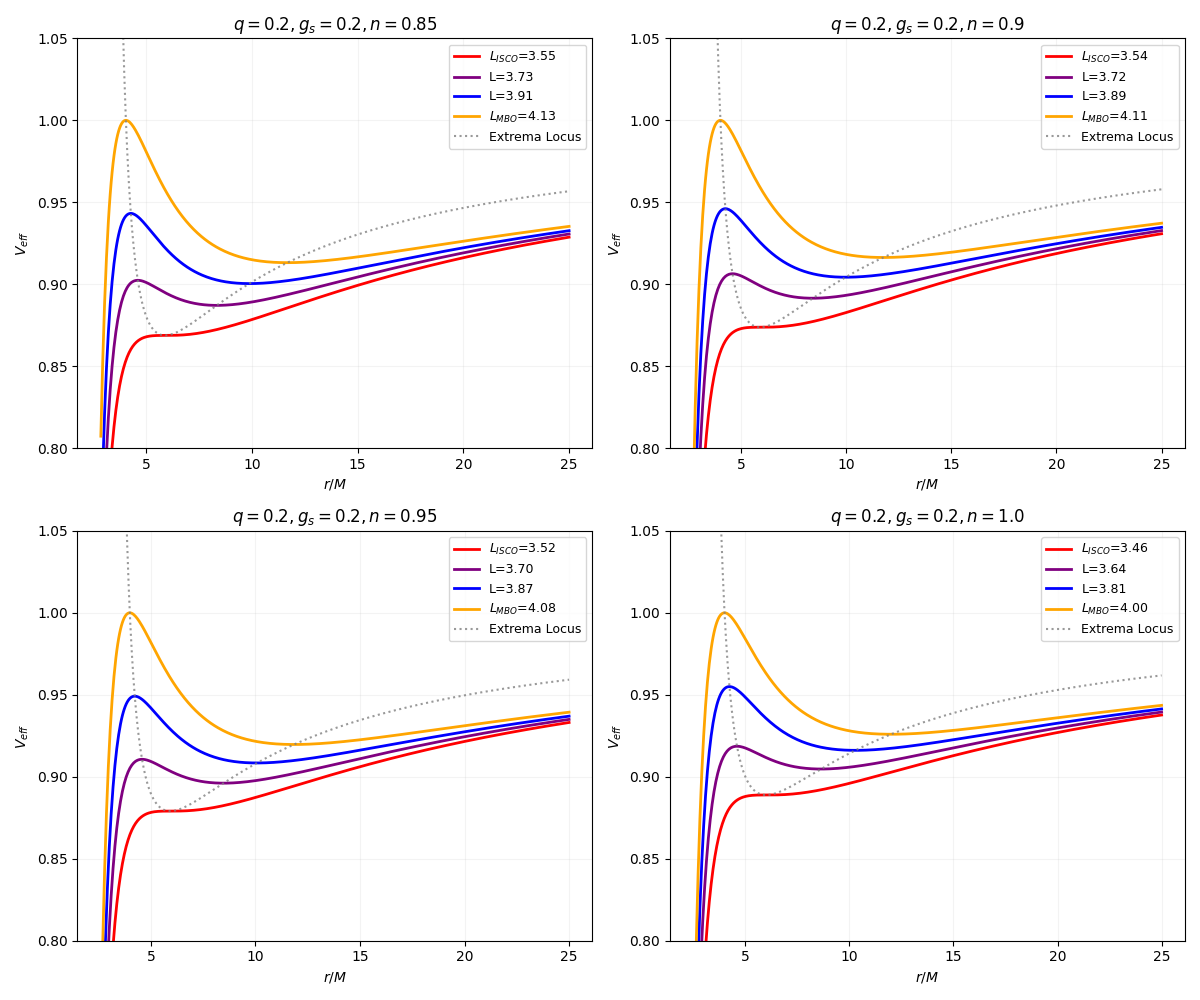
Figure 1: Effective potential q0 for various scalar parameter q1, showing displaced extrema corresponding to circular orbits.
Changing q2 or q3 systematically shifts the potential, deepening or flattening the well, and thus controlling the accessibility and stability properties of high-impact equatorial orbits.
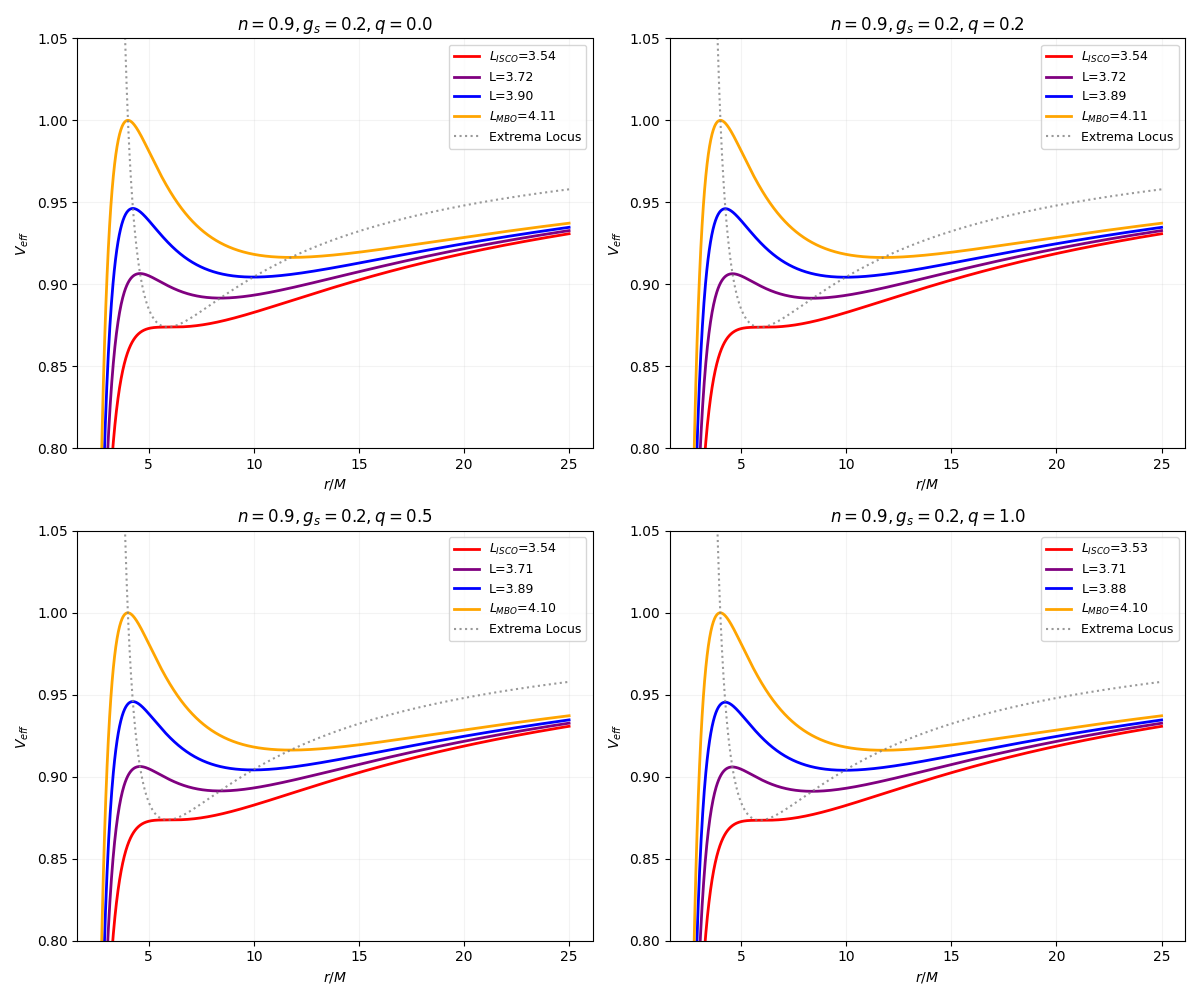
Figure 2: Variation in q4 as a function of geometric coupling q5.
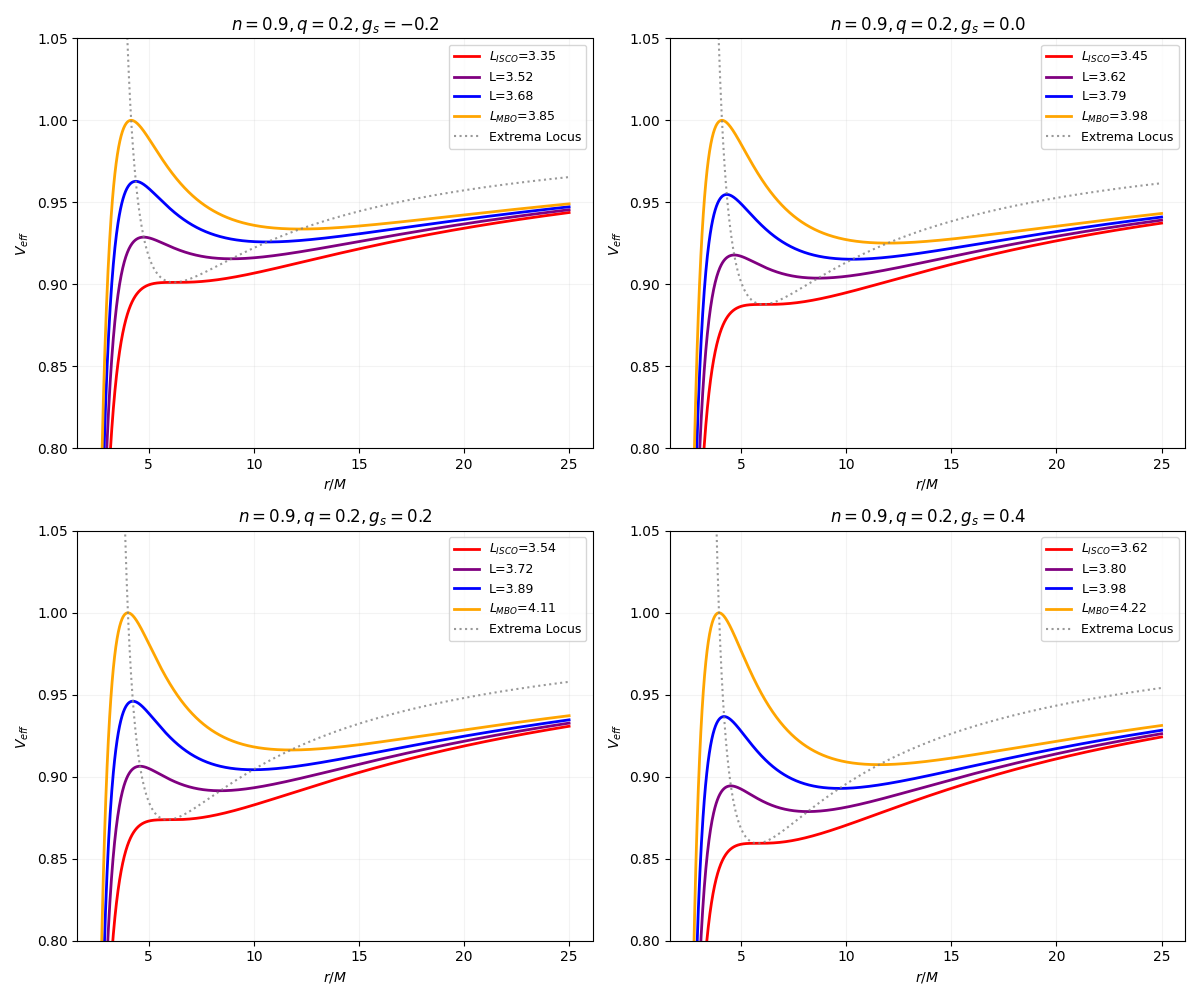
Figure 3: Variation in q6 as a function of scalar-particle coupling q7.
ISCO and Marginally Bound Orbit Structure
The ISCO radius and marginally bound orbit (MBO) thresholds are highly sensitive to scalar corrections. For q8, ISCO migrates inward, permitting stable circular orbits at smaller radii—a phenomenon unattainable in GR. Conversely, q9 renders orbits more unstable and shifts ISCO outward. The scalar parameter gs0 and geometric coupling gs1 also introduce pronounced asymmetries in these thresholds.
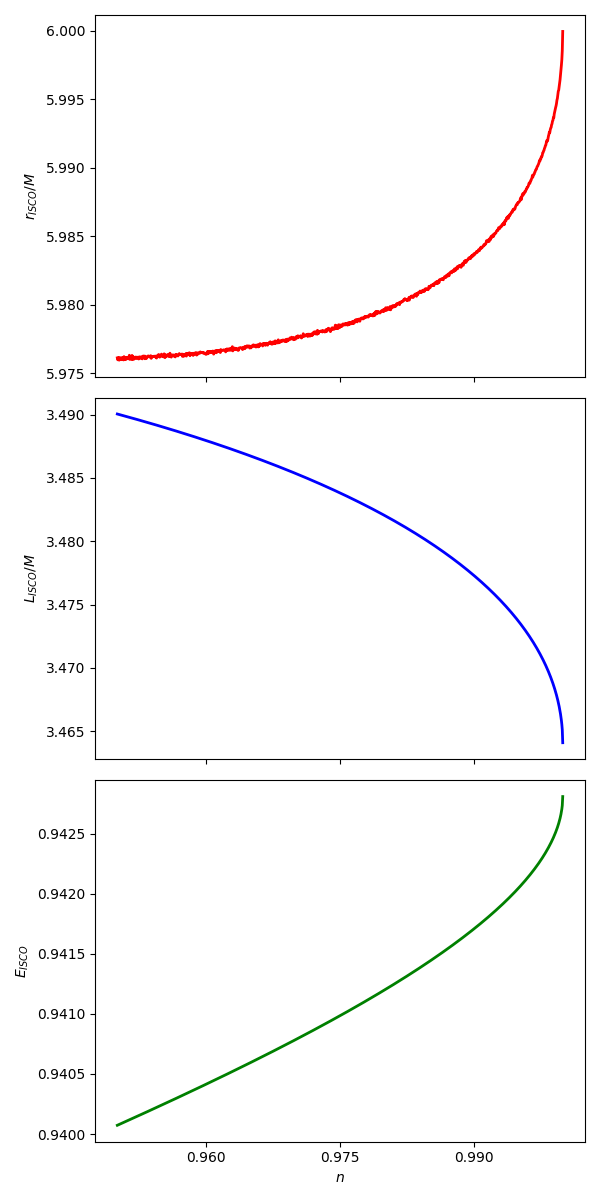
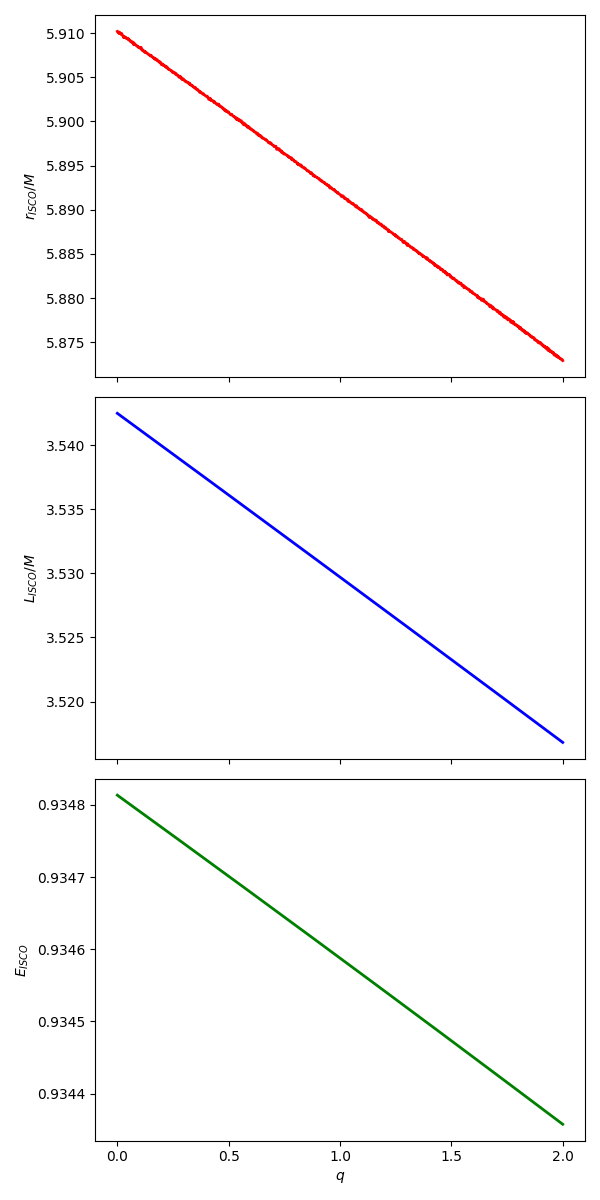
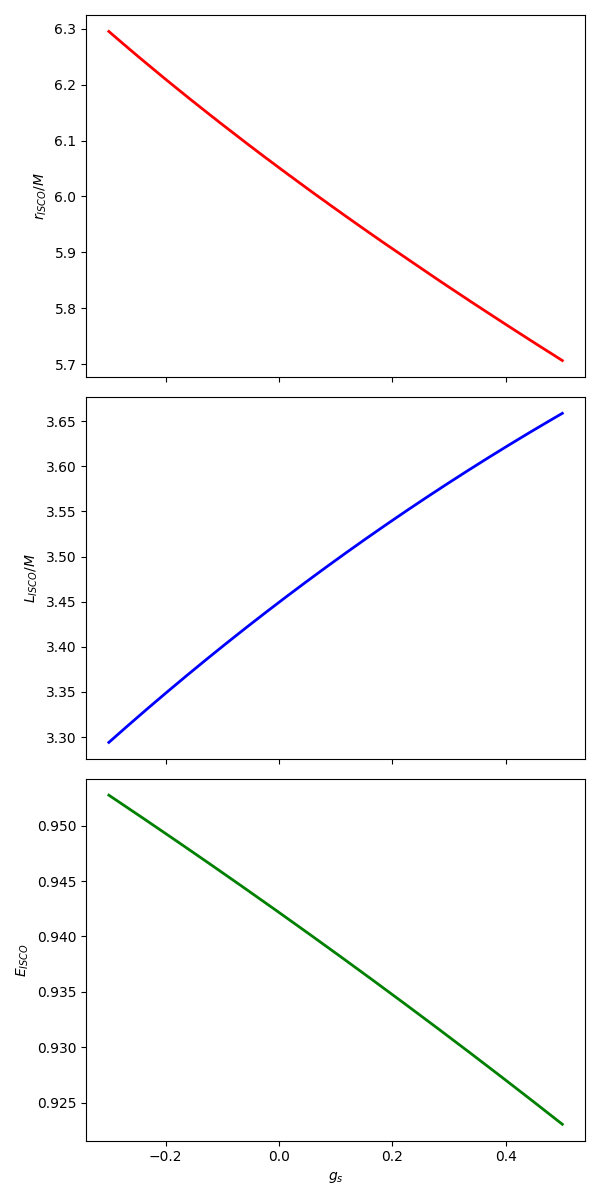
Figure 4: ISCO radius dependency on scalar and coupling parameters (gs2, gs3, gs4).
The allowed (gs5, gs6) parameter space for bounded motion is reshaped by scalar effects, altering the accessible phase space for accretion physics and strong-field relativistic phenomena.
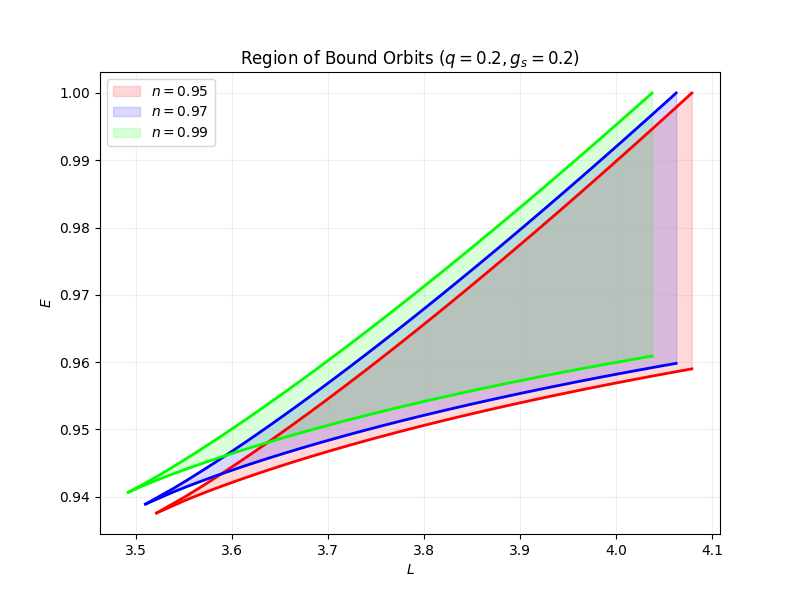
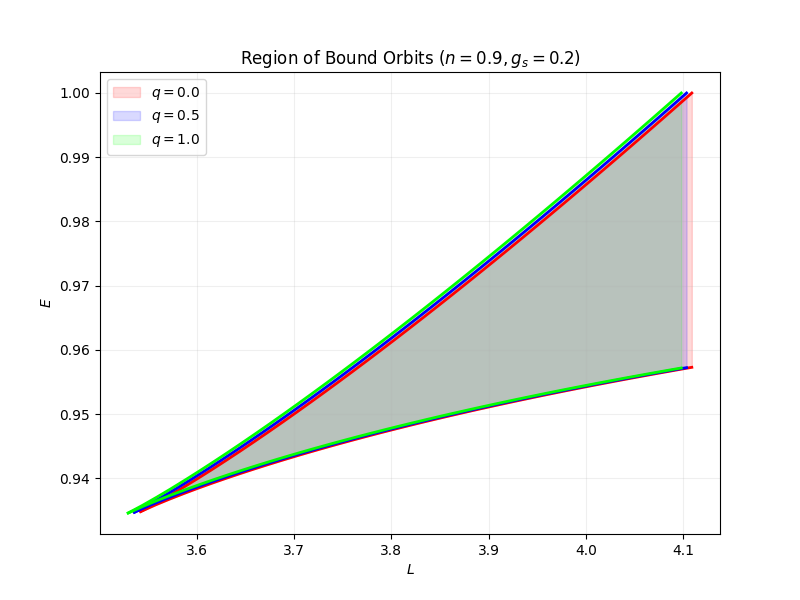
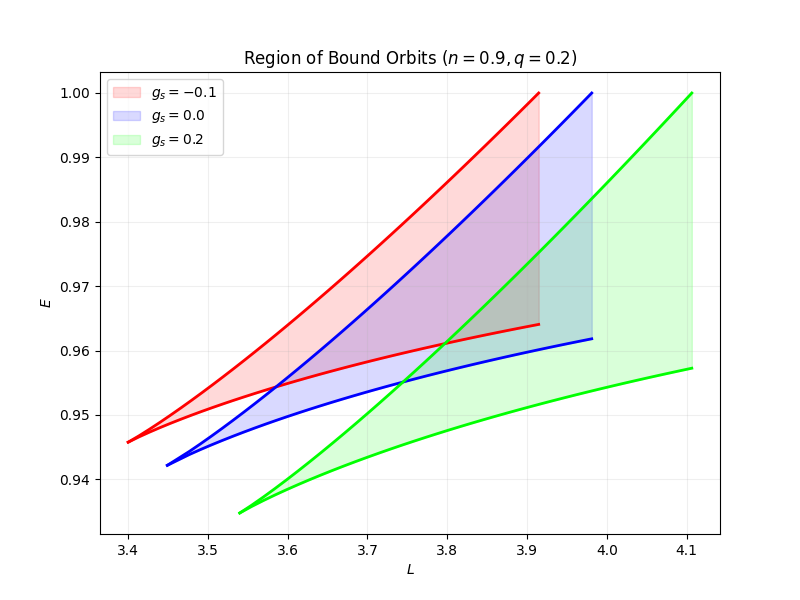
Figure 5: Regions in gs7 parameter space supporting bound equatorial orbits.
Periodic Orbit Taxonomy and Zoom-Whirl Topology
Bound periodic trajectories in Freund-Nambu spacetime manifest as zoom-whirl orbits characterized by rational parameters and gs8 topologies, indicating zooms, whirls, and vertices. These are mapped by tuning energy/ angular momentum, demonstrating enhanced periapsis precession as the separatrix boundary is approached and scalar couplings are varied.
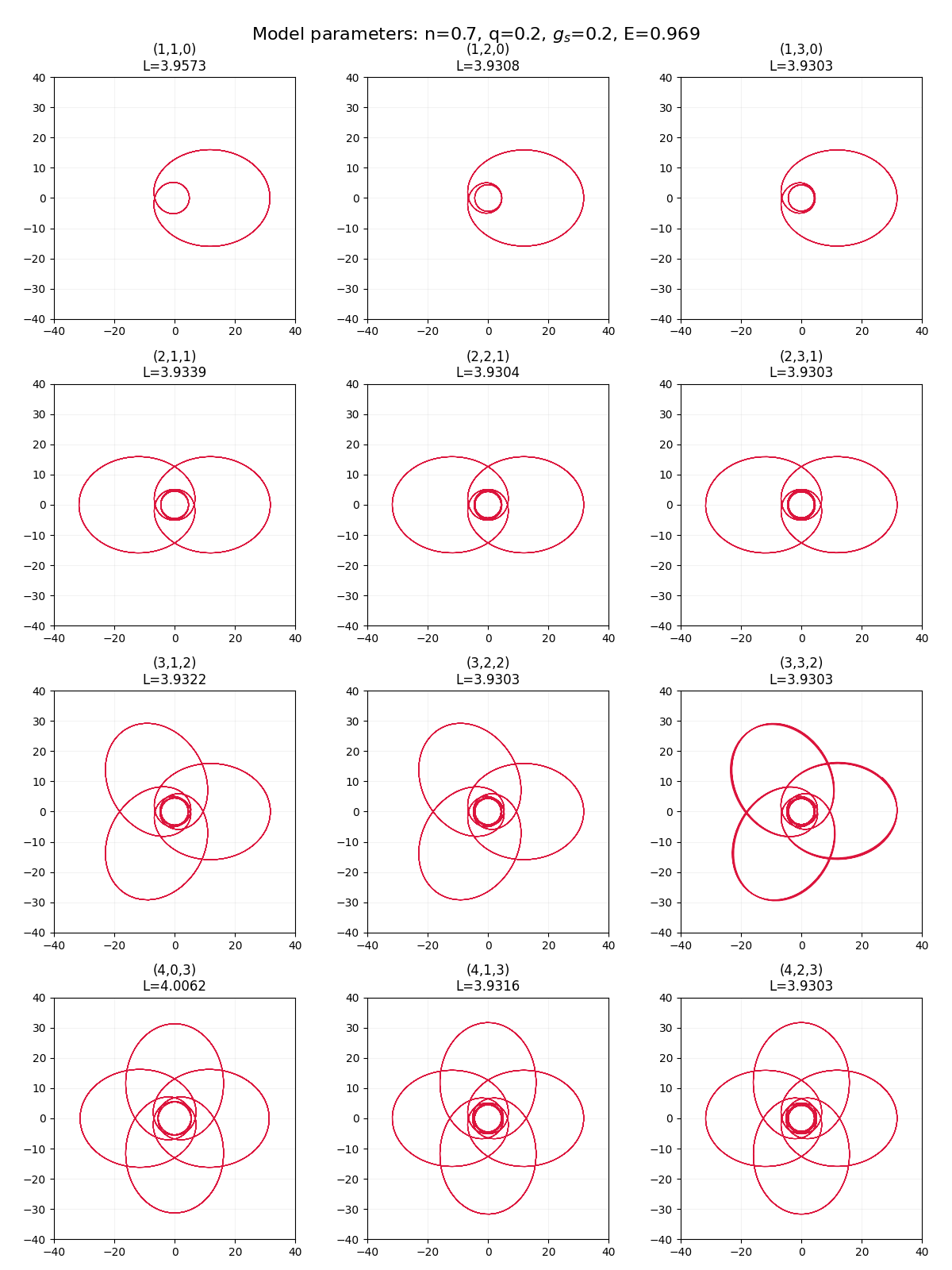
Figure 6: Orbit taxonomy at fixed gs9, showing increased whirls and petals with decreasing n0.
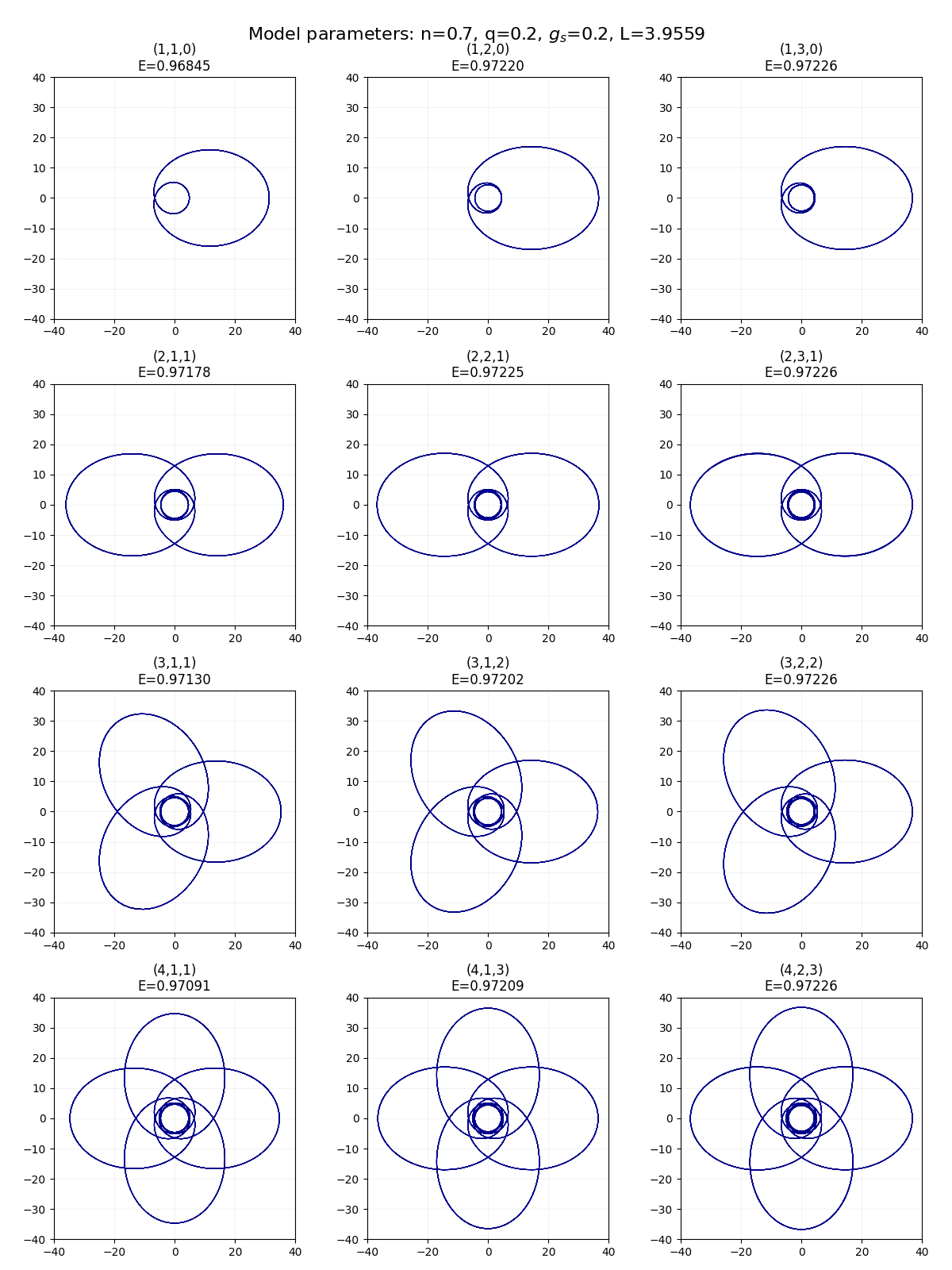
Figure 7: Orbit taxonomy at fixed n1, exhibiting pronounced periapsis precession for energetic states.
The rational parameter n2 scales rapidly as orbital energy approaches the potential peak, indicating zoom-whirl amplification and deep-field trapping effects.
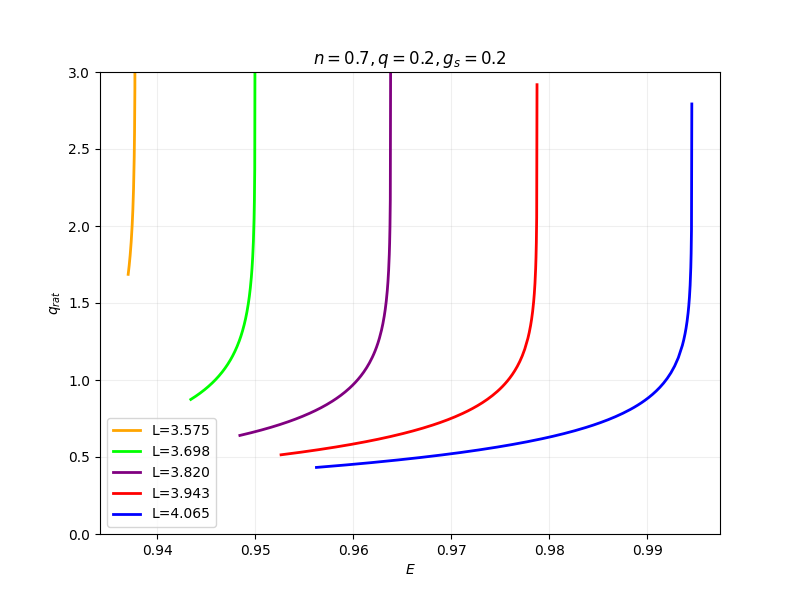
Figure 8: n3 versus specific orbital energy n4, signaling zoom-whirl onset.
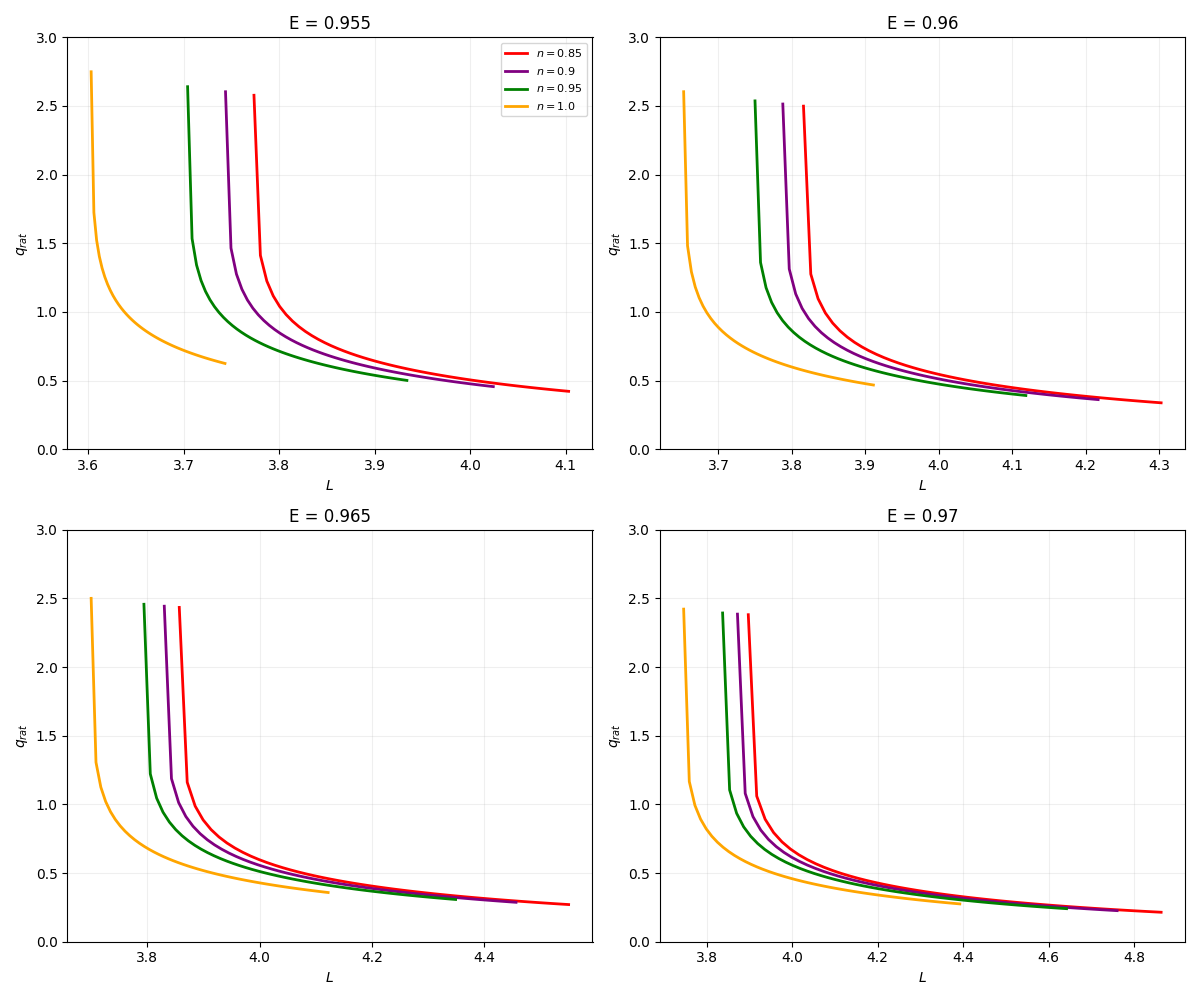
Figure 9: n5 trends with angular momentum n6 for varied n7.
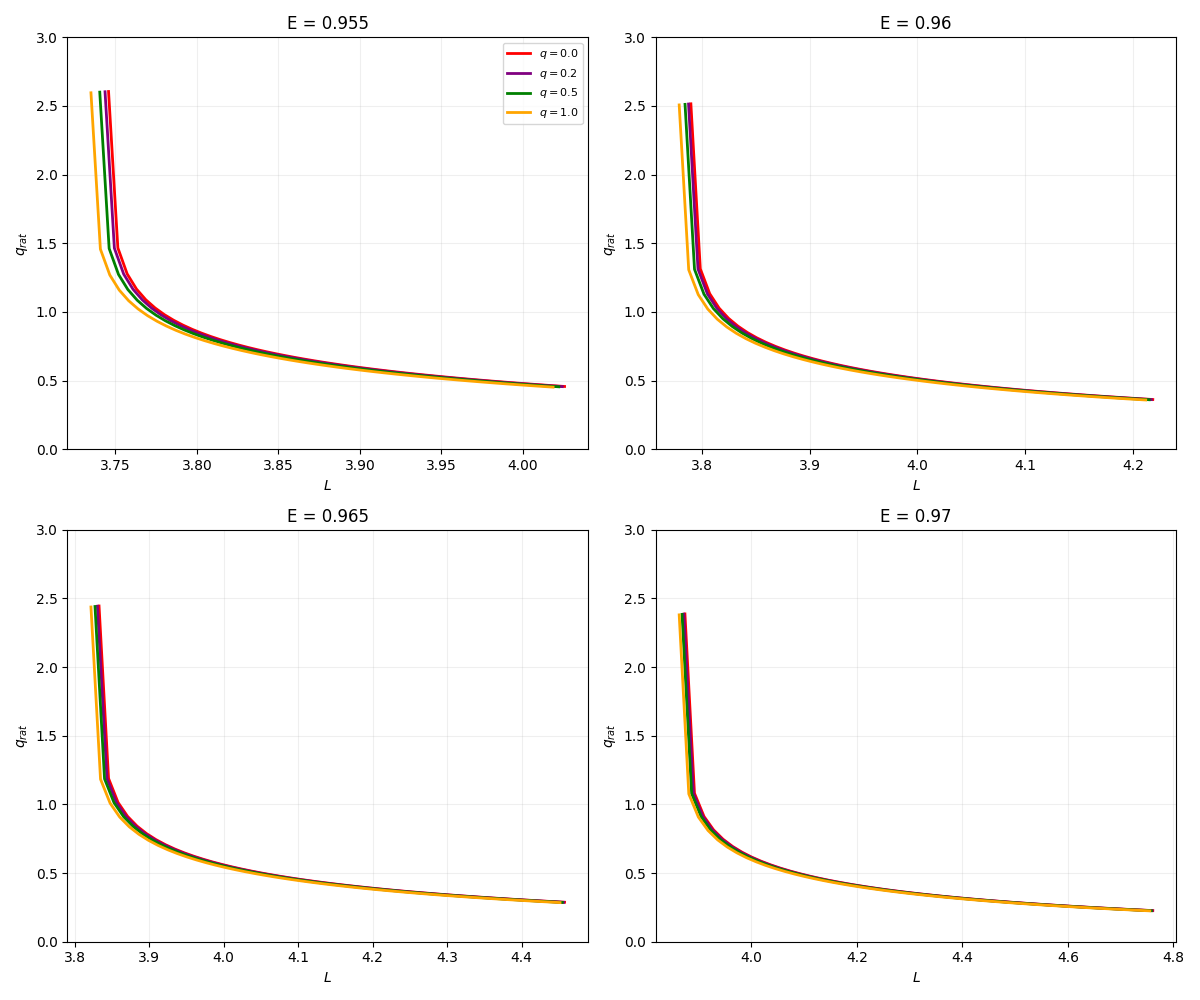
Figure 10: n8 variation with n9 across different q→00 regimes.
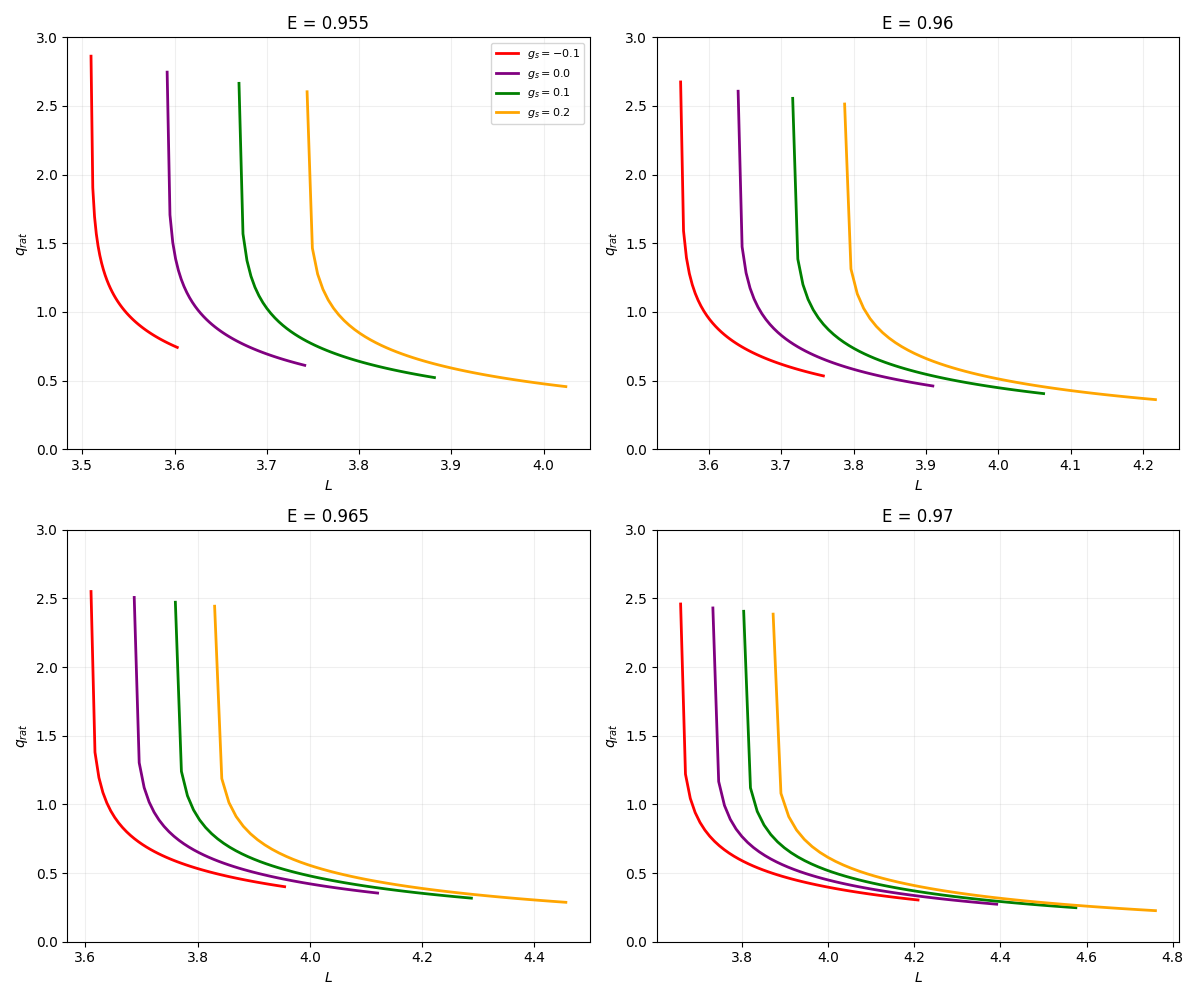
Figure 11: q→01 variation with q→02 for different q→03 values.
Gravitational Wave Signatures from Extreme Mass-Ratio Inspirals
The gravitational wave (GW) output from EMRI binaries in this scalar-tensor background is computed via Numerical Kludge and quadrupole approximation; waveforms are sensitive to the orbital topology, as well as to geometric and coupling modifications. Zoom-whirl dynamics imprint distinctive high-frequency bursts during periapsis, correlated to strong-field orbital accelerations.
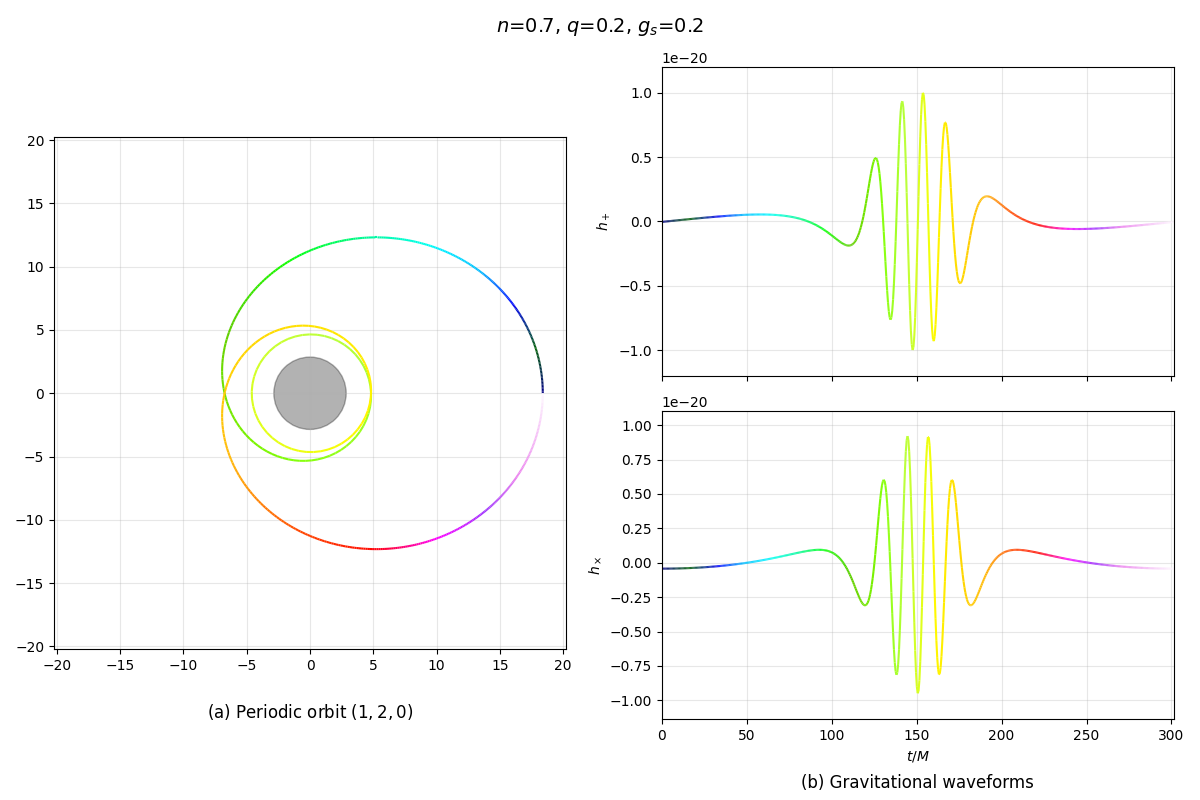
Figure 12: GW strains (q→04, q→05) from a q→06 periodic orbit, showing clear zoom-whirl burst structure.
Crucially, scalar-tensor modifications induce temporal dephasing in GW bursts even for orbits with identical spatial topologies. Varying q→07, q→08, or q→09 alters the effective potential and thus the time spent in strong-field regions, leading to systematic phase differences in burst arrival times.
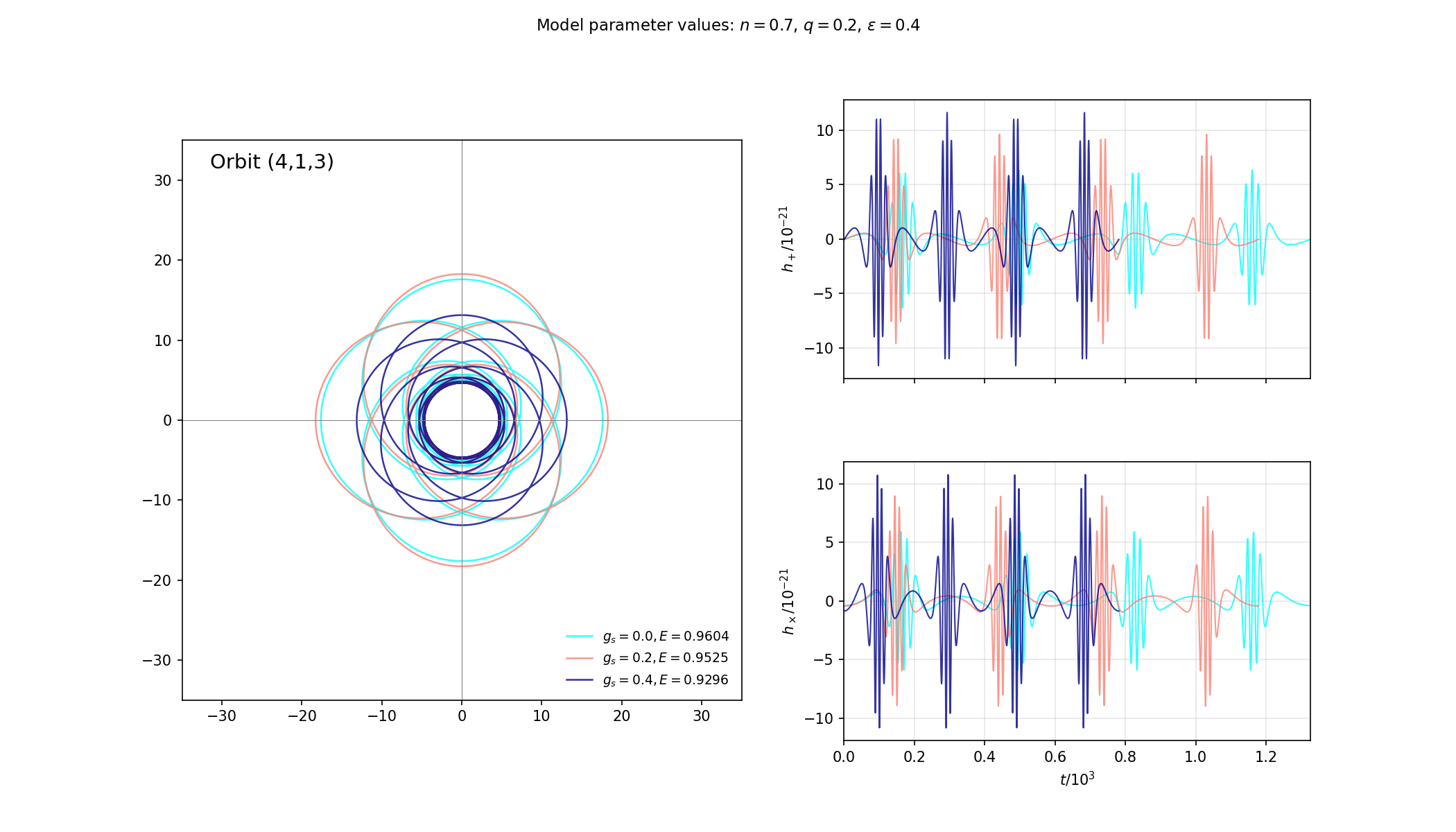
Figure 13: Temporal dephasing in EMRI waveforms as φ(r)0 is varied for φ(r)1 topology.
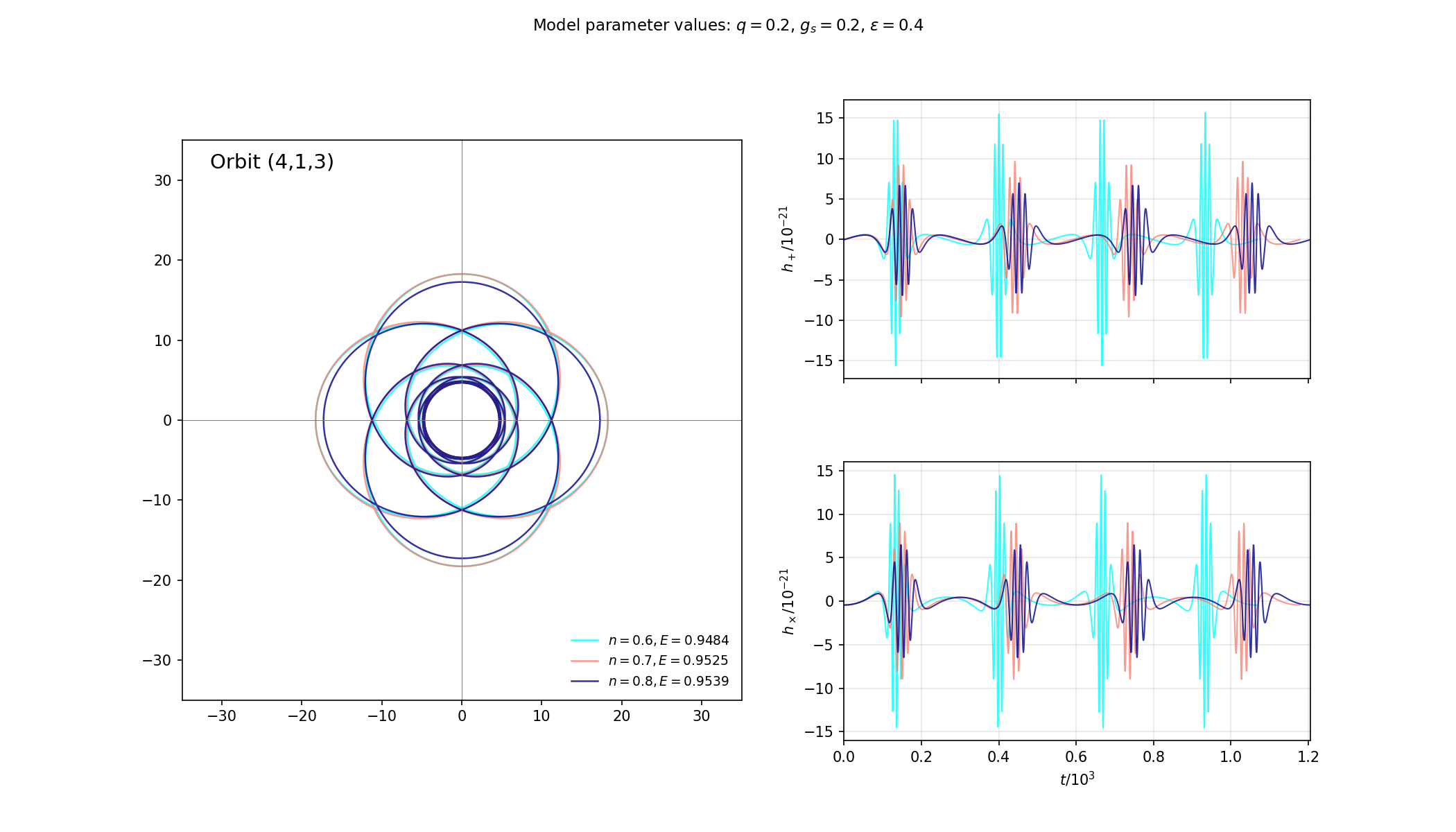
Figure 14: Waveform dephasing vs scalar parameter φ(r)2 for φ(r)3 orbits.
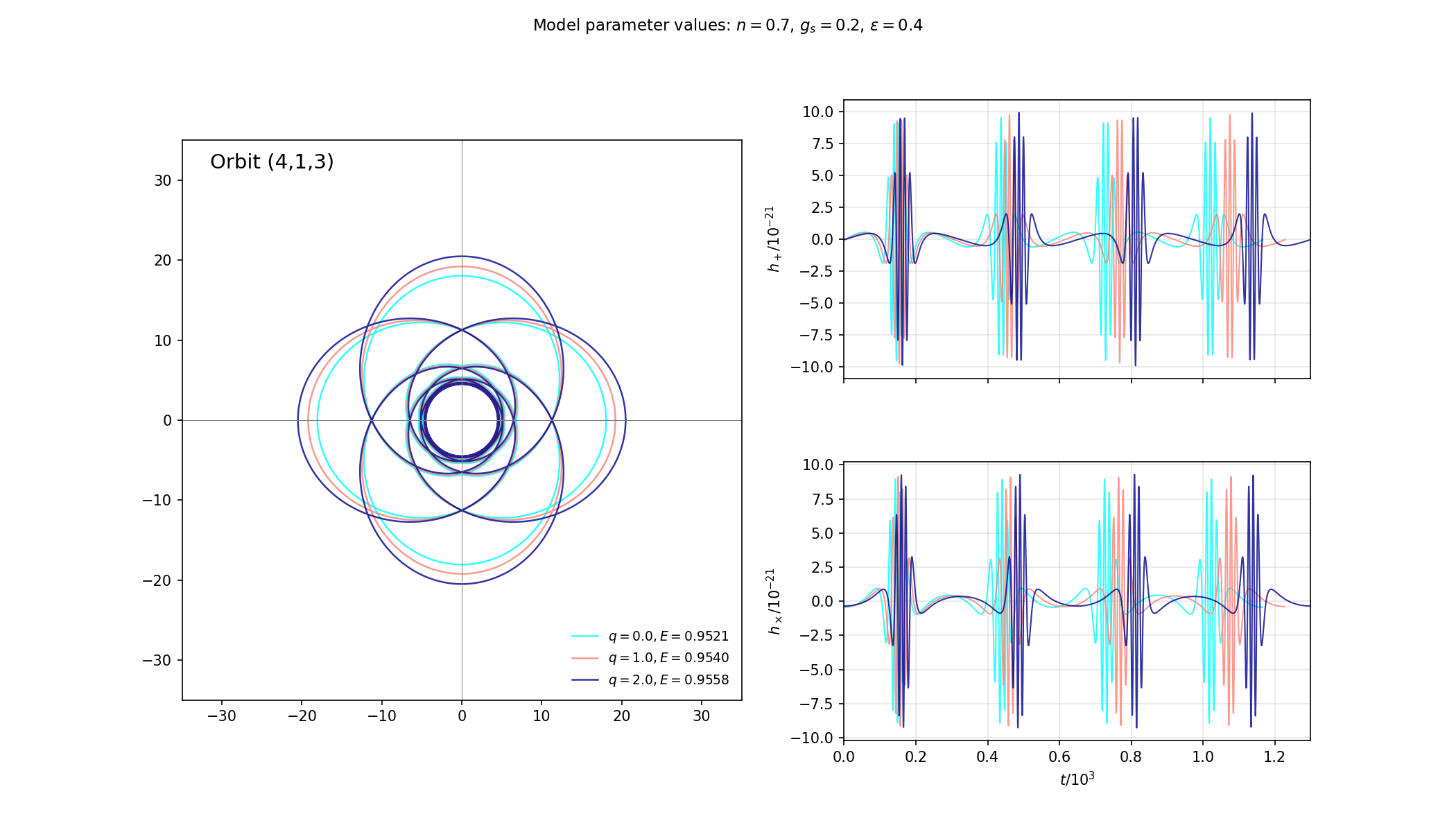
Figure 15: Waveform dephasing induced by geometric scalar coupling φ(r)4 for φ(r)5 topology.
These macroscopic phase shifts are robust, offering diagnostic GW templates for space-based detectors such as LISA to probe scalar-tensor effects and constrain non-GR coupling constants in the strong-field domain.
Implications and Outlook
The Freund-Nambu scalar-tensor vacuum solution shapes a unique strong-field environment, with scalar-induced geometric and direct coupling effects manifesting in orbital stability, phase space, and GW burst structures. Inward ISCO migration for attractive φ(r)6 enhances inner accretion disk efficiency and GW emission rates, while periodic orbit taxonomy and zoom-whirl precession become distinctly sensitive to the scalar sector.
Temporal dephasing in EMRI GW signatures constitutes a theoretically robust probe, sensitive to metric and coupling corrections. Detection and analysis of such cumulative GW phase shifts in future observatories will permit stringent constraints on scalar-tensor parameters and could distinguish naked singularity spacetimes from canonical BHs.
Conclusion
This formal analysis establishes the Freund-Nambu scalar-tensor gravity scenario as a testable extension of GR, affecting both equatorial orbital dynamics and GW phenomenology in the strong-field regime. Scalar parameters and couplings produce measurable shifts in ISCO location, zoom-whirl taxonomy, and waveform temporal structure, positioning periodic orbit GW radiations as critical diagnostic tools for upcoming precision astrometric and GW experiments. The approach offers theoretical guidance for utilizing timing and phase features in zoom-whirl EMRIs, advancing the search for scalar hair and non-GR gravitational signatures in compact astrophysical environments (2606.23635).

