- The paper demonstrates how quantum electrodynamical corrections and PFDM modify equatorial periodic orbits, altering ISCO, MBO, and zoom–whirl dynamics.
- It employs the effective potential formalism and numerical kludge methods to derive gravitational waveform templates for extreme mass-ratio inspirals.
- Results show that increased dark matter density dilutes gravitational attraction, extending orbits and suppressing waveform amplitudes.
Equatorial Periodic Orbits and Gravitational Wave Signatures in Euler–Heisenberg Black Holes Surrounded by Perfect Fluid Dark Matter
Introduction
This paper presents an in-depth analysis of timelike equatorial periodic orbits and their gravitational wave (GW) emission in the Euler–Heisenberg (EH) black hole spacetime with an external perfect fluid dark matter (PFDM) distribution (2604.11866). The work systematically examines how quantum electrodynamical (QED) corrections to classical electrovacuum gravity, as encapsulated by the EH action, and large-scale environmental effects due to PFDM alter strong-field orbital dynamics and associated GW phenomenology, with explicit focus on innermost stable circular orbits (ISCOs), marginally bound orbits (MBOs), and highly precessing "zoom–whirl" trajectories. The study employs the effective potential formalism for geodesics, provides a topological taxonomy of periodic orbits, and generates waveform templates using the numerical kludge approximation appropriate for extreme mass-ratio inspirals (EMRIs).
Euler–Heisenberg–PFDM Black Hole Metric
The adopted spacetime metric follows from the Einstein-Hilbert action augmented with the leading-order EH nonlinear electromagnetic Lagrangian and a PFDM energy-momentum tensor. The line element is
ds2=−g(r)dt2+g(r)dr2+r2(dθ2+sin2θdϕ2)
with
g(r)=1−r2M+r2Q2−20r6aQ4+rαln(∣α∣r).
Here, M, Q, a, and α are, respectively, the ADM mass, black hole electric charge, QED interaction parameter, and the PFDM environment parameter.
The QED correction a is subdominant at large r but crucial for near-horizon physics; the PFDM term, characterized by α, dominates at large and intermediate radii, modifying the global gravitational potential. The limits a→0, g(r)=1−r2M+r2Q2−20r6aQ4+rαln(∣α∣r).0, g(r)=1−r2M+r2Q2−20r6aQ4+rαln(∣α∣r).1 recover, in turn, the PFDM-Schwarzschild, EH–Reissner–Nordström, or classical Reissner–Nordström solutions.
Effective Potential and Strong-Field Orbital Structure
The motion of test particles is governed by the effective potential
g(r)=1−r2M+r2Q2−20r6aQ4+rαln(∣α∣r).2
for particles with angular momentum g(r)=1−r2M+r2Q2−20r6aQ4+rαln(∣α∣r).3. The orbital dynamics are reviewed via this effective potential framework, with the usual characterization of circular, bound, plunging, and marginal orbits.
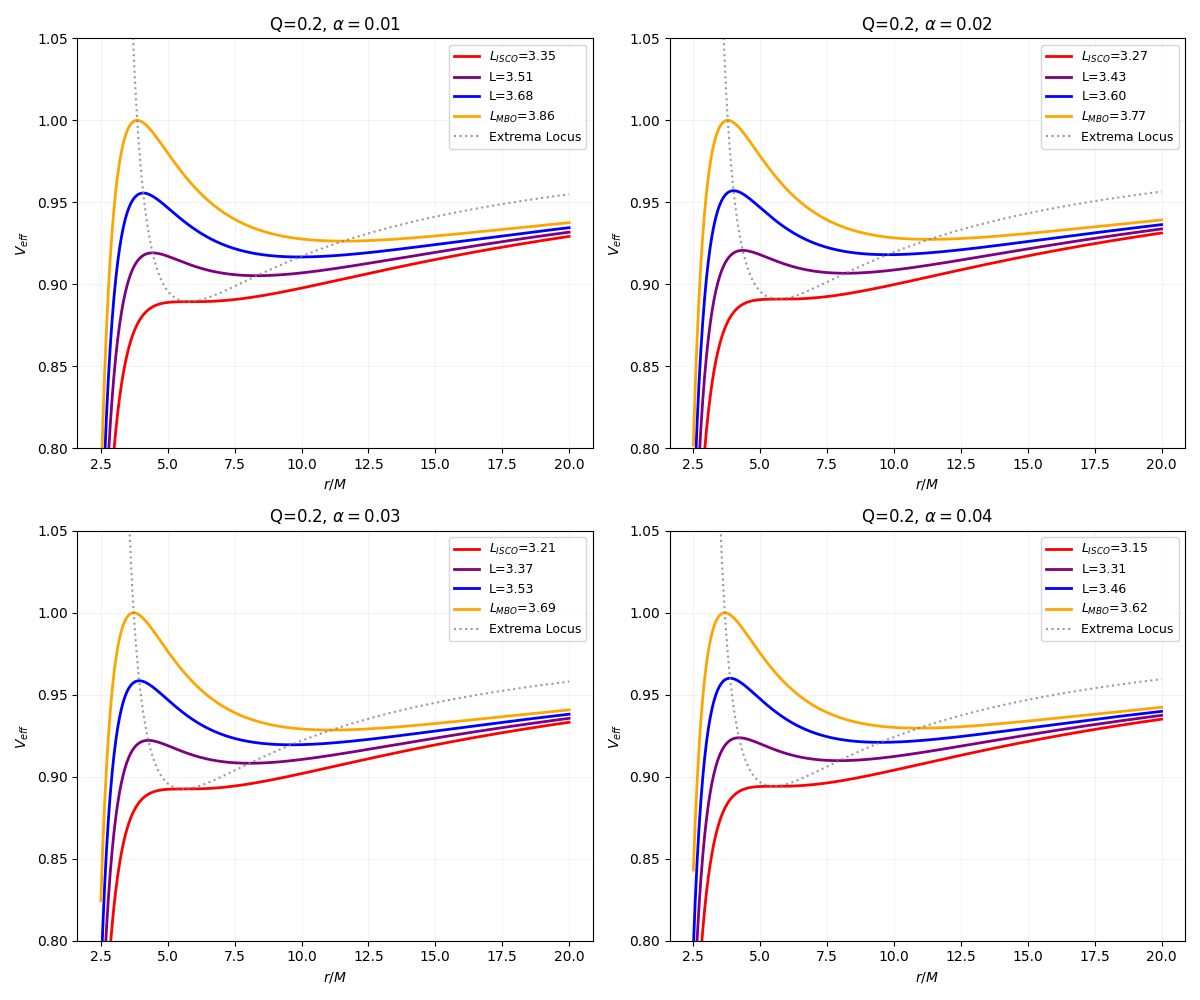
Figure 1: Effective potential g(r)=1−r2M+r2Q2−20r6aQ4+rαln(∣α∣r).4 for the EH–PFDM black hole across different g(r)=1−r2M+r2Q2−20r6aQ4+rαln(∣α∣r).5, revealing the outward shift and shallowing of the potential well with increasing PFDM content.
The PFDM parameter g(r)=1−r2M+r2Q2−20r6aQ4+rαln(∣α∣r).6 modulates both the height of the barrier (associated with the unstable circular orbit) and the depth of the bound region. Increasing g(r)=1−r2M+r2Q2−20r6aQ4+rαln(∣α∣r).7 systematically shifts the ISCO and MBO radii outward, decreases g(r)=1−r2M+r2Q2−20r6aQ4+rαln(∣α∣r).8 and g(r)=1−r2M+r2Q2−20r6aQ4+rαln(∣α∣r).9, and reduces the permitted domain for stable bound orbits. This is consistent with PFDM's effective dilution of gravitational attraction and potential flattening at large radii.
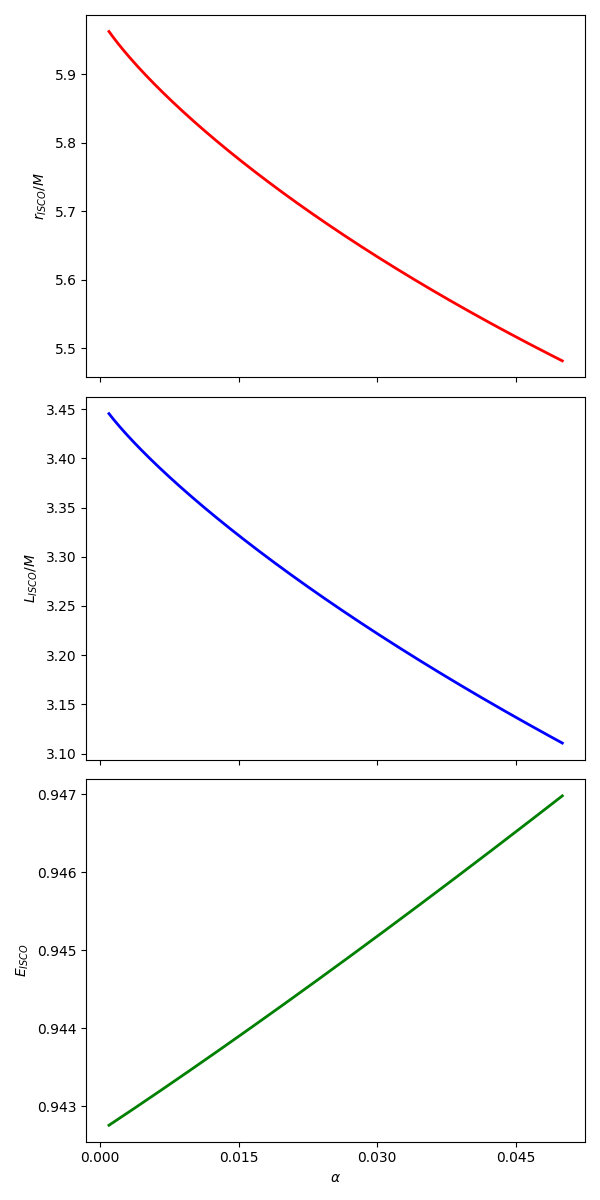
Figure 2: Dependence of ISCO radius M0, angular momentum, and energy on M1; all orbital thresholds shift toward larger radii with increasing PFDM density.
The critical loci in the M2–M3 parameter space clarify the shrinking of the bound region and the enhanced propensity for plunging/escaping trajectories when PFDM is present.
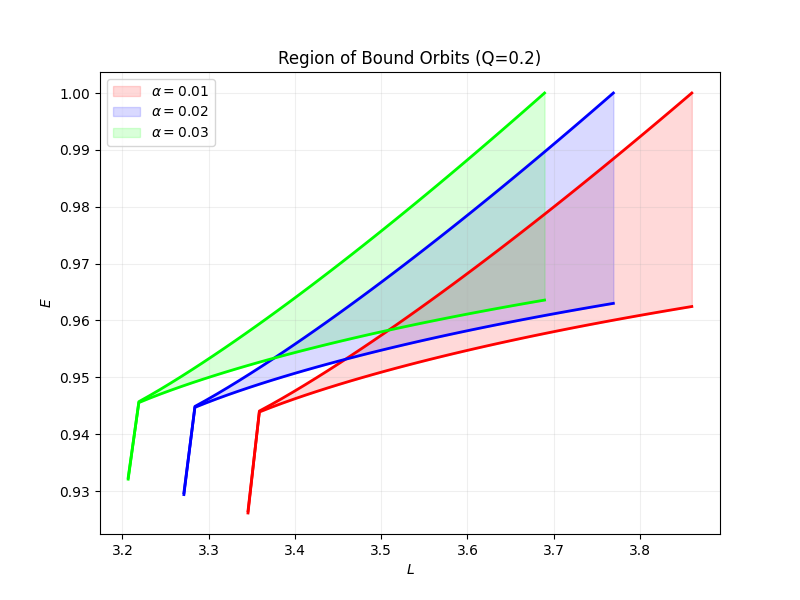
Figure 3: Allowed parameter regions for bound timelike orbits as a function of M4, showing the shrinking of accessible phase space for periodic orbits with increased dark matter.
Periodic Orbits and Zoom–Whirl Hierarchy
The paper adopts the standard rational frequency parameterization for periodic orbits and classifies relativistic bound motion using the M5 indices, corresponding to zooms, whirls, and vertices (precessions), respectively. The rational parameter
M6
is computed for families of orbits, providing a granular mapping between energy, angular momentum, and zoom–whirl behavior.
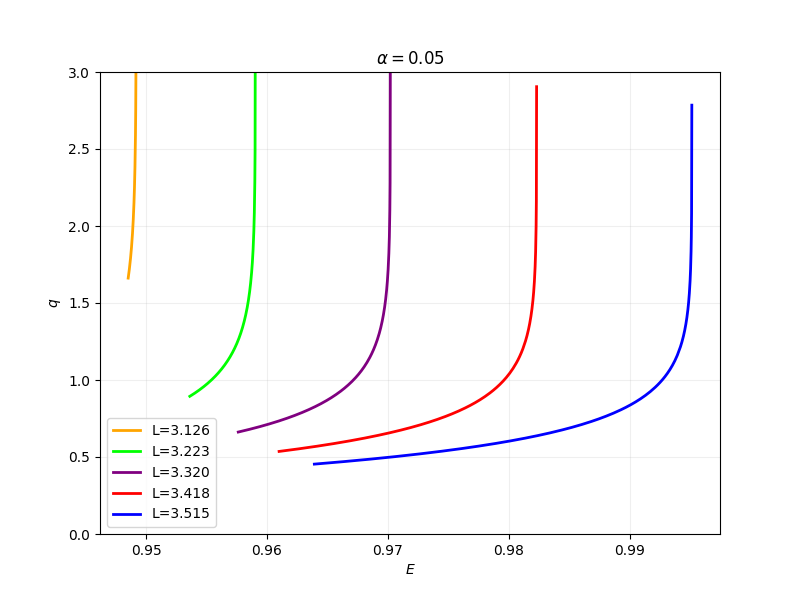
Figure 4: Rational parameter M7 versus particle energy for fixed M8 in the EHPFDM black hole.
The divergence of M9 as energy approaches the critical value for the unstable circular orbit signals the transition to extreme zoom–whirliness.
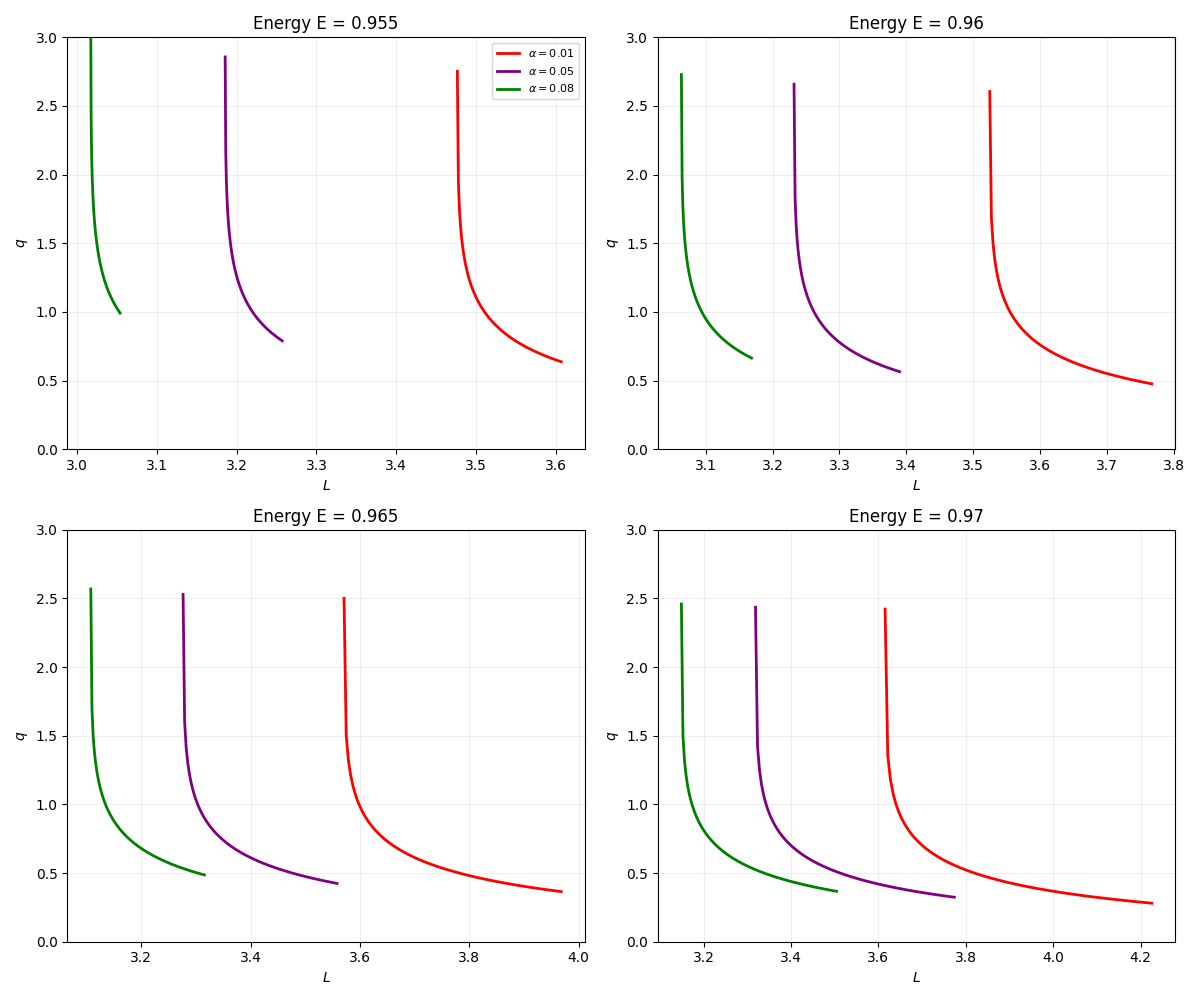
Figure 5: Rational parameter Q0 as a function of Q1 for given energy; increasing Q2 shifts divergence to lower Q3, facilitating zoom–whirl orbits for a wider parameter subset.
Both energy and angular momentum regulate the nature and extent of zoom–whirl morphologies.
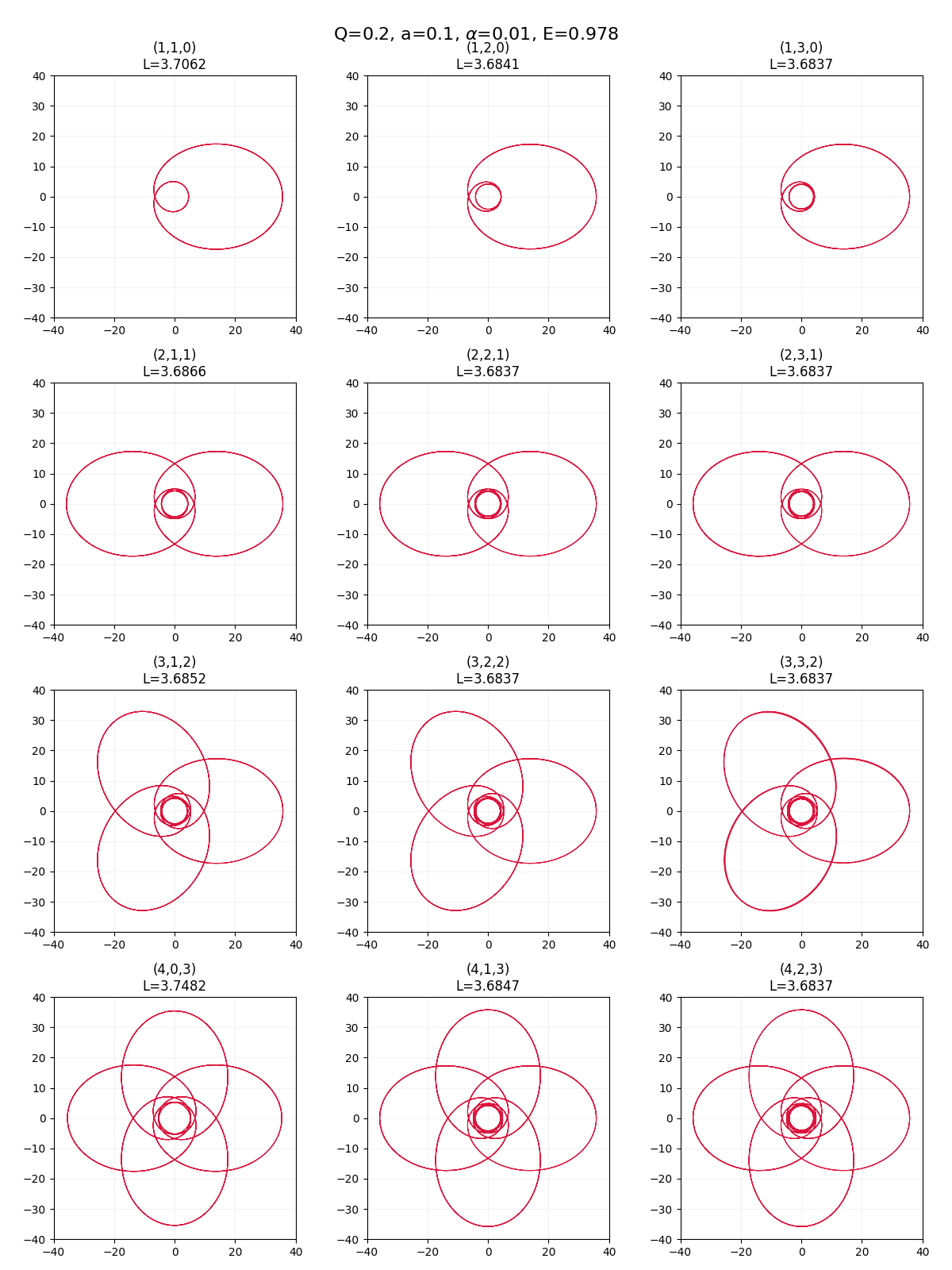
Figure 6: Representative periodic orbits for fixed energy and various Q4 values, highlighting zoom and whirl variations.
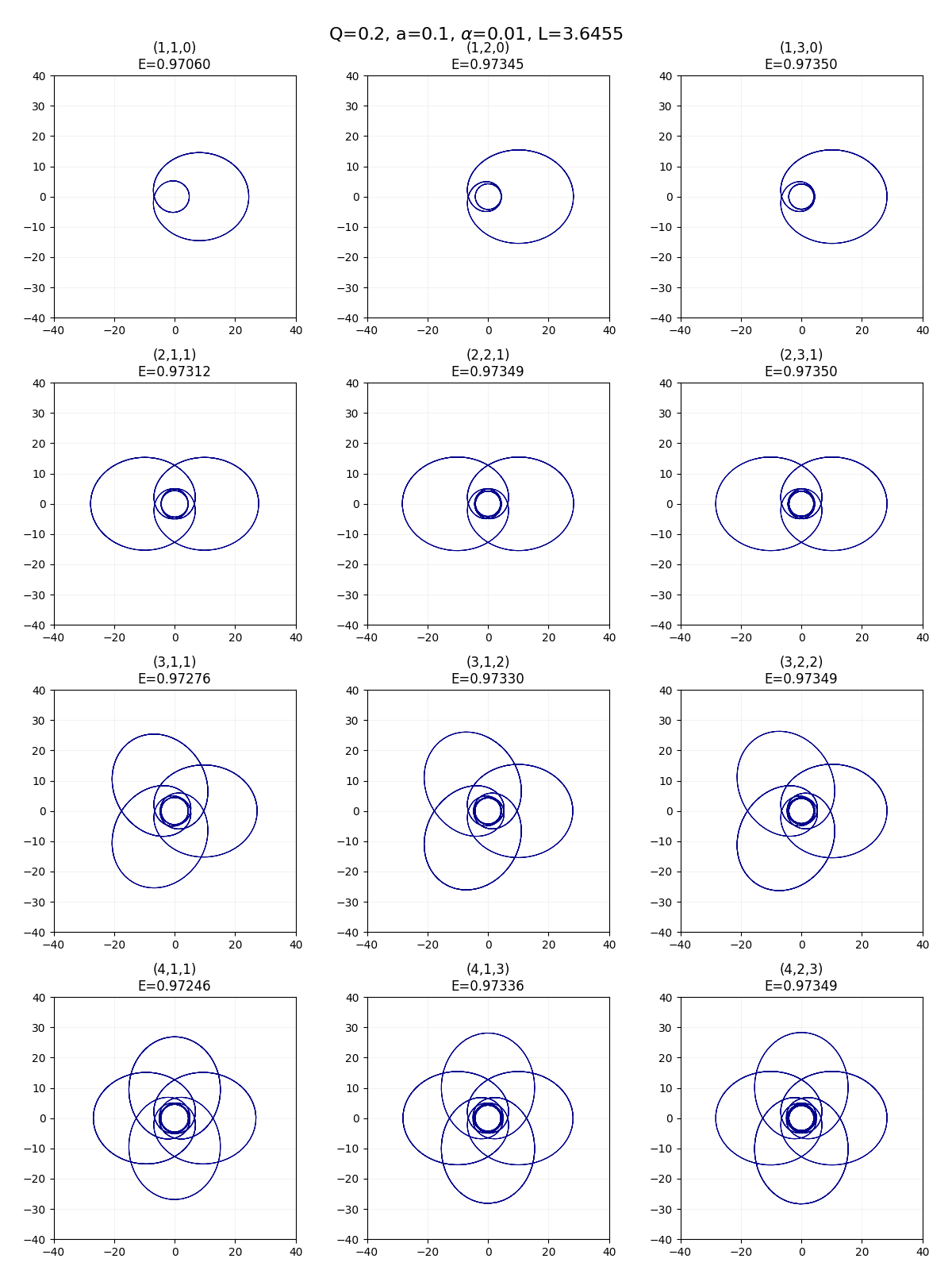
Figure 7: Periodic orbits for fixed Q5 and different Q6, demonstrating energy's effect on excursion size and angular momentum's effect on whirl depth.
The topological structure encoded by these indices provides fine diagnostic power—PFDM and QED corrections modulate both the global size and strong-field content of orbits, reshaping the spectrum of periodic motion.
Utilizing the numerical kludge approach, the work generates GW polarizations Q7 and Q8 for fiducial EMRIs (e.g., Q9 secondary, a0 primary). The GW signal exhibits the expected correspondence between zoom and whirl phases—the former produces broad, lower-amplitude modulations, while the latter generates localized, high-frequency, high-amplitude bursts.
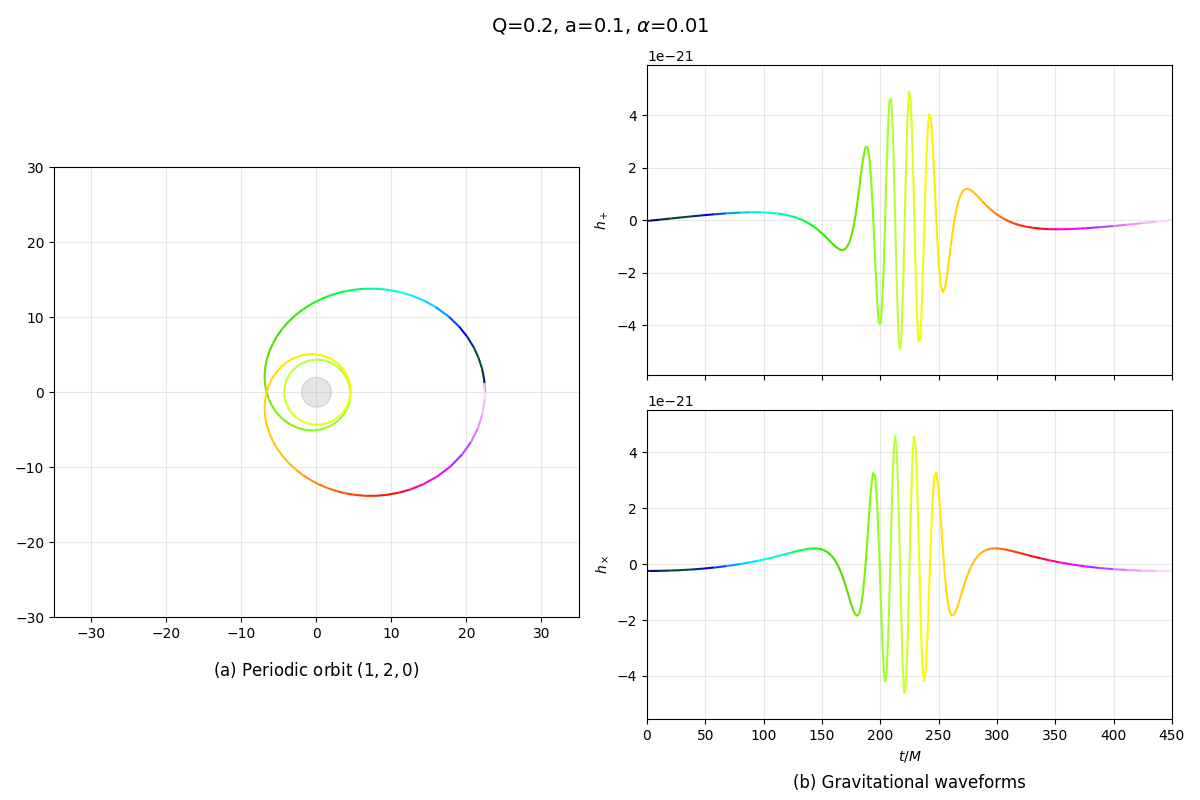
Figure 8: Gravitational waveform for a1; left shows the associated zoom–whirl orbit, right the characteristic GW polarizations with bursty structure during the whirl phase.
Systematic exploration of parameter dependence yields the following empirical results:
- Increasing PFDM a2: Orbital geometry becomes more extended, periapsis location increases, and GW amplitudes are suppressed due to the reduced time spent in the strong-field region and weaker accelerations.
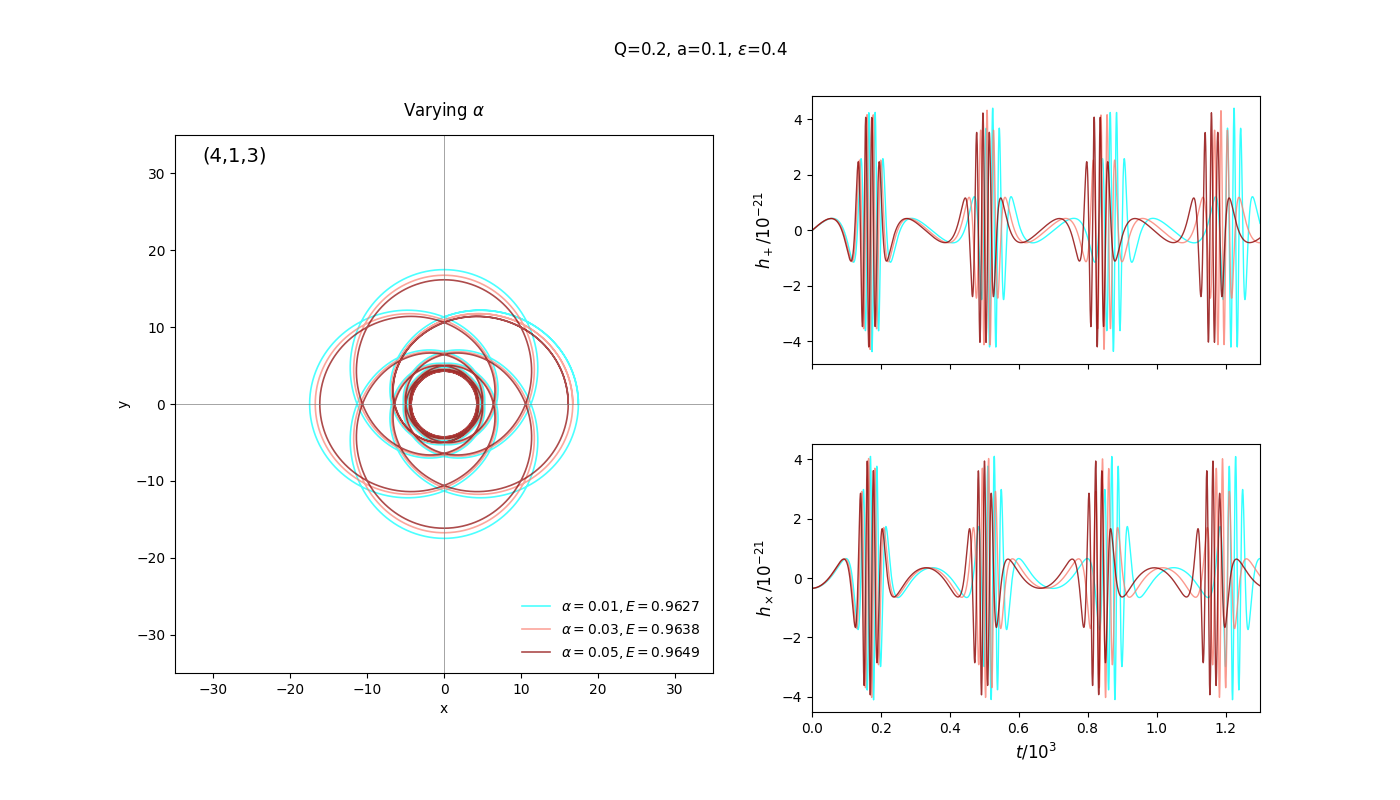
Figure 9: Increasing a3 for a4 deforms the orbit and suppresses both amplitude and high-frequency content of the waveform.
- Varying electric charge a5: Larger a6 amplifies whirl content in periodic orbits and enhances the high-frequency GW components due to strengthened near-horizon curvature.
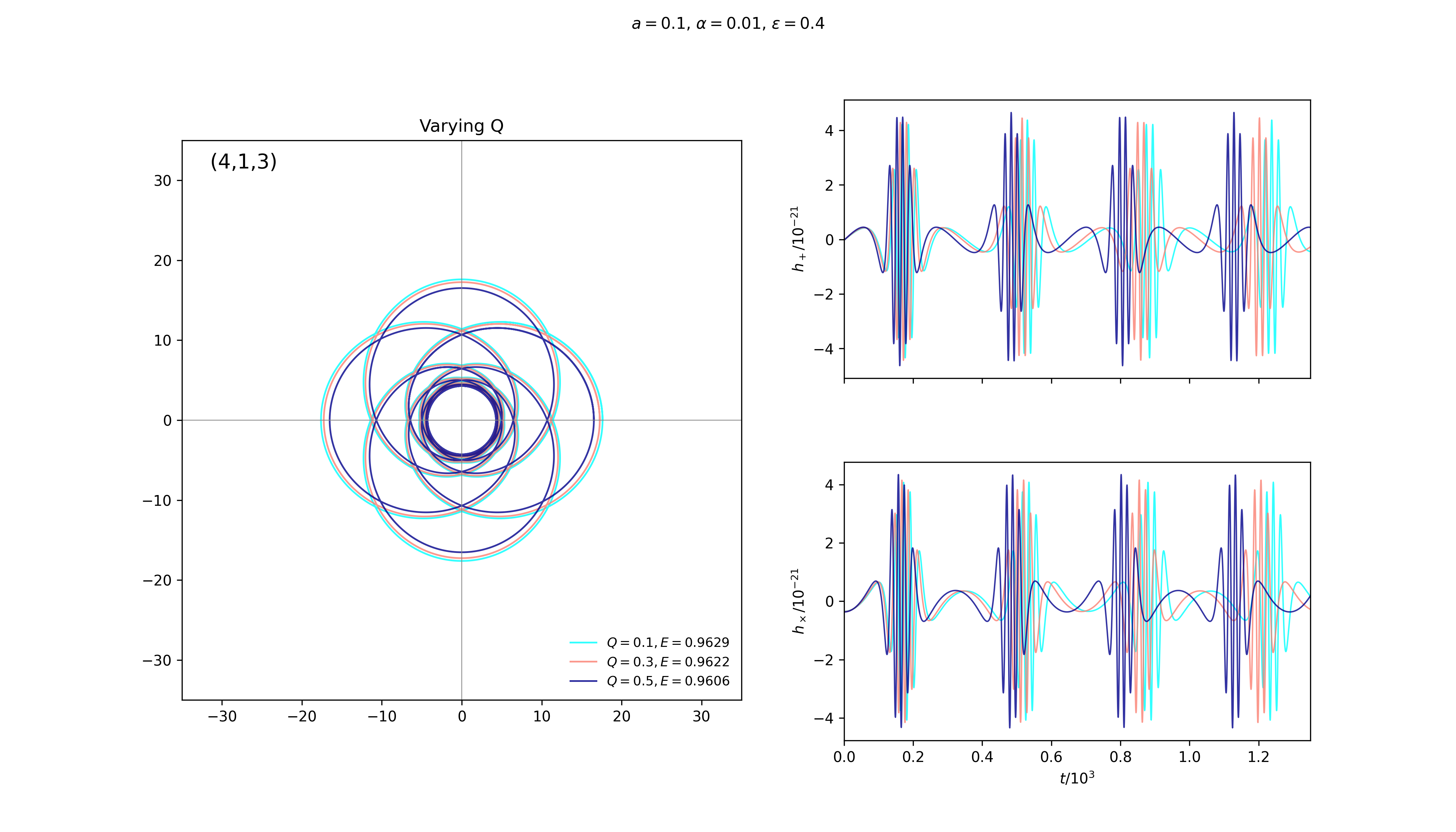
Figure 10: Increasing a7 intensifies whirl behavior and high-frequency GW components.
- QED parameter a8: Modifies near-horizon orbital structure, giving moderate but systematic changes in waveform amplitude and instantaneous frequency, reflecting the sensitive influence of vacuum polarization corrections in the strong-field regime.
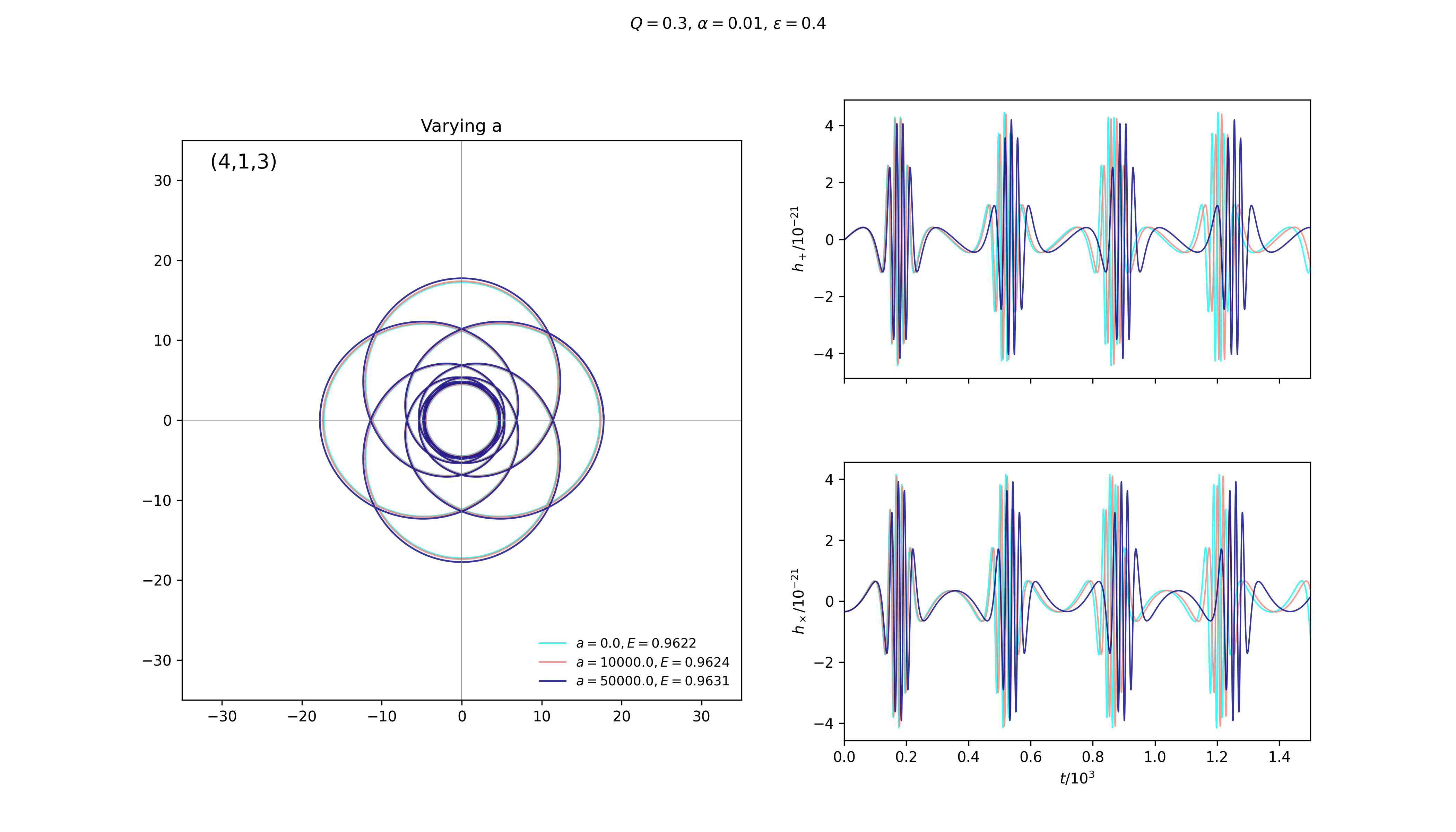
Figure 11: Increasing a9 for fixed α0 and α1 alters the strong-field segment of the orbit, resulting in amplitude and frequency modifications in the waveform.
The waveform morphology reflects a direct imprint of the relativistic zoom–whirl structure and the microphysical (QED) and macrophysical (PFDM) background modifications.
Implications and Outlook
The analysis strengthens the conclusion that relativistic periodic orbits are highly sensitive to both environmental and quantum modifications of the black hole metric. Since the GW signals encode the orbital precession, zoom–whirl content, and near-horizon geometry, they serve as robust probes of underlying microphysics and dark matter distributions.
Practically, these results inform template construction for future GW searches targeting non-vacuum black hole environments, particularly in the context of LISA/space-based detectors where EMRI signals predominate. Theoretically, they show that deviations from general relativistic predictions (e.g., ISCO radius, precession rate, waveform morphology) could be diagnostic for new physics such as strong-field QED effects or non-baryonic matter distributions.
Future work should extend to dissipative phenomena (i.e., full radiation reaction and self-force), rotate the background, and perform a multi-messenger synthesis incorporating shadow, lensing, and QPO observables for the EH–PFDM metric class.
Conclusion
The composite analysis of geodesic structure and waveform emission for test particles in EH–PFDM backgrounds reveals that periodic orbit spectroscopies and associated GWs are sensitive tools for probing QED-induced and dark matter-induced deviations from the standard black hole paradigm. PFDM suppresses and smooths GW amplitudes by diluting the central potential, while QED and charge enhance strong-field dynamical features. These findings motivate the use of periodic orbit frameworks in future theoretical and data analysis pipelines for strong-field gravity and astrophysical black hole studies.

