- The paper demonstrates that adaptive 5G resource allocation, including dynamic Zadoff-Chu waveform selection, significantly improves detection and tracking of low RCS UAVs.
- It integrates multistatic sensing with active 5G gNB emissions and opportunistic signals to enhance surveillance robustness in congested environments.
- Results indicate that adaptive scheduling and SoO augmentation achieve a 12.6 dB gain in detection SNR, ensuring performance continuity under high load.
Adaptive 5G Resource Allocation for Multistatic ISAC-Based UAV Detection and Tracking
Introduction
The proliferation of small UAVs has intensified the need for scalable, real-time surveillance frameworks, particularly for applications demanding persistent detection and robust tracking in congested airspace. Traditional modalities—radar, RF signature-based, EO/IR, and acoustic systems—suffer from modality-specific limitations and deployment complexity, revealing a need for multi-sensor fusion and tight integration with existing wireless infrastructure. This work presents a comprehensive adaptive resource allocation framework for multistatic ISAC-based UAV surveillance in 5G NR systems, specifically focusing on practical tradeoffs under dynamic load, waveform and scheduling optimization, multistatic geometries, and external signals of opportunity (SoO).
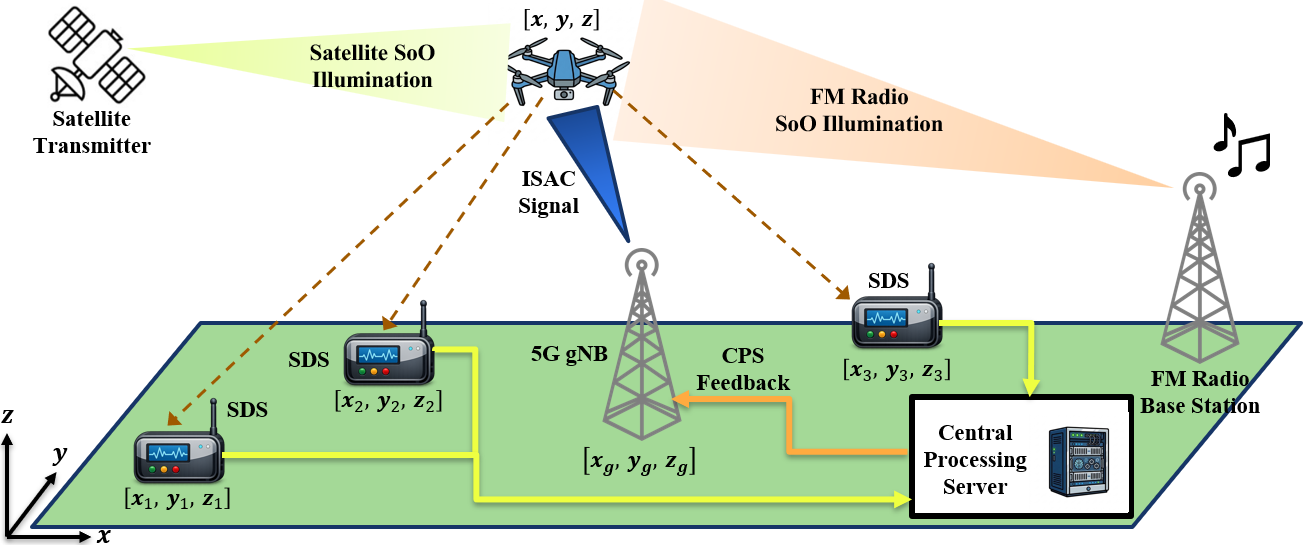
Figure 1: The proposed multistatic ISAC architecture for UAV detection and tracking, highlighting the interplay of 5G gNBs, distributed software-defined sensors (SDS), and external SoO illuminators.
ISAC-Enabled System Architecture
The proposed architecture fuses active and passive sensing using 5G NR waveform emissions from gNBs and opportunistically integrates SoO sourced from non-cooperative transmitters to extend surveillance coverage and robustness. Centralized CPS aggregates distributed SDS measurements, executing sensor coordination via multi-tier ISAC SI signaling and dynamic configuration downloads.
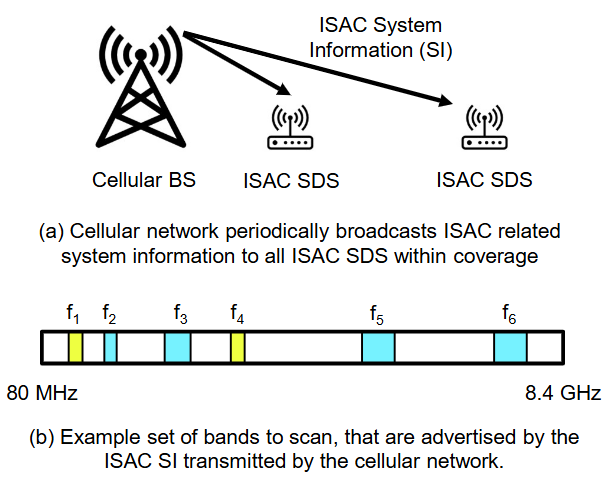
Figure 2: Control and ISAC SI signaling for adaptive configuration of SDS nodes, showing multi-band passive monitoring and prioritization based on real-time network load.
The SDSs utilize both active echoes from gNBs and opportunistic reflections, adapting sensing directions and frequency bands—prioritized using granular SI messages (from binary monitoring up to fine-grained UAV angular coordinates and gNB precoding index). Multi-band monitoring enables scalable surveillance with duty-cycled frequency coverage, balancing revisit rates against hardware bandwidth limitations.
Adaptive Sensing and Resource Management
The core of the adaptive sensing approach is dynamic Zadoff-Chu (ZC) sequence selection. Longer sequences (NZC) improve coherent processing gain and range resolution but increase PRB consumption. An adaptive scheduler selects the maximal feasible NZC under instantaneous load η, targeting robustness for low RCS and highly maneuverable UAVs without excessive throughput impairment.
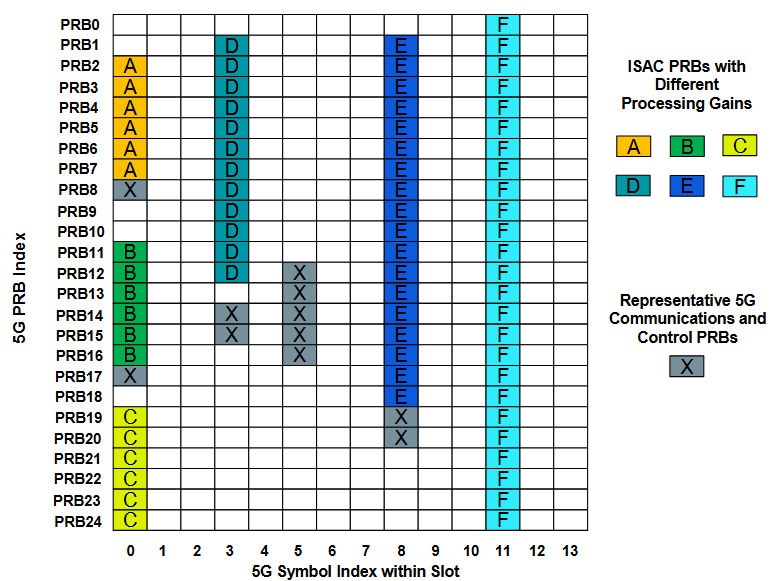
Figure 3: Example PRB allocation strategy showing the interleaving of multiple active ZC root sequences and communication data/reference channels.
The system employs a hierarchical search: short ZC roots and wide beams for coarse search, then transitions to longer waveforms with angularly focused beams for high-precision tracking—maximizing SNR and spatial separability.
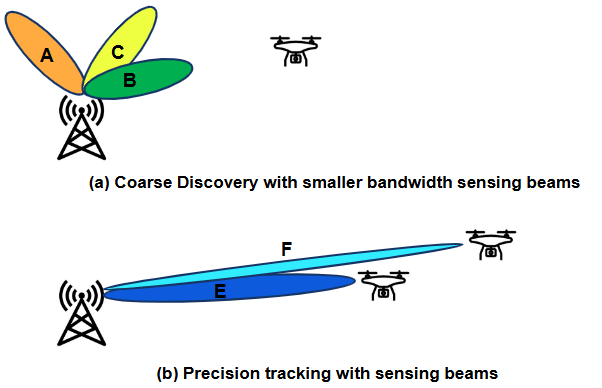
Figure 4: Transition from wide-area sweep (coarse search) to narrow-beam high-SNR tracking for precise positional updates.
Quantification of Sensing Overhead
Overhead analysis demonstrates that, within the 5G NR framework, single-beam active sensing can be maintained with limited resource consumption (e.g., <2% of post-overhead PRBs for the most aggressive settings). However, the overhead scales linearly with the number of beams, highlighting the necessity for adaptive, load-aware scaling in multi-target environments.
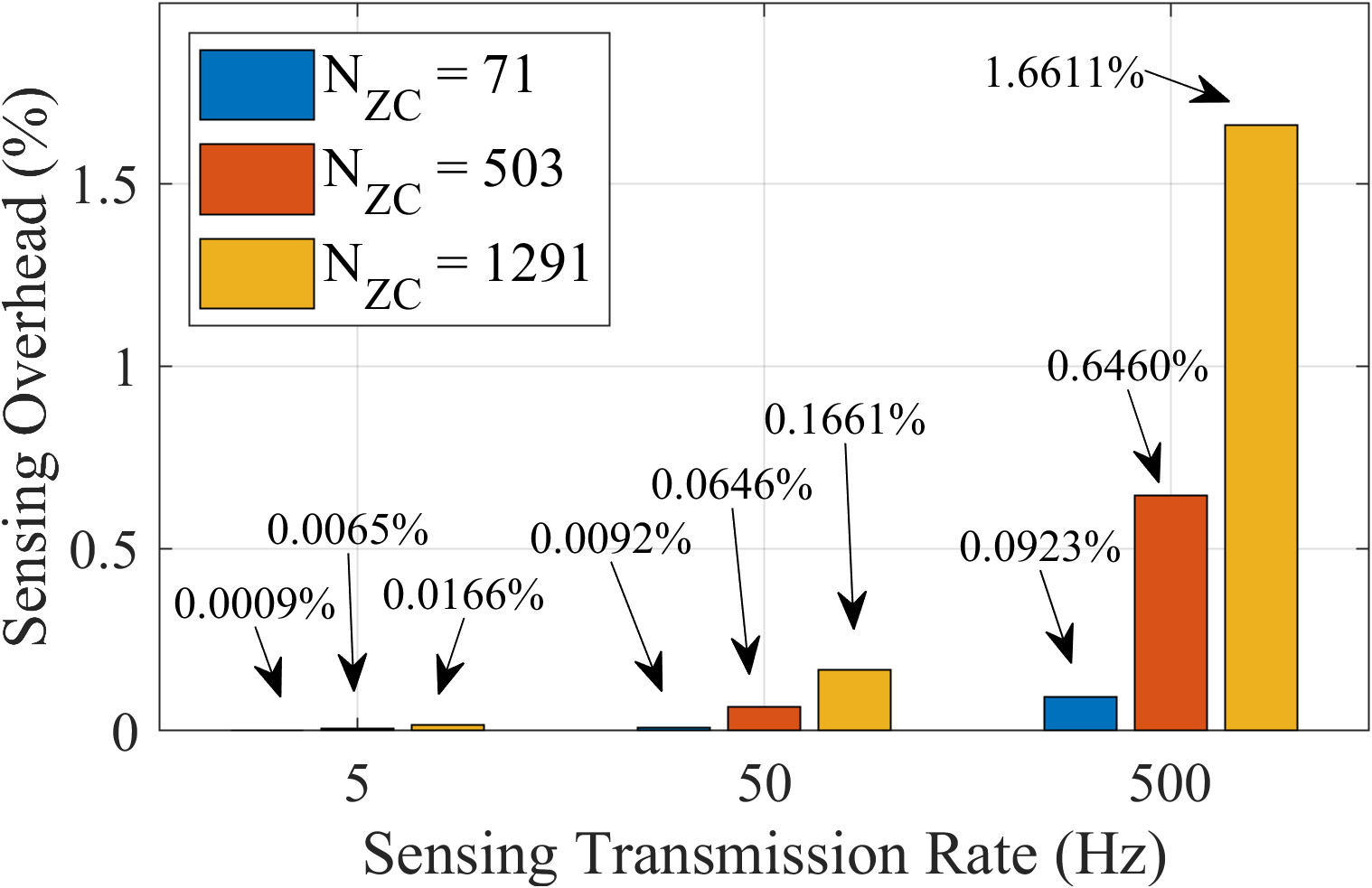
Figure 5: Single-beam sensing resource overhead as a function of ZC waveform length and transmission rate.
ZC Length, SNR Regime, and ROC Behavior
Detection reliability is shown to strongly depend on both the input SNR and the selected NZC. Larger NZC yields substantial reductions in Pmd at fixed Pfa, especially as SNR approaches the detection threshold. The improvement saturates under severely degraded SNR, justifying the utility of integrating SoO and multi-sensor fusion as complementary strategies under adversarial conditions.
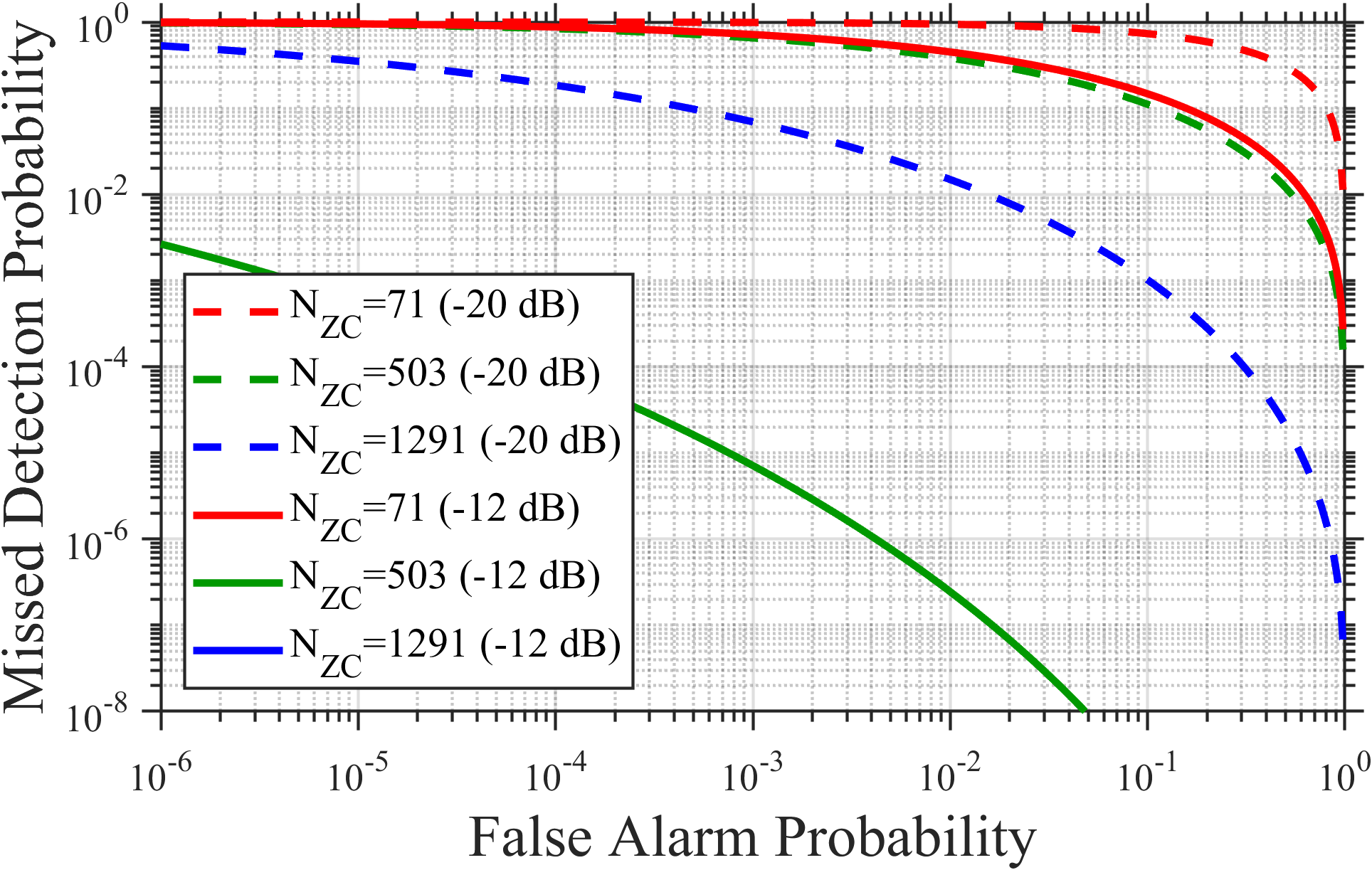
Figure 6: Missed-detection versus false-alarm probability for various ZC waveform lengths and input SNR settings.
Track-level analysis considering an M-of-N detection criterion confirms that, at a target tracking outage probability of NZC0, increasing NZC1 from 71 to 1291 delivers a processing gain equating to a 12.6 dB reduction in required detection SNR, a significant effect for maintaining continuity in dynamic and interference-prone deployments.
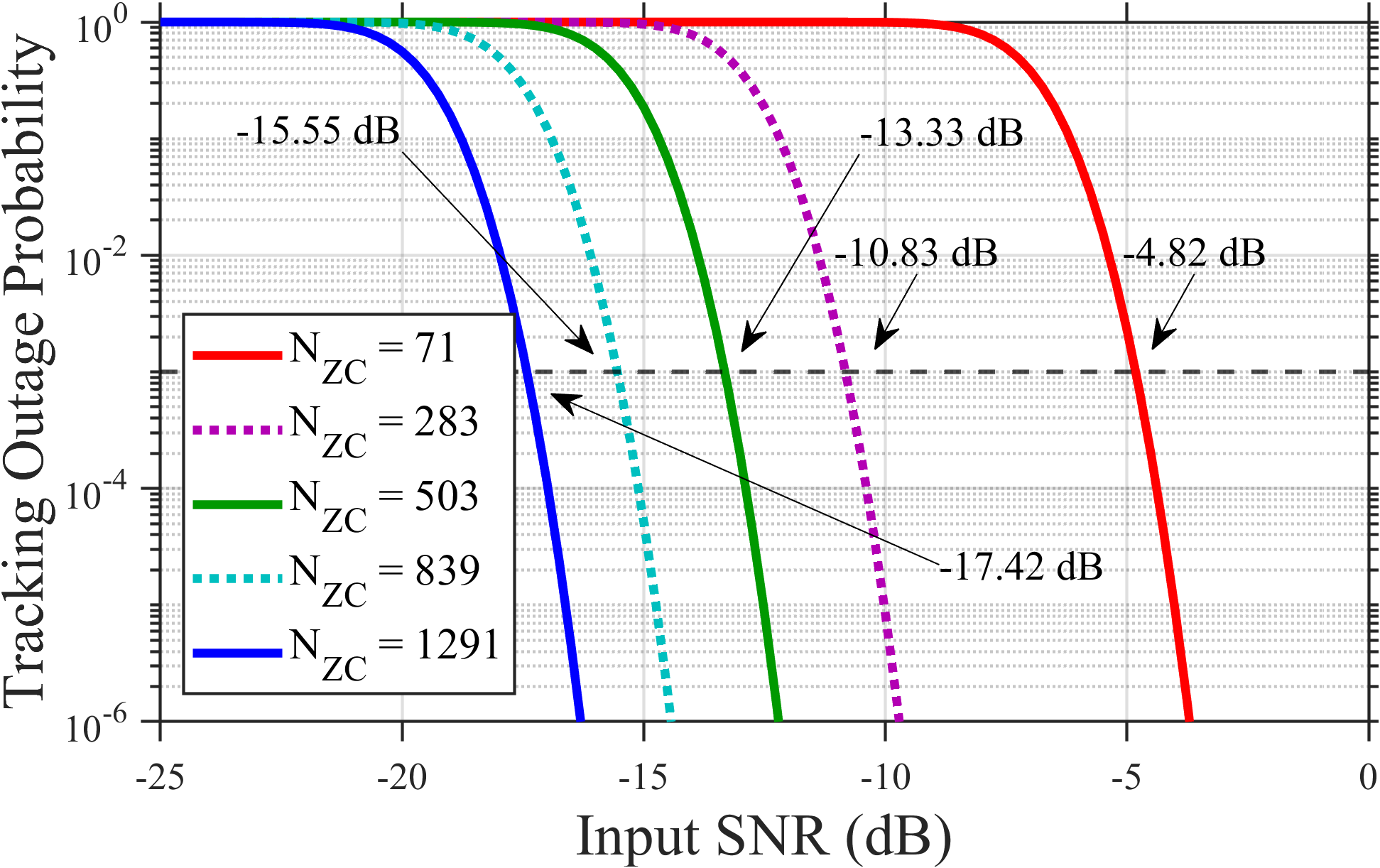
Figure 7: Tracking outage probability across input SNR for differing ZC waveform lengths under a fixed track continuity requirement.
Load-Aware Resource Allocation and SoO Augmentation
Four resource-allocation policies are benchmarked: fixed sensing-oriented, communications-oriented, pure adaptive, and adaptive with SoO assistance. Throughput-tracking tradeoff curves demonstrate that fixed policies (either high or low sensing reservation) are suboptimal under variable load. The adaptive policy maintains favorable throughput-tracking behavior except under extreme congestion, where resource exhaustion leads to tracking loss. Augmenting with SoO (exploiting additional non-5G sensing opportunities) enables full utilization for communications without sacrificing track continuity even under full load, as SoO-supported sensors offset the diminished number of active 5G sensing updates.
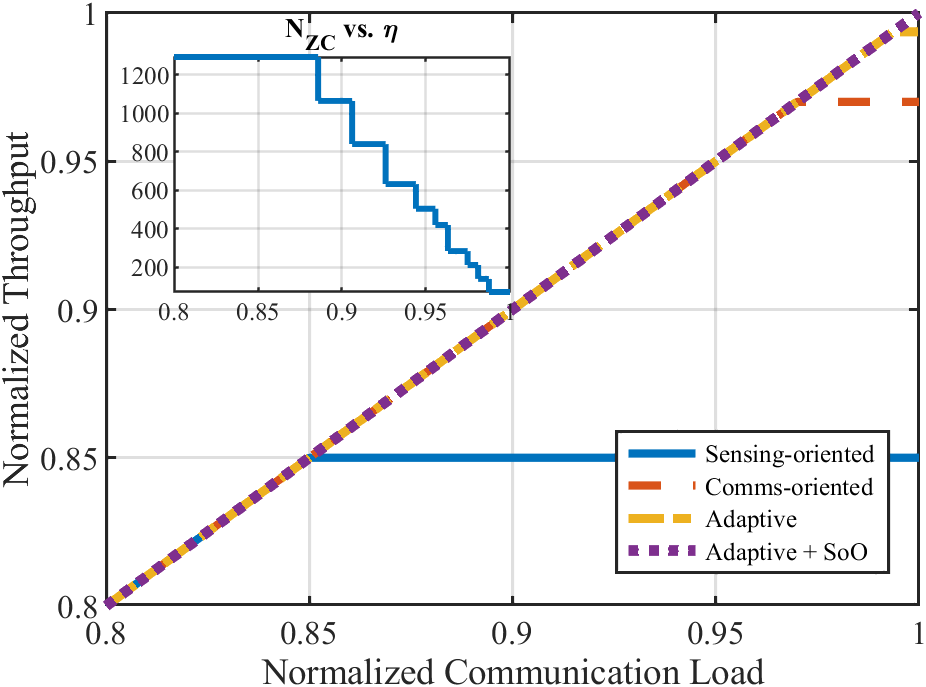
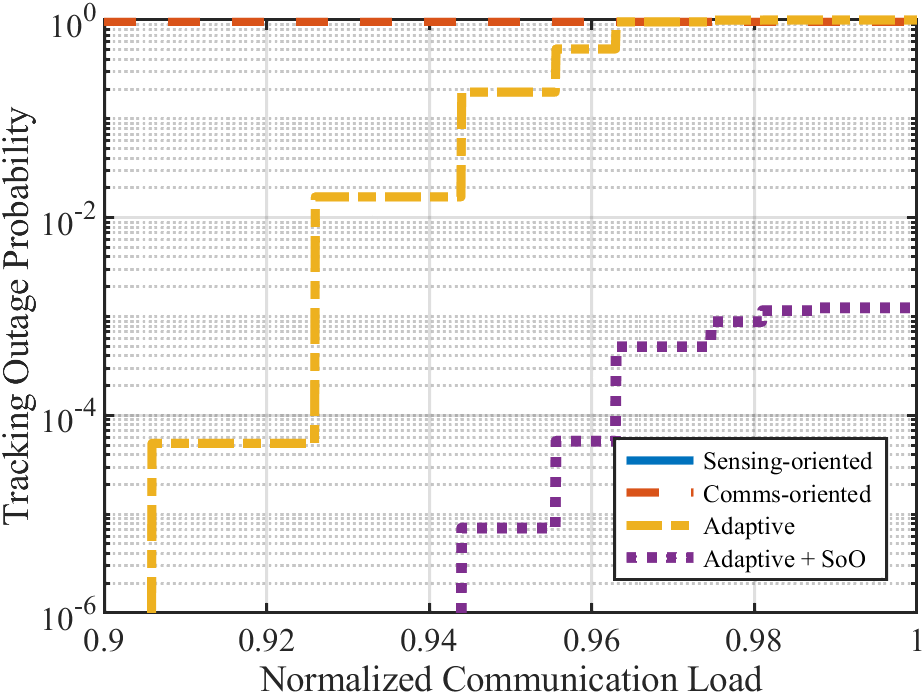
Figure 8: Comparative throughput and tracking performance for various resource allocation policies under dynamic network load, demonstrating the unique ability of adaptive + SoO to preserve both throughput and continuity at high load.
Cramér-Rao Lower Bound Analysis for Sensing Geometry
A CRLB-based performance model demonstrates the localization accuracy bounds attainable by monostatic (conventional) and multistatic (distributed SDS) sensing configurations. Notably, multistatic geometries exploit spatial diversity, yielding both lower and more uniform PEB across the surveillance region. While increasing NZC2 improves all configurations, the multistatic gain substantially amplifies the benefit—reducing mean PEB by more than 7x when increasing NZC3 from 71 to 1291, compared to negligible improvement for monostatic.
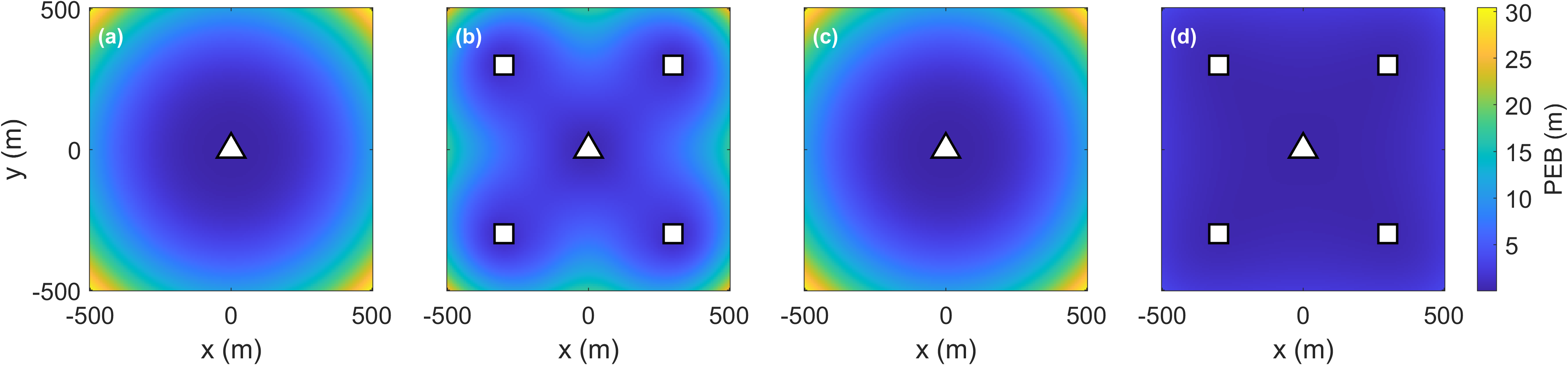
Figure 9: Heatmap comparison of PEB for monostatic and multistatic configurations and different ZC lengths, showing the spatial advantage and bandwidth scalability of distributed geometries.
Implications and Future Directions
The implications of this research for wide-area UAV surveillance and next-generation ISAC frameworks in wireless networks are substantial. The analysis formalizes how dynamic adaptation of waveform, beam, and scheduling parameters can reconcile conflicting requirements for communication throughput and sensing continuity. The integration of multistatic support and SoO-capable SDS nodes is shown to be essential for resilience under high load, enabling robust surveillance even when core network resources are saturated.
From a theoretical perspective, the CRLB analysis underscores that the benefits of increased waveform bandwidth and processing gain are fully realized only in spatially diverse, distributed architectures. Practically, the proposed adaptive scheduling architecture and signaling framework are compatible with 5G NR standards, facilitating deployment within commercial networks and aligning with emerging 6G ISAC use cases.
Future work should address the inclusion of realistic antenna and propagation effects, evaluate adaptive policies under non-Gaussian clutter and interference, and validate the system with experimental deployments. Extension to joint multi-UAV tracking and coordinated multi-cell ISAC is warranted for urban and high-density applications.
Conclusion
This paper provides a rigorous quantitative approach to adaptive multistatic ISAC resource allocation for UAV surveillance in 5G systems. It establishes the superiority of dynamically adapted waveform/beamform policies—especially when combined with distributed SDS nodes and SoO exploitation—for maintaining detection, tracking, and localization performance without compromising communication in high-load environments. The findings advocate for standards-aligned, multistatic, and SoO-assisted strategies in future cellular-enabled ISAC deployments.

