- The paper introduces a correlation-aware quantum feature map that adaptively encodes classical statistical dependencies into quantum circuits.
- It demonstrates improved classification accuracy, reduced circuit depth, and faster convergence across healthcare, finance, and education datasets.
- The method exploits thresholded statistical measures, such as Spearman and Kendall correlations, to minimize noise and enhance interpretability.
Correlation-Aware Quantum Feature Maps: Adaptive Data-Driven Quantum Encoding for Variational Classification
Motivation and Background
Quantum Machine Learning (QML) has recently advanced due to NISQ hardware progress, motivating hybrid learning architectures that combine the data representational power of quantum systems with classical optimization. Variational Quantum Classifiers (VQC) and Quantum Neural Networks (QNN) rely critically on the quantum feature map: the process by which classical features are encoded into quantum states. Existing quantum feature maps (e.g., Z Feature Map, ZZ Feature Map, Pauli Feature Map) typically use fixed interactions—linear, circular, or fully entangled patterns—irrespective of the underlying data structure. This disregards statistical feature dependencies, potentially leading to suboptimal representations and unnecessary circuit depth detrimental for NISQ devices.
In classical learning, statistical dependency measures (Pearson, Spearman, Kendall, Mutual Information, Distance Correlation) are foundational for exploiting structure within data. The scarcity of quantum encoding strategies that systematically incorporate such relationships motivates the Correlation-Aware Quantum Feature Map (CAQFM), which aims to bridge classical dependency analysis and quantum data encoding in a principled, adaptive manner.
Correlation-Aware Quantum Encoding Framework
CAQFM integrates dependency information extracted from the dataset directly into the quantum circuit. The workflow consists of:
- Dependency Matrix Construction: Statistical measures (Pearson, Spearman, Kendall, MI, Distance Correlation) are computed for all feature pairs.
- Thresholding: Only dependencies exceeding a problem-specific threshold τ are retained, reducing circuit depth and focusing on informative correlations.
- Circuit Architecture: Each selected pair triggers a controlled RY operation, with angle proportional to the dependency magnitude. Thus, quantum circuit topology is adaptively generated based on classical data structure.
- Variational Layer: Hardware-efficient ansatz with parameterized rotations and chained CNOTs is appended, compatible with NISQ constraints.
- Hybrid Training: COBYLA optimizer is employed for updating circuit parameters using Binary Cross-Entropy loss. Quantum state preparation and measurement remain on the quantum hardware.
This design ensures that both feature values and dependencies are encoded in the quantum representation, yielding richer and more discriminative quantum states for downstream learning tasks.
Experimental Validation: Classification Benchmarks
The efficacy of CAQFM was empirically validated on three binary classification datasets—Breast Cancer (healthcare), Credit Default (finance), Student Placement (education)—representing diverse domains and statistical structures.
Breast Cancer Dataset
The CAQFM models consistently eclipsed conventional feature maps across all key metrics. Spearman-CAQFM and Kendall-CAQFM achieved test accuracy ≈95%, substantially outperforming Z, ZZ, and Pauli Feature Maps, which peaked near 87%.
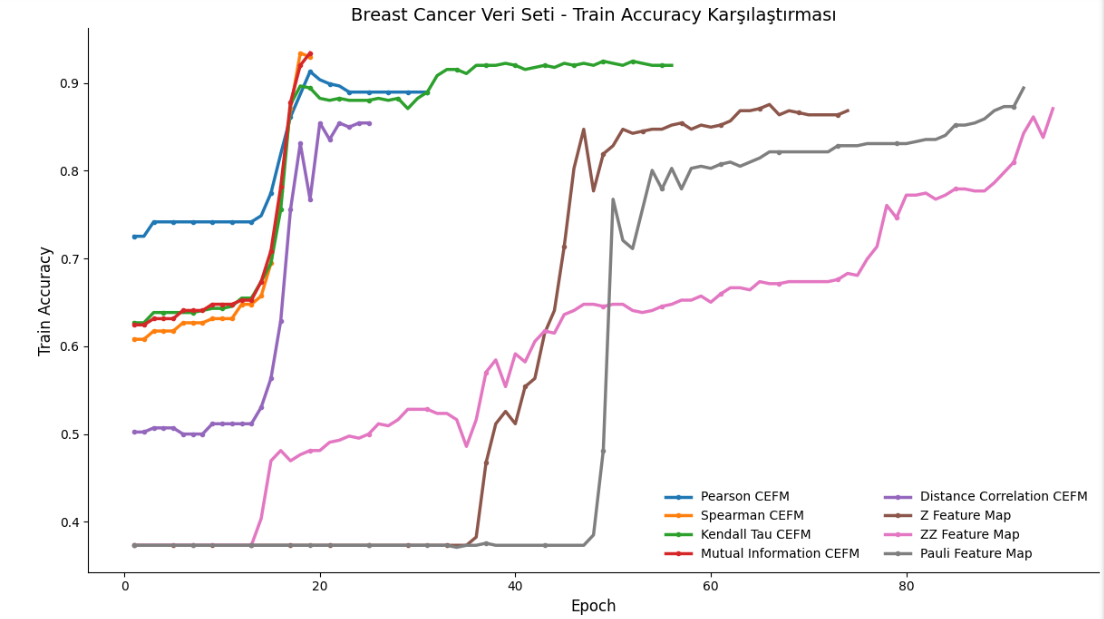
Figure 1: Training accuracy values throughout the epochs for the Breast Cancer dataset.
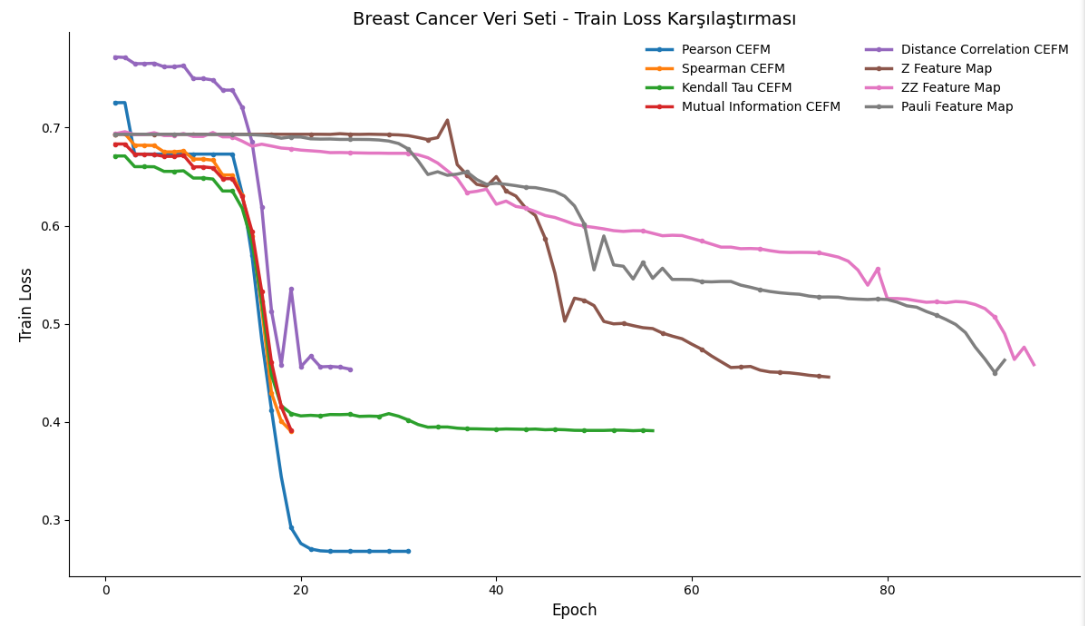
Figure 2: Training loss values throughout the epochs for the Breast Cancer dataset.
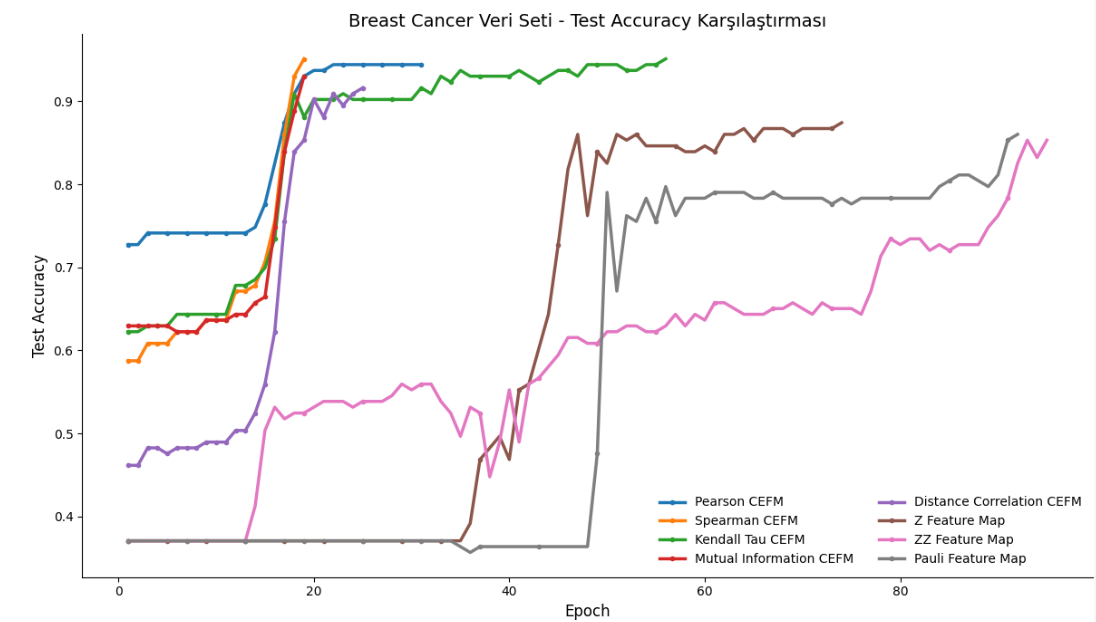
Figure 3: Test accuracy values throughout the epochs for the Breast Cancer dataset.
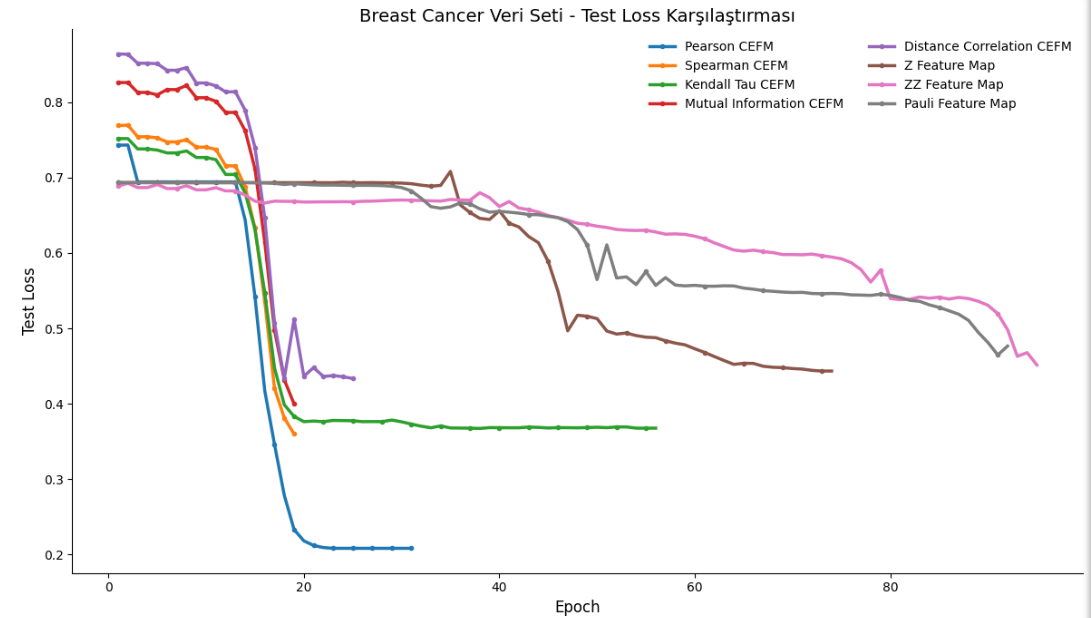
Figure 4: Test loss values throughout the epochs for the Breast Cancer dataset.
CAQFM variants not only improved accuracy but also showed reduced test loss and faster convergence (19–56 epochs vs. up to 92 for conventional maps). Incorporating statistical correlation directly allowed the circuits to capture disease-relevant feature interactions more effectively, minimizing unnecessary entanglement and mitigating noise vulnerability.
Credit Default Dataset
Financial classification tasks demand encoding of complex, often nonlinear relationships. Here, Spearman-CAQFM, Kendall-CAQFM, and MI-CAQFM scored 81% accuracy, outpacing Z (75%) and Pauli (70%) Feature Maps. Notably, CAQFM models required fewer controlled gates (1–2 vs. up to 18) and converged faster.
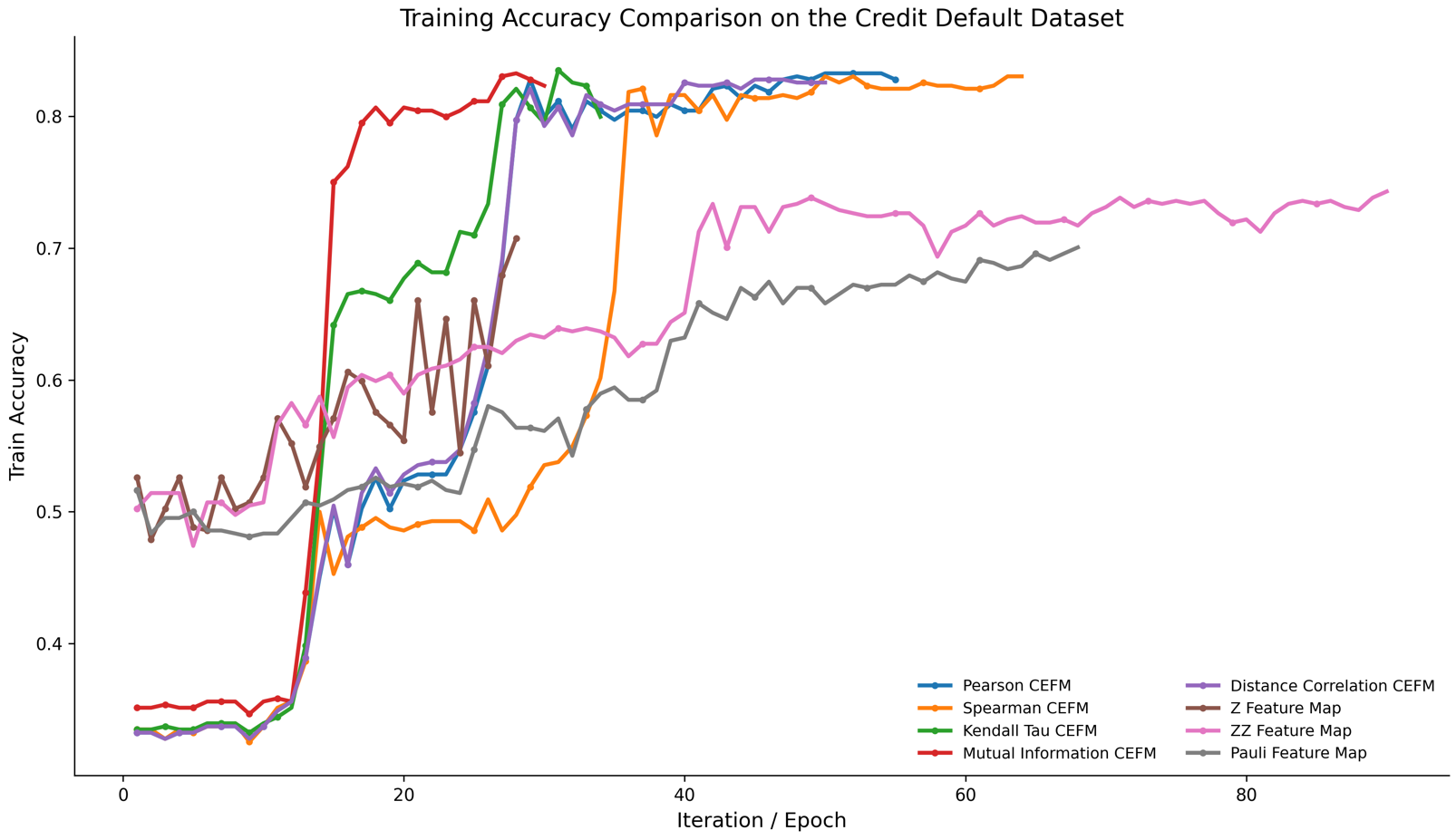
Figure 5: Training accuracy values throughout the epochs for the Credit Default dataset.
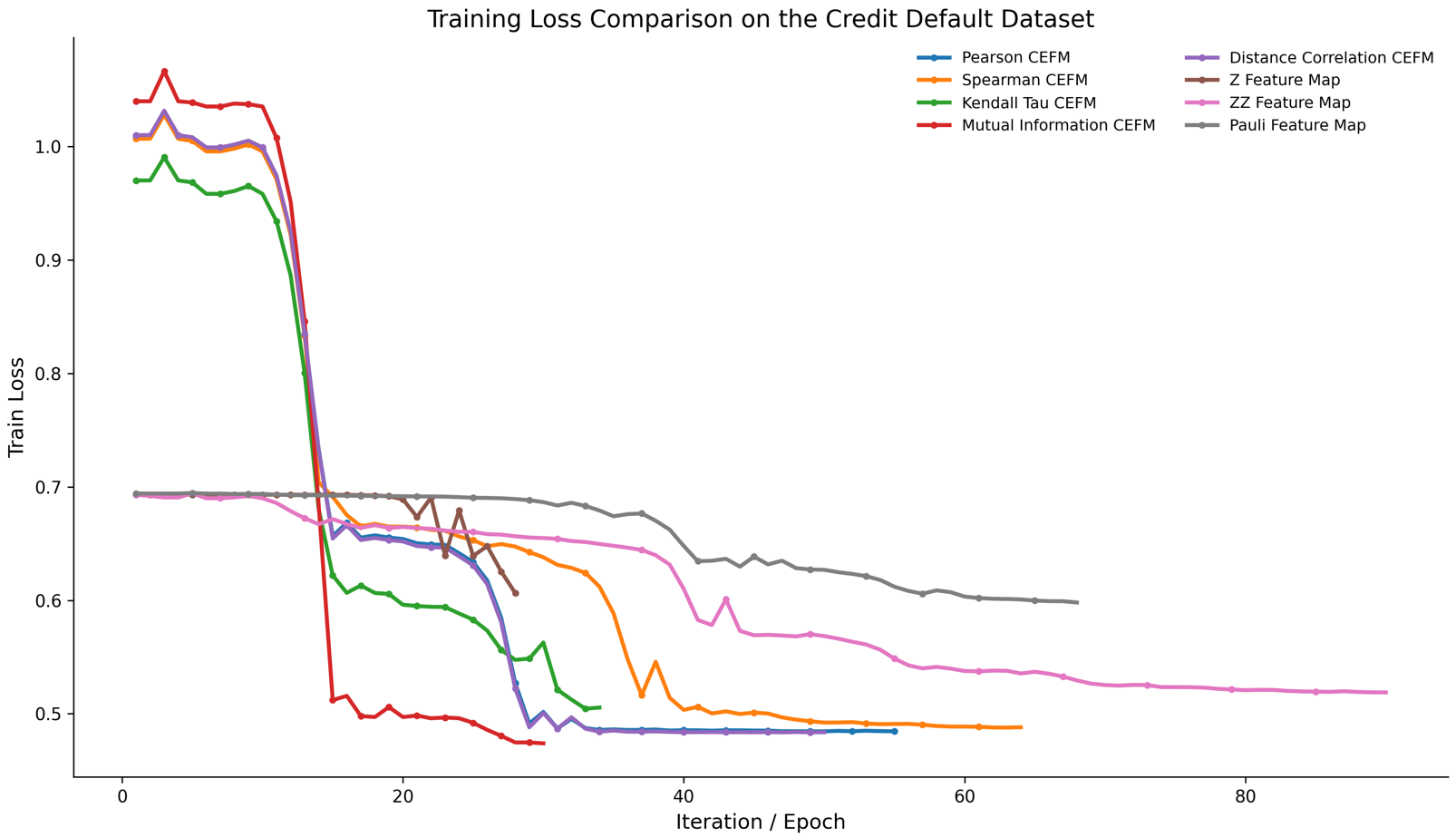
Figure 6: Training loss values throughout the epochs for the Credit Default dataset.
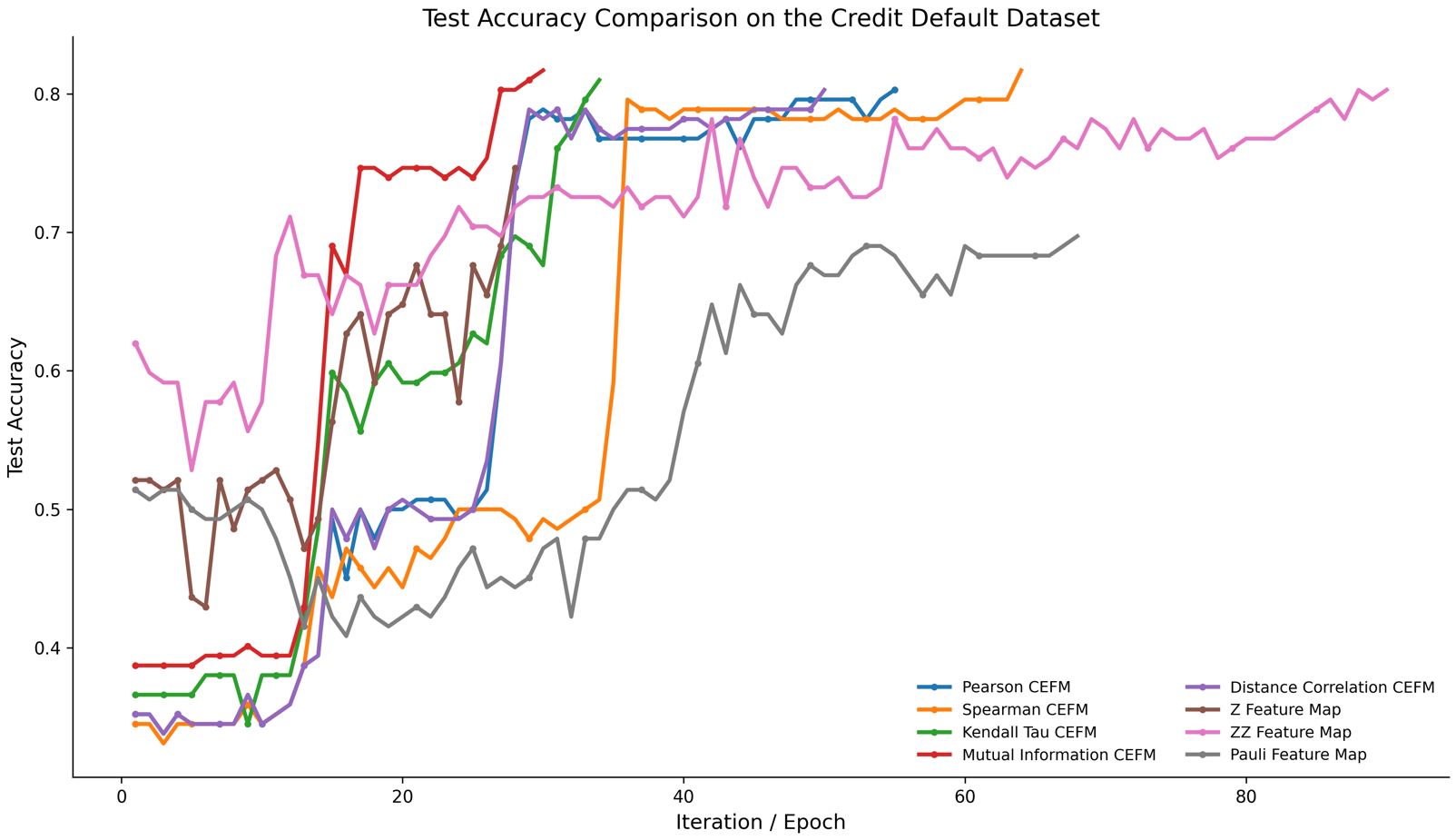
Figure 7: Test accuracy values throughout the epochs for the Credit Default dataset.
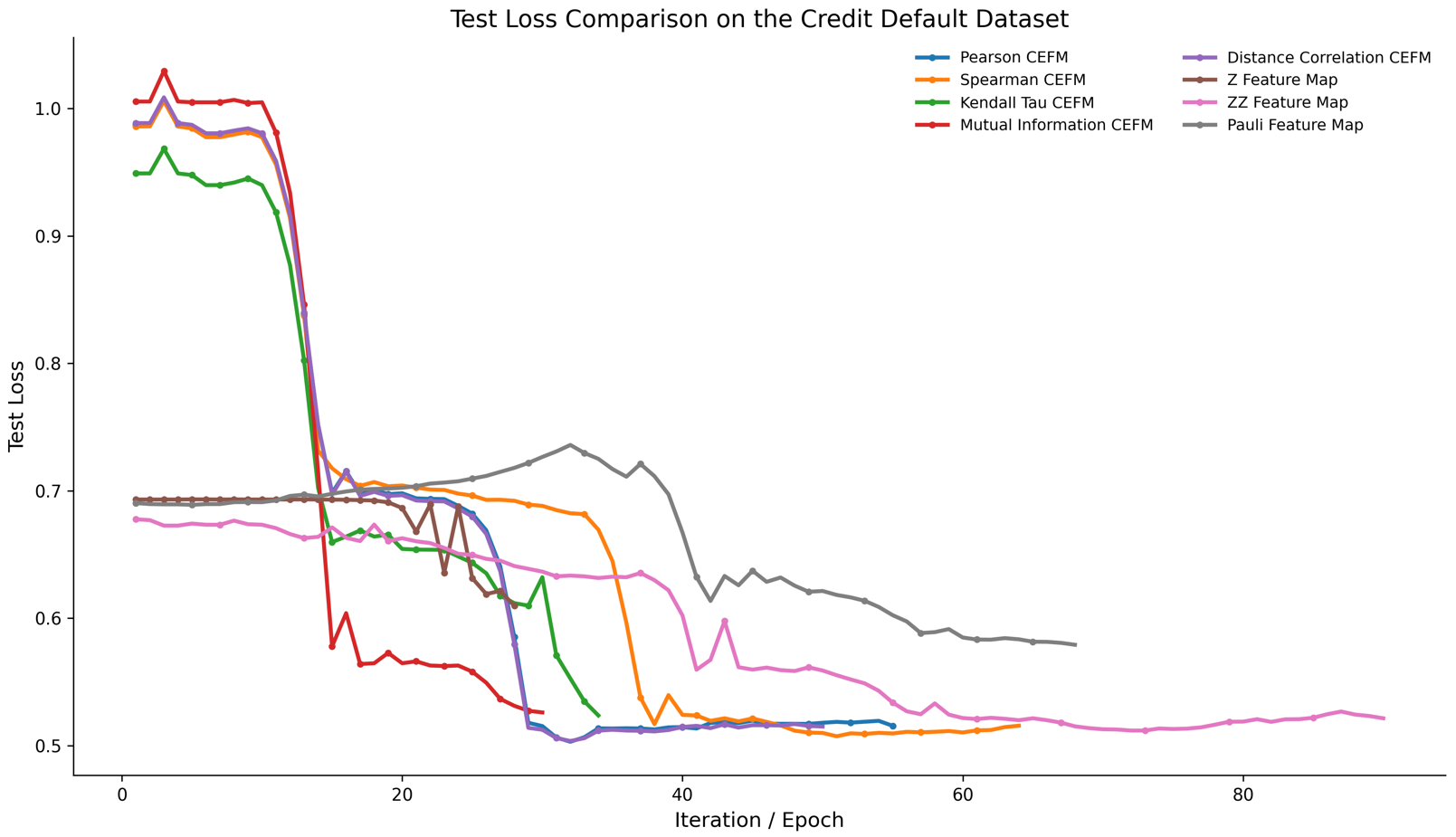
Figure 8: Test loss values throughout the epochs for the Credit Default dataset.
Rank-based and information-theoretic measures (Spearman, Kendall, MI) were particularly advantageous, confirming that monotonic and nonlinear dependencies play an important role in quantum classification for financial data.
Student Placement Dataset
All CAQFM variants performed strongly ($97$–99% accuracy), with MI-CAQFM and Z Feature Map both achieving ≈99%. The Z Feature Map's non-interacting strategy succeeded due to strong individual feature separability, but CAQFM maintained fast convergence and interpretability with fewer gates (3–4 vs. 12–36 for ZZ/Pauli).
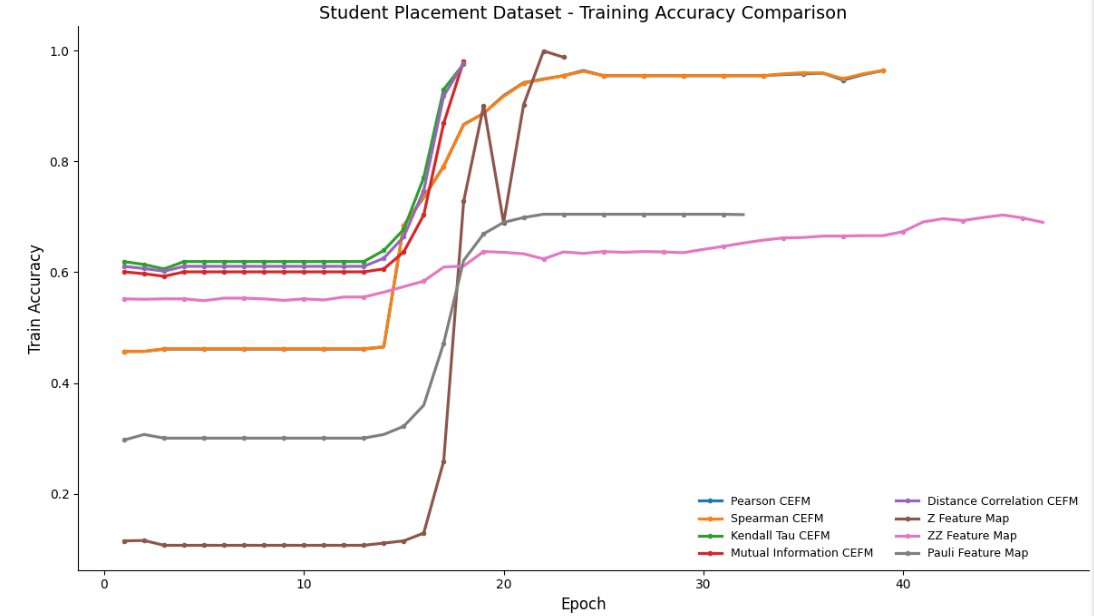
Figure 9: Training accuracy values throughout the epochs for the Student Placement dataset.
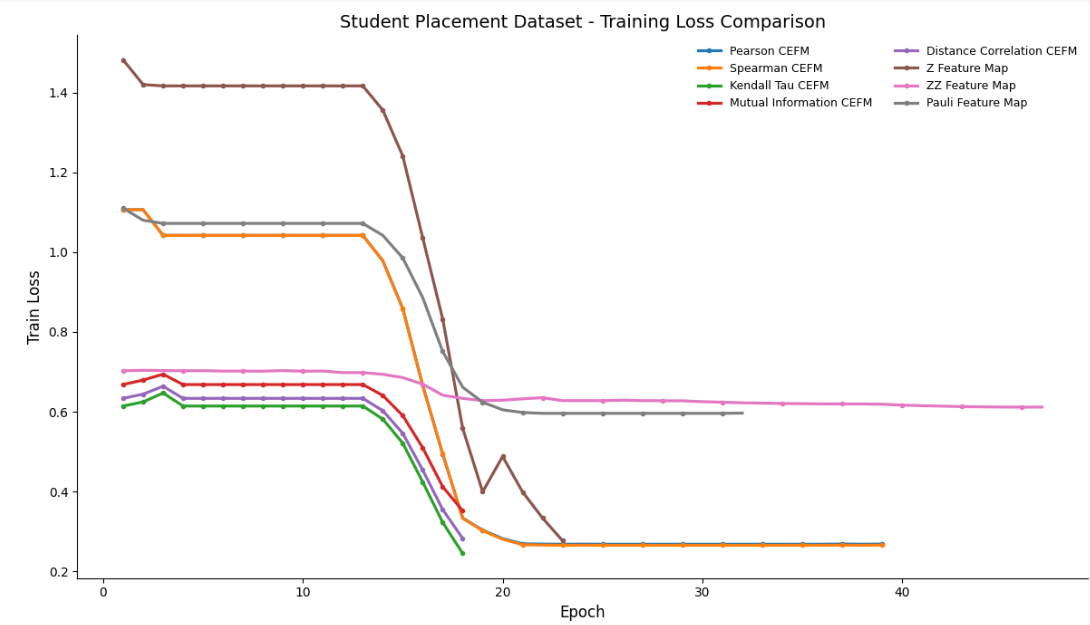
Figure 10: Training loss values throughout the epochs for the Student Placement dataset.
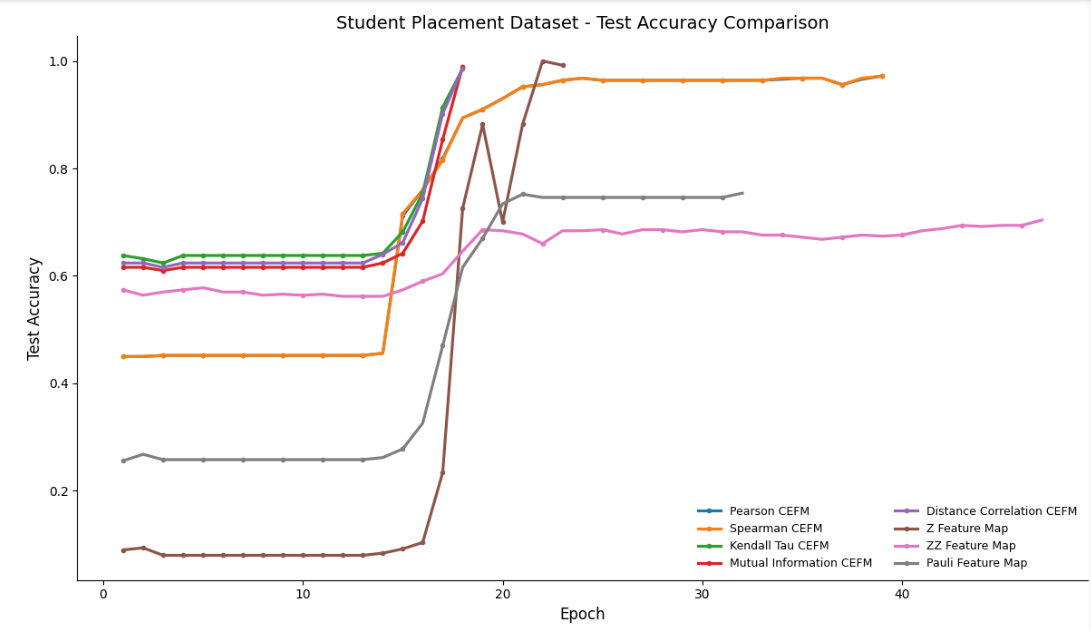
Figure 11: Test accuracy values throughout the epochs for the Student Placement dataset.
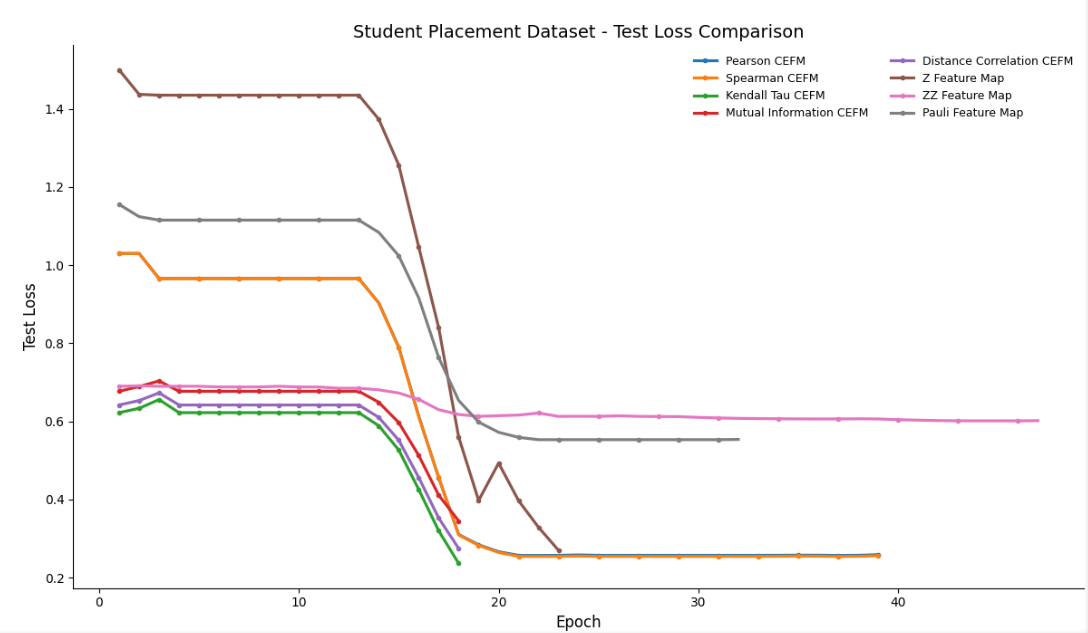
Figure 12: Test loss values throughout the epochs for the Student Placement dataset.
CAQFM's adaptive encoding demonstrated robustness irrespective of dataset domain or structure, with dependency measure selection influencing its effectiveness.
Implications and Theoretical Significance
CAQFM establishes a practical mechanism by which quantum feature map design is informed by classical statistical analysis, yielding data-aware, interpretable quantum circuits. The strategy reduces circuit depth, mitigates unnecessary gate insertions, and circumvents noise decimation in NISQ regimes. The adaptability across diverse domains implies broad applicability and scalability, given appropriate feature selection and thresholding.
From a theoretical perspective, CAQFM bridges quantum encoding and classical statistics, suggesting new directions for QML model development (e.g., dynamic ansatz construction, graph-based quantum representations, adaptive thresholding). It also opens the possibility of improved generalization by aligning quantum circuit expressivity with dataset complexity.
Future Directions
Extending CAQFM to multiclass classification, higher-dimensional datasets, and real quantum hardware evaluations remains vital. Development of automated threshold tuning and dependency-guided ansatz generation are promising avenues. Further exploration of advanced correlation metrics and integration with quantum kernel learning can further enhance model fidelity and interpretability.
Conclusion
Correlation-Aware Quantum Feature Maps (CAQFM) provide an adaptive, data-driven quantum encoding mechanism that directly integrates classical statistical dependencies into quantum circuits. Across healthcare, finance, and education datasets, CAQFM consistently outperformed conventional feature maps in accuracy, convergence, and efficiency, validating the efficacy of dependency-guided quantum representation learning. This formal connection between classical dependency analysis and quantum feature map construction has practical and theoretical ramifications, offering scalable, interpretable, and more robust approaches for QML in the NISQ context and beyond.

