- The paper introduces FIMH, a novel algorithm that maximizes overall influence while reducing activation disparity among communities in hypergraphs.
- It employs a utopia-distance criterion and greedy strategy under the Susceptible-Infected Contact Process to balance dual objectives of spread and fairness.
- Experimental results on real-world datasets show FIMH achieves near-optimal influence with a mean 24.3% reduction in community-level activation disparity.
Introduction
The paper "Fair Influence Maximization in Hypergraphs" (2606.14189) addresses the computational and algorithmic challenge of fair influence maximization (FIM) in hypergraph settings. Influence maximization (IM)—the problem of identifying a seed set of nodes that maximizes the spread of activation in a network under a diffusion model—has a long tradition in complex network analysis, with applications spanning viral marketing, information propagation, and epidemic control. Existing IM approaches are predominantly formulated for pairwise networks and seek purely global spread, frequently neglecting fairness in activating different subpopulations or communities. Recent work has extended fairness objectives to pairwise networks, but the domain of hypergraphs—structures modeling multi-node (higher-order) interactions typical of many real-world systems—remains largely unexplored with respect to group-level fairness.
The paper introduces the FIMH algorithm, a scalable, parameter-free heuristic for fair influence maximization in hypergraphs under the Susceptible-Infected Contact Process (SICP) model. FIMH aims to maximize the total influence, while explicitly minimizing the activation fraction disparity across distinct, non-overlapping communities. This dual-objective formulation is operationalized via multi-objective optimization, with the algorithm employing a utopia-distance criterion to trade off influence and fairness at each seed selection step.
Hypergraph Model and Diffusion Dynamics
Hypergraphs generalize graphs by allowing hyperedges to connect any number d≥2 of nodes, enabling the representation of multi-party group interactions. The community structure—partitioning of nodes into non-overlapping communities—is detected via modularity maximization, here using H-louvain. This community structure is integral for fairness objectives, as the activation fraction within each community serves as the measure against which disparity is evaluated.
The spreading mechanism is based on SICP: at each timestep, every infected node selects one of its incident hyperedges and attempts to infect each susceptible node in that hyperedge independently with probability β. The process iterates for T steps, with the aim to maximize the expected number σ(S) of activated nodes at the end (influence), and minimize the community-level activation fraction disparity J(S).
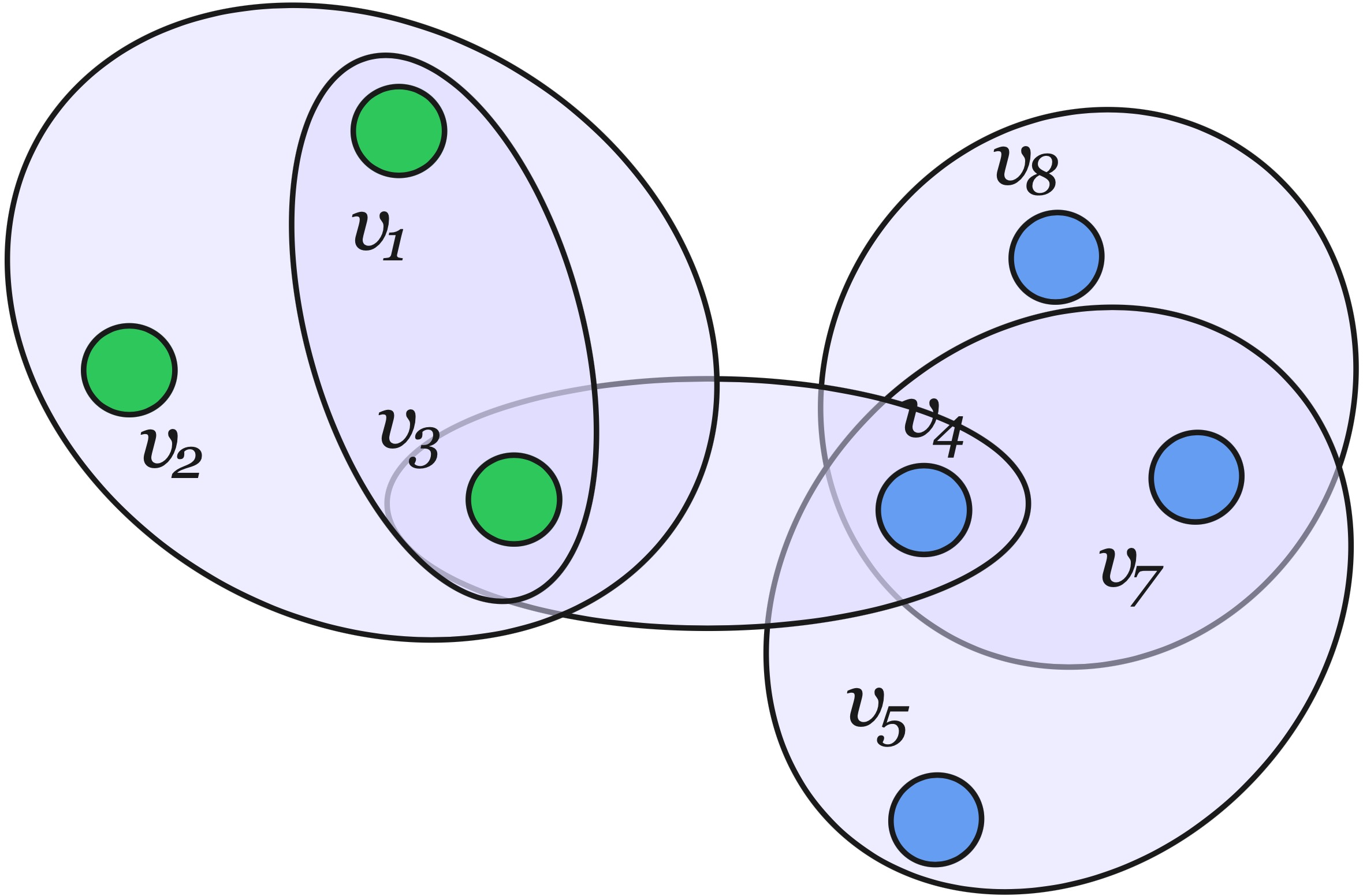
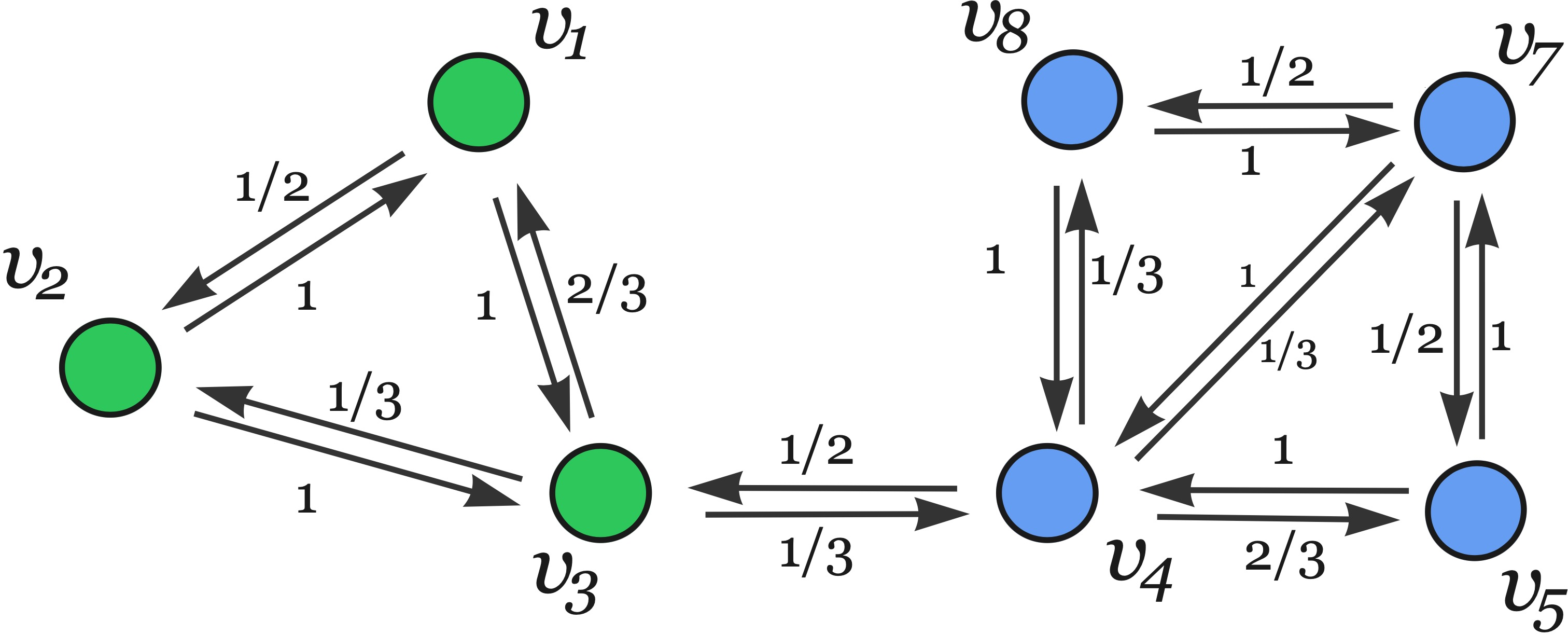
Figure 1: Hypergraph H with two distinct communities and its corresponding contact graph, visualizing the contact probability matrix P.
The fairness objective is formally defined as minimizing the influence disparity:
J(S)=∣V∣1i=1∑m∣Ci∣∣yi(S)−yˉ(S)∣,
where yi(S) is the activation fraction in community Ci and β0 is the global activation fraction. This formulation penalizes deviations in community-level activation relative to the global average, weighted by community sizes to prevent bias toward larger groups. The maximization of influence and minimization of β1 constitute the dual objectives of FIMH.
Algorithmic Design: FIMH and Its Variants
The FIMH algorithm incrementally builds a seed set via a greedy strategy, at each step evaluating candidate nodes based on their estimated marginal contributions to influence and fairness. The infection probability approximations are derived under the assumption β2, yielding efficient estimation via the contact probability matrix. For larger β3, a 2-hop variant extends the reachability approximation.
Candidate evaluation proceeds via min-max normalization of influence and disparity scores to β4, with the utopia point β5 serving as the ideal. The next seed is selected as the node closest (Euclidean distance) to the utopia point, providing a principled and parameter-free method to balance influence and fairness. Variants considered include alternative disparity objectives, linear scalarization of objectives, and 2-hop infection probability estimation.
The time complexity is β6 per run, dominated by contact matrix computation and per-iteration candidate evaluation.
Empirical Evaluation: Comparative Analysis
Performance is analyzed across seven real-world hypergraph datasets (MathOverflow, Yelp reviews, Amazon reviews, wearable sensor contact networks in schools), each with pronounced modularity-driven community structure. The experimental protocol evaluates influence and influence disparity for FIMH, its variants, and a comprehensive set of established baselines including Greedy, HADP, MIE, Adeff, Hyperdegree, and Degree heuristics, across variable seed budgets and SICP process parameters.
Key empirical results:
- FIMH consistently achieves influence scores comparable to state-of-the-art IM methods, typically within β7 of the best observed performance.
- FIMH leads to a substantial reduction in influence disparity across all datasets, with a β8 mean disparity decrease relative to the strongest baseline (MIE).
- The fairness advantage persists across all process parameter regimes (β9) tested.
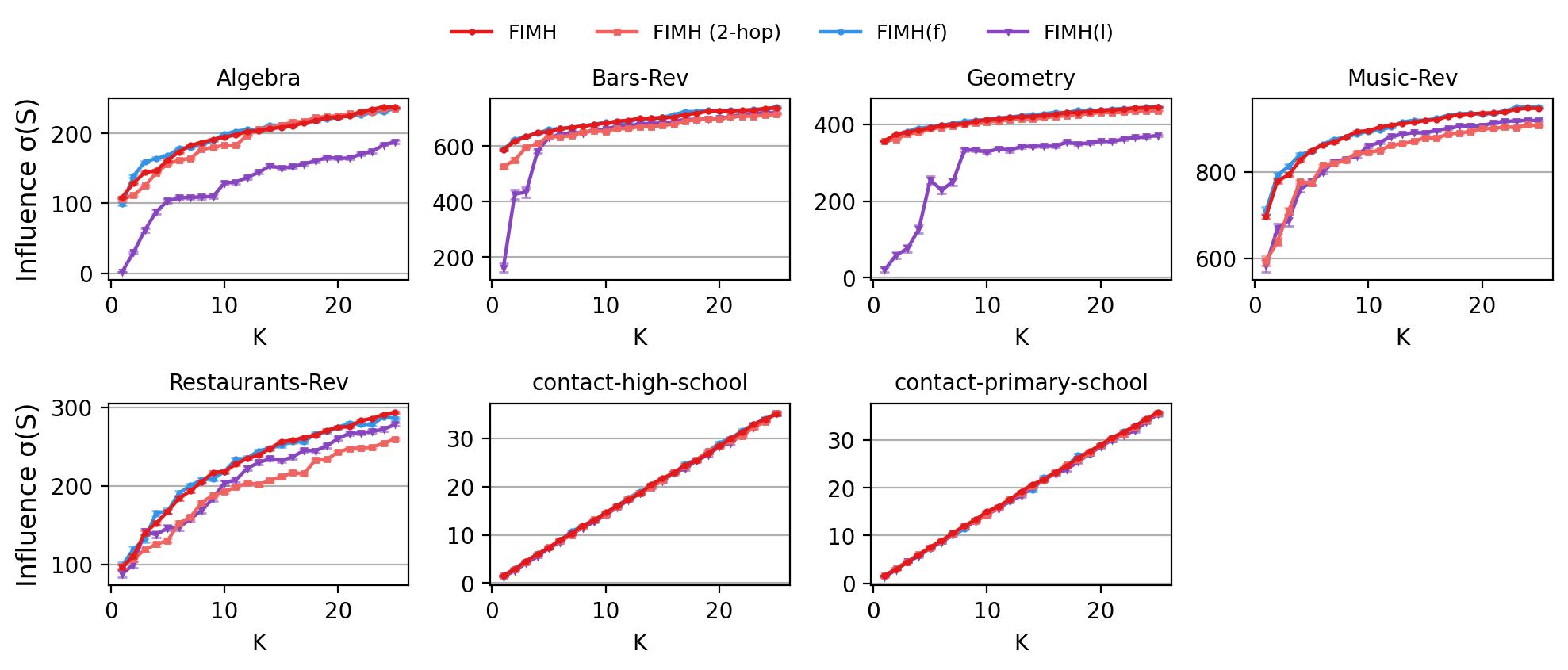
Figure 2: Influence T0 as a function of seed budget T1 for FIMH and its variants under SICP.
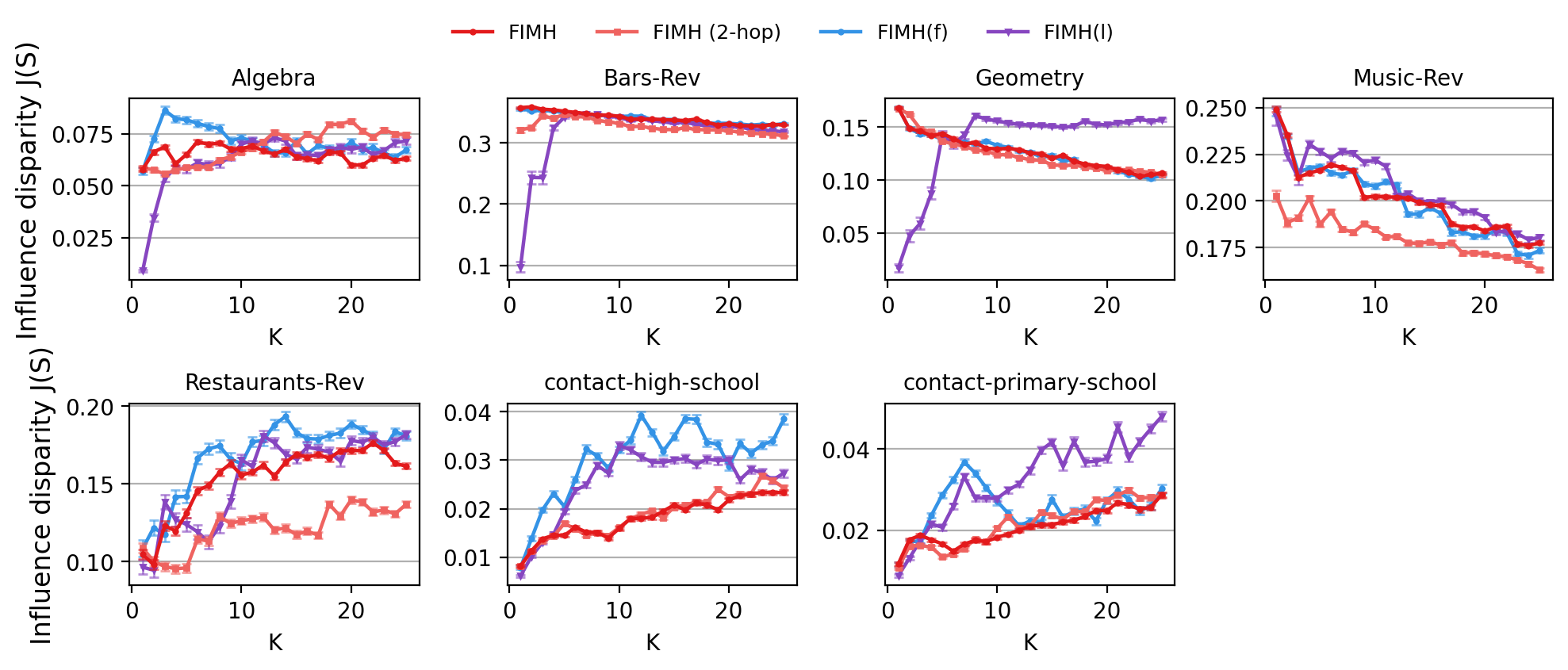
Figure 3: Influence disparity T2 as a function of seed budget T3 for FIMH and its variants under SICP.
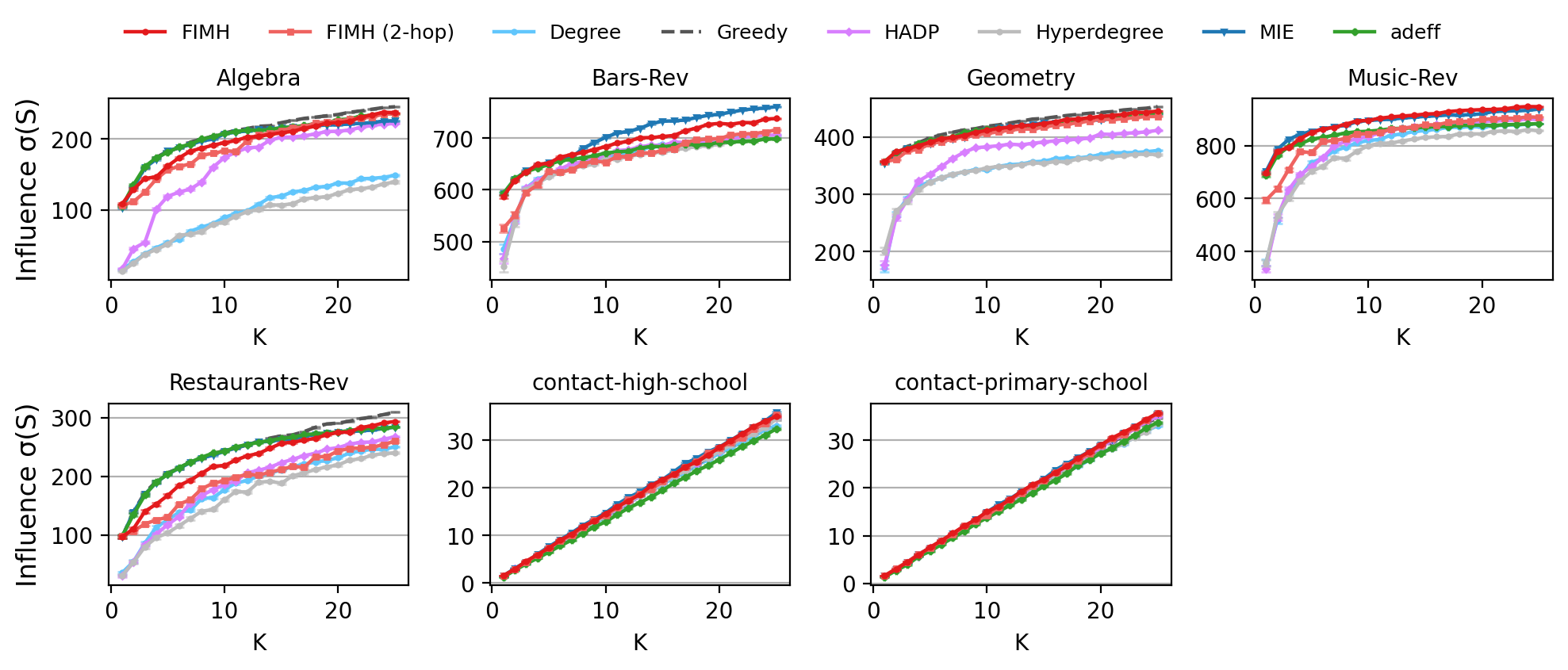
Figure 4: Influence T4 versus T5 for all methods, highlighting FIMH's comparability with top baselines.
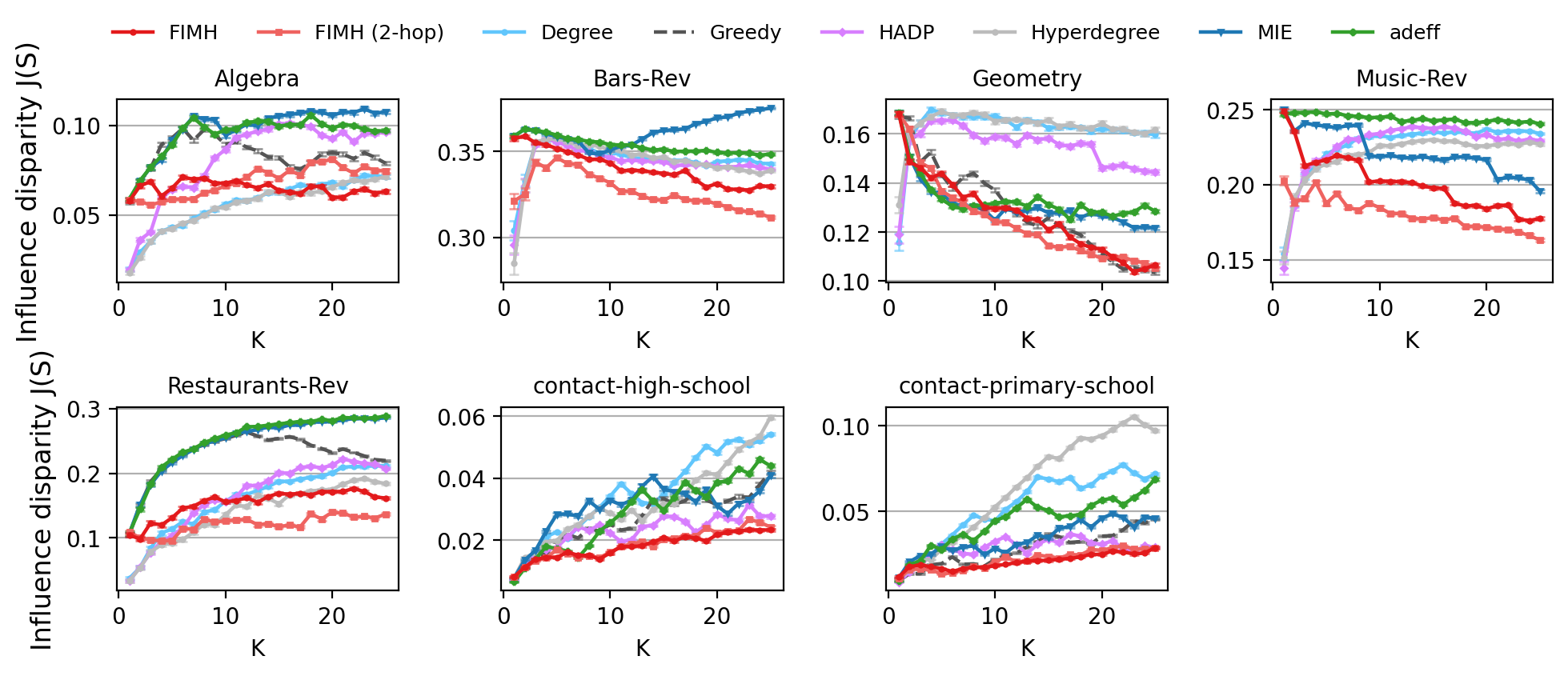
Figure 5: Influence disparity T6 versus T7 for all methods, demonstrating FIMH's consistent improvement in fairness.
Mechanistic Insights and Fairness Analysis
Detailed analyses reveal a strong positive correlation between candidate-level influence and disparity scores at each iteration: nodes offering high marginal influence frequently incur higher activation disparity, particularly at early steps. The utopia-distance criterion allows FIMH to select nodes that efficiently balance both objectives, avoiding the trade-off pitfall typical in pure influence maximization.
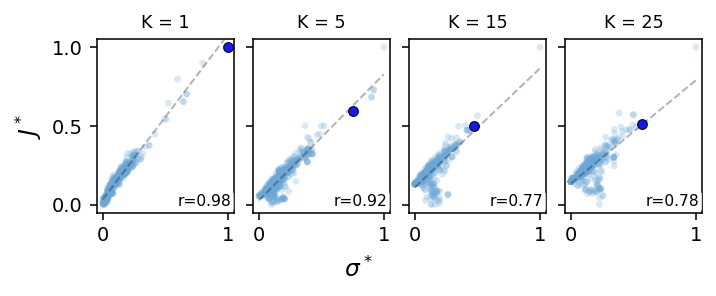
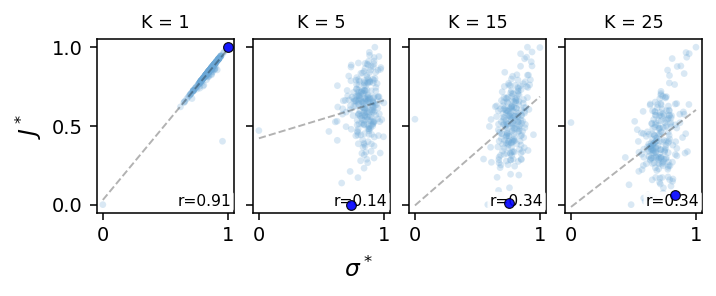
Figure 6: Per-iteration scatterplots of normalized influence T8 and disparity T9 for candidate nodes; the selected node lies closest to the utopia point σ(S)0.
Auxiliary analyses demonstrate that FIMH's seed sets are topologically scattered (greater mutual path distance), reducing overlap in influence regions and enhancing community activation balance.
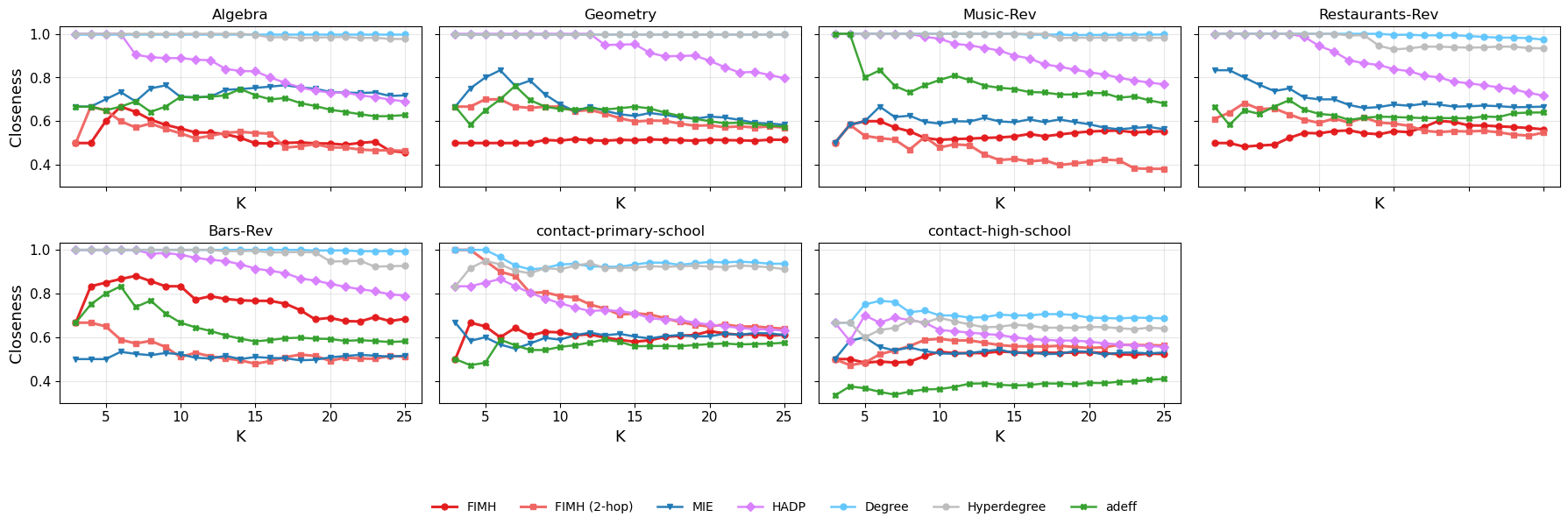
Figure 7: Mutual closeness of selected seed sets for each method; FIMH seeds are maximally dispersed in topology.
The disparity in community allocation of seeds is further analyzed. FIMH and FIMH(2-hop) select seed nodes with minimal community-level disparity, correlating strongly with post-process influence fairness in tight-spreading environments.
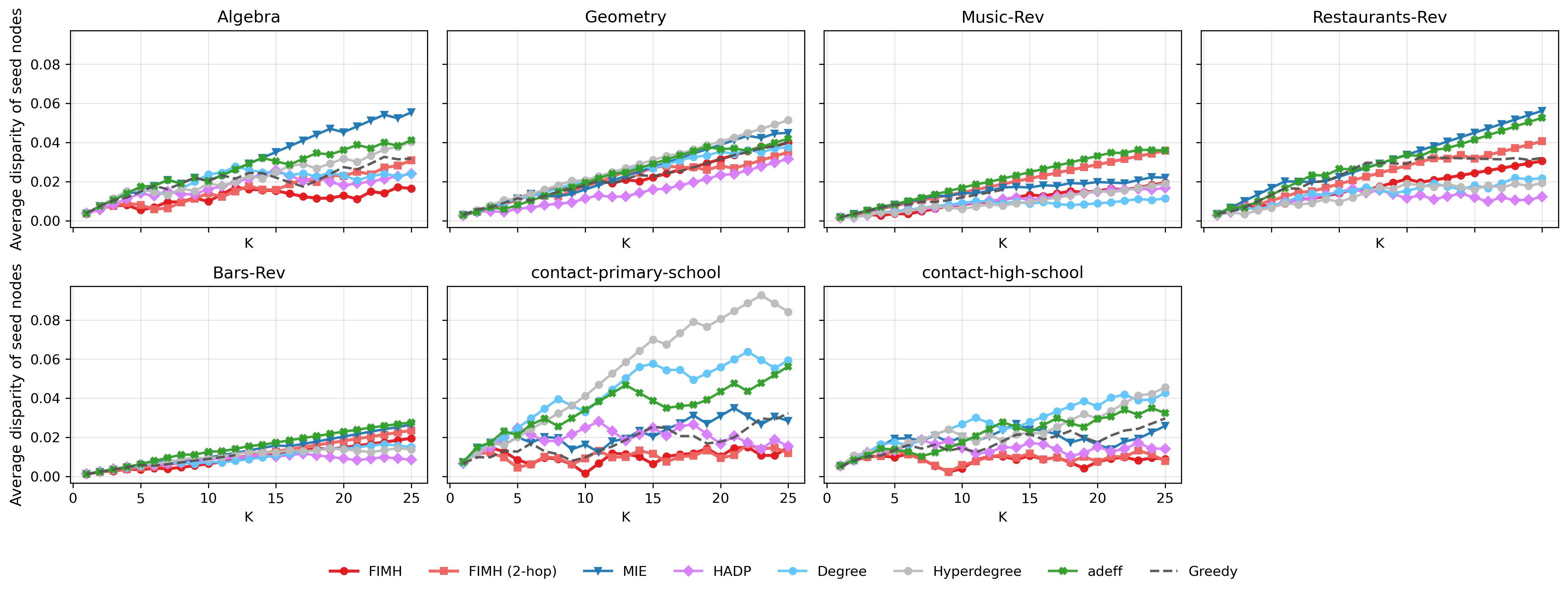
Figure 8: Disparity in community allocation of seed sets as a function of σ(S)1; FIMH consistently selects seeds distributed across communities.
Implications and Theoretical Perspectives
The findings robustly demonstrate that explicit fairness-aware seed selection in hypergraphs can substantially reduce activation disparity without sacrificing global spread efficiency. This manifests even in networks with heterogeneous community sizes and intricate hyperedge structure, contrasting with prior pairwise-only fairness techniques. Practically, FIMH offers scalable, process-agnostic seed selection policies for hypergraph-based systems in public health, social media moderation, and group-based recommender systems, with significance for equitable allocation of information or resources.
Theoretically, the results underscore that submodularity and monotonicity properties of influence under SICP in hypergraphs do not preclude effective multi-objective optimization, and that overlap minimization alone (as in some baselines) is insufficient for fair outcomes.
Future Directions
Several avenues for advancement are identified:
- Improved estimation for infection probability under high σ(S)2 or long σ(S)3 (spreading trajectories beyond two hops).
- Extension to overlapping or dynamic community definitions, as well as attribute-based group fairness frameworks.
- Adaptation to alternative diffusion models beyond SICP, including stochastic temporal hypergraphs.
Conclusion
The paper establishes a rigorous framework and algorithmic methodology for fair influence maximization in hypergraphs, simultaneously addressing influence and community-level fairness. The FIMH algorithm achieves near-optimal global spread, while significantly reducing activation disparity, validated across extensive empirical settings. The multi-objective utopia-distance criterion and infection probability estimation provide formal and scalable solutions, with clear implications for fairness-aware interventions in higher-order networks. Theoretical and empirical results motivate future expansion to more general models of diffusion and fairness in complex systems.