- The paper presents a comprehensive evaluation of adaptive mode decomposition methods for extracting quasinormal modes from black hole ringdown signals.
- It compares empirical mode decomposition with variational mode decomposition and introduces an improved instantaneous frequency estimator (IFAD) to enhance noise robustness.
- The study derives a Fisher-matrix based resolvability criterion to quantify mode separation, validated via Monte Carlo simulations under varying signal-to-noise conditions.
Mode Decomposition Techniques for Black Hole Ringdown Analysis
Introduction
The extraction of multiple quasinormal modes (QNMs) from black hole ringdown signals is a cornerstone of black hole spectroscopy, promising definitive tests of the Kerr hypothesis and robust probes of strong-field gravity. However, practical mode separation is hindered by short signal durations, moderate signal-to-noise ratios (SNR), and spectral interference between proximal modes. The paper "Mode decomposition methods for the analysis of black hole ringdown signals" (2606.13851) provides a comprehensive evaluation of adaptive, minimally model-dependent time-frequency decomposition methods for ringdown analysis, comparing Empirical Mode Decomposition (EMD) and Variational Mode Decomposition (VMD), and proposing an improved instantaneous frequency estimator (IFAD) for noise-robust parameter estimation.
Empirical and Variational Mode Decomposition
Adaptive signal decomposition methodologies, notably EMD and VMD, forgo rigid basis function expansions in favor of extracting intrinsic mode functions (IMFs) directly from data, each corresponding to a narrowband oscillatory mode. EMD operates by recursively sifting the data to isolate locally symmetric oscillations, subject to constraints on zero crossings and envelope symmetry. While EMD has been widely applied to nonstationary astrophysical data, it is susceptible to mode mixing and endpoint artifacts due to spline interpolation.
VMD recasts mode decomposition as a variational optimization problem, solving for a user-set number of band-limited IMFs via Wiener filtering, Lagrange multipliers, and the alternating direction method of multipliers. Each mode's center frequency is iteratively re-estimated to minimize total bandwidth while satisfying a reconstruction constraint. VMD therefore achieves superior noise robustness, convergence guarantees, and sharper spectral separation compared to EMD.
Reliable instantaneous frequency extraction from decomposed modes is critical for mode identification and spectroscopy. The Hilbert Transform, the de facto standard, is highly sensitive to edge effects and noise, particularly given the brevity of ringdown signals. The IFAD technique introduced in this work circumvents these issues by interpolating signal extrema and zero crossings for directly estimating phase evolution and instantaneous period, leading to more accurate frequency recovery even in high-noise or short-duration scenarios.
As shown in the evaluation of synthetic signals—including damped sinusoids with frequency drift, standard QNMs, and chirps—IFAD matches ground-truth frequencies and amplitudes with high fidelity, whereas Hilbert-based estimates degrade in boundary regions.
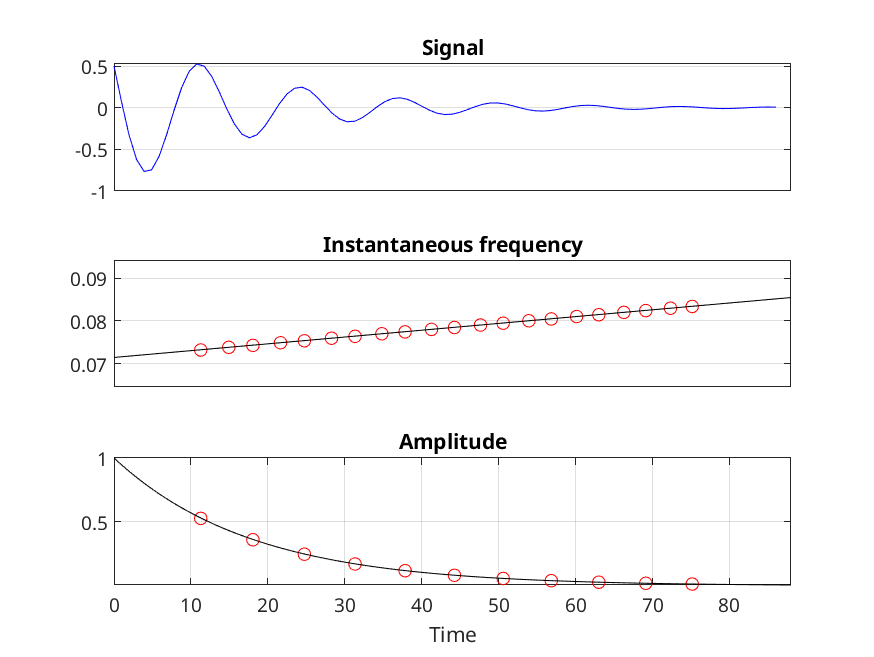
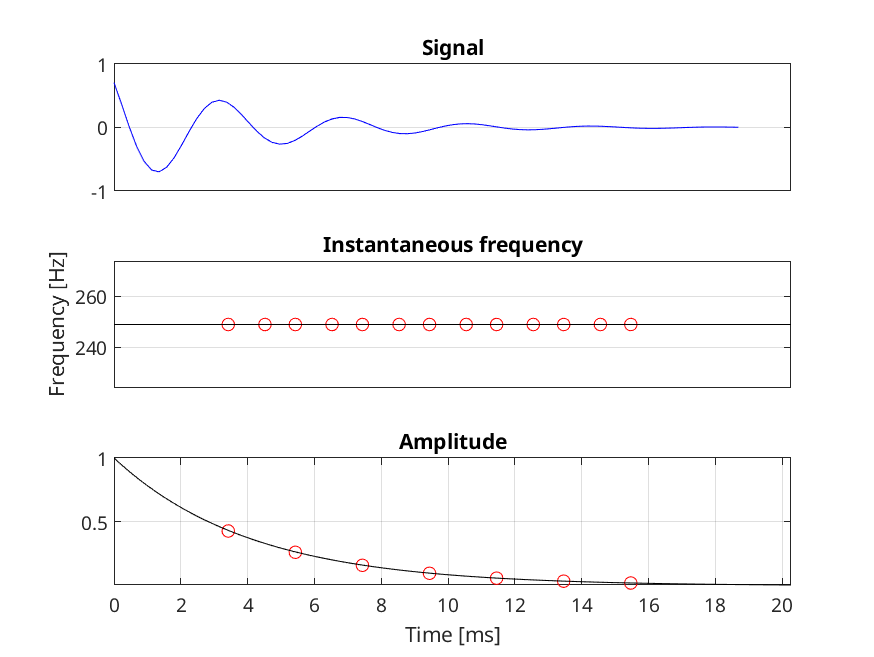
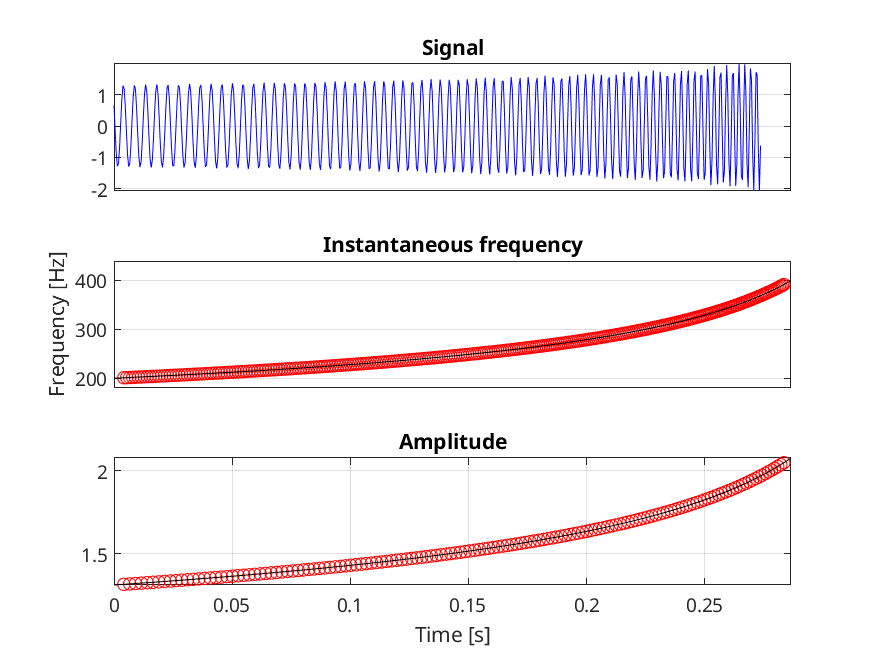
Figure 1: Damped sinusoid signal with frequency drift illustrating the challenge for frequency tracking.
Resolvability Criteria and Fisher Analysis
A central contribution is the derivation and deployment of a geometric resolvability criterion based on the projected Fisher matrix, encapsulated by the parameter ρ2=dθ⋅Γˉ⋅dθT, which accounts for correlations between frequency and damping time across modes. This approach generalizes previous criteria (e.g., by Isi and Farr) to allow for full covariance structure, enabling accurate quantitative predictions for mode resolvability in both Bayesian and frequentist analyses.
Empirical exploration demonstrates that resolvability increases with SNR and mode parameter separation, but exhibits pronounced asymmetry depending on relative damping times—longer-lived subdominant modes yield more observable cycles and facilitate better resolution.
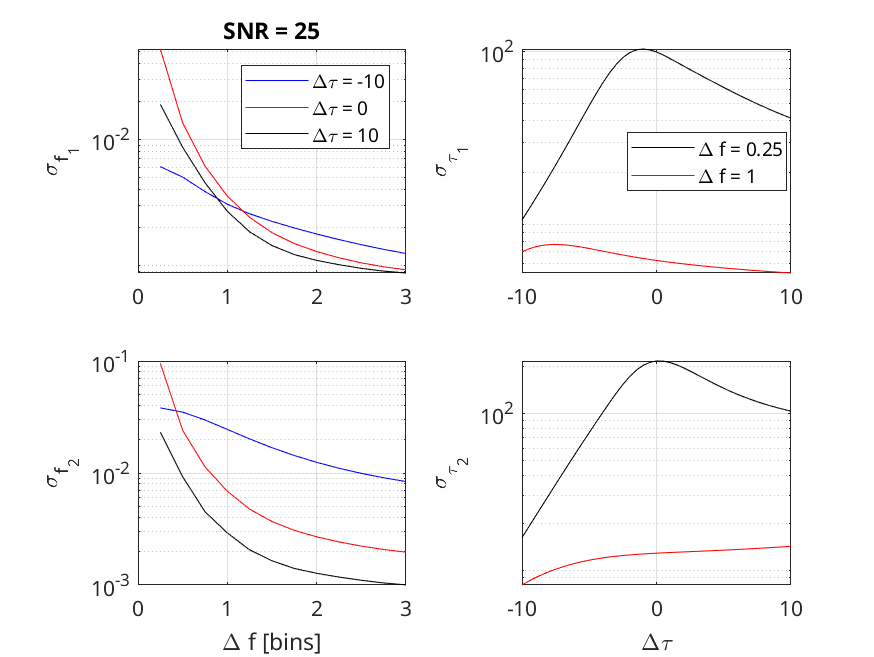
Figure 2: Standard deviations of damping times and frequencies as a function of mode separation, as estimated via the Fisher matrix.
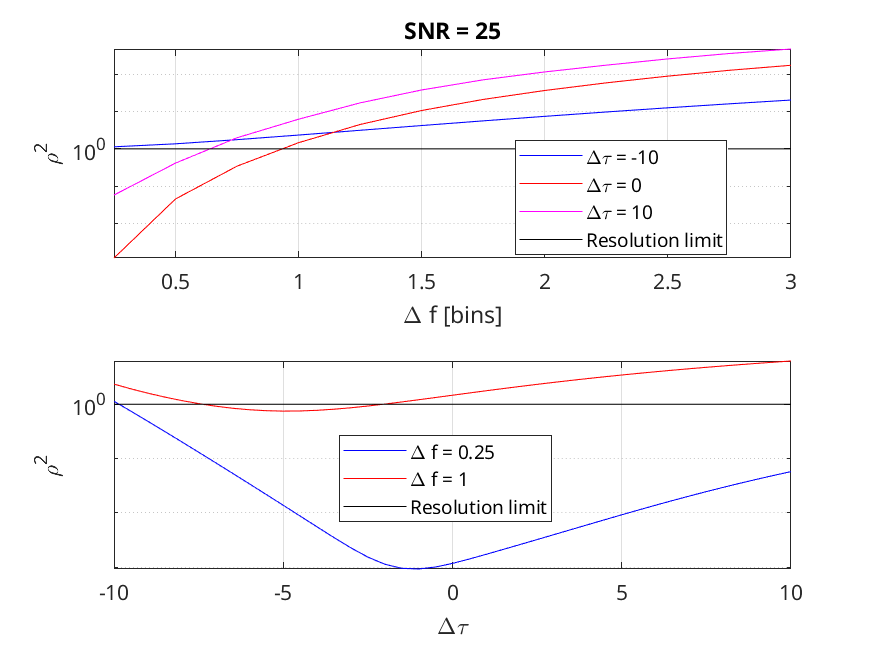
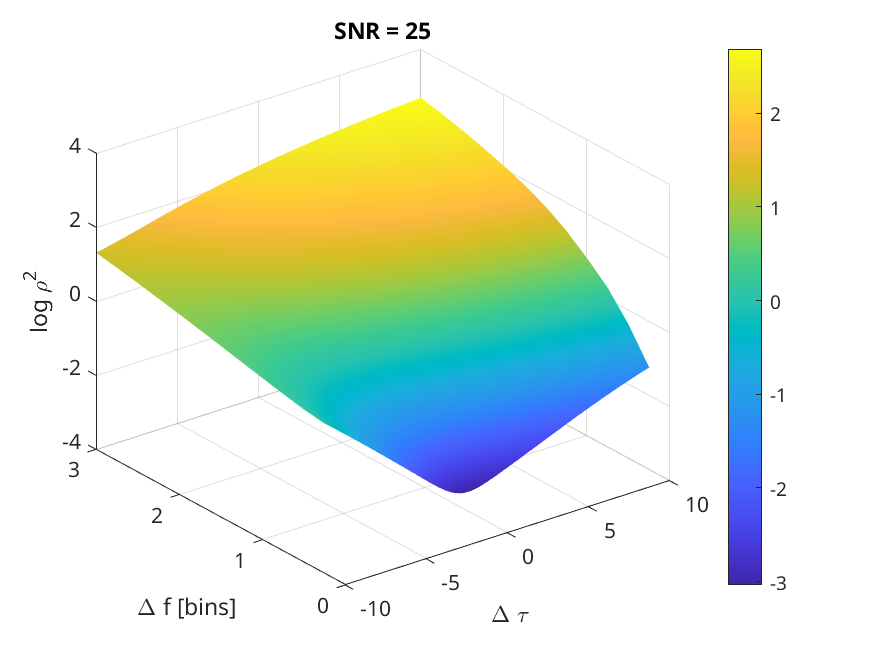
Figure 3: Resolvability parameter ρ2 as a function of frequency and damping time separation, revealing conditions for robust mode distinction.
Comparative analysis establishes that the geometric criterion is more stringent, with the previous r2 statistic systematically underestimating resolvability when off-diagonal Fisher terms are significant.
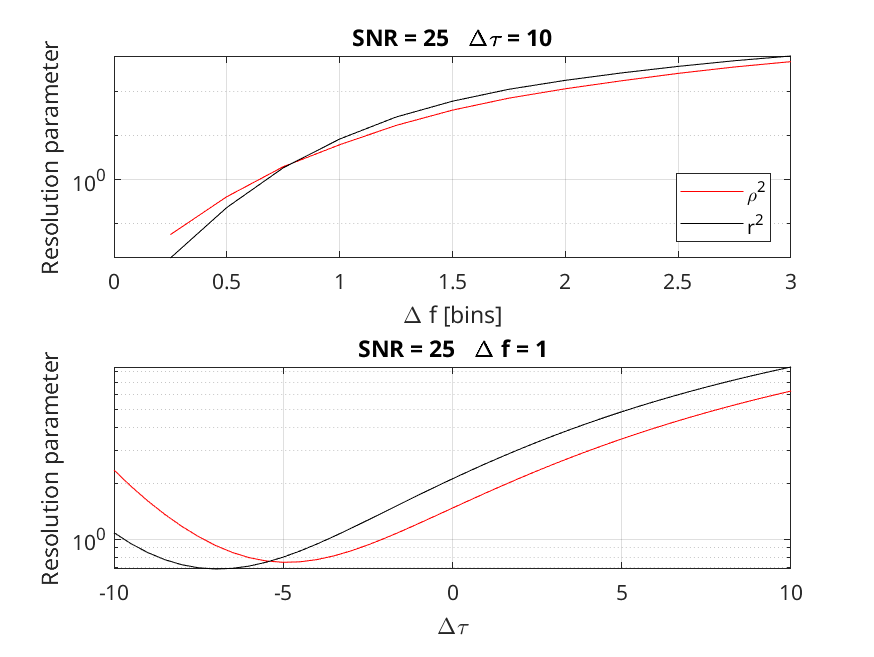
Figure 4: Comparison between the geometric (ρ2) and previous (r2) resolvability metrics.
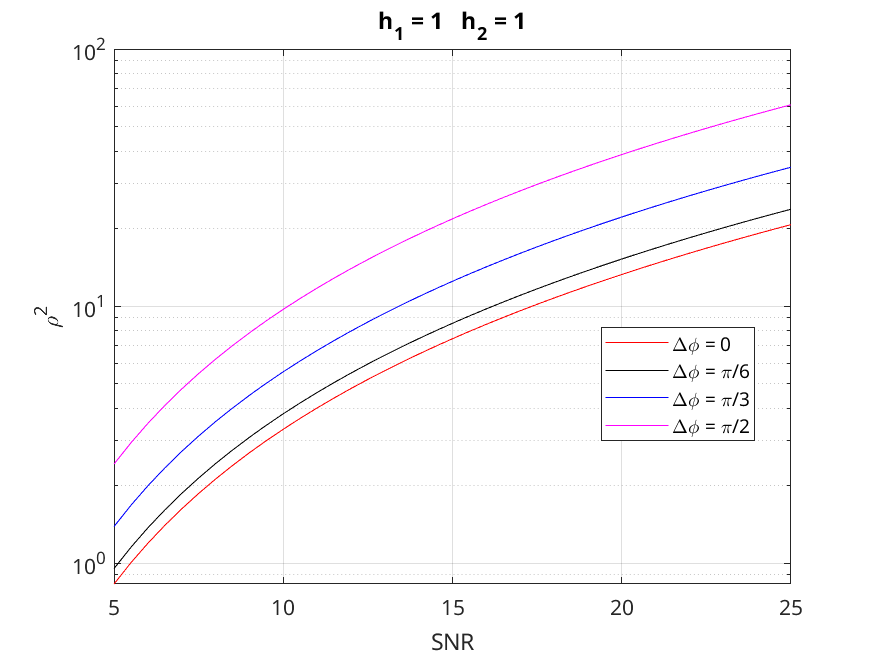
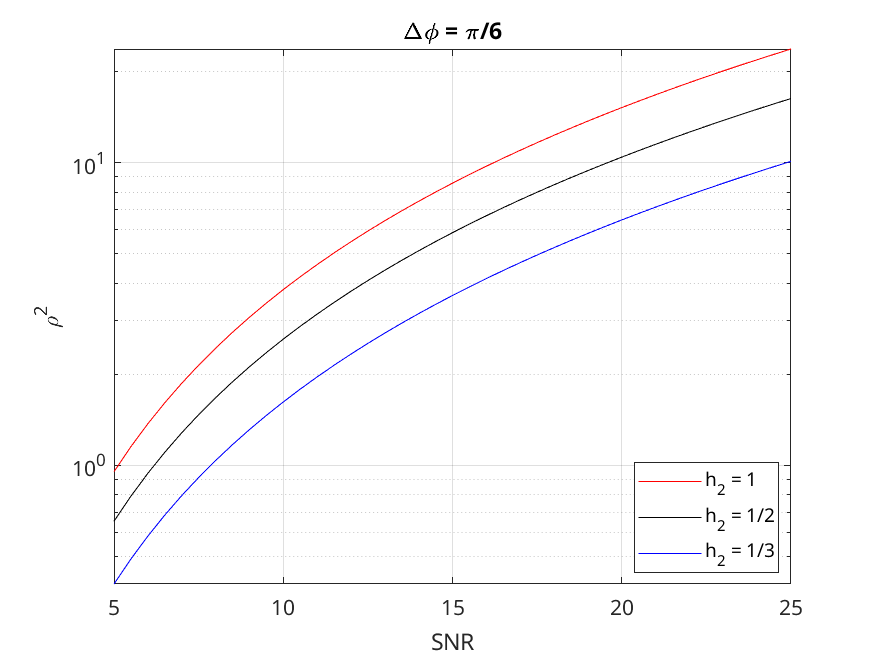
Figure 5: Resolvability dependence on SNR, amplitude ratio, and relative phase, demonstrating optimal separation for large phase differences and balanced amplitudes.
QNM Resolution in Kerr Black Holes
Applying the geometric criterion to astrophysically motivated signal models, the study examines decompositions of the fundamental [220] mode and its prominent overtones and angular harmonics as predicted for GW250114-like remnant parameters. These simulations show that resolvability is set primarily by frequency separation, with the [221] overtone remaining marginally resolvable under most scenarios due to its proximity to the fundamental, despite favorable SNR.
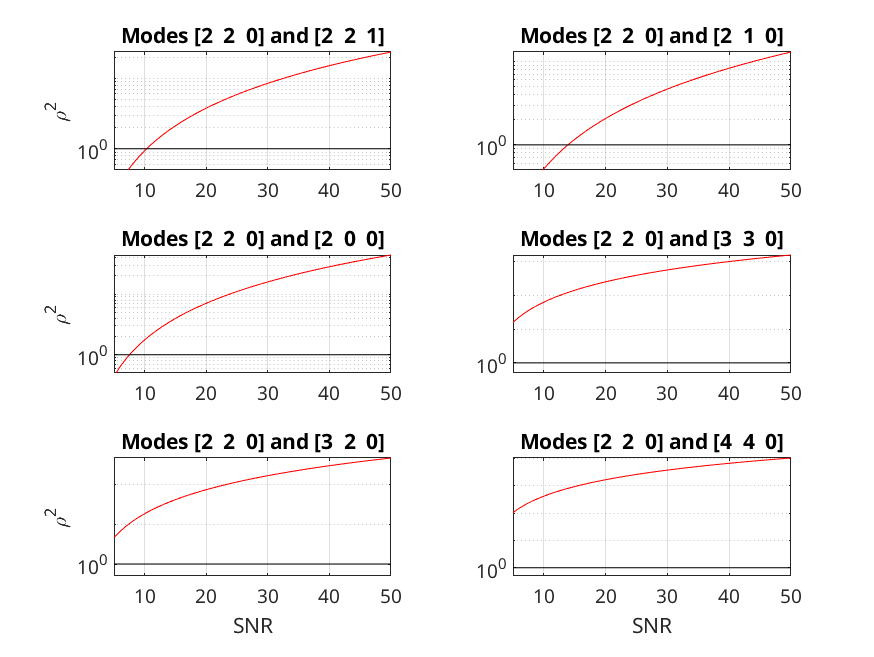
Figure 6: The resolvability parameter ρ2 for select QNM pairs as a function of SNR, demonstrating the dominant impact of frequency separation and SNR.
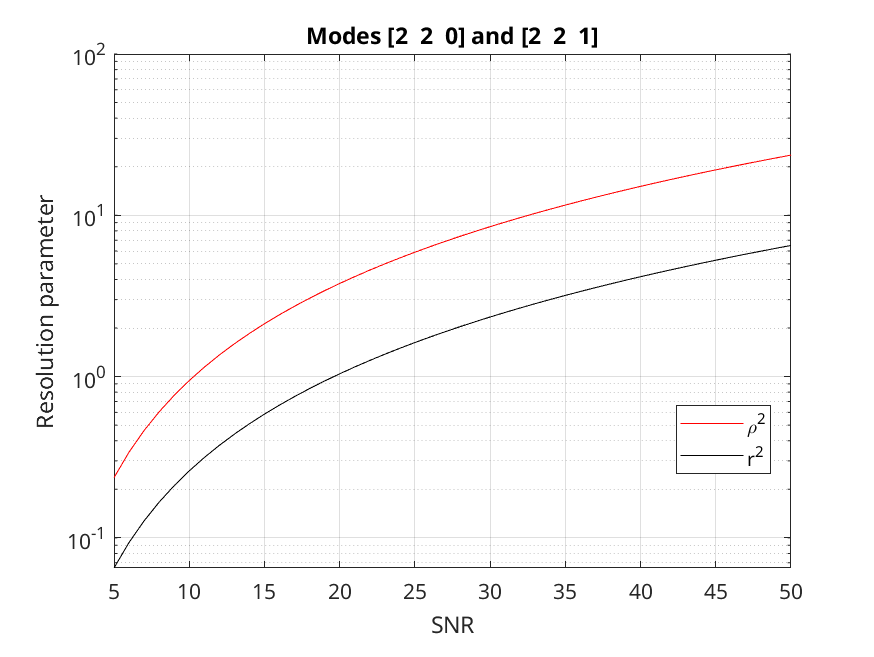
Figure 7: r2 vs. ρ2 for the case of ρ20 and ρ21 mode resolution.
Systematic Monte Carlo studies with noisy two-mode ringdown signals demonstrate that both EMD and VMD can separate constituent QNMs, but VMD delivers lower variance and bias in frequency estimates across SNR spans, particularly as mode parameter proximity increases. Limitations become acute when energy is concentrated in closely spaced, rapidly damped (short ρ22) modes or when SNR is below the threshold defined by ρ23.
The IFAD estimator further improves the precision and stability of extracted frequencies compared to Hilbert-based approaches, especially for intermediate and high SNRs, offering substantial benefits for next-generation detectors.
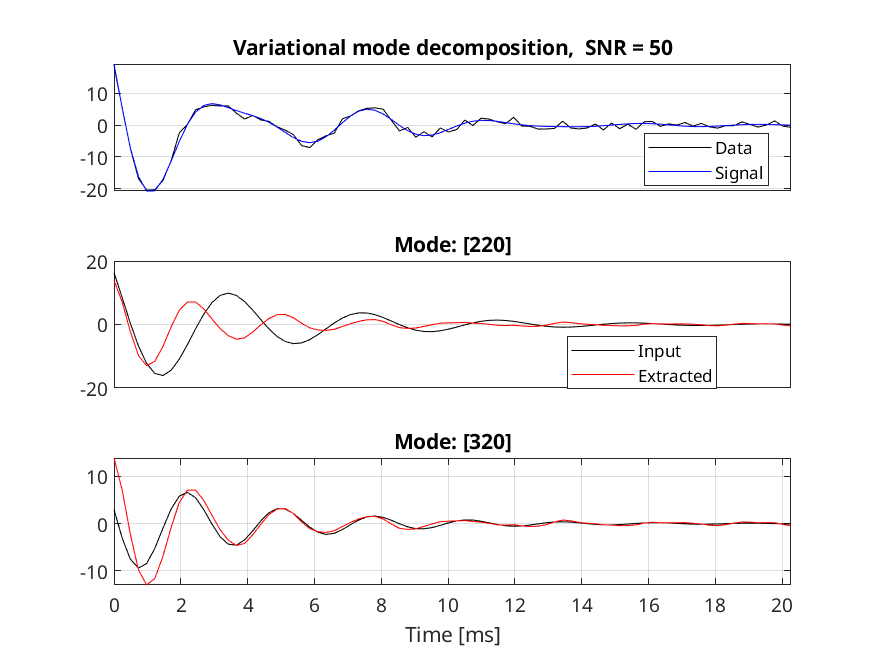
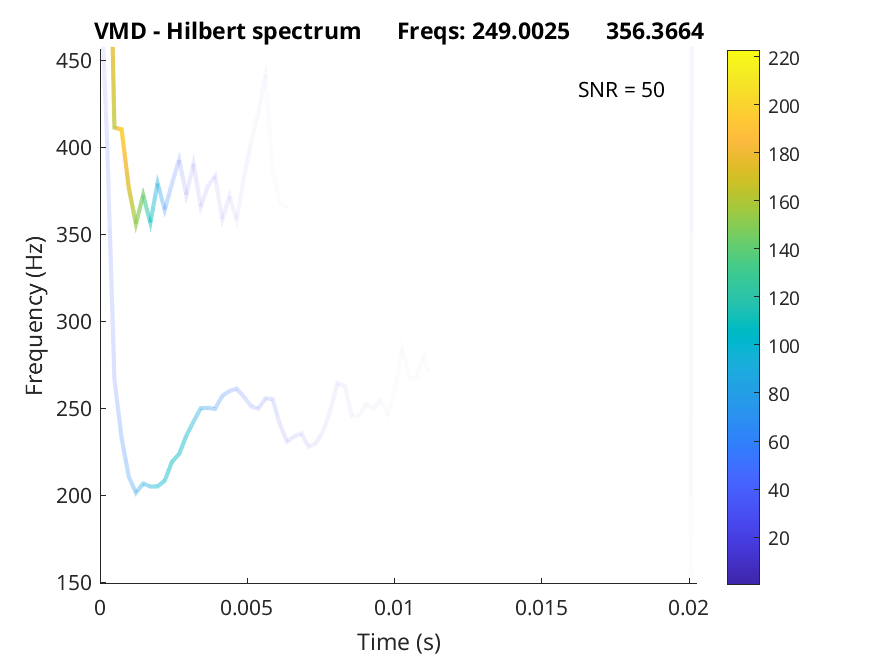
Figure 8: Example VMD extraction and reconstruction: (top) noisy input, (middle/bottom) decomposition results.
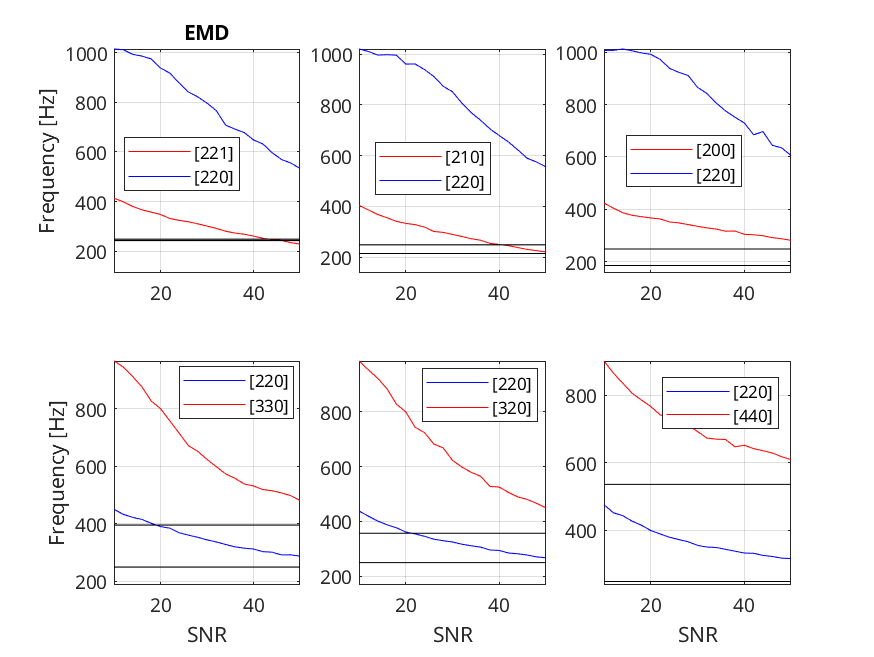
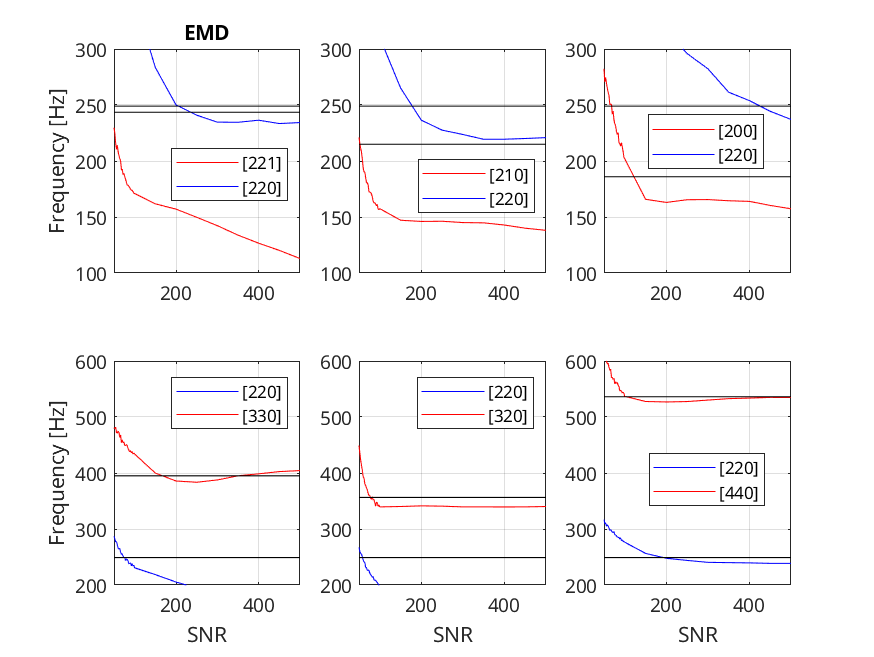
Figure 9: EMD frequency extraction performance in the low SNR regime.
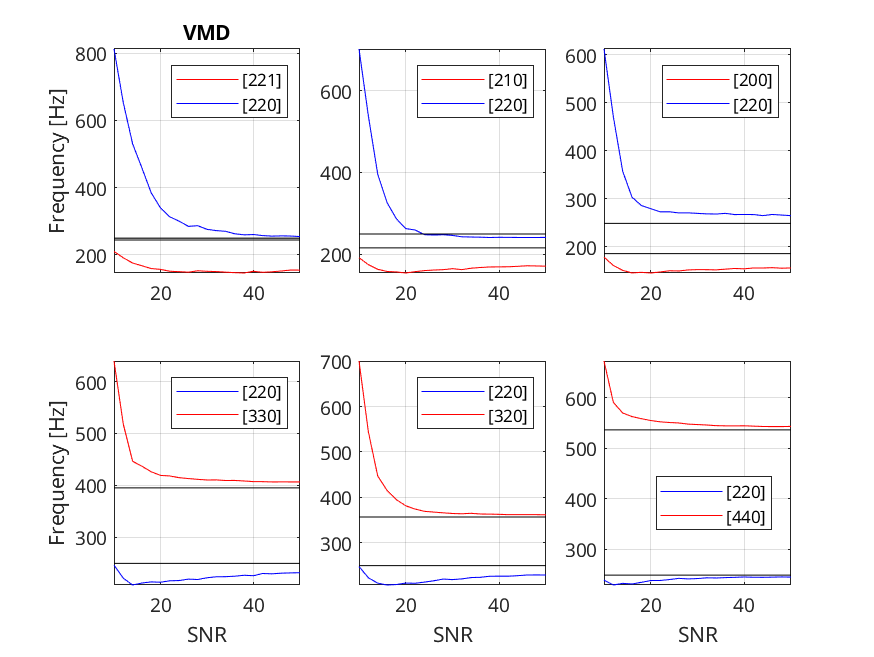
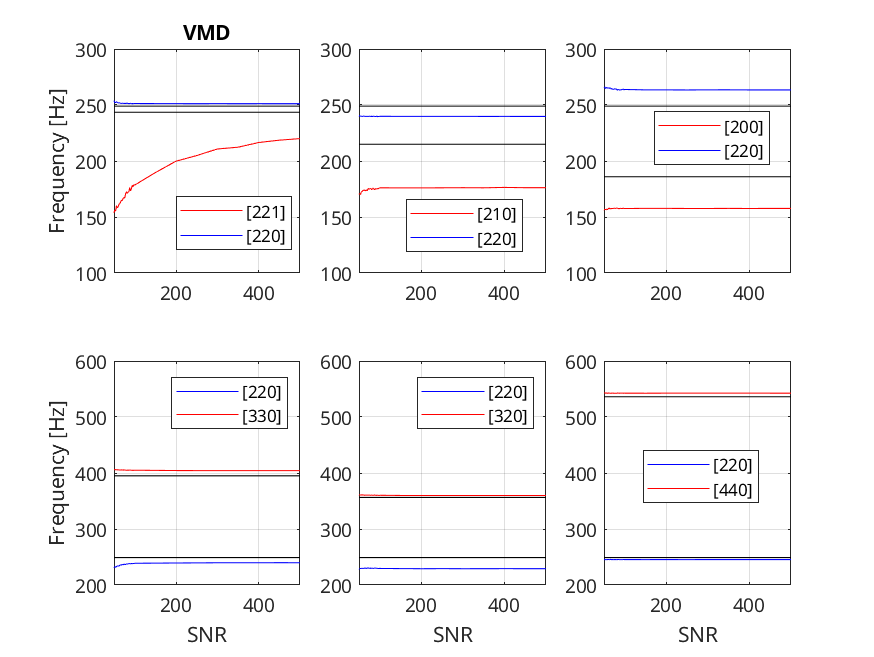
Figure 10: VMD frequency extraction performance in the low SNR regime.
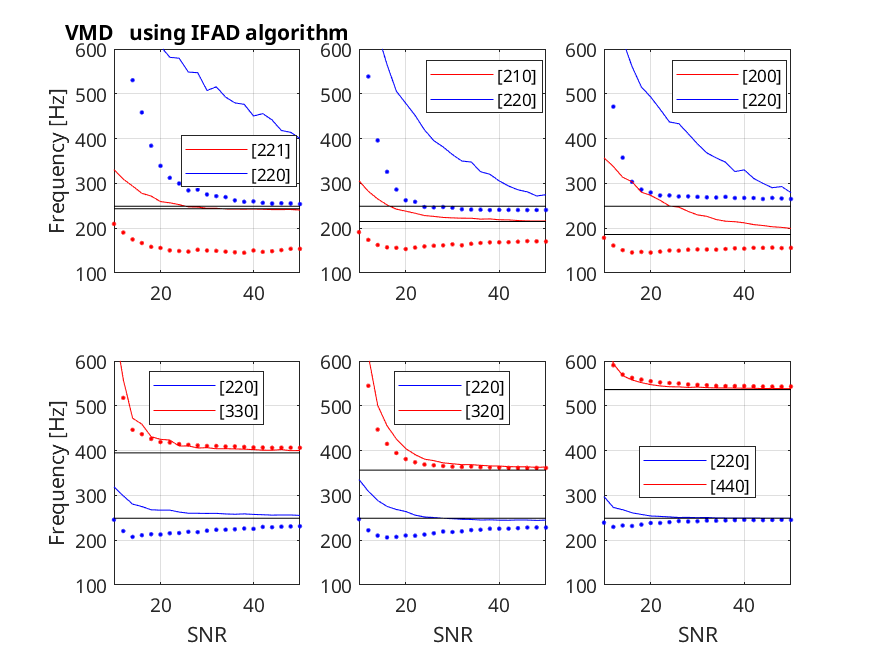
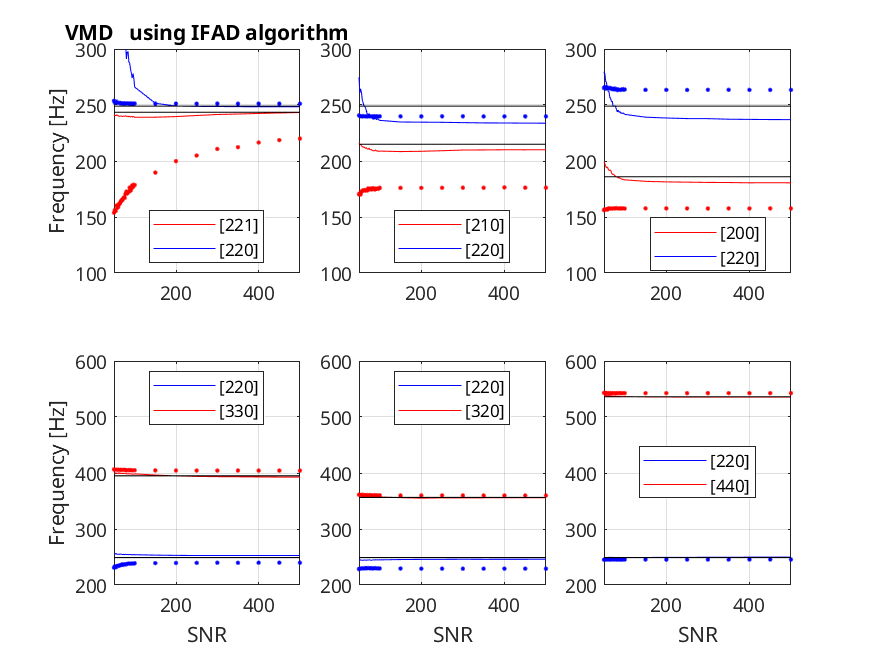
Figure 11: VMD+IFAD frequency extraction performance, showing reduced bias and variance across SNRs compared to Hilbert-based estimation.
Implications and Future Directions
The adoption of adaptive decomposition and improved frequency tracking holds significant promise for gravitational-wave spectroscopy. These techniques are largely agnostic to model-specific waveform assumptions, positioning them as complementary or even primary analysis tools as detector sensitivity improves. For current Earth-based interferometers, robust two-mode resolution is achievable only within specific amplitude, phase, and SNR windows, but the pathway to fully multi-mode, high-precision spectroscopy is clearly enabled for planned next-generation observatories.
Key challenges persist, notably for the resolution of weak or near-degenerate overtones, and extensions to scenarios with more than two modes, non-Gaussian noise, or signals with strong environmental couplings (see e.g., [RAJ2026101072] for PINN-based extensions). Incorporating physical priors or hybridizing with machine learning approaches may yield further gains.
Conclusion
This study delivers a careful, foundational evaluation of adaptive mode decomposition for black hole ringdown signals, establishing VMD and refined instantaneous frequency estimation as preferred methods for multi-mode, high-fidelity gravitational-wave spectroscopy. The rigorous quantification of resolvability conditions via a Fisher-matrix-based geometric metric, coupled with exhaustive Monte Carlo validation, sets a new standard for nonparametric ringdown analysis. The techniques surveyed here are poised to facilitate the extraction of rich black hole structure information from next-generation gravitational-wave observations, with ongoing and future work needed to handle even more complex signal scenarios and noise environments.