- The paper demonstrates that post-training processes drastically reduce cultural signals in LLM data pipelines, favoring technical domains over diverse cultural content.
- Using multidimensional tagging, the study reveals that multilingual scaling increases geographic diversity but does not proportionally boost cultural representation.
- Marker-augmented finetuning improves cultural reasoning benchmarks by up to 8 points, underscoring the need for explicit cultural data curation.
The Culture Funnel: Quantifying the Loss of Cultural Grounding in LLM Data Pipelines
Motivation and Problem Statement
The paper "The Culture Funnel: You Can't Align What isn't in the Data" (2606.13808) interrogates a fundamental yet underexplored challenge in LLM training: the presupposition that models already encapsulate adequate cultural knowledge due to coverage in pretraining data, and that alignment or prompt engineering can adequately surface or control this knowledge at inference. Through empirical data analysis and multidimensional tagging, the authors demonstrate that cultural signal is systematically eroded through post-training, with an overemphasis on technical and synthetic data homogenizing LLM behavior toward dominant, often Western-centric, cultural patterns. This study rigorously foregrounds the data pipeline itself as a central mechanism of cultural alignment, urging a reevaluation of data sourcing, curation, and annotation to maintain global representativeness.
Methodology: Multidimensional Tagging and Dataset Profiling
The authors operationalize culture using an anthropological taxonomy spanning "culture as knowledge," "preference," "dynamics," and "bias," in addition to general cultural markers and a null class. They construct and release a 5.6M-sample, multidimensionally tagged dataset spanning pretraining, instruction finetuning, alignment, reasoning, and user-generated interaction corpora. Each data point is annotated along five axes: culture, domain, task intent, geolocation, and language, using an LLM-based pipeline validated by human annotators.
Key Findings
Compression of Cultural Content through Post-Training
Quantitative analysis reveals a pronounced decline in explicitly culturally grounded content following pretraining, as alignment, SFT, and especially reasoning/coding-centric data increasingly dominate post-training datasets. The greatest proportion of cultural signals is observed in pretraining corpora, particularly in humanities, social sciences, and conversational domains. In contrast, later-stage datasets are skewed toward technical domains with minimal cultural content.
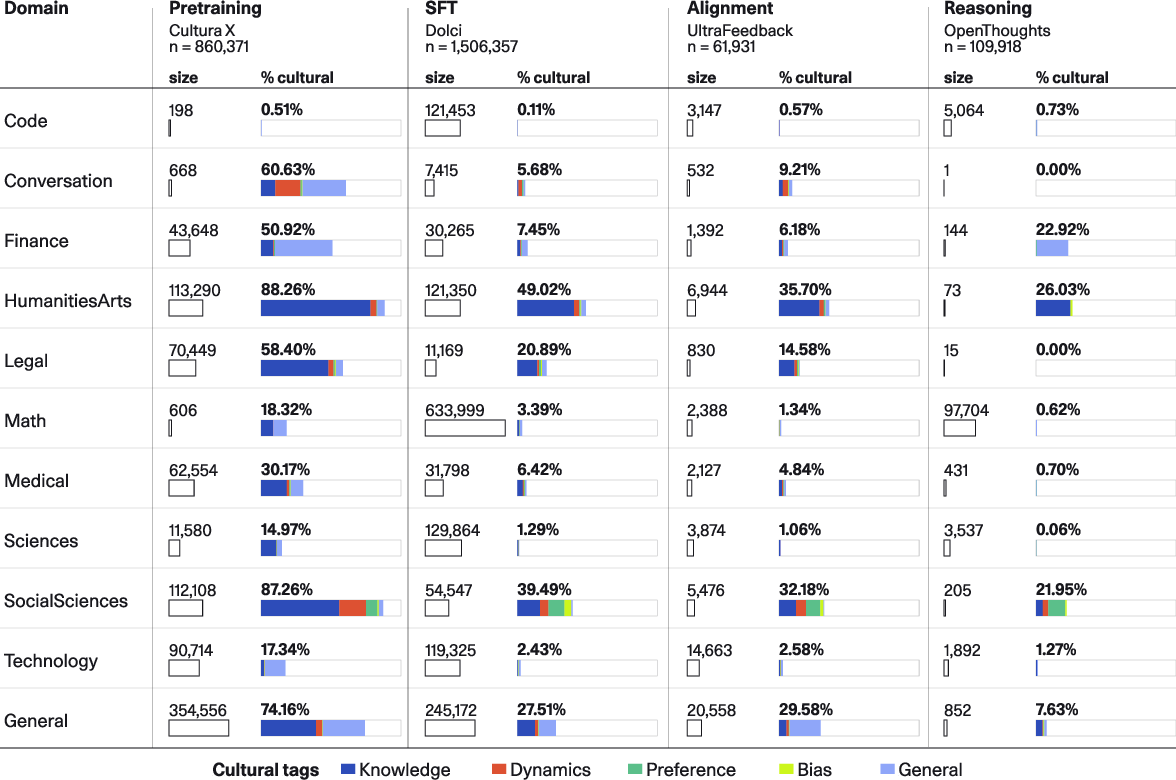
Figure 1: Cultural grounding declines from pretraining to post-training as technical domains become dominant.
Limited Impact of Multilinguality on Cultural Representation
The data show that while increasing language coverage initially expands the set of unique geolocations present in cultural content, it does not proportionally increase the overall percentage of culturally marked data in the corpus. Further, geolocation diversity grows with added languages, but the marginal utility diminishes rapidly; thus, multiculturality cannot be achieved by scaling multilinguality alone.
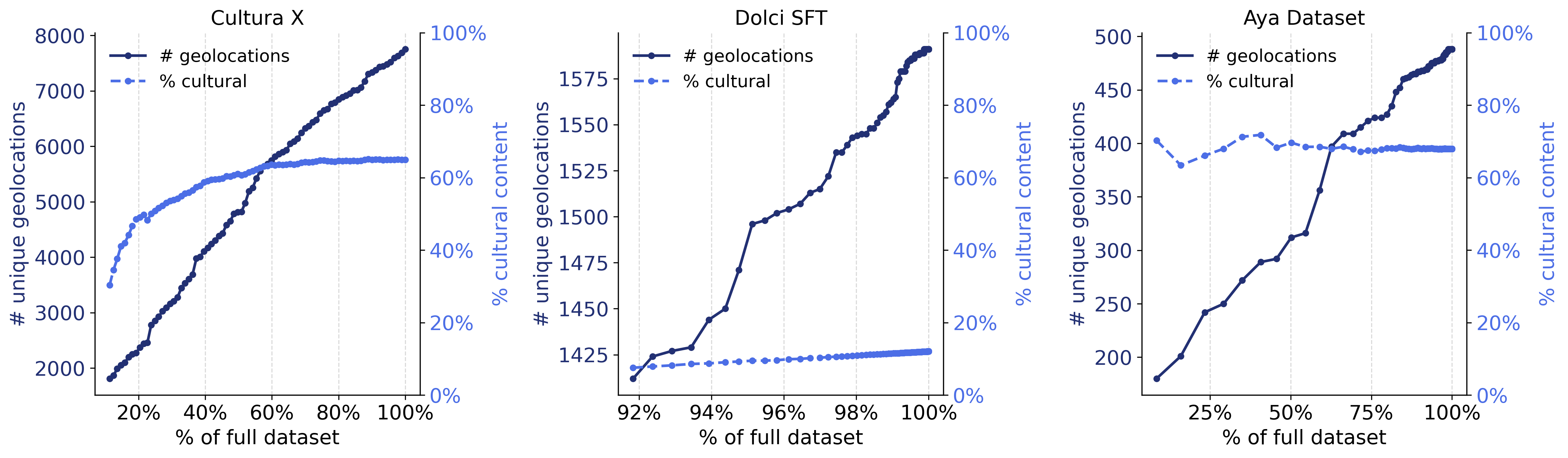
Figure 2: Expanding multilinguality increases geolocation coverage, but does not proportionately increase overall cultural content.
Long-Tailed Distributions in Geolocations and Languages
Geographic analysis exposes a severe long-tailed distribution of cultural references, with a small set of regions (notably India, United States, China) disproportionately represented, and the majority of the world's regions underrepresented or absent. This effect is amplified at the intersection of minority languages and locales, compounding the challenge of model adaptation and recall for long-tail cultures.
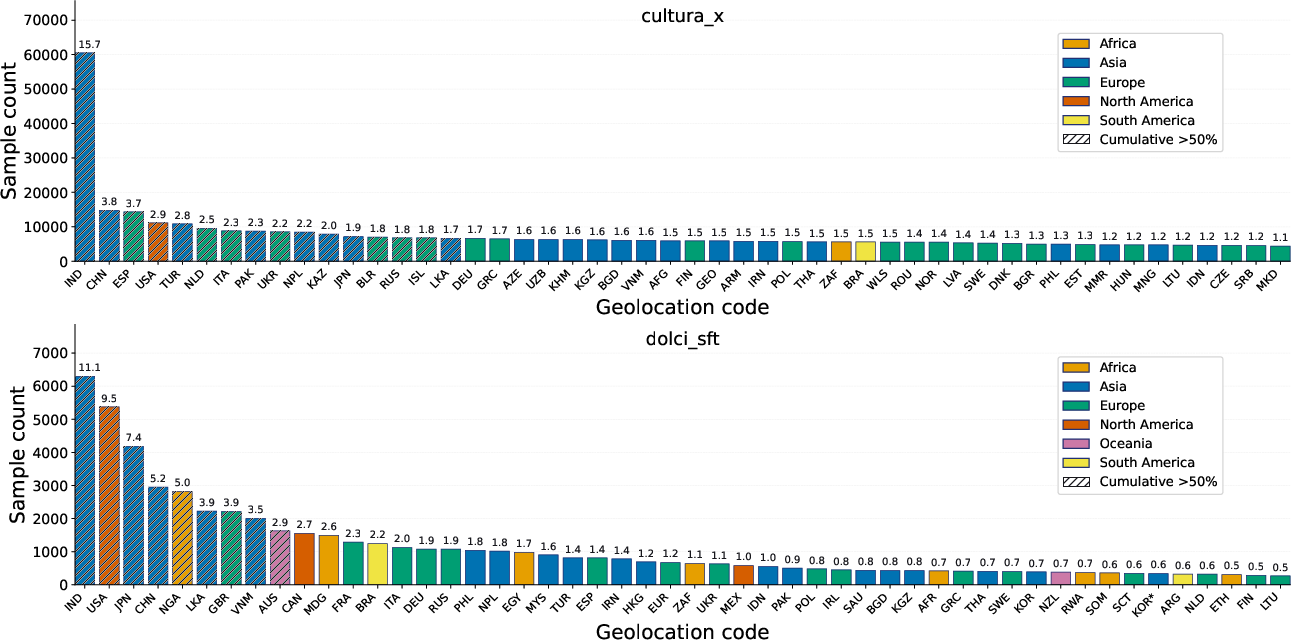
Figure 3: Top geolocations in cultural content demonstrate a highly skewed, long-tail distribution across both pretraining and SFT data.
Task Disparities in Cultural Content
Task-level analysis shows that translation, local information lookup, and message writing tasks are most culturally dense, whereas technical, medical, and reasoning tasks exhibit minimal cultural grounding in current data. Importantly, user surveys indicate a need for greater cultural adaptation in creative and communicative tasks, suggesting a mismatch between data composition and user priorities.
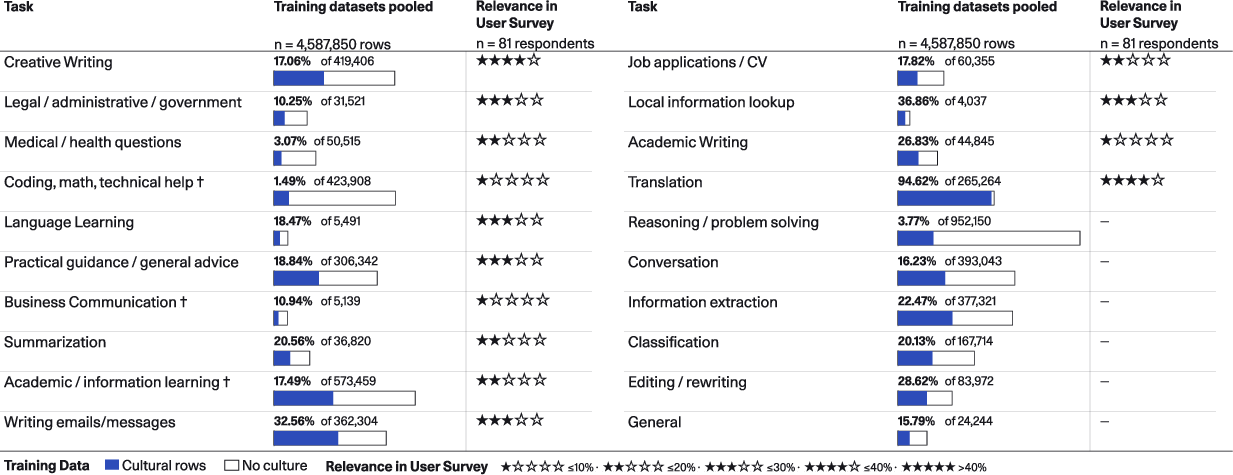
Figure 4: Cultural proportions across various task intents diverge between standard training datasets and user-identified needs.
Dataset and Cultural Marker Properties
Curated, culturally focused datasets (e.g., CultureBank, MNRC, GeoFact-X) exhibit higher densities of cultural markers despite lower language coverage, whereas large web-scale or instruction datasets may be highly multilingual but lack systematic cultural representation.
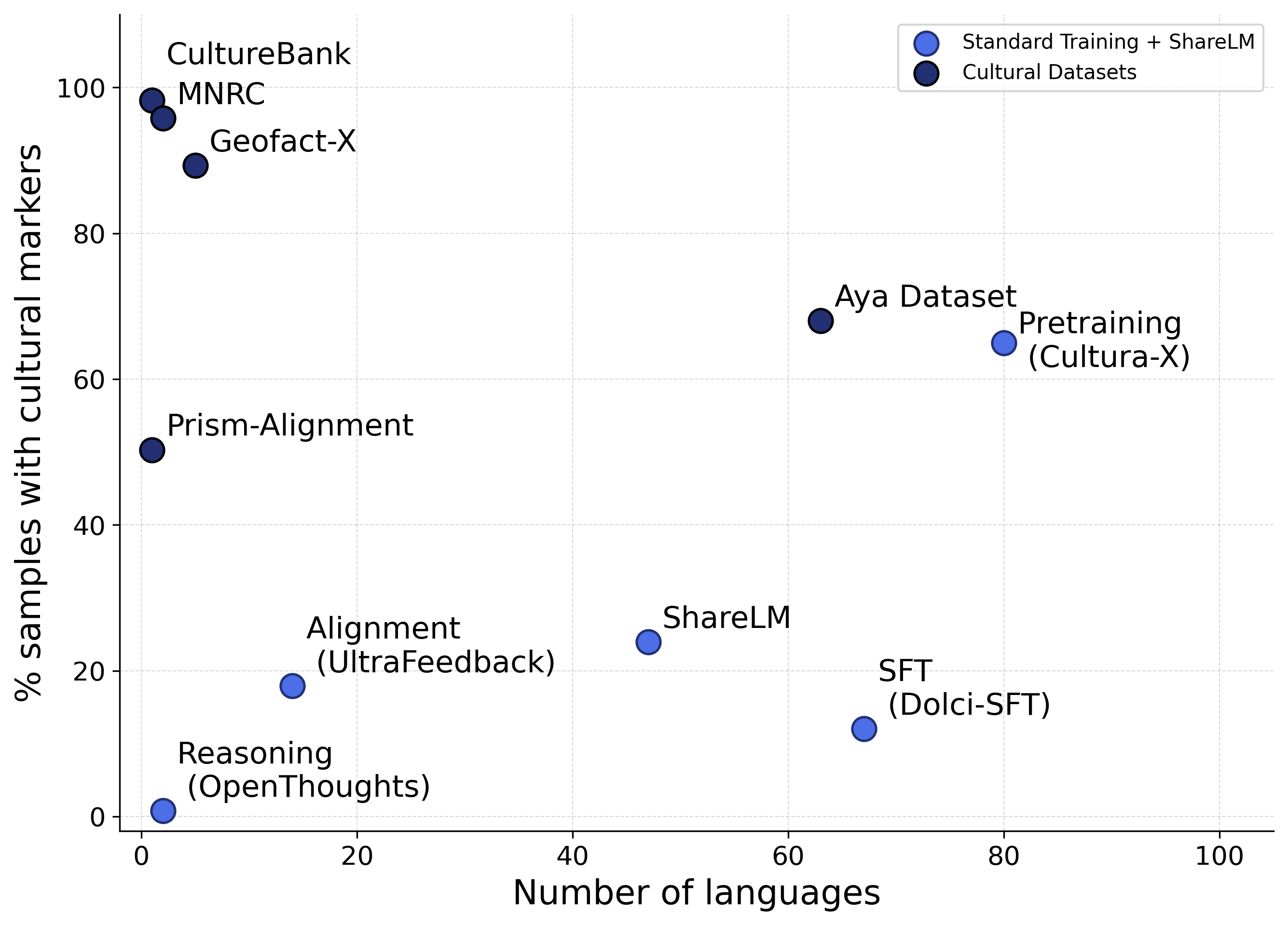
Figure 5: Explicit cultural data rises with language diversity in standard datasets, but curated sets maintain high cultural marker percentages even with fewer languages.
Preserving Culture during Post-Training: Experimental Validation
The authors evaluate two approaches to mitigating cultural attrition: (i) post-training finetuning using only the cultural fraction of instruction data, and (ii) augmentation of the entire training corpus with explicit cultural markers that survive into both prompts and completions ("treasure marking"). While simple filtered finetuning yields minimal or mixed gains — and reduces overall task proficiency — marker-augmented finetuning significantly improves accuracy on cultural-reasoning benchmarks (NormAd: +8 points, BBQ: +6 points), without marked degradation of general capabilities. This result underscores the efficacy of explicit cultural meta-data and targeted data-management protocols.
Structural Drivers of the Culture Funnel
The study identifies three main drivers of cultural signal compression:
- Task/domain prioritization during post-training: Shift toward mathematics, coding, and technical domains starves the pipeline of opportunities for culturally situated supervision.
- Ineffective scaling of multilinguality: Broader language coverage increases geographic reach only superficially; representative and granular cultural content remains concentrated in a handful of regions and languages.
- Absence of culture in alignment/benchmarking data: Most benchmarks overrepresent factoid-style or explicit knowledge, leaving preference- and dynamics-driven aspects of culture under-supervised.
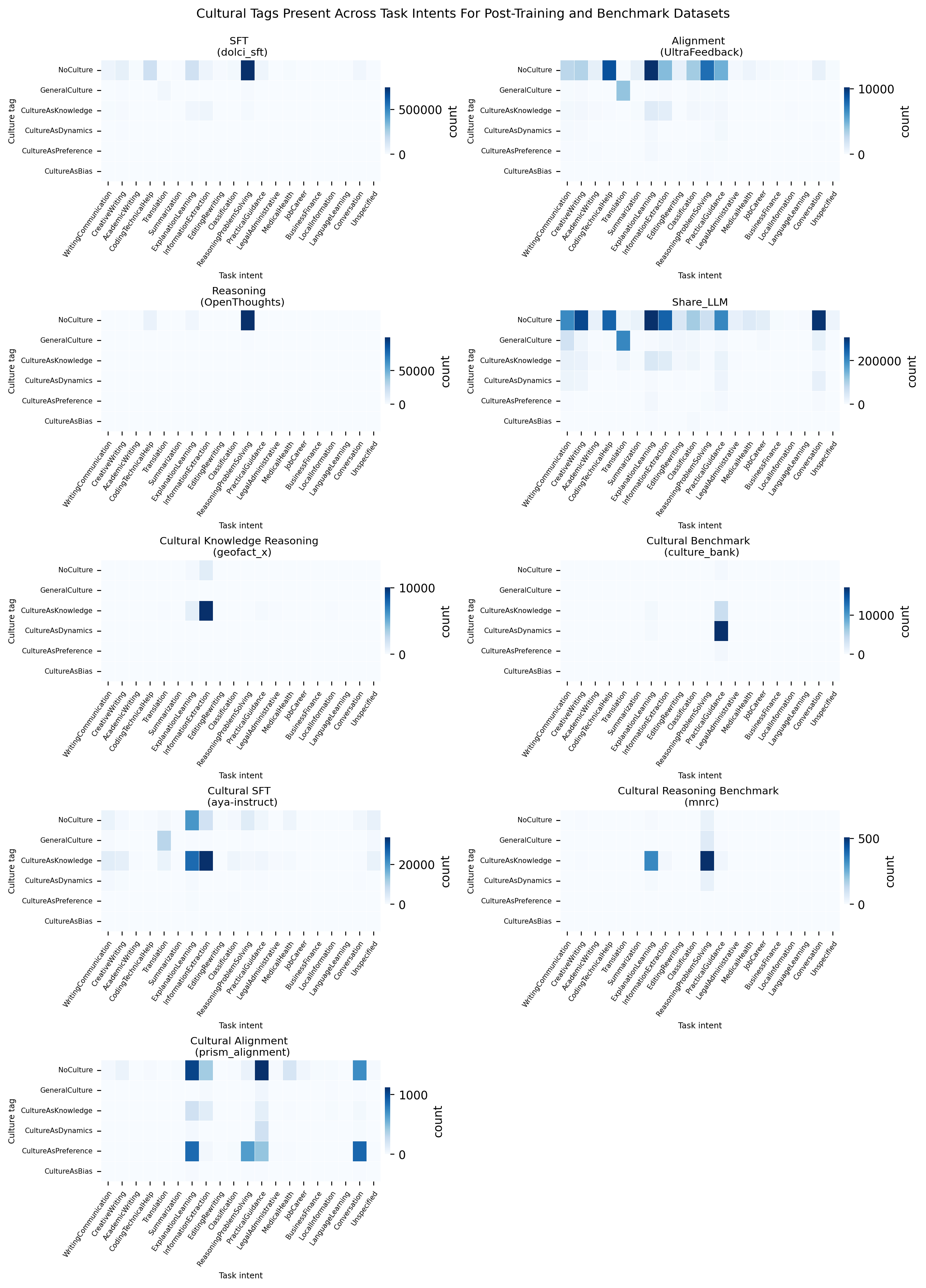
Figure 6: Cultural markers are unevenly distributed across task intents in post-training and benchmark datasets.
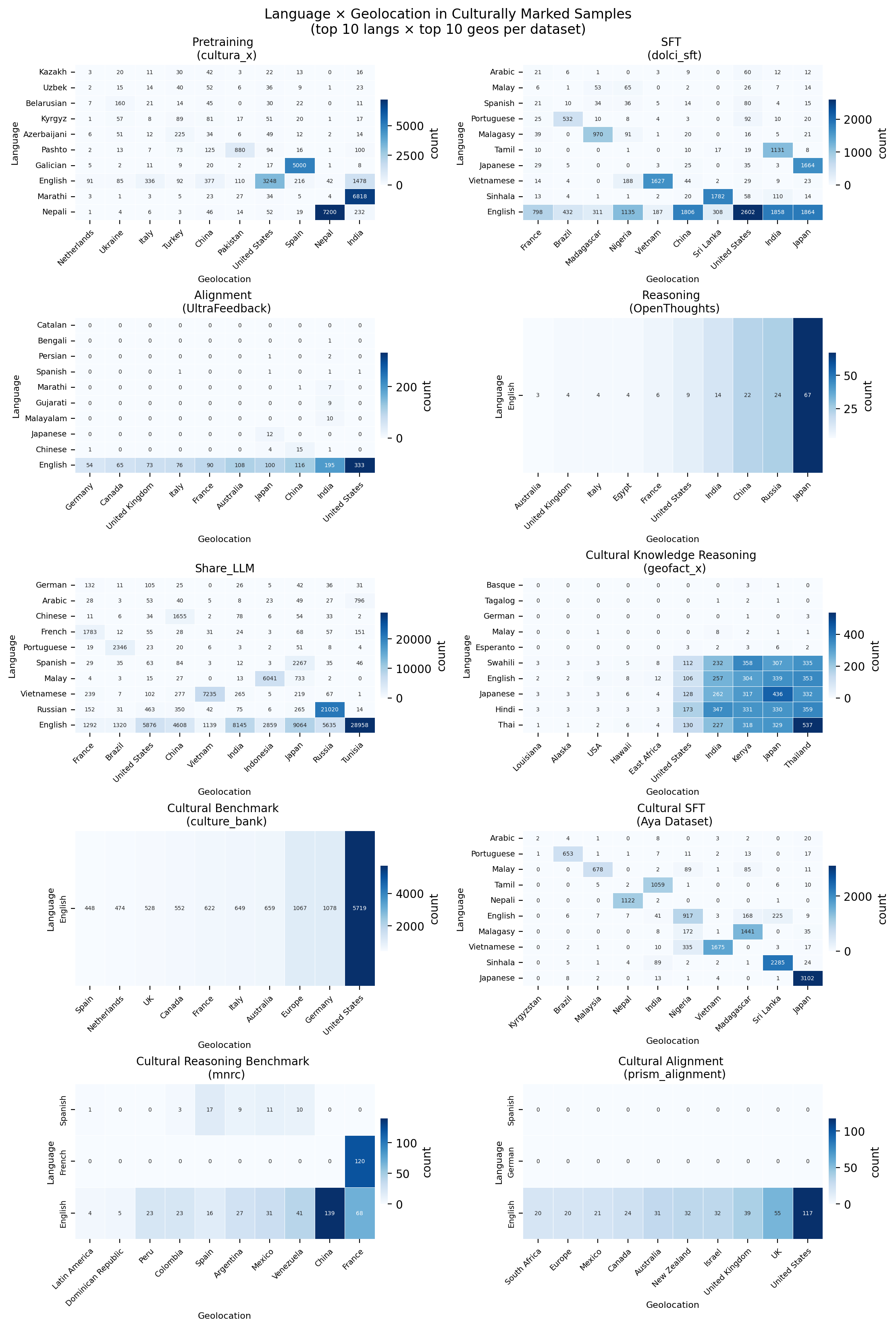
Figure 7: Distribution of culturally marked examples by top languages and geolocations demonstrates intersectional sparsity beyond dominant clusters.
Implications and Future Directions
The empirical findings decisively refute the assumption that LLMs trained on web-scale or broadly multilingual data inherit sufficient cultural grounding for global deployment. Instead, the data pipeline enforces a funnel that bottlenecks cultural diversity at each stage, rendering ex post alignment insufficient for models to act in a culturally aware manner, particularly outside high-resource, Western-centric contexts.
Practical implications include:
- Advocacy for intentional, multidimensional cultural curation: Random multilingual scaling or domain balancing is insufficient; datasets must be curated with explicit attention to cultural status, geolocation, and task alignment.
- Utility of explicit marker-based supervision: Systematic annotation and marker-based finetuning provide measurable gains in cultural alignment, especially for long-tail and intersectional cultural identities.
- Evaluation and audit protocols: Data cards and evaluation frameworks should incorporate culture as a first-class attribute to systematize representational auditing throughout the LLM pipeline.
Theoretical directions involve formalizing forgetting dynamics for cultural features across training phases, designing longitudinal metrics for cultural drift, and devising multilingual cultural augmentation techniques that avoid synthetic dilution.
Conclusion
The "culture funnel" phenomenon elucidated in this work foregrounds the data pipeline as the primary determinant not only of LLM factual and reasoning capabilities, but of their cultural alignment and inclusivity. The funnel effect — compression and loss of culture through pruning, re-weighting, and domain/task specialization — is robust across current public datasets. The authors' multidimensional analysis and explicit marker paradigm provide actionable pathways for systematically improving the cultural competence of future models, shifting the field toward proactively representational, rather than retrofitted or inference-time, cultural alignment.