- The paper proposes an efficient two-pass algorithm for reconstructing node alignment between a diffusion tree and a fully observable network.
- It utilizes tree correlation testing and Poisson thinning to derive monotonic, depth-dependent matching probability bounds.
- The method guarantees no false matches with high probability, robustly addressing the information asymmetry in diffusion processes.
Diffusion-Network Alignment: Efficient Algorithms and Explicit Probability Bounds
The paper "Diffusion-Network Alignment: An Efficient Algorithm and Explicit Probability Bounds" (2606.12879) introduces a variant of the classic network alignment problem termed diffusion-network alignment. In this setting, instead of observing two fully known correlated graphs as in traditional problems, one observes only a diffusion tree from the first network—a typical scenario in information diffusion or epidemic traces—while the second network remains fully observable. The underlying vertex correspondence between the networks, which encodes the latent identity alignment, must be inferred.
This formulation models settings where information about one network is incomplete, originating from a stochastic diffusion process governed by the Independent Cascade (IC) model, while a reference network is available in full. Classical methods such as subgraph counting are inadequate here, as they require access to both complete networks. The authors address the core algorithmic and probabilistic challenges this asymmetry produces, particularly in the regime of sparse random graphs.
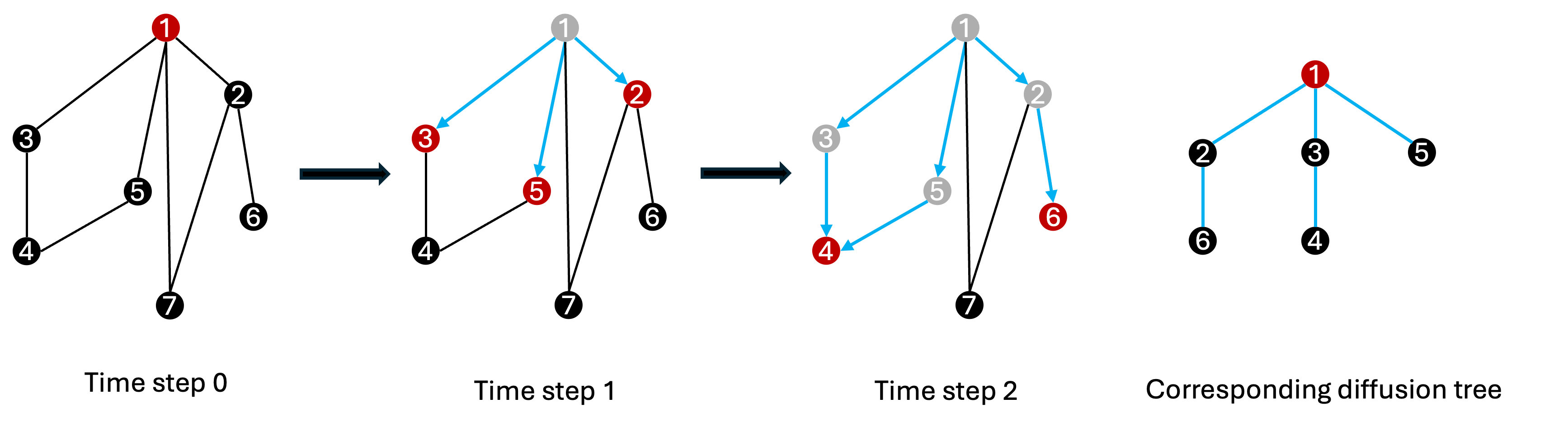
Figure 1: An example of the IC model and its corresponding diffusion tree.
Model and Technical Framework
The mathematical model is instantiated using the correlated Erdős–Rényi (ER) graph pair paradigm with parameters (n,λ,s). The diffusion process on the first graph, G1, is driven by the IC model with constant edge-activation probability q, resulting in a rooted tree TIC. The task is to reconstruct the hidden permutation π∗ which aligns vertices of TIC with those of a permuted copy of the second network G2.
Critically, the diffusion tree, typically a small random fraction of the original network, preserves only local structural information correlated with G2. This architecture necessitates inference strategies that go beyond classic ML-based graph alignment and explore statistical correlations in highly restricted subgraph structures.
Algorithmic Approach: Two-Pass Tree Correlation Propagation
The authors propose an efficient algorithm that generalizes the tree correlation testing paradigm to handle matching at all depths in the diffusion tree, not merely at the root. The algorithm proceeds in two passes:
- Upward Pass: Starting from the leaves, local evidence for candidate alignments is aggregated upward using a set of four structural criteria based on subtree correlation likelihood ratios. This ensures that matching information can be certified even for non-root, non-leaf vertices.
- Downward Pass: Matching information accumulated at higher levels (closer to the root) is recursively propagated downward, allowing for additional matches based on parent-child relationships and further correlation evidence.
Local correlation testing between diffusion subtrees and breadth-first search (BFS) trees in G2 is implemented via a Poisson Galton–Watson approximation, greatly leveraging known likelihood-ratio characterizations and hypothesis-testing optimality in such branching structures.
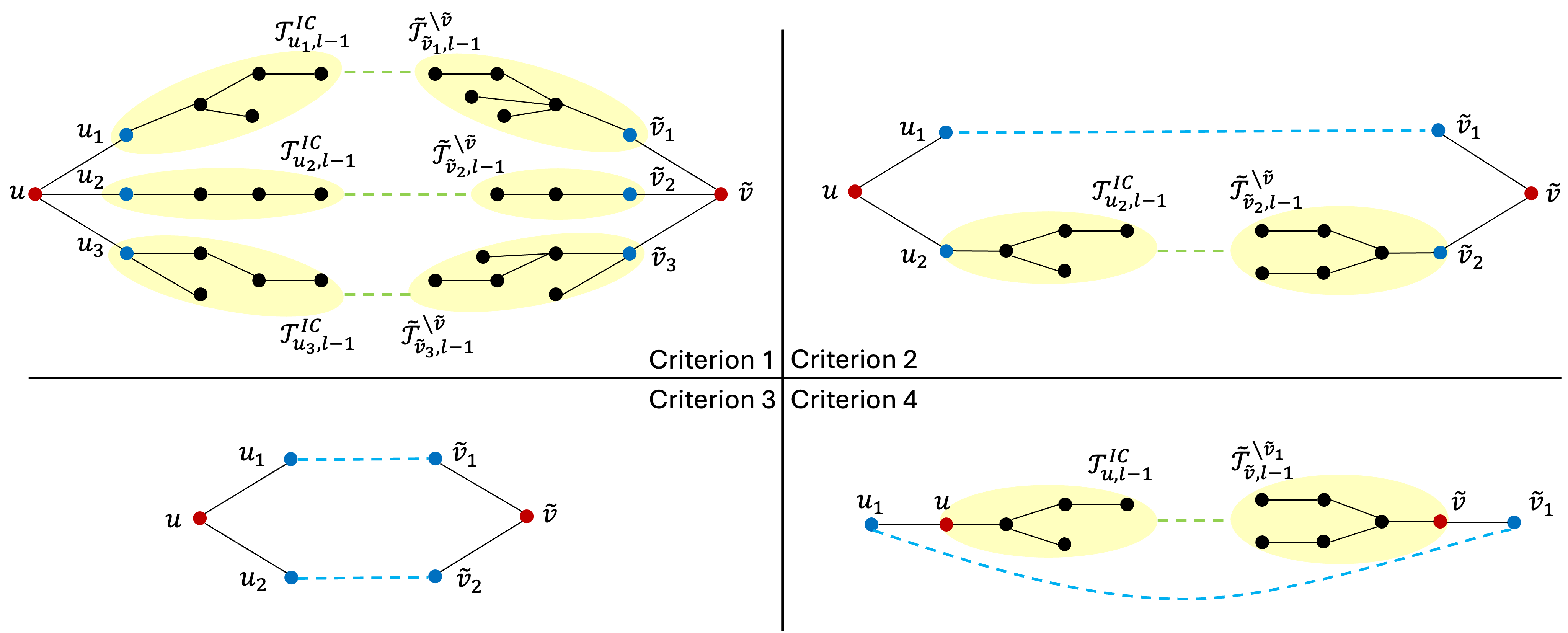
Figure 2: Illustration of the four matching criteria.
Statistical Guarantees: Explicit Depth-Dependent Probability Bounds
The core contribution resides in the explicit, constant lower bounds on matching probability for individual vertices, parameterized by their depth in the diffusion tree. These bounds are constructed recursively using Poisson thinning arguments and are strictly increasing as the depth decreases (i.e., as vertices approach the root).
Specifically, let pd denote the minimal matching probability for a vertex at depth G10. The authors prove that G11, where G12 is the limit as G13, and G14 is the bound for the leaves. The guarantee is that, with high probability G15, all matches produced are either correct or empty—no false matches are output. For large depth, the per-vertex matching probability approaches G16 (the fixed-point value of the recursion), and the root matching probability is even higher, reflecting the information gain from propagation.
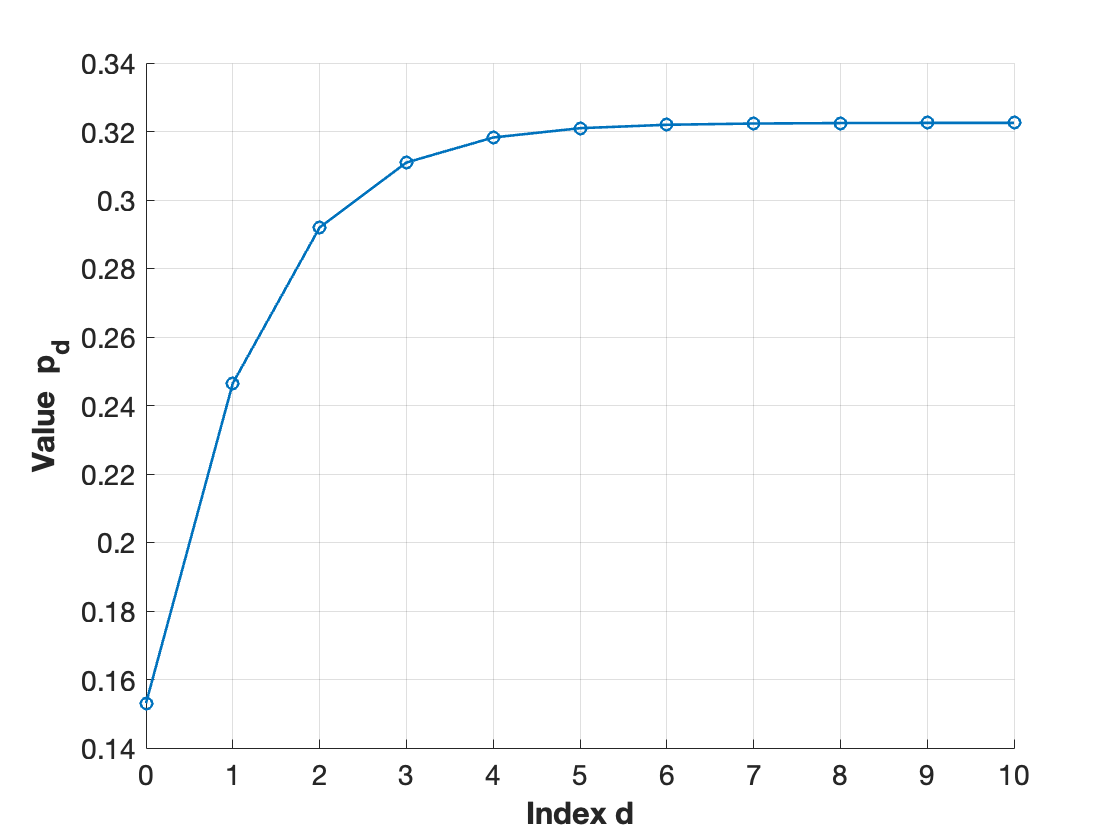
Figure 3: An example of the sequence G17 showing monotonic growth and convergence.
Theoretical Analysis and Proof Techniques
Analysis is carried out under the constant-degree (sparse) regime, drawing on both algorithmic and probabilistic tools:
- Random graph coupling: The distribution of local neighborhoods in G18 and G19 is shown to converge in total variation to correlated Poisson Galton–Watson trees, justifying the use of tree-based likelihood-ratio hypothesis testing.
- Error control: The high-probability guarantee of correctness is established via a careful path overlap and cycle analysis, ruling out spurious matches arising from non-tree-like intersections between subtrees and BFS neighborhoods. Harris' inequality and concentration-of-measure arguments are leveraged.
- Recursive bounds: For each depth, explicit recursive formulas relate the success probability at depth q0 to that at depth q1, accounting for both strong (parent-child) and weak (correlation test only) signals.
- Efficient computation: The algorithm is shown to run in time q2, determined mainly by the number of required tree likelihood-ratio computations.
Discussion and Implications
This work makes two strong claims:
- Global correctness guarantee: With high probability, every matched pair is either correct or abstained—no false positives are output.
- Vertex-wise depth-dependent probability bounds: The probability of correct matching can be made explicit, monotonic in depth, and is uniformly bounded away from zero for all depths above the leaves. These bounds are significantly sharper for vertices close to the root.
Remarkably, these guarantees are robust to the sparsity and stochastic incompleteness inherent in the diffusion process. The work reveals a computationally efficient (polynomial-time) regime that aligns with, but does not achieve, the known information-theoretic optima for partial recovery in classical network alignment. For example, in parameter regimes where the information-theoretic matching fraction is q3, the algorithm guarantees a root matching fraction around q4—indicating an explicit gap and open problem for future research.
Practical implications extend directly to scenarios of social network deanonymization via cascades, epidemic source tracing, and analysis of incomplete communication logs, providing robust, principled tools for cross-network inference when only propagating traces can be partially observed.
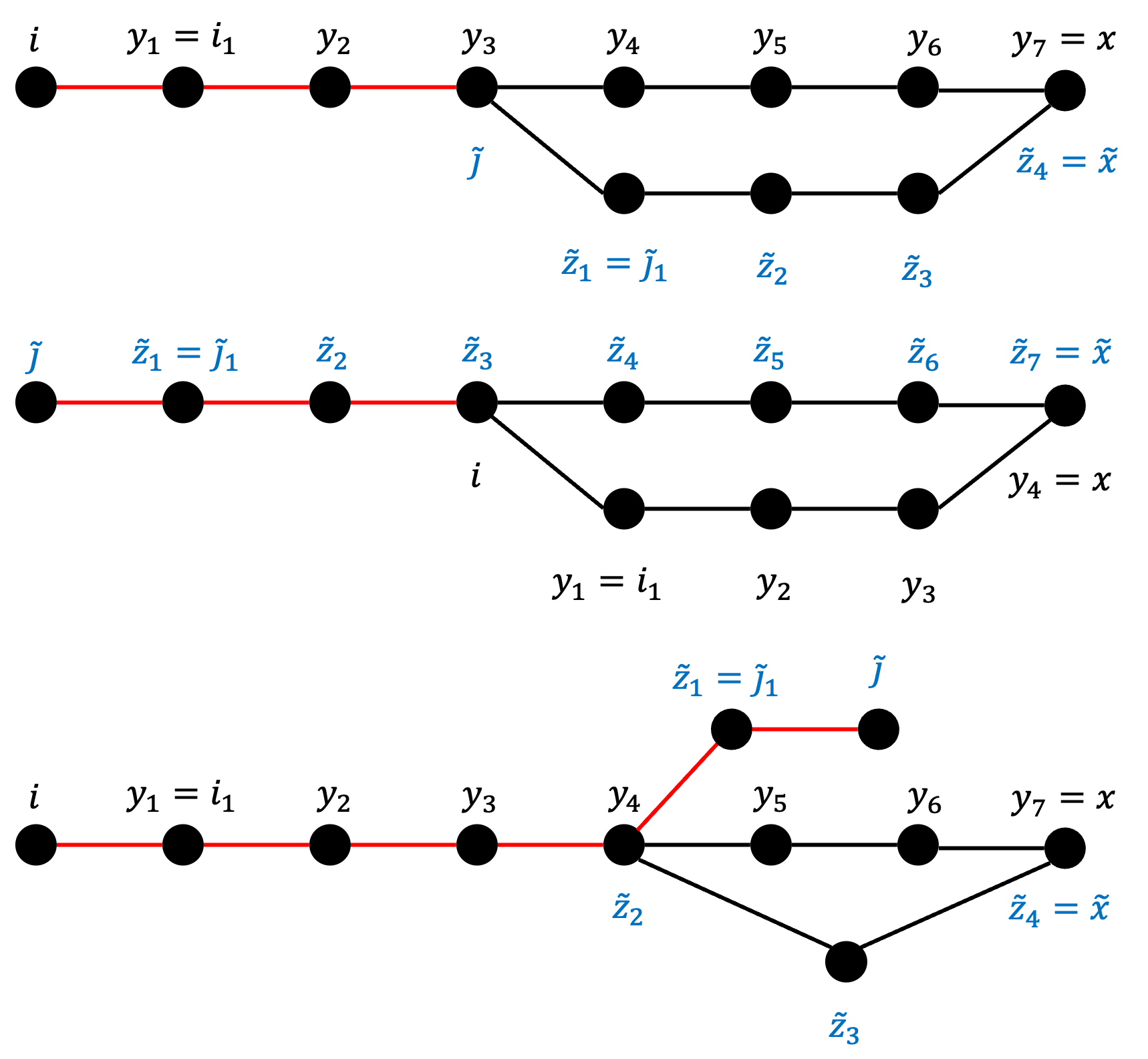
Figure 4: Intersection patterns of candidate paths showing the combinatorial cases analyzed in false positive exclusion.
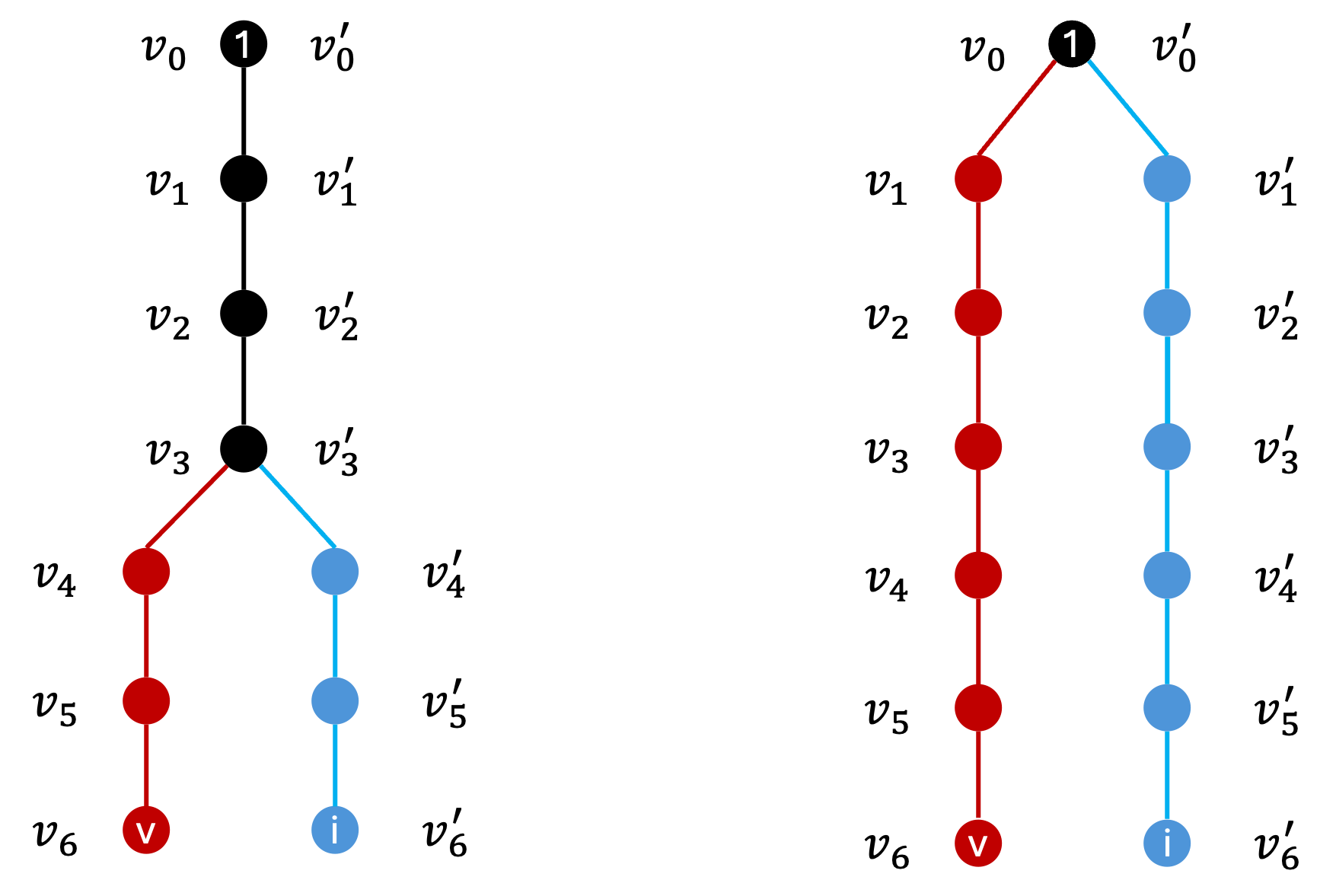
Figure 5: Examples of overlap configurations for path pairs in candidate matches.
Future Directions
Building on this foundation, open research avenues include:
- Tightening the matching probability lower bounds towards the information-theoretic limit;
- Theoretical characterization of the improvement due to the downward pass, especially for leaf and near-leaf vertices;
- Generalization to richer graph models (e.g., attributions, communities, or time-varying networks);
- Relaxation to non-tree diffusion substructures (cycles/forests) and more general diffusion models;
- Data-driven evaluation of the practical performance and robustness in real networks with noise and model inconsistencies.
Conclusion
The paper rigorously formulates and addresses the diffusion-network alignment problem, providing the first practical, theoretically-analyzed algorithm for the setting of information-asymmetric graph matching. The results establish concrete, depth-dependent recovery guarantees and advance the theory of partially-observed network inference, with immediate implications for real-world applications in privacy, epidemiology, and digital forensics.
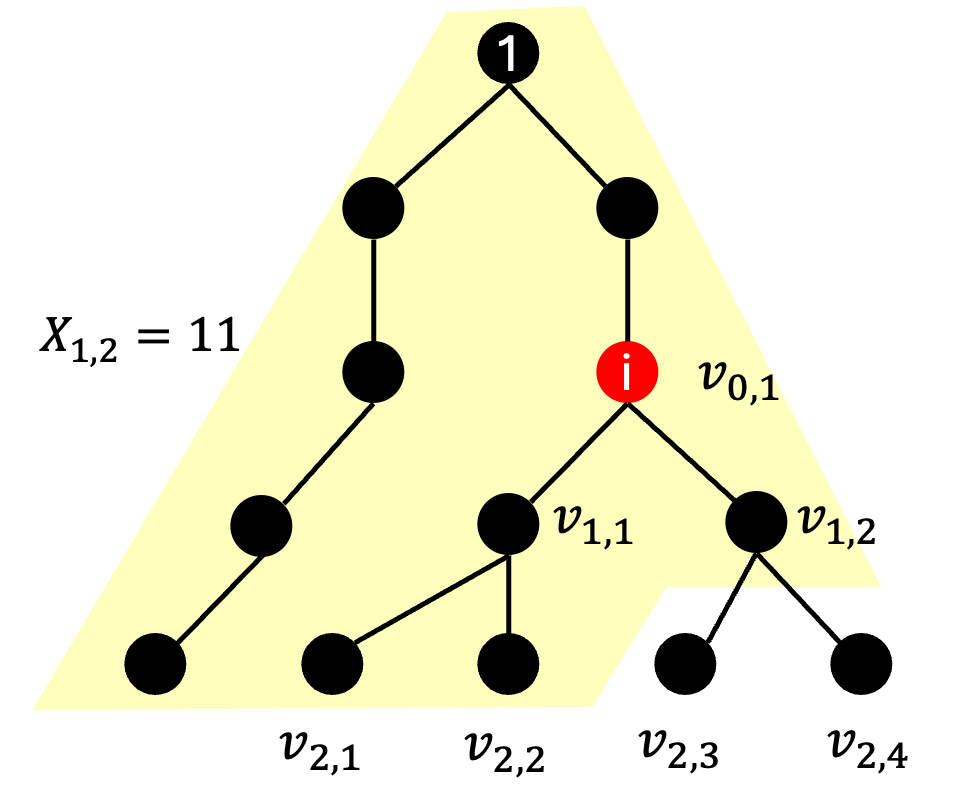
Figure 6: Notational illustration: subtree structure, canonical order, and parent/child relationships pivotal to upward and downward passes.
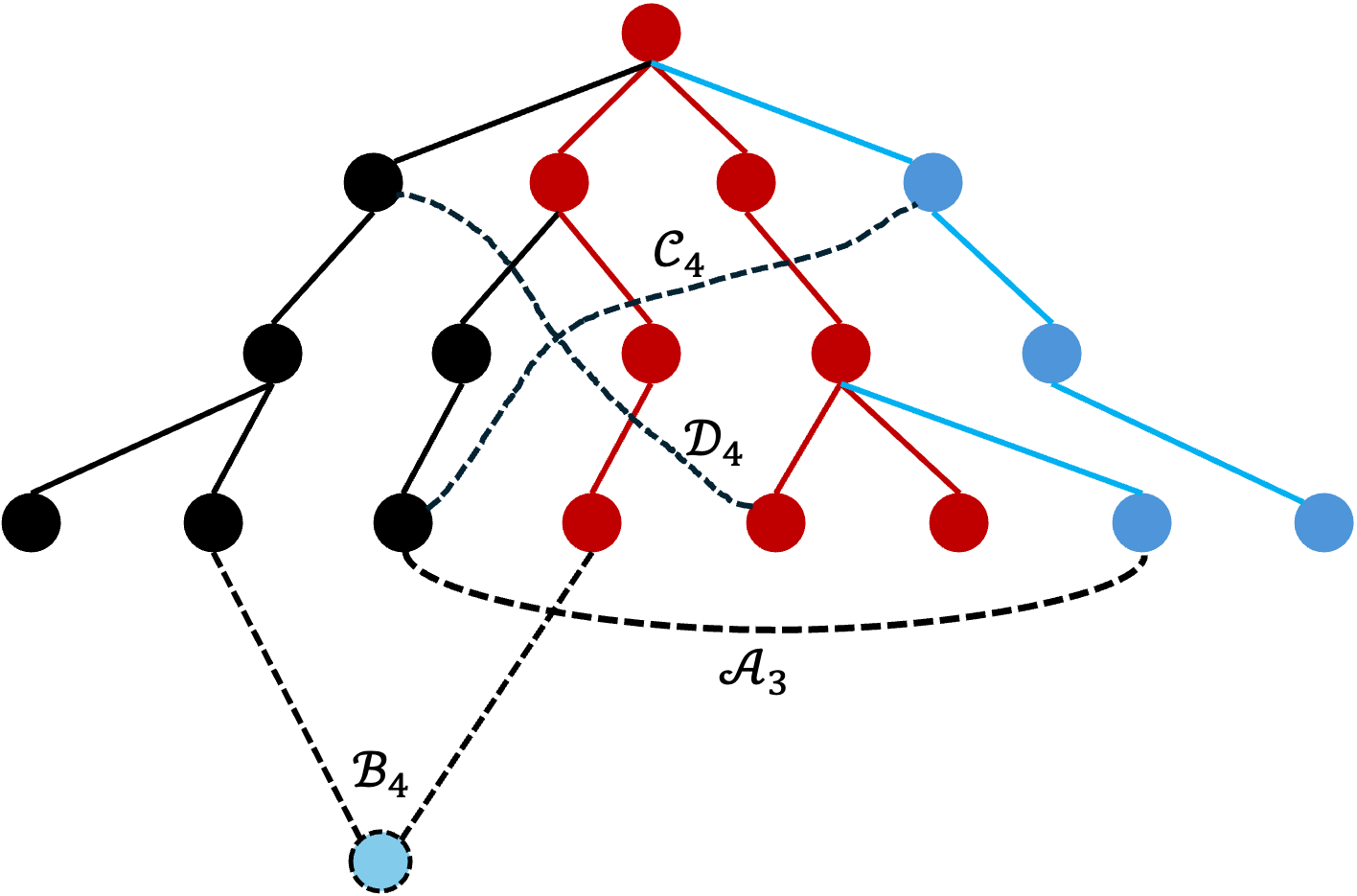
Figure 7: Visual representation of event structure and overlapping sets in the error analysis.
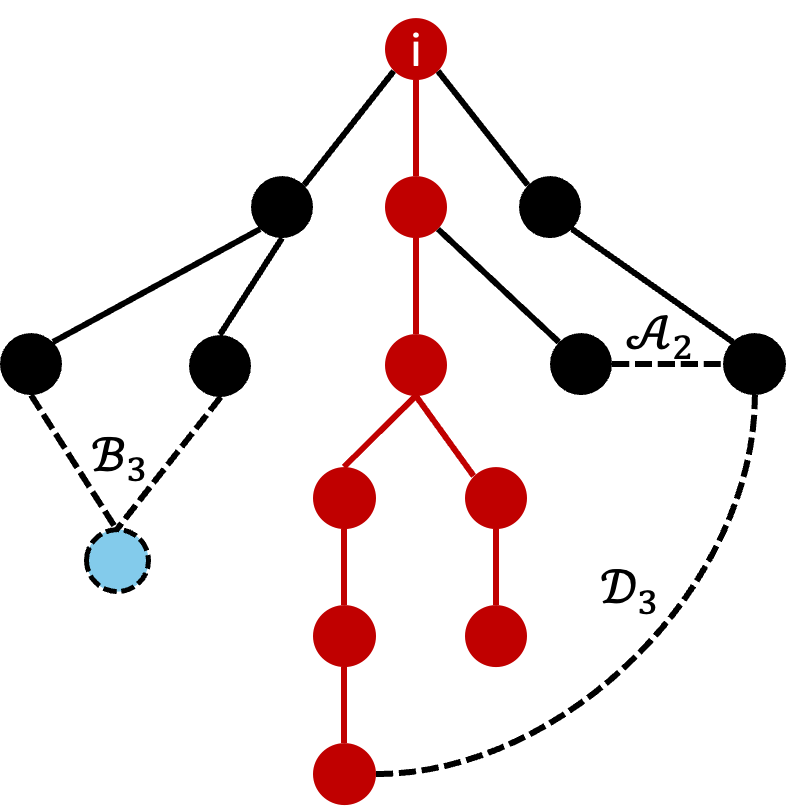
Figure 8: Conditioned graph construction used in the proof of high-probability correctness and Poisson limit approximation.