A Scalable PyTorch Abstraction for Multi-GPU Gaussian Splatting
Abstract: Gaussian splatting methods have become increasingly popular for neural reconstruction of the real world. However, they are often limited in scale and resolution due to compute and memory constraints. We present a multi-GPU Gaussian splatting approach that scales reconstruction to higher resolutions and larger scenes while abstracting away the code complexity typically associated with distributing a model. To accomplish this, we propose a PyTorch backend that distributes the Gaussian parameters and splatting operators across GPUs via CUDA unified memory and NVLink. Because distribution occurs at the operator level, the model code requires no explicit cross-device communication. More broadly, the backend exposes multiple GPUs as an aggregate PyTorch device and supports other PyTorch operators. We demonstrate city-scale reconstructions with street-level detail consisting of over 1 billion Gaussian splats, more than 25 times as many as the current state of the art.


Paper Prompts
Sign up for free to create and run prompts on this paper using GPT-5.
Top Community Prompts
Explain it Like I'm 14
What is this paper about?
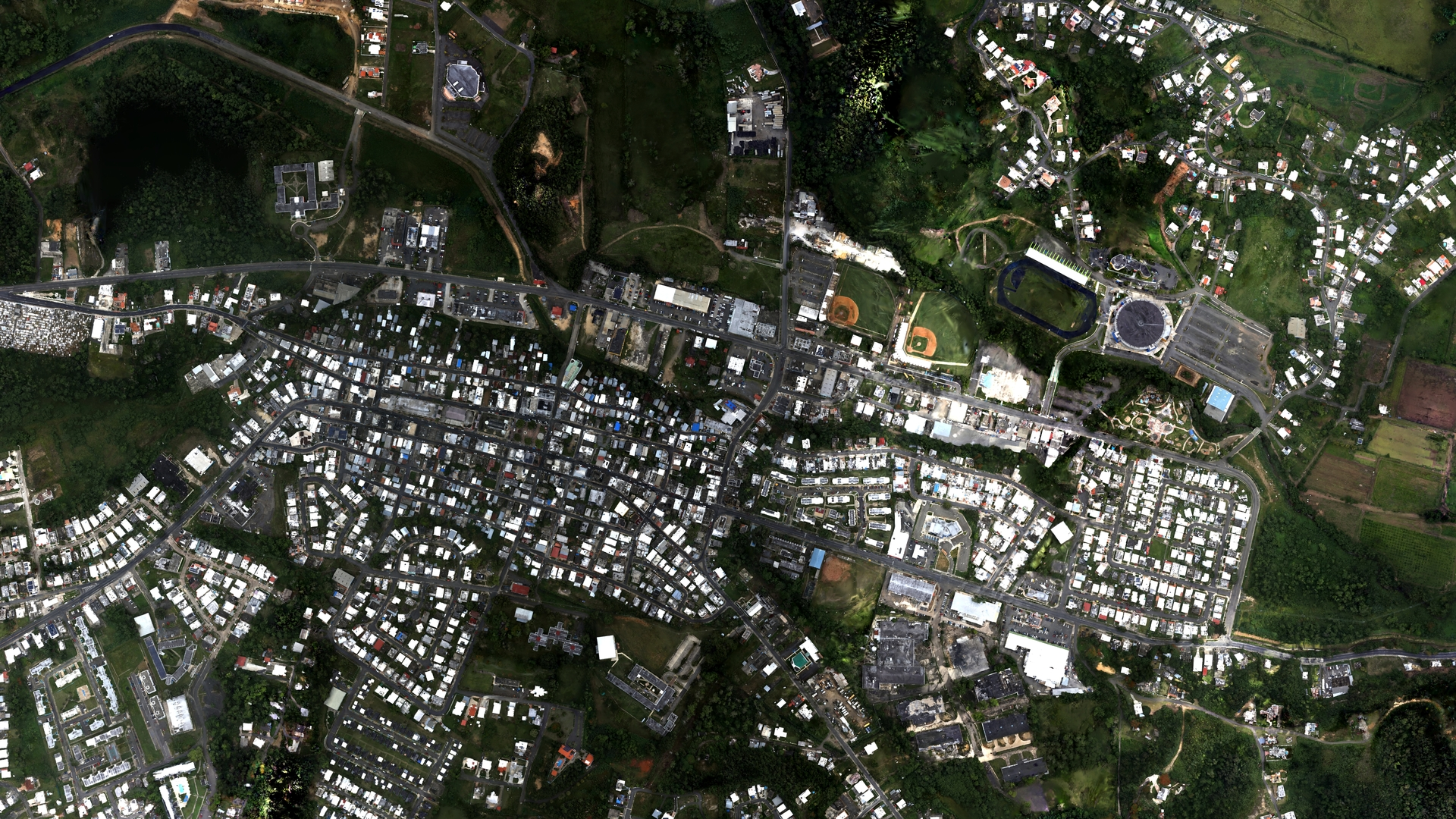
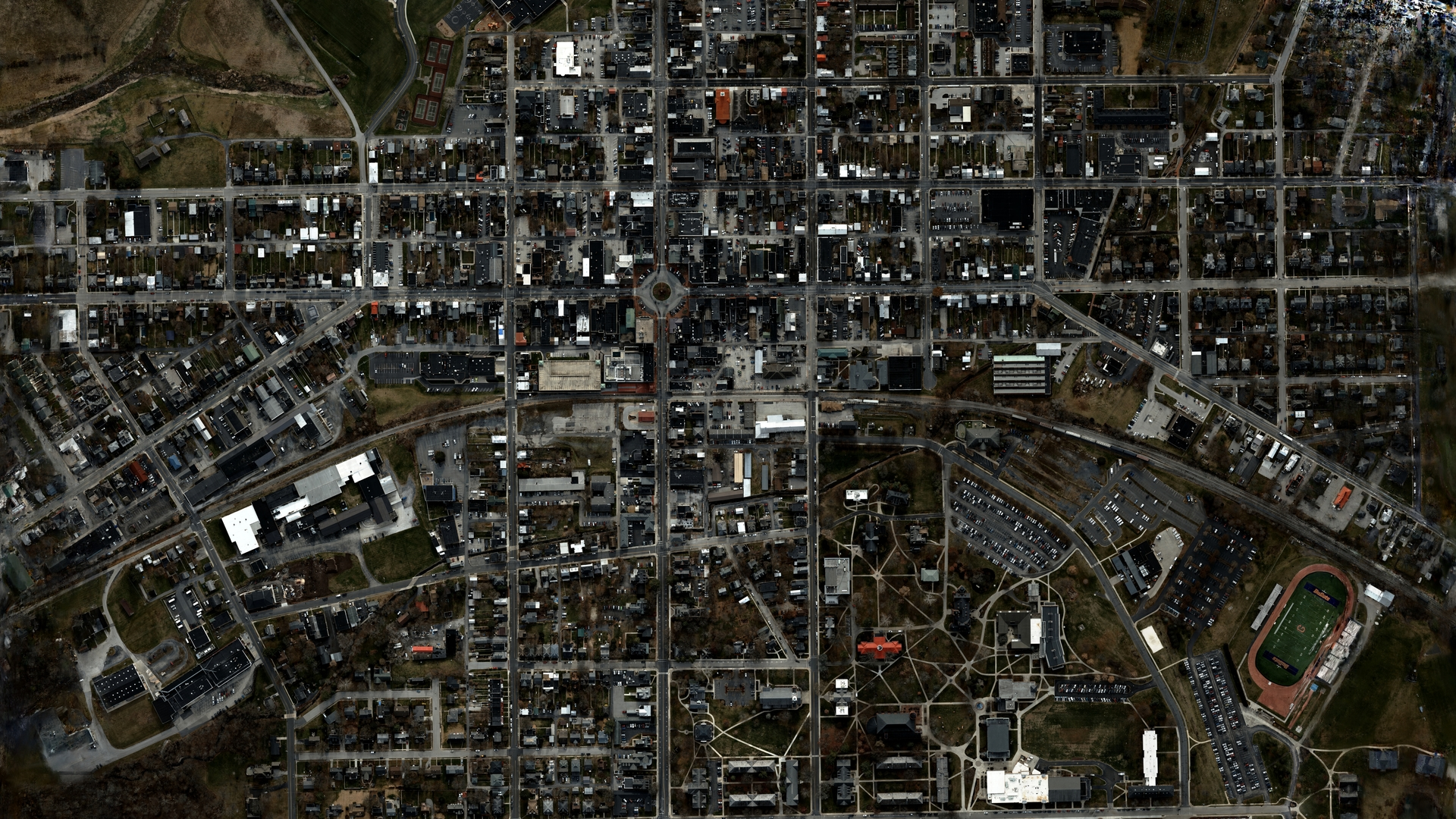
This paper shows a simple way to use many GPUs together to build super‑detailed 3D scenes from photos, using a technique called “Gaussian splatting.” Instead of forcing programmers to write complicated code to split their models across GPUs, the authors create a new PyTorch “device” that makes many GPUs act like one big GPU. With this, they reconstruct huge areas (entire city blocks) with fine, street‑level detail—using over 1 billion tiny “splats,” which is more than 25 times bigger than previous records.
What are the main questions the paper asks?
- How can we run Gaussian splatting on multiple GPUs without rewriting lots of code?
- Can we make the GPUs share memory smoothly so the program doesn’t slow down?
- Can we automatically split each step of the work across GPUs in smart ways?
- Does this actually run faster and let us build much bigger, higher‑resolution 3D scenes?
How did they do it? (Methods explained simply)
Think of rebuilding a 3D scene like painting a picture using millions or billions of tiny glowing dots (Gaussians). Each dot has a position, size, color, and shape. To render an image, you figure out how those dots look from a camera, then layer them to get the final picture.
The authors’ key idea is to make many GPUs feel like one big machine in PyTorch:
- One big toolbox for all GPUs (Unified Memory): Normally, each GPU has its own “closet” of memory. Unified memory makes it feel like there’s one large closet all GPUs can reach. This avoids copying data around by hand.
- Fast highways between GPUs (NVLink): High‑speed links between GPUs act like wide highways so data can move quickly when needed.
- No constant check‑ins with the CPU: They design the system so GPUs don’t keep stopping to ask the CPU for permission. Work is launched and runs asynchronously (like a to‑do list that GPUs process without pausing).
- Operator‑level teamwork: A model is made of many small steps (operators), like “add these numbers,” “multiply these matrices,” or “rasterize Gaussians.” The system automatically divides each operator across GPUs:
- Per‑Gaussian tasks (like evaluating each dot’s color) are split by dots.
- Per‑pixel tasks (like drawing the final image) are split by image regions or camera views.
- A tiny code change for users: In PyTorch, you just set device="dgx" instead of "cuda" and the system does the rest. No custom cross‑GPU code needed.
- Extra behind‑the‑scenes tricks:
- An asynchronous memory allocator that avoids slow system calls.
- Smart prefetching of data to reduce waiting.
- A multi‑GPU sort and safe ways to combine gradients when dots affect multiple image tiles.
Analogy: Imagine building a massive LEGO city. Instead of one person assembling everything (one GPU), you have a whole team (many GPUs). The authors give the team shared shelves (unified memory), fast carts between tables (NVLink), and a task board that splits jobs by piece type or by city block (operator‑level partitioning). You don’t rewrite your building plans; you just say, “Team mode on.”
What did they find, and why does it matter?
Here are the main results in plain terms:
- Much bigger scenes: They reconstruct huge areas with very high detail, including:
- A 145+ million‑dot (Gaussian) aerial scene.
- A city‑scale scene with over 1 billion dots—the largest reported, over 25× bigger than previous work.
- Simple to use: Existing PyTorch models can scale across many GPUs by just switching the device to "dgx". No special sharding code or communication logic needed.
- Real speedups: For common building blocks (like fills, adds, matrix multiplies, and sums), performance nearly scales with the number of GPUs when the problem is large enough. In end‑to‑end training on standard datasets, using more GPUs usually makes training meaningfully faster (especially when also increasing the batch size).
- Quality holds up: Image quality scores (like PSNR/SSIM—think “how sharp and accurate the result looks”) stay consistent across different GPU counts, though very large batch sizes can slightly slow down convergence (a known effect in many trainings).
- Honest limits: When memory is the main bottleneck and they split a single big image into tiles across GPUs, performance can slow down because GPUs need to fetch scattered data from each other. Still, memory scales up linearly with more GPUs, so you can train scenes that simply wouldn’t fit on one GPU at all.
Why it matters: These results show you can train and render enormous, detailed 3D worlds on today’s multi‑GPU machines without becoming a parallel‑programming expert. That opens the door to better mapping, virtual reality, games, digital twins of cities, and more.
What’s the bigger impact?
- Easy scaling for many models: Although the paper focuses on Gaussian splatting, the same “many GPUs as one device” idea works for other PyTorch models too (they even show diffusion sampling running this way).
- Bigger, richer 3D reconstructions: City‑scale, high‑resolution scenes with street‑level detail become practical, enabling better simulation, planning, and visualization.
- Lower barrier to entry: Researchers and developers can scale up by changing one line of code, instead of learning complex distributed systems.
- Future improvements: The authors point to next steps like better load balancing (so no GPU sits idle), rethinking how the drawing step (rasterization) is organized to reduce cross‑GPU data traffic, and expanding the set of supported PyTorch operators.
In short, this work turns a multi‑GPU computer into a “one big GPU” experience inside PyTorch, making it much easier to build massive, detailed 3D worlds—and helping many other AI models scale up with almost no extra effort.
Knowledge Gaps
Knowledge gaps, limitations, and open questions
Below is a single, focused list of what remains uncertain, missing, or unexplored in the paper. Each point is phrased to help guide concrete follow-up work.
- Performance without NVLink: No evaluation on PCIe-only systems, mixed topologies, or different PCIe gens; quantify scaling, page-migration overheads, and achievable throughput when NVLink is absent or limited.
- Single-node scope: Unified memory aggregation is only demonstrated within a node; no multi-node (interconnect such as InfiniBand/NVSHMEM) design, implementation, or scaling study.
- Unified memory behavior at scale: Lack of measurements of page-fault rates, migration traffic, TLB behavior, and NVLink bandwidth utilization during rasterization and training; provide counters/telemetry and correlate with operator runtimes.
- Prefetch policy design: Prefetching is applied “judiciously” based on profiling but without a principled or automated policy; explore predictive prefetch, compiler/runtime hints, or auto-tuning strategies and quantify benefits vs overhead.
- System-scope atomics: Backward rasterization uses system-scope atomics across GPUs; no quantitative analysis of their overhead or contention as model size, batch size, and device count grow (e.g., 8–32 GPUs).
- Load imbalance and dynamic rebalancing: The paper notes inter-GPU workload variance but does not implement or evaluate dynamic load balancing/repartitioning; assess scheduling policies, adaptive tiling, and work-stealing.
- Partitioning strategies: Only a fixed per-Gaussian and per-pixel/camera sharding is explored; study hybrid or adaptive partitioning (e.g., partial per-camera replication, clustered splat grouping, per-depth-layer sharding) to reduce cross-GPU reads.
- Alternative rasterization formulation: A sparse-matrix-multiplication–style rasterizer is proposed as future work; specify packing formats, build costs, and end-to-end speed/memory trade-offs vs current sort-and-splat.
- Tile-based regime slowdown: In the constant-batch regime, speed degrades sub-√N; quantify how much is due to scattered cross-device reads vs other causes, and test strategies (e.g., tile-aware data layouts, camera-aware reordering) to recover scaling.
- Cross-operator synchronization: Operators synchronize across devices between launches; no exploration of pipelining, inter-op overlap, or fused multi-op kernels to hide synchronization costs.
- Operator coverage and fallbacks: kDGX falls back to CPU for unsupported ops; provide coverage analysis across PyTorch operator sets, automated detection/CI for coverage gaps, and performance impact quantification of any fallback paths.
- Interoperability with PyTorch tooling: No evaluation with torch.compile/Inductor, TorchScript, DTensor, DDP/FSDP interop, AMP (fp16/bf16), or graph captures; assess correctness and performance interactions.
- Generality beyond 3DGS: Aside from microbenchmarks and a brief diffusion mention, there is no end-to-end evaluation on diverse workloads (transformers, CNNs, GNNs); establish benchmarks demonstrating broad utility and limits.
- Precision and numerics: No study of mixed precision (bf16/fp16/fp8) for Gaussian splatting on multi-GPU UM, including stability, convergence, and visual quality impacts; provide guidance and kernels optimized for tensor cores.
- Determinism and reproducibility: Multi-GPU reductions, paging order, and atomics can affect determinism; quantify variance across runs/hardware and propose deterministic modes or bounded nondeterminism guarantees.
- Memory oversubscription: The design intentionally avoids host memory; no strategy for when model state + intermediates exceed aggregate GPU memory (e.g., staged streaming, compression, UMA host spill with thresholds).
- Memory fragmentation and long runs: Unified memory pools reduce alloc/free overhead, but fragmentation behavior, peak RSS drift, and allocator tuning under long training runs are not reported.
- Sorting and merging costs: Multi-GPU radix sort and merge-path are critical in forward/backward; provide microbenchmarks and scaling analysis (N, K, key widths), plus memory overheads, to guide optimization.
- NVSwitch and larger scales: Experiments top out at 8 GPUs; evaluate on 16–32 GPUs with NVSwitch, report scaling limits, and analyze topology sensitivity.
- Head-to-head baselines: No direct comparison to Grendel or other distributed 3DGS systems on identical hardware/datasets; provide matched benchmarks (speed, quality, Gaussian count, memory) and ablations for rebalancing/on-demand vs prefetch.
- Energy efficiency: No measurement of energy/power per training step or per rendered pixel; profile energy/performance trade-offs vs batch size, GPU count, and partitioning.
- Checkpointing and fault tolerance: Unified-memory tensors and operator-level distribution implications for checkpoint size, save/restore cost, partial failure recovery, and elastic training are not examined.
- Data I/O pipeline: Training uses full-resolution images, but potential I/O bottlenecks and overlap (prefetch, caching, compression) are not analyzed; quantify I/O vs compute fractions and mitigation strategies.
- Mixed-architecture portability: Although A100/H100/B200 were used, there is no systematic evaluation of cross-arch behavior (page size differences, NVLink generations, cache coherency nuances) or MIG/virtualization support.
- Real-time rendering latency: Unified-memory paging may introduce latency spikes; assess interactive rendering jitter and propose bounds or techniques (hard pinning/prefetch windows) for real-time use cases.
- API for residency hints: There is no user-facing mechanism to annotate tensors with residency/placement preferences or access patterns; define APIs to guide prefetch and partitioning decisions for custom ops.
- Gaussian count vs memory breakdown: No detailed accounting of memory usage (Gaussians, SH coeffs, intersection records, gradients, sort buffers); provide breakdowns to inform practitioners’ scaling decisions.
- Integration with hierarchical/LOD methods: The paper suggests compatibility but does not demonstrate or quantify how LOD/hierarchical Gaussians interact with UM-based distribution and whether they improve scaling.
- Third-party/custom op porting: Guidance and tooling for porting custom CUDA ops to kDGX (templates, testing harnesses, perf checklists) are missing; provide best practices to broaden adoption.
Practical Applications
Immediate Applications
The following applications can be deployed now with existing hardware and software stacks, leveraging the paper’s multi-GPU PyTorch backend (torch-dgx) and distributed Gaussian splatting implementation. They assume access to NVLink-connected NVIDIA GPUs (A100/H100/B200-class), CUDA unified memory, a compatible PyTorch version, and sufficient operator coverage in torch-dgx.
- City-scale 3D mapping from aerial or street imagery
- Sectors: geospatial/GIS, public sector, emergency management, civil engineering
- What: Train and render city- or region-scale 3D Gaussian splat models from full-resolution aerial imagery with street-level detail for planning, change detection, and disaster assessment.
- Tools/workflows: COLMAP for pose estimation; gsplat/fVDB pipelines with device="dgx"; batched training when memory allows; distributed rendering for very large models.
- Assumptions/dependencies: NVLink-connected multi-GPU nodes; storage throughput for high-res datasets; adherence to local aerial data regulations; operator coverage in torch-dgx for the chosen pipeline.
- Virtual production and game environment capture at unprecedented scale
- Sectors: media/VFX, gaming
- What: Rapidly reconstruct large sets (outdoor city blocks, large indoor stages) with >100M–1B Gaussians and render at high fidelity for virtual sets or open-world game assets.
- Tools/workflows: Integrate torch-dgx into existing reconstruction pipelines; export to engine-ready assets; use LoD or hierarchical 3DGS for downstream runtime.
- Assumptions/dependencies: Artist pipelines for conversion/optimization; content rights; tile-based rendering when assets exceed single-GPU VRAM.
- AEC and infrastructure inspection from drone imagery
- Sectors: construction, energy/utilities, transportation
- What: As-built documentation, progress monitoring, and asset inspection (e.g., bridges, power lines, wind farms) reconstructed at full image resolution to capture small defects.
- Tools/workflows: Drone data capture; fVDB/gsplat training on “dgx”; export meshes or splats to BIM/GIS; schedule periodic retraining.
- Assumptions/dependencies: Flight safety and permissions; standardized data capture protocols; GPU availability on-prem or in cloud nodes with NVLink.
- Rapid post-disaster 3D situational awareness
- Sectors: public safety, insurance
- What: Quickly train large-scale reconstructions from new aerial sorties (or satellites if resolution permits) to guide response and estimate damage.
- Tools/workflows: Automated ingestion of imagery → COLMAP → torch-dgx training → streamed distributed rendering to response dashboards.
- Assumptions/dependencies: Timely data acquisition; compute provisioning in surge scenarios; secure handling of sensitive locations.
- AR/VR content creation at city scale
- Sectors: consumer AR/VR, tourism, education
- What: Produce explorable large scenes (campuses, parks, historical sites) with high visual fidelity, using distributed rendering for content serving.
- Tools/workflows: Authoring on “dgx”; server-side distributed inference; optional conversion to hierarchical 3DGS for streaming LoD.
- Assumptions/dependencies: Runtime/streaming infrastructure; device constraints for end users; content licensing.
- Academic neural rendering research at larger scales with minimal refactoring
- Sectors: academia, open-source
- What: Scale experiments to full-resolution datasets and larger Gaussian counts by switching device to “dgx” without rewriting for DDP/tensor parallelism.
- Tools/workflows: fVDB/gsplat/NeRF-derivatives on torch-dgx; profiling and judicious prefetching for memory locality; fallbacks flagged by warnings.
- Assumptions/dependencies: Operator support coverage; reproducibility protocols; availability of multi-GPU nodes.
- Multi-GPU diffusion and generative model inference without manual parallelization
- Sectors: AI infrastructure, software
- What: Run diffusion sampling pipelines across multiple GPUs via torch-dgx (as noted in the paper), reducing time-to-first-pixel for large images or 3D-aware diffusion.
- Tools/workflows: Replace device string; batch-size and tile strategies similar to splatting; leverage cuBLAS/cuDNN-backed ops.
- Assumptions/dependencies: Required operators supported by torch-dgx; performance depends on memory access patterns and locality.
- Digital twins for smart cities and campuses
- Sectors: smart cities, facilities management
- What: Construct detailed 3D geometry of campuses/city districts for planning and operations dashboards; update models periodically.
- Tools/workflows: Scheduled training with “dgx”; downstream analytics via GIS; distributed inference for web viewers.
- Assumptions/dependencies: Data governance; compute costs; integration with existing digital twin platforms.
- Cultural heritage digitization with high-detail capture
- Sectors: museums, cultural institutions
- What: Large-scale photogrammetry of sites/monuments (interiors and exteriors) at high resolution, including complex details.
- Tools/workflows: Photogrammetry capture guides; training on “dgx”; controlled distributed rendering for curatorial review and public display.
- Assumptions/dependencies: Preservation protocols; rights management; long-term storage.
- Cloud and on-prem GPU service offerings: “aggregate device” runtime
- Sectors: cloud providers, enterprise IT
- What: Productize torch-dgx as a managed runtime that exposes a single multi-GPU “dgx” device to users, reducing the need for bespoke parallel strategies.
- Tools/workflows: Node classes with NVLink/NVSwitch; telemetry for operator fallbacks; templates for splatting/diffusion workloads.
- Assumptions/dependencies: Single-tenant nodes recommended for unified memory; topology-aware schedulers; compatibility with MIG policies.
- Education and training in distributed ML without parallel-programming overhead
- Sectors: education
- What: Teach scaling concepts using a simple device switch rather than complex DDP/PP/TP frameworks; demonstrate Amdahl’s law with operator microbenchmarks.
- Tools/workflows: Course labs using torch-dgx; profiling/prefetch exercises; comparisons of batched vs tiled schemes.
- Assumptions/dependencies: Lab access to NVLink-equipped nodes; curated datasets.
Long-Term Applications
The following opportunities require additional research, engineering, or ecosystem support (e.g., broader operator coverage, new hardware, or algorithmic advances).
- Cluster-scale “aggregate GPU” across nodes
- Sectors: AI infrastructure, HPC
- What: Extend unified-memory-based multi-GPU abstraction beyond a single chassis (e.g., NVLink Switch Fabric/next-gen interconnects) to expose a cluster as a single PyTorch device.
- Tools/products: Torch-dgx extensions for multi-node; topology-aware partitioners; resilience and scheduling layers.
- Assumptions/dependencies: Hardware support for coherent, high-bandwidth inter-node memory access; PyTorch/RDMA/NVLink fabric integration.
- Real-time, live-updating 3D city models from continuous data feeds
- Sectors: smart cities, transportation, public safety
- What: Near-real-time ingestion of imagery (drones, vehicle fleets) to update splat-based city models for traffic management, events, or incident response.
- Tools/workflows: Incremental/delta training; background densification; streaming distributed rendering with LoD.
- Assumptions/dependencies: Efficient incremental algorithms; robust data pipelines; policy and privacy constraints.
- Automated workload rebalancing and new rasterization formulations for better scaling
- Sectors: software/graphics R&D
- What: Incorporate dynamic load-balancing and alternative (e.g., sparse-matmul-inspired) rasterization to mitigate sub-√N slowdowns and scattered memory access overheads.
- Tools/workflows: Profiling-guided partitioners; merge-path optimizations; kernel redesigns; autotuners for prefetching.
- Assumptions/dependencies: Algorithmic maturity; integration overheads; validation across diverse scenes.
- Turnkey “3DGS-as-a-service” for municipalities and utilities
- Sectors: public sector, utilities, telecom
- What: Managed service that ingests imagery and delivers up-to-date, high-fidelity 3D maps, APIs, and analytic overlays.
- Tools/products: Self-serve portals; SLA-backed training/refresh cycles; GIS connectors; access control/audit trails.
- Assumptions/dependencies: Budget models for recurring compute/storage; procurement and data governance; security certifications.
- General multi-GPU PyTorch for large 3D and imaging models in healthcare and science
- Sectors: healthcare, life sciences, Earth observation
- What: Train and infer on ultra-large 3D volumes (MRI/CT, microscopy, climate cubes) without rewriting for DDP/tensor/pipeline parallelism.
- Tools/workflows: torch-dgx operator coverage for conv/attention; tiling strategies for volumes; validation for clinical-grade reproducibility.
- Assumptions/dependencies: Regulatory compliance (HIPAA/GDPR); rigorous QA; stable operator set and determinism.
- On-vehicle or on-drone multi-GPU mapping for autonomous systems
- Sectors: robotics, autonomy
- What: Use embedded NVLink-equipped compute to perform high-fidelity mapping/recon on the edge, reducing cloud dependencies.
- Tools/workflows: Energy-aware training/inference modes; compact LoD export for onboard consumption.
- Assumptions/dependencies: Edge hardware constraints; robust thermal/power envelopes; intermittent connectivity.
- Deep integration with game engines for authoring and runtime LoD streaming
- Sectors: gaming, simulation
- What: Native engine plugins for importing, optimizing, and streaming splat representations at scale, coupled to multi-GPU offline trainers.
- Tools/workflows: Conversion to hierarchical 3DGS; runtime culling/LoD; streaming services leveraging distributed rendering.
- Assumptions/dependencies: Engine ecosystem buy-in; content pipelines and tooling; runtime performance benchmarks.
- Policy and standards for large-scale 3D city data governance
- Sectors: public policy, standards bodies
- What: Establish standards for collection, storage, and sharing of high-fidelity city-scale 3D reconstructions (privacy, security, accessibility).
- Tools/workflows: Data anonymization pipelines (e.g., face/plate blurring on reconstructions); standardized metadata and access policies.
- Assumptions/dependencies: Cross-agency cooperation; legal frameworks; stakeholder engagement.
- Unified developer experience for multi-GPU ML without specialist expertise
- Sectors: software/ML platforms
- What: Integrate torch-dgx concepts into core PyTorch (or companion packages) with operator coverage reporting, automatic fallbacks, and best-practice guides.
- Tools/products: IDE extensions that flag unsupported ops; one-click migration from “cuda” to “dgx”; tutorials and profilers.
- Assumptions/dependencies: Community contributions; long-term maintenance; upstream coordination.
- Hybrid edge–cloud recon pipelines with cost-aware scheduling
- Sectors: cloud/edge computing
- What: Split preprocessing/incremental updates on edge devices and heavy training batches in the cloud, scheduled by cost/perf constraints.
- Tools/workflows: Data versioning; topology-aware placement; prefetch policies tuned by scene characteristics.
- Assumptions/dependencies: Reliable networking; orchestration maturity; billing transparency.
Notes on Feasibility and Dependencies
- Hardware topology matters: The strongest gains assume NVLink/NVSwitch-equipped multi-GPU nodes; PCIe-only setups will see reduced benefits from unified memory paging and cross-device bandwidth.
- Operator coverage is pivotal: Immediate wins are best where torch-dgx already implements the model’s operators; missing ops trigger CPU fallbacks and synchronization overheads.
- Memory locality and access patterns: Batched per-camera training scales better than single-batch tiling due to reduced scattered cross-device reads; careful partitioning and prefetching are necessary for performance.
- Data and I/O: Full-resolution imagery increases I/O and memory pressures; high-throughput storage and efficient loaders are required.
- Licensing and governance: Use of imagery and reconstructions must comply with local regulations, privacy constraints, and dataset licenses.
Glossary
- acceleration structures: Data structures that speed up queries like intersections or traversal for rendering and geometry processing. "Hierarchical and level-of-detail approaches build acceleration structures over the Gaussian splats to speed up intersection and enable level-of-detail rendering"
- addmm: A PyTorch operator that performs matrix multiply-and-add (output = alpha * A @ B + beta * C). "e.g., torch::addmm assigns each GPU a subset of output rows"
- aggregate PyTorch device: An abstraction that presents multiple GPUs as a single logical device to PyTorch. "the backend exposes multiple GPUs as an aggregate PyTorch device"
- Amdahl's law: A principle stating that overall speedup is limited by the non-parallelizable portion of a workload. "End-to-end scalability of a PyTorch model is, by Amdahl's law, bounded by the scalability of its operators."
- autograd: PyTorch’s automatic differentiation system that records operations to compute gradients. "Automatic differentiation is handled either by specialized multi-GPU backward kernels or by decomposition through PyTorch autograd."
- Automatic differentiation: Technique to compute derivatives programmatically by tracking operations on tensors. "Automatic differentiation is handled either by specialized multi-GPU backward kernels or by decomposition through PyTorch autograd."
- CUDA events: Lightweight synchronization primitives used to coordinate work across CUDA streams/devices. "Then, CUDA events are used to synchronize the streams of all devices to the allocation stream"
- CUDA unified memory: A memory model that provides a single address space shared between host and multiple GPUs with on-demand migration. "using CUDA unified memory and NVLink"
- cuBLAS: NVIDIA’s GPU-accelerated BLAS library for high-performance dense linear algebra. "and cuBLAS for matrix multiplication."
- cuDNN: NVIDIA’s GPU-accelerated library for deep neural network primitives like convolutions. "cuDNN for convolution"
- CUB: A CUDA library providing high-performance parallel primitives such as sorting and reductions. "among them CUB for sorting and reductions"
- data parallel approaches: Distributed training method that replicates the model on each device and splits the data batch across devices. "Data parallel approaches replicate the model across GPUs, train on distinct batches, and aggregate the resulting gradients and parameter updates."
- device-scope atomics: Atomic operations whose coherence is guaranteed within a single GPU/device. "the partitioning strategy ensures that device-scope atomics are sufficient to compute the gradients."
- domain-decomposition approaches: Methods that partition a large problem or scene into subdomains solved (approximately) independently. "Domain-decomposition approaches approximate the full reconstruction problem by partitioning the scene into weakly coupled sections and reconstructing each section independently."
- DTensor framework: A PyTorch system for distributed tensors requiring explicit sharding/replication specifications. "PyTorch's DTensor framework requires explicitly specifying sharding and replication for each tensor a priori"
- dynamic load balancing: Techniques that redistribute work at runtime to mitigate workload imbalance across devices. "Grendel leverages this together with spatial locality and dynamic load balancing to scale to over 40 million Gaussians"
- embarrassingly parallel: A computation that can be split into independent tasks with no need for communication. "Since fill and add are embarrassingly parallel, they primarily exercise multi-GPU memory operations in our unified memory paradigm."
- Fully Sharded Data Parallel: A distributed training method that shards model parameters, gradients, and optimizer states across devices. "Fully Sharded Data Parallel merges data and tensor parallelism by gathering and scattering parameters and gradients on a layer-by-layer basis during training"
- fused Adam: An optimization kernel that fuses multiple operations of the Adam optimizer for better GPU efficiency. "vectorizing loads and stores and caching transcendental results in shared memory yielded significant speedups in our multi-GPU fused Adam implementation."
- Gaussian projection: Operator that projects 3D Gaussians to image/camera space to produce per-view attributes. "In the Gaussian spherical harmonics and Gaussian projection operators, each GPU processes a segment of the input Gaussians"
- Gaussian rasterization: Rendering process that splats projected Gaussians into image space to accumulate colors/depth. "In the Gaussian rasterization and fused SSIM loss operators, each GPU is assigned a single camera within the batch."
- Gaussian spherical harmonics: Evaluation of spherical harmonic basis functions for Gaussian primitives to model view-dependent appearance. "In the Gaussian spherical harmonics and Gaussian projection operators, each GPU processes a segment of the input Gaussians"
- Gaussian splatting: A rendering and reconstruction technique that represents scenes with 3D Gaussians and splats them into images. "Gaussian splatting is a rapidly evolving area of research"
- Gaussian splats: The individual 3D Gaussian primitives used to represent and render a scene. "consisting of over 1 billion Gaussian splats"
- GPipe: A pipeline-parallel training method that splits a model into stages executed across multiple devices in a pipeline. "Pipeline parallel approaches such as GPipe partition the computation graph into stages distributed across GPUs"
- GSPMD: A tensor-parallel compiler/runtime strategy that partitions tensors and computations across devices. "Tensor parallel approaches such as GSPMD shard parameters across GPUs"
- host synchronization: Blocking synchronization with the CPU/host that stalls asynchronous GPU execution. "We emphasize that no host synchronization is required in this distributed operator framework until the data is read back to the host."
- level-of-detail representations: Multi-resolution models that vary detail based on viewing conditions to reduce computation. "Prior efforts to scale Gaussian splatting have explored divide-and-conquer, level-of-detail representations, and other acceleration structures"
- merge-path: A parallel merging strategy that uses binary search to partition merge work across processors. "pairs of devices use a merge-path binary search to find the median across their two sorted halves"
- merge tree: A hierarchical merging process that progressively combines sorted partitions in multiple levels. "Then, a -level merge tree combines the partitions."
- Morton sort: Ordering data by Morton (Z-order) codes to improve spatial locality. "we Morton sort the Gaussians in three-dimensional space"
- NCCL: NVIDIA Collective Communications Library for multi-GPU communication. "but its NCCL-based approach requires significant code changes to explicitly specify communication and synchronization."
- NVLink: A high-bandwidth, low-latency interconnect between NVIDIA GPUs. "NVLink, while not strictly required, further improves the performance of unified memory"
- on-demand paging: Migrating memory between devices when pages are accessed, rather than ahead of time. "While on-demand paging is sufficient for many cases, it can sometimes be faster to prefetch inputs and outputs"
- page faults: Events where a memory access triggers migration because the page is not locally resident. "This trades off the performance impact of page faults during kernel execution for a prefetching overhead"
- prefix-sum: Cumulative sum operation producing partial sums of a sequence. "cumsum exemplify reduction and prefix-sum patterns common in loss computation and windowed sums."
- PSNR: Peak Signal-to-Noise Ratio; an image quality metric comparing reconstructed and reference images. "we obtain a PSNR of 28.258 and SSIM of 0.8741"
- radix sort: A non-comparative integer sorting algorithm often used on GPUs for high throughput. "so we implement a multi-GPU radix sort."
- shared memory: Fast on-chip memory shared among threads in a GPU block for caching and data reuse. "caching transcendental results in shared memory yielded significant speedups"
- SSIM: Structural Similarity Index Measure; a perceptual image quality metric. "we obtain a PSNR of 28.258 and SSIM of 0.8741"
- stream-ordered memory management: Memory allocation/deallocation semantics that are ordered relative to CUDA streams, enabling asynchrony. "which provide both stream-ordered memory management and memory reuse."
- system-scope atomics: Atomic operations whose coherence is guaranteed across all GPUs in the system. "computing the gradients for Gaussian rasterization requires promoting the device-scope atomics to system-scope atomics."
- tensor parallel approaches: Distributed training method that shards model tensors across devices and coordinates computation. "Tensor parallel approaches such as GSPMD shard parameters across GPUs"
- torch-dgx: A custom multi-GPU PyTorch backend that aggregates devices via unified memory/NVLink and distributed operators. "we introduce torch-dgx, a multi-GPU PyTorch backend built on CUDA unified memory and NVLink (if available)"
- unified memory pools: CUDA-managed memory pools that support asynchronous allocation and reuse across streams. "torch-dgx instead uses CUDA unified memory pools (via cudaMallocFromPoolAsync), which provide both stream-ordered memory management and memory reuse."
- unified virtual address space: A single address space mapping across multiple GPUs (and optionally host) for direct memory access. "which together provide high-throughput all-to-all communication within a unified virtual address space."
- vectorizing loads and stores: Grouping memory operations into wider transactions to increase bandwidth utilization. "vectorizing loads and stores and caching transcendental results in shared memory yielded significant speedups"
- kDGX: A custom PyTorch dispatch key that routes operators and allocations to the multi-GPU backend. "We register our multi-GPU unified memory allocator and operator implementations under a new dispatch key, kDGX"
Collections
Sign up for free to add this paper to one or more collections.