- The paper proposes a fully automated time-series forecasting pipeline enabling zero-touch orchestration in the Cloud-Edge Continuum with data-mixing and neural architecture search.
- The methodology leverages a Resource Exposer to collect high-resolution telemetry, effectively mitigating cold-start issues on ephemeral edge nodes.
- Empirical results demonstrate that mixing as few as 10 local samples with the TimeTrack dataset achieves sub-21% MAPE across multiple forecasting horizons.
Zero Touch Predictive Orchestration for Cloud-Edge Continuum: Systematizing Automated Time-Series Model Generation
Introduction
The proliferation of latency-sensitive and resource-intensive workloads such as AR/VR, federated learning, and real-time analytics has catalyzed an evolution from centralized cloud-centric architectures toward the Cloud-Edge Continuum (CEC). The inherent volatility and heterogeneity of the CEC challenge existing resource orchestration frameworks, especially in reactive and threshold-based management regimes. The principal obstacle is enabling Zero Touch Management (ZTM) with predictive, machine learning-driven approaches—without succumbing to the cold-start problem imposed by a dearth of historical telemetry on newly discovered or ephemeral edge nodes.
This work presents a fully automated time-series forecasting architecture tailored for the CEC, introducing contributions across data acquisition, grounding datasets, and neural architecture automation:
- A lightweight, agnostic Resource Exposer (RE) for dynamic, high-granularity telemetry extraction,
- The high-resolution TimeTrack dataset, enabling data-mixing strategies to overcome cold-start conditions,
- An end-to-end Neural Architecture Search (NAS) pipeline that synthesizes deployment-ready models by exploiting the data synergy.
Automated Resource Telemetry Exposure in the CEC
Conventional cloud monitoring frameworks rely on static, manually-instrumented data collectors ill-suited to the volatility and heterogeneity of the CEC. The proposed Resource Exposer (RE) architecture is a highly modular, technology-agnostic telemetry abstraction that operates through a gRPC-driven plugin layer. Upon node discovery and metric registration, the RE streams fine-granularity resource statistics—configurable across compute, network, and energy modalities—via a normalized northbound API for central ML pipeline ingestion.
The RE’s efficiency is demonstrated through stateful telemetry buffer management using a lightweight message broker (Redis, RabbitMQ, Kafka), supporting aggressive data refresh rates down to the 1-second interval with negligible consumption (<0.04 CPU cores and <9 MB memory), and outperforming conventional time series databases such as Prometheus in high-concurrency scenarios.
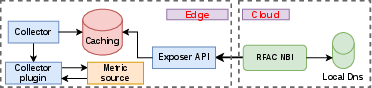
Figure 1: The lower-level architecture of the Resource Exposer, illustrating the plugin-based data collection and message broker integration.
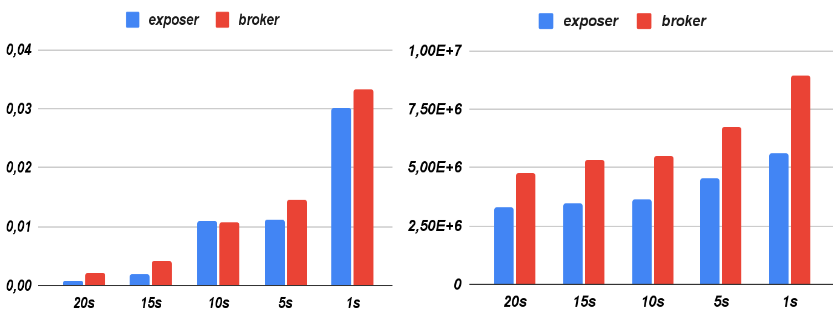
Figure 2: CPU consumption (left) and memory usage (right) of the Resource Exposer and the internal broker across varying data collection intervals.
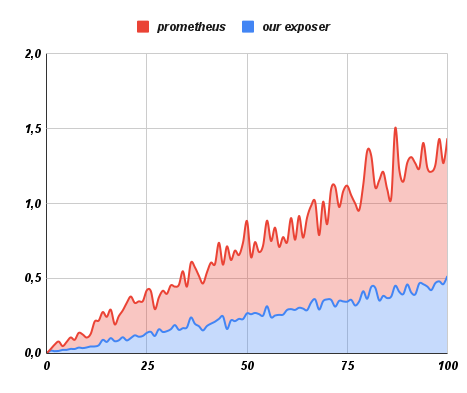
Figure 3: Comparison of API response times under concurrent request loads, demonstrating the efficiency of the RE's short-term caching versus Prometheus.
High-Resolution Foundational Baseline: TimeTrack Dataset
Training robust forecasting models for volatile edge environments demands datasets that capture both transient and cyclical resource usage patterns. Public datasets (e.g., Google, Alibaba, Materna) are limited by coarse-grain collection intervals (typically 5 minutes) and often virtualized, smoothing short-lived resource bursts and masking real-world heterogeneity.
TimeTrack provides fine-grain, high-resolution (45-second interval) telemetry from a physical OpenAirInterface CI/CD cluster, including multivariate metrics: compute (CPU, memory, disk I/O), fine-grained core utilization, and network characteristics (latency, jitter, packet loss/throughput errors). Analysis shows strong cross-metric correlations and pronounced periodicities at daily and weekly scales—features essential for informative ML training.
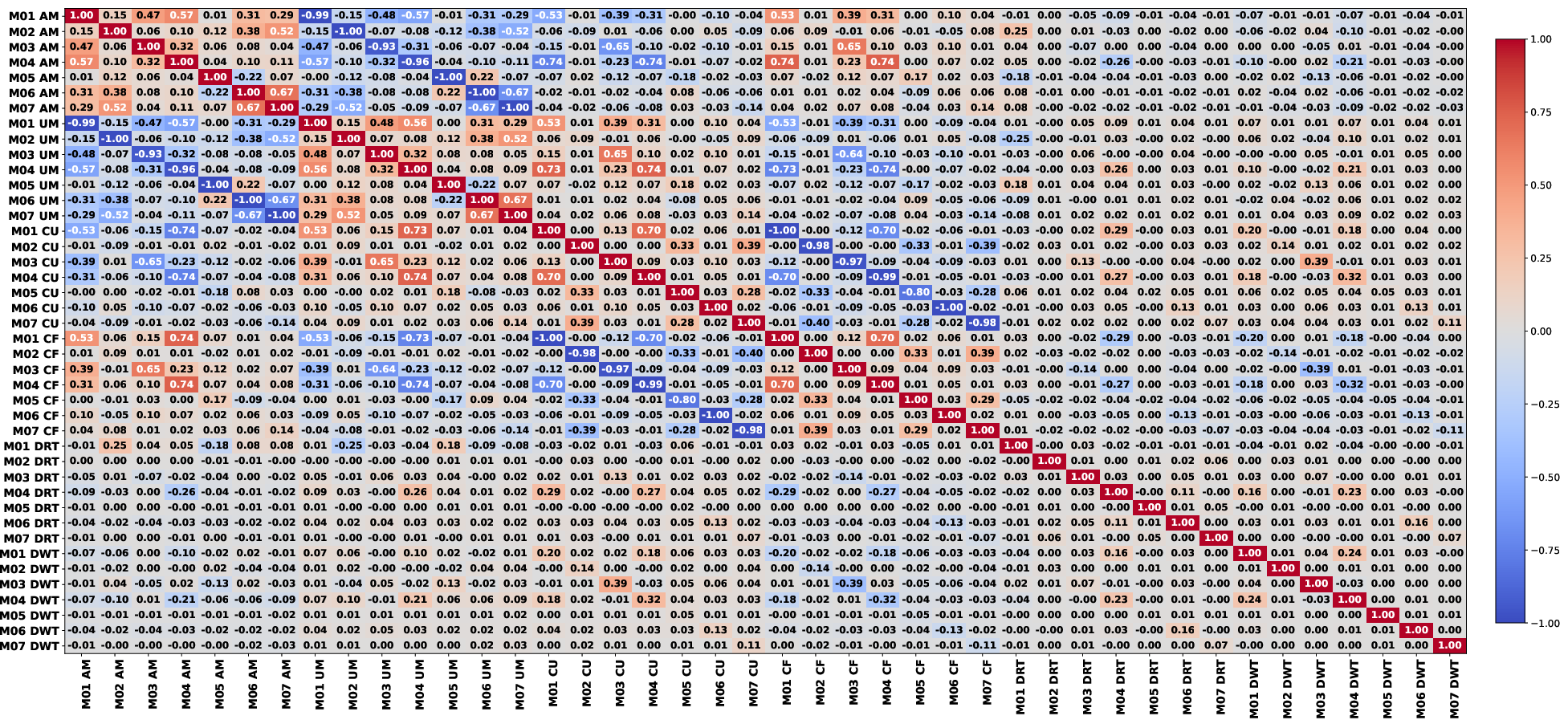
Figure 4: Correlation matrix demonstrating relationships between CPU usage (CU), memory usage (UM), disk throughput (DRT/DWT), and disk usage (UD).
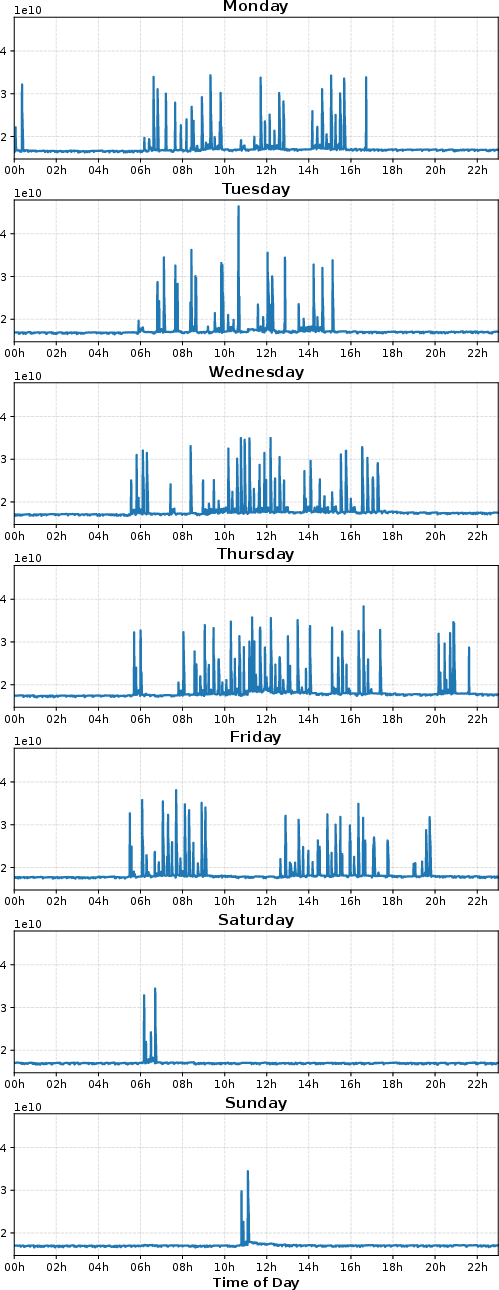
Figure 5: Memory utilization across the cluster over a week, showing distinct usage spikes during weekdays versus low, stable background utilization over the weekend.
Critically, TimeTrack’s high sampling frequency is justified via the Shannon–Nyquist theorem: only fast sampling recovers the high-frequency burstiness inherent to edge workloads, as demonstrated in the loss of sharp transitions by 5-minute-interval datasets.
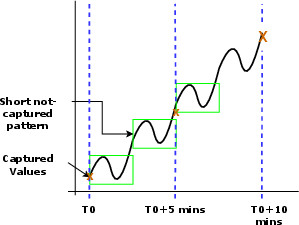
Figure 6: Example of critical short-term patterns that are smoothed over and lost due to coarse 5-minute data collection intervals.
End-to-End Automated Forecasting Architecture
The proposed solution pipeline automates discovery, telemetry collection, structural data mixing, and model synthesis. Upon node discovery, a small volume of local data is merged with high-resolution TimeTrack traces, forming a structurally rich input space for NAS. The neural model search engine explores a broad spectrum of architectures—LSTM, GRU, CNN, TCN, Transformer, MLP—jointly optimizing window size, depth, regularization, and learning schedule under resource constraints.
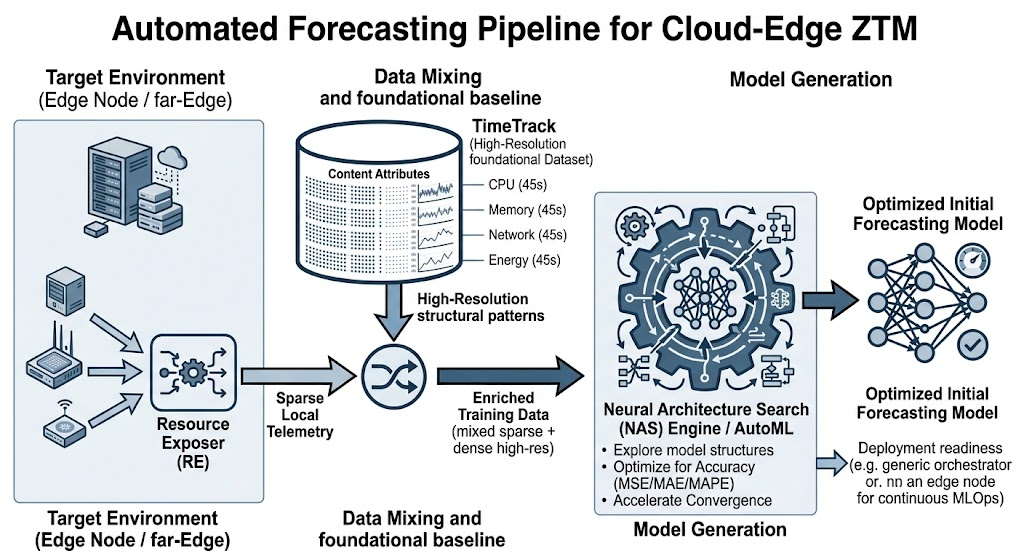
Figure 7: End-to-end architecture of the automated forecasting pipeline, illustrating the flow from System Discovery and the Resource Exposer, through Data Mixing with TimeTrack, to NAS Model Generation.
The orchestration and interaction flow is fully automated, with decentralized registration, continuous edge-side collection, and ephemeral buffer purging for minimal footprint.
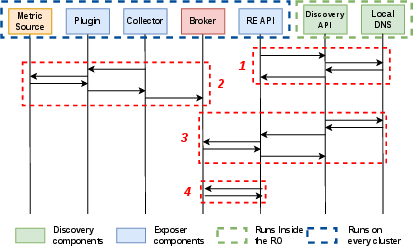
Figure 8: Interaction workflow between the different framework components, highlighting registration, continuous collection, exposure, and memory management.
Empirical Analysis: Data-Mixing, NAS, and Predictive Accuracy
Data-Mixing for Cold-Start Mitigation
Through ablation studies involving several public datasets, local-only sampling, and all possible mixtures, the pivotal result is that mixing a small number of local node samples (as low as 10) with TimeTrack structural data yields initial models that universally outperform both local-only and generic-only approaches, across all NAS routines (Grid, Random, Evolutionary, Bayesian, Annealing).
- Purely generic, coarse-trace models degrade severely (MAPE >33%) due to their inability to capture short-term variance.
- Purely local models are bottlenecked by data sparsity (requiring >500 samples to approach sub-22% MAPE).
- The local-plus-TimeTrack mixture achieves minimum MAPE of ~19% for single-step and maintains sub-21% MAPE for longer horizons (up to 5-steps), outperforming all competitors.
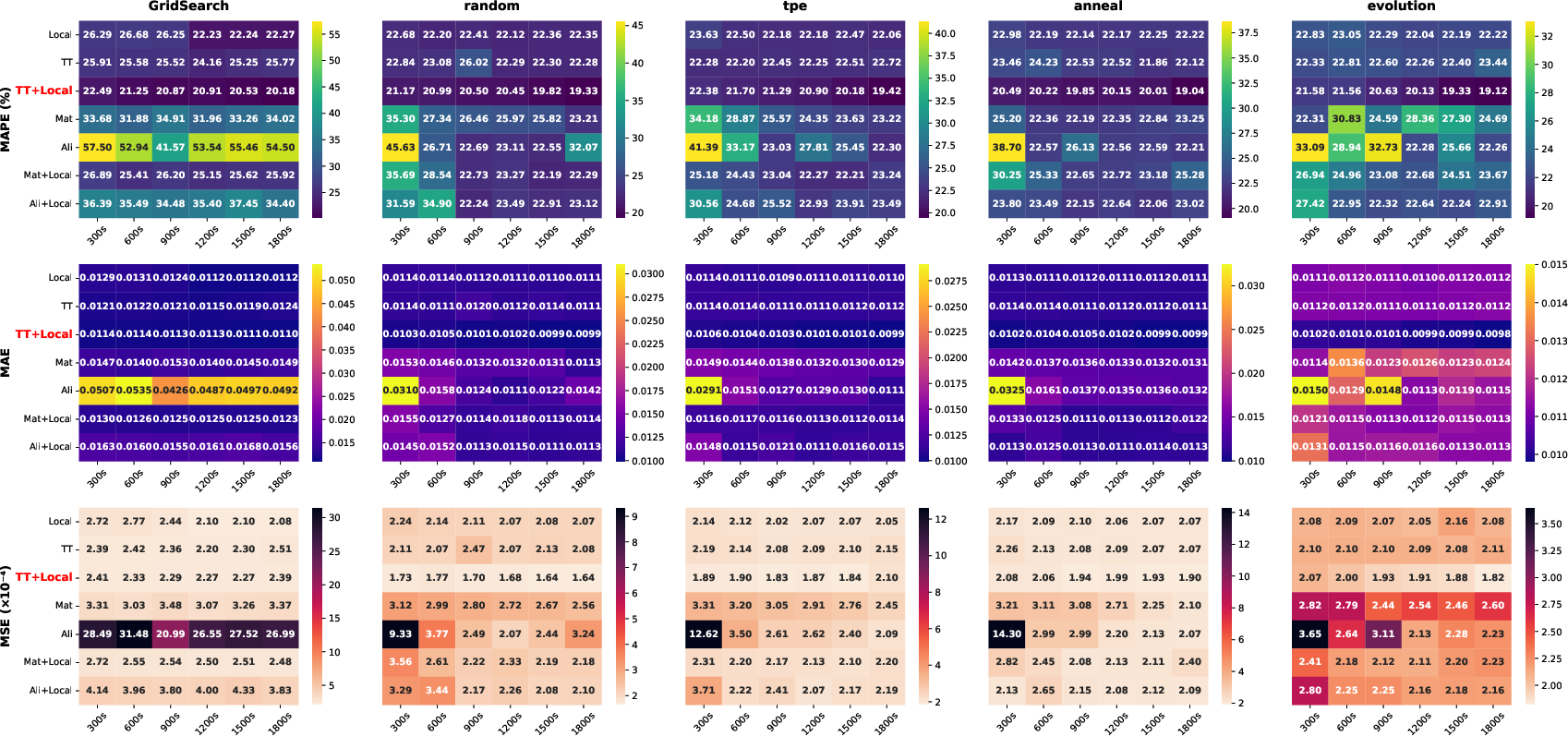
Figure 9: Performance heatmap of NAS CPU models comparing error metrics (MAPE, MAE, MSE) across varying search methods, durations, and data-mixing scenarios.
Sensitivity to Local Sample Volume and Forecast Horizon
Scaling the volume of local data in the mixture improves convergence, but even 10 samples—when mixed with high-resolution telemetry—deliver models as accurate as using 500 local-only samples. This demonstrates that the structural induction from generic, dense traces not only regularizes but also accelerates transfer learning in the cold-start regime.
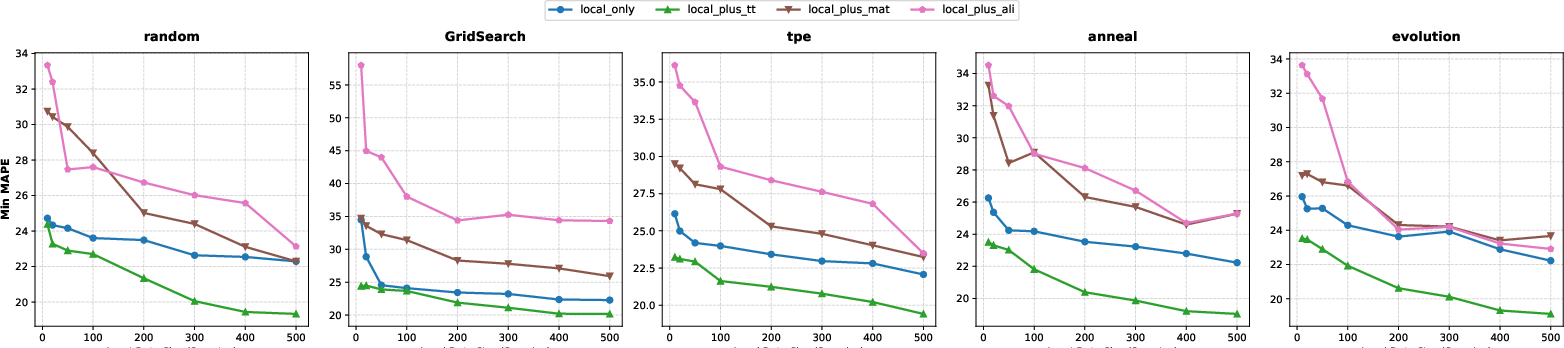
Figure 10: Impact of target data size (10 to 500 samples) on the minimum achieved MAPE across isolated and mixed data configurations using various NAS search strategies.
When forecast horizons increase (multi-step lookahead), MAPE grows monotonically for all models, but the mixed-data regime containing TimeTrack is uniquely robust, showing only marginal error growth, while all isolated or coarse-grained mixtures exhibit catastrophic performance decay (MAPE >24% by 5-step horizon).
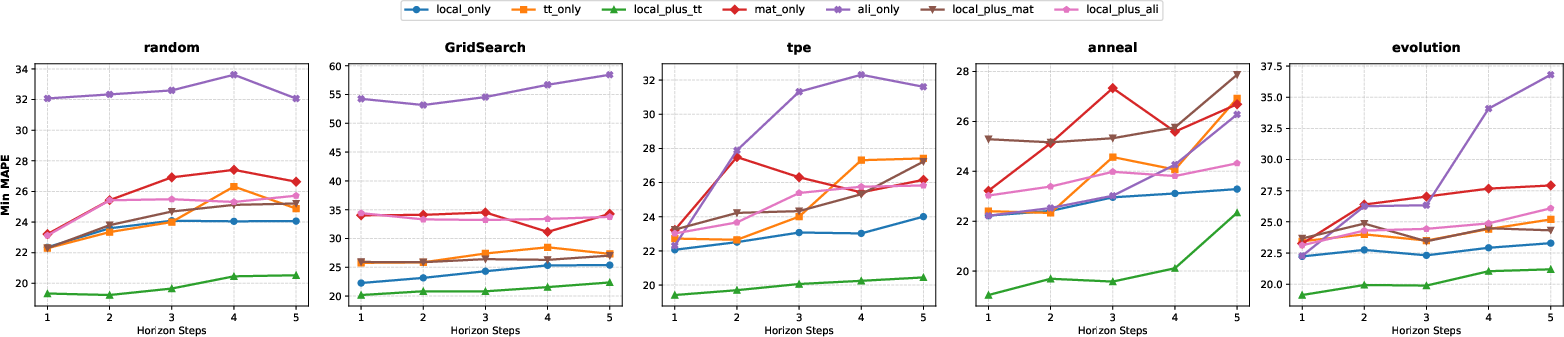
Figure 11: Minimum prediction error (MAPE) across different forecasting horizons (from 1 to 5 steps ahead) for all dataset combinations and search strategies.
Deployment and Resource Efficiency
Real-time execution with high-resolution input (45s intervals, 6.67x data vs 5-min interval) does increase model memory and compute load proportionally; however, absolute overhead is negligible on edge-class nodes. For demanding architectures (e.g., LSTM, Transformer), RAM peaked at ~55 MB and CPU at <15% for sequences of 38,400 steps—well within system constraints.
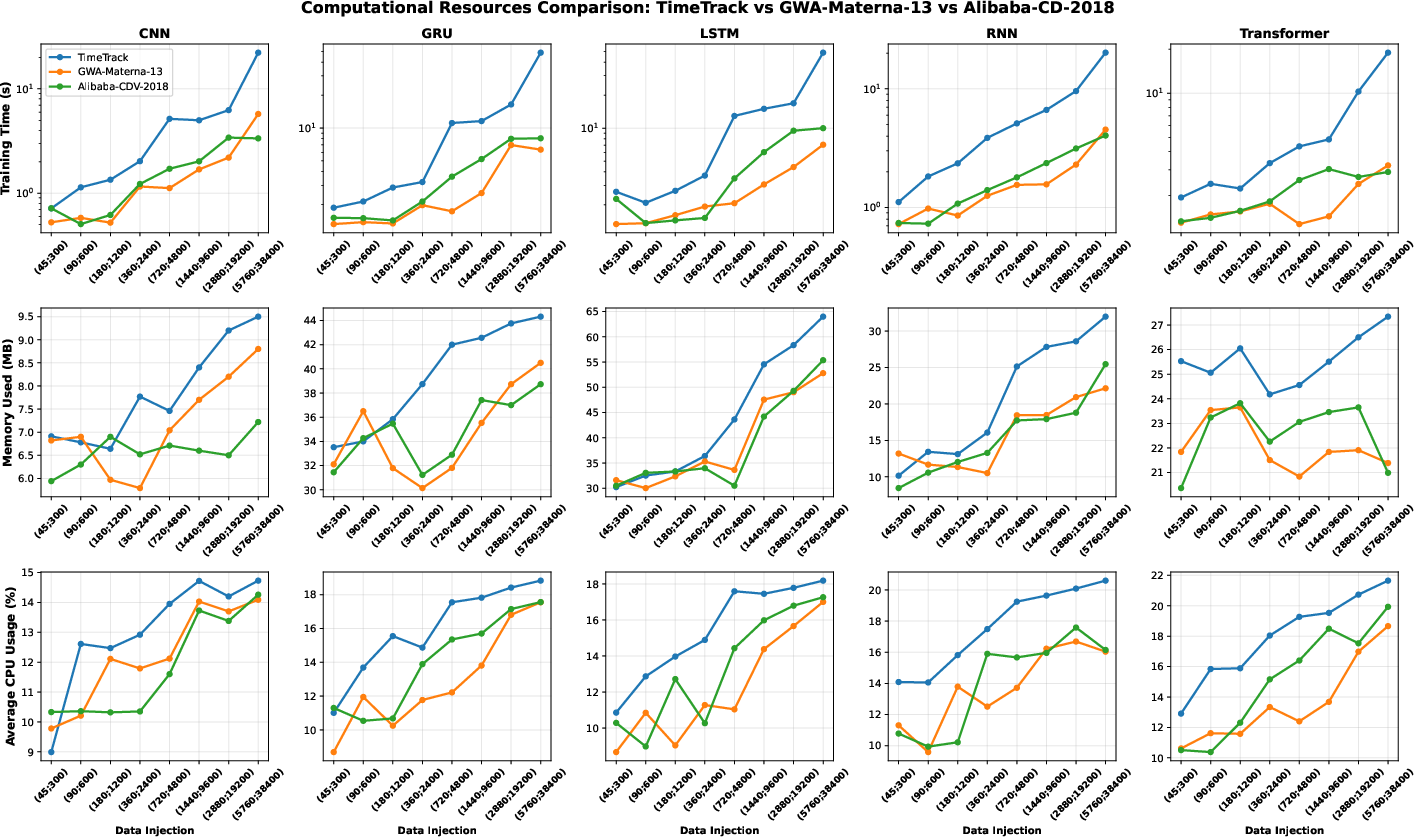
Figure 12: Training time, memory, and CPU usage for deployed models. The graphs scale proportionally to represent the 6.67× data density difference of the 45-second TimeTrack interval vs. 5-minute intervals.
Implications and Future Directions
This work substantiates that cold-start, high-accuracy, zero-touch predictive orchestration is attainable at the cloud edge via intelligent data-mixing and automation. The generalization across diverse hardware, metric targets, and workloads is facilitated by merging high-resolution foundational traces with instantaneously acquired local samples and automating neural architecture generation. The implications for MLOps are direct: it is plausible to deploy accurate, resource-optimized forecasting models on arbitrary, ephemeral nodes without manual feature engineering, laborious data collection, or offline tuning.
Critical claims substantiated by empirical analyses:
- Mixing small volumes of local data with high-resolution telemetry universally outperforms all alternative initialization methods under cold-start constraints.
- Coarse-interval public datasets cannot substitute for or be compensated by adding more local data; structural resolution is fundamental to predictive ceiling.
- Resource consumption for minute-scale training and deployment is negligible even on commodity edge hardware.
Theoretical Perspectives
This paradigm aligns with recent views on automated machine learning (AutoML, NAS) and adaptive MLOps as foundational to scalable intelligent systems, especially in non-stationary, massively heterogeneous environments. The regularizing effect observed for high-resolution data-mixing suggests altered loss landscapes, favoring transfer and rapid adaptation—relevant for meta-learning and few-shot learning research lines.
Limitations and Opportunities
Automation gaps remain—optimal dynamic sample boundary determination and feature selection are manual, constraining reactivity. Future work must embed self-adaptive SLA tracking and cross-correlation-based input set optimization for full autonomics.
Conclusion
The presented framework offers a comprehensive, empirically validated approach for zero-touch predictive orchestration in the CEC—integrating dynamic, high-fidelity data collection, synergy-driven dataset mixing, and automated neural model synthesis. This work positions data granularity and architectural automation as central to the scalable, reliable deployment of intelligent edge management systems, with applicability to the broader field of automated operations and adaptive distributed ML.