Path-Traced Inverse Rendering with Global Illumination in 3D Gaussian Fields
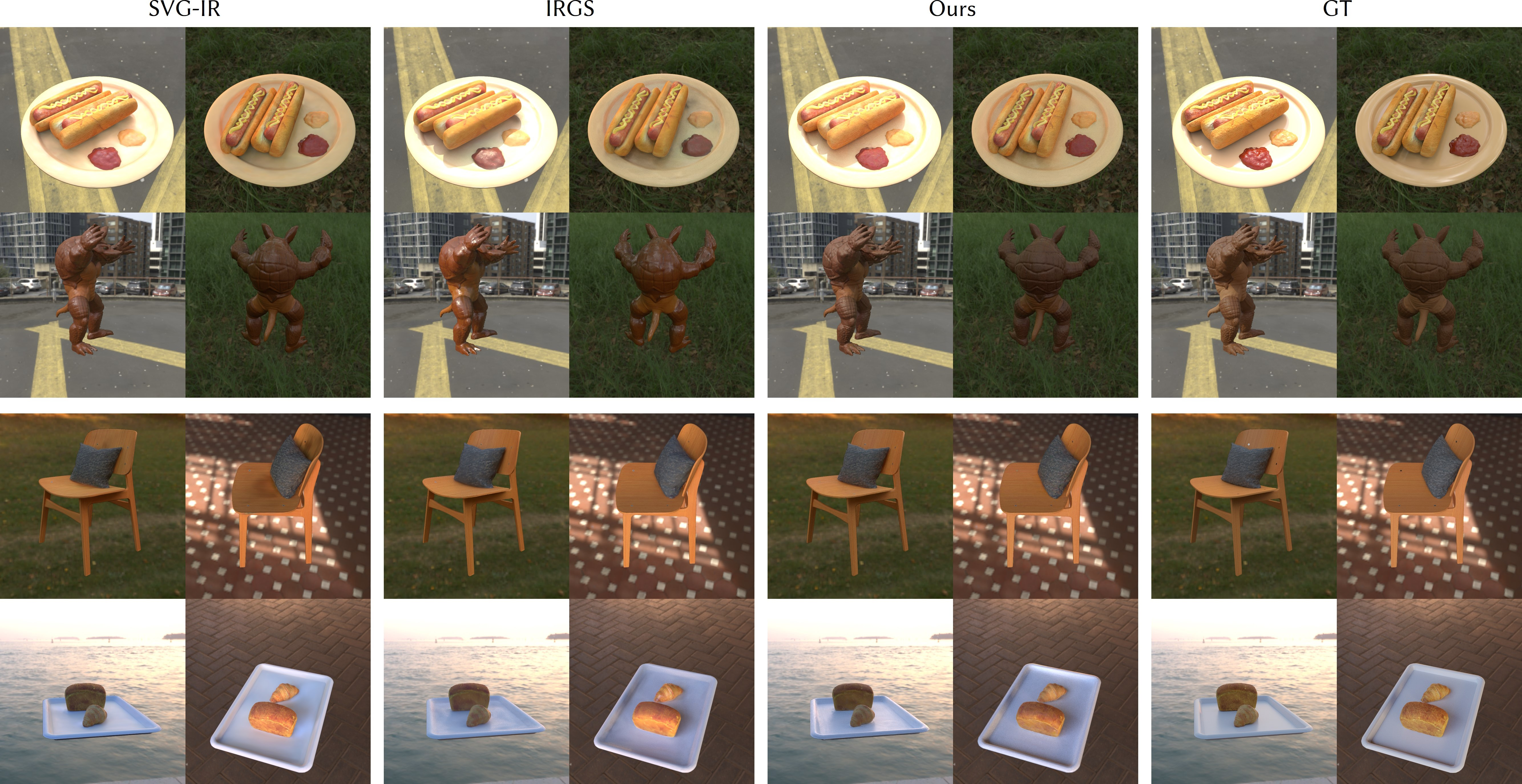
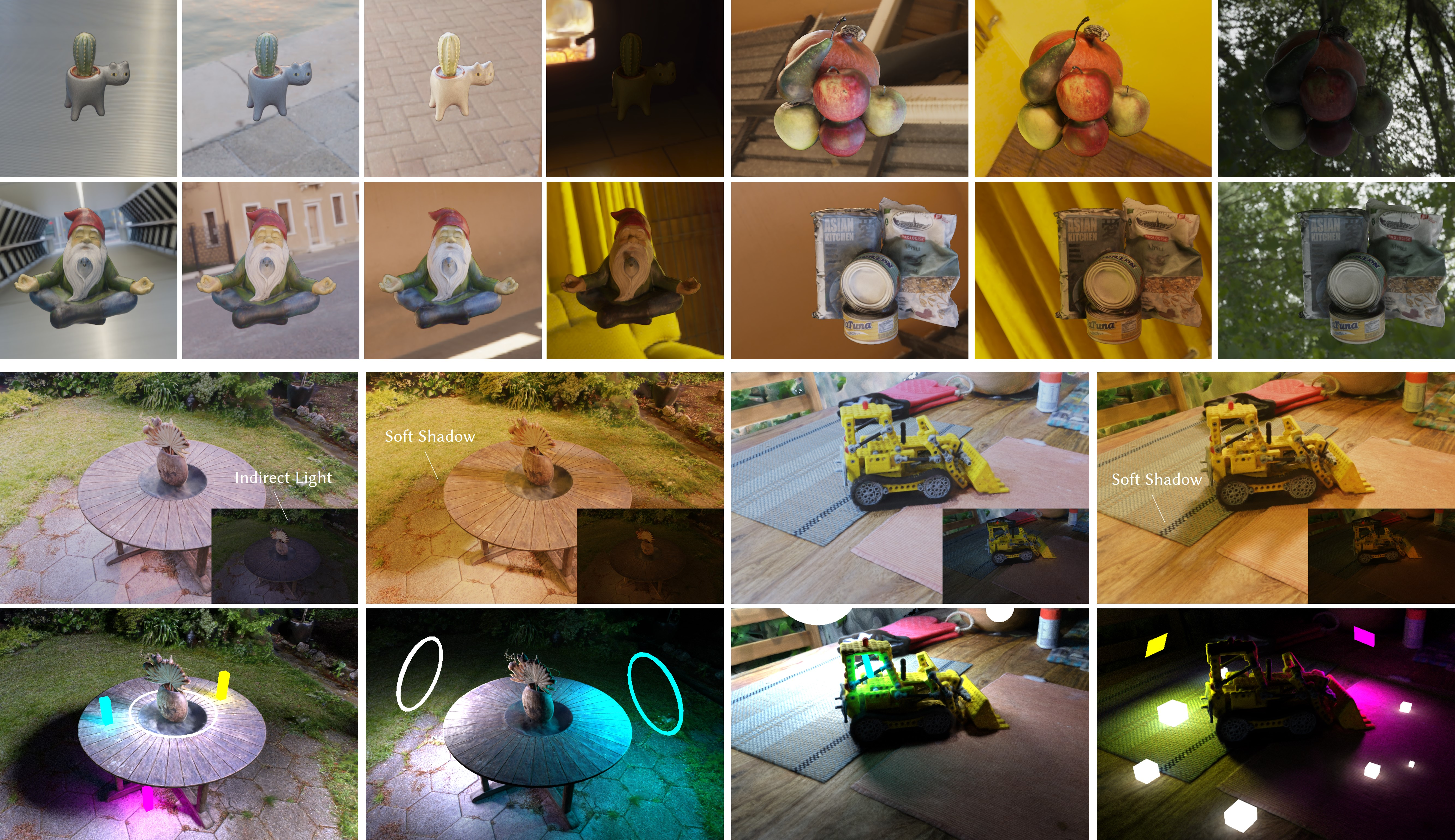
Abstract: Ray tracing enables 3D Gaussian fields to serve as a representation for physically based light transport. Faithful inverse rendering requires forward rendering and backward optimization to be defined within a consistent light-transport pipeline. Existing inverse rendering methods estimate G-buffers via splatting and optimize materials in screen space, tying the recovered properties to a rasterization-based pipeline. This pipeline mismatch, together with simplified rendering equations that neglect indirect illumination, often leads to inconsistent shading, visible artifacts, and inaccurate material-lighting estimation under path-traced rendering. Therefore, we propose a splatting-free path-traced inverse rendering framework for 3D Gaussian fields, where forward light transport and backward gradient propagation are defined within a unified ray-tracing pipeline. Our key idea is to define a path-space equivalent interaction model for overlapping Gaussian primitives, under which Monte-Carlo-based path tracing is unbiased for the induced light-transport integral, while pathwise gradients are replayed over the same ray-traced interactions rather than splatting-derived screen-space buffers. The framework optimizes materials and a compact Spherical-Gaussian environment under the full rendering equation with ray-traced visibility and multi-bounce light transport. Extensive experiments demonstrate competitive material inversion and improved path-traced rendering quality, producing more plausible shadows, reflections, and relighting results under global illumination.
Paper Prompts
Sign up for free to create and run prompts on this paper using GPT-5.
Top Community Prompts
Explain it Like I'm 14
What this paper is about
This paper explains a new way to “reverse engineer” how a 3D scene is lit and what its surfaces are made of, using photos of the scene. The authors focus on scenes built from lots of tiny, fuzzy 3D “blobs” called Gaussians (think of millions of soft, overlapping jellybeans that together form objects). They show how to recover realistic materials and lighting so that, when you render the scene with physically accurate light bounces (path tracing), you get images that look right—complete with believable shadows, reflections, and glow from nearby surfaces.
The main goal and questions
In simple terms, the paper asks:
- How can we figure out true material properties (like color, shininess, roughness) and the scene’s lighting from images, in a way that stays consistent with how light really moves and bounces in 3D?
- How do we avoid a common mismatch: optimizing materials using a 2D “splatting” approach, but rendering with 3D ray/path tracing later—since that often causes weird artifacts?
- Can we make 3D Gaussian scenes work smoothly with path tracing, including multiple bounces of light (global illumination), and still optimize everything efficiently?
How the method works (in everyday language)
First, a few key ideas in simple terms:
- 3D Gaussians: Imagine building objects from many small, semi-transparent, fuzzy blobs. When many blobs overlap, they form the surface of an object.
- Ray tracing: Pretend you shoot tiny straight “laser beams” (rays) through the scene to see what they hit.
- Path tracing: Each ray can bounce around like a pinball, bouncing off surfaces multiple times to simulate realistic lighting, including soft shadows and reflections.
- Inverse rendering: You have photos (or images) of a scene and a rough 3D model. You adjust the model’s materials and lighting so that renders match the photos.
The authors’ approach has a few key steps:
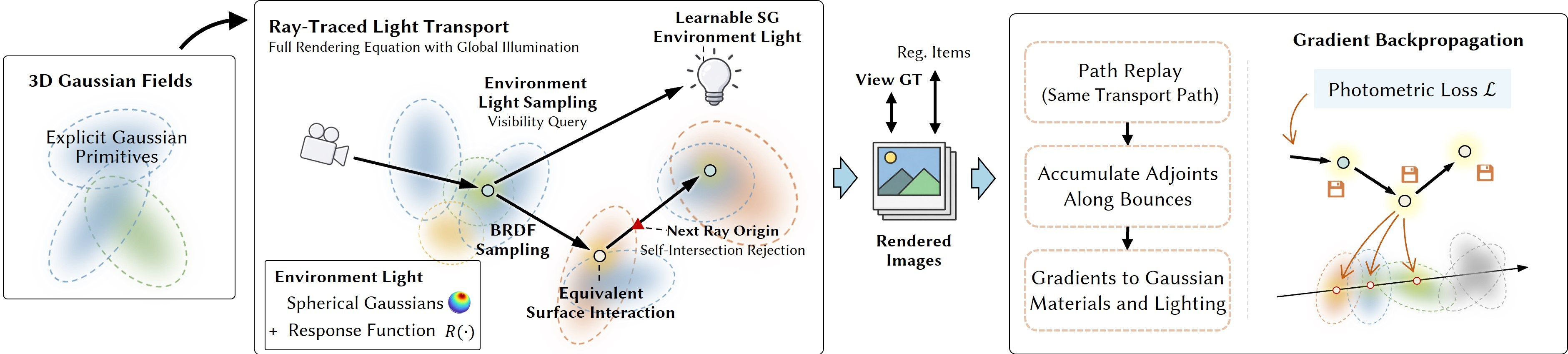
- A single, unified pipeline: They keep both the “forward” process (rendering images by tracing rays and light bounces) and the “backward” process (tweaking materials and lights to match the photos) inside the same ray/path-traced system. This avoids mixing a 2D splatting method for optimization with a 3D path-traced renderer that you use later.
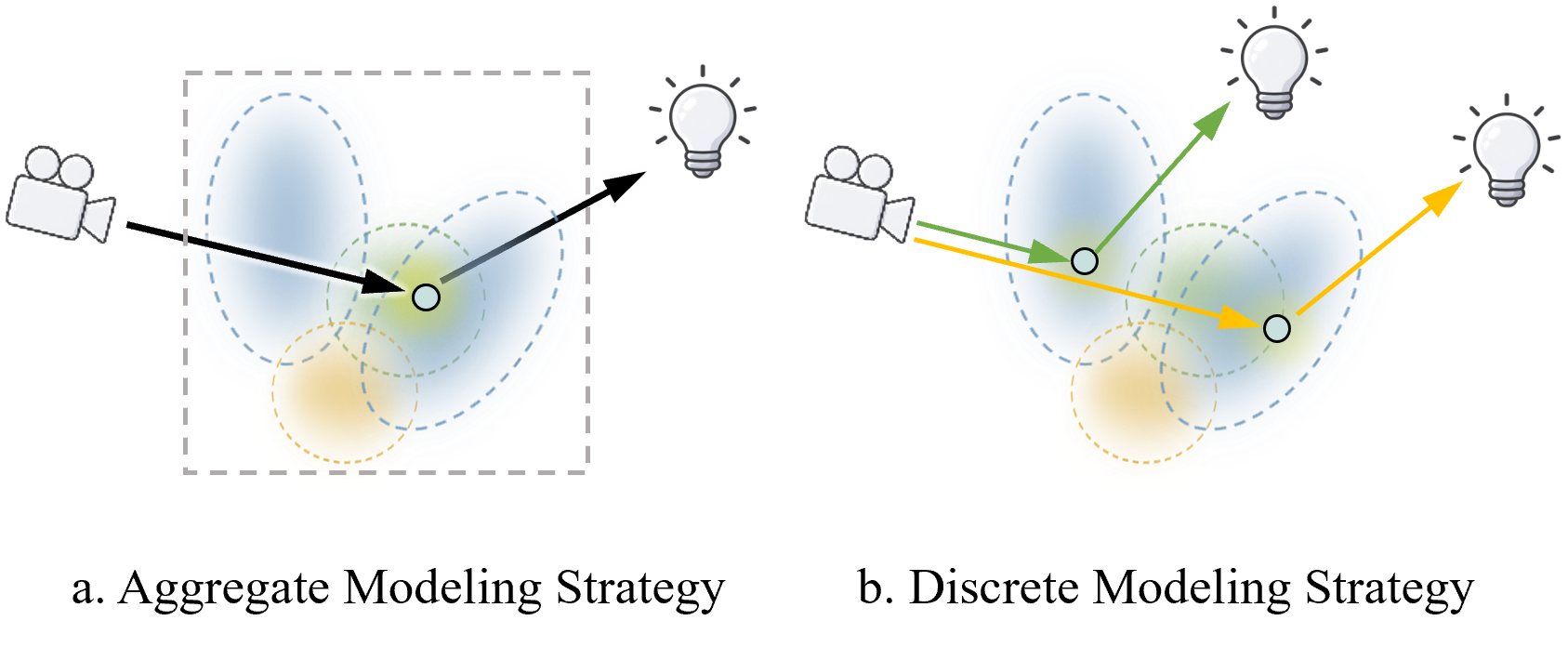
- Finding a stable surface “hit” on fuzzy blobs: When a ray goes through overlapping Gaussians, it doesn’t hit a single hard triangle like in a traditional mesh. Instead, the method combines the contributions of nearby blobs to form one “equivalent surface point” with a single normal (surface direction), color, and roughness. Think of it as averaging the nearby jellybeans to get a reliable surface point to shade.
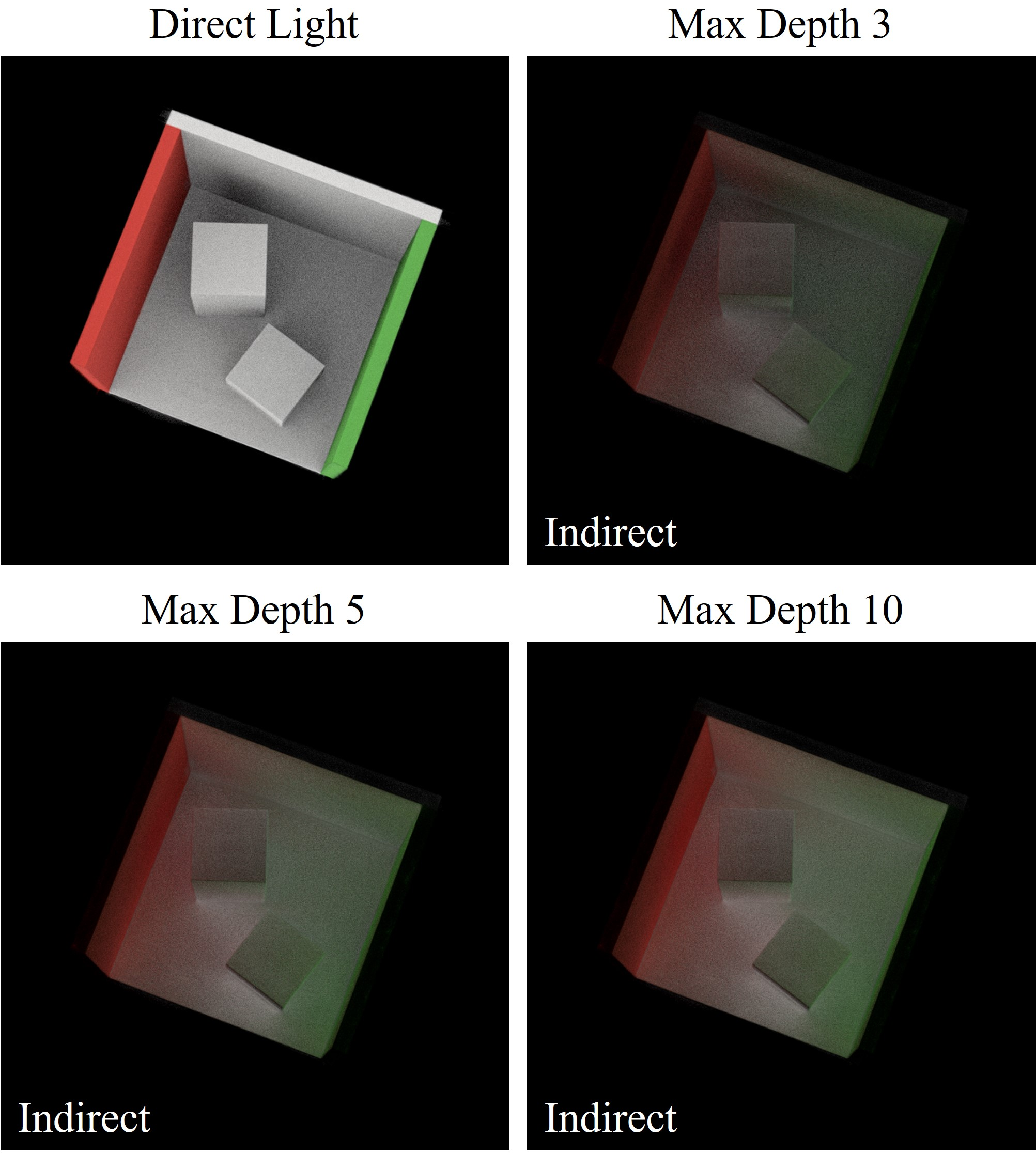
- Full global illumination: Instead of simplifying light to only direct light, the method simulates multi-bounce light paths. That means it can naturally create color bleeding (light bouncing off a red wall making nearby surfaces slightly reddish), realistic shadows, and reflections.
- Smarter sampling of light: To speed things up and reduce noise, they use techniques that mix two strategies for picking directions to sample incoming light—sometimes picking directions from lights, sometimes from the surface’s reflectance. This is called multiple importance sampling and helps get a clearer result with fewer rays.
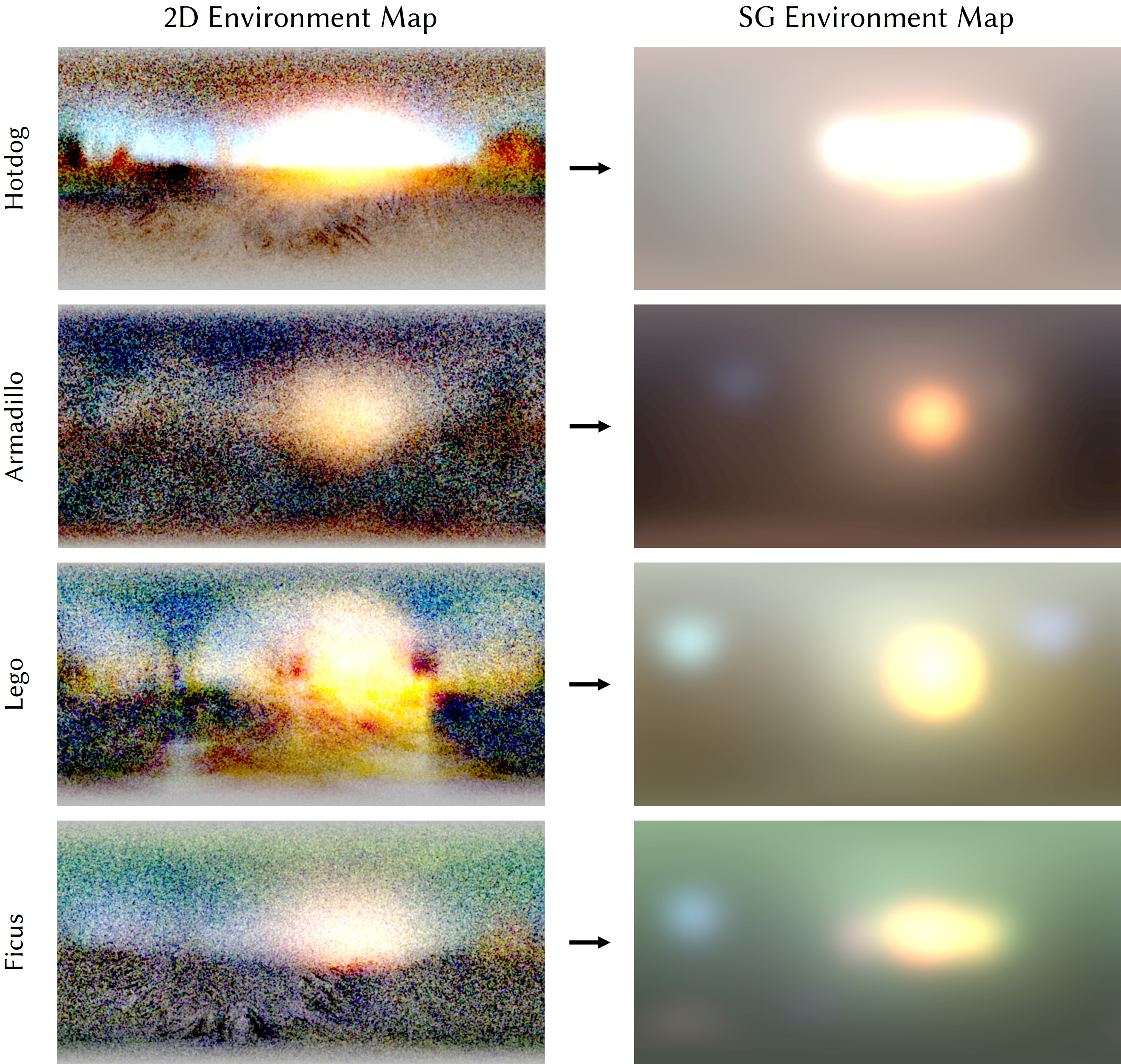
- Learning the environment lighting efficiently: Instead of a huge, high-res sky map, they represent the surrounding light with a small set of soft “light blobs” on a sphere (Spherical Gaussians). This is compact, smooth, and easy to optimize.
- Consistent backpropagation with “path replay”: To adjust materials and lights, you need gradients (how much to change each parameter). Rather than storing everything about every bounced ray (which would be huge), they “replay” the same rays and random choices during the backward pass. This technique (path replay backpropagation) keeps memory manageable and ensures the backward step matches the forward step exactly.
- Practical fixes for ray quirks: They include checks to ignore weak, unreliable hits from far-away blob tails, and they carefully nudge rays so they don’t immediately “hit” the same surface again by mistake. These small engineering tricks reduce flicker and artifacts.
What they found and why it matters
Their experiments show:
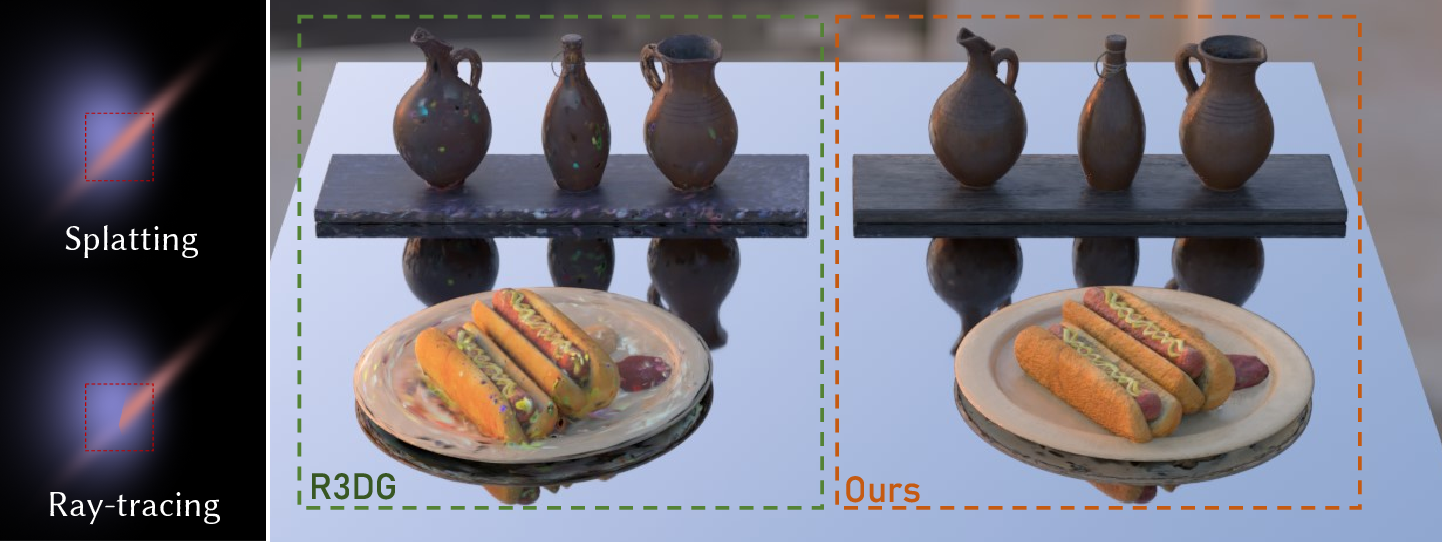
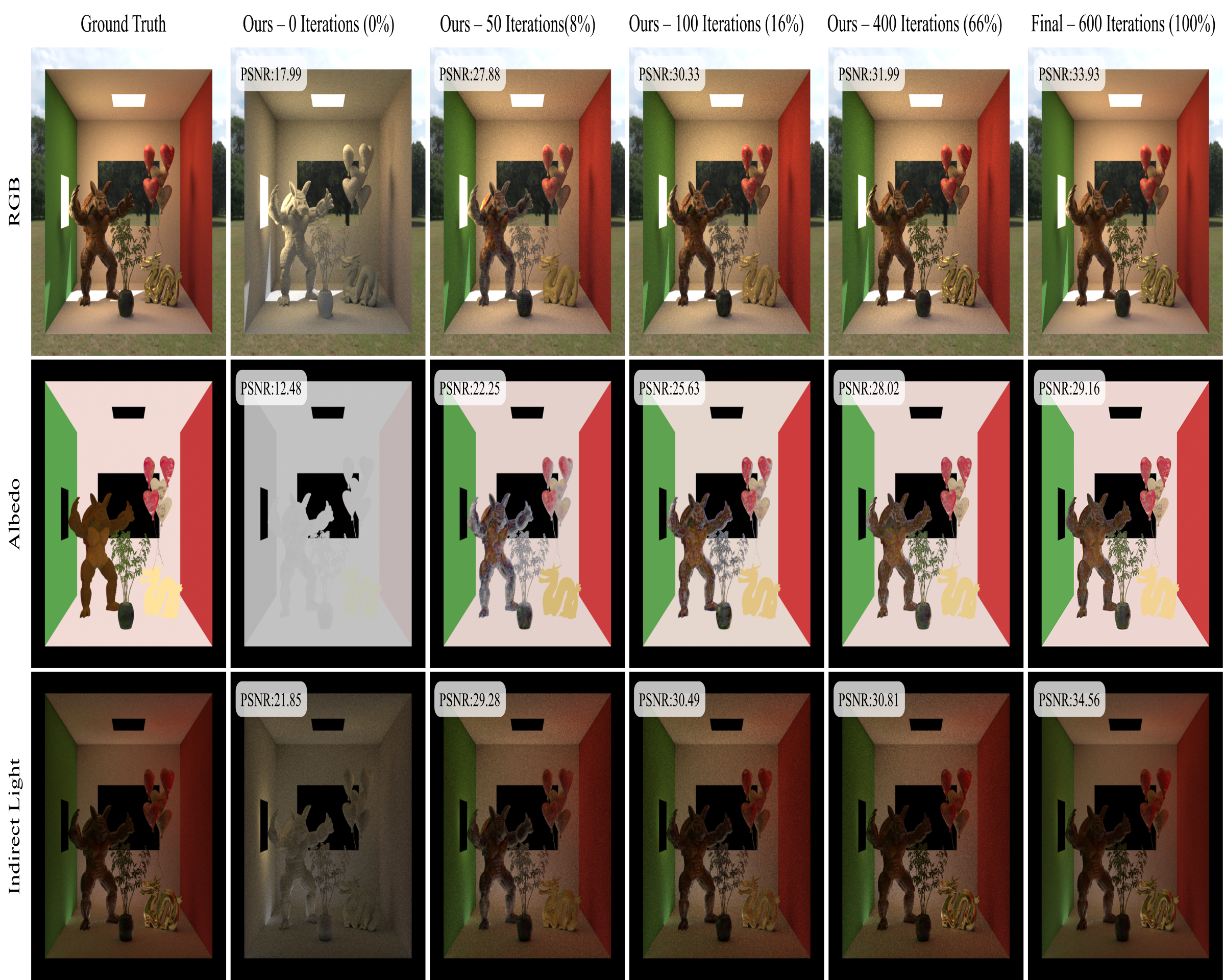
- More realistic results under path tracing: Because both optimization and rendering use the same path-traced physics, the recovered materials look consistent when used with global illumination. That means better shadows, reflections, and indirect light than methods that optimize in 2D screen space.
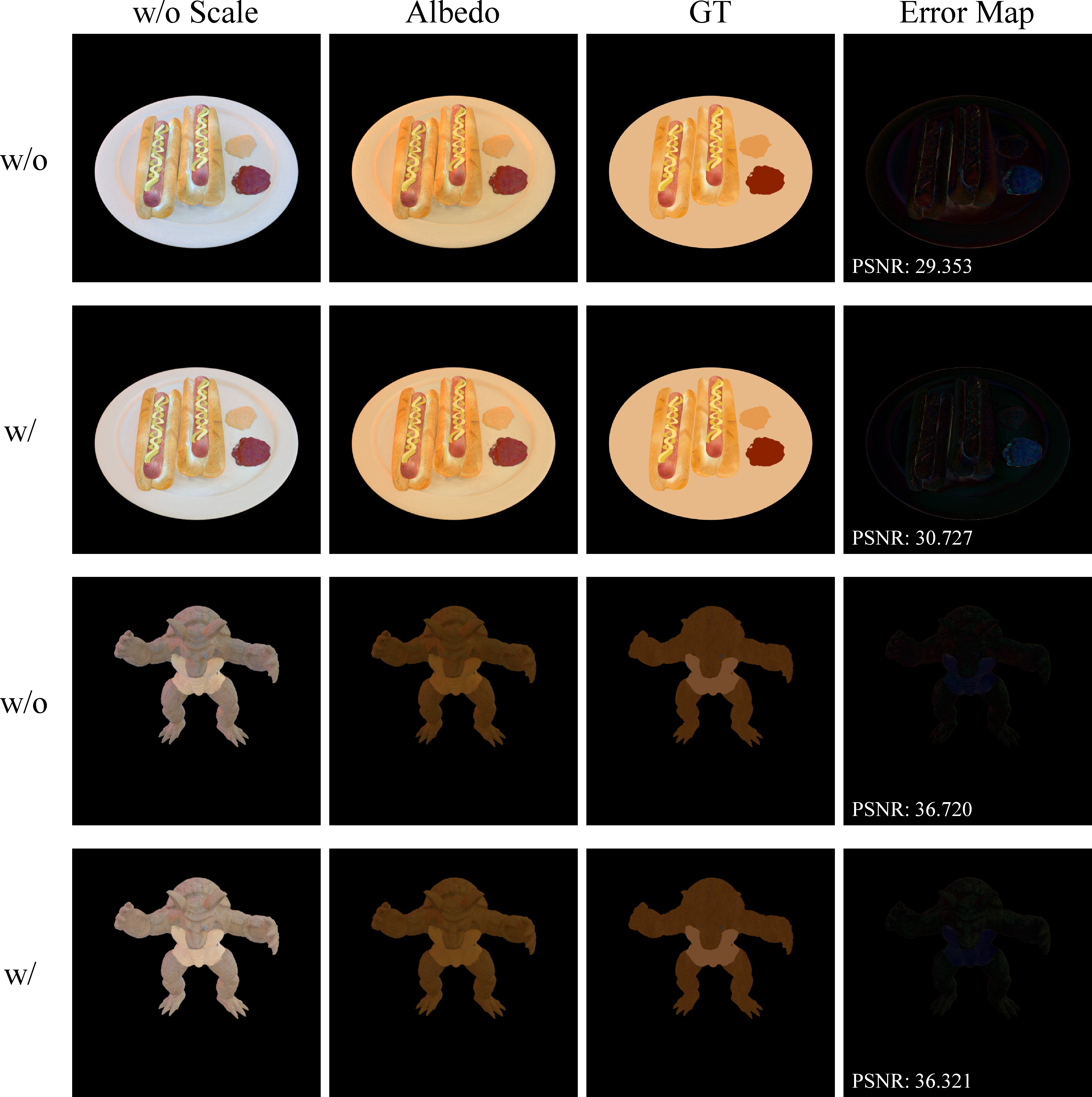
- Competitive numbers on benchmark datasets: On several standard tests, their method matches or beats previous approaches in reconstructing albedo (base color), roughness, and producing good relighting results.
- Better relighting: After recovering materials and lighting, you can place the object in new lighting and get convincing results, including soft shadows and light visibility (occlusion) that are hard to fake in 2D pipelines.
In short, the materials they learn aren’t just good for one renderer; they hold up under physically based, multi-bounce path tracing. That’s a big deal if you want to reuse these assets in high-quality rendering systems.
Why this is useful (impact and future possibilities)
- Reusable 3D assets: Artists, game developers, and AR/VR creators can capture real objects as 3D Gaussian scenes, recover physically meaningful materials, and then drop those assets into path-traced engines for realistic results.
- Consistent physics: Because the “learn” step and the “render” step match, you avoid the common problem of materials looking fine in training but wrong in final renders.
- Room to grow: While this is more computationally expensive than simpler methods, it opens the door to better speed and quality in the future through smarter sampling, caching, or hybrid neural approximations.
- Limitations to keep in mind: It’s not aiming for real-time yet, and sometimes the recovered material maps can be a bit less smooth than 2D methods. The authors suggest future work on faster sampling and better regularization to smooth results without breaking the physics.
Overall, this paper shows how to bring 3D Gaussian scenes into a fully physical, path-traced world for inverse rendering—closing the gap between how we optimize and how we ultimately render.
Knowledge Gaps
Knowledge gaps, limitations, and open questions
Below is a concise, actionable list of what remains missing, uncertain, or unexplored in the paper:
- Geometry optimization not addressed: the framework focuses on materials and environment lighting while relying on pseudo-normal supervision; it does not jointly optimize Gaussian positions/covariances/opacity (alpha) or normals within the path-traced loop. How to robustly co-optimize geometry, materials, and lighting in this ray-traced setting remains open.
- Aggregated “equivalent surface” model theory: the paper adopts contribution-weighted aggregation of overlapping Gaussians to define a single interaction state, but lacks a formal analysis of energy conservation, bias, or necessary conditions for unbiasedness versus a discrete micro-surface interpretation. Clear theoretical guarantees and comparisons across scene regimes are missing.
- Sensitivity to geometric validity threshold (τg): the gate that discards weak/unstable interactions is critical but its selection, sensitivity across scales/scenes, and impact on bias/variance are not systematically studied. Automatic or learned thresholding remains open.
- Self-intersection heuristic robustness: the backface-aware origin offset depends on local shading normals and a small ε. Its stability under noisy normals, changing scales, and different scene densities, as well as automatic parameterization, is not analyzed.
- Gradient estimator analysis (PRB): gradients are computed via path replay with fixed sampling decisions/PDFs. The paper does not quantify estimator variance, potential bias from holding PDFs/visibility decisions fixed, or compare PRB to likelihood-ratio/score-function or reparameterization alternatives for materials and lighting.
- Computational cost and scalability: training is significantly slower (e.g., ~16× first-bounce cost over 3DGRT), and the method uses 32 spp and limited bounces. Systematic studies on scalability to tens of millions of Gaussians, deeper bounces, and large scenes, and practical strategies (adaptive sampling, caching, denoising, neural radiance/radiosity caches) are left for future work.
- Limited material model: experiments fix the metallic parameter and consider only opaque, isotropic microfacet BRDFs. Support for and evaluation of metallic variability, anisotropy, clearcoat, sheen, emissive surfaces, thin transparency, transmission/refraction, and subsurface scattering are missing.
- Lighting model constraints: environment lighting is parameterized with a fixed, compact set of Spherical Gaussians (24 lobes). The capacity to represent sharp HDR features, multiple high-intensity sources, and the identifiability trade-offs versus material parameters are not explored. Joint estimation of near-field/area lights or emissive geometry is not supported.
- Camera/photometric calibration: exposure, white balance, tone mapping/CRF, and vignetting are not modeled or estimated. The consequences for material–lighting ambiguity and physical parameter recovery in real images remain unquantified.
- Reliance on diffusion-based priors: early-stage stabilization depends on a monocular diffusion prior. The sensitivity to prior inaccuracies, dataset/domain shifts, and minimal prior requirements to avoid degenerate solutions are not evaluated.
- Noise management during training: beyond MIS, no denoising or low-variance gradient techniques are employed. The impact of training noise on convergence speed, final quality, and stability, and the potential of learned/path-space denoisers or control variates are unaddressed.
- Hybrid mesh–Gaussian transport boundaries: although the method claims support for coexisting meshes and Gaussians, visibility/occlusion correctness and seam artifacts at representation boundaries are not systematically tested or analyzed.
- Densification in inverse stage: Gaussian densification is used only in pretraining. Whether gradient-guided densification (e.g., adding/splitting Gaussians during inverse rendering) improves material/lighting recovery is unexplored.
- Normal handling and shadow terminator issues: the method aggregates shading normals without discussing geometric normals, shading-normal corrections, or shadow terminator artifacts. Strategies to ensure physically plausible shading and energy conservation with smoothed/aggregated normals are not presented.
- Numerical choices for SG radiance mapping: the softplus–exp mapping and parameter γ are fixed (γ=0.3). The effect of this parameterization on dynamic range, gradient conditioning, and optimization stability is not analyzed.
- Participating media and thin/filamentary structures: the framework targets solid thin-shell surfaces. Extensions to participating media, translucent materials, hair/fur, and porous/thin geometry (where volumetric effects dominate) are not addressed.
- Path length and difficult light transport: evaluation limits bounces and does not consider caustics, specular-diffuse-specular paths, or highly glossy scenes where MIS may be insufficient. Specialized sampling (e.g., specular manifold sampling) and its integration with Gaussians are open directions.
- Identifiability under sparse views/coverage: robustness to limited viewpoints, pose/calibration errors, or real-world noise is not studied. The minimal data requirements for reliable joint material–lighting estimation in this ray-traced pipeline remain unclear.
- Acceleration structures and memory: details on BVH construction for millions of anisotropic Gaussians, rebuilding during optimization, and out-of-core/streaming strategies are not given. How to keep memory and build times manageable at larger scales is open.
- Evaluation breadth and metrics: beyond PSNR/SSIM-type metrics, the paper does not report material parameter accuracy (e.g., roughness error distributions), perceptual user studies for relighting realism, or physical plausibility checks (e.g., energy conservation) across varied materials/lighting.
- Weight redistribution assumptions: gradients to aggregated states are redistributed to contributing Gaussians via fixed weights w_i that depend on geometry/opacity, not material. Joint optimization that updates opacity/geometry would require differentiating through w_i; this is not explored.
- Exposure to high-frequency environment lighting: the fixed number and placement of SG lobes (Fibonacci-initialized) may underfit complex HDR skies or indoor point sources. Adaptive SG counts, lobe splitting/merging, or hierarchical lighting representations are uninvestigated.
- Real-time or interactive inference: while post-optimization rendering is shown, the pipeline is not designed for interactive inverse rendering or fast updates. Bridging to real-time through cached transport, hybrid raster–ray methods, or learned surrogates remains open.
Practical Applications
Immediate Applications
Below are actionable use cases that can be deployed now, built directly on the paper’s unified, splatting-free, path-traced inverse rendering for 3D Gaussian fields. Each item includes suggested sectors and likely tools/workflows, plus assumptions/dependencies that affect feasibility.
- Physically consistent relighting of scanned objects for film, VFX, and advertising (Media/Entertainment, Software)
- What: Recover PBR materials and a compact environment light from multi-view captures, then render under new lighting with physically accurate shadows, reflections, and multi-bounce GI.
- Tools/workflows: OptiX-based path-traced inversion -> export PBR parameters and environment SGs -> render in a path-traced DCC or engine for shot lighting and look-dev.
- Assumptions/dependencies: Requires calibrated multi-view images and a reasonable 3DGS reconstruction; GPU with hardware ray tracing; limited to solid surfaces (no participating media); current implementation is offline (seconds per frame), not real-time.
- Product visualization with true-to-life finishes (Retail/E-commerce, Industrial Design, Software)
- What: Capture consumer products (e.g., footwear, electronics), invert to PBR materials, and relight under studio or environmental setups to generate consistent catalog and marketing imagery.
- Tools/workflows: Capture rig -> 3DGS pre-processing -> inverse rendering with PRB -> batch relighting across standardized environment SG presets.
- Assumptions/dependencies: High-quality geometry improves material accuracy; metallic is fixed in benchmarks (extend as needed); compute cost may limit large-scale batch processing without scheduling/queuing.
- Asset clean-up and reuse for path-traced pipelines (Game/Film asset pipelines, Software)
- What: Convert existing splatting-optimized Gaussian assets into path-trace-ready materials; remove pipeline mismatch that causes artifacts when assets are moved from rasterization to ray tracing.
- Tools/workflows: Ingest existing 3DGS scenes -> run path-traced inverse rendering -> validate with multi-bounce rendering -> export to PBR libraries.
- Assumptions/dependencies: Relies on unified ray-space optimization; scene sizes (hundreds of thousands to millions of Gaussians) determine memory/runtime.
- Photorealistic digital twins for offline evaluation (Manufacturing QA, Digital Twin, Software)
- What: Use recovered materials and GI-true relighting to evaluate surface finishes, roughness, and appearance under variable lighting during design reviews.
- Tools/workflows: Scan prototype -> inverse render to PBR -> precompute views for stakeholder review -> compare finishes under different SG environments.
- Assumptions/dependencies: Offline workflow; accuracy depends on capture quality and geometric fidelity; near-field lights supported but require visibility tests (already integrated).
- Scene relighting for real-estate and cultural heritage documentation (AEC/Real Estate, Cultural Heritage, Education)
- What: Generate photorealistic re-illumination of interiors/artifacts with plausible soft shadows and indirect light to support archival, presentation, and education.
- Tools/workflows: Multi-view capture -> 3DGS reconstruction -> inverse rendering -> path-traced relighting (time-of-day presets via SGs) -> image/video outputs.
- Assumptions/dependencies: Indoor scenes benefit from environment optimization; rough geometry may cause non-smooth maps that need regularization; offline render times.
- AR/VR asset preparation with physically grounded materials (XR Content Authoring, Software)
- What: Author assets with materials that remain consistent when ported to ray-traced XR renderers (for offline previews or high-end XR devices).
- Tools/workflows: Gaussian capture -> path-traced material inversion -> export PBR -> integrate into XR content pipeline; use GI-authored turntables for validation.
- Assumptions/dependencies: Real-time XR not feasible yet; intended for content prep and offline previews; requires careful geometry filtering.
- Environment illumination estimation from multi-view imagery (Computer Vision, Graphics Research)
- What: Fit compact spherical Gaussian environment lights jointly with materials to produce HDR lighting estimates usable for relighting and insertion tasks.
- Tools/workflows: Run joint optimization of materials + SG lights -> export SG parameters -> use for lighting in other rendering systems or for ML datasets.
- Assumptions/dependencies: SGs (e.g., 24 lobes) capture mid- to high-dynamic range but may limit very high-frequency features; requires multi-bounce GI evaluation.
- Research benchmarking and dataset generation for inverse rendering and GI (Academia/Research)
- What: Generate path-trace-consistent datasets, evaluate methods under multi-bounce transport, and study the effect of pipeline consistency on material estimates.
- Tools/workflows: OptiX-based reference -> parameter sweeps for MIS, PRB depth -> release assets with PBR ground truth and relighting renders.
- Assumptions/dependencies: Compute-intensive; requires expertise in ray tracing and 3DGS; method focuses on solid objects.
- Mixed representation scenes (Gaussian + mesh) for production lighting studies (Media/Entertainment, Software)
- What: Combine Gaussian-captured assets with traditional meshes and lights, ensuring consistent GI and visibility through a unified path-traced pipeline.
- Tools/workflows: Assemble hybrid scenes -> path-traced inverse rendering per Gaussian asset -> joint relighting.
- Assumptions/dependencies: Pipeline integration needed for asset import/export; careful handling of per-primitive visibility and BVH acceleration.
- Educational modules for physically based rendering and inverse rendering (Education)
- What: Demonstrate path tracing, MIS, PRB, and inverse rendering concepts on Gaussian primitives with illustrative examples of shadows, indirect light, and material edits.
- Tools/workflows: Course kits using OptiX reference -> sample datasets -> step-by-step labs (forward PT, backward PRB).
- Assumptions/dependencies: Requires GPUs with RT cores; simplified datasets recommended for classroom runtimes.
- Commercial relighting services for small studios and sellers (SMB Services)
- What: Offer “scan-to-relight” services that return path-traced images and PBR materials for marketplaces and catalog production.
- Tools/workflows: Web intake -> capture guidance -> automated backend inversion + relighting -> downloadable renders + material packs.
- Assumptions/dependencies: Compute budgets per job; SLA depends on scene size and hardware; quality control for geometry and capture.
- Appearance editing with GI feedback for look development (Look-dev, Software)
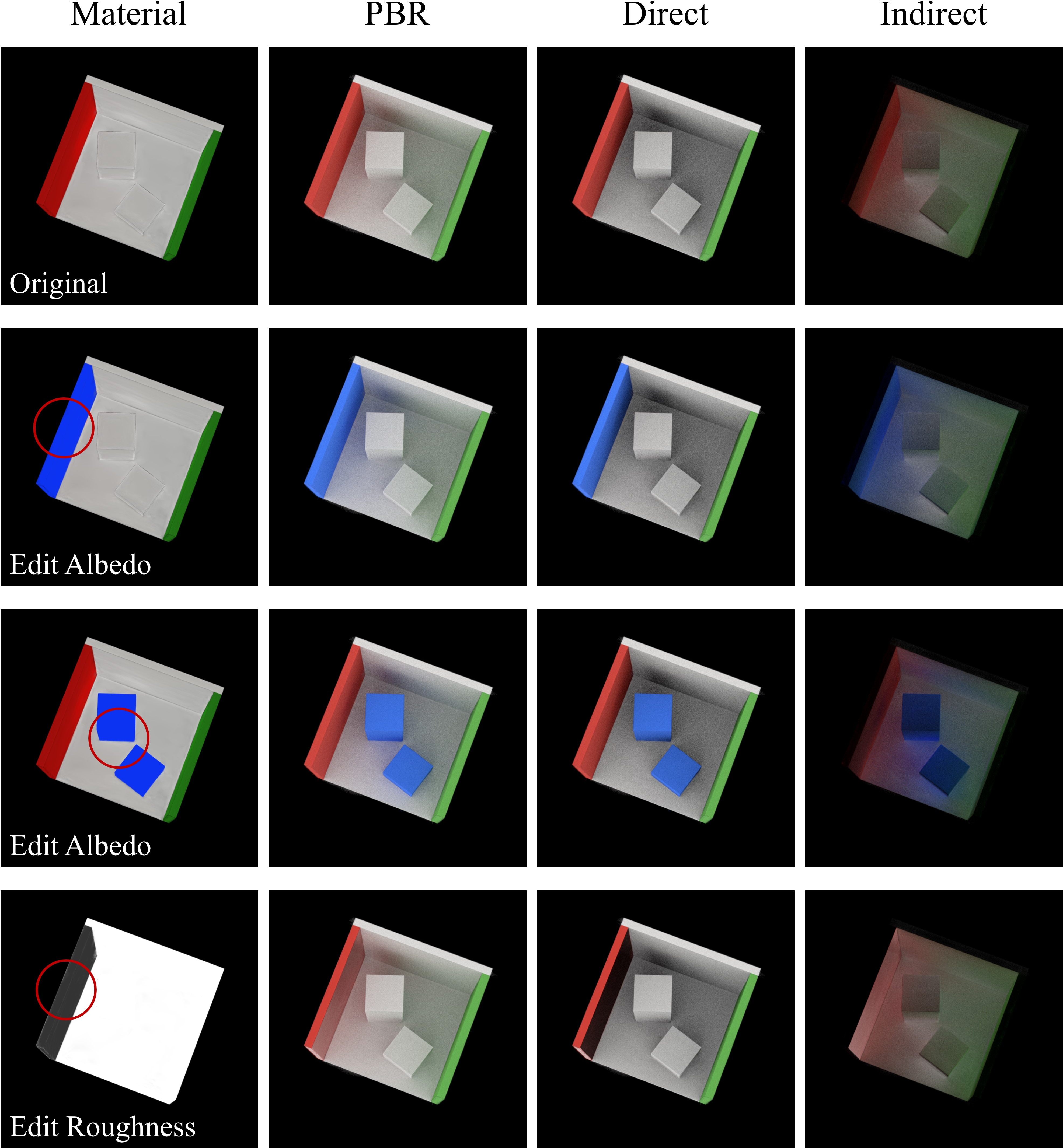
- What: Edit materials (albedo, roughness) and preview how global illumination changes propagate realistically across scenes.
- Tools/workflows: Inversion -> path-traced edits with multi-bounce -> compare variants under common SG lighting.
- Assumptions/dependencies: Interactive speeds not feasible; batch previews or low-spp progressive feedback may be used.
Long-Term Applications
The following use cases require further research, scaling, or engineering, such as real-time constraints, larger scenes, dynamic content, or new hardware.
- Interactive or real-time inverse rendering and relighting for AR/VR (XR, Mobile, Software)
- What: On-device or cloud-assisted, low-latency material capture and relighting with consistent GI for live AR object insertion.
- Tools/workflows: Transport caching, neural approximations, adaptive sampling, and specialized hardware accelerators; streaming pipelines.
- Assumptions/dependencies: Significant efficiency improvements over current PRB + multi-bounce PT; robust against capture noise; broader device support.
- City-scale or outdoor scene inverse rendering with dynamic illumination (AEC, Mapping, Digital Twins)
- What: Recover materials and lighting for large scenes to support daylighting studies, urban planning visualization, and photorealistic twins.
- Tools/workflows: Tiled/streamed Gaussian BVHs; hierarchical lighting models beyond SGs (e.g., sun-sky models + local emitters); distributed rendering.
- Assumptions/dependencies: Scaling to millions+ Gaussians; memory and scheduling across clusters; hybrid representations (meshes, Gaussians, volumes).
- Neural transport caching for fast multi-bounce evaluation (Software, Research)
- What: Amortize GI estimation with neural caches or radiosity-like approximations while maintaining unbiasedness or controlled bias.
- Tools/workflows: Train neural GI caches conditioned on equivalent interaction states; integrate with MIS and PRB.
- Assumptions/dependencies: New theory/engineering to ensure stability and gradient correctness; handling view-dependent effects and high-frequency lighting.
- Photorealistic simulation for robotics/perception training (Robotics, AI)
- What: Generate training data with accurate GI and material realism, improving robustness for perception tasks.
- Tools/workflows: Scanned environments -> inverse render materials -> render photorealistic sequences under varied lighting for synthetic training sets.
- Assumptions/dependencies: Throughput and scale challenges; integration with simulation stacks; domain-gap quantification.
- In-the-loop inspection and metrology of surface finishes (Manufacturing, Quality Control)
- What: Estimate material parameters from factory-line imaging and evaluate finishes under standardized lighting to catch defects.
- Tools/workflows: Conveyor capture rigs -> fast inversion with approximate GI -> thresholds for acceptance/reject.
- Assumptions/dependencies: Requires orders-of-magnitude speedups; robust to texture/geometry variation and noise.
- Live digital humans and complex materials (hair, skin) with GI consistency (Media/Entertainment, Telepresence)
- What: Extend to challenging materials (subsurface scattering, hair/fur, fabrics) with consistent path-space optimization.
- Tools/workflows: Hybrid models (Gaussian + volumetric/mesh for skin/hair); data-driven BRDFs; specialized samplers.
- Assumptions/dependencies: Current method assumes solid surfaces; requires richer BSDFs and participating media support; higher compute.
- Standardization and exchange of Gaussian PBR assets in production (Standards, Software)
- What: Define interoperable formats (e.g., USD layers or similar) for Gaussian primitives with PBR parameters and lighting metadata.
- Tools/workflows: Converters to/from meshes/NeRFs; DCC plugins for import/export; asset validation suites.
- Assumptions/dependencies: Industry alignment; ecosystem support in engines and content tools.
- Real-time look-dev with progressive GI-consistent previews (Look-dev, Software)
- What: Interactive editing with coarse-to-fine previews that preserve GI consistency, improving artist iteration loops.
- Tools/workflows: Progressive PT with PRB replay budgets; adaptive spp and bounce limits; viewport-integrated PRB.
- Assumptions/dependencies: Engine integration; perceptual metrics to manage noise; caching to stabilize edits.
- Joint scene-level lighting (multiple emitters) and material recovery (AEC, Cinematography, Research)
- What: Recover near-field lights, emissive surfaces, and complex lighting rigs alongside materials, beyond compact SG environments.
- Tools/workflows: Mixed parametric lights + environment maps; sparse light probe constraints; multi-view supervision.
- Assumptions/dependencies: Ill-posedness increases; stronger priors and regularizers needed; more sophisticated MIS and visibility strategies.
- Consumer-grade scan-to-PBR pipelines (Prosumer, Creator Economy)
- What: Mobile capture, cloud inversion, and PBR asset delivery with templated relighting packs for creators and small businesses.
- Tools/workflows: App-based capture guidance -> cloud PT inversion -> automatic QC -> downloadable assets and renders.
- Assumptions/dependencies: Robustness to capture variability; cost-effective cloud compute; UX for non-experts.
Cross-Cutting Assumptions and Dependencies
- Data requirements: Calibrated multi-view imagery and an initial 3D Gaussian reconstruction with reasonable geometry; quality strongly impacts results.
- Compute: Current approach is offline and GPU-intensive (OptiX, ray tracing cores); 32 spp and multi-bounce transport used in reported results.
- Material model scope: Focus on albedo and roughness; metallic fixed in experiments; complex materials (e.g., SSS, anisotropy) need extensions.
- Scene scope: Assumes solid surfaces; not designed for participating media (smoke, fog); hair/fur better handled by specialized neural methods today.
- Lighting representation: Compact spherical Gaussians (e.g., 24 lobes) balance stability with expressiveness; very high-frequency lighting may require more lobes or different models.
- Regularization: Diffusion-based priors and edge-aware TV help stabilize early optimization; non-smooth gradients may appear without screen-space smoothing.
Glossary
- 2D Gaussian Splatting (2DGS): A representation that uses anisotropic 2D Gaussian primitives for view synthesis and geometry refinement. "2D Gaussian Splatting (2DGS)~\cite{Huang2DGS2024} improves geometry with anisotropic 2D primitives"
- 3D Gaussian Ray Tracing (3DGRT): A ray-tracing approach that treats 3D Gaussian primitives as explicit geometry using proxy meshes for intersection. "3D Gaussian Ray Tracing (3DGRT)~\cite{3dgrt2024} approximates Gaussians with icosahedral mesh proxies"
- 3D Gaussian Splatting (3DGS): A rasterization-based method representing scenes with 3D Gaussians composited in screen space for fast novel view synthesis. "3D Gaussian Splatting (3DGS) achieved remarkable success in novel view synthesis"
- Albedo: The diffuse reflectance color of a surface, independent of lighting. "physically motivated properties such as albedo and roughness."
- Any-hit shader: A ray-tracing shader stage that can process hits before closest-hit determination, useful for transmittance and shadow queries. "a stochastic transmittance test in the any-hit shader"
- Backface-aware origin-offset: A strategy to avoid self-intersection by shifting ray origins past back-facing responses of overlapping primitives. "We therefore introduce a backface-aware origin-offset strategy"
- Bidirectional Reflectance Distribution Function (BRDF): A function describing how light is reflected at a surface as a function of incoming and outgoing directions. "environment-light sampling and BRDF importance sampling."
- Bounding Volume Hierarchy (BVH): A tree structure of bounding volumes used to accelerate ray–primitive intersection tests. "constructs a scene-level BVH"
- D-SSIM: A differentiable variant or use of SSIM in loss functions to compare structural similarity of images. "D-SSIM mixing weight"
- Differentiable ray tracing: Ray tracing augmented with gradients to enable learning and optimization through rendering. "hardware-accelerated differentiable ray tracing"
- Fibonacci sampling: A method to distribute directions approximately uniformly on the sphere using Fibonacci sequences. "via Fibonacci sampling"
- G-buffers: Per-pixel geometric and material attribute buffers (e.g., normals, albedo) used for shading and inverse rendering. "estimate G-buffers via splatting"
- Global illumination: The full transport of light including multiple bounces, indirect lighting, and complex interreflections. "Path tracing naturally models global illumination through multi-bounce light transport."
- Haar wavelets: A wavelet basis used to represent functions (e.g., environment lighting) with multiscale detail. "Haar wavelets"
- Icosahedral mesh proxies: Approximate geometric proxies using icosahedron-based meshes to stand in for Gaussian primitives during ray tracing. "icosahedral mesh proxies"
- Image-based lighting (IBL): Lighting a scene using captured or synthetic environment images to provide directionally varying illumination. "image-based lighting"
- Indirect illumination: Light reaching a point after one or more reflections or refractions, not directly from a light source. "indirect illumination is often neglected"
- Multiple importance sampling (MIS): A variance-reduction technique that combines samples from multiple distributions using weighting heuristics. "We use multiple importance sampling (MIS)~\cite{Veach1997RobustMC} to estimate incident radiance"
- Near-field lights: Light sources positioned close to the scene objects where distance and angular variation are significant. "near-field lights."
- Novel view synthesis: Generating new camera views of a scene given a set of observed images. "novel view synthesis"
- Path replay backpropagation (PRB): A gradient estimation technique that replays sampled light paths to compute consistent pathwise derivatives. "path replay backpropagation (PRB)~\cite{PathReplayBackpropagation}"
- Path space: The space of all possible light transport paths considered in rendering integrals. "path-space light transport"
- Path tracing: A Monte Carlo rendering algorithm that simulates light transport by stochastically tracing light paths. "Monte-Carlo-based path tracing is unbiased for the induced light-transport integral,"
- Path-Space Equivalent Surface Interaction: A constructed interaction state that aggregates overlapping Gaussian contributions into a single shading event for path tracing. "Path-Space Equivalent Surface Interaction"
- Radiosity: A method for computing diffuse interreflections by solving energy exchange between surfaces. "extended classical radiosity to Gaussian surfels"
- Rasterization: A rendering approach that projects geometry to the image plane and shades in screen space. "Most 3DGS methods rely on rasterization"
- Ray spawning: Emitting secondary rays from an interaction point for further light transport evaluation. "Ray spawning and shading are then performed"
- Ray tracing: Computing visibility and lighting by tracing rays through the scene to find intersections with geometry. "Ray tracing provides a physically based rendering paradigm"
- Relighting: Re-rendering a scene or object under new illumination conditions after material and geometry recovery. "path-traced rendering and relighting."
- Rendering equation: The integral equation that models light transfer in a scene as reflected and emitted radiance. "the full rendering equation"
- Shadow-ray visibility: The binary (or probabilistic) determination of whether a point is visible to a light source along a shadow ray. "shadow-ray visibility"
- Spherical Gaussians (SGs): Directional lobes used to compactly represent environment illumination with smooth, differentiable parameters. "Spherical Gaussians (SGs)"
- Spherical harmonics: A basis of functions on the sphere commonly used to represent low-frequency lighting. "spherical harmonics"
- Stochastic transmittance test: A randomized method to estimate transmittance through semi-transparent media or overlapping primitives. "stochastic transmittance test"
- Thin-shell surface: A representation that treats aggregated Gaussians as a surface of negligible thickness for interaction. "thin-shell surface representation"
- Transmittance: The fraction of radiance that passes through a medium (or set of primitives) along a ray without being absorbed or occluded. "accumulated transmittance"
- Volumetric rendering: Rendering that integrates light absorption, emission, and scattering within volumes along rays. "volumetric rendering"
- VPPT integrator: A volumetric path-tracing integrator referenced for Gaussian volumetric transport. "VPPT integrator"
Collections
Sign up for free to add this paper to one or more collections.