- The paper introduces a modular, agent-based system that operationalizes continuous, physician-supervised care with integrated reinforcement learning and dynamic memory management.
- It employs a three-layer nested adaptive control framework and SPAR++ reward modeling to ensure high accuracy, safety, and compliance in clinical decision-making.
- Empirical evaluations demonstrate superior performance in long-context memory, evidence retrieval precision, and low hallucination rates, surpassing state-of-the-art models.
Baichuan-M4: A Clinical-Grade Continuous Care Medical Agent System
System Architecture and Agentic Innovations
Baichuan-M4 redefines medical LLM design by operationalizing physician-supervised continuous care through a modular, agent-based system. The architecture introduces Baichuan-Harness as a unified runtime, achieving tight coupling between reinforcement-learning training and deployment. This design systematically enforces environment consistency, action-space constraints, safe tool utilization, patient-state memory, and multi-agent coordination.
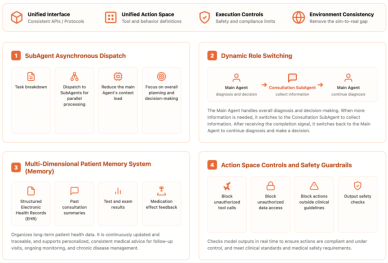
Figure 1: Baichuan-Harness, the unified runtime foundation for both training and deployment.
Harness orchestrates asynchronous SubAgent dispatch, enabling parallelization for high-context-load tasks (e.g., literature retrieval, medical history synthesis) and supports dynamic role switching to improve interaction workflow robustness. The multidimensional patient memory subsystem manages both transient session state and verified long-term profiles, while action-space constraints and guardrails deliver compliance and prevent protocol violations during tool use and output generation.
Closed-Loop Model Training and Adaptive Control
A cornerstone of Baichuan-M4 is its three-layer nested adaptive control framework, bringing continuous closed-loop improvement grounded in real-world feedback. The inner loop preserves patient-level context continuity, integrating longitudinal disease trajectories for holistic assessment. The middle loop implements comprehensive clinical pathway evaluation, leveraging both automation and expert review across accuracy, logical coherence, safety compliance, and task efficiency. The outer loop enables self-evolution by mining weak signals—bad cases, physician overrides, tool-exception traces—and repurposing them as aligned training data for policy refinement.
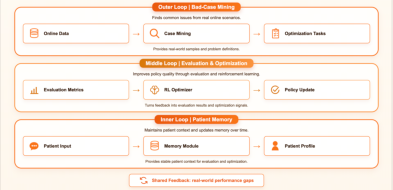
Figure 2: The three-layer nested adaptive control system, where continuous improvement is driven by real-world feedback.
Algorithmically, Baichuan-M4 advances span-level reward modeling (SPAR++), which delivers highly granular credit assignment, rewarding key clinical sub-tasks alongside final output quality. The quality gating system ensures efficiency rewards are contingent on minimum accuracy standards, guarding against omitted critical steps. Reasoning path compression reduces inference token consumption while maintaining transparency and accuracy, and curriculum RL stratifies training from initial-visit to longitudinal care stages for a robust generalization profile. SAPO and R3 route replay stabilize policy training, addressing oscillation and loss peaks endemic to large-scale RL in multi-turn, high-concurrency settings.
Baichuan-M4's Tool layer spans patient records, evidence retrieval, and multimodal perception. Memory management employs progressive disclosure, decoupling session context from long-term profile and enforcing privacy by exposing only relevant information. The evidence-based medical retrieval system constructs a six-tiered authoritative knowledge base, mapped to clinical standards. PICO-driven query decomposition and RL-optimized retrieval strategies substantially increase evidence-chain precision relative to generic RAG methods.
Multimodal perception incorporates high-fidelity medical OCR, X-ray understanding with structured report generation, and an agent-based, evidence-driven dermatology pipeline. The dermatology system optimizes multi-step, clinically analogous diagnostic reasoning—candidate generation, hypothesis verification, visual-morphological comparison—rewarding only complete, auditable evidence chains.
Quantitative Evaluation and Empirical Results
Evaluations on diverse benchmarks attest to Baichuan-M4’s superiority in both foundation model and tool-directed metrics. On HealthBench Hard, Baichuan-M4 exceeds GPT-5.5 by 15.9 points in complex, safety-sensitive reasoning tasks and achieves lowest hallucination rate (3.3%) among peers—demonstrating stringent control of critical failure modes.
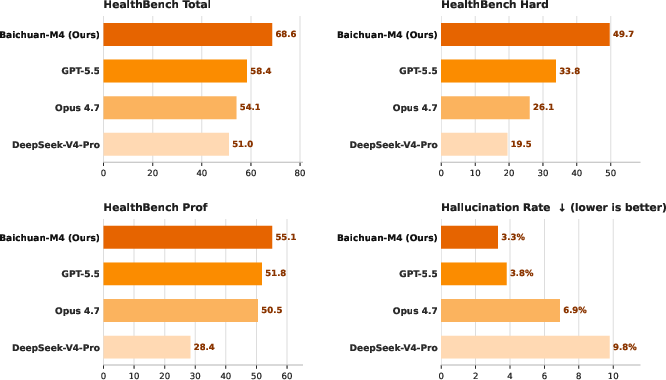
Figure 3: Static medical knowledge and safety metrics across the four models. Baichuan-M4 demonstrates top performance in all knowledge metrics and the lowest hallucination rate (3.3%).
Dynamic clinical consultation and long-context memory performance, assessed on Scan-Bench V1/V2, shows Baichuan-M4’s clear advantage in workflow execution and a notable breakthrough in long-context memory (score: 86.9), significantly outperforming both Baichuan-M3 (65.8) and closed models such as GPT-5.5 (81.7).
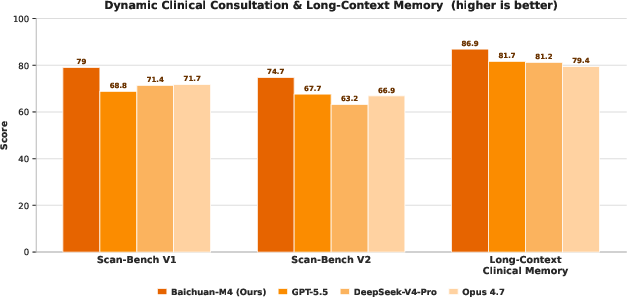
Figure 4: Dynamic clinical consultation and long-context memory capacity across models. Baichuan-M4 achieves the highest score in long-context clinical memory.
In evidence-based medicine (Baichuan-EBM), Baichuan-M4 attains unprecedented Citation Precision (90.0)—a large margin over others in the field (43.8–55.9)—reflecting highly efficient, low-redundancy retrieval.
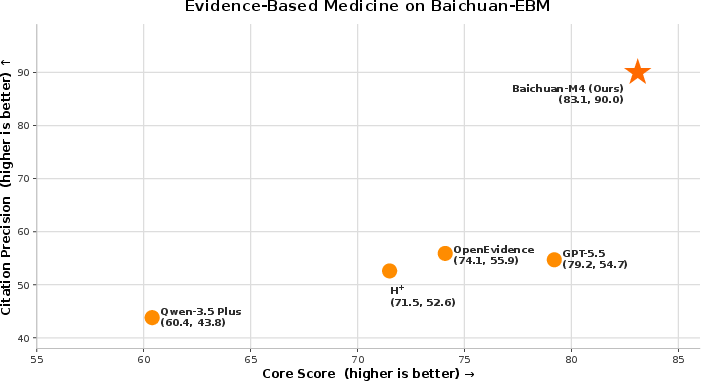
Figure 5: Evidence-based medicine results on Baichuan-EBM. Baichuan-M4 leads both core score and citation precision metrics.
In medical document OCR, M4 achieves structured field extraction accuracy of 0.914, establishing a new state-of-the-art for clinical information digitization. On the IU-Xray benchmark, it outperforms leading open and closed-source multimodal models in both CIDEr (0.1892) and clinically grounded GREEN-LLM (0.8435) metrics. Dermatology agent evaluation on f17k yields best-in-class TOP-1 exact match (30.78%) and TOP-6 category recall (60.68%), surpassing models such as Gemini-3.1-Pro and Qwen3.5 across all hierarchical match criteria.
Theoretical and Practical Implications; Prospects for Medical AI
Baichuan-M4's design signals a maturation in clinical AI agent systems: agentic modularity, persistent patient memory, closed-loop RL optimization, and multimodal, evidence-grounded capabilities address both reliability and real-world deployment constraints. Its low hallucination rates, strong context memory, and evidence synthesis signify meaningful progress toward deployable physician-assistive agents.
Nevertheless, limitations persist in long-tail disease coverage, scenario atypicality, unstructured data risks, and the need for robust external clinical supervision. The modular Harness and multi-agent orchestration set the stage for future extensibility (e.g., new sensory modalities, domain- or specialty-specific toolchains), while closed-loop adaptation provides a path for rapid, expertise-grounded iteration post-deployment.
Future work will likely focus on deeper integration with electronic medical records across live deployments, expansion to specialties beyond general and dermatological medicine, improved autonomy in evidence audit trails, and regulatory-compliant assurance for broader geographies.
Conclusion
Baichuan-M4 introduces a rigorously designed clinical-grade medical agent system, achieving high standards in physician-supervised continuous care, clinical workflow orchestration, safety-aligned reasoning, and multimodal medical understanding. Its empirical results establish new benchmarks for safety, memory, evidence-based retrieval, and clinical OCR, positioning it as a leading candidate for real physician-assistive deployment—albeit always under appropriate clinical oversight.

