- The paper presents the main finding that although thermal operations and Gibbs-preserving operations share the same asymptotic work rate, their reliability functions differ significantly in error exponent behavior.
- It establishes explicit forms for error exponents using Petz and sandwiched Rényi divergences, revealing how quantum coherence influences work extraction precision.
- The analysis provides practical insights for precise quantum thermodynamics and connects resource theories with operational error rates in work extraction protocols.
Overview and Motivation
The paper "Reliability of asymptotic work extraction" (2606.06318) undertakes a refined resource-theoretic and information-theoretic analysis of quantum thermodynamic work extraction, focusing not only on optimal extraction rates but crucially on asymptotic error exponents—how fast the failure probability of work extraction decays as the system size increases. Two main classes of free operations are compared: physically realizable thermal operations (TO), which are constrained by energy conservation and time-translation covariance, and the broader, axiomatically defined class of Gibbs-preserving operations (GPO). While prior results established operational equivalence between these classes at the level of optimal asymptotic rate (Helmholtz free energy), this paper rigorously demonstrates that their reliability—in terms of error exponents and operational precision—is fundamentally distinct, with clear separation quantified through information-theoretic divergences.
Resource-Theoretic Framework and Precision Notions
Work extraction from quantum states is formulated within the resource-theoretic paradigm, associating quantum states ρ on a Hilbert space H with a thermal bath at inverse temperature β, and quantifying extractable work via a work battery modeled as a two-level system.
- Thermal Operations (TO): Realizable by energy-conserving unitaries with ancillae in thermal states; mathematically intricate due to conservation constraints.
- Gibbs-Preserving Operations (GPO): All channels preserving the Gibbs state τ, easier to characterize but not always physically implementable.
The yield of work extraction is previously known to be given by the relative entropy D(ρ∥τ), connecting with the Helmholtz free energy, regardless of whether TO or GPO are assumed. However, the paper defines and analyzes the reliability function—the exponential rate at which the error (infidelity) in extracting a target amount of work decays as n increases:
BO(ρ;r)=sup{n→∞liminf−n1logEO(ρ⊗n,βWn)∣n→∞liminfn1βWn≥r}
where EO(⋅) is the one-shot infidelity for class O (TO or GPO).
The core technical results establish explicit forms for BO(ρ;r) in terms of quantum R\'enyi divergences, delineating a strict operational gap:
- Under GPO, the reliability function is governed by the Petz R\'enyi divergence H0.
- Under TO, the function is governed by sandwiched R\'enyi divergence H1 (with the input state pinched in the energy eigenbasis).
This yields the fundamental separation:
H2
H3
where, generically, H4 when H5, i.e., if H6 has coherence with respect to the thermal state.
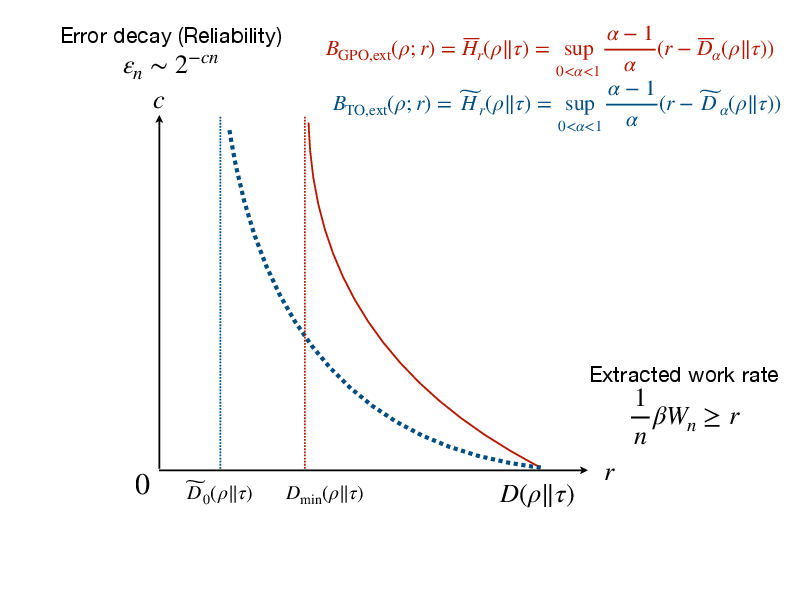
Figure 1: The reliability function of work extraction under TO and GPO when H7 is rank-deficient and coherent; GPO allows divergence at H8, TO at H9.
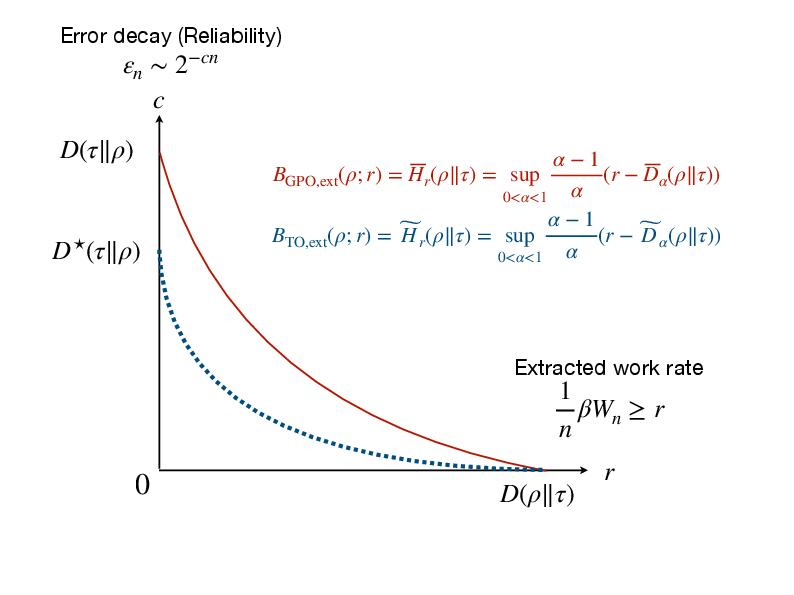
Figure 2: Reliability functions with full-rank coherent β0; GPO approaches β1, TO converges to star divergence β2.
At β3, both functions vanish, reaffirming rate equivalence.
Zero-Rate Regime and Star Divergence
Examining the limit β4 (zero-rate regime), the exponents yield fundamentally different operational meanings:
- GPO: Zero-rate error exponent becomes β5 (reversed Umegaki relative entropy).
- TO: Characterized by star divergence β6, defined as β7.
This provides new operational interpretations for divergences previously lacking thermodynamic context, notably the star divergence.
Data-Processing Inequality and Symmetry Restrictions
The sandwiched R\'enyi divergence for β8 and star divergence do not universally satisfy the data-processing inequality, yet under channels commuting with thermal pinching (TO or time-translation-covariant operations), monotonicity is retained. Thus, operational monotonicity is recovered in physically relevant symmetric settings, reinforcing the thermodynamic significance of these divergences.
Strong Numerical Separations
The paper gives explicit numerical examples illustrating strict separation: e.g., with rank-deficient, coherent states, GPO reliability diverges while TO remains finite below β9. The operational gap is thus not merely technical but measurable in realistic scenarios, especially when precision rather than yield is paramount.
Generalization to Quantum Resource Theories
The analysis extends to generic quantum resource theories, linking error exponents and strong converse exponents for resource distillation/dilution to composite hypothesis testing and entropic quantities. This substantiates a broader principle: precision in quantum resource manipulation corresponds directly with information-theoretic error exponents.
Practical and Theoretical Implications
The sharp operational separation has major implications:
- Modeling Accuracy: GPO, while mathematically convenient, fails to capture precision limits imposed by physical constraints; TO is necessary for reliable modeling where error rates matter.
- Quantum Thermodynamics: Precision (not merely yield) must be considered for applications in quantum technologies, error correction, and reliable quantum computation.
- Information-Theoretic Connections: Operational meanings for quantum divergences (Petz, sandwiched, star) are newly established in thermodynamic contexts.
Future work should address universal (state-agnostic) work extraction, further explore error exponent characterizations, and investigate implications in broader quantum information processing regimes.
Conclusion
This paper shows that first-order asymptotic rate equivalence between GPO and TO in quantum work extraction belies a deeper separation in asymptotic reliability, strictly characterized by Petz and sandwiched R\'enyi divergences. Error exponents, rather than optimal rates, reflect the precision constraints inherent to physical laws (energy conservation, symmetry). The results illuminate both operational and theoretical roles of quantum divergences and challenge the sufficiency of axiomatic models for high-precision quantum thermodynamics.