- The paper introduces CDOT, a novel convex formulation that transforms non-convex GW-type optimal transport into a globally optimizable problem using operator-based methods.
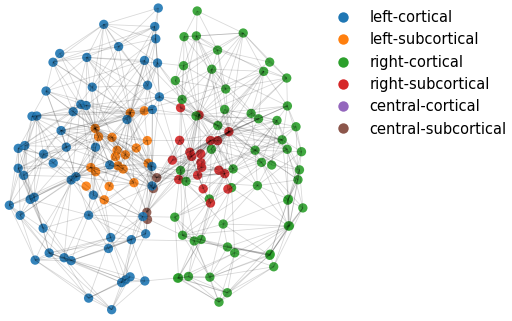
- Empirical results on synthetic point clouds, brain connectomes, and graph benchmarks demonstrate improved accuracy, reduced MSE, and robust statistical consistency.
- CDOT advances both theoretical insights and practical applications by preserving geometric structure, enabling scalable optimization, and offering potential integration in deep learning models.
Introduction and Motivation
Traditional Optimal Transport (OT) methods, particularly those grounded in Wasserstein distances, facilitate pointwise matching between distributions in a shared metric space. However, in many applications—such as graph analysis, neuroscience, or structured data—data is naturally modeled as distributions over heterogeneous metric-measure (mm) spaces, with potentially incompatible geometries and sizes. The Gromov–Wasserstein (GW) framework offers a metric-based approach to compare such structures by aligning pairwise distance distributions. Still, GW and its attributed variant (FGW) are inherently non-convex due to their reliance on quadratic costs over tensor products of couplings. This non-convexity impedes global optimization and complicates theoretical analysis.
The paper introduces Convex Distance Operator Transport (CDOT), a fundamentally new OT formulation that addresses these limitations. CDOT formulates geometry-preserving OT as a convex optimization by lifting pointwise geometry (distance matrices) and matching (transport plans) into the space of linear operators on L2 function spaces. This operator approach ensures convexity, efficient global optimization, and robust geometric structure preservation. Theoretical results show that CDOT defines a pseudometric over attributed compact mm spaces and provides non-asymptotic risk bounds with statistical consistency.
A key innovation of CDOT is its operator-theoretic treatment of structure and matching:
- Distance Operator: For a mm space (X,dX,PX), define DPX:L2(X,PX)→L2(X,PX) as
(DPXf)(x)=∫XdX(x,x′)f(x′)PX(dx′).
- Conditional Expectation Operator: Given a transport plan π∈Π(PX,PY), let Tπ:L2(Y,PY)→L2(X,PX) be
(Tπg)(x)=∫Yg(y)π(dy∣x).
- Structural Regularization: CDOT’s key geometric penalty,
R(π)=∥DPXTπ−TπDPY∥HS2,
quantifies how well Tπ “intertwines” the geometries of X and (X,dX,PX)0.
The CDOT optimization problem jointly balances feature alignment and this structural regularization via the strictly convex objective
(X,dX,PX)1
over (X,dX,PX)2. Here, (X,dX,PX)3 is typically squared feature distance.
Geometric and Theoretical Properties
- Convexity: CDOT’s operator-based formulation transforms the quadratic non-convexity of GW-type objectives into a global convex problem with guaranteed existence of optimal solutions.
- Pseudometric Structure: The CDOT discrepancy (X,dX,PX)4 defined by the optimal value of (X,dX,PX)5 is a pseudometric on attributed mm spaces—vanishing only when distance operators and features align under some coupling. While this is weaker than (FG)W’s requirement of measure-preserving isometries, it ensures robust, geometry-aware, and relaxable similarity.
- Dispersion Gap: By decomposing the (F)GW quadratic form, the authors introduce the notion of “dispersion,” which isolates the source of GW’s non-convexity:
(X,dX,PX)6
where (X,dX,PX)7 penalizes the variance or “determinism” in the coupling. Unlike GW, CDOT completely omits this term, favoring convexity even if it admits more diffuse, fractional couplings.
- Empirical Risk and Optimization: In finite-sample regimes, the objective is a convex quadratic program over the transport polytope. The authors exploit the affine structure of the objective for efficient Frank–Wolfe optimization, with an option for post hoc hard assignment via the Hungarian method.
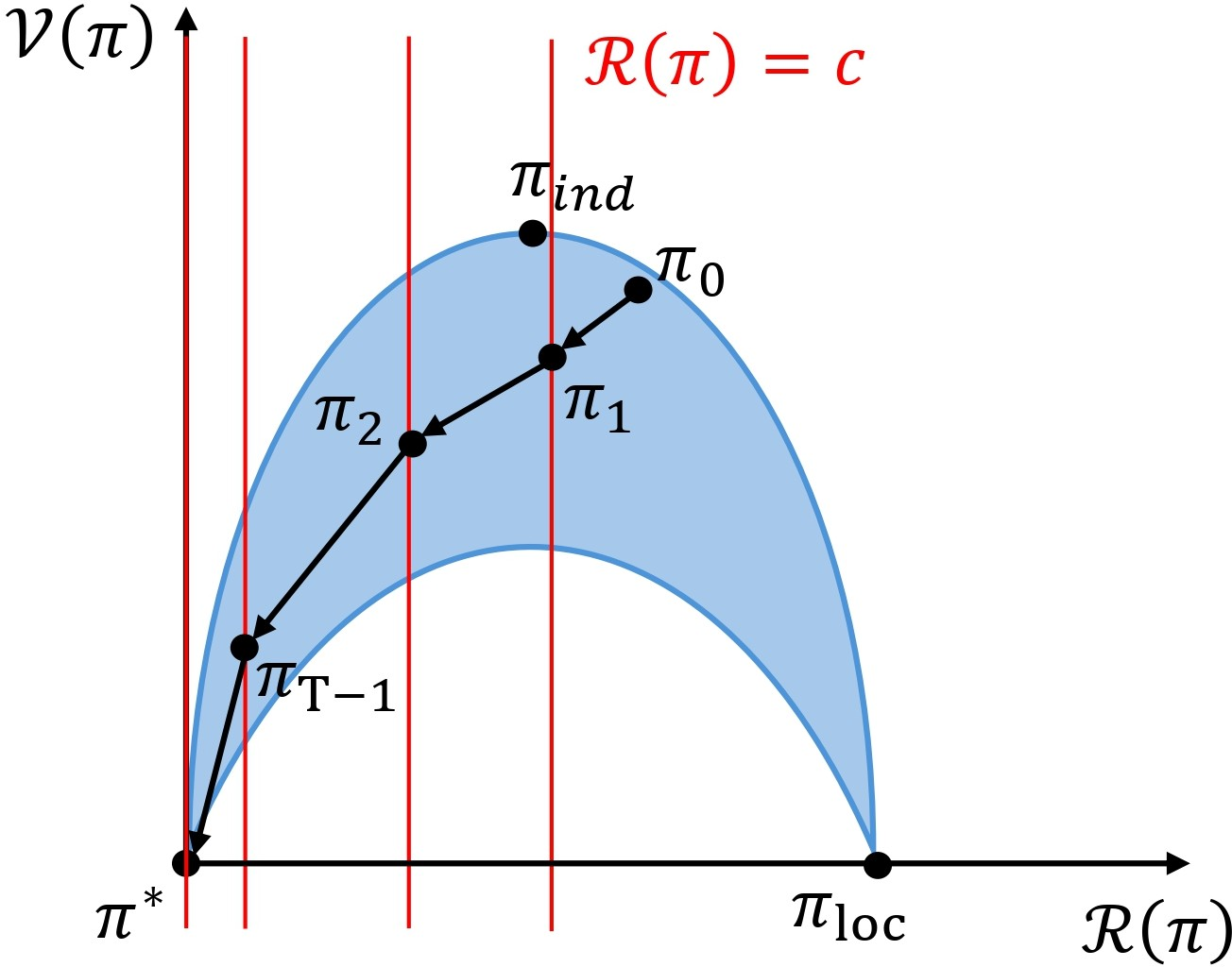
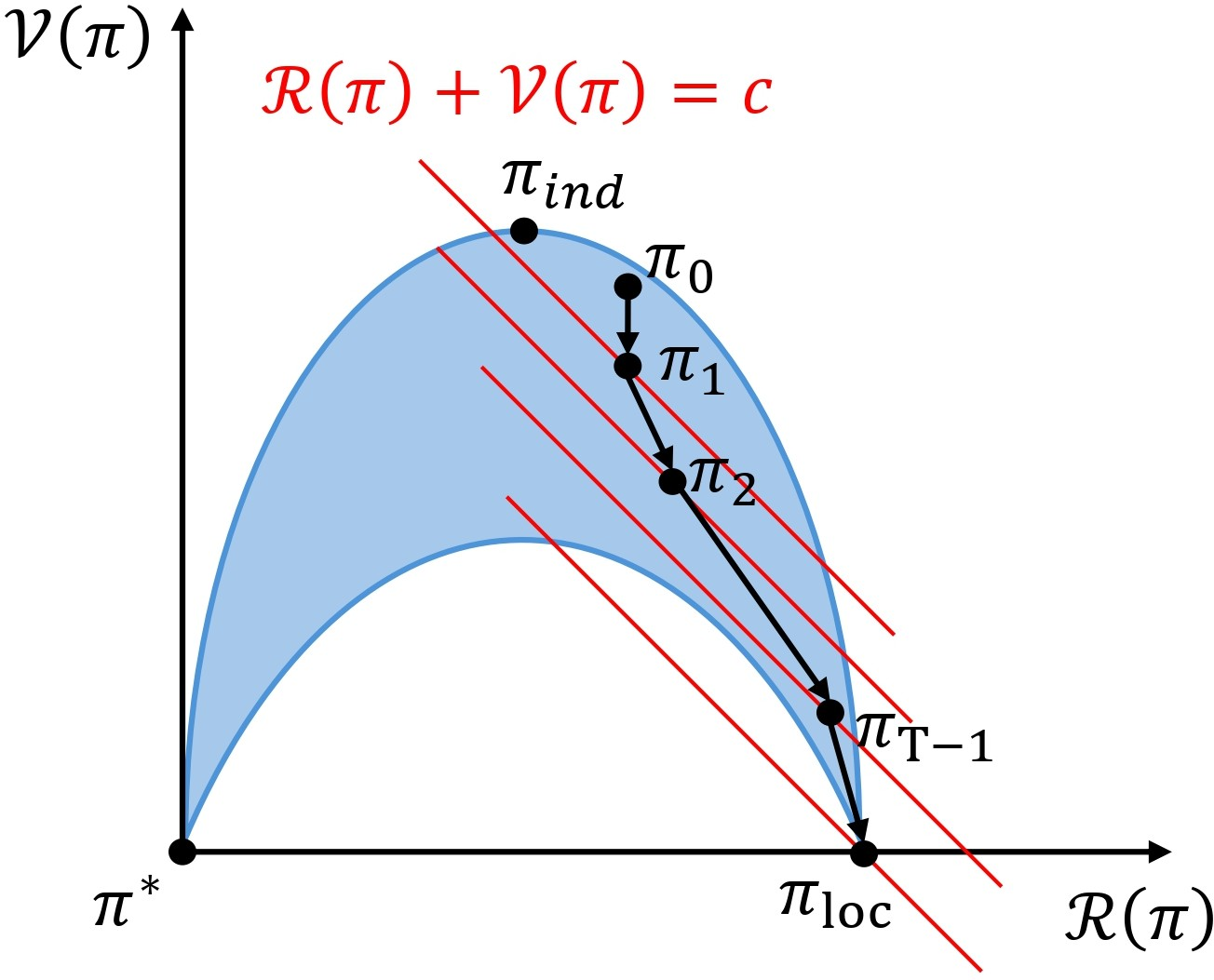
Figure 2: Level sets of (X,dX,PX)8 (left) and (X,dX,PX)9 (right), visualizing their distinct optimization landscapes and illustrating how CDOT ensures global convergence.
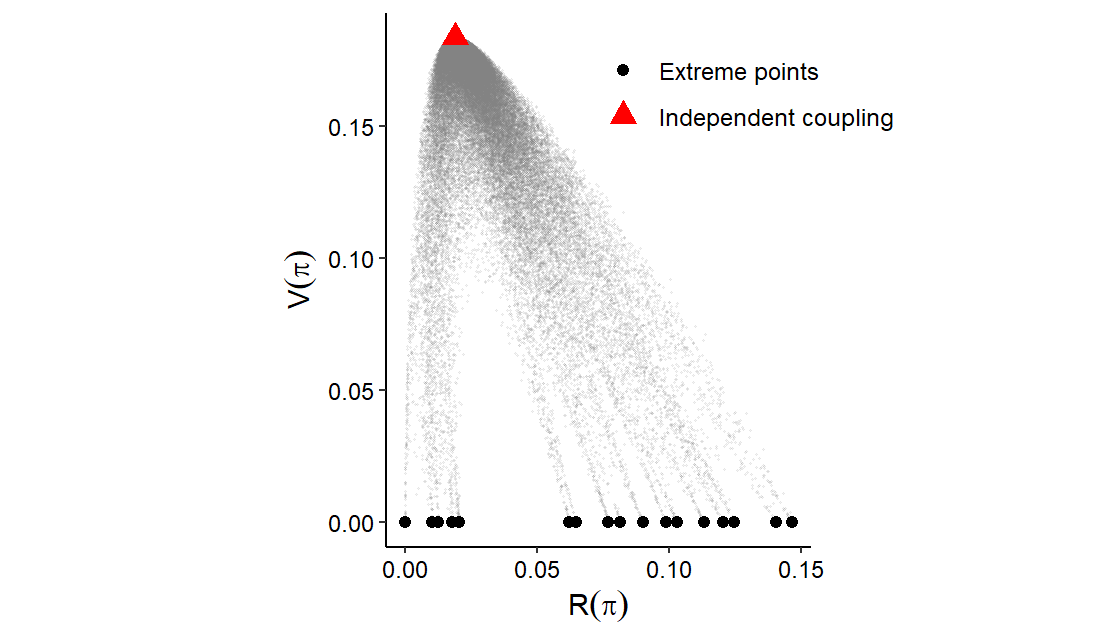
Figure 1: Empirical transport polytope projected onto the DPX:L2(X,PX)→L2(X,PX)0 plane, showcasing the convex vertical level sets of CDOT and the non-convex diagonal level sets of GW.
Empirical Results
Extensive experimental evaluations demonstrate the practical impact of CDOT’s operator perspective:
- Synthetic Point Clouds: On structured matching tasks between 2D point clouds with labeled clusters, CDOT obtains the lowest mean-squared error (MSE) across all sample sizes and exceeds (E)FGW, IsoRank, Spectral, and COPT baselines. Increasing data size systematically reduces MSE, supporting the risk consistency result.
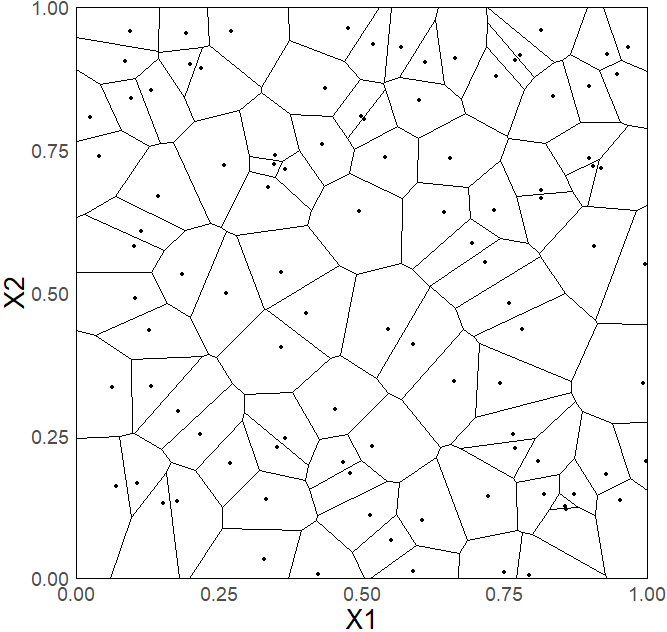
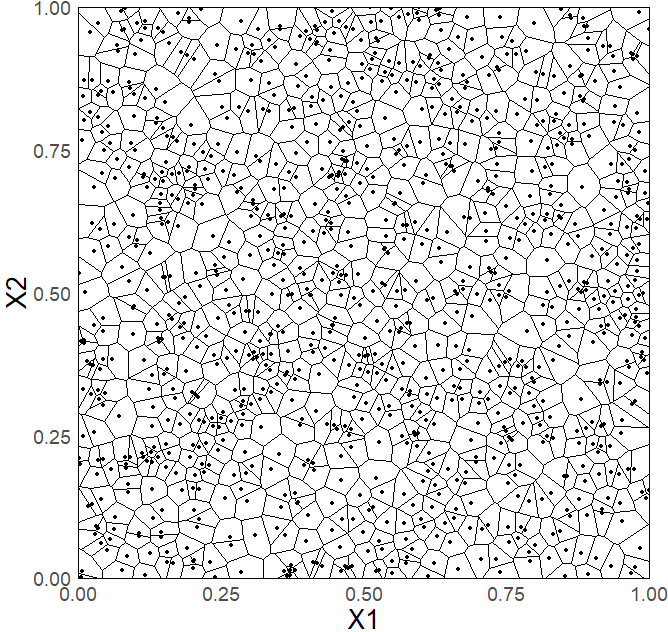
Figure 5: Synthetic data matching performance with DPX:L2(X,PX)→L2(X,PX)1 samples, indicating rapid convergence of CDOT’s matching accuracy as sample size increases.
Implications and Future Perspectives
The introduction of CDOT advances the practical and theoretical landscape for matching and comparing heterogeneously structured data:
- Theoretical Insights: The operator-level discrepancy framework offers a new perspective on geometric alignment, rooted in functional analysis, that naturally extends classical metric geometry and reveals the inner structure of GW-type objectives.
- Practical AI Applications: CDOT provides a reliable, robust, and interpretable method for applications requiring the alignment of structured distributions, including neuroscience, network analysis, structured prediction, and scientifically interpretable AI.
- Statistical Learning: The availability of finite-sample risk bounds and consistency results open the door to statistically principled inference with geometry-preserving transport methods.
- Extensions: The paper suggests integrating CDOT as a differentiable metric layer in deep learning architectures, enabling joint learning of features and ground metrics for structure-aware domain adaptation, manifold learning, or geometric generative modeling. Furthermore, CDOT’s pseudometric nature naturally supports the construction of testing and inference frameworks on mm spaces, such as isomorphism or equivalence tests.
Conclusion
CDOT presents a rigorously justified, convex, and geometry-preserving optimal transport framework that resolves key limitations of prior GW-type distances. By aligning aggregated operator profiles rather than enforcing rigid pairwise correspondences, it achieves stable optimization, improved empirical performance, and theoretically sound statistical guarantees. While CDOT relaxes rigid point-to-point matching in favor of robust geometry aggregation, in many structured-data or scientific applications, this yields more stable, scalable, and interpretable solutions. Future investigation into learnable metrics, scalable solvers, and statistical testing paradigms on mm spaces will further broaden its foundational and applied impact.