- The paper presents CrossLift, a method that lifts 2D visual cues into 3D cross fields to create semantically aligned quad meshes.
- It employs a two-stage interpolation process combining per-view and multi-view integration to achieve robust, smooth mesh generation.
- Experimental results show improved quad quality and semantic alignment over traditional geometry-only and neural field methods.
Visual Guidance for Semantic Quad Meshing: An Analysis of "Look Both Ways Before You Cross: Lifting Cross Fields From 2D Visual Priors"
Introduction
The design and extraction of quadrilateral (quad) meshes from 3D surfaces, particularly those aligning to both geometric and semantic features, remains a central problem in geometry processing, computer graphics, and related fields. The paper "Look Both Ways Before You Cross: Lifting Cross Fields From 2D Visual Priors" (2605.26062) presents CrossLift, a novel cross-field generation technique that exploits visual guidance from powerful 2D text-to-image generative models. This approach addresses the insufficiency of geometry-only methods for semantic feature alignment and enables robust, visually-driven quad meshing on arbitrary input shapes. The following essay provides an in-depth summary and critical analysis of this contribution, organized around its methodology, empirical evaluation, and broader implications for geometric learning and modeling.
Methodology
From 2D Priors to 3D Cross Fields
CrossLift introduces a pipeline where 2D visual alignment priors, induced by text-to-image generative models such as Flux and Gemini 3, are leveraged to guide cross field and quad mesh construction on 3D surfaces. This process is outlined as follows:
Gradient Backprojection and Two-Stage Interpolation
The 2D alignment directions, encoded as per-pixel gradients, are back-projected onto the surface tangent spaces of the input mesh via camera-projection Jacobians, effectively lifting 2D alignment cues into 3D.
CrossLift employs a two-stage smooth interpolation for robust cross field construction:
- Per-View Interpolation: For each view, extracted surface-aligned gradients are interpolated across visible mesh regions using a $4$-RoSy (four-way rotationally symmetric) field representation, yielding dense per-face alignment.
- Multi-View Consolidation: Per-view cross fields are integrated by weighing constraints according to view normal alignment and inter-view coherence. This regularizes conflicting multi-view information and ensures smooth field propagation, particularly into occluded mesh regions.
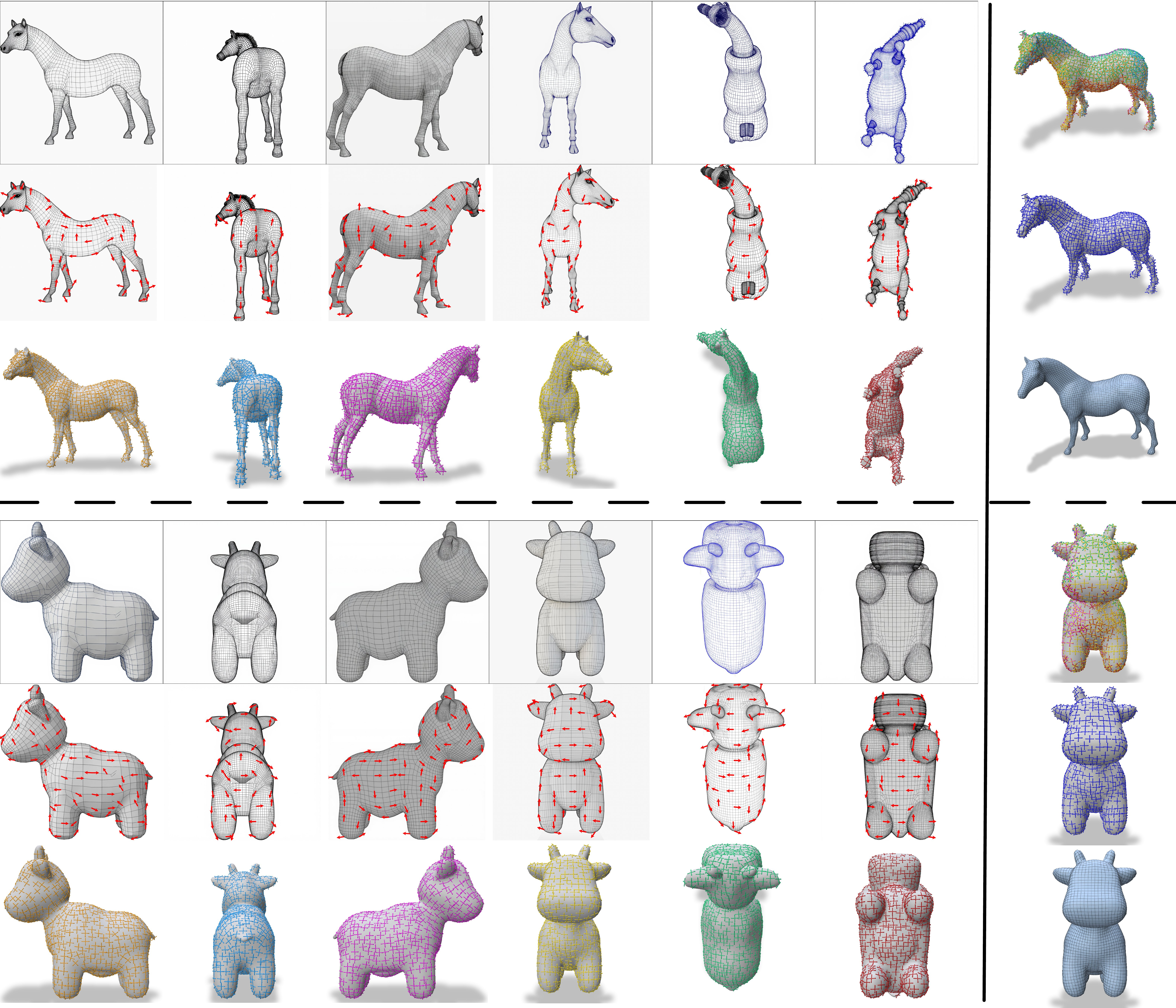
Figure 2: Detailed visualization of the multi-view signal extraction, per-view field generation, cross-view aggregation, and resulting quad mesh.
This two-stage process is key to preventing view-dominance artifacts and projection-related field distortions, issues which naïve or image-space interpolations are prone to.
Modular Visual Guidance and User Interaction
Crucially, the method is agnostic to the specific 2D image prior—it can utilize arbitrary generative models or even hand-drawn user sketches for fine-grained control. Visual guidance extends to aligning quads with mesh texture features and supporting direct user input with 2D scribbles.
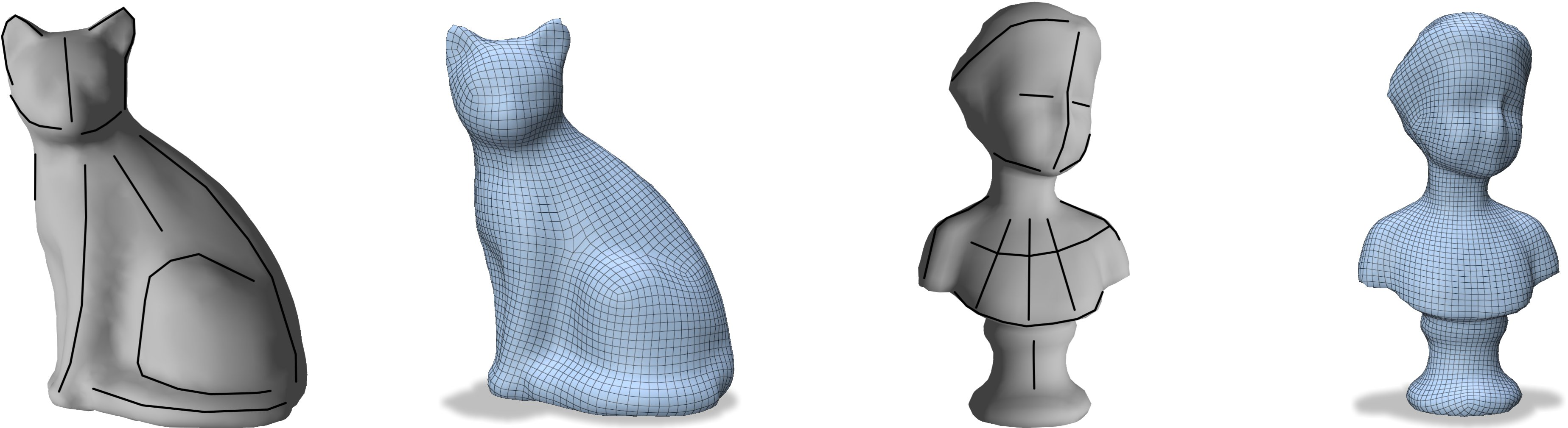
Figure 3: CrossLift can extract and honor hand-drawn 2D alignment cues, providing user-centric, visually-driven meshing workflows.
Experimental Evaluation
Qualitative and Quantitative Comparison
CrossLift is evaluated on diverse benchmarks comprising both organic and mechanical objects. The method is compared against QuadriFlow, QuadWild, and NeurCross, representing state-of-the-art geometric and neural field-guided quad meshing paradigms.
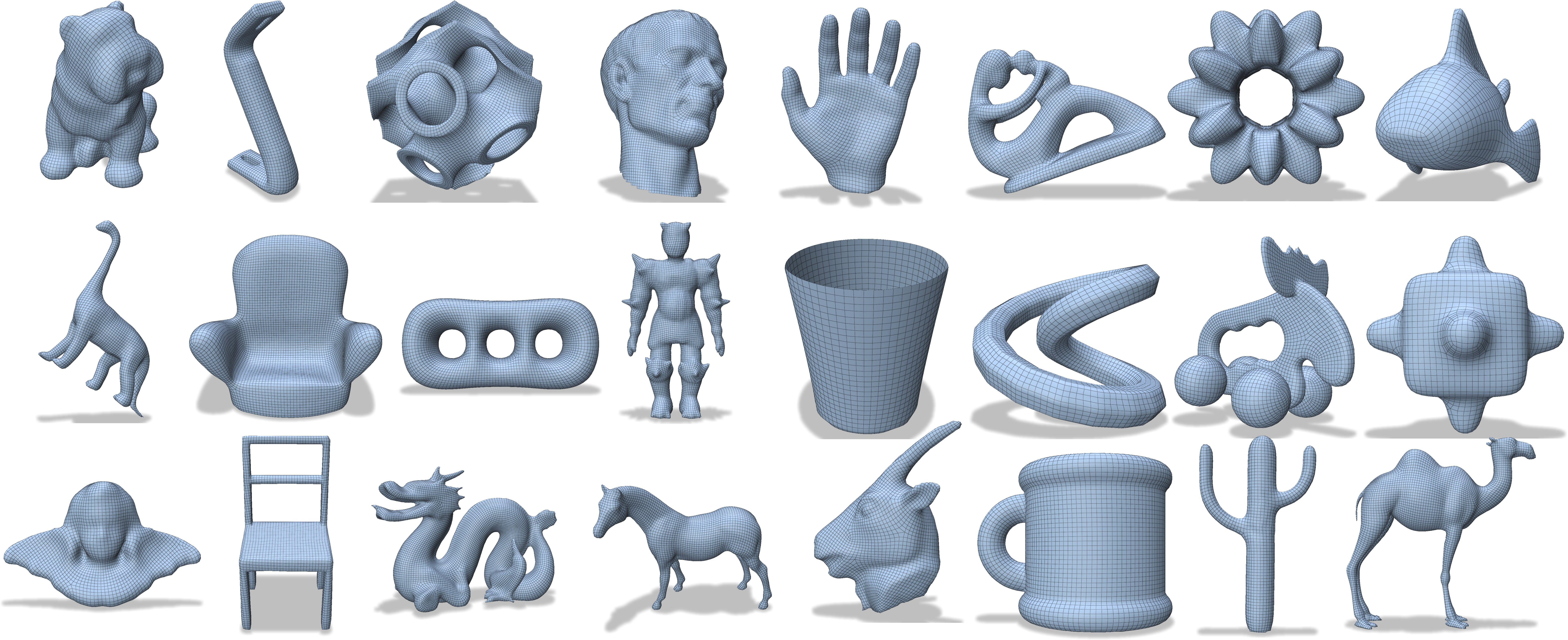
Figure 4: CrossLift outputs for a wide variety of complex and semantically rich shapes, demonstrating grid alignment to both geometric and semantic surface features.
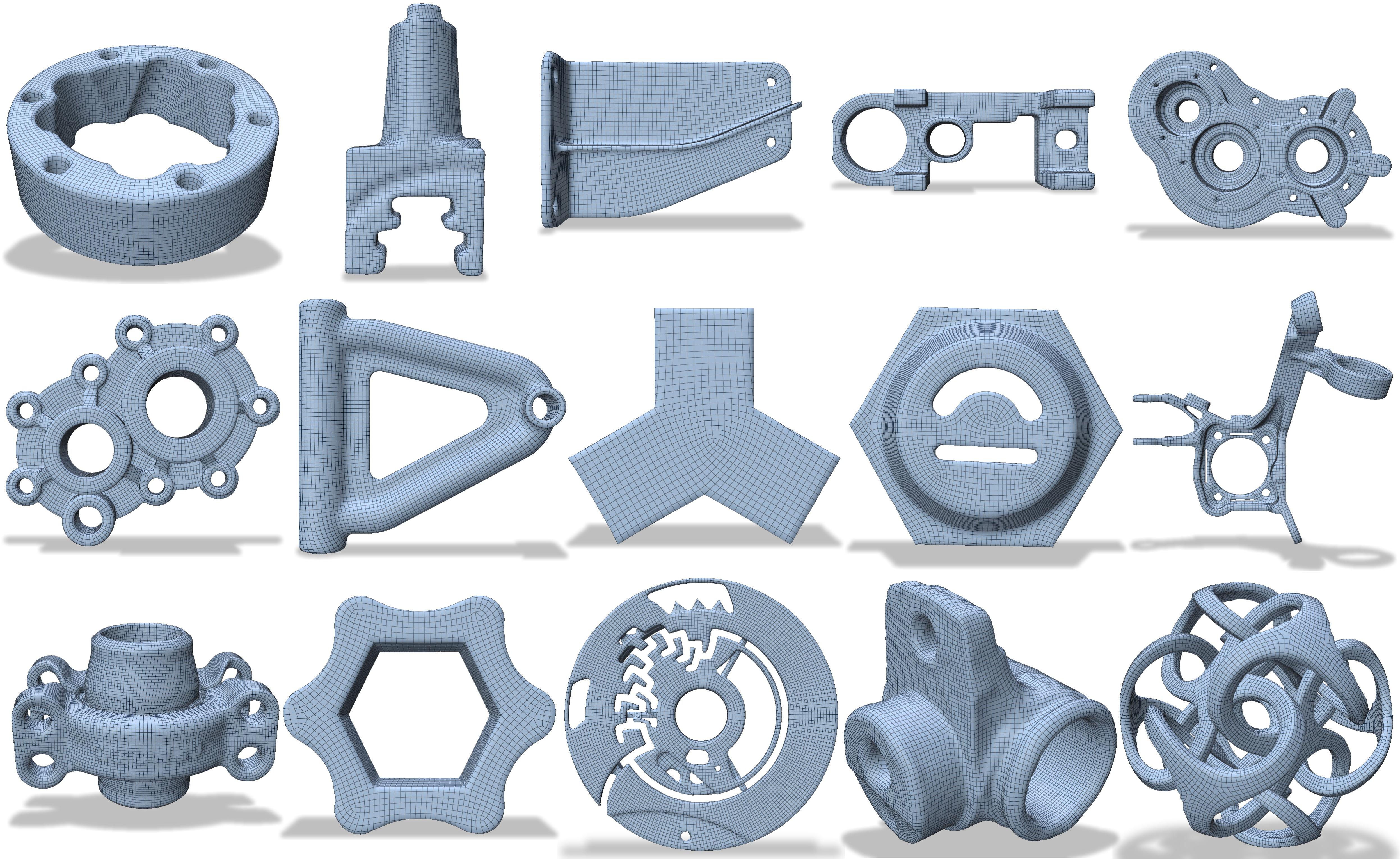
Figure 5: For mechanical/CAD objects, CrossLift produces feature-aligned quads on sharp or thin surface components, solely from 2D cues.
Key results include:
- Superior Semantic Alignment: CrossLift achieves explicit alignment to semantic axes and symmetry features absent in the underlying geometry or classic curvature descriptors.
- Quad Quality: The scaled Jacobian metric—measuring distortion and face quality—shows CrossLift generating quads of higher or comparable quality compared to strong neural baselines, with a lower rate of irregular (non-valence-4) vertices, suggesting improved edge flow smoothness.
- Robustness to Noise and Texture: Visual priors enable robust field alignment even with significant surface noise (e.g., wrinkles), and alignment to visually salient, non-geometric features such as textures.
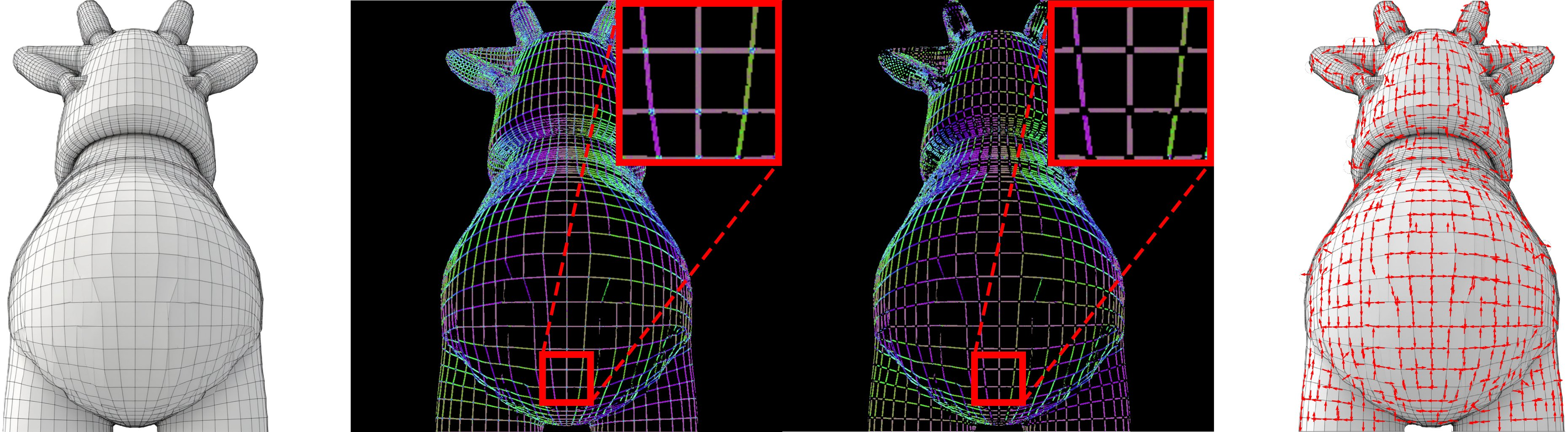
Figure 6: Extraction of gradient-based alignment cues from generative image outputs, forming the basis for 3D field projection.
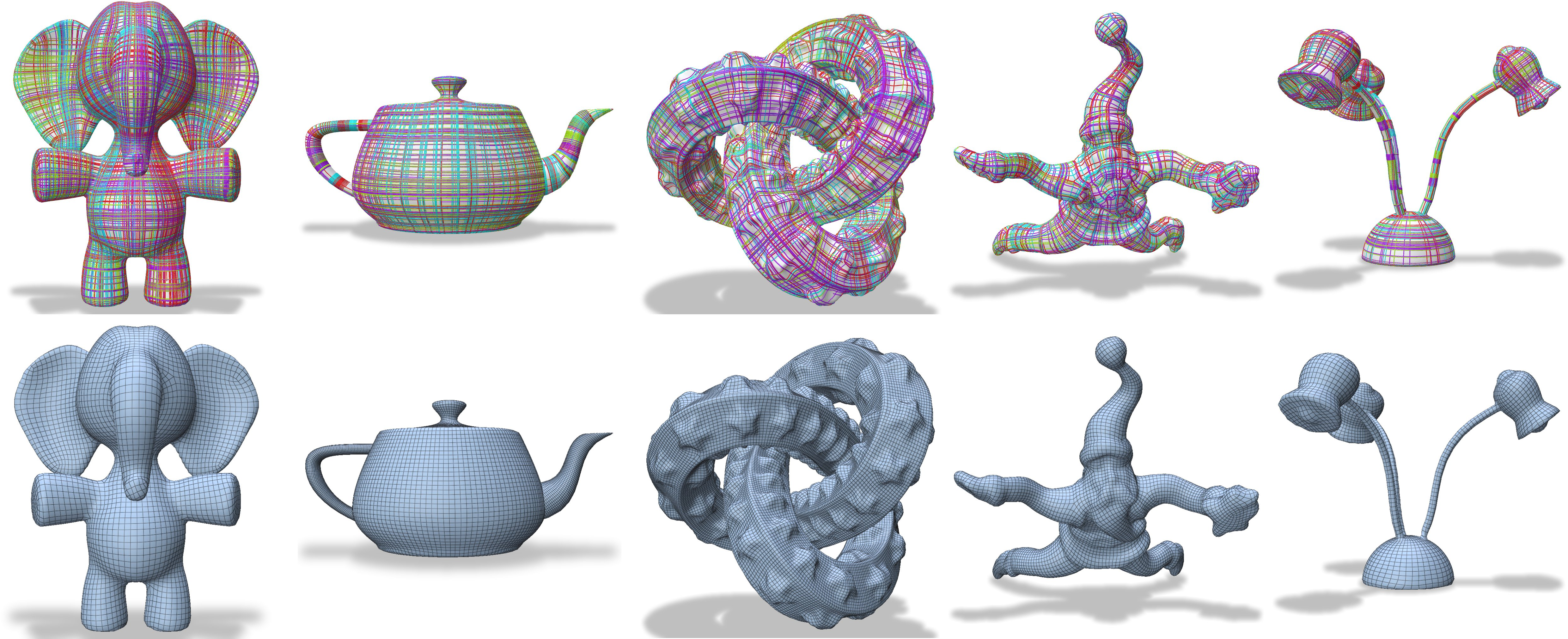
Figure 7: Streamline visualization, showing quad grid layout conforming to major semantic axes and features.
Ablation and Robustness
Ablation studies confirm the necessity of CrossLift’s two-stage interpolation for view-equalization and field consistency. The method is shown to be robust across generative model variants and random seed variations, producing consistent semantic alignment under model output noise and changing textures.
CrossLift also smoothly interpolates cross fields into unobserved regions, a limitation of direct view-based or geometric-only methods.

Figure 8: Multi-view interpolations yielding smooth, global cross fields from local, view-dependent signals.

Figure 9: The method maintains alignment to semantic features under significant pose or mesh deformations, underscoring the generalization induced by 2D visual priors.
Theoretical and Practical Implications
By coupling global, semantically-rich 2D visual information with 3D field design, CrossLift transcends the intrinsic limitations of geometry-local or training-data-constrained approaches. The technique:
- Bridges the 2D-3D gap by integrating large-scale visual features into mesh-based tasks without reliance on explicit 3D priors.
- Enables non-expert and artist-driven workflows by providing accessible 2D control modalities (image priors, sketches).
- Exhibits flexibility and modularity, opening avenues for extending visual priors into additional non-meshing 3D processing domains, including semantic deformation and attribute transfer.
Limitations remain: CrossLift is not strictly equivariant under rigid transformations (the same mesh in different global positions may produce non-identical quads), and the reliance on generative model output quality places an upper bound on achievable alignment fidelity.

Figure 10: Results of CrossLift’s non-equivariance to rigid transformations—high-level features are preserved but quad mesh topology may differ.
Conclusion
CrossLift represents a significant advance in cross-field and quad mesh generation, synthesizing visual-semantic cues from 2D generative models into robust, editable 3D surface structure. Its modularity and ability to leverage accessible 2D modalities constitute a substantial practical improvement over geometry-only or data-limited neural approaches. These findings imply a broader paradigm shift where pre-trained 2D vision models guide geometric computation, potentially transforming downstream tasks in shape analysis, design, and generative modeling. Pursuing extensions towards semantically-driven surface manipulation and integration with diverse visual priors constitutes a promising avenue for future work.
